分类: society

  • Daughter of Calypsonian Singing Althea Says “Mama Rose” Robbed of Gold Chain Outside Home

    Daughter of Calypsonian Singing Althea Says “Mama Rose” Robbed of Gold Chain Outside Home

    A beloved veteran Trinidadian calypsonian, widely known by her stage name Singing Althea and affectionately called ‘Mama Rose’, has become the victim of a violent street robbery just steps away from her own residence. The shocking attack unfolded early Friday morning, when the perpetrator assaulted the elderly entertainer to steal her gold chain.

    The incident was first brought to public attention by Rose’s daughter, Michelle Williams, who took to social media to share her anger and grief over the attack. In a scathing public post, Williams directly called out the attackers, labeling them greedy ‘vampires’ who showed no regard for her mother’s safety. She detailed that the robbers violently slammed Singing Althea into a concrete wall before yanking the gold chain off her neck and fleeing the scene.

    Williams’ post was paired with footage that appears to be pulled from nearby home surveillance cameras, which quickly spread across local social media platforms. Within hours, the news drew widespread reactions from community members, fellow calypso artists, and residents across the region. Many flood the comment sections with messages of sympathy and support for the 80-something entertainer, while others expressed sharp outrage at the brazen nature of the attack, which occurred in broad daylight right outside a family home.

    As of the latest updates, law enforcement officials have not released any formal public statement regarding the incident. It also remains unclear whether investigators have identified any persons of interest or made any arrests in connection with the robbery.

  • UWI Statement on the Passing of Sir Aziz HadeedKCMG,CBE

    UWI Statement on the Passing of Sir Aziz HadeedKCMG,CBE

    On Saturday, May 23, 2026, The University of the West Indies (UWI) Five Islands Campus in Antigua and Barbuda released an official statement announcing the passing of Sir Aziz Hadeed, CBE, the institution’s beloved Campus Council Chairman. The entire campus community has joined the people of Antigua and Barbuda and Caribbean communities across the region in grieving the loss of this iconic leader, whose decades of public service and unwavering commitment to higher education left an indelible mark on the regional education landscape.

    A towering figure in Caribbean public life, Sir Aziz built a decades-long career marked by distinction across multiple sectors: he was a revered business leader, a former Independent Senator, a past Cabinet Minister, and former Dean of the Diplomatic Corps. When he joined UWI, he brought the same sharp vision and steady, measured judgment that defined every stage of his lifelong service to the Antigua and Barbuda nation.

    Sir Aziz made history as the inaugural Chairman of the Five Islands Campus Council, appointed to the role when the campus first launched in August 2019, and reappointed for a second term in 2024. Over his nearly seven years of stewardship, he guided the young campus through its most formative and challenging early chapters: the successful 2019 launch, the unprecedented disruption of global higher education by the COVID-19 pandemic, the landmark $80 million development partnership with the Saudi Fund for Development secured in 2023, and the campus’s extraordinary expansion from just 173 inaugural students to a current enrollment of more than 1,400. Even in his final months in the role, he led campus governance with a calm, commanding authority, most recently presiding over the March 2026 Council meeting centered on the forward-looking theme “Building Beyond Borders.”

    At the core of Sir Aziz’s leadership was a deep, unshakable belief that education is the foundational pillar of sustained development across the Caribbean. He turned this conviction into tangible action, prioritizing expanded access to higher education for marginalized students. Through funding personal scholarships, he removed financial barriers that would have prevented low-income, high-achieving students from pursuing university degrees. The countless lives transformed by his quiet, unpublicized generosity stand as one of his most enduring and far-reaching legacies.

    “Sir Aziz was far more than a Chairman to this campus — he was a true partner in our core mission,” said Professor C. Justin Robinson, Pro Vice-Chancellor and Campus Principal of UWI Five Islands. “His close collaboration with our team grew from a genuine conviction that accessible higher education is the bedrock of a just, prosperous society. He contributed not just his public standing and financial support, but his time, his unmatched wisdom, and his whole heart to the work of bringing UWI’s excellence to the people of Antigua and Barbuda and the entire Organisation of Eastern Caribbean States (OECS).”

    Robinson added that Sir Aziz’s thoughtful leadership leaves the Five Islands Campus far stronger, more confident, and more deeply rooted in its regional mission than it was when he first took office. On behalf of the campus executive leadership, faculty, staff, and student body, the campus extended its deepest condolences to Lady Hadeed, the entire Hadeed family, and all those mourning the loss of this extraordinary leader. The statement closed with a note of prayer: May his soul rest in peace.

    As context, the UWI Five Islands Campus is one of five physical campuses that make up the historic University of the West Indies system, which has driven inclusive development across the Caribbean for more than 75 years. Founded in 1948 as a small medical college affiliated with the University of London in Jamaica, UWI has grown from an institution of just 33 students into a globally respected comprehensive university serving nearly 50,000 learners across the region. In addition to the Five Islands Campus, it operates flagship campuses at Mona in Jamaica, St. Augustine in Trinidad and Tobago, Cave Hill in Barbados, and a distributed Global Campus, alongside international research and education centers partnered with leading institutions across North America, Latin America, Asia, Africa, and Europe.

    Since opening in 2019, the Five Islands Campus has expanded to offer more than 45 undergraduate and postgraduate degree programs across four specialized schools: Business and Management, Health and Behavioural Sciences, Humanities and Education, and Science, Computing and Artificial Intelligence. As part of the Caribbean’s leading higher education system, it is focused on addressing the most pressing social and economic challenges facing the OECS, the broader Caribbean region, and the global community.

    UWI has been recognized for its global academic excellence through inclusion in the Times Higher Education (THE) annual rankings since 2018, holding its place as one of the world’s top universities and the only English-speaking Caribbean institution featured across four of THE’s most prestigious ranking lists. THE’s World University Rankings evaluates more than 2,000 leading research-focused universities worldwide, while the Golden Age University Rankings highlights leading institutions founded between 50 and 80 years ago. THE’s Latin America Rankings focuses specifically on institutional performance across Latin America and the Caribbean, and the Impact Rankings assesses universities based on their progress toward the United Nations’ Sustainable Development Goals (SDGs). This global recognition supported the launch of UWI’s International School for Development Justice (ISDJ), a global online graduate business school designed to train the next generation of leaders in sustainable development practice. A long-standing leader in advancing the SDG framework, UWI is consistently ranked among the top global universities for its work on sustainable development.

  • Angelo’s stepdad charged with murder

    Angelo’s stepdad charged with murder

    In a major development in the high-profile disappearance case of two-year-old Angelo Tobias-Plaza, 24-year-old Shannon Miller, the toddler’s stepfather and a resident of Goodwood, Tobago, has been formally charged with murder by local law enforcement. The charging announcement was made public on Thursday by the Trinidad and Tobago Police Service (TTPS) through an official media statement.

    Per the TTPS release, law enforcement officials convened a formal review meeting with a specialist legal advisor from the Office of the Director of Public Prosecutions (DPP) to thoroughly assess all circumstances tied to the young child’s disappearance before moving forward with charges.

    Angelo was first reported missing to authorities on May 11, 2026. Immediately after the missing person report was filed, a large-scale, coordinated investigation spanning multiple law enforcement and government agencies was launched to locate the toddler. As of the latest update in the case, however, investigators have not recovered Angelo’s remains.

    After a comprehensive forensic and evidential review of all materials collected throughout the investigation, the DPP’s office provided formal legal guidance confirming that sufficient evidence exists to pursue criminal prosecution against Miller. Of the seven other suspects previously taken into custody in connection with Angelo’s disappearance, five were released from detention this past Friday, leaving Miller as the primary defendant in the ongoing murder case.

  • Vincy jailed in France while fleeing charges in SVG gets 13 years at home

    Vincy jailed in France while fleeing charges in SVG gets 13 years at home

    A high-profile drug trafficking case that has stretched over a decade has concluded this week in St. Vincent and the Grenadines, with a 40-year-old fugitive receiving a substantial custodial sentence after evading justice for 10 years. The defendant, Rajiv Deshong, who will turn 41 in August, was found guilty by a nine-member jury on two counts: possession of 2,008 pounds (approximately 911,146 grams) of cannabis with intent to supply, and trafficking of the same massive volume of the controlled substance.

    The roots of the case stretch back to February 2014, when a joint enforcement operation by SVG’s Coast Guard and Drug Squad intercepted a high-speed “go-fast” vessel off the coast of Chateaubelair. The craft carried six men, including Deshong, and enforcement officers were forced to disable the boat’s engines after the occupants refused to comply with orders to halt.

    Four of Deshong’s co-defendants in the case — Daniele Baptiste, Calvert Prince, Ezekiel Robin, and Denzil Sam — were convicted and sentenced to prison terms ranging from 11 to 17 years back in 2017, and all have now completed their sentences. A fifth co-accused, sea captain Godfrey Cumberbatch, was fatally shot at his Glen home in June 2014, just one week ahead of a scheduled court hearing in the case. Deshong, for his part, absconded from SVG while out on bail awaiting trial shortly after the 2014 interception.

    After fleeing the country, Deshong was arrested and convicted on separate drug charges in France, where he served a 10-year prison sentence. He was deported back to St. Vincent and the Grenadines following the completion of his French sentence, allowing local authorities to finally prosecute him for the 2014 offences.

    During Tuesday’s sentencing hearing at the Kingstown High Court, Justice Rickie Burnett explained that sentencing was guided by the Eastern Caribbean Supreme Court’s binding guidelines for drug offences, which can only be departed from in extraordinary circumstances to serve the interests of justice. The court weighed four core sentencing aims: retribution, deterrence, crime prevention, and rehabilitation.

    A social inquiry into Deshong’s background painted a mixed portrait. The defendant completed only up to Form 4 of secondary school, has diabetes requiring ongoing medication, and holds trade skills in automotive repair and commercial agriculture. Community members and family described Deshong as calm, easy-going, and a highly capable farmer, and noted he has one dependent daughter who relies on him. Despite the jury’s guilty verdict, Deshong continues to maintain his innocence. Prior to the 2014 offence, Deshong had a history of migration: he moved to Canada in 2009, returned to SVG in 2012, migrated to Guadeloupe in 2013, and returned again to SVG before fleeing for good in 2014.

    Evidence was presented to the court regarding the ability of His Majesty’s Prison to accommodate Deshong’s diabetes, a non-communicable disease. Witness testimony was heard from two current inmates and acting prison Superintendent Dwayne Bailey, who outlined the existing protocols for medication access, dietary accommodation, and general patient care for incarcerated people with chronic conditions. After reviewing all testimony, Justice Burnett confirmed the court was satisfied that the prison system is able to provide adequate care for Deshong.

    In calculating the sentence for the possession charge, Justice Burnett noted Deshong stated he had little awareness of the full scale of the trafficking operation and held no senior position in the criminal network. The maximum penalty for this offence is 25 years imprisonment and a EC$5 million fine, and the court set an initial starting sentence of eight years and nine months. Aggravating factors — including the attempt to evade capture by forcing a coast guard chase, the large volume of drugs (worth an estimated EC$1 million or more), Deshong’s prior drug conviction in France, and his 10 years as a fugitive that delayed the trial — led the court to add four additional years to the sentence. After deducting the 12 months and 10 days Deshong has already spent on remand, the adjusted sentence for possession was 11 years, eight months and 20 days.

    For the second charge of drug trafficking, which carries a maximum sentence of life imprisonment, the court set a starting point of 10 years and six months. The same aggravating factors prompted a four-year increase, bringing the total to 14 years and six months. After deducting remand time, the adjusted trafficking sentence came to 13 years, five months and 20 days. Justice Burnett ruled that the two sentences will run concurrently, meaning Deshong will serve the longer of the two terms behind bars.

  • Police Investigate Road Fatality in Springfield

    Police Investigate Road Fatality in Springfield

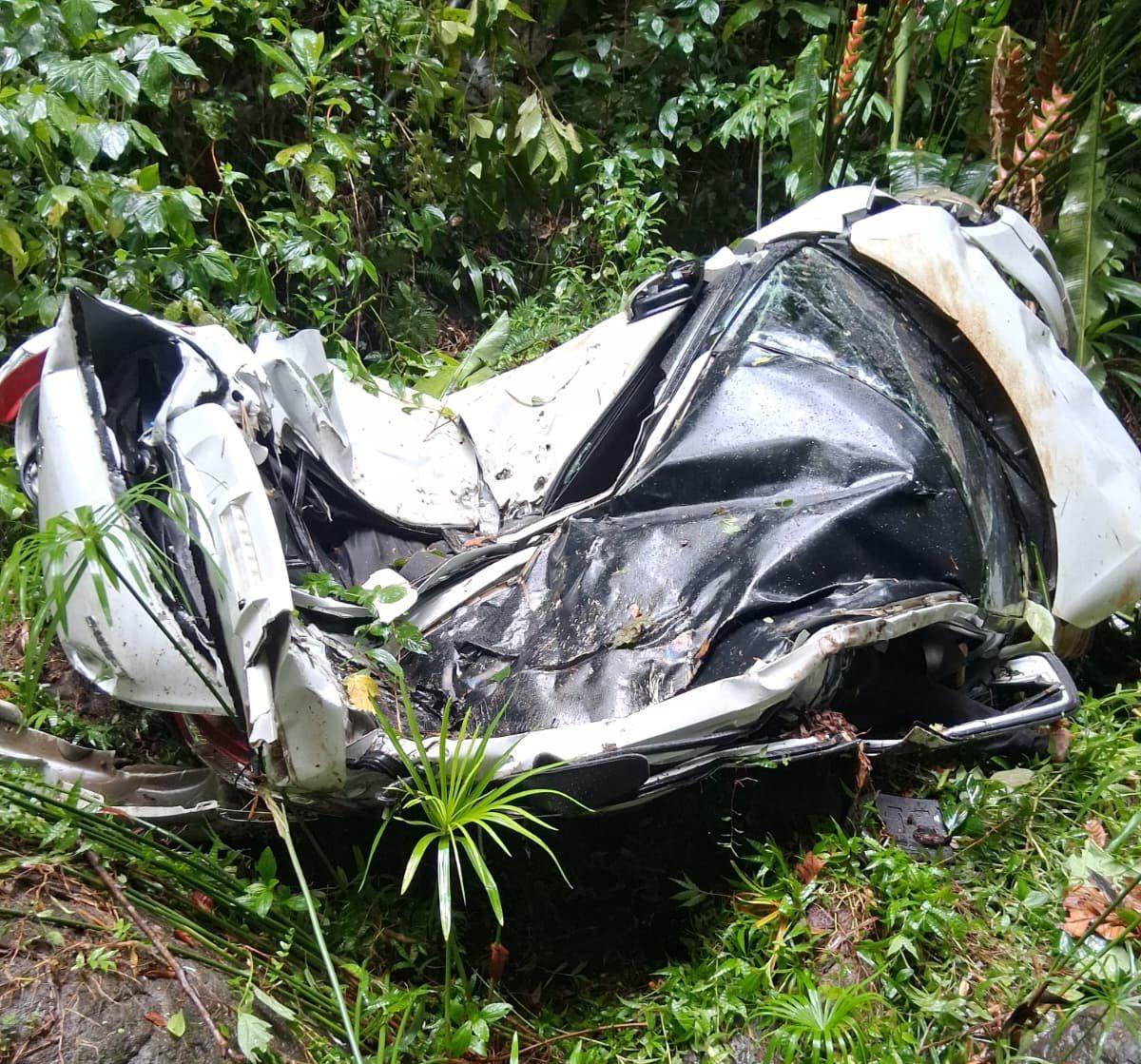
    A fatal road traffic accident that claimed the life of a local man has prompted an ongoing investigation by law enforcement authorities in the Commonwealth of Dominica. The incident unfolded shortly after 3:00 p.m. on Friday, May 22, 2026, in the community of Springfield, according to official statements from the island nation’s police force.

    Acting Assistant Superintendent Fixton Henderson, the police public relations officer, confirmed on Sunday that the victim has been formally identified as 44-year-old Kenworth Gordon, a resident of Springfield. Gordon was the only person inside his vehicle, a silver Suzuki Swift bearing the registration plate TS516, at the time of the crash.

    Preliminary findings from early investigative work show that Gordon was driving southbound along Imperial Road when for unknown reasons, his vehicle veered off the paved roadway and fell down a steep cliff adjacent to the route. The sudden plunge left Gordon with catastrophic, life-threatening injuries that proved fatal despite emergency response efforts.

    First responders from Dominica’s Fire and Ambulance Services were dispatched to the accident scene immediately after the crash was reported. Rescue crews worked to extract Gordon from the wreckage of his vehicle, after which he was rushed by ambulance to a nearby medical center for urgent care. Sadly, attending physicians pronounced Gordon dead at the facility the same evening the crash occurred.

    As of the latest update, officers from the Commonwealth of Dominica Police Force’s traffic division are continuing their probe into the exact circumstances that led to the fatal crash. Authorities have not yet released additional details on potential contributing factors, such as weather conditions, vehicle mechanical issues, or speed, and the investigation remains active and ongoing.

  • New Programme Promises Real Jobs for Young Belizeans in Trades

    New Programme Promises Real Jobs for Young Belizeans in Trades

    A groundbreaking eight-month apprenticeship initiative designed to place young Belizeans directly into skilled trades careers has officially launched at the Orange Walk Institute of Technical and Vocational Education and Training (ITVET), bringing tangible employment opportunities to the country’s youth workforce.

    Twenty aspiring tradespeople are already enrolled in the program, dubbed “Breaking Barriers”, which focuses on three high-demand skilled areas: air conditioning maintenance, refrigeration systems work, and electrical installation. By the end of the training cycle, participants will earn a Caribbean Vocational Qualification (CVQ) Level 2 credential in their selected field, a widely recognized certification that opens doors to regional employment.

    The project is a collaborative venture between Orange Walk ITVET and Belize’s Ministry of Education, with full funding provided through a grant from Canada’s Local Engagement Action Fund. According to the program’s project manager, planning for this workforce development effort has been years in the making. “Back in September last year we got the good news that we can apply for this grant, and we put all efforts to apply. And we were blessed to receive the grant from the Local Engagement Action Fund in Canada,” she shared in an interview following the official launch.

    Notably, two of the twenty current apprentices are young women, breaking traditional gender barriers in the skilled trades — both have already secured early internship placements with private sector companies ahead of their program completion.

    The program’s curriculum is structured to combine traditional theoretical instruction on the ITVET campus with immersive, on-the-job practical training hosted directly by local industry partners. This hybrid model was intentionally designed to address a common gap in vocational training: unlike many programs that only offer paper certification, Breaking Barriers is built to ensure graduates are fully job-ready from their first day of employment.

    For the initiative’s national coordinator, the impact of the program extends far beyond individual credentials. “What makes this programme especially meaningful is that it connects education directly with opportunities,” she explained, highlighting the program’s broader goal of strengthening Belize’s skilled workforce and reducing youth unemployment across the country.

  • Belizean Crime Scene Investigators Get a Look at How Europe Solves Crimes

    Belizean Crime Scene Investigators Get a Look at How Europe Solves Crimes

    From May 17 to 23, 2026, 22 police and forensic specialists from 12 Caribbean nations, including two representatives from Belize, wrapped up a week-long immersive study tour across Spain and France designed to upgrade regional crime investigation capacity. The exchange program, funded by the European Union and executed by UNDP Belize as part of the PACE Justice Project, builds on a foundational advanced forensic training course held in Barbados in 2025, extending the hands-on learning opportunity for regional law enforcement.

    Belize’s delegation included one seasoned crime scene investigator from the country’s National Forensic Science Service (NFSS) and one senior officer from the Belize Police Department. Over the course of the tour, the entire Caribbean cohort met with leading law enforcement and forensic experts from European agencies, gaining firsthand insight into how major transnational and complex criminal investigations are structured and executed across the continent. A core focus of the exchanges was exploring how cutting-edge digital technology is reshaping modern police work, closing gaps between regional practices and global innovation.

    Participants got to test and examine a suite of modern investigation tools that are increasingly standard across European law enforcement, including artificial intelligence-powered evidence analysis systems, virtual reality for crime scene reconstruction, and Geographic Information Systems (GIS) mapping technology. These tools are already streamlining workflows for European investigators, enabling more accurate crime scene mapping, faster evidence analysis, and more robust case building that holds up in judicial proceedings.

    For Belize specifically, this capacity building comes at a critical moment: the country has faced growing public pressure to improve the quality of criminal investigations and boost conviction rates for high-profile major crime cases. In an official statement released after the study tour concluded, the NFSS emphasized that international exchange and training programs like this are foundational to strengthening Belize’s broader criminal justice system. By integrating modern tools and evidence-based European practices, the service noted, Belize can increasingly rely on rigorous, sound scientific evidence to support both criminal investigations and prosecutions, ultimately increasing public trust in the country’s justice system. The PACE Justice Project organizers added that they plan to roll out follow-up training and knowledge sharing initiatives across Caribbean nations in the coming year to help participating agencies implement the new practices they learned during the tour.

  • Home Burgled in Crosbies; SUV Stolen

    Home Burgled in Crosbies; SUV Stolen

    A residential burglary in the Crosbies area has triggered an active investigation by local law enforcement, after intruders broke into a private residence while the homeowner was asleep inside the property.

    According to initial law enforcement accounts, the thieves did not only gain unlawful access to the home, but also made off with multiple personal items belonging to the resident, in addition to a silver Hyundai Santa Fe SUV that was taken from the location.

    Local police have issued a public appeal for community assistance, asking any residents or passersby who spot the stolen vehicle, or who hold any tips that could help advance the investigation, to contact the department at the dedicated line 562-5730.

    Preliminary reports confirm that the sleeping homeowner was not physically harmed during the break-in. As of the latest update, additional details about the incident, including potential clues about the suspects or the full list of stolen property, have not been released to the public pending ongoing investigative work.

  • Petition to reinstate death penalty surpasses 7,500 signatures

    Petition to reinstate death penalty surpasses 7,500 signatures

    A grassroots campaign to bring back capital punishment in Saint Lucia has rapidly built public support in the wake of a high-profile fatal shooting that has sent shockwaves across the Caribbean nation. As of the latest update, the online petition hosted on Change.org has collected 7,622 signatures, far exceeding the organizers’ initial 7,500 signature milestone, and campaign leaders are now preparing to deliver a formal formal appeal to the country’s parliamentary representatives.

    The petition, officially titled “Petition to Reinstate and Active-enforce Capital Punishment for Capital Murder and Heinous Offences in Saint Lucia”, was launched last Thursday. Its launch came just 24 hours after 24-year-old Joy St Omer — a budding entrepreneur, student, and mother of one — was killed in a shooting that has sparked national public outrage.

    In an update posted to the petition page, organizers announced the movement’s next steps: “Family, we have officially crossed 7,500 supporters! Thank you to everyone who signed and shared. We are moving to the next phase. I am currently compiling our final signature list and drafting the formal letters to be delivered to Members of Parliament so we can get this issue officially brought to the floor of the House of Assembly.”

    Campaign leaders are now pushing to expand their support base even further, setting a new target of 10,000 signatures to demonstrate the depth of public demand for action on citizen security and judicial reform. “Let’s hit 10,000 signatures next to show our leaders exactly how serious the community is about citizen security and justice!” the petition page reads.

    According to official police statements, the prime suspect in St Omer’s murder is her estranged husband, who has since turned himself in to authorities and remains in custody. Records confirm that a full protection order was already in effect against the suspect prior to the killing, with an active court case pending over allegations that he had already violated the terms of that order. St Omer had repeatedly contacted police to report concerns about the suspect, including making contact on the very day she was killed.

    Court documents show the suspect was arrested and charged in March 2026 with assault, criminal threats, and violation of the protection order following a complaint filed at the Anse La Raye Police Station. Bail was initially denied by the First District Court, but the suspect successfully appealed the decision to the High Court and was released on bail ahead of his trial. The circumstances of his release have sparked widespread criticism of gaps in the country’s judicial and law enforcement systems.

    While the call for reinstating the death penalty has resonated with large swathes of the public hungry for accountability, the movement has also drawn competing perspectives from community members who argue that harsher punishment will not address root failures in public safety. “Yes, the death penalty is punishment for such crime, but that doesn’t solve the issue. We have to focus on … preventative action, which is better response from the police and the judiciary system. If the system fail[s] our citizens, there should be serious repercussions,” one local Facebook user wrote. Other commenters have called for expanded early intervention services through family and community programs to prevent violent conflicts from escalating into fatal harm.

    As of publication, police investigations into St Omer’s murder are still ongoing.

  • Who cares for the carers? BCD wellness event may give answer

    Who cares for the carers? BCD wellness event may give answer

    Caregiving for a dependent family member, loved one, or ward is far from a simple undertaking. The constant physical, emotional, and mental demands of the role often leave caregivers struggling under the weight of their responsibilities, even as public focus almost always remains on the people receiving care rather than the people providing it. On Friday, a small but impactful event at a Christ Church garden centre sought to change that narrative, carving out dedicated space to honor, listen to, and support caregivers whose tireless work often goes unrecognized.

    Barbados TODAY reporters on site at Nature Care in Lowlands documented the event, a Mental Wellness Day hosted by staff from the Barbados Council for the Disabled (BCD) and led by counselling psychologist Janelle Skinner, who herself lives as a paraplegic. Drawing on both her professional expertise and personal experience as a disabled person relying on care from her mother, Skinner opened with a frank discussion of the little-discussed crisis of caregiver burnout.

    “Caregiving drains you in every way – emotionally, physically, mentally – and burnout is a very real experience that far too many caregivers go through,” she explained. Skinner emphasized that caregivers cannot sustain their work without intentional breaks, even short ones, that let them step away from their role and recharge. “Too many caregivers operate in constant survival mode. They pour every bit of energy into the person they care for and completely ignore their own needs. They never stop to ask, ‘What will happen to the person I care for if something happens to me?’ That’s why creating spaces where caregivers can receive care themselves is so critical.”

    Speaking from her own experience, Skinner noted that she has learned to spot early signs of burnout in her mother, Joan Skinner-Graham, who has served as her primary caregiver for 26 years. “I do everything I can do independently to reduce her load, but there are some things I cannot do on my own. The key is being attentive to those subtle signs that fatigue is building, both for the disabled person and the caregiver themselves.”

    Skinner also pointed to the importance of professional support and strong personal networks, sharing that she sees a therapist herself to manage the emotional weight of her work and personal circumstances. “There is no shame in therapy – it helps. Having a support network means you always have people you can turn to, people who can step into the caregiving role temporarily so you can step back, reset, and refocus,” she said.

    For Joan Skinner-Graham, the journey of caregiving began with a devastating phone call 26 years ago, when her daughter was on holiday in New York. “My niece called and said she had bad news. Janelle was in the hospital, paralyzed. I got on a flight the very next day and stayed with her until she could come home,” she recalled. Through decades of care, she has held fast to a core principle: never let the person you care for feel like a burden.

    “When you care for a person with a disability, you must never let them see your frustration or anger,” she said. “They will internalize that, think they are a burden, and that sets back their own progress. If you feel overwhelmed, step away for a few minutes, take a breath, and come back when you are grounded. That small break makes all the difference.”

    Now retired, Skinner-Graham admitted that the long-term weight of caregiving brings quiet worries, especially as she ages. “Many nights I pray for strength to be here for my daughter. What I’ve seen over the years is that unaddressed stress kills caregivers. Too many people bottle up their feelings instead of reaching out, and that stress makes them sick, and then there is no one left to care for them. That’s why we need more accessible counselling and support for caregivers – we need spaces to talk through what we’re feeling instead of holding it all in.”

    When it comes to balancing daily care with other life responsibilities, Skinner-Graham relies on intentional planning and unapologetic self-care. “I plan out my days, and I stick to my plan. I get Janelle set up for her work day, handle household tasks, and when I need a break, I tell her straight: this is mommy’s time. I sit down, play my game, and recharge before I come back. There’s no shame in taking that time for yourself.”

    BCD President Patricia Padmore-Blackman, who is blind and cares for a disabled son, echoed that call for intentional self-care for caregivers. “My son has been with me since birth, so it can feel like I never get a break. There are definitely days when I need to step away,” she said, crediting her own support network of family, friends, and professionals for helping her sustain her role over decades. “That support is non-negotiable. We can’t do this alone.”

    BCD Operations Manager Roseanna Tudor explained that Friday’s gathering was designed specifically to prioritize the mental and emotional wellbeing of BCD’s own frontline staff, who navigate high-stress, emotionally demanding work supporting disabled people and their families every day. “This event was about reducing emotional fatigue, building stronger connections among staff, and creating a culture of psychological safety,” Tudor said. “When we invest in our staff’s wellbeing, that directly improves the quality of the services we deliver. We need workplaces that prioritize care for the people who care for others, and I encourage every organization to host similar events for their teams.”