分类: society

  • Mother of Two Makes Urgent Appeal for Kidney Donor

    Mother of Two Makes Urgent Appeal for Kidney Donor

    Laurin Williams, a dedicated mother raising two children, finds herself in a life-or-death battle against end-stage kidney disease, and she has issued an urgent public appeal to find a compatible living kidney donor that will allow her to undergo a life-sustaining transplant.

    Currently, Williams relies on regular dialysis treatments to manage her condition. While this invasive therapy has kept her stable in the short term, medical professionals universally agree that dialysis cannot serve as a permanent fix for her declining kidney function. According to leading clinical guidance, a successful kidney transplant remains the only intervention that can give Williams the opportunity to reclaim a long, healthy, and productive future.

    Williams’ appeal specifically centers on finding a living donor, a choice that carries significant clinical benefits. Medical research consistently shows that living donor kidney transplants typically have higher long-term success rates compared to transplants from deceased donors, and donors face minimal long-term risk: people born with two kidneys can lead fully normal, healthy lives after donating one to a person in need.

    Williams’ family and close supporters emphasize that a successful transplant would do more than just save her life—it would allow her to continue being the active, caring parent her children need, and restore the daily stability that her illness has stolen from their household. With her condition still categorized as critical, her loved ones are urging any member of the public who is willing to help to step forward and undergo simple compatibility testing.

    For any person interested in learning more about donor eligibility or exploring whether they may be a match for Williams, they can reach out directly to Williams at (268) 721-4508. Supporters stress that this one act of generosity would not just change Williams’ life forever—it would bring renewed hope to her entire family, who are holding out for a positive outcome to this urgent search.

  • Powering a return to normal life

    Powering a return to normal life

    Nearly six months after Category 5 Hurricane Melissa carved a path of destruction across western Jamaica’s parishes, school leaders from storm-ravaged communities gathered Tuesday at the National Education Trust (NET) headquarters in St Andrew to receive a life-changing donation: 20 portable dual-fuel generators provided through a collaborative partnership between NET and the Mediterranean Shipping Company (MSC) Foundation.

    For educators and students still picking up the pieces of their learning environments after the devastating storm, the new power sources are far more than emergency equipment. They represent a critical step toward restoring normalcy, renewing hope, and securing stable, functional learning spaces for thousands of children displaced by the hurricane.

    Ryan Stone, acting principal of St Elizabeth’s Mulgrave Primary School, one of the beneficiary institutions, called the donation transformative. His campus suffered catastrophic damage when Hurricane Melissa’s high winds ripped off large sections of the school’s roof, destroyed furniture and learning materials, knocked down perimeter fencing, and fried the campus’s entire electrical system. While the school has partially reopened, students have continued to grapple with lingering trauma, requiring ongoing psychosocial support from visiting psychologists, guidance counselors from neighboring schools, and specialists from Jamaica’s Ministry of Health and Wellness.

    Stone recounted that some students have described the storm as “wicked” or “gluttonous,” with one young student telling counselors, “She ate up everything.” A recent cold front bringing heavy winds even triggered widespread re-traumatization, forcing school leaders to call in additional support teams. Against this backdrop, Stone said the generator donation is a much-needed boost to the school’s long recovery process.

    “ The generator represents more than just power — it symbolises hope, resilience and a renewed opportunity for our students to learn in a safe and stable environment,” Stone told the Jamaica Observer on the sidelines of Tuesday’s handover ceremony.

    Victoria Gooden-Green, vice-principal of Darliston Primary School in Westmoreland, echoed that gratitude, outlining the daily struggles her staff and students have faced since the storm destroyed their school’s roof. Currently, classes for the campus’s most vulnerable group, grade six students preparing for national exams, are held in two temporary tents donated by UNICEF — and not all students can attend in-person classes daily. Without consistent power, the school has also been unable to support digital learning activities that have become a core part of modern education, from streaming educational content to charging student devices.

    “Having the generators, that will help us immensely to do what we have to do,” Gooden-Green said, noting that many students lost everything when the storm hit their homes and communities, and continue to live with the lingering emotional impact of the disaster. “It’s not an easy time for us but we know that the toughest soldiers get the strongest fight. We will bounce back because we are resilient, and no matter how dark it seems, the sun will shine again.”

    The Generator Donation Initiative was launched in direct response to the widespread devastation caused by Hurricane Melissa in October 2023. In the aftermath of the storm, NET reached out to the MSC Foundation to mobilize support for the hardest-hit education institutions, and the partnership ultimately resulted in 20 15,000-watt DuroMax dual-fuel generators being procured for the affected schools.

    Speaking at the handover ceremony, Jamaica’s State Minister for Tourism Tova Hamilton praised the cross-sector collaboration, framing the donation as a model for community-focused recovery. She emphasized that public-private partnerships like this one deliver tangible benefits to communities through targeted educational support, infrastructure investment, and capacity building that strengthens national resilience.

    “We see today not as the end of a gesture but as the opening of a door — a door to stronger partnership, deeper engagement, and shared growth,” Hamilton said. “On behalf of the Government and people of Jamaica, I express sincere appreciation to MSC Foundation and MSC Mediterranean Shipping Company Jamaica Limited for this meaningful intervention. This is a demonstration that tourism at its best is a force for national development, strengthening communities, supporting education and building resilience. Jamaica is grateful, Jamaica remembers, and Jamaica looks forward to even stronger partnership in the months and years ahead.”

  • More than 600 homeless people receive Easter treat from Kiwanians

    More than 600 homeless people receive Easter treat from Kiwanians

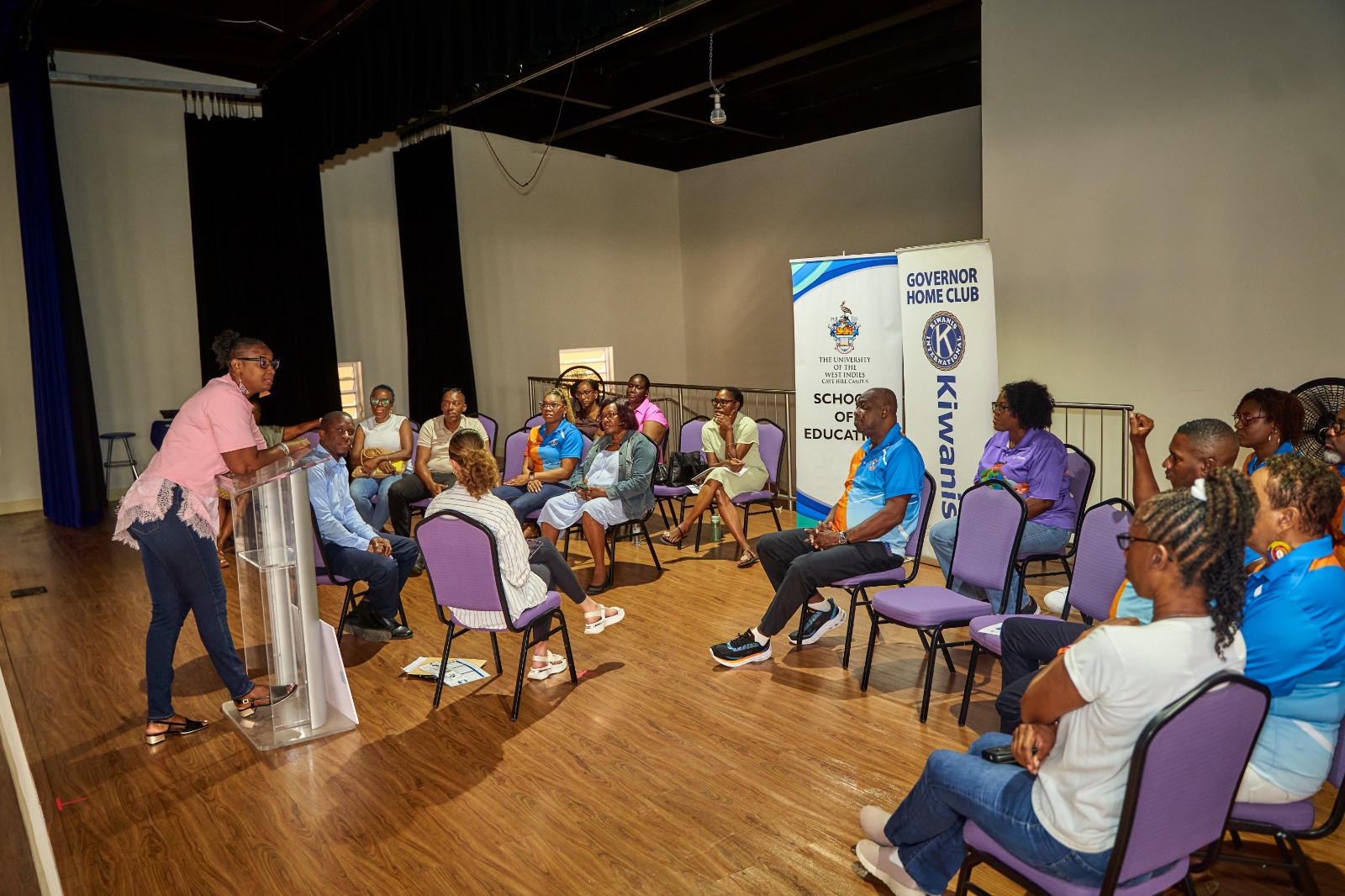
    On the Easter holiday Monday, hundreds of vulnerable people across Kingston and St Andrew received a heartfelt boost of holiday cheer through a large-scale community outreach initiative organized by Kiwanis Club Division 23 East. The club’s annual Easter Breakfast for the Homeless program brought together a coalition of local businesses, municipal authorities and medical providers to deliver hot meals, traditional holiday food and free healthcare services to more than 600 people living in shelters and on the streets of the Jamaican capital.

    Volunteers and organizers began their work before dawn, with teams fanning out across multiple districts of the city to reach people wherever they were. Audrey Brown, Lieutenant Governor for Kiwanis Division 23 East, shared that preparation and distribution kicked off at 5:30 am, with separate teams covering zones including Dumfries, New Kingston, Cross Roads, Papine, Liguanea, Half-Way-Tree and downtown Kingston. Every public shelter in the area was included in the outreach, with services delivered to the Desmond McKenzie Transitional Centre, the Church Street Temporary Shelter, the Marie Atkins Night Shelter and the Denham Town Golden Age Home. Brown emphasized that the effort was not limited to shelter residents – unhoused people living on city streets were also priority recipients of support.

    For many recipients, the initiative represented far more than a free meal. Fredericka, a 78-year-old resident of the Marie Atkins Night Shelter who has lived at the facility for more than a year, called the outreach an incredible comfort. “As an elderly person over 78 years old it is hard for me to go out and get these things, so when they come here it is an extreme relief for me,” she shared, expressing deep gratitude for the program. Brown added that for many of the people served, the traditional bun and cheese provided by the organizers is the only special Easter meal they will access all year. “All the clubs decided to come together and do one massive project. And it has been so fulfilling to those who are on the streets and in the shelters. Our less fortunate, at times we take them for granted — and for some, this is the only bun and cheese that they will ever have. To us, that is something that we see fit to do. It’s something that means a lot to us,” Brown said, noting the work aligns with the Kiwanis mission of “Serving children in need, one community at a time” by lifting up vulnerable members of the community.

    Beyond food support, the initiative integrated free medical care to address unmet health needs among the unhoused and low-income shelter population. Dr. Andre McDonald, chief medical officer at lead sponsor Suretime Emergency Medical Services, explained that at least 50 people received on-site medical check-ups and assistance during the outreach. He framed the holistic effort as a demonstration of a complete definition of health, noting that wellness extends far beyond physical care to include mental, social, financial and even spiritual well-being. “We are here to ensure that people are okay,” Dr. McDonald said.

    Club President Carolyn McDonald Riley credited the broad cross-sector collaboration for the initiative’s success, noting that more than 300 holiday buns were donated by participating partners. Suretime Emergency Medical Services served as the lead sponsor, covering costs for cheese and providing on-site medical and security services. Additional in-kind and financial support came from a range of local partners: Island Car Rentals donated two buses to transport volunteers and supplies across all distribution sites; the Kingston and St Andrew Municipal Corporation provided on-ground guidance and coordination at the first distribution stop; Flavor Fresh and Newtown Bakery donated all 300 plus buns for the meals; Jet Tour provided gap funding to cover costs not covered by other sponsors; and Lifespan donated bottled water for the event.

    The volunteer-led outreach has been celebrated as a powerful example of community action to address food insecurity and unmet care needs among Kingston’s most vulnerable populations ahead of the Easter holiday, with organizers noting plans to continue expanding the annual initiative in coming years.

  • ‘We have a bishop!’ Colin Reid elected Anglican shepherd of Montego Bay

    ‘We have a bishop!’ Colin Reid elected Anglican shepherd of Montego Bay

    In a landmark decision announced this Wednesday, the 155th synod of the Anglican Church in Jamaica and the Cayman Islands has voted to select the Very Rev Colin Reid as the next bishop of Montego Bay.

    Reid, who currently serves as senior Canon of the Cathedral of St Jago de la Vega in Spanish Town, secured a decisive victory in the election, earning 75 votes from participating clergy and 101 votes from lay representatives. The strong cross-faction support reflects broad confidence in his leadership within the regional church community.

    He will step into the role vacated by the Right Rev Leon Golding, who was elected Bishop of Jamaica and the Cayman Islands last year. Outside of his ecclesiastical work, Reid is a family man, married to Carol Reid, and the couple share three children together. The election marks a new chapter of leadership for the Montego Bay diocese as it prepares for Reid’s official installment in the coming months.

  • Police seize ammo in Kingston operation

    Police seize ammo in Kingston operation

    KINGSTON, Jamaica — In a targeted early-morning crackdown driven by intelligence gathered by law enforcement, Jamaican police recovered a cache of unauthorised ammunition and firearm components at an address in Kingston 2 on Wednesday.

    The operation, which unfolded between 5:30 a.m. and 7:00 a.m. at a property situated along Mountain View Avenue’s Jarrett Lane segment, uncovered five live 5.56-caliber rounds, five spent bullet casings, an M16 rifle magazine, and an M16 hand guard, according to official law enforcement updates.

    Investigative reports detail that the illicit items were concealed inside a black plastic bag, which was stashed in a hollow block cavity of an unfinished structure on the site. Despite the successful seizure, no suspects have been taken into custody as of the latest updates, and the investigation remains active.

    Law enforcement officials have highlighted that the location of the recovery is an area of repeated interest and ongoing concern for local policing teams. The neighborhood has long been tied to organized gang activity, and investigators confirmed Wednesday that the seizure is expected to hinder the operational capabilities of a local criminal group based out of Jarrett Lane.

    The find marks a significant pre-emptive win for police, who have stepped up targeted intelligence-led operations across Kingston to disrupt weapons trafficking and prevent gang-related violence before it occurs.

  • JN and partners support JCF to reduce motorcycle deaths

    JN and partners support JCF to reduce motorcycle deaths

    KINGSTON, Jamaica — As motorcycle-related road deaths continue to climb as one of the fastest-growing categories of traffic fatalities worldwide, a new targeted capacity-building program has kicked off in Jamaica to equip frontline law enforcement with the tools to reverse this dangerous trend. The three-day training focused on proper helmet regulation and evidence-based road safety practices, hosted for 27 officers from the Jamaica Constabulary Force’s (JCF) Public Safety and Traffic Enforcement Branch (PSTEB), grew out of a multi-party partnership framework signed just months earlier in June 2025.

    The program is led by the National Helmet Wearing Coalition (NHWC), an initiative run by the JN Foundation in coordination with Jamaica’s National Road Safety Council. It forms a core part of a formal Memorandum of Understanding between the JCF, the Global Road Safety Partnership (GRSP), the NHWC, and the FIA Foundation, all aligned to strengthen enforcement of national motorcycle helmet laws. Speaking at the program’s opening, JN Foundation General Manager Claudine Allen emphasized that police officers occupy a unique position of trust and respect across Jamaican communities, giving them unmatched power to drive lasting cultural change around road safety.

    Allen urged officers to leverage that community influence to cut preventable motorcycle deaths, arguing that progress in this work will not be measured by citation volumes, but by the number of lives spared from tragedy. “Every time you put on your uniform, you carry an authority that can influence behaviour,” she told attendees. “Success will not be measured by the number of tickets issued but by the number of lives saved.” Allen encouraged participants to model safe behavior themselves, engage with motorists respectfully, and maintain consistent professionalism in all enforcement interactions.

    GRSP Chief Executive Officer Dave Cliff echoed Allen’s remarks, praising Jamaica for taking bold, targeted action to address a public health crisis that impacts nations across the globe. He called the collaborative partnership with the JCF a direct, high-impact investment in saving Jamaican lives, noting that upskilling frontline officers in enforcement, communication, and technical road safety knowledge is one of the most effective interventions any country can make to reduce road fatalities. Cliff also highlighted that Jamaica’s intentional investment in training and capacity building positions the island as a regional leader among developing nations grappling with similar road safety challenges.

    PSTEB head Senior Superintendent Lloyd Darby laid out the urgent scale of the crisis motivating the new initiative, sharing stark data on decades of road deaths in Jamaica: between 2015 and 2025, more than 4,480 people lost their lives in road collisions across the country. Of those fatalities, 1,356 were motorcyclists and an additional 159 were motorcycle passengers. In 2025 alone, 111 motorcyclists died in preventable crashes.

    Darby outlined the JCF’s ambitious public safety targets: the force aims to cut total annual road deaths to fewer than 300 by 2026, a milestone that has only been hit seven times in the last 50 years. The JCF’s broader strategy includes a 50% reduction in motorcycle fatalities and a 10% drop in deaths across other road user categories, achieved through a combination of zero-tolerance enforcement of existing traffic laws, expanded public outreach, and ongoing upskilling training for officers. Darby also noted that enforcement efforts have already ramped up significantly: in the first months of 2026 alone, JCF officers have seized 786 non-compliant motorcycles, compared to 336 seizures in all of 2025.

    For officers on the ground, the training has already delivered tangible, actionable skills. Sergeant Shereen Chambers, a sub-officer leading the Metro Quick Response Team, called the program both timely and practical. “I have learnt a lot; some things I knew and some things were new,” she said. “I can now identify certified helmet elements, and I will pass this knowledge on to my juniors and to motorists I engage with daily.”

    The 27 officers who completed the initial training will go on to train fellow JCF members across the country, expanding the program’s reach exponentially. Partners involved in the initiative emphasize that the gap between formal road safety legislation and consistent on-the-ground enforcement is a key barrier to progress, and this training program is designed to close that gap. Meaningful, long-term change, they note, will depend on consistent, sustained application of the skills officers gained during the workshop.

    Closing the opening session, Allen urged trainees to carry a renewed sense of purpose forward in their work. “Your interventions may prevent tragedies you will never see. But your impact will be lasting,” she stressed.

  • Mom not told son’s leg ‘amputated’ at PMH

    Mom not told son’s leg ‘amputated’ at PMH

    A devastating medical negligence case involving a teenage Bahamian national rugby player has taken a critical turn, with the Supreme Court of the Bahamas upholding a default judgment that finds the Public Hospitals Authority (PHA) liable for damages arising from the un-consulted partial amputation of the athlete’s leg. The ruling marks the end of years of procedural delay and clears the path for a formal hearing to determine the size of the compensation package for 19-year-old (at time of ruling) Miguel Russell, who suffered life-altering complications following routine treatment for a sports injury.

    The incident dates back to when Russell, a minor representing The Bahamas in international rugby competition, sustained a dislocated knee during a match and was admitted for treatment at Princess Margaret Hospital (PMH), the country’s leading public healthcare facility. After being placed on dialysis following his initial procedure, Russell’s condition rapidly deteriorated. According to the formal claim filed against the PHA, medical staff at PMH proceeded to amputate a portion of Russell’s leg without notifying or gaining consent from his mother, who was his legal guardian at the time of the procedure.

    As his infection spread and wounds failed to heal, Russell’s family eventually arranged for specialized care in Cuba, where attending clinicians documented extensive tissue necrosis, widespread bacterial infection, and catastrophic open wounds that aligned with the young athlete’s allegations of improper care. What followed after the family filed suit was years of unexplained procedural inaction on the part of the PHA, which has drawn sharp criticism from the court.

    Court records show the initial writ of summons was first filed in December 2017, with an amended complaint submitted just two months later in February 2018. The PHA entered a formal appearance in the case in April 2018, but took no substantive steps to mount a legal defense for more than six years. Russell’s legal team finally submitted a full statement of claim in September 2024, which was served to the PHA shortly after. While the PHA acknowledged receipt of the claim the following month, it still failed to file a formal response or defense.

    By January 2025, Russell’s legal team moved for a default judgment, which was granted by the court during a March 19 2025 hearing. Notably, PHA representatives attended the hearing but made no formal objection or request for an extension of time to prepare their defense. It was only after the default judgment was entered that the PHA attempted to reverse the ruling, filing an application to set aside the judgment and revive its defense.

    In its application, the PHA claimed it had a viable defense to the negligence allegations, blaming its years-long delay on logistical hurdles in obtaining Russell’s medical records from Cuban healthcare providers. The authority also argued that Russell’s severe complications stemmed from the initial severity of his rugby injury, not negligent care, and maintained that he had received appropriate, evidence-based treatment at PMH.

    Russell’s legal team pushed back against the PHA’s claims, noting that the authority already had full access to all relevant domestic medical records and had repeatedly missed opportunities to move the case forward over the preceding six years. They argued the PHA had no substantive defense to the core allegations and had intentionally relied on delay to avoid liability.

    In her ruling, Assistant Registrar Akeira D Martin sided entirely with Russell, applying the country’s Civil Procedure Rules to evaluate whether the PHA met the legal requirements to set aside a default judgment. To successfully reverse a default ruling, defendants must demonstrate they acted promptly after the entry of judgment, provided a credible explanation for their prolonged inaction, and prove they have a genuine prospect of successfully defending the claim at trial. The PHA failed to meet all three criteria, Martin found.

    The ruling specifically notes that the PHA did not act with any urgency to request medical records, with key documentation only being requested years after the PHA first entered the case. The court also confirmed that many of the records the PHA claimed it needed were already in its possession long before the default judgment was granted. Martin further found that the PHA’s proposed defense consisted almost entirely of general denials of negligence, with no substantive response to the core claims: that Russell developed preventable bedsores during his stay at PMH, that the partial amputation was performed without required consent from his mother, and that he was never provided adequate medical guidance about his worsening condition.

    By contrast, the court highlighted that Russell’s account of events was fully supported by independent medical evidence from Cuban clinicians, whose documentation of severe infection and tissue damage aligned perfectly with his allegations of improper care. Martin emphasized that the court was not making a final ruling on the underlying negligence at this procedural stage, but found that the PHA had failed to demonstrate it had a strong enough defense to justify reopening the case. The court also refused to grant the PHA an extension of time to file a defense, dismissing the authority’s application in full and ordering the PHA to pay all legal costs incurred by Russell to date.

    With liability now effectively settled (barring a successful appeal by the PHA), the case will next move to a directions hearing for the formal assessment of damages, where the court will determine how much compensation the PHA must pay Russell for his life-altering injuries and ongoing harm. This phase of the proceedings is expected to include testimony from independent medical experts and a detailed review of the care Russell received at PMH and the progression of his condition following the initial injury.

  • NWC eases water restrictions on Constant Spring network

    NWC eases water restrictions on Constant Spring network

    KINGSTON, Jamaica — Thousands of residential and commercial customers relying on the Constant Spring water distribution network across Kingston and St. Andrew will soon regain full, uninterrupted water access, after Jamaica’s National Water Commission (NWC) announced it will roll back emergency supply restrictions starting Wednesday, April 8, 2026.

    The policy shift comes after two consecutive weeks of consistent, widespread rainfall across the island’s catchment areas, which has reversed months of declining water reserves at the critical Hermitage Dam. Prior to the rainy spell, storage levels at the dam had dipped below 65 percent, forcing the NWC to implement rolling outages and targeted supply cuts to prevent a total depletion of reserves. Steady inflows over the past fortnight have pushed storage volumes up to roughly 90 percent of total capacity, creating enough of a buffer to resume standard service.

    In an official media statement published this week, NWC’s Acting Vice President for Operations Herman Fagan emphasized that the decision to relax restrictions honors the commission’s public promise to restore normal service as soon as hydrological conditions improved. “This adjustment is not just a response to recent rainfall—it’s a commitment we made to the public that we would act quickly when conditions allowed,” Fagan explained. “The improved inflows have given us the operational buffer we need to return to regular 24-hour supply for all customers connected to the Constant Spring system.”

    While welcoming the end of restrictions, Fagan urged all customers to maintain long-term water stewardship habits to reduce the risk of renewed shortages during the upcoming dry season. Key recommended practices include routine water conservation, immediate reporting of broken infrastructure to NWC teams, and prompt repairs to leaks on private property, which account for a significant share of unaccounted-for water loss across the island.

    The NWC added that it will maintain continuous real-time monitoring of dam storage levels and inflow rates through the coming months. If precipitation drops off sharply and reserves decline again during the projected dry period, the commission did not rule out reintroducing targeted supply restrictions to protect reliable water access for all communities across the service area.

  • ‘We are in jeopardy’

    ‘We are in jeopardy’

    On a grey, rain-threatened Easter Monday, residents of Amity Hall’s Gazer Road neighborhood in St James, Jamaica, surveyed the muddy wreckage of their properties and braced for more disaster. Just 24 hours after heavy downpours swept through parts of the parish, the community remained on edge: with the Montego River still choked with unremoved debris, another storm could bring a repeat of Sunday’s destructive flooding, leaving families displaced for a second consecutive day.

    Sunday’s flood, which sent river water pouring over the banks and into residential properties, stirred up harrowing memories from last October’s Category 5 Hurricane Melissa. When the waters receded, they left behind thick layers of mud, tangled debris, and new losses that have set back slow, already fragile recovery efforts for local families.

    Janet Dawkins, one of the hardest-hit residents, spoke with the Jamaica Observer amid the clean-up, her voice frazzled with worry. ‘People’s lives are in jeopardy, we are in jeopardy. The water flows right around our homes; we need help,’ she said, repeating her fear as dark storm clouds gathered overhead.

    Dawkins explained that the small bridge connecting Gazer Road to the rest of Amity Hall suffered major damage in Sunday’s flood. If residents had not worked through the day to clear broken debris, the crossing would have been completely cut off, leaving the community isolated. ‘We cut up the debris with saws so we could get across. We packed it ourselves yesterday just to be able to leave the area,’ she added.

    Local residents have pinned the blame for the repeat flooding on the buildup of trees and debris left uncleared in the Montego River since Hurricane Melissa struck last fall. That debris has piled up against the bridge, acting as a makeshift dam that forces rising flood waters to divert into the surrounding neighborhood instead of flowing downstream. For Dawkins, the damage went far beyond the flood that soaked her home: she lost all the building materials she had stockpiled to rebuild her small on-site shop, which was first destroyed in the hurricane.

    ‘I had stone and sand, everything washed away. Half my building blocks got carried off by the river; the impact is devastating,’ she said dejectedly. ‘I put up a new stall just three weeks after the storm, and yesterday the river came down and knocked it right down.’ Dawkins has joined her neighbors in an urgent appeal for authorities to clear the river, clearing the debris that puts the community at constant risk of repeated flooding. ‘We want help, we need help. I need help to rebuild my shop, and we need help to get the river flowing again. It can’t stay like this,’ she said.

    For Mark Samuels, another Gazer Road resident, Sunday’s flood put his partner and young granddaughter in danger. Samuels was not home when waters rose to nearly two feet inside his house, and neighbors had to step in to evacuate his family before he returned after 8 p.m. When he arrived, he found his entire home — including the small shop he runs from the property — coated in mud and filled with debris. Samuels and his family spent most of Easter Monday shoveling muck out of their property, and the constant threat of future flooding has left him under crippling mental stress. The blocked section of the bridge sits just meters from his back door. ‘I know that when it rains, I can’t sleep. I’m always watching, always ready to run. I worry all the time about my family, and we are human beings too,’ he said.

    Tameika Brown, another resident who spent all of Sunday and Monday cleaning up her flood-damaged home, said the disaster has reawakened the trauma of Hurricane Melissa. She was at church when Sunday’s rains began, and returned home late to find the same destruction she had worked for months to recover from. ‘It’s not a good feeling. It brings back all the trauma from Melissa, and it puts you right back in that place of being traumatized all over again. It’s not good, but this is our life now,’ she said resignedly.

    Michael Allen, councillor for the Somerton Division, told the Observer he has been pressing authorities to clear the river channel since Hurricane Melissa passed last year. ‘Right after the hurricane, the whole river was blocked and families were already flooded out,’ he explained. Allen confirmed that clearing the Montego River falls under the responsibility of Jamaica’s National Works Agency (NWA), and he has repeatedly reached out to the agency to request cleanup crews. He also contacted Edmund Bartlett, Member of Parliament for St James East Central, who dispatched a tractor to the site — but heavy machinery was not suited to the work and could not clear the blocked channel.

    Allen followed up three weeks ago to alert Bartlett that the tractor had failed, warning that any future rain would trigger flooding if the river was not cleared. Now, he says, his warning has come true. Beyond the damage to homes, Sunday’s flood also destroyed a section of Gazer Road that Allen had recently lobbied to repair at a cost of J$3.5 million. Work on the road was just completed last week. ‘Last week they finished the front section,’ he said wistfully.

    Allen confirmed that 10 homes were directly impacted by Sunday’s flooding, and he has joined residents in calling for urgent cleanup of the river bed before more severe damage occurs. ‘If they had come when I called first, this would never have happened. The flood waters pushed the accumulated debris down to the bridge, and that’s when it flooded the whole neighborhood. Now residents are left to pick up the pieces,’ he said.

  • Court appearance for soldier charged in girlfriend’s murder delayed to Friday

    Court appearance for soldier charged in girlfriend’s murder delayed to Friday

    MANCHESTER, JAMAICA – The first court hearing for a Jamaica Defence Force (JDF) service member accused of murdering his romantic partner in a brutal domestic incident in Manchester last week has been rescheduled for Friday, after a last-minute delay pushed the originally scheduled Wednesday appearance.

    Twenty-seven-year-old Damanice Tyrone Williamson, the accused soldier, was set to face a preliminary hearing at the Manchester Parish Court this week. But when assembled reporters arrived to cover the high-profile case, the defendant’s legal representative, attorney Norman Godfrey, confirmed that proceedings would be pushed back to the end of the week.

    The charges against Williamson stem from the fatal killing of 29-year-old Tanzanya Dunkley, which took place at a residential property in the Three Chains community of Manchester. Authorities confirmed that Williamson has confessed to the killing, which unfolded during a verbal confrontation between the pair. But the details of his confession have sent shockwaves across the island nation: an anonymous police source briefed on the investigation told local media that Williamson claimed an unknown “voice” commanded him to carry out the deadly attack.

    According to the police source’s account of the confession, the confrontation began when Dunkley made the decision to end her relationship with Williamson. In response, the soldier grabbed her mobile phone; when Dunkley held onto him to retrieve the device, Williamson says the voice ordered him to kill her. He then picked up a knife and sliced her throat, the confession alleges.

    Law enforcement has also released additional chilling details about the moments leading up to the killing. Before the attack, they confirmed, Williamson approached Dunkley’s 12-year-old daughter, told her he needed to speak privately with her mother, and directed the child to go upstairs to the upper level of the family home. Moments later, he murdered Dunkley before fleeing the property.

    Neighbors who were in the area that Friday afternoon corroborated the timeline, telling local reporters they heard loud screams coming from the residence around 3 p.m. Shortly after, they saw a man matching Williamson’s description running from the home, his clothing covered in what witnesses described as blood.

    In the aftermath of the killing, a second video has also spread widely across Jamaican social media, adding more fuel to public outcry. The footage, which was reportedly filmed inside the Mandeville Police Station after Williamson was taken into custody, shows a man believed to be the accused holding what looks to be a knife, begging responding officers to shoot and kill him on the spot. The clip has now gone viral, drawing tens of thousands of views and intense public comment.

    The brutal killing has already reignited long-simmering national conversations about the pervasive crisis of domestic violence in Jamaica, a problem that advocacy groups have repeatedly highlighted as requiring urgent systemic intervention. As the public awaits Williamson’s rescheduled court appearance this Friday, community leaders and anti-violence activists continue to call for greater action to address gender-based harm across the country.