分类: society

  • Blending Traditions: Planning a Multicultural Wedding in 2026

    Blending Traditions: Planning a Multicultural Wedding in 2026

    As global mobility and digital connection break down geographic and cultural barriers, more and more couples from differing cultural, religious and traditional backgrounds are uniting in marriage — turning their weddings into far more than a celebration of romantic love. These events are joyful merging of two personal stories, two family lineages, and often two distinct faiths, bringing a rich depth of meaning that sets them apart from homogeneous cultural ceremonies. Yet for all their beauty, multicultural weddings present a unique, common question: how can couples honor both partners’ cultural identities fully, without leaving one side feeling sidelined or their traditions diluted?

    Multicultural marriages have grown steadily more common in recent decades, and this trend shows no sign of slowing. Widespread access to international travel, cross-border career opportunities, and digital dating platforms that connect people across continents have created more space for intercultural love to bloom. Today’s couples increasingly want their weddings to reflect not just their shared future, but the unique individual identities each partner brings to the relationship. When planned with intention and care, these events stand out as some of the most personal, memorable and meaningful wedding celebrations possible.

    Historically, the most common approach for intercultural couples was to host two separate wedding events: one dedicated to each culture’s religious or traditional rituals. This model remains a perfectly valid and effective choice today, particularly when certain ceremonies are sacred, require a specific structure, or are too lengthy to combine comfortably. However, a growing number of modern couples are opting for a more integrated alternative: a single, thoughtfully designed celebration that weaves both partners’ cultural traditions together in a seamless, respectful way.

    The first step to building a successful multicultural wedding is figuring out which structure aligns best with the couple’s values and circumstances. Couples need to weigh whether two distinct ceremonies will feel more authentic to their backgrounds, or if one combined event will better reflect the unified dynamic of their relationship. Key practical considerations include logistics, travel requirements for family members, visa processes, destination plans, overall timing, and available budget. A rising middle ground gaining popularity particularly in popular wedding destinations like Jamaica is the multi-day wedding weekend: couples can highlight one culture during a welcome event, the other during the official ceremony, and center both shared identities during the main reception.

    Honoring both cultures relies on intentional inclusion, rather than last-minute token gestures. Couples can weave meaningful traditions into every layer of the wedding experience, from the structure of the ceremony and musical selections to the menu, wedding attire, decor, core rituals, and evening entertainment. For example, a couple with one Jamaican partner might hire a traditional mento band to perform during cocktail hour, incorporate a sacred ceremonial ritual from the other partner’s culture into the vow exchange, and craft a menu that highlights signature dishes from both family backgrounds. Food, in particular, is a powerful vessel for cultural storytelling, whether it takes the form of signature cocktails, themed tasting stations, homemade family recipes, or late-night snacks inspired by each partner’s childhood.

    Open early communication is another non-negotiable element of successful multicultural wedding planning. These events can trigger strong emotions, especially when family members feel protective of their cultural or religious traditions. Couples should hold frank conversations with each other first, then extend those discussions to key family members early in the planning process. Important topics to cover include religious requirements, dress codes, non-negotiable rituals, and any customs that must be preserved intact. At the same time, couples need to be honest about what is feasible given their budget, venue constraints, timeline, and overall vision for the day. The end goal is not perfect execution for every guest, but a fair balance that honors what matters most to the couple.

    Before trying to accommodate every request from family and guests, couples should first carve out time to identify their own core priorities. What elements matter most to both of them as a pair? Is it a specific ancestral blessing, a traditional cultural dance, a sacred garment passed down through generations, a beloved family heirloom to display, a specific song that holds meaning, or a favorite childhood meal? Once the couple locks in their non-negotiable elements, the rest of the wedding can be structured around these meaningful anchors.

    There is no shame in choosing two separate ceremonies if blending traditions feels forced or inauthentic. In many cases, separating events allows each culture or faith to be honored fully and true to its origins, rather than being altered to fit a combined format. That said, couples choosing this path should go into the process aware that multiple events almost always require additional planning time, more coordination, and a larger overall budget. With global travel costs continuing to rise and guest expectations evolving, careful financial planning is particularly critical for couples planning multiple events.

    Communicating clearly with guests is another often-overlooked key to a smooth experience. Couples should use their invitations, wedding website, or digital itineraries to clearly outline dress codes, explain unique religious customs, set expectations for ceremony behavior, and share the full event timeline. This is especially helpful for guests who have never attended the cultural traditions being featured. In 2026, modern tools like QR-coded invitations, custom wedding websites, and private wedding apps make it easier than ever to guide guests clearly and respectfully through unfamiliar customs.

    Finally, couples planning a multicultural wedding are strongly advised to partner with an experienced wedding planner who specializes in these types of events. Every wedding involves dozens of moving parts, but multicultural weddings often add extra layers of coordination that generalist planners may not be equipped to handle. These extra tasks can include collaborating with clergy from multiple faiths, scheduling multiple outfit changes for the couple, sourcing specialty cultural decor, balancing the timing of different ceremonial elements, and ensuring every tradition is represented respectfully and accurately. A planner with deep experience in multicultural weddings brings far more than organizational skills: they bring cultural sensitivity, practical problem-solving, and careful attention to the nuanced details that make these events special.

    At its core, a multicultural wedding is about unity, not uniformity. It is a celebration of the unique paths that brought two people together, and the new shared life they are choosing to build. With thoughtful planning, honest communication, and intentional attention to meaningful details, a multicultural wedding can be more than just a beautiful event — it can be a deeply meaningful experience that sets the tone for a shared life built on respect for difference and shared love.

    Expert commentary from Shikima Hinds, Managing Director of Shikima Hinds Events Concierge: Planning a multicultural wedding begins with intention. From wedding attire to musical selections, couples should prioritize authentic ways to weave cultural rituals and decor throughout the entire wedding experience. If merging traditions feels strained and unnatural, hosting two separate ceremonies allows each culture’s traditions to shine authentically on their own. This is a graceful, valid solution, as long as couples account for the extra time, planning work, and budget required to pull it off successfully.


  • ‘Security failures’ at Old Fort Bay allegedly allowed man to enter expat resident’s home

    ‘Security failures’ at Old Fort Bay allegedly allowed man to enter expat resident’s home

    A devastating security failure at Old Fort Bay, an elite gated community in the Bahamas, allowed an unauthorized man to access an expat resident’s private property early on the morning of May 21, resulting in violent threats, tens of thousands of dollars in property damage, and a ongoing police investigation, according to allegations from the resident directly impacted by the incident.

    The resident, who chose to remain anonymous out of fear for personal safety, told local outlet The Tribune that the intruder was mistakenly cleared through the community’s service gate at approximately 5:33 a.m. — a full two hours before the entrance is scheduled to open — without any prior confirmation from the household. Moments after gaining entry, the suspect drove through a secondary private gate, damaged multiple features on the property, and forced his way into the home’s main entrance.

    When reached for comment, the Royal Bahamas Police Force confirmed the incident remains an active investigation, with formal allegations including trespassing, death threats, and around $40,000 in major property damage. A senior police source also confirmed the suspect is currently detained at Sandilands Rehabilitation Centre, where he has been admitted previously. As of press time, investigators have not been able to conduct a formal interview with the suspect, as he has been deemed unfit for questioning due to mental health status.

    Multiple sources familiar with the case indicate the suspect, who is separated from his wife, entered the property believing his estranged spouse — who previously worked as a contractor for the expat resident’s company — was present at the home. The resident recalled the intruder screaming “Get my wife outside. I’m going to kill everybody” at the top of his lungs during the incident, adding that he was armed inside the home and came just two seconds from opening fire on the intruder. The suspect also brought two large dogs onto the property, which were later collected by his estranged wife after the confrontation ended.

    After reviewing the incident’s surveillance footage, the resident has raised sharp questions about the competency of the community’s security team and the response from responding law enforcement. He noted that security staff failed to verify the man’s identity or obtain permission from the household before granting him entry, a catastrophic mistake that never should have happened. Even more concerning, he said, cameras recorded security personnel parked outside the property during the incident, leaving the household with a dangerous false sense of safety that defines the community’s security model.

    In a formal statement sent to all Old Fort Bay residents shortly after the incident, the Old Fort Bay Property Owners Association (OFBPOA) acknowledged that an unauthorized individual had gained entry to the community and caused property damage just after 5:30 a.m. on May 21. The association noted that Royal Bahamas Police Force officers responded quickly to the scene, apprehended the suspect, and took him into custody, adding that the association was working collaboratively with law enforcement on the ongoing investigation. When contacted by The Tribune for additional comment on the resident’s allegations, OFBPOA representatives declined to speak on the record.

    The resident alleges that long-simmering tensions between him and the property owners association — stemming from past legal disputes over construction regulations and previous complaints of delayed security responses during an incident roughly a year prior — led to the inadequate follow-up to the breach. He argues the incident has laid bare systemic flaws in the community’s security protocols, especially given the premium monthly fees residents pay for the promise of exclusive gated protection.

    “One of the main reasons I think people choose to live in a gated community, especially as expats, is for the security that comes with that, and it’s an extreme false sense of security,” he said. The resident plans to file a formal lawsuit against OFBPOA next week, centered entirely on the negligent security breach that allowed the intruder onto the property. He also intends to file formal complaints with Bahamas regulatory bodies that oversee private security operations, arguing that residents paying high security fees deserve staff trained to de-escalate high-risk situations.

    He pointed out that the community allocates roughly $1 million annually to its security budget, but he claims very little of that funding goes toward training or upgrading personnel. He also questioned whether the association follows its own published internal security policies, which outline a requirement for the community’s security committee to meet annually and update protocols after any breach or break-in incident. The resident says this is the third major incident with inadequate security response he has experienced in the community, and despite providing feedback after each event, no changes have been implemented.

    Local reporting confirms intruder incidents are rare at Old Fort Bay, and when they do occur, they almost always involve people sneaking onto the property rather than being granted explicit access through official security checkpoints. For the impacted resident and his girlfriend, however, the incident has been life-altering, leaving them with lasting psychological trauma that extends far beyond the physical damage to their home.

    “My girlfriend can’t sleep, she has to go see a forensic psychiatrist this weekend. They had to give her Ativan so she could try and calm down. She’s not eating, she’s in a complete mess,” the resident said. The experience has completely upended his sense of safety in the community he moved to for protection: “I went and bought two bulletproof vests this weekend online. Is that normal? I live in Old Fort, I live in a security community, I gotta go buy bulletproof vests?”

    He added that the lingering threat remains unresolved: “If this guy gets out in two months, six months, one year, whenever he gets out, and you have zero assurance that Old Fort security knows what they’re doing, you’re gonna fall back in the exact same situation eventually.”

  • HAPI Continues Home Transformation Programme for Vulnerable Families

    HAPI Continues Home Transformation Programme for Vulnerable Families

    A collaborative community housing improvement program in Antigua is earning widespread acclaim for its tangible impact on low-income residents, delivering upgraded, safer living spaces while fostering renewed optimism for participating families. The transformative project, spotlighted in a recent social media post from the community group Adoptafamily Ragguette, brings together a diverse coalition of partners spanning the national government, private sector actors, civil society, and the prison service to address substandard housing conditions for vulnerable households.

    In its public acknowledgment of the effort, Adoptafamily Ragguette extended gratitude to every contributing stakeholder, naming Prime Minister Gaston Browne as a key supporter alongside Rawdon Turner, the country’s Minister of Urban and Social Transformation. Other recognized contributors include community advocate Mary Baltimore, the Antiguan corporate sector, and a cohort of inmates from His Majesty’s Prison, who lent hands-on labor to the renovation work.

    Visual documentation shared alongside the post offers striking evidence of the project’s results, side-by-side before-and-after shots that showcase the dramatic changes to one family’s home. The upgrades completed include full interior repainting and comprehensive improvements to the home’s exterior, turning a neglected, unsafe structure into a dignified living space.

    In its statement, Adoptafamily Ragguette emphasized that the initiative extends far beyond physical construction. “The transformation is real,” the post affirmed, noting that the program is “building more than houses” — it is laying the foundation for lasting hope for families that have long struggled with inadequate housing.

  • COMMENTARY: Read Across Jamaica Day media bliss or impactful

    COMMENTARY: Read Across Jamaica Day media bliss or impactful

    Across education systems worldwide, a troubling gap has emerged: boys are consistently falling behind girls in reading and literacy proficiency, a trend that experts warn risks long-term harm to academic outcomes and social development if left unaddressed. International standardized assessments, including the Progress in International Reading Literacy Study (PIRLS) and the Programme for International Student Assessment (PISA), have documented steady declines in average male literacy scores across dozens of countries in recent years, with the gap particularly stark in Jamaica.

    According to a landmark report from the Jamaica Education Transformation Commission (JETC), chaired by Professor Orlando Patterson, the majority of Jamaican primary school students struggle with basic literacy. Data from the 2019 Primary Exit Profile (PEP) exam, the national assessment for final-year primary students, underscores the scale of the crisis: 33 percent of students are either completely unable to read or only possess very basic reading skills, 56 percent face similar barriers to writing, and 58 percent cannot effectively locate and extract information from written texts.

    Beyond simple word recognition, true literacy relies on reading comprehension — an area where the vast majority of struggling students face their biggest challenges. Experts trace part of this negative attitude toward reading to deep-rooted cultural associations: for generations, many children were ordered to read as a punishment for misbehavior, framing the activity as a punitive chore rather than an enjoyable or rewarding pursuit. This perception persists for many students today, and it hits boys especially hard.

    A major driving force behind boys’ declining reading performance is the persistence of harmful cultural stereotypes that frame reading-intensive subjects like English Language, English Literature, and History as “soft” or feminine pursuits, in contrast to “hard” STEM fields such as mathematics and physics that are widely perceived as more rigorous and masculine. Former educator Kurt Hickling, who has researched gender disparities in literacy, notes that this stereotype is reinforced by data: girls outperform boys at nearly every education level globally in reading habits and comprehension, mirroring broader gender gaps in academic literacy. While girls typically gravitate toward fiction and long-form reading for pleasure, boys often prefer visual media such as comics, heavily illustrated books, and non-fiction — a difference that learning environments rarely accommodate.

    One-off public awareness events have also been called out for failing to deliver lasting change. Critics note that Jamaica’s annual Read Across Jamaica Day, held during Education Week, has become little more than a photo opportunity that generates positive media coverage for participants but does nothing to address the underlying crisis for the hundreds of struggling readers enrolled in Jamaican schools each year. After media attention fades, most schools return to the same under-resourced, complacent systems that allowed the literacy gap to widen in the first place. Each academic year, hundreds of underprepared primary students transition to secondary school, unable to engage with the requirements of the National Standards Curriculum, trapped in a cycle of underachievement.

    Experts argue that closing this gap requires intentional, gender-specific intervention that addresses structural barriers and cultural stereotypes. In an era dominated by short-form, AI-curated bite-sized content, educators must meet boys where they are: most boys are tactile, visual learners who process information differently from the pace and structure that current education systems are designed for. While systemic gender discrimination has disproportionately harmed women and girls for centuries, advocates point out that rigid gender norms also create unique disadvantages for boys. Many boys experience their school environment as inherently feminized, and boys who prioritize academic excellence are often ridiculed as effeminate by peers and even adults in communities where male academic achievement is devalued. Forcing active, tactile learners to sit confined in a classroom for five to six hours a day runs directly counter to how boys naturally learn, creating a cycle of disengagement that starts early and worsens over time. True gender equality, experts emphasize, requires challenging and dismantling destructive stereotypes for all genders, not just addressing one side of systemic inequality.

    To reverse the trend of declining male literacy, experts have outlined a series of targeted solutions. An inclusive education system must meet the unique needs of all students, including creating safe, non-judgmental spaces for boys to engage with reading without stigma. Communities must also reevaluate the harmful social norms that glorify “dunce culture” — a widespread attitude that frames academic underachievement as cool or desirable, particularly for boys — and redefine success to value literacy and education.

    A core recommendation is “de-feminizing” the education system to remove barriers that discourage boys from engaging with reading. If left unaddressed, widespread male underachievement risks fueling the spread of toxic hyper-masculinity that further harms communities. Hickling proposes targeted literacy sessions that bring boys together with male peers in controlled learning environments, a structure that encourages more active interaction with reading material. He also calls on textbook publishers to integrate more graphics and visual elements into learning materials to align with boys’ preference for visual content, and to incorporate physical movement and multimedia learning activities that hold the attention of tactile learners. Above all, improving literacy outcomes for boys requires consistent, intentional effort rather than one-off ceremonial events.

    As award-winning author Kate DiCamillo once noted: reading should never be presented to children as a boring chore or an obligation. It should be offered to them as what it is: a precious gift that expands the mind, opens new worlds, and enables personal growth.

    Wayne Campbell is an educator and social commentator focused on how development policy intersects with culture and gender issues. Kurt Hickling is a former educator currently with the Charlotte Area Transit System.

  • Haynesville man charged with murder

    Haynesville man charged with murder

    A fatal stabbing incident that claimed the life of a 38-year-old man in Barbados last week has led to formal murder charges against a local resident, according to official updates from the Barbados Police Service.

    Dwayne Demar Garnes, 38, a resident of Haynesville’s Block 20D, has been officially accused in the death of Andre Maynard. Maynard, also 38, who lived in Redmans Village, St Thomas, lost his life on 19 May during a violent altercation that broke out in the St James district.

    Law enforcement officers were dispatched to the scene after receiving urgent reports of a heated dispute between two men in Haynesville. Upon arrival, first responders confirmed Maynard was already deceased at the location of the incident.

    Following the completion of initial investigative procedures, police took Garnes into custody and filed the formal murder charge. The accused is set to make his first court appearance at the Holetown Magistrates’ Court this coming Tuesday, 26 May, where the legal process surrounding the case will officially begin. As of the latest updates, no additional details about the motive behind the dispute or the circumstances leading up to the stabbing have been released to the public by law enforcement.

  • Vigil for recovery of little Angelo’s body

    Vigil for recovery of little Angelo’s body

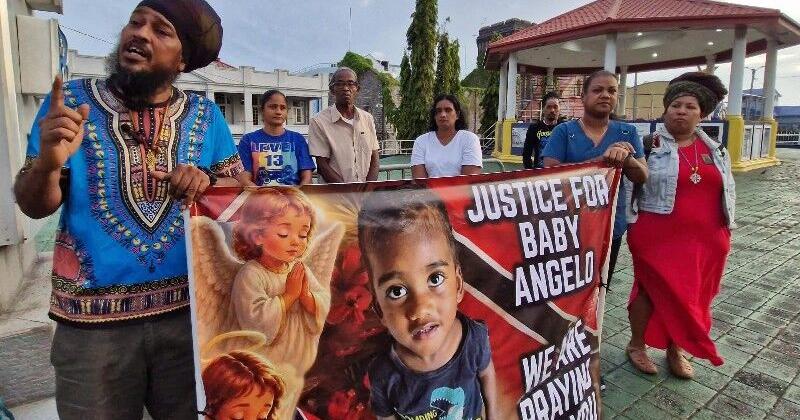
    A somber, resolute gathering of community activists and concerned locals unfolded on San Fernando’s Harris Promenade yesterday, centered on a single urgent plea: bring home the body of two-year-old Angelo Tobias Plaza and deliver justice for his untimely death. The toddler went missing two weeks prior in Goodwood, Tobago, and his suspected murder has sent waves of shock and grief across the entire nation of Trinidad and Tobago. Participants held high a banner emblazoned with Angelo’s photo and the words “Justice for Baby Angelo. We are praying for you,” before lighting candles, offering hymns, and saying prayers for both the recovery of the child’s remains and comfort for his devastated family, as official investigations into his killing continue.

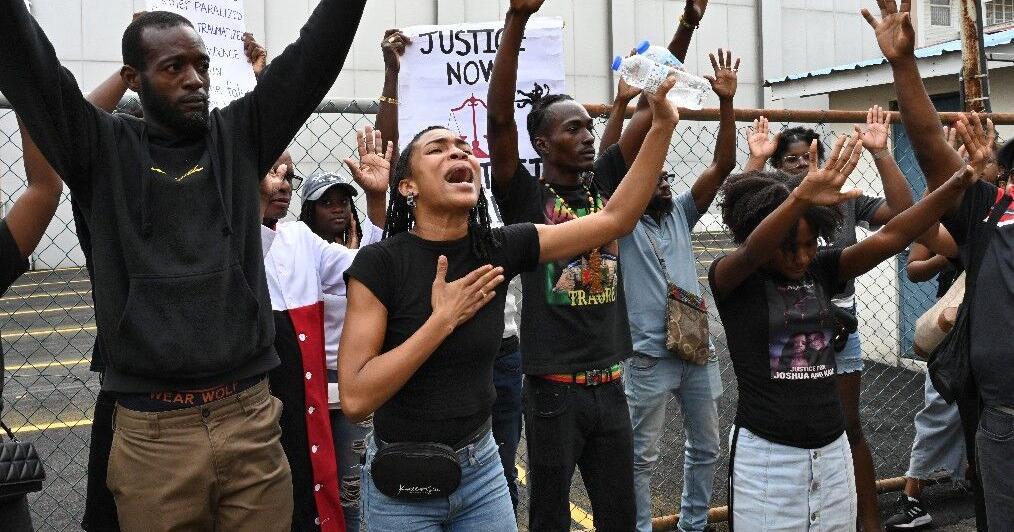
    Speaking for the assembled group, organizer Kevin Lalchan — a veteran activist who has previously led vigils for other high-profile local tragedies, including the 2019 pipeline deaths of four divers working for Paria Fuel Trading Company and the 2023 killing of teenager Mariah Seenath — said that both divine help and persistent public pressure are needed to bring the case to a close. “We want closure. We want justice. We want baby Angelo’s body to be found so that he may get his final rites,” Lalchan told attendees. He also expressed public solidarity with a separate protest gathering that took place yesterday in Port of Spain, organized to demand answers for Kaia Sealy, a woman shot by police on January 20 in an incident that left her husband Joshua Samaroo dead. Sealy currently faces charges of manslaughter and three counts of aggravated assault with a firearm. “Justice must be served for each and every one. While fellow citizens are burning their fire in Port of Spain, I decided to burn my fire in San Fernando. But I stand and support those who are rallying for justice for Joshua and Kaia,” Lalchan said.

    Lalchan used the vigil to shine a light on a growing crisis of vulnerable community members across the country, arguing that Angelo’s killing exposes a critical gap in child protection that demands urgent systemic and social action. “It grieves me to know that we as a nation cannot protect our women, children and elderly folks. Who shall stand for the innocent when they are being slaughtered? Where are the voices Trinidad and Tobago? Where is the national outrage, concern and interest? Today we stand here tugging at your conscience,” he added. Reviving the long-held community principle that “it takes a village to raise a child,” Lalchan emphasized that every sector of society — from individual families and local schools to regional communities and national law enforcement — shares responsibility for keeping children safe. “We must be prepared to go the distance to protect our beloveds,” he said.

    The group issued a formal call for state agencies and law enforcement bodies to adopt more proactive intervention strategies when children are identified as being at risk of harm, noting that early, decisive action could stop countless future tragedies before they occur. Quinlan Achat, a community advocate who goes by the public name Empress Q, reinforced this call, stressing that Angelo’s death is far from an isolated incident in Trinidad and Tobago. “This is not a one-off incident; every day, teenagers and babies are missing. This is so tragic. It shows that families do not have the support or community. My heart grieves. We are citizens, and who else will stand up for justice? I think of the 300 or 500 families that grieve due to gun violence every year in this country, and we multiply that over the last ten years. We represent the most high Jah, and the most high nah sleep,” Achat said.

    goThe San Fernando gathering was framed by attendees as both a demand for accountability and a collective act of healing for a nation shaken by the young child’s death, which has already sparked widespread national outrage and sorrow. As of yesterday, Angelo’s stepfather, Shannon Miller of Goodwood, Tobago, has been formally charged with the toddler’s murder and is scheduled to make his first court appearance this week.

  • Marchers must seek permission before protesting, warn police

    Marchers must seek permission before protesting, warn police

    On a recent day in Port of Spain, a group of demonstrators assembled outside the city’s Police Administration Building to voice public support for local figure Kaia Sealy, in a move that bypassed established regulatory procedures for public demonstrations. Senior law enforcement official Senior Superintendent Raymond Thom later confirmed that no formal notification or approval application had been submitted to the Commissioner of Police ahead of the gathering, a required step under current regional regulations.

    Trinidad and Tobago currently operates under a declared state of emergency, which brings with it adjusted public order rules that grant expanded authority to law enforcement agencies. When reached for comment on the demonstration, Deputy Commissioner of Police Suzette Martin clarified that small, non-disruptive groups of people gathering in public do not automatically violate existing legislation. Even so, Martin stressed that formal advance approval remains a mandatory legal step for any organized public gathering of this nature.

    In an official media statement released later the same day, the Trinidad and Tobago Police Service (TTPS) laid out its formal position on the incident and the broader regulatory framework governing protest activity under the ongoing state of emergency. The TTPS confirmed that while peaceful protest is not explicitly banned by the current state of emergency declaration, all public assemblies are required to adhere fully to the provisions laid out in the Emergency Powers Regulations 2026.

    Acknowledging the demonstrators’ presence outside the Police Administration Building, the statement detailed the law enforcement response to the unauthorized gathering: “In this instance, officers engaged the individuals present and issued clear, lawful instructions in accordance with the Emergency Powers Regulations. The decision to disperse the gathering was based on assessed concerns relating to public safety and the maintenance of public order.”

    The TTPS underlined that it carries a binding statutory obligation to protect public safety and uphold civic order across the country. “Where any gathering presents a potential risk to either, officers are duly empowered to take appropriate and proportionate action, including the lawful dispersal of such assemblies,” the statement added.

    The official release also walked the public through the full scope of powers granted to police under the current emergency regulations, noting that the legislation grants law enforcement broad latitude to regulate, restrict, or break up public assemblies when conditions demand such action. Per the regulations, the Commissioner of Police holds the authority to limit individual association and communication, block public access to specific geographic areas, and designate sensitive sites as “protected places.” Unauthorized entry into these protected zones counts as a criminal offense, and police are legally permitted to search or remove any unauthorised individuals from these locations.

    Further provisions of the regulations expand police powers to stop, search, detain, and arrest individuals without requiring a prior warrant, as long as officers hold reasonable suspicion that the individual’s actions could put public safety at risk. The TTPS also noted that public speech, organizing work, or advocacy connected to unapproved protests can be classified as criminal offenses if those activities are judged to influence public opinion in a way that undermines public safety.

    The TTPS reiterated that all protest activity, especially demonstrations held near police facilities and other sensitive infrastructure, must be carried out in full compliance with existing public order laws and state of emergency rules. It also issued a formal warning about the consequences of violating the Emergency Powers Regulations: breaches can result in fines reaching $100,000 and prison sentences of up to five years.

    The current regulatory framework governing the state of emergency is formally established under the Emergency Powers Regulations, 2026 (Legal Notice No. 40 of 2026), which was enacted to support the ongoing state of emergency declaration currently in effect across the country.

  • 200 protesters march for Kaia

    200 protesters march for Kaia

    Nearly 200 demonstrators gathered outside the Police Administration Building in downtown Port of Spain on Tuesday, channeling public anger over the fatal police shooting of Joshua Samaroo and demanding the immediate resignations of Police Commissioner Allister Guevarro and Homeland Security Minister Roger Alexander. The peaceful demonstration, part of a coordinated series of protests, was organized to stand in solidarity with Kaia Sealy, Samaroo’s partner who faces manslaughter charges over the January 20 incident that left Samaroo dead from 19 bullet wounds.

    The protest, held at the intersection of Sackville and Edward Streets, was launched just days after the Trinidad and Tobago Police Service (TTPS) announced arrest warrants for Sealy, whom authorities claim opened fire on officers first during a police chase, prompting the fatal return fire that killed Samaroo. Organizers have structured 19 planned demonstrations — one for every bullet that struck Samaroo — making Tuesday’s gathering the 15th in the ongoing campaign for accountability.

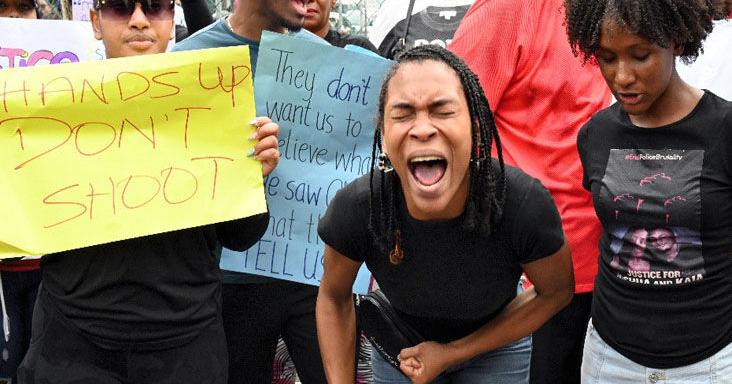
    Protesters carried hand-painted placards emblazoned with messages including “We saw the video”, “Injustice anywhere is a threat to justice everywhere”, “We demand truth, not cover up”, and “The next Joshua could be you”, chanting refrains of “Shame on the TTPS” and “Hands up, don’t shoot” as they called for criminal charges to be brought against the officers who opened fire instead of Sealy.

    Speaking to the assembled crowd, protest organizer Allysa Phillip alleged that state authorities are actively attempting to shift blame for Samaroo’s death onto Sealy, framing her as a convenient scapegoat to protect officers accused of excessive force. “They want Kaia Sealy to be responsible for their damages,” Phillip told supporters. “The Commissioner of Police said from inception that he would be protecting his officers. This means to me that he will go to any length to defend his officers whether they are right or wrong. This is a dangerous precedent to set. They are fabricating this ridiculous cock and bull story to try to make us believe that Kaia is responsible for Joshua’s death.”

    Phillip also called on Prime Minister Kamla Persad-Bissessar to break her public silence on the case and address the growing national unrest over the killing. “To the Commissioner of Police, Sir, you cannot stay in your position. You must step down. And to the Prime Minister of our country, we are sick and tired of hide-and-seek games. You need to address your country. The nation is bleeding,” she said.

    Maria Walcott, a close friend of Sealy, used her speech to push back against a recent Guardian newspaper report that claimed Samaroo’s father, Christopher Samaroo, had reversed his position and acknowledged Sealy may have shot at police. Walcott denounced the article as a deliberate misrepresentation designed to erode public support for the protest, accusing local media outlets of manipulating public opinion instead of reporting accurately.

    “The media is leaving the citizens feeling more manipulated than informed,” Walcott said. “The senior Mr Samaroo is denying all allegations made in that article of saying any claims of Kaia being responsible for Joshua’s death. Such interviews and such words were never said by Mr Samaroo but were somehow publicised for everybody to see. Why is it on the day when the nation decided they are going to come out for what we know is more than an injustice, why are we releasing false information again to sway the people from coming out to fight for what is right?”

    Walcott also condemned how Sealy first learned of the pending charges against her: through public social media posts, rather than official legal notification, at a time when Sealy is still recovering from severe injuries sustained in the shooting and cannot stand or care for herself. Questioning the official police narrative of the incident, she pointed to widely circulated cell phone footage of the shooting that contradicts law enforcement claims.

    “We all saw the video. Let us be reasonable about this,” Walcott said. “My friend cannot stand up for herself, literally because the car was riddled with bullets. Joshua was riddled with 19 bullets. So my question is: if police were receiving fire from Kaia, why is it that all of their attention was directed at Joshua Samaroo? If police were being shot at, do they not receive training that when you exit a vehicle you take cover?”

    She also added allegations of post-shooting mistreatment, claiming officers threw an injured Sealy “like a dog” into the back of a police vehicle, forcing her to lie on top of the wounded Samaroo while she listened to him struggle to breathe.

    After the protest concluded, local outlet the Express reached out to Christopher Samaroo to confirm the claims in the Guardian report. Samaroo said he had not fully read the article and directed all media inquiries to his attorney, Criston J Williams, who confirmed that Samaroo had not reversed his stance that Sealy did not fire at police.

    Williams explained that Samaroo’s original comments were taken out of context: Samaroo simply acknowledged that if the Office of the Director of Public Prosecutions files charges, due process must run its course, and that Sealy remains innocent until proven guilty. “What was stated by Samaroo was taken out of context,” Williams said. “I just think the father understands that if there is a charge, that due process has to take course and she is innocent unless proven guilty.”

  • UNC councillor critical in hospital

    UNC councillor critical in hospital

    A long-serving local government official in Trinidad is fighting for his life in intensive care, following a suspected suicide attempt at his home over the weekend.

    Anil Baliram, who has represented the Freeport/Chickland district for at least 16 years, experienced the medical emergency at his Couva residence early Sunday morning. The Couva Police Station received an urgent distress call just after 8 a.m., and law enforcement officers immediately dispatched to the property to respond.

    Before emergency transport, a family member and emergency medical services paramedics administered life-saving cardiopulmonary resuscitation to stabilize Baliram. He was first rushed to the Couva District Health Facility for urgent initial care, before being transferred to the Intensive Care Unit at the San Fernando General Hospital, where he remains listed in critical condition as of the latest updates. Law enforcement sources have confirmed that investigators are working on the theory that Baliram attempted suicide following the incident.

    Khadijah Ameen, Trinidad’s Minister of Rural Development and Local Government, released an official statement addressing the tragedy in the days following the incident, expressing widespread shock and concern across local government circles. Ameen, who also leads the political opposition United National Congress (UNC), noted that Baliram is one of the UNC’s longest-tenured local government representatives, serving on the Couva/Tabaquite/Talparo Regional Corporation.

    “Today, I received the deeply troubling news surrounding the reported incident involving Anil Baliram,” Ameen wrote in her statement. “My thoughts and prayers are with Councillor Baliram, his loved ones, colleagues, and all those affected by this painful and distressing situation. Many of our councillors have expressed shock and concern, with his colleagues at the Couva Corporation especially distressed by the news. We continue to pray for his strength, healing, and speedy recovery.”

    Ameen used the moment to draw public attention to the often unspoken burdens carried by public servants, who work daily on the frontlines of community service. “Incidents such as this remind us of the emotional, mental, and social pressures many individuals silently carry,” she said. “I urge the national community to approach this matter with compassion, sensitivity, and responsibility, particularly on social media, while medical professionals and the relevant authorities continue their work.”

    She emphasized the critical need for open dialogue and accessible support for people struggling with mental health challenges across the country. “As a nation, we must continue encouraging support systems, empathy, dialogue, and intervention for those facing personal struggles or emotional distress. Seeking help must never be viewed as weakness,” Ameen added. “On behalf of the Ministry of Rural Development and Local Government, I extend sincere prayers and support during this difficult time.”

    As of Tuesday, attempts by local media to reach additional leadership at the Couva/Tabaquite/Talparo Regional Corporation, including chairman Ryan Rampersad and vice-chairman Henry Awong, for comment have not received a response.

    Local health authorities remind any member of the public experiencing suicidal thoughts or who has a loved one in crisis that free 24/7 support is available through the national suicide prevention hotline at 800-COPE (2673).

  • PSA rejects CPO proposal

    PSA rejects CPO proposal

    Long-running negotiations over years of unpaid salary arrears for public sector workers and retirees in Trinidad and Tobago have entered a new phase, with the country’s leading public service union rejecting a revised government offer and preparing to table a fresh counter-proposal this week.

    The Public Services Association (PSA), which represents employees across the Civil Service, Statutory Authorities and the Tobago House of Assembly, has been negotiating backlogged salary adjustments for two multi-year periods: 2014 through 2016, and 2017 through 2019. In a major breakthrough for workers, the union secured a 10% total salary increase by December 2025, alongside a landmark consolidation of the Cost of Living Allowance (COLA) and back-adjusted payments owed to retirees. In its official bulletin to members dated May 23, 2026, PSA President Felisha Thomas framed this earlier agreement as a critical win, noting it represented a stark improvement over the previous administration’s offer of just 4% total increase with no COLA consolidation, delivering tangible financial gains for working households across the public sector.

    The current dispute centers on the payment structure for the accumulated arrears, which the government values at an estimated $3.8 billion. In January 2026, the Chief Personnel Officer (CPO), the government’s lead negotiator for public sector pay, put forward an initial proposal: 40% of arrears paid in cash split across three fiscal years, with the remaining 60% issued through non-cash arrangements. The non-cash options included offsets against existing mortgage or rental debts owed to the state-run Housing Development Corporation and Trinidad and Tobago Mortgage Bank, settlement of outstanding personal tax bills, $3,500-worth of executive medical coverage, tuition fee offsets for state-owned higher education institutions, tax exemptions for new and roll-on/roll-off vehicle purchases, and conversion of cash entitlements into additional paid leave. The PSA rejected this initial offer, and put forward an 80% cash counter-proposal at the time, with the remaining 20% held as deferred payment via interest-bearing government bonds. The union also added supplementary demands including full settlement of outstanding debts to public sector medical plans, priority access to state housing, and expanded access to residential and agricultural land across both Trinidad and Tobago.

    During a negotiation session held the Friday before the bulletin’s release, CPO Dr. Daryl Dindial resubmitted a proposal substantially identical to the January framework, adding only a new carveout for retirees: only those with arrears accumulated through 2018 would receive full cash payment, while all later arrears for retirees would be issued via non-cash arrangements. The PSA rejected this revised offer immediately. Union negotiators have continued informal talks with the CPO, floating a range of alternative flexible arrangements, including allowing workers to apply arrears toward existing mortgage obligations, convert cash to extra leave, receive temporary income tax relief, access supermarket and fuel credits, or put arrears toward future pension entitlements.

    Throughout the talks, the PSA has held firm on two core demands: all retirees must receive 100% of their outstanding arrears as full cash payment, and all cash disbursements must be completed no later than March 31, 2027. On Monday, May 25, 2026, the union will submit a formal revised counter-proposal to the CPO, calling for a new structure of 60% of arrears paid in immediate cash, and 40% held as deferred cash, backed by equity stakes in state-owned publicly traded assets on acceptable terms.

    In her message to members, President Thomas reaffirmed the union’s commitment to securing the best possible outcome, recalling the organization’s earlier work to force a better deal than the previous administration’s “shameless and disrespectful 4%” offer, and to protect the COLA consolidation the union won. On the government side, CPO Dr. Dindial has characterized the original 40% cash / 60% non-cash proposal as the administration’s “best and final offer,” and gave the PSA a four-week window to respond to the terms.