分类: society

  • “With cries to heaven”: residents of Los Alcarrizos denounce power outages and water shortages

    “With cries to heaven”: residents of Los Alcarrizos denounce power outages and water shortages

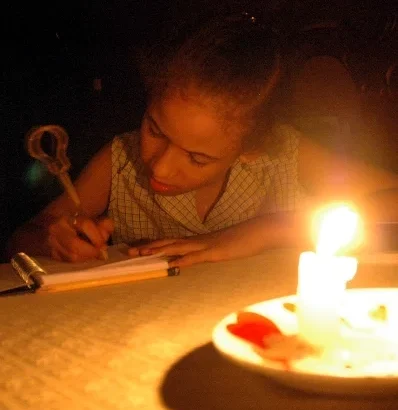
    In the Los Alcarrizos district of the Dominican Republic, hundreds of families across five residential sectors have spent months grappling with two crippling basic service failures: prolonged, routine power outages and a persistent shortage of potable drinking water, local residents publicly denounced this Sunday.

    The affected communities — Las Glorias, Los Cerros, Residencial Pablo, Mella and Pueblo Nuevo — report that power cuts follow a predictable, disruptive schedule, cutting off electricity consistently from 9 p.m. to 2 a.m. each night. This nightly blackout window does more than just disrupt daily life: it undermines rest for working residents and inflicts measurable financial harm on local small business operators who rely on consistent power to keep their businesses running.

    Gustavo Pérez, who owns a small neighborhood grocery store, explained that the combination of extended outages and the region’s sweltering high temperatures has destroyed hundreds of dollars worth of inventory that requires constant refrigeration. “Our products that need refrigeration are spoiling due to the lack of energy,” Pérez confirmed in an interview with local community organizers.

    North Villa Mella, the broader region where these sectors are located, has long been framed as being on the cusp of modern development, yet decades of underinvestment have left it trapped in systemic poverty with gaps in even the most basic public services. The water crisis compounds the misery caused by unreliable power, with residents of Las Glorias reporting that consistent drinking water service has been unavailable for more than seven months.

    Supply gaps are most extreme in the elevated sections of the sector, where running water rarely reaches households at all. Even in lower-elevation neighborhoods, water is only available for a few hours just once or twice a week. Forced to secure water for their households amid the chronic shortage, many families have turned to purchasing water from private tanker trucks — a service that costs between 2,000 and 2,500 Dominican pesos, an expense that local residents say places an unbearable strain on already tight household budgets.

    Residents describe daily life in the area as unlivable: backup power inverters have been worn down by constant use from intermittent power, soaring heat makes indoor spaces unbearable, and booming mosquito populations have made it impossible to get a full night of sleep. “The inverters are down, the heat is unbearable, and the mosquitoes have us cornered. We can’t sleep,” community members said in a joint statement.

    Mercedes Cruz, a long-time resident of the area, shared that she returns home from a full workday at 10 p.m. each night only to face another round of service failures. “Every day I get home at 10 pm, after a long day at work, and I find there’s no electricity. Between the blackouts, the lack of water, the mosquitoes, and the heat, I feel like I never get any rest,” Cruz explained.

    Local community leaders have issued an urgent call for national and municipal authorities to intervene immediately to resolve the crisis and restore stable, reliable water and power service to the affected neighborhoods. Fed up with unfulfilled political pledges, leaders say residents are demanding tangible solutions that respect their fundamental right to access these core public services. “We demand respect for our right to receive electricity and drinking water. We are tired of promises and we need solutions,” leaders concluded.
  • “Ezequiel” surrenders, implicated in the death of “El Rubito” during a fight in Santiago

    “Ezequiel” surrenders, implicated in the death of “El Rubito” during a fight in Santiago

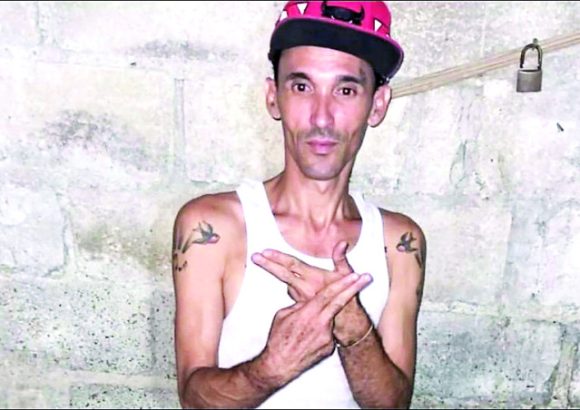
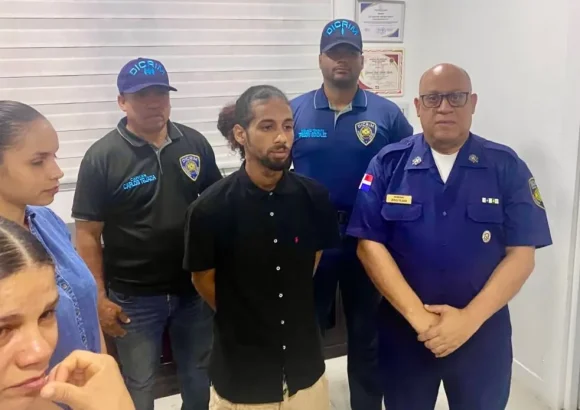
    In a development that brings a high-profile homicide investigation one step closer to resolution, Dominican National Police announced Saturday that Alexander Torres Lora, a suspect linked to the fatal stabbing of Domingo Andrés Acevedo Peña, has turned himself in to authorities. Torres Lora, who is known by the aliases “Ezequiel” and “El Sade”, surrendered at the regional headquarters of Cibao Central, accompanied by his family members and a representative from a local media outlet, following days of coordinated investigative tracking by law enforcement.

  • Two high-altitude rescue specialists, the heroes of the cable car

    Two high-altitude rescue specialists, the heroes of the cable car

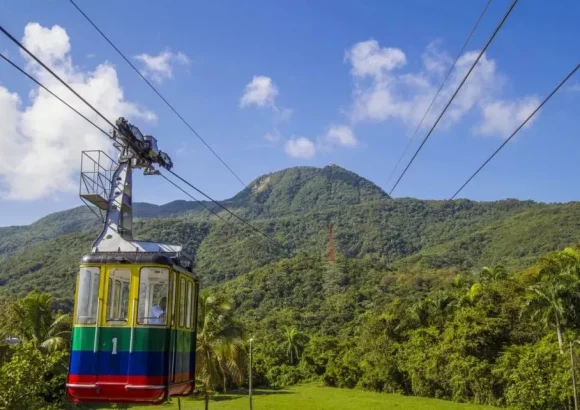
    A tense 24-hour mid-air emergency in the Dominican Republic’s northern tourist hub of Puerto Plata came to a safe conclusion on Monday, when two highly trained cable car rescue specialists successfully extracted 17 people stranded in a suspended funicular cabin. The trapped group, which matched the cabin’s full 17-person capacity of 16 passengers and one operator, had been stuck hanging over the mountain slope since Sunday, after an unexpected mechanical failure shut down the iconic tourist attraction.

    The two rescuers, Amaro García and Michael Añasco, were specially called in from the capital city of Santo Domingo to lead the high-stakes operation. Both are part of a cohort of 32 Dominican rescue workers who completed advanced high-altitude rescue training for cable car emergencies in Colombia just last year. García, a corporal and second-in-command of the Metro and Cable Car Specialized Security Corps (Cesmet), said the team only deploys after on-site teams have exhausted efforts to restart the stalled cable system, as manual extractions carry significant inherent risk.

    Using specialized climbing and rigging equipment designed for aerial rescue operations, the pair reached the suspended cabin on the Isabel de Torres Mountain funicular — better known as the Puerto Plata cable car — and safely lowered each passenger and the operator to the ground one by one. Once they arrived in Puerto Plata from Santo Domingo, the team integrated with local response units from the Emergency Operations Center to coordinate the rescue effort.

    Local officials praised the team’s quick, calm execution of the dangerous mission. “This emergency personnel demonstrated great technical skill and a lot of courage in making use of their training,” said government spokesperson Homero Luis Lperalta in a statement following the successful rescue.

    The specialized rescue unit, which falls under the administrative umbrella of the Santo Domingo Metro (the managing body of the Santo Domingo Cable Car), has been working to expand local response capacity across the Dominican Republic. As the number of funicular and cable car operations has grown in recent years to meet rising tourism demand, the unit has been training new cohorts of local rescue workers to serve as additional skilled responders across the country.

    First opened in 1975, the Puerto Plata cable car is one of the destination’s most popular tourist attractions. The eight-minute scenic trip up and down Isabel de Torres Mountain draws thousands of visitors annually, who ride to the mountain’s summit for panoramic views of the northern coast and native tropical vegetation. The mechanical failure that caused Sunday’s incident was traced to a broken axle in the upper pulley system — an original component that had been in place since the cable car launched 48 years prior. The attraction is managed by an independent board of trustees, and it remains unclear how long inspections and repairs will keep the site closed to visitors.

  • Man killed for 50 pesos in Santiago

    Man killed for 50 pesos in Santiago

    SANTIAGO — A regional manhunt is active across Santiago after a fatal stabbing Thursday night that grew out of a minor gambling dispute, local law enforcement confirmed this week. The Dominican National Police announced they are continuing targeted search and intelligence operations across multiple neighborhoods in the district to locate Alexander Torres Lara, who is also known by the aliases Ezequiel and El Sade. Authorities have named Lara as the primary suspect in the killing of Domingo Andrés Acevedo Peña, a local man who went by the nickname El Rubito.

    The deadly attack unfolded in the La Yagüita sector of the Pastor neighborhood, according to preliminary law enforcement investigations. The fatal confrontation began during a casual dice game, when a trivial disagreement over a 50-peso bet spiraled into violence.

    Witness accounts and initial investigative findings detail that Peña pressed Lara to cover a 50-peso match bet. The pair was playing for a 500-peso pot, and Peña told Lara he had already exhausted all his cash after a streak of losses. When Lara refused to put forward the required 50 pesos to match the bet, the disagreement quickly escalated into a heated argument that turned into a knife fight. Perita was fatally wounded in the altercation, and he was pronounced dead at the scene by responding emergency personnel.

    Immediately after the incident, the suspect fled the neighborhood to avoid arrest. Since then, National Police teams have been carrying out coordinated sweeps and intelligence-gathering work across the Santiago region to track down Lara, with investigators confirming that they are following multiple leads to determine the suspect’s current whereabouts.

  • SiFoCol Alumni Association announces fifth annual White Sunset charity event for Independence season

    SiFoCol Alumni Association announces fifth annual White Sunset charity event for Independence season

    After four years of successful impact-driven events, the Dominica SiFoCol Alumni Association (DSAA) has officially confirmed the return of its beloved annual charity fundraiser, *White Sunset with a Hint of Creole*, scheduled for 2026. Open to Dominican residents, diaspora members, tourists, alumni and community supporters, the event blends cultural celebration of Dominican heritage with targeted fundraising to advance local community development projects across the island.

    Now in its fifth iteration, the all-white themed event will take place on Wednesday, October 21, 2026, from 5:00 p.m. to 2:00 a.m. at the Kai Mama Mwen venue in Castle Comfort. Over the years, the fundraiser has carved out a permanent spot as one of the most anticipated signature events of Dominica’s annual Independence season and World Creole Music Festival, drawing crowds of attendees eager to reconnect with old friends, honor their Creole roots, and contribute to causes that deliver long-term benefits to local communities.

    DSAA representatives stress that White Sunset is far more than a casual social gathering. Every dollar raised from ticket sales and corporate sponsorships goes directly to supporting local organizations and initiatives that address pressing social, educational, and community needs across Dominica. The 2025 edition of the fundraiser demonstrated just how meaningful this impact can be: proceeds funded three distinct types of high-priority projects that continue to serve Dominican residents today.

    Among the 2025 grant recipients was the Anse Kouanari Tourism Association Inc.’s Community and Youth-Led River Stewardship Project. This initiative empowers young people and local residents to protect two critical rivers in the Castle Bruce region, offering hands-on environmental training, organizing regular river clean-up campaigns, advancing policy advocacy for water protection, and installing educational signage to teach visitors and locals about river ecosystem conservation. Funds also supported Lifeline Ministries’ Survivor Support Project, which provides life-changing services for gender-based violence survivors and their children, including emergency housing, immediate crisis intervention, a 24/7 after-hours helpline, emotional counseling, and referral services to help survivors rebuild safe, stable lives after trauma. Additionally, 2025 proceeds covered full scholarships for six outstanding students attending Dominica State College, removing financial barriers that would have otherwise blocked access to higher education for these young scholars.

    “The continued support of our patrons, sponsors, community partners and dedicated volunteers has allowed us to turn a single evening of cultural celebration and connection into tangible, lasting impact for communities across the entire island,” a DSAA spokesperson shared in a statement.

    For the 2026 event, organizers have rolled out three flexible attendance tiers to accommodate different guest needs and budgets. General admission tickets grant access to all evening activities, including live entertainment, traditional Creole cultural performances, raffles, complimentary giveaways, and open access to fundraising food and beverage stations. VIP guests can purchase an all-inclusive package that adds hors d’oeuvres, a full dinner, unlimited non-alcoholic and alcoholic beverages, a limited-edition commemorative souvenir, and exclusive access to a private VIP lounge. For attendees seeking a premium group experience, limited private VIP tables are available for groups of four or six, which include all standard VIP benefits plus reserved seating, personalized table service, access to a private dinner buffet, and front-row views of all evening entertainment. Organizers note that premium table inventory is extremely limited and expected to sell out quickly.

    Early bird tickets went on sale to the public on Friday, July 31, with discounted pricing: general admission is US$30 (equivalent to EC$81), the full VIP experience is priced at US$120 (EC$325), a four-person premium table costs US$680 (EC$1,836), and a six-person premium table is US$1,020 (EC$2,754).

    DSAA is actively encouraging visitors traveling to Dominica for the annual Independence celebrations, former SiFoCol students, local and international travelers, and all supporters of local charitable work to secure their tickets early. Attendees are asked to follow the event theme by “coming dressed in white with a hint of Creole” to celebrate Dominican culture, community, and the collective power of giving back. Tickets can be purchased online via the event’s official Eventbrite page, and real-time updates about the event are posted to the Dominica SiFoCol Alumni Association and White Sunset official Facebook and Instagram pages.

  • Emancipation in Grenada: Did you know?

    Emancipation in Grenada: Did you know?

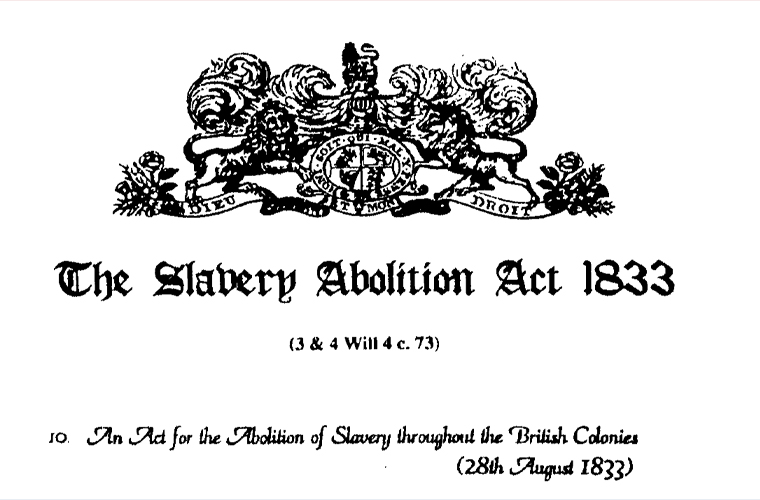
    The journey toward ending chattel slavery across the British Empire began with a landmark piece of legislation 190 years ago: the Imperial Act of Emancipation, signed into law on August 28, 1833, which outlined a phased process to abolish the institution of slavery across all British colonial holdings. Grenada’s local legislative assembly followed suit, approving its own emancipation framework in March 1834, setting in motion a process that would reshape the Caribbean nation forever.

    On the eve of formal emancipation in 1834, official records show that 23,600 enslaved people were held in captivity across Grenada, its smaller sister islands Carriacou and Petite Martinique, forced to labor on 430 separate slave plantations spread across the territory. Of these holdings, Dumfries estate on Carriacou held the largest number of enslaved people at 437, while Grenada’s largest plantation by land size—Grand Anse, spanning 1,237 acres—only held 134 enslaved workers.

    To compensate enslavers for the loss of their forced labor force, the British government disbursed roughly £616,255 to Grenadian slave owners, a sum that equals more than £67 million in 2024 currency. A little-noticed 2018 fact released by HM Treasury revealed a little-known long-term consequence of this compensation: British taxpayers continued paying down the £20 million national loan the government took out to fund these slave owner payouts well into the 21st century.

    Contrary to popular narratives of immediate full freedom, the 1833 act mandated a transitional apprenticeship period for most newly freed people. Field hands were required to continue working for their former enslavers for six additional years, while all other enslaved workers faced a four-year apprenticeship term. Only 3,747 children under the age of six were granted immediate, unconditional freedom on Emancipation Day with no required apprenticeship. The transitional system, framed by policymakers as a preparation for full self-determination, was cut short when all apprenticeships were formally ended on August 1, 1838, marking the date that all enslaved people in Grenada finally gained complete freedom from forced servitude.

    This emancipation process came after more than a century of systematic forced migration of African people to Grenada as part of the transatlantic slave trade. Between 1709 and 1808, an estimated 129,000 captive African people were brought to Grenada’s Carenage harbor, with 19,000 dying from neglect, disease, and abuse during the brutal Middle Passage crossing from West Africa. The last group of African people to arrive in Grenada came much later, in 1863, when 120 recaptive and already liberated Africans were brought to the island as indentured laborers aboard the ship *Barbara Campbell*, departing from St. Helena.

    Roughly 13 percent of all captive Africans brought to Grenada originated from the Windward Coast of West Africa, according to historical trade data. Many cultural traces of these African origins endure in Grenadian society to this day, shaped by centuries of ancestral preservation. One of the most distinct cultural continuities is visible in Grenadian surnames: unlike many former slaveholding societies where formerly enslaved people adopted the family names of their enslavers, most surnames in modern Grenada derive from the first names of male enslaved ancestors, a detail explored in the local historical work *Marking an ‘X’: Exploring the History of Grenada’s Surnames*.

    The ancestral celebration of Saraka, practiced in rural villages including La Poterie in St. Andrew Parish and River Sallee in St. Patrick Parish, was introduced by the last group of Africans who arrived as indentured laborers after formal abolition. On Carriacou, the traditional Big Drum dance—also called the African Nation Dance—honors the ancestral roots of nine distinct West African ethnic groups, including the Akan (Kromanti), Kongo, Igbo, Mandinka, Moko, Temne, and Arada peoples. The iconic Caribbean stilt-walking masquerade tradition of Moko Jumbie, a staple of Grenadian cultural celebrations today, also traces its origins to captive West Africans who brought the performance practice with them to the Caribbean.

    Memorialization of slavery and abolition has been a core part of Grenadian public life for nearly a century. In 1933, two stone pillars were erected at the lower end of St. George’s Cemetery to honor William Wilberforce, one of the most prominent British leaders of the 19th century abolitionist movement. Following the dedication, the cemetery was officially renamed Wilberforce Cemetery in his honor, and it remains a key historical site today. In 2017, a new commemorative plaque marking emancipation was installed in St. George’s Market Square, expanding the nation’s public memorialization of this pivotal history.

    A key note from the article’s contributors frames modern language around this history: contemporary scholars and activists prefer the term “enslaved people” over “slaves” to center the humanity of those held in captivity, emphasizing that enslavement was a violent, forced condition imposed by European enslavers, not an inherent identity of the people subjected to it.

  • Cheni Greene Wins Best Learning Experience Award at Caribbean Baking Awards

    Cheni Greene Wins Best Learning Experience Award at Caribbean Baking Awards

    The annual Caribbean Baking Awards, a prestigious event that celebrates excellence across the regional baking industry and highlights emerging talent in culinary arts, has named Cheni Greene as the 2024 recipient of its Best Learning Experience Award. The award recognizes Greene’s transformative journey through the Caribbean baking sector, where she turned a lifelong passion for traditional Caribbean baked goods into a structured, community-centered learning experience that has resonated with aspiring bakers across the region.

    Unlike technical awards that focus on final product quality, the Best Learning Experience Award honors individuals who have turned their personal baking journey into an educational resource for others. Greene, who launched her popular online and in-person workshop series three years ago, has centered her curriculum on preserving centuries-old Caribbean baking techniques, from making traditional jerk-spiced sourdough to classic coconut bread and festive black cake. What set her submission apart was her focus on inclusive learning: she offers sliding-scale tuition for low-income aspiring bakers and provides free digital recipe kits and tutorial videos to community centers across 12 Caribbean island nations.

    At the awards ceremony held in Kingston, Jamaica, judges praised Greene for creating a learning environment that prioritizes cultural preservation alongside skill development. “Cheni hasn’t just learned to bake incredible Caribbean food—she’s created a pathway for hundreds of young people to connect with their culinary heritage while building marketable skills,” said lead judge Maria Hernandez in her presentation of the award. Greene, in her acceptance speech, shared that she plans to use the award’s cash prize to expand her workshop program to include apprenticeships for youth in rural communities, where access to culinary training has long been limited.

    Industry analysts note that the award highlights a growing trend in the Caribbean food sector: increasing investment in educational initiatives that preserve culinary tradition while creating economic opportunities for small-scale producers. Greene’s win draws attention to the critical role that accessible, community-focused learning plays in sustaining the region’s unique baking heritage for future generations.

  • Police probe alleged kidnapping of girl, 15

    Police probe alleged kidnapping of girl, 15

    Law enforcement officers from Trinidad and Tobago’s Western Division have opened a formal investigation into a brutal alleged kidnapping and sexual assault targeting a 15-year-old minor, an incident that unfolded in the coastal community of Cocorite.

    According to official police accounts, the teenage victim was en route to a neighborhood mini-mart close to her residence on the day of the attack when she opted to cut her journey short by taking an isolated path behind a local building. It was in this secluded spot that she came face-to-face with an unknown male attacker.

    The first suspect, described by the victim as wearing a black athletic jersey and black three-quarter length jeans, grabbed the teen before forcefully dragging her to a waiting black sedan parked nearby. He then shoved her into the vehicle’s rear passenger seat, where a second accomplice was already positioned. That second man, clad in a white sleeveless vest and full-length white trousers, pinned the victim’s head down as the car pulled away and traveled to an undisclosed location.

    Within minutes of departing the original abduction site, the driver pulled the vehicle onto a neglected, abandoned plot of land. The man in the white vest then dragged the teenager out of the car and into a nearby derelict house, where he forced her to the ground and raped her, according to the victim’s official statement.

    After carrying out the assault, the two attackers returned the minor to their vehicle and drove her back to Cocorite, dropping her off near the area’s well-known walkover. Before fleeing the scene, the pair threatened the victim, warning her that she “better not tell nobody about this” to avoid retaliation.

    Terrified but unharmed in any other physical sense, the teenager walked straight home and immediately disclosed the full details of the attack to her father. The pair wasted no time in traveling to the St James Police Station to file an official report with authorities.

    Following the filing of the report, a female acting corporal named Durham escorted the victim to the St James Medical Centre, where she underwent a full forensic medical examination to collect evidence for the ongoing investigation. As of the latest update, no arrests have been announced, and detectives are continuing to canvass the area for witnesses and review any available surveillance footage that could help identify and apprehend the two attackers.

  • Police Investigating People who use Stolen Credit Cards to buy fete Tickets

    Police Investigating People who use Stolen Credit Cards to buy fete Tickets

    A major ticketing service has teamed up with law enforcement to crack down on a coordinated credit and debit card fraud scheme that illegally generated Carnival event tickets, in a move that signals a hardening stance against recurring ticketing fraud in the lead-up to popular seasonal celebrations.

    TickeTing, the regional ticketing platform at the center of the probe, confirmed Friday that it is collaborating with the local Criminal Investigation Department (CID) to unpack an alleged operation where bad actors have been leveraging stolen payment card data to purchase tickets for personal use, distribution to loved ones, and illegal resale.

    According to the company’s official public statement, investigators have spent weeks quietly tracking suspicious transaction patterns connected to specific individuals tied to the scheme. While past incidents of this nature have historically been resolved through internal, private actions that avoided formal law enforcement involvement, TickTing officials say the scale of this current operation warrants a full criminal inquiry. In a clear warning to anyone connected to the fraudulent activity, the platform emphasized that all tickets linked to the illegal scheme will be seized permanently.

    The penalties extend even to users who unknowingly obtained the illicit tickets: anyone who received tickets from the individuals under investigation, whether they paid for the entries or got them as a gift, will face immediate account blocks and confiscation of all associated tickets. While the blocks are in place, affected users will lose access to core account functions, including logging into their profiles, resetting passwords, transferring tickets to other users, or redeeming any existing tickets for event entry. Blocks will remain active until every individual case undergoes a full, personalized review to clarify the user’s level of involvement.

    TickeTing has issued an urgent call for any users who suspect they may have inadvertently received fraudulent Carnival tickets to reach out to the platform’s customer support team directly, or contact local CID investigators to report their situation. The platform also took the opportunity to remind the general public that payment card fraud is a serious criminal offense with lasting legal consequences, noting that modern digital tools and mobile tracking technologies allow law enforcement to trace suspects even when they attempt to hide their identity or physical location.

    Closing its statement, TickeTing wished attendees a safe and enjoyable conclusion to the 202X Carnival season, urging the public to remain vigilant against fraudulent ticketing scams amid the rush for event entry.

  • ‘Africans an endangered species’

    ‘Africans an endangered species’

    In a provocative, unflinching address to mark Emancipation Day, Homeland Security Minister Roger Alexander has drawn widespread attention by declaring that people of African descent have become “an endangered species” — blaming internal cycles of violence, criminality and intergenerational neglect for the community’s ongoing stagnation nearly two centuries after the formal abolition of slavery.

    Delivering his remarks in a virtual presentation titled for his hard-hitting thesis, Alexander challenged the value of annual Emancipation Day observances, questioning whether the popular celebrations have translated to tangible, meaningful progress for African communities globally. He argued that far too many people remain trapped in what he described as a slave-era mentality that continues to hold the community back generations after emancipation.

    “ I have more questions than answers because why after so long we are celebrating Emancipation but still mentally we are still on that slave ship making that same trip,” Alexander told his online audience. He pressed community leaders and members to examine their own inaction, asking: “What are we doing differently to change the hearts and minds of our people, to richly educate them, prepare young men to be adults, to be fathers and women to be able to manage their career and their family at the same time? What are we doing?”

    Alexander pointed out a stark disconnect in how African identity is practiced: while communities proudly showcase their culture, heritage, traditional clothing, distinctive hairstyles and unique talents during Emancipation events, these values are rarely upheld consistently through the rest of the year. He also leveled criticism at individuals and organizations that he says only lean into public African identity when pursuing grants or financial backing, all while ignoring the deep-rooted structural and social issues eroding the community from within.

    Acknowledging that his blunt assessment would likely stir controversy and alienate some listeners, Alexander insisted that uncomfortable, honest dialogue is a necessary first step to drive change. “I know some of us will not be impressed with what I say because most African males do not have the testicular fortitude to say it. We are endangered species, not just young men but Africans on a whole whether we like it or not. And who is doing all of this? We. We are doing it to each other. So what really changed?”

    To illustrate the ongoing crisis facing young people in the community, Alexander shared a recent anecdote: he recently spoke with a 30-year-old man who had managed to secure stable employment, yet still saw his life derailed by addiction to drugs and exposure to gang violence — a case, he says, that proves systemic problems within the community continue to undermine individual progress.