分类: society

  • Malecón Center: detached cornice was non-structural

    Malecón Center: detached cornice was non-structural

    A partial structural failure has occurred at one of Santo Domingo’s prominent landmarks after intense weather swept through the Dominican capital on Monday afternoon. The Board of Directors of Malecón Center confirmed that a decorative cornice broke free from the building’s north-facing exterior, brought down by the harsh meteorological conditions that impacted the region that day.

    In an official public announcement, the facility’s administration moved quickly to reassure the public and residents about the nature of the damage. The fallen element, they explained, is a decorative plaster feature included in the building’s original architectural plans, and never formed a core part of the property’s load-bearing structural system. This key distinction means the incident does not compromise the overall stability of Malecón Center, and poses no ongoing threat to people who live in or visit the space.

    While no people were harmed in the collapse, the falling debris did cause limited material damage to the property. The condominium’s in-house technical team is currently conducting a full on-site assessment to map out the full extent of the harm, and will move forward with all necessary restoration work once the evaluation is complete.

    The Board of Directors used the statement to reaffirm its long-standing commitment to three core priorities: maintaining rigorous safety standards across the facility, carrying out consistent proactive upkeep, and keeping residents fully informed of all relevant developments. It also extended its gratitude to property residents for their patience and collaboration as the repair process gets underway.

  • Gazcue hit hard by sudden storm, dozens of vehicles affected

    Gazcue hit hard by sudden storm, dozens of vehicles affected

    On Monday afternoon, an unanticipated severe weather system characterized by torrential rainfall, large hail and destructive wind gusts barreled through Santo Domingo’s National District, leaving a trail of extensive destruction that hit the Gazcue neighborhood particularly hard. The fast-intensifying storm caught local residents off guard, triggering a series of disruptions that upended daily life across the affected area.

    Strong wind gusts reached enough force to uproot fully grown trees, sending the massive vegetation crashing onto public roadways and parked or moving vehicles. The blockages immediately snarled traffic, leaving commuters and local residents stranded for extended periods and creating chaotic, high-tension conditions across the sector. Multiple residential properties also reported substantial material damage: shattered window panes were widespread, and outdoor structures including awnings and backyard gazebos were completely destroyed by the powerful winds. Loose debris and household items were scattered across yards and streets by the gusts, adding to the cleanup burden facing the community.

    In addition to structural and property damage, the severe weather knocked out critical electrical infrastructure, leaving the vast majority of Gazcue without power immediately after the storm passed. Local utility companies quickly dispatched response teams to the area to conduct full damage assessments and begin restoration work. As of the latest updates, emergency management officials have confirmed that no storm-related injuries have been reported, though fallen tree debris continues to cause major traffic congestion throughout the neighborhood as cleanup efforts proceed.

  • He Won Over $300,000 in Mega Bingo

    He Won Over $300,000 in Mega Bingo

    A lucky yet methodic bingo player has walked away with a life-changing $370,000 Mega Bingo jackpot, crediting his long-term patience rather than pure random luck for the huge windfall, announced on April 13, 2026.

    After mandatory tax deductions, the winner takes home a net sum of approximately $315,000, a payout that has already reshaped his near-term financial plans. In a reflection on his winning strategy, the player shared that he has held fast to the same ticket number combination for years, even through a long break from playing the game.

    “I started purchasing Mega Bingo tickets when the game first launched, but I took an extended break from playing before I came back to it,” he explained. “Ever since I returned, I’ve bought the same exact ticket every time without ever changing the numbers. That consistency paid off in the end.”

    Now that the jackpot is secured, the winner says he has no plans to rush into reckless spending. Instead, his top priority is using the funds to support his mother and other loved ones who have supported him over the years. He emphasized that he intends to avoid impulsive financial decisions, noting that unplanned spending can drain even a large windfall faster than many people expect.

    As of press time, the report of the win has garnered more than 200 views from readers following the story.

  • Fuel panic buying, despite assurances supplies arriving

    Fuel panic buying, despite assurances supplies arriving

    On Monday, April 13, 2026, widespread panic buying of gasoline and diesel swept through major population centers in Guyana, leading to kilometer-long lines at operating fuel stations and leaving stations without stock completely empty. Even after President Irfaan Ali publicly confirmed that fresh fuel shipments would reach the country by Monday night following emergency talks with the nation’s top fuel importers, motorists rushed to fill their tanks and stock up on extra fuel supplies.

    The most dramatic scenes unfolded at GUYOIL and RUBIS stations, which remained partially stocked as the shortage unfolded. At GUYOIL’s high-traffic Regent Street location, motorcyclists bypassed standard vehicle queues entirely, arriving with five-gallon containers to stock up on reserve fuel to avoid future shortages. Local law enforcement was forced to implement emergency traffic restrictions on Regent Street, blocking through traffic west of Camp Street to accommodate the massive queues that wrapped from Regent and Camp Streets all the way back to South Road. A second, similarly large queue formed further west on Regent Street near Kong Street.

    In sharp contrast, the MOBIL filling station located at the intersection of Regent and King Streets sat almost entirely deserted, with no pump attendants on site — a clear indication the location had already sold out of all fuel stock.

    President Ali explained the root of the shortage during an interview with Demerara Waves Online News, noting that industry leader SOL/MOBIL encountered unexpected shipping and logistics issues after the anchorage for one of its fuel tankers failed, forcing the vessel to return to port for repairs. He clarified that the disruption has not impacted fuel supplies for Guyana Power and Light (GPL), the country’s primary public electricity provider, adding that critical power infrastructure would remain fully operational through the temporary disruption.

    The president added that state-owned GUYOIL confirmed it maintains adequate existing fuel stocks, while competitor RUBIS is already ramping up its incoming supply volumes. “RUBIS and GUYOIL said that they don’t foresee a challenge and they have orders in line and some of it will arrive as early as tonight (Monday) night,” Ali stated, noting that government officials are continuing to monitor the situation closely to ensure importers follow through on their delivery commitments.

    This level of widespread fuel shortage and consumer panic has not been seen in Guyana since the 1980s, when the country endured years of prolonged, widespread shortages of multiple fuel types including kerosene for household use.

  • Antigua Court Finds Driver Liable in Lashauna Bridgen Death; Body to Be Repatriated After Four Years on Ice

    Antigua Court Finds Driver Liable in Lashauna Bridgen Death; Body to Be Repatriated After Four Years on Ice

    After four years of protracted legal battles spanning two court systems, a landmark ruling from the Eastern Caribbean Supreme Court has finally brought a measure of resolution to the family of Lashauna Sheleta Bridgen, a 29-year-old Jamaican security officer and mother of two who was killed in a 2022 road collision in Antigua. The court’s October 2025 judgment found driver Diondre Samuel fully liable for negligence in Bridgen’s death, ending years of legal limbo that left her remains unburied and her family trapped in unresolved grief.

    The fatal incident unfolded on January 20, 2022, along Friar’s Hill Road near Jasmine Court. According to official police records from May that year, Bridgen was crossing the road after exiting a vehicle when she was struck by a vehicle operated by Samuel, a resident of All Saints. Investigators determined Samuel was traveling at excessive speed at the time of impact; the force of the collision threw Bridgen more than 100 feet, causing catastrophic multiple injuries that led to her death shortly after she was transported to a local hospital. The initial investigation formally concluded Samuel was at fault and eligible for criminal prosecution.

    What followed was an unprecedented dual-track legal process that legal observers have described as a landmark for Caribbean jurisprudence. Criminal proceedings moved forward first, but in June 2025, a jury acquitted Samuel of the charge of causing death by dangerous driving, ruling that prosecution evidence failed to meet the strict “beyond a reasonable doubt” standard required for criminal conviction. Many expected the case to end there, but Bridgen’s family and their legal team refused to drop the matter, pursuing a civil negligence claim under Antigua and Barbuda’s Fatal Accidents Act.

    Represented by Salomon and Simpson Attorneys-at-Law, with early consular support from former Jamaican Honorary Consul Dr. Onika Campbell-Rowe, Bridgen’s estate — led by Avagay Hervelyn Cummings on behalf of Bridgen’s mother Christine Evans and brother Chafray Chafral Bridgen — advanced the civil claim through the High Court. In her ruling on Claim No. ANUHCV2022/0491, Justice Tunde A. Byer found Samuel failed to uphold multiple core duties of a responsible driver: he did not maintain a proper lookout for pedestrians, failed to take evasive action to avoid the collision, and did not exercise reasonable care to protect other road users. The justice also rejected the defense’s argument that Bridgen bore any contributory fault for the incident, assigning 100% of liability to Samuel. The full claim was granted, with the final amount of damages set to be determined at a future hearing.

    The ruling resolves not just legal liability, but also a four-year delay that left Bridgen’s remains stored in a mortuary, unable to be repatriated to her home country of Jamaica for burial. The family had sought urgent interim funding for mortuary storage and repatriation costs as early as December 2022, but that initial application was denied. An appeal to the Court of Appeal was also dismissed in May 2023, prolonging the family’s emotional agony.

    The long four-year wait was also shaped by repeated administrative and procedural delays. Court documents show that for months, Bridgen’s legal team struggled to obtain critical investigative records, including police reports and coroner’s findings, that were required to advance the civil claim. Dr. Campbell-Rowe intervened at the consular level to escalate the matter, submitting formal requests to then Police Commissioner Atlee Rodney in May 2022 to highlight the delays and push for urgent access to records. Formal representations were also made to then Director of Public Prosecutions Anthony Armstrong, emphasizing the strict statutory limitation period for fatal accident claims and warning that unnecessary delays could permanently prejudice the family’s right to seek justice. These persistent efforts ultimately unlocked the documentation needed to move the case forward, allowing the civil claim to proceed within the required legal timeframe.

    The outcome of the dual-track process highlights a key difference between criminal and civil legal standards: while criminal courts require proof beyond a reasonable doubt to convict, civil courts only require a “preponderance of the evidence” to find liability. This difference allowed the civil court to hold Samuel responsible even after a criminal acquittal.

    In terms of compensation, the ruling requires Samuel’s auto insurance provider to cover all funeral-related costs incurred in Antigua. Any damages that exceed Samuel’s insurance policy limits, however, will remain the personal responsibility of the defendant, once the final damages assessment is complete. The estate’s claim includes special damages, general damages, aggravated damages, accrued interest, and legal costs.

    With the liability question resolved, Bridgen’s remains are scheduled to be repatriated to Jamaica on April 14, 2026, four years after her death. For Bridgen’s brother Chafray, the ruling brings an end to years of unbearable emotional strain. “We are finally at a place where the family can breathe a sigh of relief. This process has not been easy — it has been emotionally draining for all of us. For four years, we carried the weight of not being able to lay our loved one to rest, while dealing with delays, pressure, and the trauma that came with everything surrounding this matter,” he said. Echoing a local proverb, he added: “Long run, short ketch. Even though one arm of the law did not find him liable, a second arm of the law has now spoken clearly. Justice has been achieved in the long run.”

    Chafray Bridgen also publicly thanked the family’s legal team at Salomon and Simpson, as well as Dr. Campbell-Rowe, for their years of sustained work through an emotionally grueling process. “This has helped to bring justice and closure on behalf of our family,” he said. The case now moves to the damages assessment phase, while the family prepares to lay their loved one to rest at last.

  • Belize City Teen Still Missing Four Days Later

    Belize City Teen Still Missing Four Days Later

    In Belize City, a grieving family remains trapped in a nightmare of uncertainty, as 17-year-old Alwin Marin Junior has now been missing for four days following a violent incident that claimed the life of his fishing companion.

    Marin was last spotted last Thursday, when he left his family home to head out on a routine fishing trip with 18-year-old Jaheil Westby. But what began as an ordinary outing quickly turned to tragedy: by the pre-dawn hours of Friday, searchers found Westby’s body in a thick, bushy plot of land behind the Port of Belize Limited facility in the Port Loyola neighborhood. Preliminary examinations confirmed the young man died from apparent gunshot wounds, leaving investigators with more questions than answers. Marin has not been heard from or seen by family or authorities since the day the pair left for their trip.

    Now, Marin’s mother, Patricia Cardinez, is speaking out to share her theory about what triggered the violence that has upended her family’s life. In an exclusive interview with local outlet News Five, Cardinez insisted her son had no history of conflict with others, but suggested that people close to the teen may hold grudges against him. “My son has no problem with nobody. But people have problems with my son. And I believe somebody who is in this has to be somebody close to my son, whom my son trusts,” she said.

    Cardinez also pointed to a specific, recent disagreement that she believes may be linked to the incident: an argument over ownership of a horse that unfolded shortly before Marin and Westby left for their fishing trip. “Whosoever he had a talking about this horse, that is the person they have to search for,” she urged investigators.

    As the search stretches into its fourth day, a desperate Cardinez says her family has exhausted all local efforts to locate her son, and is now pleading for higher-level authorities to step in to aid the search. “As a mother right now, we done search to find him… I need somebody more stronger who could come in and find him, so we could put him down and make him rest. Because if he don’t rest, I won’t rest neither,” she said, her voice heavy with grief and worry.

    The family’s plea for help has expanded to social media, where a relative shared a public post asking the broader Belizean community for any information that could lead to Marin’s recovery. The post describes Marin as a kind, hardworking young man, and asks residents to keep an eye out for the 17-year-old brown-skinned teen. “We beg you all… he’s 17 brown skin you all plz help us,” the post reads.

    As of Monday, official police investigations into Westby’s death and Marin’s disappearance remain ongoing. While one family has already begun mourning the loss of Westby, Marin’s loved ones continue to cling to the fragile hope that their son will be found, even as uncertainty grows with each passing day.

  • Govt partners with UNFPA to strengthen GBV protections ahead of disasters

    Govt partners with UNFPA to strengthen GBV protections ahead of disasters

    When natural disasters and humanitarian crises strike, the heightened danger of gender-based violence (GBV) against women and girls is often pushed to the margins of emergency response — a gap that the United Nations Population Fund (UNFPA) is working to close through a new pre-crisis preparedness initiative in partnership with the Barbados government.

    Kicking off Monday at UN House in Hastings, a two-day multi-stakeholder workshop brought together representatives from government agencies, UN bodies, and community organizations to strengthen cross-sector coordination and build robust protection frameworks for vulnerable groups ahead of future disasters. The event is led by UNFPA in collaboration with Barbados’ Bureau of Gender Affairs, centered on a core premise: emergency protection systems cannot be built from scratch when a crisis is already unfolding.

    Jenny Karlsen, Deputy Director of UNFPA’s Subregional Office for the Caribbean, told local outlet Barbados TODAY that pre-disaster coordination is critical to preventing GBV response from being deprioritized amid competing emergency needs. “When a disaster hits, immediate priorities like securing clean water and food understandably take the spotlight, but the reality is that risks of gender-based violence spike dramatically in these chaotic, disrupted settings,” Karlsen explained. “Without pre-existing systems in place, protection needs for women and girls are too often overlooked when they are most at risk.”

    Over the course of the workshop, participants are mapping coordinated service delivery across government ministries and non-governmental sectors, exploring strategies to center youth input in solution-building, and addressing often-overlooked specific needs of women and girls. One key topic of discussion is integrating menstrual hygiene management into disaster preparedness: the group is working to establish protocols for pre-positioning and distributing sanitary hygiene products to vulnerable communities, a basic need that regularly goes unmet in emergency response.

    A major systemic barrier the workshop aims to address is the global and local gap in disaggregated data on disaster-related GBV. Currently, underreporting and weak reporting mechanisms mean experts lack an accurate picture of how many women and girls are affected during crises. Many survivors avoid coming forward to report abuse due to stigma, unsafe conditions, and lack of accessible reporting pathways — challenges that are amplified in the aftermath of disasters. UNFPA’s initiative prioritizes expanding data collection and reforming existing reporting frameworks to make it safer and easier for survivors to seek support.

    The gathering also turned attention to an emerging, rapidly growing threat: virtual and online gender-based violence. Karlsen noted that global data shows a steady rise in online abuse against women and girls, and the impacts of this form of violence during disasters are still not fully understood. As part of its global work to address this gap, UNFPA has already rolled out capacity-building workshops to analyze emerging evidence on online GBV, but much remains to be learned about its specific dynamics during crises.

    Last year, UNFPA’s Caribbean subregion released research examining online violence against women in public life, which confirmed the trend of rising digital abuse across the region. “Online GBV affects every woman and girl, from young people growing up in a digital world to women in public leadership,” Karlsen said. “Addressing this evolving challenge requires coordinated action across legislation, policy, and public awareness. It is an emerging threat that we can no longer afford to ignore as we build more inclusive, effective disaster preparedness systems.”

  • Detective allegedly shot miner during cutlass attack

    Detective allegedly shot miner during cutlass attack

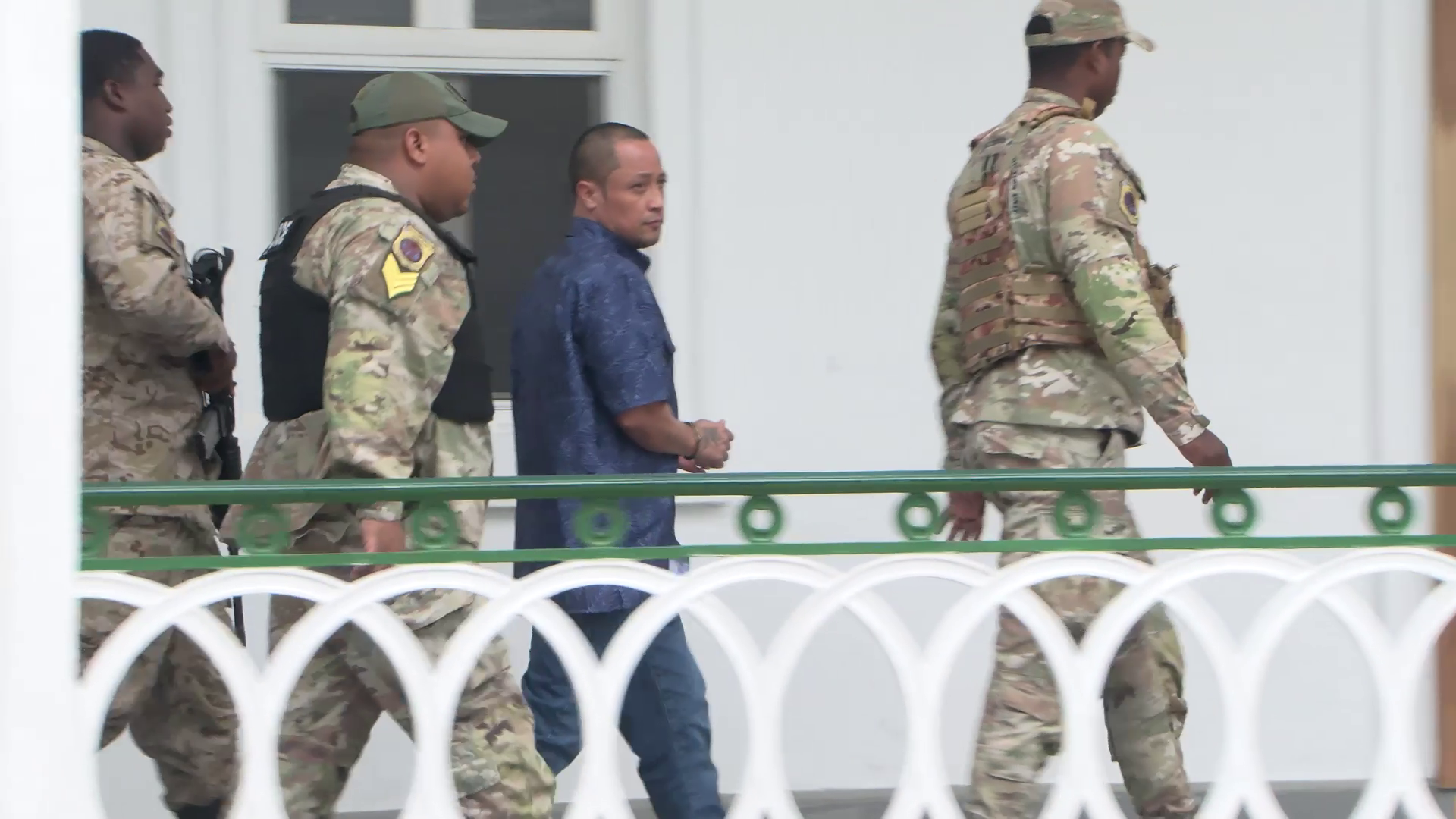
    In an incident that has sparked official scrutiny in Guyana, a serving detective sergeant with the Guyana Police Force has been taken into close custody following a shooting that left a local gold miner injured on Sunday afternoon, law enforcement officials confirmed in a public statement released Monday. The update, first published by Demerara Waves Online News on April 13, 2026, details a sudden confrontation that unfolded just after 5 p.m. local time at Chanta Creek, located along the Soesdyke-Linden Highway.

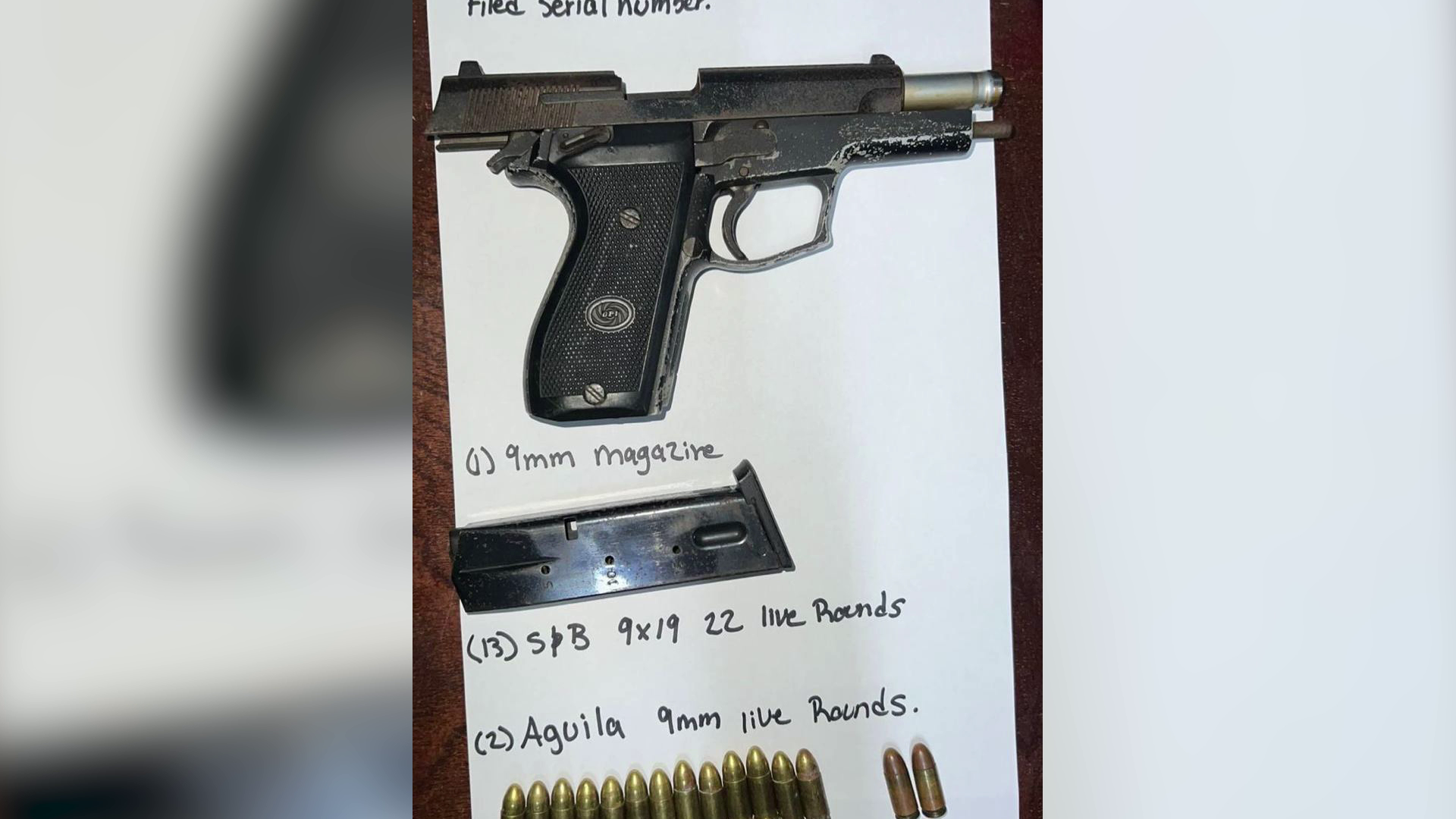
    According to official police accounts, the off-duty detective was visiting the popular creek-side location with members of his family when a verbal misunderstanding escalated into physical conflict. Multiple men involved in the dispute attacked the officer, with at least one assailant wielding a cutlass — a large, sharp machete-style blade common in the region. Facing the ongoing assault, the detective drew his service-issued 9mm pistol and fired a single round toward the group.

    The bullet struck a 37-year-old gold miner who resides in the nearby Yarrowkabra Creek community, hitting him in the right leg. Emergency response efforts began immediately after the confrontation: the injured miner was located by his relatives, who coordinated with arriving police officers to transport him quickly to Mackenzie Hospital for urgent medical care. As of the latest official update, the miner remains admitted for treatment and is listed in stable condition, with no immediate threat to his life.

    In line with standard police protocol for on and off-duty officer-involved shootings, the detective has been placed under close arrest pending a full, transparent investigation into the circumstances of the confrontation. Authorities have not yet released additional details about whether any other charges will be filed, or when the investigation is expected to be concluded. The incident comes as Guyana continues to grapple with public scrutiny of police use of force, alongside ongoing industry activity in the country’s artisanal gold mining sector.

  • Nalatenschap van Claudetta Toney: klein van gestalte, groot in daden

    Nalatenschap van Claudetta Toney: klein van gestalte, groot in daden

    Suriname’s beloved public advocate Claudetta Nita Toney, who passed away at 88, was cremated on Sunday, with hundreds of mourners filling the service to celebrate her decades of tireless work advancing cultural preservation, community development, and institutional reform across the South American nation.

    Described by loved ones and colleagues as small in stature but giant in impact, Toney leaves behind a legacy defined by fearlessness, relentless drive, and a rare balance of sharp business acumen and deep social commitment. Attendees gave a standing ovation to honor the late leader, remembered as a dignified figure who commanded respect through the consistent respect she extended to every person she met.

    Speakers at the funeral highlighted Toney’s far-reaching, often underreported influence across multiple sectors of Surinamese society. When proposed government cost hikes threatened to put mining rights holders out of business, Toney stepped forward immediately to advocate on the association’s behalf, rallying support and pushing back against harmful policy changes. She also dedicated years of work to mending strained relationships between natural resource concession holders and local Indigenous and community populations, working to build mutually beneficial partnerships that protected both economic opportunity and local livelihoods.

    A core pillar of Toney’s life’s work centered on lifting up marginalized community members. She firmly rejected the idea that success was reserved for a small privileged elite, arguing instead that every person deserved access to opportunity – and often only needed a small helping hand to reach their potential. To turn that belief into action, she created skills training programs for local residents, and helped countless people secure critical official documentation that opened doors to education, employment, and formal participation in public life.

    Another central focus of Toney’s advocacy was preserving, elevating, and formalizing Afro-Surinamese culture and traditional knowledge. She did not only push for cultural conservation – she argued for rigorous academic study and intentional development of these traditions to ensure they would thrive for future generations. Most notably, Toney organized traditional healers across Suriname into a unified collective, and her decades-long campaign for formal legal recognition and protection of traditional medicine resulted in the drafting of three landmark pieces of draft legislation.

    Toney often emphasized that Suriname’s own indigenous natural resources contained all the raw materials needed to build a robust, innovative traditional medicine sector. She frequently reminded her community: “Don’t discard your traditional knowledge – the Western world uses those same natural ingredients to make the pills you buy at the pharmacy.”

    To further embed traditional medicine in scientific practice, Toney championed the upcoming launch of the Claudetta Toney University of Suriname for Chemistry, Engineering & Research, set to open its doors in September. The institution will combine rigorous scientific research with the study of traditional healing practices to give evidence-based backing to traditional medicine, while also dedicating specialized research capacity to Suriname’s mining, oil, and gas sectors.

    Kortencia Sumter-Griffith, Toney’s close associate and long-time right hand, summarized her lifelong impact in a tribute at the service. “She was an incredibly important catalyst for both the economic advancement and cultural consciousness of people of African descent in Suriname,” Sumter-Griffith said. “Socially committed, culturally aware, business-minded, extraordinarily wise and loving, her presence radiated both warmth and authority. Her legacy is one of strength, compassion, perseverance, and courage.”

    Toney would have celebrated her 89th birthday in May.

  • Woman charged with murder of 7-year old daughter

    Woman charged with murder of 7-year old daughter

    On Monday, April 13, 2026, a 26-year-old domestic worker from Guyana was formally arraigned on a murder charge in connection with the alleged death of her 7-year-old daughter, law enforcement authorities confirmed. Sarah Elizabeth Shivpersaud, a resident of Fyrish Village on the Corentyne in Berbice, made her first court appearance at the New Amsterdam Magistrate’s Court, where the indictment against her was read by presiding Magistrate Michelle Mathias.

    Under standard judicial procedure for indictable offences, Shivpersaud was not required to enter a formal plea during the hearing. Following the presentation of the charge, the magistrate ordered that the defendant be remanded into state custody, and adjourned all further proceedings in the case to May 12, 2026, when the matter will resume for additional legal processing.

    The charge stems from an incident that unfolded at Shivpersaud’s home, where responding police officers first discovered the unresponsive body of 7-year-old Isabella Dabidyal, a student at the local Cropper Primary School. Alongside the deceased child, officers found the defendant’s 21-month-old son in a semi-conscious state, and observed self-inflicted knife wounds on the back of Shivpersaud’s heels.

    All three individuals were immediately transported to a nearby medical facility for urgent care. The toddler received treatment for his condition and was subsequently released to care, while Shivpersaud was admitted for observation and treatment of her injuries before being discharged into police custody to face legal action.

    According to official statements from investigators, the defendant told authorities she had been driven to desperation after being abandoned by her husband, leaving her and her two children without financial resources or access to food. The tragic case has drawn attention to widespread challenges of economic insecurity and unaddressed mental health support for vulnerable households in rural Guyanese communities, as the judicial process moves forward toward a full resolution of the murder charge.