分类: society

  • Parents watch in horror as flames engulf preparatory school

    Parents watch in horror as flames engulf preparatory school

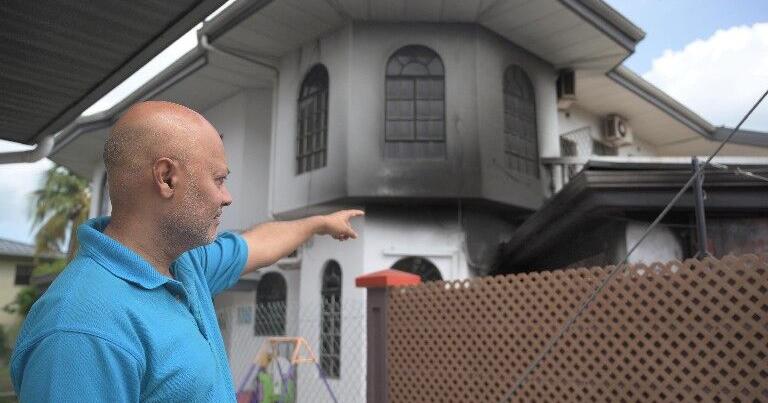
    A devastating late-night fire left a small community preparatory school with substantial structural and property damage earlier this week, with investigators pointing to a faulty electrical fan as the likely source of the ignition. The blaze broke out just after 9 p.m. on Thursday at Sarah’s Preparatory School, located in the Sunset Ridge neighborhood of La Romaine, triggering chaotic emotional scenes as alarmed parents and young students gathered outside the property while flames tore through two interior rooms of the two-story building.

    Local residents who spotted the emergency acted first, attempting to contain and douse the spreading flames before official emergency crews arrived. Firefighters responded swiftly to the scene and ultimately brought the blaze under full control, but the intensity of the fire left large sections of the building gutted, particularly the building’s playroom and adjoining cafeteria space.

    Sarah Mohammed, the school’s founding principal who has worked in education for 31 years, told local media outlet *Express* that early estimates put total losses at close to $100,000. Despite the heavy damage, Mohammed made clear she was deeply grateful for the quick action that stopped the fire from spreading further across the entire property, crediting both the immediate diligence of nearby neighbors and the rapid response of local fire department personnel for limiting destruction.

    Mohammed explained that the problematic fan was plugged into an electrical outlet inside the school’s children’s playroom, where it had gone undetected as a safety hazard. “Apparently, the fan was faulty and there was a motor spinning at the back, which we did not know. It got overheated and exploded. The entire play area and eating area were gutted. All of the kids’ doll houses, chairs and tables were destroyed. The fire was contained very quickly,” she shared.

    For the past five years, Mohammed has operated the school out of the rented Sunset Ridge property, which has grown into a beloved second home for hundreds of students and staff members over that time. She projects that full post-fire cleanup and safety inspections will take approximately one week to complete, after which the school plans to resume normal daily operations at the site.

    Remarkably, just one day after the fire, the school went ahead with a long-planned annual community event. Its popular Cultural Day programme, held this year at the nearby Bel Air Play Park, proceeded on schedule as planned, featuring performances from celebrated local pannist Joshua Regrello, the Fire Nation African Dance Troupe, the Woodland Indian Group, and traditional moko jumbie stilt performers.

    Speaking on the decision to move forward with the event despite the devastating setback, Mohammed emphasized the importance of honoring the young students’ hard work. “Even though the fire was a setback, the kids have practised for weeks and we cannot disappoint them. Regardless of how I feel, I need to be strong for them,” she said, highlighting the school community’s resolve to bounce back from the unexpected disaster.

  • Senior cop warns officers: Don’t abuse sick leave

    Senior cop warns officers: Don’t abuse sick leave

    In the wake of a horrific on-duty murder that shook the San Fernando Municipal Police Service to its core, senior law enforcement leaders have announced sweeping new accountability measures targeting abuse of sick leave, paired with organizational healing efforts to restore trust and morale among frontline officers. Senior Superintendent Wayne Mohammed, head of the Southern Municipal Police Division, outlined the reforms to reporters on the heels of an interfaith prayer service and ceremonial rededication held at the San Fernando Municipal Police Station, an event convened in response to the April killing of 13-year veteran corporal Anuska Eversley.

    Eversley’s body was discovered inside the King’s Wharf Municipal Police Station on April 19. A post-mortem examination confirmed she had been beaten and strangled to death. To date, three men have been charged with her murder, including Jivan “Bigs” Cooper, one of Eversley’s fellow officers at the station. The brutal incident left surviving personnel deeply traumatized, with many struggling to return to their regular duties in the building.

    Mohammed stressed that while comprehensive mental health and counseling support will remain available to all officers affected by the tragedy, the service must also address longstanding cultural issues that have eroded accountability. The most pressing reform he announced will ramp up scrutiny of officers exploiting extended sick leave policies to collect full salaries without fulfilling their job responsibilities. Mohammed said systematic organizational assessments will be rolled out across the division to verify that all posted personnel are actively carrying out their assigned duties.

    “Under my watch here now, I expect the best of everybody,” Mohammed told reporters. “I want everybody to have that passion for the job that they are supposed to have. I want them to show up for duty and serve the community.” He added that strengthened shift supervision has already been implemented to prevent future tragedies and close gaps in accountability, giving a public assurance that such an incident will not be repeated.

    The interfaith rededication event brought together senior and junior command staff to mark a collective turning point after months of grief. Leaders from multiple religious traditions led prayers for healing, protection, and professional strength for the department. As a visible symbol of renewal, the entire station building was repainted ahead of the ceremony.

    Wayne Mystar, Assistant Commissioner of Police and current head of the Trinidad and Tobago Municipal Police Service (TTMPS), framed the gathering as a core part of the department’s healing journey. “We want the flowers to bloom again. We want officers to get back on duty and ensure that they are performing their functions in a meaningful manner,” he said, noting that the entire force was left reeling by the traumatic killing.

    Mistar explained that the Trinidad and Tobago Police Service Social and Welfare Association and the San Fernando Mayor’s office have partnered to provide ongoing psychosocial support for Eversley’s colleagues. He shared the story of one female officer who, for weeks after the murder, refused to enter the station’s reception area and waited for her shift outside. “However, I had a meeting in San Fernando and I spoke with her. She said she’s now back inside, she’s okay now because of the necessary support that she has been given from the corporation, from the senior officers, from her colleagues,” Mystar reported.

    Local business community leaders also joined the event to express solidarity with officers, while pushing for continued improvements to public safety in downtown San Fernando. Kiran Singh, president of the Greater San Fernando Chamber of Commerce, echoed calls for reform, noting that community leaders have heard persistent reports of underperforming officers. “We heard that some officers are not pulling their weight and we expect that to change in the coming days,” Singh said.

    Singh also renewed the business community’s longstanding request for additional patrols across downtown San Fernando, covering not just standard business hours but also off-peak periods, weekends, and public holidays. More consistent visible patrols, he argued, would encourage local businesses to extend their operating hours and help rebuild public confidence so that shoppers feel safe returning to the area’s commercial corridors. Both law enforcement and community leaders framed the day’s events as the start of a sustained push to rebuild the department from within and restore public trust.

  • $2.5m Catalyst Project launched, aims to curb youth crime

    $2.5m Catalyst Project launched, aims to curb youth crime

    The island nation of Saint Lucia has formally kicked off national stakeholder consultations for its ambitious $2.5 million Catalyst Project, a groundbreaking public initiative designed to cut rates of youth crime and violence through targeted social programming and community-centered support.

    The consultations, a two-day collaborative planning event hosted by the Department of Equity, Social Justice, Gender and Older Persons, opened on May 27, 2026. This launch comes just weeks after Equity Minister Emma Hippolyte first unveiled the project during her presentation of the 2026-2027 national budget. The entire initiative is backed by financing from the Caribbean Development Bank, and the input-gathering phase is a critical early step to map out the program’s island-wide rollout.

    In her remarks at the opening of the consultations, Minister Hippolyte emphasized that the government’s approach marks a shift from traditional crime-fighting strategies. “The Government recognises that sustainable crime reduction requires more than policing alone. We must invest in our people, strengthen our families, and create meaningful opportunities for our young people to thrive,” she said.

    Unlike reactive enforcement-focused policies, the Catalyst Project targets the underlying roots of youth crime and antisocial conduct, centering its work on three core pillars: prevention, youth empowerment, and systemic social change. A wide range of support services will be delivered through the program, including targeted reintegration support for young people exiting the justice system, specialized psychosocial counseling, family capacity-building workshops, structured after-school activities, and custom interventions for youth identified as most at-risk of involvement in crime.

    Dr. Charmaine Hippolyte Emmanuel, Permanent Secretary of the Department of Equity, noted that the inclusive consultation process is intentional: it is designed to bring diverse voices into the project’s design and decision-making stages. Attendees at the planning event span multiple sectors, including representatives from government agencies, school leaders and education professionals, practicing social workers, civil society organization members, youth outreach workers, and local community leaders.

    “This consultation is about bringing all key stakeholders to the table so that together we can design interventions that are inclusive, effective, and capable of making a real difference in the lives of vulnerable young people and families,” Dr. Hippolyte Emmanuel explained.

    Project officials have stressed that cross-sector collaboration is non-negotiable to ensure the final program aligns with on-the-ground community needs and delivers long-lasting, practical solutions to youth violence. Tanzia Toussaint, Director of Social Transformation, framed the Catalyst Project as a fundamentally people-centered response to the systemic challenges facing young Saint Lucians and their families.

    “We seek to build stronger systems of support around young people and families while creating pathways for empowerment, inclusion, and positive community engagement,” Toussaint said.

    Beyond its direct goal of reducing youth crime, the consultation launch underscores the Saint Lucian government’s sustained commitment to strengthening the country’s national social protection systems and expanding robust support networks for all vulnerable populations across the island.

  • Government warns livestock owners over stray animals

    Government warns livestock owners over stray animals

    In a firm new push to address a long-running public safety hazard, Saint Lucia’s Department of Agriculture, Fisheries and Food Security has issued an urgent warning to all livestock owners across the island: bring stray and roaming animals under immediate control, or face strict legal consequences. The department’s announcement comes as officials commit to ramping up enforcement of longstanding animal control regulations that have failed to fully resolve the persistent issue of unconfined livestock.

  • LESSONS LEARNT!

    LESSONS LEARNT!

    Seven months after Hurricane Melissa swept through Jamaica’s southwestern parishes, leaving a trail of billions of dollars in damage and widespread service disruptions, the Caribbean nation is gearing up for the 2025 Atlantic hurricane season, which officially kicks off on June 1 and runs through November 30. Major public utility companies across the island say they have integrated hard-won lessons from last year’s storm into extensive upgrades, leaving them as prepared as possible to face whatever the new season brings.

    Forecasters at the United States National Oceanic and Atmospheric Administration (NOAA) are projecting a below-normal season for 2025, giving the island some breathing room after last year’s destructive storm. The agency’s latest outlook puts the probability of a below-normal season at 55%, compared to a 35% chance of near-normal activity and just a 10% chance of an above-normal season. In total, NOAA expects between eight and 14 named storms (systems with sustained winds of 39 mph or higher) to form this season. Of those, three to six are forecast to strengthen into hurricanes with winds of 74 mph or above, and one to three of those are expected to develop into major hurricanes carrying winds of 111 mph or higher.

    Last week, representatives from Jamaica’s four largest critical service providers — mobile and fixed network operators Digicel and Flow Jamaica, electric utility Jamaica Public Service Company (JPS), and the National Water Commission (NWC) — laid out their comprehensive preparedness plans during a Jamaica Observer Press Club held at the newspaper’s Kingston headquarters, confirming their infrastructure and response systems have been upgraded to withstand future storm events.

    For JPS, which suffered the most severe damage from Hurricane Melissa, the recovery and rebuilding process has been a transformative one. The storm caused an estimated $3.5 billion in damage to the company’s transmission and distribution networks, cutting power to more than 540,000 customers across the island. Speaking at the event, JPS Chief Operating Officer Lance Becca told reporters that power has now been restored to more than 99.9% of affected customers, with only a small number of isolated connections still pending work.

    Rather than simply replacing damaged infrastructure with identical materials, Becca explained that JPS has used the recovery period to build stronger, more wind-resistant systems. “We’re not just going back with the same old poles,” he said. “We’re using thicker poles, and we’ve adopted a new technology called PoleCrete, a rapid-setting backfill that secures pole foundations far more effectively than traditional materials. We’ve also added more storm guides to anchor poles, making them far more resistant to the high winds that come with hurricane systems.” All lessons identified during the response to Hurricane Melissa have now been integrated into the company’s new season planning, he added.

    Digicel’s Chief Executive Officer Stephen Murad noted that hurricane preparedness has become an ongoing, permanent part of the company’s operations rather than a pre-season activity. “I don’t think we have been out of hurricane preparation and execution for the past two years, so I don’t think hurricane prep really exists as a one-off phrase any more in our world,” Murad said, referencing back-to-back storm activity dating to Hurricane Beryl in July 2024.

    Within three months of Hurricane Melissa hitting Jamaica last October, Digicel had restored 100% service to both its mobile and fixed network customers. Since that recovery was completed, the company has focused on expanding and hardening its infrastructure. It has added 10 new communication towers, bringing its total network to 935 towers, with five more planned for construction this year to improve coverage amid Jamaica’s growing number of high-rise buildings, which can block wireless signals. The company has also laid additional fibre transport routes, deployed more solar-powered cell sites, and built out alternative connectivity options via satellite and microwave technology to keep networks running during extended outages. Operationally, Digicel has also refined its large-scale fuel distribution protocols to keep backup generators running for longer periods during grid disruptions.

    “Up to the hurricane we had 925 towers in Jamaica as part of this expansion programme…Every year we will build more towers, because we need more coverage. More high-rise buildings in Jamaica means coverage is intercepted by concrete and steel, so we need to continually expand our infrastructure to meet that need,” Murad explained. “I always think the most important thing is you have to learn and learn quickly, and do things differently, because I think the public would not forgive us if we didn’t learn from our experiences and adapt.”

    Flow Jamaica’s Vice-President and General Manager Stephen Price said the company has also poured hundreds of millions of dollars into infrastructure upgrades since Hurricane Melissa, adapting to a 60% jump in network demand as Jamaicans increasingly rely on digital services. As of the Press Club event, 100% of Flow’s mobile customers have had their service fully restored, while 82% of fixed network customers are back online, with remaining recovery work ongoing. Price noted that network traffic across Flow’s networks has grown roughly 60% since last October, reflecting a steady increase in digital adoption across the country.

    To date, Flow has invested approximately US$85 million in core network infrastructure and an additional US$27 million to expand spectrum capacity. The company has also buried 80 kilometers of vulnerable transmission cables underground to protect them from wind damage, and reinforced critical sub-sea cable landing sites in storm-prone areas including Negril and Black River to reduce risk from storm surge. Through a new partnership with Starlink, Flow now has direct-to-cell satellite capabilities that support roughly 40% of its mobile network, dramatically expanding its disaster recovery options for both residential and business customers.

    “While no network is completely immune to any kind of extreme weather event, what is key is that we have robust business continuity plans in place to respond as quickly as possible when storms hit,” Price said. “We are as prepared as we can be for this season.”

    Even the National Water Commission, which is still completing repairs to some damaged infrastructure, says it is entering the new season in a far stronger position than it was ahead of Hurricane Melissa. NWC Acting Corporate Public Relations Manager Delano Williams told the Press Club that water service has been restored to between 98% and 99% of the commission’s 551,000 customers, though the storm caused such widespread damage that some communities still experience intermittent service while repairs are finalized.

    “Almost no infrastructure escaped unscathed from the scale of damage Hurricane Melissa brought. Even our 100,000-gallon storage tanks were decimated,” Williams said. “What that means is that even while we’ve restored most of our facilities, there are still places where water supply has not come back to its optimum regularity. Where residents used to get water seven days a week, they may now get it four or five days while we complete repairs to damaged pipelines and rehabilitate saturated wells.”

    To address these vulnerabilities, the NWC is investing approximately $1.2 billion in backup power and resilience projects. The commission has already begun procuring mobile backup generators, which will be deployed at both primary treatment plants serving major town centers and secondary distribution facilities that deliver water to inland and rural communities. It is also rehabilitating damaged wells and developing alternative water sources across the island to reduce reliance on single systems during storms. When asked if Jamaicans should feel confident heading into the new season, Williams gave a clear answer: “My short answer is yes.”

    The 2025 hurricane season comes as Jamaica continues to clean up and rebuild from the devastation of Hurricane Melissa, with utility companies across the island emphasizing that every lesson from the 2024 storm has been used to strengthen their ability to serve customers through future extreme weather events.

  • ‘You are the Michelin’

    ‘You are the Michelin’

    For 27 years, the Jamaica Observer Table Talk Food Awards has stood as more than a celebration of Caribbean culinary excellence—it has served as a foundational pipeline for nurturing emerging Jamaican talent in the hospitality and food industries. This year, the long-running initiative continued its legacy of investment in local youth, awarding six students from the University of Technology (UTech) Jamaica’s School of Hospitality and Tourism Management with a combination of full scholarships and need-based bursaries.

    The six recipients—Khalisa McLean, Kanye Swaby, Yolan Davis, Tyssanne Thomas, Kia Campbell, and Anna-Kaye Doyle—earned their awards after a rigorous conversational interview process conducted by a panel of industry and academic leaders. Headed by Novia McDonald-Whyte, the award program’s founder and chair, the panel also included UTech Chief Technical Officer Dr Garcia Green, Jamaica Observer Managing Editor Miguel Thomas, and guest judge Angelique Beaubrun. Following the interviews, three students were selected for full scholarships, while the remaining three received partial bursaries to support their ongoing studies.

    Since the scholarship program was launched alongside the Food Awards nearly three decades ago, it has disbursed more than JMD $20 million in financial support to over 60 aspiring culinary professionals. McDonald-Whyte, who also serves as senior associate editor for lifestyle and social content at the Jamaica Observer and is a former UTech lecturer, framed the initiative as a natural extension of the publication’s core mission: lifting Jamaican communities, a philosophy first laid out by late chair Gordon “Butch” Stewart. For her, the program also addresses a gap she has observed throughout her decades in the industry: many talented local students lack the access to industry networks, fine dining experiences, and educational resources that their more privileged peers take for granted.

    In remarks to candidates ahead of the interviews, McDonald-Whyte emphasized a core expectation for the next generation of Jamaican culinary leaders: centering and elevating authentic local cuisine even as the global food landscape grows more interconnected. “We need to stop searching for the Michelin, because we are the Michelin here,” she told the aspiring chefs. “We need to really celebrate that which is ours, elevate that which is ours, and, obviously, we look to you guys to do that because you are the future. Don’t think that it’s exhausted, we’ve only just begun.”

    That vision resonated deeply with the three full scholarship recipients, each of whom brings a unique personal perspective and creative approach to Jamaican culinary arts.

    Tyssanne Thomas, a second-year student awarded the Novia McDonald-Whyte Scholarship, said her path to culinary arts grew out of a personal journey to rebuild her relationship with food. A self-described reformed picky eater, she developed a curiosity for the ingredients and processes that shape the food people eat every day. When asked to describe an original dish she might create for the panel, she outlined a creative reimagining of local staple ingredients: a cornmeal soufflé topped with caramelised plantains and bright passion fruit sauce. For Thomas, cooking is far more than following a recipe—it is an expression of individual identity. “We all are humans, but we have different fingerprints. You may be a chef, but your story is different from my story…a standard recipe, but the heart and soul that I put in it is different from what you put in it,” she explained. Eager to live up to the program’s expectations, she aims to serve as an inspiration for other young aspiring culinary professionals.

    For Anna-Kaye Doyle, a 25-year-old third-year student who works full-time to support her son and mother as the household’s sole breadwinner, the full scholarship opens doors that have long been closed to her due to family responsibilities. She recalled the heartbreak of having to turn down a once-in-a-lifetime exchange program spot in Canada after being selected, saying “My fear is graduating as a ghost.” Still, she has continued to nurture her creativity, focused on reimagining familiar ingredients in unexpected new forms. “My whole goal when it comes on to food is to be out of the norm, it is to present what you already know in a way that you never thought of it,” she said.

    Kia Campbell, a third-year Japanese-Jamaican student and full-time worker who holds a first-degree black belt in karate, draws on her dual cultural heritage to create innovative fusion cuisine. When asked about an original dish concept, she described a fusion sushi roll blending Jamaica’s iconic ackee with Japanese natto—a creative combination that reflects her overlapping identities. For Campbell, the scholarship allows her to serve as an ambassador for young people from mixed and multicultural backgrounds, embodying Jamaica’s national motto “Out of Many One People.” “To show young people from different backgrounds and ethnicities that wherever you want to be, no matter where you come from, you can be…if you really want it,” she said.

    McLean, Swaby, and Davis rounded out the group of awardees as bursary recipients, bringing their own innovative ideas to the table. Looking back at the program’s 27-year history, McDonald-Whyte noted how far the culinary industry has come in Jamaica. When the Food Awards first launched, working in a professional kitchen was not seen as a prestigious or desirable career path. Today, she pointed out, local caterers and chefs are celebrated stars—proof that the program’s decades of investment in lifting local talent have already yielded transformative results for the nation’s culinary landscape.

  • Buckets, barriers and ‘blessings’

    Buckets, barriers and ‘blessings’

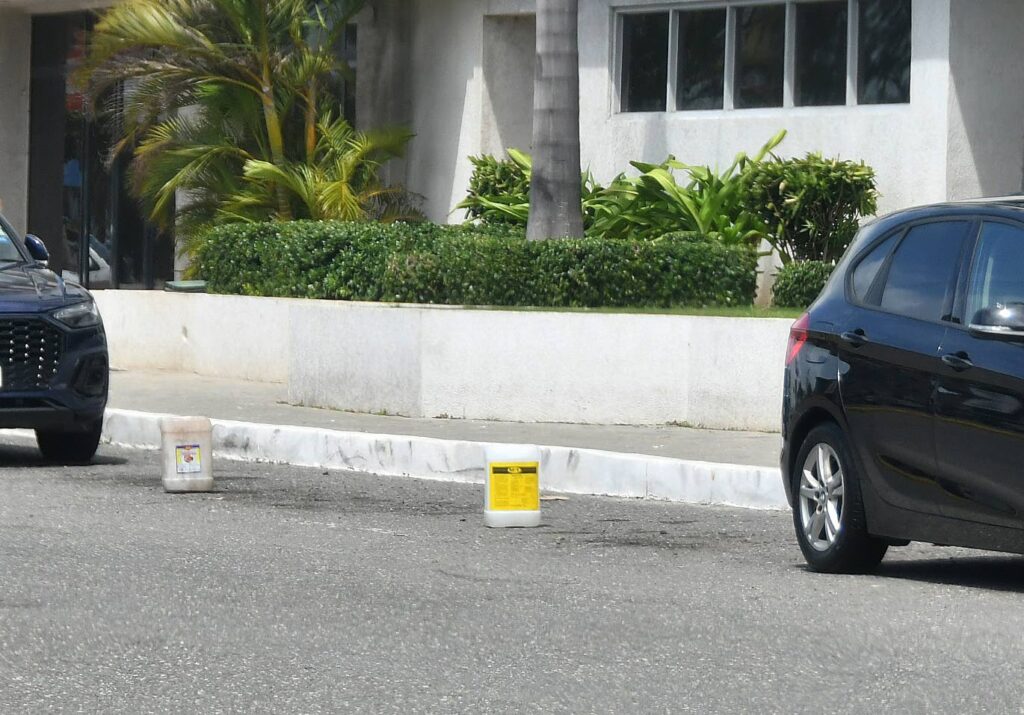
    Downtown Kingston, Jamaica’s bustling central business district, has seen the rapid spread of an unregulated informal parking practice that has left many motorists frustrated, intimidated, and facing unexpected extortionate charges. An increasingly common sight for drivers navigating the area’s crowded streets is informal actors blocking public legally designated parking spaces—marked by white-painted kerbs—with buckets, plastic containers, or other debris, only moving the obstacles after motorists agree to pay a so-called “drink money” or “blessing” fee for access.

    Multiple motorists who frequent the district’s major thoroughfares, including King Street, Harbour Street, Ocean Boulevard, Orange Street, and Princess Street, have shared accounts of repeated run-ins with these unauthorised attendants. One anonymous motorist told Jamaica’s Sunday Observer he has been approached for payment more than 10 times in just three months, with charges ranging as high as JMD $200 per spot. In one incident, his refusal to pay after growing fed up with the practice sparked a heated, hostile argument that left him shaken. Another motorist recounted a March encounter on Ocean Boulevard where an attendant directed him into a spot under the false pretense of offering car washing services, then chased his vehicle down the street demanding payment when he tried to leave without paying. On a separate occasion on King Street, his refusal to pay a $500 request devolved into a public screaming match.

    This long-time motorist said repeated interactions with the unauthorised attendants have left him feeling violated, extorted, and constantly on edge. He expressed particular concern for less assertive drivers who may be too intimidated to refuse payment, fearing the confrontation could escalate into violence. “It is traumatic to have to go through this, and then you are basically at the peril of them if you should take actions on your own,” he explained, noting that most ordinary Jamaicans are unwilling to risk personal safety over a parking fee. He has called for urgent intervention from local law enforcement, including increased foot and mobile patrols across downtown Kingston and the immediate removal of all blocking debris from public parking spaces, pointing out that leaving buckets and old oil containers on roadways already violates Jamaica’s litter laws.

    A recent on-the-ground investigation by the Sunday Observer confirmed the widespread nature of the practice. During a visit to downtown Kingston, the news team encountered multiple blocked spots along Ocean Boulevard. When the team pulled into a spot marked by a plastic container, a man in a reflective safety vest immediately removed the obstacle and allowed them to park. As the team prepared to leave and started the vehicle, the attendant reappeared, standing in front of the car on the roadway to block exit and request a “blessing” for his service. After clarifying the request was for cash to buy drinks, the team paid $100 before being allowed to leave. The team also observed another attendant demanding $500 from an unsuspecting visiting driver; when the driver refused the exorbitant rate, the attendant became visibly angry and hounded him until a lower fee was negotiated and paid. Similar operations were also observed along Darling Street outside the busy Coronation Market.

    The informal attendants, however, frame their work not as extortion, but as a valuable informal service that addresses gaps left by city planning failures. Most operate in plain clothes or cheap reflective vests, appearing seemingly out of nowhere when a driver searching for a parking spot approaches the area. One attendant interviewed near Coronation Market argued that his work protects motorists from predatory tow truck operators that regularly target illegal parking zones—marked by yellow-painted kerbs—across downtown. He claimed tow truck operators often act in bad faith, towing vehicles even when drivers are still nearby, and charge exorbitant retrieval fees that far outpace the small “donation” he requests. He added that on busy market days, the limited number of official government-provided parking spots fills up almost immediately, leaving drivers with few legal options as almost all extra road space is marked no-parking. He insisted that payments are voluntary donations for his service, not mandatory demands, and that he adjusts his expectations based on what drivers can afford. “We nah do nothing wrong,” he stated.

    Local law enforcement confirms that the practice has not generated many formal complaints to date, but police acknowledge that a lack of reports does not mean the problem does not exist. Superintendent Mischka Forbes, head of the Kingston Central Police division, told the Sunday Observer no recent formal complaints have been logged, but did not deny that the practice is widespread across the district.

    The rise of informal unauthorised parking comes as downtown Kingston has struggled for years with a chronic shortage of legal parking that local authorities have repeatedly tried and failed to fully resolve. Both the Urban Development Corporation and the Kingston and St Andrew Municipal Corporation (KSAMC) have built public parking lots to ease congestion, but rising traffic volumes have consistently outpaced available capacity. Most recently, KSAMC has announced a series of new parking initiatives to address the crisis, including the rollout of paid parking on Orange Street, a redevelopment partnership for Gold Street with the Jamaica Stock Exchange, and plans to introduce metered parking across 32 streets spanning downtown, New Kingston, and Cross Roads. Even with these planned changes, however, downtown’s parking gap is expected to persist for years, leaving drivers vulnerable to the informal extortion schemes that have become a regular part of navigating the busy commercial district.

  • Preparing for the unknown

    Preparing for the unknown

    As simmering geopolitical tensions in the Middle East push global shipping costs sharply higher and introduce new risks to already strained international supply chains, Jamaica’s core utility providers are taking aggressive, proactive steps to stockpile critical infrastructure equipment and ramp up investment in emergency readiness ahead of the 2026 Atlantic Hurricane Season. Senior industry leaders say hard-won lessons from the COVID-19 pandemic and repeated global disruptions have underscored the urgent need for forward planning in an era of unprecedented global uncertainty.

    Executives from four of Jamaica’s largest utility and infrastructure providers — Digicel, Flow Jamaica, Jamaica Public Service (JPS), and the National Water Commission (NWC) — outlined their updated preparedness strategies during a public forum held last Thursday at the Jamaica Observer Press Club. They emphasized that modern hurricane preparation now extends far beyond traditional weather tracking, with transnational conflicts, persistent supply chain bottlenecks, and soaring transportation costs reshaping every part of emergency planning.

    For Digicel Chief Executive Officer Stephen Murad, the adjusted strategy is straightforward: secure essential supplies early, and stock more than historical protocols recommend. “COVID taught us to plan multiple years in advance, so we’ve been purchasing all critical equipment years ahead of need. We’re not willing to take any unnecessary risks at this point,” Murad explained. He noted that this approach was forged not just by the pandemic, but by more recent geopolitical shocks, including the ongoing Russia-Ukraine conflict and escalating tensions across the Middle East. To mitigate supply chain disruption risks, Digicel has overhauled its long-standing procurement framework, allocating larger upfront budgets and accelerating purchase timelines for all key network and recovery equipment.

    Stephen Price, Vice-President and General Manager of Flow Jamaica, echoed Murad’s observations, noting that constant uncertainty has become the default operating environment for Caribbean utility providers. “From COVID onward, we’ve recognized we operate in a world defined by volatility, uncertainty, complexity and ambiguity,” Price said. “We have to plan with this reality front of mind, because any unforeseen crisis can emerge at any time.”

    Price added that the financial ripple effects of global instability are already being felt across Jamaica’s utility sector, with dramatic cost increases hitting operational budgets. “We have to buy ahead and account for all the supply chain challenges Stephen outlined, but right now this preparedness comes with a huge price tag. We’ve seen shipping costs for some equipment double, and the cost of key products has also risen 100 percent in some cases,” he said.

    The renewed focus on preparedness comes as Jamaica enters the lead-up to another hurricane season, less than a year after Hurricane Melissa swept across parts of the island in October 2025, leaving widespread damage to public and private infrastructure and placing massive strain on the country’s critical service providers.

    At the NWC, the country’s state-owned water utility, preparations have centered on expanding inventories of core recovery equipment including generators, water pumps, and replacement pipes, while locking in pre-emergency service agreements with private water trucking operators. “One detail we’ve had to prioritize much more heavily is strengthening our partnerships with trucking operators ahead of any storm, because their rates skyrocket once water supply shortages hit after a disaster,” explained NWC Corporate Public Relations Manager Delano Williams.

    JPS Chief Operating Officer Lance Becca noted that the power utility has also expanded cross-border partnership networks with international utilities and suppliers to guarantee fast access to critical materials in the aftermath of major storms. “A key lesson we’ve taken away is the importance of diversifying our supply and support portfolio,” Becca explained. “We’ve built formal partnerships with other key industry players across the globe, and when Hurricane Melissa hit, that relationship allowed us to quickly source emergency supplies from peer utilities when we needed them.”

    Across all four companies, leaders agreed that 21st-century hurricane preparedness can no longer be approached as a purely local challenge. Events occurring thousands of miles from Jamaica’s borders now directly impact how quickly emergency supplies can reach the island, how much critical equipment costs, and ultimately how effectively the country can recover after a storm makes landfall.

  • Staying afloat

    Staying afloat

    Seven months after Category 5 Hurricane Melissa tore through Jamaica’s southwestern coast, leaving widespread destruction of homes and local livelihoods in its wake, three small business owners in Treasure Beach, St Elizabeth are slowly rebuilding their operations, bracing for the 2026 Atlantic hurricane season and holding out hope for a calm, storm-free year.

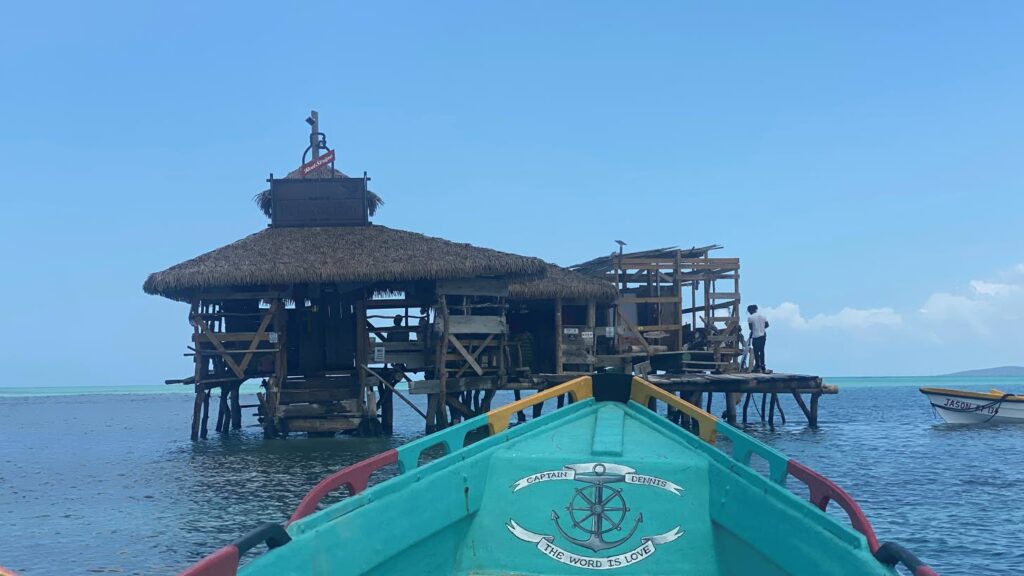
    Denever “Floyd” Forbes, owner of the world-famous Pelican Bar, Dennis Abrahams, founder of Captain Dennis Boat Tours, and Ridge Harvey, operator of Captain Ridge Boat Tours, have collectively rehired 16 local workers, breathing much-needed life back into the region’s community tourism sector, the backbone of the local economy. For Forbes, this rebuild marks the second time he has restored his iconic floating bar after severe hurricane damage.

    Last October, Hurricane Melissa scattered the broken wooden frames of Pelican Bar across the entire coastline, but Forbes managed to reconstruct the popular destination in just two months. The rebuild was far more than a personal win: boat tour operators across the region depend on Pelican Bar as a core stop for their visitors, making its restoration critical to the entire local tourism ecosystem.

    The new iteration of the bar is smaller than its predecessor, so Forbes currently rotates his six-member team on a biweekly three-by-three schedule to accommodate slower business. Still, he remains grateful for any progress. “Things are not bright like before, but we still give thanks, we have something working with,” he shared in a recent interview. Reflecting on his experience with 2024’s Hurricane Beryl, which spared his bar but destroyed other local properties, and 2025’s devastating Melissa, which impacted every community across the southwestern coast reaching into Westmoreland, Forbes said he is hopeful the 2026 season will bring no major storms. “I am hoping for the best…I wouldn’t want it to come as terrible as last year and the year before,” he added.

    Pelican Bar has recently drawn a high-profile visitor: American actress and entrepreneur Ayesha Curry, who has Jamaican heritage. Forbes frames his business as an inclusive space for everyone, from A-list celebrities to everyday tourists and local residents. “It is everyone’s home away from home. I am not too surprised for anyone who comes here, because I provide it as everyone’s home away from home, it is a throne, and as long as anyone enters they wear the crown, whether male or female,” he explained. Boat tours to the bar depart from multiple launch points across the region: Treasure Beach, Black River, and Parottee Bay.

    Abrahams, a Treasure Beach native who has operated coastal boat tours for 30 years, has weathered four major hurricanes along Jamaica’s south coast. He says Hurricane Melissa was unlike any storm he has ever experienced. “Melissa is one of them that devastated the coastal area all the way from Treasure Beach right back to Westmoreland and beyond, because it came off the water it took a different approach than the rest that I have experienced. Coming off the sea then, there is nothing to shelter us, so everything was exposed,” he said. The storm completely wiped out all of Abrahams’ assets, but within three weeks, he had cleared debris and started rebuilding, determined to be open in time for the December winter tourist season. Today, his business employs eight local workers and offers a diverse range of experiences, from coastal excursions and snorkeling on calm days to trips to Pelican Bar and the Black River Safari. It was Abrahams who transported Curry to Pelican Bar during her recent visit, and he says she was impressed with the warm, laid-back service his team provides.

    Abrahams credits local social media influencers with helping grow his business and market Jamaica as a tourist destination to international visitors, saying he is deeply grateful for their support. Like Forbes, he is praying for a quiet 2026 hurricane season, noting that small businesses are still recovering and are in no position to absorb another major disaster. Beyond his own hopes, he is urging residents and local leaders to prioritize storm preparedness education, drawing on his recent experience with Melissa to help other Jamaicans stay safe. He says preparedness goes far beyond stocking up on food, water, and flashlights: residents need to physically reinforce their homes by adding extra screws to roofs and boarding up windows, and those in low-lying coastal areas must evacuate inland immediately when storm warnings are issued, without ignoring evacuation orders. “The more people are educated, more lives will be saved, fewer injuries will be reported, and post-hurricane spend will be less,” he explained, calling on the government and storm survivors to lead public preparedness workshops across the island.

    For Harvey, who operates his boat tours out of Parottee Bay, business has slowly restarted, but the broader community of Parottee still faces significant ongoing challenges seven months after the storm. Harvey currently employs two people, and he says tours are running, but increased visitor numbers are critical to full economic recovery for the entire region. While power has been restored to most of Parottee, a community where most residents are independent small business owners working in tourism or fishing, access to consistent potable running water remains a major unmet need. “The storm was an earthquake and tornado, so everything mash up. We nah get nuh water. Trucks do come, but as they go up the road and come back they say they don’t have water, and for a big, long water truck, how you don’t have water, or is some favouritism?” Harvey asked. He added that while some residents still lack permanent housing, many have received government disaster assistance, a small bright spot amid ongoing recovery. Across all three businesses, the message is clear: resilience has carried the community this far, but a calm 2026 hurricane season is critical to building back better for southwestern Jamaica’s tourism economy.

  • WATCH: KSAMC moves to address homelessness in downtown Kingston

    WATCH: KSAMC moves to address homelessness in downtown Kingston

    Amid rising public anxiety over unhoused populations gathering in Justice Square and other downtown Kingston corridors, the Kingston and St Andrew Municipal Corporation (KSAMC) has moved forward with a coordinated, multi-stakeholder plan to address the crisis. The action comes after weeks of growing community complaints about encampments and unserved needs in high-foot-traffic areas including Parade and central Justice Square.

    Donna-Gaye Brady, acting inspector for KSAMC’s Poor Relief Department, outlined that the new initiative balances two core goals: upgrading living conditions in public spaces currently impacted by homelessness, and connecting unhoused residents directly to critical support services they have long lacked access to. As a public body, KSAMC carries a legal and ethical mandate to support vulnerable unhoused communities across the region, prompting the push for urgent, solution-focused action after sustained public outreach.

    The framework for the intervention was developed during a recent strategic workshop themed “From Street to Stability: A Coordinated Multi-Agency Approach to Homelessness”, which convened more than 35 cross-sector stakeholders. Participants included senior representatives from the Jamaica Constabulary Force, public and private medical institutions, regional mental health service agencies, and local community organizations that already work closely with unhoused populations. Unlike previous conversations that focused only on documenting the scope of the crisis, Brady emphasized that this workshop centered on designing actionable, implementable solutions to street homelessness.

    Brady hailed the collaborative workshop as a clear success, noting that input from across sectors has already shaped clear next steps for the municipality. Data and insights gathered during the event will guide all future programming, with KSAMC projecting that tangible, visible improvements for both unhoused residents and local communities will emerge by 2025. The cross-agency model is designed to eliminate fragmented, uncoordinated support, leveraging specialized expertise from each partner to deliver more holistic care to people living on the streets of Kingston and St Andrew.