分类: society

  • Buckets, barriers and ‘blessings’

    Buckets, barriers and ‘blessings’

    Downtown Kingston, Jamaica’s bustling central business district, has seen the rapid spread of an unregulated informal parking practice that has left many motorists frustrated, intimidated, and facing unexpected extortionate charges. An increasingly common sight for drivers navigating the area’s crowded streets is informal actors blocking public legally designated parking spaces—marked by white-painted kerbs—with buckets, plastic containers, or other debris, only moving the obstacles after motorists agree to pay a so-called “drink money” or “blessing” fee for access.

    Multiple motorists who frequent the district’s major thoroughfares, including King Street, Harbour Street, Ocean Boulevard, Orange Street, and Princess Street, have shared accounts of repeated run-ins with these unauthorised attendants. One anonymous motorist told Jamaica’s Sunday Observer he has been approached for payment more than 10 times in just three months, with charges ranging as high as JMD $200 per spot. In one incident, his refusal to pay after growing fed up with the practice sparked a heated, hostile argument that left him shaken. Another motorist recounted a March encounter on Ocean Boulevard where an attendant directed him into a spot under the false pretense of offering car washing services, then chased his vehicle down the street demanding payment when he tried to leave without paying. On a separate occasion on King Street, his refusal to pay a $500 request devolved into a public screaming match.

    This long-time motorist said repeated interactions with the unauthorised attendants have left him feeling violated, extorted, and constantly on edge. He expressed particular concern for less assertive drivers who may be too intimidated to refuse payment, fearing the confrontation could escalate into violence. “It is traumatic to have to go through this, and then you are basically at the peril of them if you should take actions on your own,” he explained, noting that most ordinary Jamaicans are unwilling to risk personal safety over a parking fee. He has called for urgent intervention from local law enforcement, including increased foot and mobile patrols across downtown Kingston and the immediate removal of all blocking debris from public parking spaces, pointing out that leaving buckets and old oil containers on roadways already violates Jamaica’s litter laws.

    A recent on-the-ground investigation by the Sunday Observer confirmed the widespread nature of the practice. During a visit to downtown Kingston, the news team encountered multiple blocked spots along Ocean Boulevard. When the team pulled into a spot marked by a plastic container, a man in a reflective safety vest immediately removed the obstacle and allowed them to park. As the team prepared to leave and started the vehicle, the attendant reappeared, standing in front of the car on the roadway to block exit and request a “blessing” for his service. After clarifying the request was for cash to buy drinks, the team paid $100 before being allowed to leave. The team also observed another attendant demanding $500 from an unsuspecting visiting driver; when the driver refused the exorbitant rate, the attendant became visibly angry and hounded him until a lower fee was negotiated and paid. Similar operations were also observed along Darling Street outside the busy Coronation Market.

    The informal attendants, however, frame their work not as extortion, but as a valuable informal service that addresses gaps left by city planning failures. Most operate in plain clothes or cheap reflective vests, appearing seemingly out of nowhere when a driver searching for a parking spot approaches the area. One attendant interviewed near Coronation Market argued that his work protects motorists from predatory tow truck operators that regularly target illegal parking zones—marked by yellow-painted kerbs—across downtown. He claimed tow truck operators often act in bad faith, towing vehicles even when drivers are still nearby, and charge exorbitant retrieval fees that far outpace the small “donation” he requests. He added that on busy market days, the limited number of official government-provided parking spots fills up almost immediately, leaving drivers with few legal options as almost all extra road space is marked no-parking. He insisted that payments are voluntary donations for his service, not mandatory demands, and that he adjusts his expectations based on what drivers can afford. “We nah do nothing wrong,” he stated.

    Local law enforcement confirms that the practice has not generated many formal complaints to date, but police acknowledge that a lack of reports does not mean the problem does not exist. Superintendent Mischka Forbes, head of the Kingston Central Police division, told the Sunday Observer no recent formal complaints have been logged, but did not deny that the practice is widespread across the district.

    The rise of informal unauthorised parking comes as downtown Kingston has struggled for years with a chronic shortage of legal parking that local authorities have repeatedly tried and failed to fully resolve. Both the Urban Development Corporation and the Kingston and St Andrew Municipal Corporation (KSAMC) have built public parking lots to ease congestion, but rising traffic volumes have consistently outpaced available capacity. Most recently, KSAMC has announced a series of new parking initiatives to address the crisis, including the rollout of paid parking on Orange Street, a redevelopment partnership for Gold Street with the Jamaica Stock Exchange, and plans to introduce metered parking across 32 streets spanning downtown, New Kingston, and Cross Roads. Even with these planned changes, however, downtown’s parking gap is expected to persist for years, leaving drivers vulnerable to the informal extortion schemes that have become a regular part of navigating the busy commercial district.


  • Preparing for the unknown

    Preparing for the unknown

    As simmering geopolitical tensions in the Middle East push global shipping costs sharply higher and introduce new risks to already strained international supply chains, Jamaica’s core utility providers are taking aggressive, proactive steps to stockpile critical infrastructure equipment and ramp up investment in emergency readiness ahead of the 2026 Atlantic Hurricane Season. Senior industry leaders say hard-won lessons from the COVID-19 pandemic and repeated global disruptions have underscored the urgent need for forward planning in an era of unprecedented global uncertainty.

    Executives from four of Jamaica’s largest utility and infrastructure providers — Digicel, Flow Jamaica, Jamaica Public Service (JPS), and the National Water Commission (NWC) — outlined their updated preparedness strategies during a public forum held last Thursday at the Jamaica Observer Press Club. They emphasized that modern hurricane preparation now extends far beyond traditional weather tracking, with transnational conflicts, persistent supply chain bottlenecks, and soaring transportation costs reshaping every part of emergency planning.

    For Digicel Chief Executive Officer Stephen Murad, the adjusted strategy is straightforward: secure essential supplies early, and stock more than historical protocols recommend. “COVID taught us to plan multiple years in advance, so we’ve been purchasing all critical equipment years ahead of need. We’re not willing to take any unnecessary risks at this point,” Murad explained. He noted that this approach was forged not just by the pandemic, but by more recent geopolitical shocks, including the ongoing Russia-Ukraine conflict and escalating tensions across the Middle East. To mitigate supply chain disruption risks, Digicel has overhauled its long-standing procurement framework, allocating larger upfront budgets and accelerating purchase timelines for all key network and recovery equipment.

    Stephen Price, Vice-President and General Manager of Flow Jamaica, echoed Murad’s observations, noting that constant uncertainty has become the default operating environment for Caribbean utility providers. “From COVID onward, we’ve recognized we operate in a world defined by volatility, uncertainty, complexity and ambiguity,” Price said. “We have to plan with this reality front of mind, because any unforeseen crisis can emerge at any time.”

    Price added that the financial ripple effects of global instability are already being felt across Jamaica’s utility sector, with dramatic cost increases hitting operational budgets. “We have to buy ahead and account for all the supply chain challenges Stephen outlined, but right now this preparedness comes with a huge price tag. We’ve seen shipping costs for some equipment double, and the cost of key products has also risen 100 percent in some cases,” he said.

    The renewed focus on preparedness comes as Jamaica enters the lead-up to another hurricane season, less than a year after Hurricane Melissa swept across parts of the island in October 2025, leaving widespread damage to public and private infrastructure and placing massive strain on the country’s critical service providers.

    At the NWC, the country’s state-owned water utility, preparations have centered on expanding inventories of core recovery equipment including generators, water pumps, and replacement pipes, while locking in pre-emergency service agreements with private water trucking operators. “One detail we’ve had to prioritize much more heavily is strengthening our partnerships with trucking operators ahead of any storm, because their rates skyrocket once water supply shortages hit after a disaster,” explained NWC Corporate Public Relations Manager Delano Williams.

    JPS Chief Operating Officer Lance Becca noted that the power utility has also expanded cross-border partnership networks with international utilities and suppliers to guarantee fast access to critical materials in the aftermath of major storms. “A key lesson we’ve taken away is the importance of diversifying our supply and support portfolio,” Becca explained. “We’ve built formal partnerships with other key industry players across the globe, and when Hurricane Melissa hit, that relationship allowed us to quickly source emergency supplies from peer utilities when we needed them.”

    Across all four companies, leaders agreed that 21st-century hurricane preparedness can no longer be approached as a purely local challenge. Events occurring thousands of miles from Jamaica’s borders now directly impact how quickly emergency supplies can reach the island, how much critical equipment costs, and ultimately how effectively the country can recover after a storm makes landfall.

  • Police Recover Stolen TVs and Tools After Attempted Break-In on Lower All Saints Road

    Police Recover Stolen TVs and Tools After Attempted Break-In on Lower All Saints Road

    In the early hours of Friday, May 29, 2026, the Royal Police Force of Antigua and Barbuda launched a rapid response to an urgent report of an ongoing break-in at a commercial store on Lower All Saints Road, Saint John’s. The official media release, issued the following day by the force’s Office of Strategic Communications, detailed the sequence of events that unfolded after officers arrived at the scene.

    When law enforcement personnel reached the location just after 3:00 a.m., they spotted three male suspects, all clad in dark clothing, emerging from the targeted building. Descriptions released to the public note two of the men are roughly six feet tall, while the third stands approximately five feet eight inches tall. Upon seeing police, the trio split up and fled the area in different directions, managing to temporarily evade immediate capture.

    According to investigators, the suspects had looted a range of electronics and power equipment from the business premises, including eleven 43-inch JVC televisions, one 32-inch Royal brand television, two handheld drills, a complete tool kit, and one powered vacuum cleaner. In a breakthrough for responding officers, all of the stolen property was recovered intact in the immediate area outside the targeted building shortly after the suspects fled.

    The case remains open and active, with the Criminal Investigations Department continuing to pursue leads to identify and apprehend the three at-large suspects. Law enforcement is issuing a public call for assistance from anyone who may have been in the Lower All Saints Road area in the early hours of May 29, or anyone who holds additional information that could advance the investigation. Members of the public with relevant details can contact the Criminal Investigations Department directly at 462-3913 or 462-3914, or submit anonymous tips through the Crimestoppers hotline at 800-TIPS (8477).

  • Police Alert Public to Rise in Jewelry Snatching Reports

    Police Alert Public to Rise in Jewelry Snatching Reports

    Law enforcement officials in Antigua and Barbuda are calling on local residents to boost their personal safety awareness and adopt extra protective measures after a spike in jewelry snatchings targeting unsuspecting community members. The official public warning was issued by the Royal Police Force of Antigua and Barbuda’s Office of Strategic Communications on Saturday, May 30, 2026, one day after two distinct armed-free robbery cases were logged by the force’s Criminal Investigations Department (CID).

    The first incident unfolded just after 1:00 p.m. on Friday along Campbell Road in the Ottos neighborhood. According to official reports, a female victim was out walking when an unidentified male suspect approached her abruptly, seized her wrist, and ripped off two gold wristbands estimated to be worth a combined 4,000 Eastern Caribbean dollars. The attacker immediately fled the scene on foot. Investigators have released a description of the suspect: he is light-skinned, has a slim frame, and was wearing a black hat at the time of the robbery.

    Roughly two hours later, a second jewelry theft took place in the Sutherlands area. In this case, a male victim had just stepped out of his residence and was walking toward his parked car when two unknown male suspects stole a 14-karat gold chain valued at around 5,000 Eastern Caribbean dollars from his neck before running away. Investigators have shared detailed descriptions for both suspects in this case. The first is approximately 5 feet 11 inches tall, brown-skinned, of medium build, and has short, low-cut hair. The second stands around 5 feet 7 inches, has a dark complexion, weighs roughly 170 pounds, and was dressed in a black T-shirt and multicolored shorts at the time of the incident.

    Beyond urging everyday residents to stay alert, the police force has issued a targeted advisory for local business owners that handle precious metals. Store operators and managers at jewelry outlets, pawn shops, and other precious metal buying and selling enterprises are told to maintain a high state of vigilance for any attempted sales of potentially stolen gold. They are instructed to vet all transactions for gold jewelry carefully and contact law enforcement immediately if any suspicious activity is flagged.

    For members of the public who own valuable jewelry, the police offered a series of practical safety tips: avoid wearing high-value pieces in crowded public areas when possible, keep constant awareness of people and movement around you, refrain from openly displaying expensive jewelry unnecessarily, and contact emergency services right away if any unusual or suspicious behavior is observed.

    Law enforcement is asking any resident who may have information relevant to either of the two active investigations to come forward with details. Tips can be submitted directly to the CID at 462-3913 or 462-3914, sent anonymously via the Crimestoppers hotline at 800-TIPS (8477), or reported through a direct call to 911 emergency services. In closing the official advisory, the Royal Police Force of Antigua and Barbuda’s administration expressed gratitude for the ongoing public cooperation and support that helps the force fight crime and hold offenders accountable under the law.

  • Foul play ruled out in Hippolyte’s death, police confirm suicide

    Foul play ruled out in Hippolyte’s death, police confirm suicide

    Authorities in St. Lucia have closed the door on speculation surrounding the 34-year-old’s death, confirming after a full forensic post-mortem examination that Talia Norma Hippolyte died by suicide, with no evidence of outside involvement. The case first drew public attention on May 4, when Hippolyte’s decomposing remains were discovered in the Pomme, Augier region, prompting initial investigators to label her passing a suspected death by suicide. Four days after the body was recovered, a full post-mortem was carried out, which formally ruled the official cause of death as death by complete hanging. In an official interview with local outlet St Lucia Times, Superintendent of Police Stephen Victorin, the lead officer overseeing operations for the Southern Division, confirmed that the exhaustive investigative process uncovered no indication that any other person played a role in Hippolyte’s death. “There were no signs of sexual or other physical violence perpetrated against the body of Talia Norma Hippolyte,” Victorin clarified. His official statement comes in direct response to growing unease among segments of the local public after the body was found, with many community members raising questions about alternative explanations for the young woman’s unexpected death. Victorin emphasized that law enforcement took these public concerns seriously from the outset of the probe, integrating them into the scope of a full, systematic investigation carried out jointly by uniformed investigators and the regional police Forensics Unit. Per the senior law enforcement official, the entire inquiry was structured around two core goals: unpacking the full circumstances surrounding Hippolyte’s passing, and directly addressing unconfirmed public claims that foul play may have occurred, putting lingering community speculation to rest.

  • ECCAA Pays Tribute to Veteran Aviation Official Simon Lewis

    ECCAA Pays Tribute to Veteran Aviation Official Simon Lewis

    On a Thursday marked by both celebration and sorrow, the Eastern Caribbean Civil Aviation Authority (ECCAA) found itself balancing two monumental moments: the official opening of its expanded headquarters at Antigua and Barbuda’s V.C. Bird International Airport, and the somber announcement of the passing of one of the region’s most respected aviation professionals, Simon Lewis.

    The opening ceremony, which brought together senior government officials, key aviation industry stakeholders, and regional diplomatic representatives, was paused to honor Lewis’ decades of service to Caribbean aviation. In a quiet act of collective remembrance, all ECCAA staff in attendance pinned gold and black ribbons to their clothing, and the entire room bowed their heads for a minute of silence to celebrate his life and legacy.

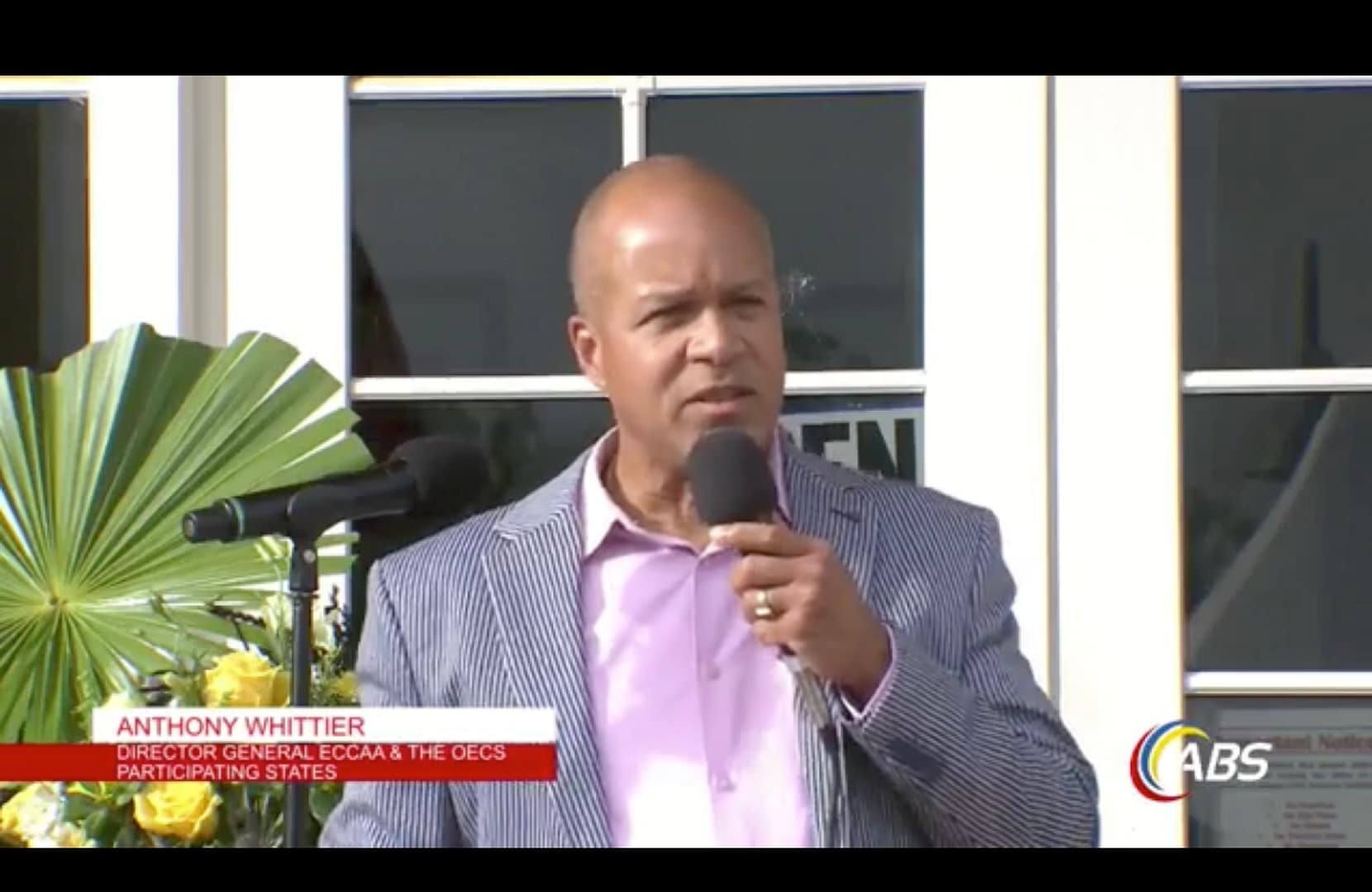
    Lewis, who most recently held the role of operations officer for aerodromes at ECCAA, passed away in the early hours of that same Thursday, bringing to a close a career in civil aviation that stretched across more than 50 years. ECCAA Director General Anthony Whittier delivered the official tribute during the opening event, sharing that the entire organization was grieving the loss of a beloved colleague and foundational leader.

    “It is with profound sadness and heavy hearts that we mourn the passing of our colleague, Mr. Simon Peter Lewis, who served the Eastern Caribbean aviation community with unwavering dedication and distinction,” Whittaker told the assembled crowd.

    Lewis’ journey in aviation began in 1971, when he started his career working dual roles as an air traffic controller and a meteorological officer. Over the course of his early career, he worked his way up to leadership, eventually taking on the position of air traffic department manager at Grenada’s Maurice Bishop International Airport. It was in this role that he first earned widespread recognition across the region for his steady leadership and unmatched technical expertise.

    His impact extended far beyond Grenada’s national borders, as he took on key regional and international roles to advance Caribbean aviation. From 2001 to 2006, he served as chairman of the International Civil Aviation Organization’s Eastern Caribbean Working Group, where he played an instrumental role in building cross-border cooperation, aligning regional safety standards, and expanding air connectivity across the Eastern Caribbean.

    Even after officially retiring from full-time public service, Lewis continued to contribute to the industry he loved. He joined the ECCAA team on July 1, 2012, where he supported aviation development initiatives across all of the authority’s 10 member states. Whittier emphasized that Lewis remained actively involved in on-the-ground assignments right up until his death, noting that Lewis had completed an official ECCAA inspection and outreach mission to Dominica as recently as last month.

    “He generously shared his vast knowledge and experience, providing comprehensive guidance and support that significantly contributed to the improvement of civil aviation across our member states,” Whittier added.

    Colleagues across the region remembered Lewis not just for his professional contributions, but for the personal qualities that made him a beloved mentor and friend. Working remotely from his home in Grenada, Lewis was known as a consistently responsive, supportive colleague who was always willing to drop his own work to help a teammate facing a challenge. Professionally, he was widely described as dedicated, dependable, meticulous, punctual, and hardworking in every project he took on.

    Beyond his work ethic, Lewis will be remembered for his warm, approachable personality. “Simon was known by his colleagues as dedicated, dependable, punctual, hardworking, and meticulous in all of the work that he undertook,” Whittier said, adding that he was also “jovial, approachable, and warm.”

    In a statement following the tribute, ECCAA leadership confirmed that Lewis’ decades of work have left an indelible mark on every corner of Eastern Caribbean civil aviation. His legacy, the organization noted, will live on through the hundreds of aviation professionals he mentored, the regional cooperation frameworks he helped build, and the improved safety standards that will benefit the region for decades to come.

  • Caribbean Female Empowerment Movement Hosts Inaugural Girls Day Camp in Antigua

    Caribbean Female Empowerment Movement Hosts Inaugural Girls Day Camp in Antigua

    On a sunny Sunday in late May 2026, a groundbreaking new initiative for young women took root at Antigua and Barbuda’s Ministry of Environment Conference Room, as the Caribbean Female Empowerment Movement (cFEM) welcomed dozens of girls from across local communities to its first ever Bloom and Become Girls Day Camp. What unfolded over the day was far more than a routine community gathering: it was a transformative experience built on intentional learning, joyful connection, deep self-discovery, and targeted empowerment for a generation of young girls ready to step into their power.

    Founded by Dominican-born counselor, educator and renowned youth advocate Nicola Reefe-Babb, cFEM’s girls program was built to address a critical gap in youth development: providing dedicated, safe spaces where girls can build the foundational confidence, practical life skills and growth-oriented mindsets needed to thrive through life’s challenges, while fully embracing the unique potential each participant brings to the table. Unlike generic youth programs, the Bloom and Become camp centers the specific needs of growing girls, creating a judgment-free supportive environment where attendees are encouraged to chase big dreams, nurture trusting healthy relationships, and practice leadership from a young age.

    The day’s schedule was carefully crafted to balance education, engagement and fun, with a diverse lineup of activities tailored to different interests and growth goals. Girls took part in interactive group discussions, hands-on creative projects, collaborative team-building challenges, and targeted empowerment workshops focused on core life skills: building sustainable self-esteem, navigating personal growth, setting actionable long-term goals, building resilience in the face of setback, and making intentional positive decisions for their futures. Every session circled back to a core message: every girl has inherent worth, her individuality is a strength, and she deserves the confidence to pursue every personal and academic goal she sets.

    Speaking after the event, Reefe-Babb shared heartfelt gratitude for the collective effort that made the inaugural camp a success, thanking the volunteer facilitators, participating parents, community sponsors, and the girls themselves who brought energy and enthusiasm to every activity. She went on to outline the long-term vision that drives cFEM’s girls chapter: to build recurring, meaningful programs that support girls and young women across the region to overcome systemic and personal barriers, unlock their untapped potential, and grow into confident community leaders.

    Reefe-Babb emphasized that the one-day camp was never meant to be a standalone event. “This camp is not just a one-off gathering — it is an investment in the future of our region’s girls,” she explained. “Our goal is for every girl who leaves here to carry this certainty with her: she is capable, she is valuable, and she is born for greatness.”

    The sold-out, successful first camp marks a major milestone for cFEM, which is working to expand its mission of nurturing personal growth, leadership development, and systemic empowerment for young girls across Antigua and Barbuda and the wider Caribbean. Local communities across the region have already expressed enthusiastic support for the organization’s work, with many anticipating more impactful programming in the years ahead. As cFEM continues its work, it aims to turn girls with big dreams into women with clear vision — women who will go on to shape a more equitable, prosperous future for the Caribbean and the world beyond.

  • PM urges parenting clubs as part of anti-gang strategy

    PM urges parenting clubs as part of anti-gang strategy

    As the Caribbean nation of Barbados grapples with a creeping spread of organized gang activity that has already claimed new lives, Prime Minister Mia Mottley, who also holds the national security portfolio, has put forward a multi-pronged strategy to curb the threat, warning that the country risks losing an entire generation to violent gang culture without collective action from families and local communities.

    Speaking during parliamentary debate on the landmark Criminal Gangs (Prevention and Control) Bill, Mottley emphasized that while Barbados’ gang problem has not reached the severity seen in neighboring regional territories, it cannot be addressed by government law enforcement alone. She pointed to deep-seated shifts in Barbadian social structures as a core root of the rising youth involvement in gangs, noting that long-held community support systems for childrearing have eroded in recent decades.

    Mottley argued that society too often makes dangerous assumptions that all parents inherently know how to raise children with consistent, firm guidance. Many modern caregivers mistakenly equate love with constant approval, she said, and fail to recognize the risks of letting pre-teen and early teen children roam public streets late at night, where they are exposed to gambling, illicit activity, and gang recruitment. These missteps have been compounded by the breakdown of extended family households and the loss of neighborhood mutual support — once cornerstones of Barbadian community life that ensured children received consistent guidance beyond their immediate household. When that collective support vanishes, she said, the void created leaves young people vulnerable to recruitment by criminal gangs.

    To rebuild that lost support network, Mottley is calling for the widespread creation of community-based parenting clubs across the country. These local groups will create structured spaces for caregivers to share guidance, learn evidence-based childrearing strategies, and support one another in navigating challenging behavioral issues with young people. Until these community clubs can be fully established and operational, the prime minister proposed the immediate launch of a national support hotline for parents struggling to manage at-risk children.

    A key provision of the new criminal gang legislation is a targeted exit strategy designed to help young people who have already joined gangs leave the organization safely. Mottley noted that gang groups often use coercion, violence, threats, and social stigma to trap members even after they recognize they made a mistake and want to exit. “Many young persons will realise that they can get in easy, and then discover that leaving ain’t so easy,” she said, explaining that the bill will create legal and support frameworks to remove the barriers that keep young people trapped in cycles of violence. The legislation also aims to dismantle the code of silence rooted in fear that allows gangs to operate, imposing harsh penalties that make gang activity unprofitable and unsustainable in Barbadian communities.

    The plan also includes a $5 million special grant facility for registered faith-based organizations to develop and run youth-focused community programs that provide positive alternatives to gang involvement for at-risk young people. Mottley stressed that these trusted local entities have a long track record of supporting child and youth development, and they will play a critical role in reaching vulnerable populations before gangs do.

    Mottley called on all lawmakers and responsible Barbadian citizens to unite behind the strategy, noting that the country had recorded a new gang-linked murder just hours before the parliamentary debate. She insisted that the nation will not surrender to what she called an “insidious culture that has no place in our jurisdiction.” Opening with a call for confronting hard truths about the scope of the problem, she argued that communities cannot allow fear to force families to choose between protecting their loved ones and speaking out about gang activity.

    “Sometimes there is that one person in the family who will not listen and sometimes you need tough love to be able to get that person to be dealt with,” she said. “Because the grandmother deserves to be able to sit on the step, if she wants to. She deserves to be out there getting little breeze if she wants to get breeze. The shopkeeper must be able to ply their trade without fearing that if ‘I got a karaoke here somebody can come and spray away bullets and therefore people ain’t coming and I ain’t earning money no more.’” Mottley concluded that these basic quality of life rights for all Barbadians are what the new strategy and legislation are fighting to protect.

  • ABWU Calls for Full Protection of Workers’ Rights in Proposed CIBC Caribbean Acquisition by Butterfield

    ABWU Calls for Full Protection of Workers’ Rights in Proposed CIBC Caribbean Acquisition by Butterfield

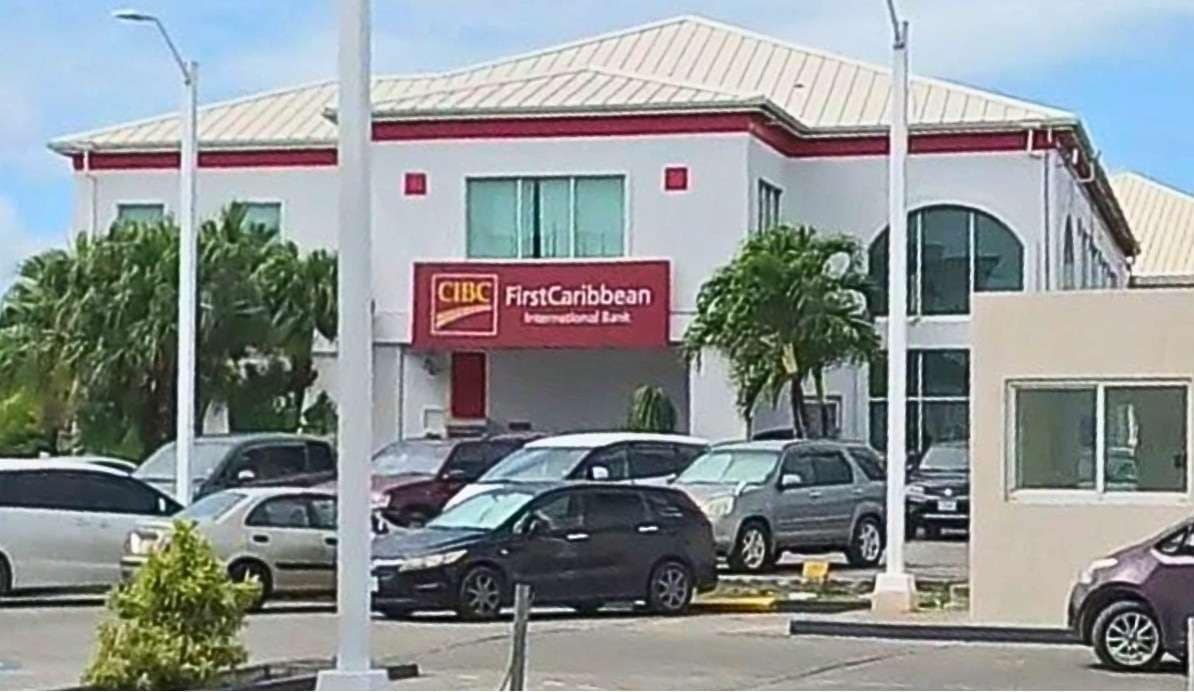
    As the officially recognized collective bargaining body for CIBC Caribbean workers based in Antigua and Barbuda, the Antigua and Barbuda Workers’ Union (ABWU) has formally responded to the recently announced acquisition proposal from Bermuda-based lender The Bank of N.T. Butterfield & Son Limited. The global financial firm has tabled a plan to purchase CIBC’s controlling 91.7% stake in CIBC Caribbean Bank Limited, a deal that remains contingent on gaining necessary regulatory clearances from regional authorities, with both acquiring and target firms indicating they anticipate no major disruptions to daily operations once the transaction closes under new ownership.

    While the union has acknowledged the preliminary statements from both financial institutions regarding operational continuity, the ABWU has moved quickly to lay out non-negotiable requirements for how the ownership transfer must proceed to protect local workers. In a formal correspondence addressed to CIBC leadership, ABWU General Secretary David Massiah has underscored that all corporate acquisition activity impacting Antigua and Barbuda-based employees must align strictly with the nation’s existing labor laws, which outline clear protections for employment contracts, collective bargaining rights, continuous service tenure, severance pay entitlements, and mandatory consultation requirements between employers and worker representatives.

    Massiah’s letter explicitly references two key pieces of national legislation that govern this type of corporate ownership change: the 2019 Antigua and Barbuda Labour Code (Amendment) Act No. 9, and the accompanying 2015 amendment to Section 176(g) of the nation’s Banking Act. These regulatory changes explicitly clarify that workers cannot be forcefully transferred to a new employer without first exercising their legally guaranteed right to make an active election about their future employment status.

    Under the updated labor framework spelled out in Sections C40 and C44 of the amended Labour Code, workers are now eligible to receive severance pay not only in cases of traditional redundancy, but also during scenarios involving the sale of business assets, transfer of company shares, handover of business operations, or any other disposal of a business to a successor employer. Massiah outlined the two clear options that every affected worker is legally entitled to choose from.

    The first option allows employees to accept a severance payout from the current, pre-acquisition employer, which would formally end their employment relationship with the existing entity. Any continued work for the new Butterfield-led ownership would then require a brand new employment offer negotiated under current labor standards. The second alternative permits workers to decline the offered severance and retain their employment with the successor institution. In this scenario, all existing employment benefits, accrued rights, job privileges, tenure, and continuous service records must be fully preserved and transferred intact to the new employer.

    Complementing these labor code provisions, the amendment to the Banking Act adds an additional layer of protection for finance sector workers: any employee that chooses to continue their employment with the acquiring bank must retain employment terms and conditions that are at least as favorable as those in place immediately before the ownership transfer is completed.

    A core demand put forward by Massiah is that every impacted worker must receive a clear, genuine, and reasonable window of opportunity to make their informed election between the two options: accepting severance and ending their current employment, or retaining their role with the new owner without taking a severance payout. The General Secretary has pushed for CIBC to fully adhere to the existing statutory framework, and most critically, to formally notify every affected worker in writing of all their legal rights and available options under both the Labour Code and Banking Act.

    Massiah reiterated that the ABWU expects full transparency, good-faith consultation with union leadership, and timely ongoing communication at every stage of the proposed acquisition. This includes all matters that impact the union’s collective bargaining units as well as both statutory and collective bargaining rights held by workers. He emphasized that the worker protections codified in these laws were intentionally passed by the Antigua and Barbuda Parliament specifically to prevent workers from losing their hard-earned accrued rights and benefits when a business or financial institution is sold or transferred to new ownership.

    “In closing, the Union therefore expects full compliance with both the spirit and letter of the legislation throughout this entire transaction process,” Massiah wrote in the formal letter. Moving forward, the ABWU has confirmed it will maintain close ongoing monitoring of all developments related to the proposed acquisition to ensure that the rights, interests, and professional dignity of every affected worker are fully protected through the completion of the deal.

  • Maxi drivers  to stay away

    Maxi drivers to stay away

    Commuters across Trinidad and Tobago are bracing for widespread travel disruptions next week, after the national maxi-taxi industry association announced that most operators will suspend all services from June 1 to June 3 to push for long-delayed policy and regulatory changes.

    In an official statement released Thursday, the Association of Maxi-Taxi Trinidad and Tobago (AMTTT) framed the three-day work stoppage as a “rest and reflect” period, designed to draw national attention to a litany of unresolved grievances that have plagued the shared transport sector for generations, even after repeated promises of action from consecutive national governments.

    At the top of the association’s list of demands is an urgent crackdown on the fast-growing proliferation of illegal white buses that operate on routes officially designated for maxi-taxis, which display solid colored route bands. Industry leaders say the crisis has been made worse by confusing and inconsistent vehicle registration processes for “P” and “T” class vehicles, along with poorly structured transportation capacity limits that have created loopholes for unlicensed operators.

    The AMTTT noted that one widely supported solution — the implementation of chequered-band route classification — has already been proposed to address the illegal operation problem, but the policy has sat in bureaucratic limbo for more than five years, with no movement on review, revision, or final approval.

    Beyond the illegal operator issue, the association is pushing for a raft of other long-outstanding reforms. A key ask is raising the legal speed limit for maxi-taxis from 65 kilometers per hour to 80 kilometers per hour, a request first submitted to authorities back in 2021 that has not received any formal response.

    The group also highlighted the total absence of clear, formal policies governing transfers of Priority Bus Route (PBR) passes, covering scenarios ranging from amnesty program cases and next-of-kin transfers to health-related reassignments and open market transfers. According to the AMTTT, this gap in regulation has remained unaddressed for more than 20 years.

    Decades of neglect also extend to the country’s transportation infrastructure: the association says the need for new, upgraded, and properly managed transport hubs across the nation has been recognized for more than 30 years, with no tangible progress on development or revitalization.

    The statement also drew attention to challenges facing school transportation providers, calling for immediate payment of long-overdue concessionaire grants and the establishment of clearly defined drop-off and pick-up zones, particularly in the capital city of Port of Spain. Additional demands include equal access to major thoroughfares and overpasses, a privilege currently only extended to buses operated by the state-owned Public Transport Service Corporation (PTSC).

    Other unresolved issues raised by the association include clearer rules for National Insurance System (NIS) contributions for self-employed maxi-taxi operators, updated legal guidelines for in-vehicle radio permits, improved safety measures for commuters and operators working night routes, and revisions to overly burdensome application requirements for intra-city route passes. The AMTTT argues that many current eligibility requirements are irrelevant to the actual work of intra-city maxi-taxi services.

    While the association acknowledged that the current national administration has publicly recognized most of these sector-wide challenges and made formal pledges to deliver solutions, it says operators have yet to see any meaningful, tangible progress on the ground.

    “While the current government has acknowledged these challenges and pledged solutions, tangible progress has yet to be realised,” the statement read. The three-day “rest and reflect” shutdown is intended to highlight the urgency of the sector’s struggles and reaffirm the association’s commitment to advocating for a sustainable, viable future for maxi-taxis and better welfare for all operators.

    In closing, the AMTTT issued a public appeal for understanding and support from the travelling public during the industrial action. “We seek the understanding and support of the general public during this time, as we collectively call for accountability and concrete steps toward resolving these enduring problems,” the statement said.

    As of Thursday, efforts by reporters to reach Transport Minister Eli Zakour and Education Minister Dr Michael Dowlath for comment on the planned shutdown and the association’s demands were unsuccessful.