分类: society

  • Charges to be laid in tragic death of 4-year-old Rikki Samuel

    Charges to be laid in tragic death of 4-year-old Rikki Samuel

    Nearly a year after a devastating multi-vehicle collision on Saint Lucia’s Vieux Fort-Laborie Highway claimed the life of a 4-year-old kindergarten student, law enforcement officials have confirmed that criminal charges are imminent in the case. The tragic crash, which unfolded last October close to two high-profile local landmarks — Hewanorra International Airport and the island’s Marine Base — left 11 other people injured besides the young victim, identified as Rikki Samuel.

    At the time of the incident, Rikki was traveling alongside his father Jonard Samuel, a local taxi driver, when their vehicle became one of the multiple units involved in the collision. The young boy did not survive the impact, leaving the local community in mourning and sparking calls for a thorough investigation into the circumstances of the crash.

    In an exclusive interview with local outlet St Lucia Times, Superintendent Stephen Victorin, head of the Saint Lucia Police Force’s Southern Division, shared key updates on the months-long probe. According to Victorin, the investigation has cleared an early initial hypothesis that had been floated shortly after the crash.

    “Initially, the suggestion was that a gentleman might have suffered some medical difficulty during the collision,” Victorin explained. “[But] that has been dispelled.” With that line of inquiry ruled out, investigators have advanced the case far enough that formal charges are now the next step in the legal process.

    While the senior police official confirmed that charges are being prepared, he declined to share details on what specific offenses will be laid or which individual will face them. Victorin added that the public will receive timely updates as the case moves through the legal system, noting that authorities will release new information as the investigation progresses further.

  • Man shot dead in The Pine

    Man shot dead in The Pine

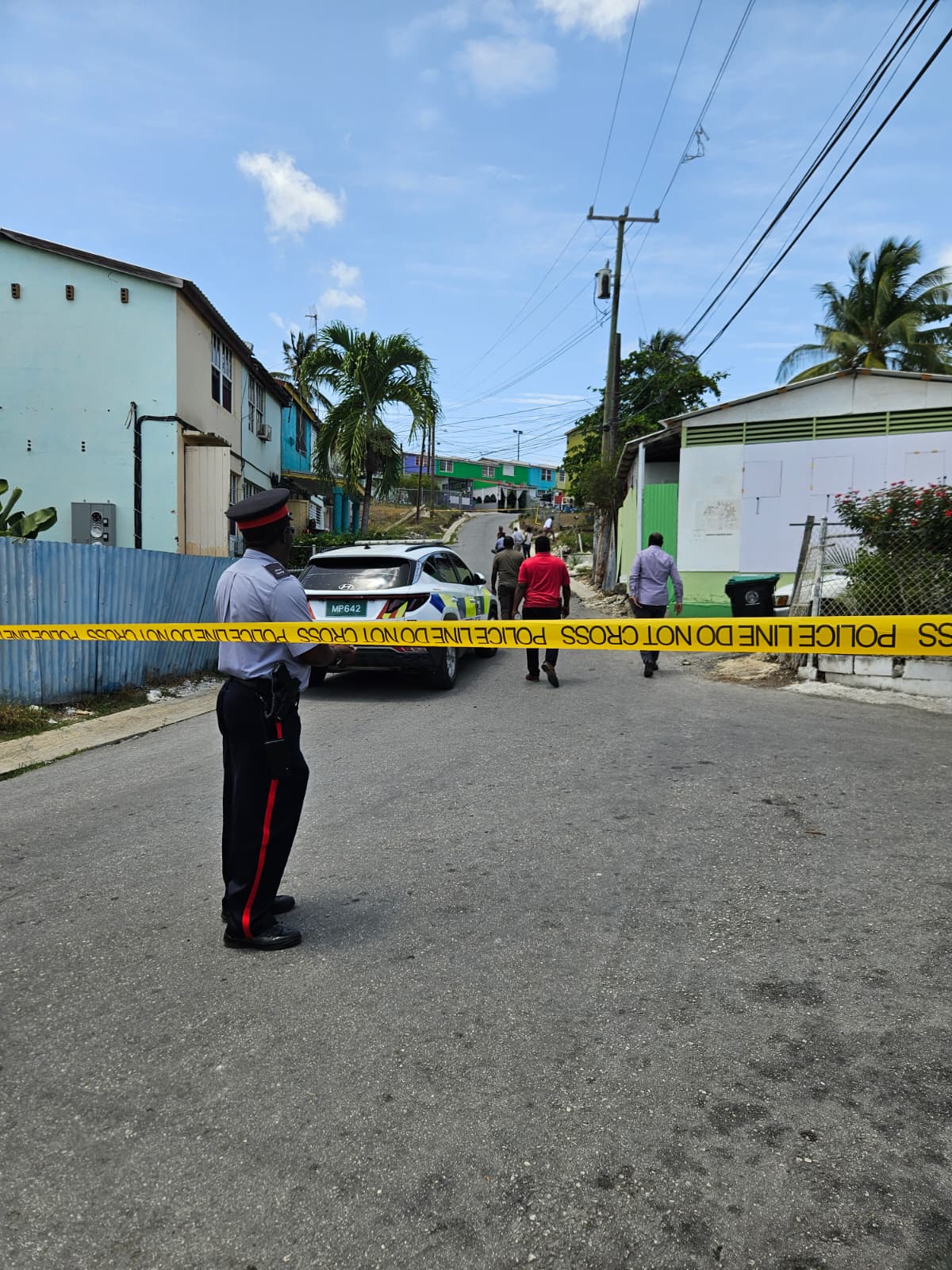
    A fatal shooting has rocked the quiet community of Pinelands, St Michael, after a man was gunned down on Martins Road early Friday, launching a intensive criminal investigation by local law enforcement.

    According to official statements from Inspector Ryan Brathwaite, the Police Public Affairs and Communications Officer, the incident came to light just before 10 a.m. when a female caller contacted the national police Operations Control Room to report that a man had been shot at the Martins Road location.

    Within minutes of receiving the alert, uniformed police officers and emergency medical response teams were mobilized and rushed to the scene to provide assistance and secure the area.

    “Teams from the Barbados Ambulance Service, made up of one attending physician and two emergency medical technicians, arrived promptly to assess the victim, but they were unable to detect any vital signs,” Brathwaite confirmed in a press briefing Friday.

    Following the initial emergency assessment, a police medical examiner traveled to the shooting site and formally declared the man deceased, Brathwaite added.

    As of Friday afternoon, the investigation remains in a critical early phase that law enforcement officials describe as “delicate”. Forensic specialists have been deployed to process the crime scene, which has been cordoned off to preserve evidence and prevent unauthorized access to the area.

    In an appeal to the public for assistance, police are urging anyone who was present in the Martins Road area around the time of the shooting, or anyone who holds any information that could help advance the investigation, to come forward with their details. Tipsters can share information anonymously through Crime Stoppers at 1-800-8477, contact the 24-hour Police Emergency line at 211, or reach out directly to investigators at District ‘A’ Police Station via 430-7242.

    At this stage of the investigation, authorities have not yet released the name of the deceased, pending notification of next of kin. Police say additional details about the shooting and investigation progress will be released to the public as they become available.

  • Dublin protest urges probe into ‘George Floyd’-style death

    Dublin protest urges probe into ‘George Floyd’-style death

    DUBLIN, Ireland — Hundreds of demonstrators gathered in Ireland’s capital Saturday, united in a call for accountability over the death of 35-year-old Yves Sakila, a Congolese man who had built his life in Ireland since 2004, after he died while being restrained by private security personnel earlier this month. Protesters have drawn a stark parallel between Sakila’s death and the 2020 murder of George Floyd at the hands of U.S. police, a killing that ignited the global Black Lives Matter movement and brought worldwide attention to systemic anti-Black violence.

    The fatal incident unfolded on May 15 on one of central Dublin’s busiest shopping streets, outside a popular department store. Viral video footage shared widely across social media platforms captured the sequence of events: security workers pinned Sakila to the ground, holding him in that position for nearly five full minutes. Shortly after the restraint, Sakila lost consciousness, and he was pronounced dead after being rushed to a local hospital.

    Irish law enforcement has launched an official inquiry into all circumstances surrounding the restraint and subsequent death, but as of Saturday’s demonstration, no findings have been made public, and no charges have been filed against any of the security personnel involved. A post-mortem examination carried out by the state’s chief pathologist has been completed, though the official results remain under wraps pending further investigation.

    Approximately 100 attendees turned out for the peaceful demonstration, where speakers highlighted growing community concerns over excessive force, inadequate training for private security staff, and systemic racial inequity in Ireland. “We need justice for Yves Sakila. We need a proper investigation into his death,” Eoghan O Ceannabhain, a Dublin-based musician and protester, told reporters. He went on to note that the incident raises urgent questions about the quality and anti-bias training provided to private security operatives working in public spaces.

    The killing has resonated deeply across Ireland’s Black and African communities, especially among the country’s Congolese diaspora, which has long highlighted unaddressed issues of racial profiling and discrimination. “We are standing for the community to ask for justice,” Ono Tambura, a 60-year-old Congolese woman who has resided in Ireland for years, said on the protest lines.

    Beyond calls for a full investigation into Sakila’s death, organizers have laid out a clear set of demands for Irish authorities. They are calling for an independent, fully transparent probe that includes a full review of all existing security camera footage and witness testimony. Demonstrators are also pushing for the immediate public release of forensic post-mortem results, and full legal accountability for any individual found to have acted unlawfully in the incident. On a systemic level, campaigners are urging the Irish national government to finally address longstanding complaints of racial profiling and institutional discrimination raised repeatedly by members of racial minority communities across the country.

  • Residents join rebuilding effort as hurricane recovery continues in George’s Plain

    Residents join rebuilding effort as hurricane recovery continues in George’s Plain

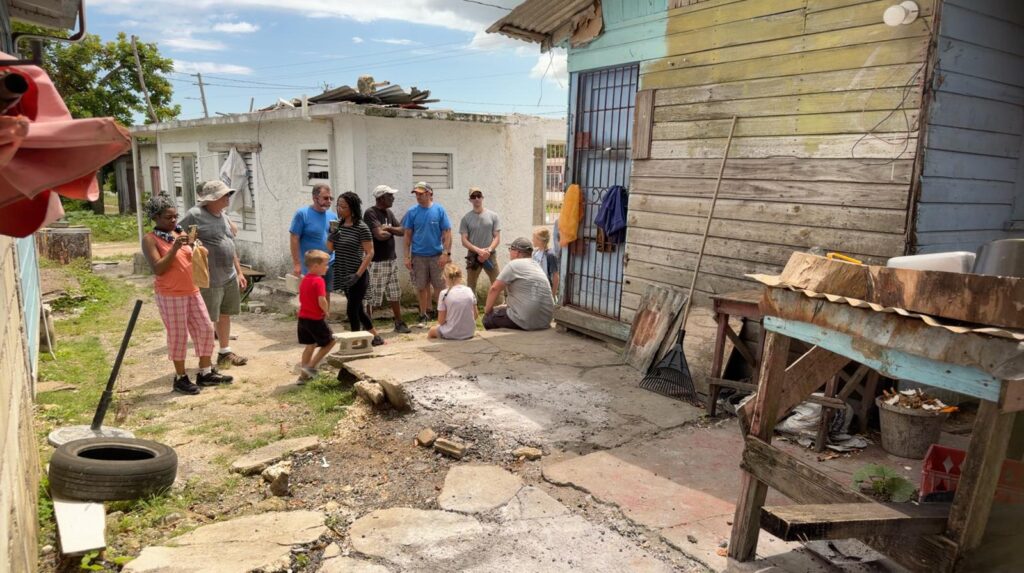
    It has been seven months since Hurricane Melissa carved a path of destruction across parts of western Jamaica, and in the hard-hit community of George’s Plain, the slow work of rebuilding is still unfolding. Early estimates indicate that nearly 50 percent of all residential properties in the area suffered catastrophic damage during the storm, and dozens of local families have yet to secure the critical repairs their homes need to be safe and habitable.

    Today, what began as a crisis has evolved into a collective movement of resilience: George’s Plain residents are now joining forces with volunteer organizations to drive recovery forward, gaining hands-on construction and home repair skills while working to restore damaged homes, churches and shared community gathering spaces across the region.

    One of the many residents turned community builders is Jerry, a local whose own family was directly in the storm’s path. When Hurricane Melissa hit, his mother’s home was completely unroofed, leaving the family without a secure place to live. After his own family’s home was rebuilt, Jerry made the choice to pay that support forward. He now works as a volunteer with Adventures Relief, joining teams that complete repairs and restoration projects for vulnerable households and damaged religious sites across the Westmoreland parish.

    Jerry’s shift from disaster survivor and aid recipient to volunteer community leader is far from an isolated story. It reflects a growing core of the ongoing recovery effort: local residents are stepping into active roles to lift up their neighbors, turning outside aid into lasting, community-owned change.

    The grassroots rebuilding work is supported through a strategic partnership between two mission-aligned organizations: Adventures Relief and the BridgePoint Foundation, both of which focus on delivering on-the-ground support and sustained long-term recovery resources for hurricane-impacted communities across Jamaica.

    Laura Butler, founder of the BridgePoint Foundation, emphasized that meaningful recovery stretches far beyond fixing broken structures. “Recovery is not only about rebuilding structures,” Butler explained. “It’s about restoring dignity, strengthening communities and reminding families that they have not been forgotten.”

    To date, the partnership’s work has included a broad portfolio of projects beyond residential repairs: restoring damaged church facilities, providing grants and support to help local small businesses rebuild, and offering skills training and free resources that let residents lead work in their own neighborhoods.

    Adventures Relief leaders note that their current top priority is empowering local residents: the organization is focused on providing the hands-on training, quality tools and ongoing support that locals need to own and sustain long-term recovery efforts long after outside volunteer teams depart.

    While organizers celebrate the tangible progress that has been made in the past seven months, they are clear that a substantial amount of work still lies ahead. Recovery, they acknowledge, is a gradual process that moves forward one repaired roof, one stabilized family, one revitalized community at a time.

    Even so, the momentum of community-led change continues to build across George’s Plain. Families are steadily moving back into newly repaired, safer homes, closed churches are welcoming congregations again for services, and local leaders like Jerry are proving that long-term, meaningful recovery is strongest when it is shaped not just by outside aid, but by the people who call these communities home.

  • Celebrate at home or out? This is what the weather will be like for Mother’s Day weekend

    Celebrate at home or out? This is what the weather will be like for Mother’s Day weekend

    As the Dominican Republic heads into the weekend, the Dominican Institute of Meteorology (INDOMET) has released a detailed forecast outlining how shifting atmospheric patterns will shape conditions across the country for both Saturday and Sunday. For weather observers and residents alike, the two-day outlook points to consistent hazy conditions paired with isolated afternoon precipitation concentrated in specific geographic zones.

    On Saturday, the combination of a stable anticyclonic system and incoming Saharan dust particles will create a muted, grayish sky across nearly the entire country. Morning hours will stay largely dry, with very little precipitation expected across most Dominican provinces. As temperatures rise through the afternoon, localized dynamics will trigger weather activity in higher terrain and northern regions: daytime orographic heating and the consistent drag of a southeast wind will combine to spark scattered, widely isolated showers. The forecast notes a moderate chance of accompanying thunderstorms and gusty wind bursts across three key areas: the country’s northwest, the shared border region with Haiti, and the Central Mountain Range.

    For Sunday, INDOMET’s forecast carries over many of the same core trends, with subtle shifts in precipitation risk. Morning hours will again bring overcast, gray-tinted skies to most provinces, with unseasonably warm, muggy conditions expected as humidity builds through the early part of the day. By afternoon, similar dynamics will drive isolated, passing showers in the same northwest, border and Central Mountain Range regions. The biggest change from Saturday’s outlook is a reduced chance of thunderstorms and strong wind gusts on Sunday, as atmospheric instability is expected to be slightly lower.

    The forecast also included specific outlooks for the country’s most heavily populated urban areas. The National District, which encompasses the capital city of Santo Domingo, is expected to see gray skies and warm temperatures through Sunday afternoon. The broader Santo Domingo province will see identical conditions: hot, hazy weather with gray overcast skies during afternoon hours.

  • Montoconcho regulations: the outstanding debt that authorities are still evading

    Montoconcho regulations: the outstanding debt that authorities are still evading

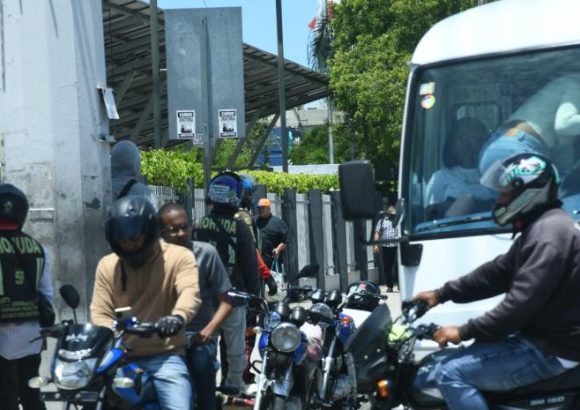
    A recent minor traffic collision outside Santo Domingo’s Centro de los Héroes Metro station has pulled back the curtain on a growing, months-long mobility crisis plaguing the Dominican capital, exposing deep institutional gridlock over the regulation of informal motorcycle taxi (locally known as motoconcho) stands.

    The incident unfolded when a motorcycle taxi driver traveling against the flow of traffic scraped a passing truck, sending the rider falling onto hot pavement. Within seconds, dozens of fellow drivers surrounded the vehicle, blocking the main thoroughfare in front of the busy transit hub and snarling traffic for passing commuters. While the collision caused no severe injuries or harm to the truck driver, it amplified longstanding questions from frequent station users: why is an unpermitted motorcycle taxi stand operating directly adjacent to an official “No Passengers” sign here?

    Local residents confirm the informal stand’s appearance dates back to the inauguration of the city’s new Independence Corridor project. When existing public transport service disappeared from the corridor following the project’s completion, more than 10 drivers affiliated with local motoconcho associations MOHUDA and UNIMODIN gradually occupied a long stretch of curb space in front of the Metro station. To date, no local authority has intervened to remove the stand, which disrupts both pedestrian and vehicle movement on a daily basis. This unregulated encroachment is not an isolated incident: recent data from the Dominican Republic’s General Directorate of Internal Taxes (DGII) shows motorcycles have come to dominate the capital’s vehicle fleet. As of February 2026, the National District hosts roughly 841,647 registered motorcycles, with the national total hitting 3,954,053 by April 2026. Shockingly, 2025 data from the National Institute of Transit and Land Transportation (INTRANT) reveals only just over 11,000 of these motorcycle operators hold valid legal driving licenses.

    To uncover who authorized this informal stand – and hundreds like it across the capital – reporters submitted three freedom of information requests to the Mayor’s Office of the National District and INTRANT, asking for public records of all permitted and registered motorcycle taxi stands in the capital. Under Dominican Law 63-17 on Mobility, Land Transport, Transit and Road Safety, the two institutions share formal responsibility for regulating motorcycle transport: Article 75 of the law states that motorcycle services are to be overseen by INTRANT in coordination with local municipalities, requiring joint authorization and an operating license for all motoconcho stands, plus a municipal registry of all permitted sites.

    What followed was a clear case of bureaucratic buck-passing. A senior source within the National District Mayor’s Office confirmed no such registry exists, after the agency’s Public Information Access Office refused to fulfill the request and redirected all responsibility to INTRANT. After a 14-working-day delay, INTRANT responded with just four lines of text, asserting that under current law, registration of motorcycle taxi stands falls exclusively to local municipalities. This directly contradicts a 2025 response INTRANT gave to an identical request for records of motoconcho stands in Greater Santo Domingo. At that time, the agency claimed the information was still in internal review and data collection, rather than shifting full responsibility to the city government.

    Even more striking, INTRANT’s own 2025 annual public report contradicts both agencies’ claims of having no active records. The report explicitly details the work of INTRANT’s Motorcycle Operating License Department, noting that the agency processed hundreds of applications to register new motorcycle taxi stands, update existing stands’ rosters, and conducted a full census of more than 200 motoconcho operating zones across multiple provinces including the National District in 2025. The report also mentions that INTRANT provided compensation and safety training to motoconcho operators displaced by new Metro and Cable Car construction in Los Alcarrizos.

    While the current system is mired in chaos, policy experts and existing planning documents outline a clear path forward to formalize the service. A past national motorcycle registration initiative launched in 2021 and discontinued in 2022 offers a tested framework for identifying and registering the country’s massive unregulated motorcycle fleet. The official Sustainable Urban Mobility Plan for Greater Santo Domingo also proposes a practical solution that does not require eliminating the popular informal service: instead of eradicating motoconchos, urban mobility specialists recommend integrating them into the formal public transit network as last-mile feeder services. Under this plan, designated, clearly marked intermodal transfer zones would be established near mass transit stations like Centro de los Héroes, physically delimiting operating space to prevent spontaneous encroachment on sidewalks and traffic lanes, reduce congestion, and protect pedestrian safety.

    This model has already proven successful across Latin America. Technical road safety reports endorsed by the Spanish Road Association highlight Brazil’s regulatory framework for motorcycle taxi services, which combines clear administrative requirements and direct institutional oversight to deliver smoother, safer traffic flow. The crisis of unregulated motoconcho stands in Santo Domingo ultimately presents an opportunity to turn systemic chaos into a efficient, integrated mobility model – but progress will first require an end to institutional buck-passing and a commitment to fulfilling the shared regulatory mandates set out in national law.

  • Man’s arm severed in Spur Tree crash

    Man’s arm severed in Spur Tree crash

    A devastating road accident on Jamaica’s Spur Tree Hill main road in Manchester left two men hospitalized Saturday, with one suffering a life-threatening injury that saw his right arm completely severed in the crash.

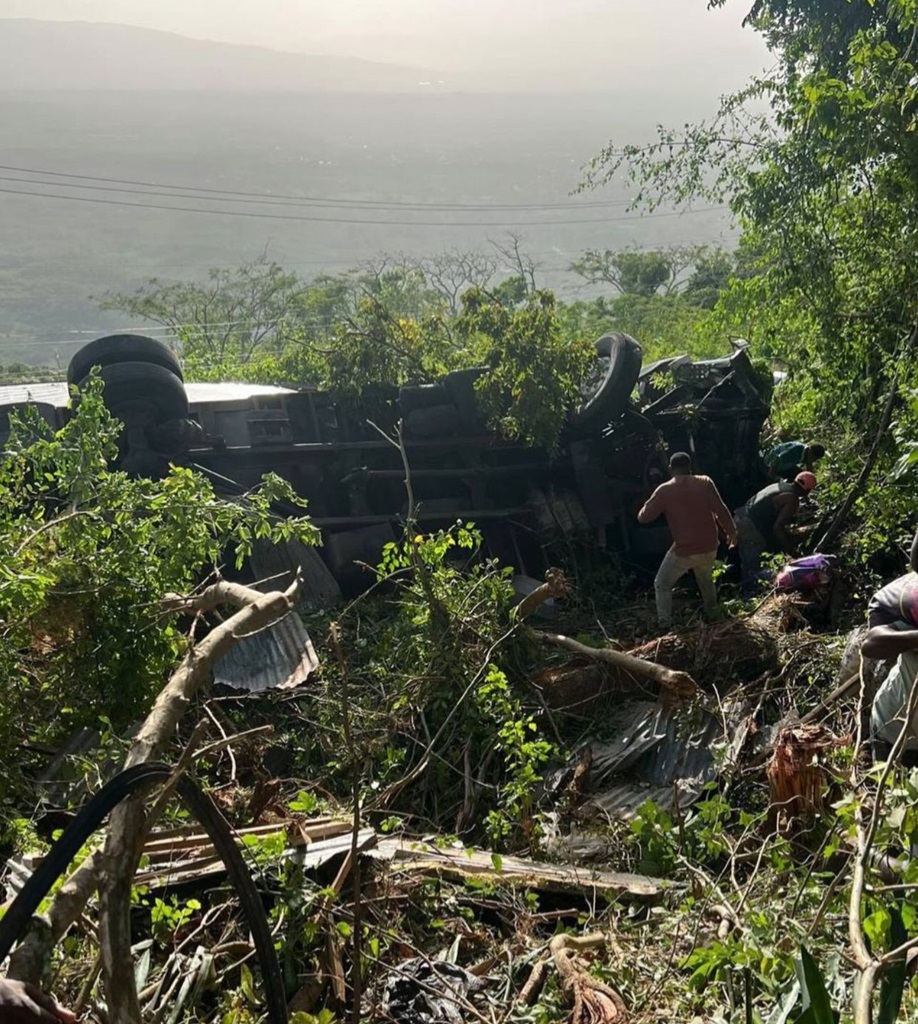
    According to initial law enforcement accounts, the incident unfolded just after 4 p.m., when the two men were operating a heavy cargo truck carrying large quantities of rice through the hilly corridor. For reasons still under preliminary investigation, the driver suddenly lost control of the vehicle.

    Surveillance footage from a nearby property recorded the chaotic sequence of events: the speeding, unbalanced truck veered sharply off the paved roadway, crashed onto private adjacent land, and flipped completely over.

    The passenger, who suffered the traumatic arm amputation, and the driver were both rushed to a local medical facility by emergency responders and have since been admitted for treatment. The passenger remains listed in critical condition as of update.

    In a disturbing turn of events following the crash, members of the public who converged on the accident site took advantage of the emergency chaos to loot the overturned vehicle, making off with dozens of bags of rice from the damaged cargo hold. Local authorities have not yet announced any arrests or plans to recover the stolen goods.

    The Spur Tree Hill main road serves as a critical transportation link connecting the town of Mandeville and its surrounding communities to St Elizabeth and other parishes in western Jamaica. For years, local commuters and safety officials have raised ongoing concerns about the route: its steep incline and twisting path make navigation difficult, and the constant presence of overloaded, slow-moving heavy trucks regularly creates traffic bottlenecks and elevated crash risk. The corridor has already seen multiple fatal truck accidents over the past decade, prompting repeated calls for improved infrastructure and stricter weight enforcement for heavy goods vehicles.

  • Sri Lanka’s top monk suspended over alleged child sex abuse

    Sri Lanka’s top monk suspended over alleged child sex abuse

    COLOMBO, Sri Lanka – On Saturday, the same day Sri Lanka marked the sacred Buddhist holiday of Vesak commemorating the Buddha’s birth, enlightenment and death, the island nation’s top Buddhist governing body made an unprecedented disciplinary move: it suspended a high-ranking monk facing charges of sexually assaulting an 11-year-old girl, a case that has sent shockwaves through this deeply religiously conservative South Asian country.

    At 71 years old, Pallegama Hemarathana held one of the most revered positions in Sri Lankan Buddhism: chief custodian of the Jaya Sri Maha Bodhi sacred ficus in Anuradhapura, a site located roughly 200 kilometers north of the capital Colombo. This ancient tree is believed to have grown from a cutting of the original Bodhi Tree, the very ficus under which the Buddha achieved enlightenment, drawing tens of thousands of devout pilgrims and worshippers from across the country every year.

    Following the allegations against Hemarathana, the Malwatte Chapter Council of Monks formalized its disciplinary decision in an official public statement, confirming that the monk would remain stripped of all his official duties and titles pending the outcome of ongoing criminal proceedings against him.

    Law enforcement first took Hemarathana into custody on May 9, over claims that he assaulted the 11-year-old victim at the Jaya Sri Maha Bodhi temple compound in 2022. Since his arrest, the monk has been released on bail, though a court has imposed a formal travel ban barring him from leaving Sri Lanka for the duration of his trial.

    What makes this case particularly notable is Hemarathana’s senior status: while a string of child abuse allegations involving Sri Lankan Buddhist clergy have emerged in recent years, he is the highest-ranking monk ever to face such criminal charges. The case also draws renewed attention to gaps in religious institutional accountability on the island: in an unrelated, separate narcotics case, 22 Buddhist clergy arrested back in April for possession of 110 kilograms of cannabis remain in custody awaiting trial, but have not faced any disciplinary suspension from the national Buddhist hierarchy.

  • Dock deception fails

    Dock deception fails

    In a striking turn of events during an ongoing Jamaican gang trial in downtown Kingston, a retired police officer who initially arrested accused Klansman gang affiliate Carlos Williams took mere seconds on Friday to correctly identify him from a group of 25 co-accused, even after defense attorneys secured a last-minute seating rearrangement and the defendant attempted a surreptitious shirt swap to throw off the witness.

    The former law enforcement officer is a key witness for the Crown in the high-profile trial of members of the Tesha Miller faction of the notorious Klansman gang, testifying to the details of two counts on the sweeping indictment against the group. During his direct testimony, he walked the court through the pre-dawn arrest of Williams carried out on April 16, 2023, by Jamaica’s former Counter-Terrorism and Organised Crime (C-TOC) unit at a residence on Okra Lane in Spanish Town, St Catherine.

    According to the witness’s account, a search of the property uncovered a Ziploc bag stored in a dresser drawer holding 30 blank magnetic-strip cards and two embossed bank cards carrying a major Jamaican bank’s branding. He then took the then 27-year-old labourer into custody and charged him. Williams allegedly told the officer the two bank cards were his, gifted to him by a girlfriend living overseas.

    When the acting deputy director of public prosecutions leading the case asked the former officer if he could pick Williams out of the dock of defendants, the witness confirmed he could, but defense attorney Petreta Gabbidon immediately objected. She requested the witness step outside the courtroom while she argued for a reshuffling of the defendant seating arrangement, a motion that was granted alongside co-counsel Lynden Wellesley’s request. Trial judge Justice Dale Palmer ordered the shuffle, instructing all defendants to remove any facial coverings and sit upright to ensure unobstructed visibility, after multiple accused had been observed slouching in their seats to hide their faces, some completely obscuring their features.

    As the defendants rearranged themselves, Williams moved from his assigned seat in the secondary dock to the main holding area, where witnesses saw him attempt to trade his signature blue patterned shirt with another co-accused. The swap was cut short, however, when Justice Palmer spotted the half-completed exchange, with both men already stripped down to their white undershirts. The judge halted the swap immediately, ruling that unauthorised clothing changes could not take place in the courtroom, leaving the two men sitting side by side in matching white tees.

    When the former officer returned to the stand to make his identification, he left the witness box, walked along both sides of the courtroom to get a clear view of every defendant in the docks, and within seconds correctly pointed to Williams, identifying him as the second-to-last man in the back row on the right side. When Justice Palmer asked the defendant to confirm his name, a dejected, crestfallen Williams replied, “Carlos Williams.” The former officer confirmed Williams faces a charge of possession of an unauthorised access device in addition to his more severe gang-related counts.

    Williams, alongside co-accused Jermaine Clarke and Owen Billings, faces charges on counts 28 and 29 of the Crown’s indictment for knowingly facilitating the August 11, 2022, robbery and murder of Zamari McKay, a St Catherine resident.

    During cross-examination, Wellesley attacked the former officer’s conduct during the arrest, comparing the pre-dawn operation to the biblical figure Nicodemus who visited Jesus under cover of night, claiming the officer “sneaked up” on his client. The witness pushed back, confirming the operation was a pre-planned targeted action. Wellesley also challenged the witness’s account of the evidence recovered, asserting that only one bank card with Williams’s name was found at the property, and that Williams only admitted ownership of the 30 blank cards, not the second bank card. The former officer firmly denied this claim, stating the suggestion was incorrect.

    Separately, Denise Hinson, counsel for Clarke and Billings, questioned the authenticity of the witness’s investigative notes, arguing that the entries related to the 2023 arrest were a recent fabrication, not written in 2023 as the witness had testified. The former officer countered that he completed his final notes on the case on April 27, 2023, 11 days after the arrest, and finalised his official statement shortly after. He resigned from the Jamaica Constabulary Force roughly one year after the arrest.

    The trial is scheduled to resume at 10:00 a.m. Monday at the Home Circuit Division of the Supreme Court in downtown Kingston.

  • Federations and importers oppose limiting the flow of motorcycle imports

    Federations and importers oppose limiting the flow of motorcycle imports

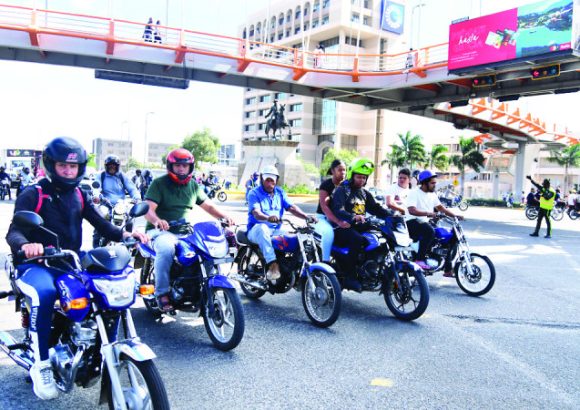
    A public debate over road safety in the Dominican Republic has intensified after national newspaper Listin Diario proposed a radical five-year suspension on all new and used motorcycle imports as a strategy to cut sky-high traffic accident fatalities linked to two-wheeled vehicles. But the plan has drawn fierce pushback from key stakeholders across the motorcycle sector, who argue the policy targets the wrong group and would trigger unnecessary economic harm.

    The proposal, titled “No More Motorcycles in 5 Years”, frames an import ban as a necessary measure to rein in rising traffic deaths — official data shows the country records nearly 2,000 annual fatalities from motorcycle crashes. Importers, however, say cutting off imports would devastate livelihoods without addressing the root of the road safety crisis.

    Aurelina de la Paz, general manager of a motorcycle import firm operating in the National District, has worked in the sector since 2000, and warned that restricting imports would put thousands of jobs at risk. Her business sells around 50 motorcycles per month, and she noted the policy would wipe out income for workers across imports, sales, repair and servicing. “We do recognize that many motorcyclists exhibit aggressive behavior on our roads, but the solution to this public safety issue is not to destroy an entire industry that supports so many households,” de la Paz explained. “We need targeted measures that fix the problem without putting people out of work.”

    Leading motorcycle rider associations echo this criticism, saying the import ban does nothing to address systemic gaps in regulation, identification and traffic education that are the real causes of frequent crashes. Óscar Almánzar, president of the National Federation of Motorcycle Riders (Fenamoto), which counts 78,000 registered members across the country, explained that current gaps in vehicle registration and rider identification are far more pressing than import volumes. He pointed out that unregistered informal riders — including app-based motorcycle taxi drivers, food and grocery delivery couriers, and unlicensed young riders — are not properly tracked by authorities, making it impossible to enforce traffic laws consistently.

    Almánzar emphasized that the country’s tax authority, the General Directorate of Internal Revenue (DGII), must first implement a universal system to issue license plates and register every motorcycle entering the country through customs, ensuring all riders keep their documentation and registration up to date. He also pushed back on the common misconception that formal motoconcho (motorcycle taxi) drivers are the primary cause of accidents, noting that statistics paint a different picture. While motorcycles are involved in 7 out of 10 traffic crashes in the capital, Almánzar claimed that formal motoconcho drivers are the least likely group to be involved in fatal incidents even during peak travel seasons like December and Holy Week. “All the blame gets dumped on motoconcho drivers, but the data shows the problem comes from unregulated, unregistered riders,” he said.

    Instead of an import ban, Fenamoto has proposed creating a dedicated Motorcyclist Assistance Center that would provide mandatory traffic education, guidance on regulatory compliance, and support for registered riders. The federation already enforces its own internal penalties, including expulsion from the association for riders who commit serious violations.

    Regional association leaders have backed this position, echoing that formal registered motoconcho drivers are not the source of the crisis. Raúl Ortiz, president of the Pantoja Motoconcho Drivers Association (Asomopa), which represents 3,000 drivers across Los Alcarrizos, Pantoja, and Palmarejo Villa Linda, confirmed that all of his member drivers are fully registered and compliant with regulations. While he does not dispute the national figure of nearly 2,000 annual motorcycle accident deaths, he noted that fatalities among formal motoconcho drivers remain far lower than among unregistered riders.

    Braulio Cuevas, president of the Quitasueño Mototaxi Association (Asomoquita), which represents 120 drivers in the Quitasueño region, added that most serious incidents involve inexperienced unlicensed young riders who have not received formal training or regulation. He called on national transport authorities to partner with existing federations to separate formally registered hardworking motoconcho drivers from unregulated riders, rather than punishing the entire industry.

    Stakeholders across the sector also agree that the National Institute of Traffic and Land Transportation (Intrant) must expand mandatory traffic education across all rider groups, with a focus on enforcing licensing requirements, mandatory helmet use, and universal owner identification. They have called for a pilot regulatory program to be launched first in Greater Santo Domingo and the National District to test targeted reforms before rolling them out nationwide, arguing that evidence-based regulation will cut fatalities far more effectively than a blanket import ban that only harms working people.