分类: society

  • Local schools and college to receive copies of new Caribbean World War II book

    Local schools and college to receive copies of new Caribbean World War II book

    A landmark initiative centered on expanding access to regionally focused historical literature is set to roll out in Dominica next week, as 10 local secondary schools and the Dominica State College prepare to receive donated copies of a newly released work by Dominican author Clement Richards. Titled *Sea Wolves in Warm Waters: The U-Boat Battle in the Caribbean*, the book is Richards’ second published title, coming just one year after his 2025 debut *Indian Warner: Son of Two Worlds*, according to an official press statement from Dominica Bookshelf.

    Unlike many mainstream historical accounts of World War II that marginalize the Caribbean theater, Richards’ latest work dives deep into a largely unexamined chapter of regional history: the active operations of German U-boats in Caribbean waters and the far-reaching impact that the transatlantic conflict had on local communities. For Richards, filling this gap in public knowledge is a critical academic and educational mission. “This is a very important segment of recent Caribbean history that is generally overlooked or forgotten,” the author explained. “The book is an attempt to inform and educate readers in the region and beyond about its importance and significance.”

    The cross-border donation project is a collaborative effort between the Maryland-based U.S. law firm Law Offices of Gabriel J. Christian & Associates LLC and the non-profit Rebuild Dominica Organization. Beyond just distributing books, the initiative was designed to advance core educational goals across Dominica: boost public awareness of underrepresented Caribbean history, and encourage young learners to engage with literary and historical work created by local and regional Caribbean authors.

    The formal handover ceremony is scheduled to take place on Friday, June 5, 2026, at 10:00 a.m. at the Archives Unit on Kennedy Avenue in Roseau, the capital of Dominica. The event will feature a full program of speakers and activities: opening and introductory remarks from author Clement Richards, a pre-recorded video presentation from lead donor Gabriel Christian, and a keynote address from Prince St Jean, Officer-in-Charge of the Dominica Library and Information Service. To bring the book’s content to life during the ceremony, a student from St. Martin Secondary School will deliver a featured reading of an excerpt from *Sea Wolves in Warm Waters*, and a representative from Pierre Charles Secondary School will offer acceptance remarks on behalf of all receiving educational institutions.

    Looking ahead, event organizers have outlined ambitious long-term hopes for the donation. Beyond expanding immediate access to historically accurate, locally rooted historical literature that centers Caribbean experiences and perspectives, they expect the initiative to push for broader curricular change across Dominican schools, encouraging greater integration of works by Dominican and Caribbean authors into regular coursework. Ultimately, the project aims to help current generations of Dominican students develop a more nuanced, informed understanding of their nation’s place in both Caribbean regional history and broader global history.


  • Calvin Ayre Foundation Supports Two Urgent Medical Transfers Through Partnership with MBS and CalvinAir

    Calvin Ayre Foundation Supports Two Urgent Medical Transfers Through Partnership with MBS and CalvinAir

    When life-threatening cardiac emergencies strike and local healthcare systems lack the specialized resources to intervene, collaborative partnerships between public and private organizations can mean the difference between life and death. That is exactly the case for two Caribbean residents, Arthur James and Kenneth Edwards, who recently received urgent, life-saving care abroad thanks to a coordinated effort between the Calvin Ayre Foundation (CAF), the Medical Benefits Scheme (MBS), and private aviation provider CalvinAir.

  • Voormalig bisschop Wilhelmus de Bekker overleden

    Voormalig bisschop Wilhelmus de Bekker overleden

    One of Suriname’s long-serving Roman Catholic spiritual leaders, former Paramaribo Bishop Monseigneur Wilhelmus Adrianus Josephus Maria de Bekker, passed away on Wednesday at the age of 87.

    De Bekker’s journey to the episcopate began decades before his consecration, rooted in educational service and pastoral work within the Surinamese Catholic community. Ordained as a priest on May 25, 1985, by the late Bishop Aloysius Zichem, he had already spent many years working in the Catholic special education system, where he held roles including consultant inspector. He also served as director of the Pater Ahlbrinck Foundation prior to his priestly ordination.

    Following his ordination to the priesthood, De Bekker took on key pastoral and administrative roles: he led the Sint-Alfonsusparochie as parish priest and served as vicar-general of the Diocese of Paramaribo. He was officially consecrated as Bishop of Paramaribo on January 30, 2005, and went on to guide the country’s Roman Catholic community for approximately eight and a half years. In line with canonical regulations, he submitted his resignation from the episcopal office upon reaching the mandatory retirement age of 75, and Pope Francis accepted his departure from active episcopal service on May 31, 2014.

    Even after entering official emeritus status in 2014, De Bekker continued his pastoral service for several more years. He served as parish priest of the Sint-Thaddeusparochie in Groningen, where he dedicated himself to leading the project to construct a new parish church. He spent his final years of life living at the Fatima Oord care home, where he passed away this week.

    Current Bishop Karel Choennie has announced full funeral and memorial arrangements to honor the late prelate. A special mourning vesper service will be held in his memory at Sint-Alfonsus Church on Saturday, June 13, starting at 7:00 PM local time. The official funeral Mass will take place the following day, Sunday, June 14, at the HH. Petrus en Paulus Cathedral, beginning at 1:00 PM. After the service, De Bekker will be interred in the cathedral’s crypt.

    For community members who wish to pay their respects, public viewing and farewell will be open at the cathedral between 10:00 AM and 12:30 PM on June 14. A condolence register will also be available for signing at the cathedral from 10:00 AM to 1:00 PM on Friday, June 12.

    The Surinamese Roman Catholic community is mourning the loss of a figure who dedicated more than six decades of his life to service across the church, education, and broader civil society. With his passing, the community has lost a committed spiritual leader who shaped the life of the church in Suriname for generations.

  • Pregnant woman, fiancé drown at Guyana beach; bodies recovered

    Pregnant woman, fiancé drown at Guyana beach; bodies recovered

    GEORGETOWN, Guyana — A coastal tragedy has left a small Guyanese community in mourning after authorities recovered the remains of two missing people: a young pregnant woman and her police officer fiancé, who were swept out to sea during a weekend beach trip.

    The victims, 20-year-old Lyodisa “Loyda” Waldron and 33-year-old Andri Francis, a serving special constable, were both residents of Victoria Village on East Coast Demerara. Their bodies were pulled from the waters off Unity Beach on Tuesday, three days after they went missing, local law enforcement confirmed.

    The incident unfolded on Sunday afternoon, when the couple joined a group of friends and family for a recreational outing at the popular Atlantic coastline spot. While swimming, Waldron was caught in unexpected strong pulls that dragged her further from shore, prompting her to call out for emergency assistance.

    Francis, a father of two children, did not hesitate to act on her cries for help and immediately entered deeper water to rescue his fiancée. But the powerful Atlantic currents proved too much for both of them, overwhelming the pair and pulling them under the surface before other beachgoers could reach them.

    Within hours of their disappearance, a coordinated search and recovery mission was assembled, bringing together uniformed officers from the Mahaica Police Station and specialist water teams from the Guyana Defence Force (GDF) Coast Guard. Search teams combed the shoreline and surrounding offshore waters through Monday, but poor conditions and strong currents hampered their efforts, and they were unable to locate the couple on that day.

    Local police have confirmed that investigations into the exact circumstances of the drowning are still ongoing, as the community begins to process the loss of two young residents.

  • JFB to launch new emergency communication centre

    JFB to launch new emergency communication centre

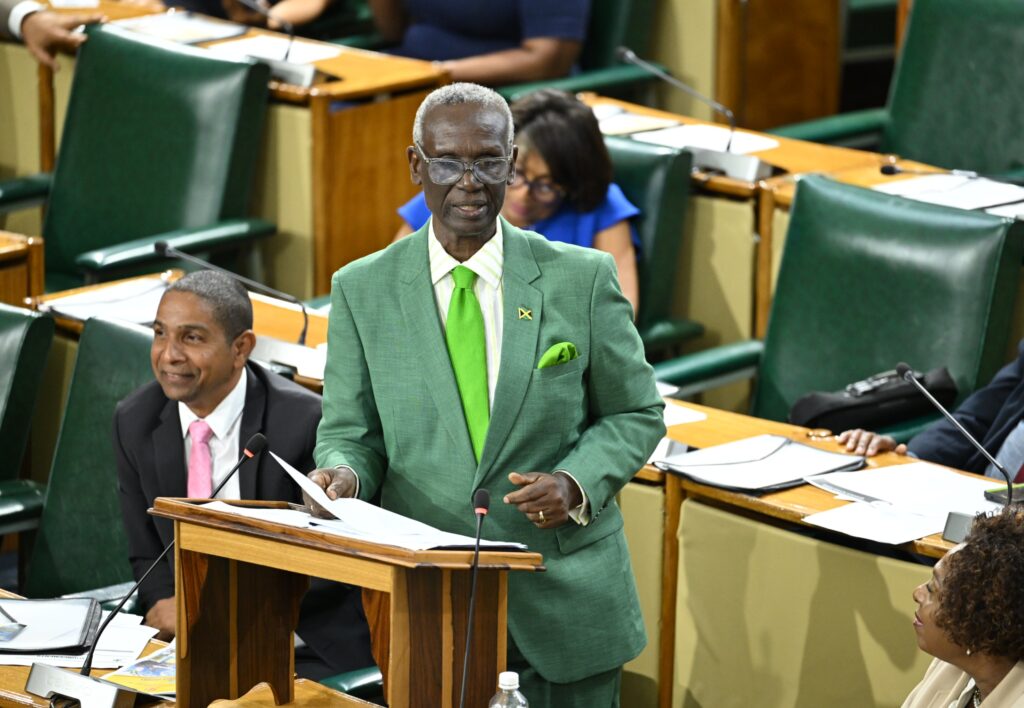
    KINGSTON, Jamaica — Jamaica’s public fire services are poised to deliver a dramatic upgrade to national emergency response infrastructure, with the Jamaica Fire Brigade (JFB) preparing to launch a purpose-built central emergency communication centre. The new facility is anchored by an automated station alerting system, engineered to slash response wait times for fire and rescue calls across every parish on the island.

    The official announcement was made Wednesday by Desmond McKenzie, Jamaica’s Minister of Local Government and Community Development, during his 2026/27 Sectoral Debate address to the country’s House of Representatives. As part of the advance preparations for the new hub, 24 active firefighters completed specialized training in emergency telecommunications operations back in February. These trained personnel will staff the centre, which will initially operate out of the Waterford Fire Station located in the parish of St Catherine.

    McKenzie outlined the core functionality that sets the new system apart from legacy infrastructure: “The defining advantage of this update is that the system sends instant alerts and emergency notifications directly to responding units. If an emergency call is processed within 64 seconds, the critical details are immediately transmitted to the appropriate fire station, and firefighters can be fully dispatched within 60 seconds.”

    When added together, the total end-to-end response time from call receipt to dispatching comes out to just two minutes and four seconds – a benchmark that brings JFB’s operations fully into alignment with global emergency response best practices.

    The transformative infrastructure project will roll out in two sequential phases, prioritizing the highest-need regions first. Phase one will focus on rolling out the system to fire stations across Kingston and St Catherine, two parishes that are home to Jamaica’s most densely populated residential and commercial communities and consequently receive the highest volume of annual emergency calls.

    Phase two of the rollout is scheduled to launch at the start of the next national financial year, when the new communication system will be expanded to all remaining fire stations across the entire island. For the second phase, the main emergency communication hub will be relocated to the York Park Fire Station in central Kingston, the ministry confirmed.

  • Pranks, fast food orders and bomb threats

    Pranks, fast food orders and bomb threats

    Jamaica’s top police officials have sounded a public alarm over a growing crisis that is crippling the country’s primary emergency communication line: thousands of unnecessary, non-urgent calls each day are diverting critical resources from people facing real life-threatening situations.

    During the latest episode of the Jamaica Constabulary Force’s official FORCE4GOOD podcast, Assistant Commissioner of Police Gary Francis, who leads the 119 24-hour emergency communication centre, exposed that confined adults held in jails, prisons and other correctional facilities are among the worst offenders, sometimes placing as many as 200 meaningless calls to the line in a single day.

    Francis broke down the staggering volume of traffic the centre handles: on average, 5,000 calls reach 119 operators every 24 hours. Only 20 percent of these are actual emergency requests requiring immediate police intervention. Roughly 15 percent are related to police business but do not qualify as urgent emergencies, while a full 65 percent are completely non-essential prank or crank calls with no connection to policing needs.

    “The numbers are not exaggerated — it is literally 200 calls a day from some confined adults, simply because they have nothing to occupy their time,” Francis confirmed, emphasizing that the constant flood of irrelevant calls forces centre operators to waste hours sifting through junk requests to locate genuine life-or-death alerts.

    The unrelenting volume of non-emergency calls has created extreme pressure on centre staff, requiring specialized ongoing training to build tolerance and patience. Operators must remain calm and focused even after a long string of aggressive prank calls, because the very next call could be a genuine emergency that demands split-second, clear-headed action, Francis explained. Consistent supervision and balanced workflows are non-negotiable to keep the centre functioning under these conditions.

    Superintendent of Police Stacey-Ann Powell backed up Francis’s assessment, noting that the 119 centre already serves as the central coordination hub for all Jamaican Constabulary Force units across the country, handling everything from routine service calls to officer status checks during field operations. Even with these heavy core responsibilities, operators are regularly forced to field absurd, non-urgent requests ranging from rescuing a cat stuck in a tree to ordering fast food, helping with homework, or even making false bomb threats.

    Powell also warned that as summer break approaches, parents need to monitor their children’s phone usage closely, as minors account for a large share of unnecessary calls. She noted that in recent months, the centre has seen a rise in minors placing prank bomb threats, a dangerous prank that carries serious legal consequences.

    Powell reminded the public that placing false non-emergency calls to police or emergency services is not just an inconvenience — it is a criminal offense. Currently, Jamaican police prosecute offenders under the Offences Against the Person Act, but law enforcement is pushing for new, specific legislation targeting abusive prank calling, bringing the country in line with other nations that have clear penalties for this behavior. False calls put lives at risk by delaying emergency response to people in genuine danger, and offenders can and will be held legally accountable for their actions, she added.

  • ‘Don’t hate Granville’

    ‘Don’t hate Granville’

    In the tight-knit community of Granville, Montego Bay, a wave of cautious joy has spread among residents this Wednesday, after a police officer charged with the murder of 45-year-old Latoya “Buju” Bulgin made his first court appearance — a development many thought would come far slower after her fatal May 2024 shooting. The swift movement of the case through Jamaica’s justice system has prompted local organizers to infuse a long-planned gospel concert with a celebratory tone, even as community leaders push for accountability for four other fatal police shootings in the area this year.

    When Jamaica Observer arrived in Granville early Wednesday, the news had just broken that Constable Andrew Wilson, assigned to the Irwin Police Station, had been brought before the court in connection with the May 17 shooting. Wilson was denied bail at the conclusion of the hearing, received a formal warning against tampering with case witnesses, and is scheduled to reappear in court on June 16, per an official statement from Jamaica’s Independent Commission of Investigations (Indecom).

    One anonymous event organizer told the Observer that the community would kick off the day’s events with a church service honoring Bulgin, framing the court appearance as a hard-won early victory for her loved ones. “We will be having a church service in Granville today, and we’ll use that to celebrate our friend’s victory. We are having tears of joy and we are hoping to hear more in regards to this,” she said, adding that the entire community shares in satisfaction over the progress of the case.

    Another unidentified resident shouted the now-ubiquitous rallying cry that has defined protests held since Bulgin’s death: “Justice fi Buju!” She told the Observer that the community would continue holding weekly protests every Saturday leading up to Bulgin’s funeral, a vow to keep pushing for full accountability.

    Longtime community member Tyrone Gordon shared the widespread satisfaction with the speed of the case, crediting local Member of Parliament Marlene Malahoo Forte for moving the process forward quickly. But Gordon, who extended his deepest condolences to Bulgin’s grieving sons and extended family, also issued a key appeal to law enforcement: not all officers share responsibility for the shooting, and he hopes remaining tensions do not damage relations between the entire Granville community and the police force.

    “This is kind of a mixed feeling for me, because I know that not everybody in the police force is unprofessional like that police [involved in shooting]. I know they have good police officers. I just want to appeal to the good police officers to not hate Granville, just come in and treat us well,” Gordon explained.

    The progress of the case has also been formally welcomed by the Granville Peace, Justice & Resource Development Foundation, which has led calls for accountability after Bulgin’s death. In an official statement, the foundation called the decision to charge Wilson and bring him to court quickly “an important step in the pursuit of justice, accountability, and the preservation of public confidence in the rule of law.”

    The organization also praised the Granville community for its peaceful, persistent advocacy over the past weeks. “We also acknowledge the valiant and determined efforts of the people of Granville, who remained peaceful, disciplined, and steadfast in their demand for justice. Their courage and persistence, coupled with the overwhelming support received from Jamaicans at home and abroad, helped ensure that this matter remained in the national consciousness and that justice was allowed to take its course,” the statement read.

    Bulgin’s shooting was the fifth fatal police shooting in Granville between the start of 2024 and May 17, and the foundation has used the public attention around her case to amplify calls for urgency in the four remaining open investigations. Among the other victims are four-year-old Romaine Bowman, Kevaun Martinez, and Desmond Dunkley, who were killed in a New Year’s Day incident, as well as Tajay “Teejay” Edwards — the victim of a shooting that Bulgin was traveling to a protest over when she was stopped and killed.

    To date, Bulgin’s death has sparked repeated peaceful protests across Granville, with community members demanding full transparency and accountability from law enforcement and investigative bodies. The early progress in Wilson’s case has given many residents a glimmer of hope that long-sought changes to policing accountability in the area may finally be within reach.

  • Some cabbies out west vote to wait for fare increase

    Some cabbies out west vote to wait for fare increase

    In a move that balances industry survival with working-class commuter concerns, a coalition of 15 Jamaican taxi associations serving primarily the country’s western region has voted to hold off on implementing the remaining 16% approved fare increase until Jamaica’s minimum wage adjustment takes effect in July.

    Dion Chance, who serves dual roles as a director for the National Council of Taxi Associations (NCOTA) and president of the St James Taxi Association, shared the group’s decision with the Jamaica Observer on Wednesday, noting that after three years of waiting for full fare adjustment, an extra 29 days makes little material difference to operators.

    The background of this decision stretches back to October 2023, when Jamaican authorities approved a total 35% fare increase for taxi services. At that time, amid ongoing post-COVID-19 economic stabilization efforts and recovery from 2024’s Hurricane Beryl, transport operators agreed to only implement a 19% partial increase immediately, leaving the remaining 16% pending. Recent months have brought growing pressure from cabbies to roll out the remaining adjustment, driven by skyrocketing fuel prices tied to ongoing geopolitical tensions in the Middle East that have squeezed operator profit margins.

    On Tuesday, Transport Minister Daryl Vaz announced a staggered two-phase plan for the 16% residual increase: an 8% hike to take effect immediately, followed by a second 8% increase on July 1. The government framed the staggered approach as a measure to soften the inflationary shock of the fare adjustment on the broader national economy. But the taxi coalition concluded that the government’s plan would still leave low-income commuters facing sudden higher transport costs without a corresponding increase in their income.

    Chance explained the coalition’s community-focused rationale, saying: “What we are looking at is that commuters will face two increases under the transport ministry’s staggered approach, one in a period where their income has not changed. We are just being good corporate citizens. While we are feeling it, we know that they are feeling it too and you can’t kill the goose that lay the golden egg. In order to survive we have to give the commuters some breathing space too.”

    Jamaica’s national minimum wage is scheduled to rise from the current rate of J$16,000 per 40-hour work week to J$17,000 effective July 1. Chance emphasized that minimum wage earners make up the core of taxi ridership across the country, making the alignment of fare and wage adjustments a logical priority for the group. The decision to delay was not made unilaterally: NCOTA surveyed its member associations via WhatsApp groups, and the majority of members voted in favor of the hold, cementing it as the national body’s official policy.

    “Our members and our member associations will hold, because we can do that,” Chance said. “While we need to stay in business, we also have to take them into consideration.”

    To ease the financial strain on taxi operators as they wait for the fare adjustment to take effect, NCOTA is now exploring alternative solutions to offset elevated fuel costs. Chance said the association is in discussions with local businesses to secure bulk discounts on essential supplies for operators, including fuel, tires, and vehicle spare parts. With an estimated 24,000 registered taxis operating across Jamaica, the industry represents a large, consistent consumer base that makes mutual discount arrangements beneficial for both sides, he noted.

    Beyond cost relief on supplies, Chance also called for a policy shift from Jamaican commercial banks to expand access to low-interest financing for taxi operators looking to purchase new or replacement vehicles. Currently, he explained, low-interest vehicle loans are only accessible to operators who are members of credit unions, pushing many working cabbies to turn to predatory loan sharks who charge exorbitant interest rates. In some cases, operators end up paying more than J$40,000 per week to service these high-cost loans.

    Recent regulatory changes now allow individual taxi operators to apply for personal vehicle import licenses, which let them source cheaper vehicles directly from overseas markets rather than purchasing marked-up vehicles through local dealers. All that is required to import a vehicle is self-clearance through customs or hiring a local broker to handle the process. But Chance noted that this cost-saving opportunity is out of reach for most operators without access to affordable commercial financing, underscoring the urgent need for banks to revise their long-standing lending policies that exclude independent taxi operators.

  • CMU employee charged over alleged misappropriation of student funds

    CMU employee charged over alleged misappropriation of student funds

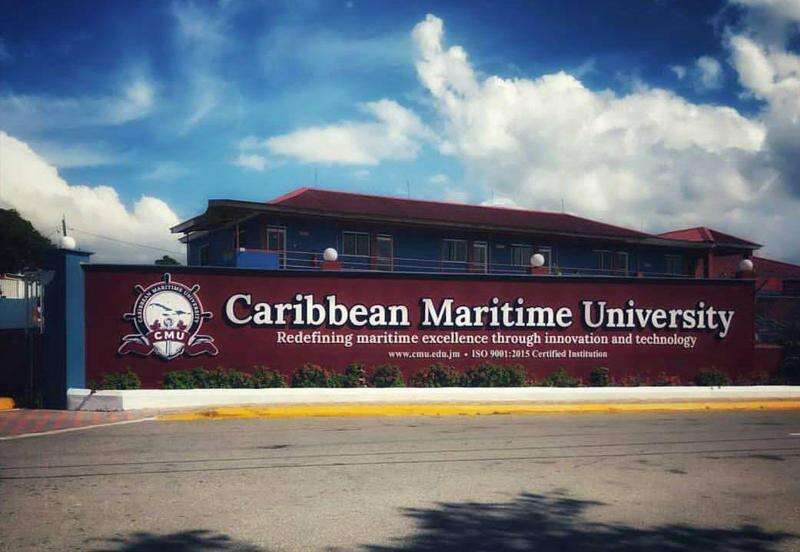
    KINGSTON, Jamaica — A long-running probe into suspected financial misconduct tied to student tuition and fee payments at one of Jamaica’s leading tertiary education institutions has culminated in the arrest and criminal charging of a current employee, law enforcement officials confirmed this week.

    Kevan Anthony Panton, who holds a dual role as accounting officer and customer service officer at the Caribbean Maritime University (CMU), faces a total of 84 criminal counts. The charges include 14 counts each of embezzlement, transactions involving criminal proceeds, possession of illegally obtained property, facilitation of criminal property transactions, falsification of institutional financial records, and conspiracy to defraud the university.

    The case traces its origins back to November 2024, when routine financial checks during an unexpected university system downtime uncovered the first red flags. While conducting a mandatory reconciliation cross-checking daily cashier closing reports against official bank deposit records, auditing teams found that $970,000 in collected funds had not been deposited to the university’s accounts as required. While Panton ultimately deposited the missing sum months later, investigators confirmed the transaction timeline and processes deviated sharply from CMU’s official cash handling protocols, triggering further scrutiny.

    Additional major discrepancies came to light in January 2026, when a cohort of students presented manual payment receipts for examination fees that did not appear anywhere in CMU’s centralized financial records. This discovery prompted a full, formal review of the university’s manual receipt issuance, banking protocols, and accounts receivable recording processes, led by Jamaica’s Financial Investigations Division (FID).

    During the probe, investigators confirmed that pre-numbered receipt book sequences had been intentionally altered, and multiple full receipt books could not be located for auditing. A full audit of documented manual payments found that $1,702,000 in total student payments collected by Panton were never recorded or deposited to CMU. To date, only $552,500 of that unaccounted sum has been returned or deposited, leaving an outstanding deficit of more than $1.149 million, per FID’s official findings.

    Following the discovery of the discrepancies, Panton and a second CMU employee were suspended from their roles in January 2026, after which CMU’s leadership submitted a formal report to the FID to launch a full criminal investigation. Following his arrest on Wednesday, Panton was granted bail set at $700,000, and his first court appearance is scheduled for July 6, 2026 at the Kingston and St Andrew Parish Court.

    Keith Darien, the FID’s Principal Director of Financial Crimes Investigations, noted in an official statement that the case underscores a systemic need for public educational institutions to strengthen internal financial safeguards and enforce immediate reporting of suspected misconduct. “This case highlights why institutions must maintain robust systems for cash handling, receipting, reconciliation and oversight. Where funds are collected on behalf of an institution, there must be clear accountability at every stage,” Darien explained.

    He added that the FID will continue to collaborate closely with local law enforcement agencies and institutional partners to root out financial crime, ensuring that all well-documented cases of suspected misconduct are brought before the judicial system for resolution.

  • Ministry of Education invites public to TVET showcase 2026

    Ministry of Education invites public to TVET showcase 2026

    Ahead of its launch next week, Malaysia’s Ministry of Education, Human Resource Planning, Vocational Training and National Excellence has issued a public call for widespread attendance at the 2026 TVET Showcase, an event crafted to reshape public understanding of technical and vocational education and training (TVET) across the country.

    Scheduled for June 5, 2026, from 10 a.m. to 2 p.m. on the ground floor of Government Headquarters, this year’s gathering centers on the transformative theme: “TVET for Excellence: Showcasing Skills, Breaking Stigmas, Building Futures.” Unlike generic education fairs, the showcase is intentionally designed to center the tangible achievements of TVET students, putting their on-the-job competencies, creative problem-solving, and innovative projects front and center for community visitors.

    According to an official press release from the ministry, attendees will be able to explore a wide array of interactive displays spanning key vocational sectors. These include hands-on exhibits from agricultural technology, commercial garment production, culinary arts and food nutrition, custom woodworking, and dozens of other specialized technical disciplines. Each showcase is structured to highlight the real-world, actionable knowledge and skills that students gain through structured TVET programming — skills that directly align with in-demand jobs across Malaysia’s evolving economy.

    Beyond displaying student work, the event carries a broader policy and social goal: to underscore the critical role that TVET plays in preparing people for successful careers. For many years, vocational education has carried unfair social stigma that frames it as a “second choice” for students who cannot pursue university degrees. The showcase aims to counter that myth by demonstrating that TVET equips learners with the specialized tools they need to secure stable employment, launch their own small businesses, and build sustainable long-term professional and personal growth.

    The ministry has extended a targeted invitation to a broad cross-section of the public, including current TVET students, prospective learners, parents, K-12 and post-secondary teachers, and all community members. Organizers note that public attendance not only supports student participants but also reinforces national efforts to nurture a culture of skills development, innovation, and excellence in vocational training — a key pillar of Malaysia’s workforce development strategy for coming years.