分类: society

  • Mom still critical after deadly ambush on family

    Mom still critical after deadly ambush on family

    A quiet morning commute to a toddler’s daycare turned into a deadly ambush this week in Belmont, leaving a 2-year-old boy and two adult men dead, and the child’s mother fighting for her life in a Port of Spain hospital. As of Wednesday evening, Antonia Cain-Kafi, 39-year-old Aquil Kafi’s wife and the mother of slain toddler Akini Kafi, remained in critical but stable condition after being hit four times during the sudden attack. The third victim was Aquil Kafi’s close friend, Anthony “Monster” Wilson.

    What makes the tragedy even more devastating to family members is the long, difficult journey the couple went through to welcome their only child. A close family friend shared with local outlet *Trinidad Express* that Cain-Kafi spent years trying to conceive, and when Akini arrived 2 years and 11 months ago, the couple celebrated him as nothing less than a “miracle baby.”

    On Thursday morning around 8:30 a.m., the group was traveling in a Toyota Aqua, with Kafi and Wilson in the front seats and Cain-Kafi and her young son in the back. They were en route to Akini’s regular daycare drop-off when another vehicle cut them off and blocked their path in the Holder Steps/Rifle Hill area, just off Serraneau Road and St Francois Valley Road. A gunman exited the blocking vehicle and immediately opened fire on the car carrying the family. By the time the shooting stopped, both Kafi and Wilson had been killed instantly, while both Cain-Kafi and Akini suffered life-threatening gunshot wounds.

    According to police accounts, bystanders in a private vehicle rushed the wounded survivors to Port of Spain General Hospital. Witnesses say Cain-Kafi, despite her own multiple gunshot wounds, managed to hand her injured son over to hospital staff for treatment. Medics were unable to save the toddler, who was pronounced dead shortly after arrival.

    On Wednesday, *Express* reporters met grieving relatives at the Forensic Science Centre in Federation Park, where family members had traveled to formally identify the bodies of the three victims. One relative who spoke to reporters shared warm, tender memories of the young boy who was taken too soon. Akini, she recalled, had an all-consuming obsession with cars. “He loved cars. He was fascinated by it and, well, he destroyed a lot of toy cars and he would then try to fix it,” she said. “He was a really loving baby boy and, oh my gosh, he had a smile that would melt any lady’s heart.”

    Local law enforcement has not yet released updates on potential suspects or motives for the targeted attack, leaving the community in mourning and waiting for answers as the surviving mother recovers from her devastating injuries.

  • Stuart: 3 new nurses walk off the job

    Stuart: 3 new nurses walk off the job

    A small group of newly qualified nursing professionals have abandoned their posts at a major public medical facility in Trinidad and Tobago, stepping down over what they describe as unsafe, unregulated working conditions that put their professional licenses and patient safety at severe risk. The Trinidad and Tobago National Nursing Association (TTNNA) president Idi Stuart confirmed the departure of the three nurses in an interview with the Saturday Express, shedding light on the systemic staffing gaps that led to the early exit of three of the 61 newly hired registered nurses at the North Central Regional Health Authority.

    Stuart explained that all newly hired nurses were assigned to the Eric Williams Medical Sciences Complex in Mt Hope, where they were immediately subjected to working conditions that violated both international nursing standards and onboarding promises made during orientation in April. During their hiring process, the new nurses were guaranteed a structured transition: they would only work weekday morning shifts, gradually acclimate to their roles, always work under the supervision of experienced senior staff, and share shifts with at least two to three other colleagues. None of these commitments were honored once the nurses began their roles.

    Instead of the ideal 1:4 nurse-to-patient ratio outlined in global nursing best practices, the facility requires all nursing staff to operate under a 1:6 ratio, a burden the TTNNA has already asked members to tolerate temporarily while the health authority addresses chronic staffing shortages. For the newly licensed nurses, however, the strain extended far beyond an elevated patient load: the three professionals were left to manage their assigned wards entirely alone, with zero ongoing supervision from senior or head nurses – a violation of standard onboarding protocols.

    Industry best practice mandates that new graduate nurses remain under close, structured supervision for a minimum of three to six months after starting their first role. Most other regional health authorities across the country maintain formal monitoring departments to support new hires during this transition period, recognizing that it takes an average of two years for new nurses to develop the confidence and clinical competence to practice independently. Leaving a newly licensed nurse unsupervised creates avoidable risks: if a medication error occurs or a critical patient emergency unfolds, the nurse faces professional disciplinary action that can result in the loss of their hard-earned license, all for failures rooted in systemic understaffing, not individual error.

    Stuart emphasized that the unmet onboarding commitments and unsupervised working conditions left the three new nurses with no other choice. They were forced to bear full responsibility for critical events like patient cardiac arrests, seizures, and end-of-life care – situations that even experienced nurses struggle to manage alone, and that should never fall to an unsupervised new graduate. With errors all but guaranteed under this structure, the nurses chose to step down rather than risk their professional futures. They now plan to pursue employment opportunities at other regional health authorities that can provide the structured support and safe working conditions necessary to deliver quality patient care.

  • ‘SCARY’ PRISON DATA

    ‘SCARY’ PRISON DATA

    During a parliamentary debate on the 2026 Parole Bill last sitting day, Trinidad and Tobago’s Justice Minister Devesh Maharaj dropped a bombshell, releasing grim recidivism data from national law enforcement and correctional agencies that lays bare a deepening national crime and rehabilitation crisis.

    Maharaj opened his address by warning lawmakers to brace for the troubling statistics, pulling data from two decades of arrest records to frame the scope of the problem. Between 2015 and 2025, a total of 53,183 people were arrested and charged with criminal offenses across the twin-island nation, with roughly 22% of those offenders going on to reoffend after facing legal consequences. Far more alarming, he said, are the figures from the Trinidad and Tobago Prison Service, which track repeat offending among convicted inmates who have been released back into society. Data collected between 2022 and 2026 shows that the annual recidivism rate for released prisoners has consistently hovered above 50%: hitting 58% in 2022-2023, 56% in 2023-2024, 53% in 2024-2025, and 57% in 2025-2026. Averaged across the five-year period, that means more than one out of every two released prisoners returns to criminal activity after serving their sentence. Calling the trend “scary” and “alarming”, Maharaj questioned the systemic failures driving the cycle of repeat crime, asking, “What is going on in our country? Why are so many of our young people returning to crime?”

    Digging into the root of the crisis, Maharaj revealed that prison officials have been sounding the alarm about the lack of resources for years, with no meaningful response from previous leadership. When asked what barriers were driving the high recidivism rate, prison administration confirmed that core rehabilitation programming has never received dedicated government funding. Currently, the prison service uses a standardized risk assessment tool called the LSCMI to evaluate each new inmate’s risk level, individual needs, and accountability on intake. After a six-month orientation period that reviews each offender’s criminal history and risk factors, inmates are placed in programming tailored to their sentence length, needs, and background. The slate of available programming includes evidence-based cognitive behavioral therapy, adult literacy and general education courses, vocational and technical skills training, and recreational, spiritual, and cultural activities designed to support pro-social behavior change.

    But Maharaj explained that none of these critical programs are supported by public funding. Instead, almost all rehabilitation initiatives rely entirely on external support from faith-based groups, community organizations, non-governmental organizations (NGOs), and volunteer private citizens who donate their time, professional expertise, and personal money to run the programs. To date, there is no dedicated budget line allocated to offender rehabilitation within the national correctional system. “Imagine the prison service having to depend on non-governmental organisations to change prisoners’ attitudes and rehabilitate them,” Maharaj said, noting that the entire system is one crisis away from collapse if these external groups pull their support.

    Compounding the funding gap are crippling staffing shortages. The nation’s total prison population stands at roughly 3,500 inmates, but only 57 correctional officers are assigned full-time to facilitate and coordinate rehabilitation programming. These officers are tasked not only with coordinating daily activities but also with directly teaching and training inmates, drawing on their own individual skills to lead courses. Without dedicated funding, there is no budget to develop new evidence-based programming, adapt curricula to the changing needs of the inmate population, or expand access to programs across all correctional facilities. Widespread staff attrition has further stretched the system’s capacity, leaving the department responsible for rehabilitation chronically understaffed. Maharaj also highlighted that there is an urgent unmet need for specialized professional training for correctional staff to develop and deliver high-quality rehabilitation programming.

    The Justice Minister argued that this systemic neglect is a core contributor to the nation’s ongoing crime crisis, pointing out that while the public and policymakers frequently complain about rising crime and repeat offending, successive governments have failed to address the root gap in rehabilitation resourcing. “The point I am making is, we have been complaining vigorously about crime, we have been complaining about repeat offending, but yet when it comes to addressing the root causes within the prison service, we have not taken the necessary steps,” he said.

    Looking forward, Maharaj stated that the current Kamla Persad-Bissessar administration has committed to overhauling the broken correctional system, starting with a full top-to-bottom review of current policies and resourcing. He emphasized that the proposed 2026 Parole Bill is a critical first step to address the crisis: the legislation is designed to expand structured rehabilitation opportunities, give qualifying offenders a meaningful second chance to re-enter society, and support successful long-term reintegration to break the cycle of repeat crime.

  • Teen Detained After Fatal Bar Shooting That Rocked Belize City

    Teen Detained After Fatal Bar Shooting That Rocked Belize City

    A quiet opening shift at a popular Belize City entertainment venue ended in devastating tragedy on Thursday, leaving a 34-year-old woman dead, two other people injured, and a community reeling from senseless violence. Salma Funez, a working mother of three and an employee at Da Buzz Lounge on the Phillip Goldson Highway, was killed in a targeted shooting just minutes after the establishment opened its doors to the evening crowd.

    Witnesses recalled that the night had just begun: Funez was seated near the bar, the bartender was prepping for incoming patrons, and other staff were settling into their shifts. One anonymous employee recalled that shortly after opening, a colleague noted an unfamiliar person enter the venue and immediately head to the restroom, a detail that struck them as odd but did not immediately raise alarm. That person, police confirmed, was a 16-year-old male who wore a face covering to hide his identity.

    Surveillance cameras captured the suspect leaving the restroom and approaching Funez directly, with any exchange between the pair so quiet that nearby staff did not notice any argument. According to Funez’s brother-in-law Joshua Trapp, eyewitnesses told the family the suspect demanded Funez’s phone immediately before opening fire. The spray of bullets grazed two other employees: one was hit in the head, and another suffered a gunshot wound to the hand. One injured employee described the chaotic aftermath to reporters, recalling seeing blood run down her own head, spotting Funez lying motionless on the floor, and fleeing to safety while thinking only of her own children.

    Trapp told reporters that Funez was a dedicated, loving woman whose life revolved entirely around her three children. For the 10 years he has known her, he said, she led a quiet routine of going to work and returning home to her kids, with no known involvement in any activity that would put her at risk of violence.

    Authorities launched an immediate manhunt after the shooting, pulling surveillance footage to map the suspect’s movements and setting up vehicular checkpoints across the area. By 11:30 p.m. Thursday, law enforcement had taken the 16-year-old suspect into custody. In a recent update, ASP Stacy Smith, a staff officer with the department, confirmed that investigators have also recovered the firearm suspected to be used in the killing.

    Preliminary investigation has revealed that Funez and the detained suspect already knew each other, and police believe the suspect targeted Funez’s phone to destroy prior threatening messages he had sent her. “There was some indication that he may have threatened her before, and those messages would have been on the phone. So, it is suspected that taking away the phone would have allowed him to cover the evidence,” Smith explained. When asked whether the pair had previously lived together, Smith declined to comment further, noting that additional details would be released at a scheduled press briefing on Monday.

    For Funez’s grieving family, the shooting has left an irreparable hole, but they hold out hope that a full investigation will deliver the justice they are seeking. “My sister-in-law was a very loving person, hard working and she used to live for her kids. That I can tell anyone,” Trapp said. As the community processes the shock of the killing, investigators continue to piece together the full sequence of events that led to the fatal attack.

  • Police Slam ‘Reckless’ AI Suspect Post Amid Funez Murder Investigation

    Police Slam ‘Reckless’ AI Suspect Post Amid Funez Murder Investigation

    As the investigation into the high-profile Funez murder case progresses in Belize, law enforcement officials have issued a sharp public rebuke of unethical online misinformation that is endangering innocent civilians and derailing official investigative work. At the center of the controversy is an AI-altered image of a purported murder suspect, published and spread by an unaffiliated social media news blog.

    Assistant Superintendent Stacy Smith, a staff officer with the Belize Police Department, went public on May 8, 2026 to call out the blog’s irresponsible action, labeling the post as fundamentally reckless. Smith emphasized that the digitally generated image bears no resemblance to the actual suspect currently in police custody, with significant discrepancies in both facial features and the suspect’s age.

    Beyond undermining the official investigation, Smith warned that the fake depiction creates a serious public safety threat. The doctored image could lead to wrongful identification and vigilante targeting of an unrelated civilian living in Belize City who happens to match the AI-generated description. Given the severity of the murder charge, any misidentification could put that innocent person in grave danger, Smith explained.

    In a public address, Smith appealed to all individuals and groups involved in sharing public information—whether formally regulated media outlets or unvetted online self-described informants—to prioritize ethical standards in their work. “You certainly put lives at risk and detract from the process of investigation,” she stated, highlighting the real-world harm that unregulated AI-generated misinformation can cause during active criminal probes.

    To keep the public updated on the progress of the murder investigation, law enforcement has scheduled a follow-up press conference for Monday, where investigators will share official updates on their latest findings. This incident has emerged as a high-profile example of the growing risks posed by unregulated use of artificial intelligence to generate content related to active criminal cases, prompting renewed calls for online accountability among unofficial news sources.

  • Another Murder; One Mother Faces Unthinkable Loss This Mother’s Day

    Another Murder; One Mother Faces Unthinkable Loss This Mother’s Day

    As Mother’s Day 2026 approaches, families across Belize City are busy preparing bouquets, planning warm gatherings, and cherishing time with loved ones. But for one long-time CET Site resident, this holiday will bring nothing but unthinkable agony, marking a second devastating loss of a child to violent urban gun crime.

    Helen Samuels, 60-something, will not be on the receiving end of hugs or gifts this Sunday. Instead, she is sitting with her grief, mourning the murder of her 29-year-old son Jamal Samuels, who was gunned down in a brazen public shooting in their neighborhood on the evening of May 6. For Samuels, who already lost her first infant son decades ago and a second adult son to gun violence years prior, this killing leaves her with just one surviving child — and a gaping hole that no amount of resilience can fill.

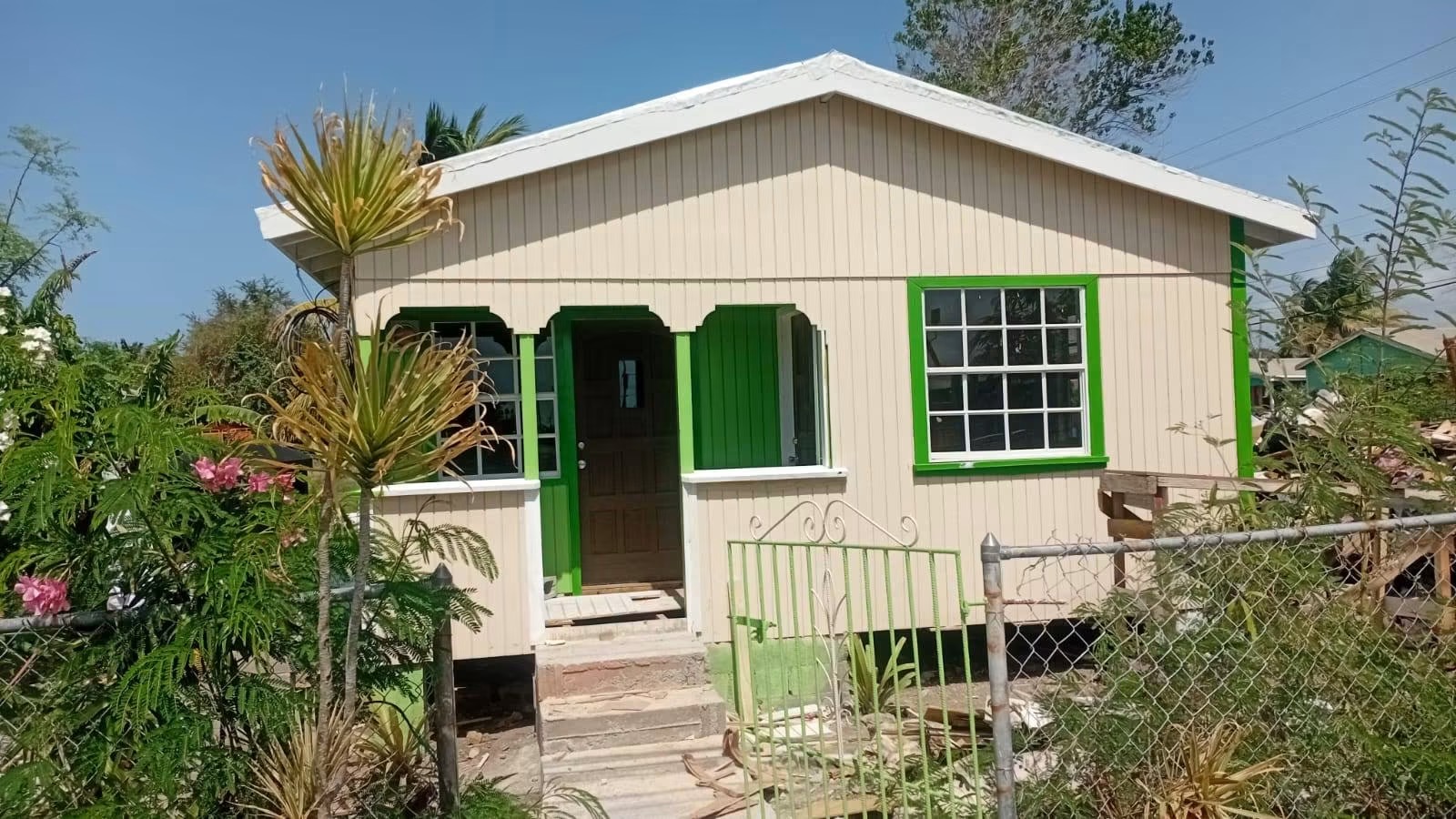
    Samuels has spent her entire life building stability for her children out of hardship. For decades, she raised her four sons in a small, weathered wooden home in CET Site, where the family weathered hurricanes, heavy rains, and constant economic uncertainty. The creaky, worn structure was more than wood and nails to her; it was a testament to her sacrifice: she went without basic needs so her children could have enough, and turned the modest space into a stable home amid constant neighborhood instability. Years later, the Government of Belize provided Samuels with a new concrete starter home, but even the solid new walls cannot hold back the crippling grief she now carries.

    The shooting unfolded on Thursday evening, when Jamal stepped out of his home to run a quick errand to a nearby shop. As he made the purchase, unidentified gunmen approached and opened fire multiple times, fatally wounding him before fleeing the scene. Jamal’s sister, Sherean Tracy, was at home nearby when she heard the gunfire. She had no idea the attack had targeted her brother until first responders arrived on scene. Speaking to reporters, Tracy described the attack as cold and unrelenting, saying the shooters showed no mercy and appeared determined to kill.

    Samuels told reporters her son was not an aggressive person, and rarely spent time socializing outside the home. “He doesn’t hang out in crowds,” she explained. “He would roll his weed, sit right in our yard, smoke and drink by himself. He never kept much company.” The family believes Jamal was caught in crossfire, in the wrong place at the wrong time for a attack meant for someone else.

    Belizean police have not yet confirmed a clear target for the attack. ASP Stacy Smith, a staff officer with the department, told reporters investigators suspect the shooting stems from ongoing internal conflict between criminal factions in the Backaland area. Smith also confirmed Jamal had prior interactions with law enforcement, including a drug trafficking charge filed in 2025.

    In the aftermath of the shooting, Samuels shared her deepest regret as a mother: she never managed to move her family out of the violence-plagued neighborhood of Belize City to safer ground. “I always wished I could have moved my two boys out of Belize, away from all this,” she said. “Now I only have one son left. I don’t know how I’m going to get through this — this killing brings back every terrible memory of losing my first son.”

    Adding to Samuels’ distress in the days after the shooting, authorities have detained her only remaining surviving son for questioning in connection with the incident, leaving the grieving mother isolated ahead of Mother’s Day. The report, filed by News Five correspondent Paul Lopez, underscores the persistent toll violent street crime takes on Belizean urban families, turning a national holiday of celebration into a day of quiet survival for those touched by murder. The original newscast was transcribed from News Five’s evening television broadcast, with Kriol language remarks preserved in standard spelling for the transcript.

  • Police Swarm CET Site, as Murder and Highway Shooting May Be Linked

    Police Swarm CET Site, as Murder and Highway Shooting May Be Linked

    As of May 8, 2026, a heavy police presence is currently concentrated in the CET Site district, as law enforcement investigators probe a potential connection between two separate shocking violent incidents that have shaken the local community. Authorities are investigating whether the fatal killing of Jamal Samuels, a recent homicide case, is tied to a highway shooting that occurred earlier this week along the Phillip Goldson Highway. That shooting left two men, Hubert Baptist and Eric Frazer, wounded and under medical care at local hospitals.

    Fears of further violence and escalating retaliation have pushed regional police leadership to ramp up visible patrols and targeted operations across the area, with the dual goal of preventing additional conflict and reassuring nervous residents. Senior Superintendent Reymundo Reyes, Regional Commander for the Eastern Division, explained that law enforcement moved quickly to deploy specialized operational teams to the area starting the night after the highway shooting, out of explicit concern that violent retaliation could follow the attack.

    “From the moment the shooting involving Mr. Baptist unfolded on the Phillip Goldson Highway, we recognized that retaliation was a distinct possibility,” Reyes stated in an interview with reporters. “As a result, we immediately activated full operational deployments across this area, and we are continuing to monitor and target individuals with a history of violence who may threaten public safety in the Martins neighborhood district.”

    When pressed by reporters to confirm whether the recent homicide of Samuels and the highway shooting are definitively linked, Reyes acknowledged that investigators have not ruled out a connection, saying, “There is a possibility that yes they are connected.”

    Local news outlets are continuing to monitor developments in the case over the coming weekend, tracking both the progress of the investigation and the public safety impact of the increased police deployment. This report is adapted from a televised evening newscast, originally published as a direct transcript for online readers.

  • Teenage Gunman Hunted After San Pedro Shooting

    Teenage Gunman Hunted After San Pedro Shooting

    Authorities in San Pedro have launched an urgent manhunt for an 18-year-old gunman following a late-night shooting that left one man wounded outside a local grocery store. The incident, which unfolded on the evening of Thursday, May 7, 2026, began with a heated verbal altercation between the suspect and the victim, 32-year-old Winston Cayetano, according to official police statements.

    ASP Stacy Smith, a staff officer with the local police force, outlined the sequence of events for reporters. After the initial argument broke out inside the island grocery store, Cayetano left the premises briefly before returning. It was at this point that the teenage suspect pulled out a concealed firearm and fired a single shot, striking Cayetano in the shoulder, Smith confirmed.

    Fortunately, first responders transported the victim to a local medical facility quickly after the shooting, and he has since survived his injury and is receiving ongoing treatment. As of the latest update on May 8, the accused shooter remains at large, and law enforcement teams have not released the suspect’s name to the public.

    Police investigators say they are actively working to track down the suspect’s location, with dedicated resources assigned to the ongoing investigation. This outlet will continue to monitor developments in the case and publish updates as new information becomes available.

    This report is adapted from a transcribed evening television newscast, with all statements from officials retained in their original context for accuracy.

  • Finally, Marcus Canti Reveals Truth Behind Disappearance

    Finally, Marcus Canti Reveals Truth Behind Disappearance

    It has been three weeks since Marcus Canti, the top elected Alcalde of Indian Creek village in southern Belize, vanished without a trace — a disappearance that sent immediate shockwaves across the small Maya community and put long-simmering local disputes in the national spotlight. Now, after being found alive but deeply shaken by his ordeal, Canti has spoken publicly for the first time, detailing the terrifying moments of his abduction and calling out law enforcement for what he calls a negligent, glacial investigation into the attack.

    In a candid, emotional account of the April 13 incident, Canti explained that he had long avoided traveling alone amid rising community tensions, knowing local authorities had previously attempted to detain him with villagers successfully blocking those efforts by standing as witnesses. But on that fateful day, he made a quick, fateful choice to head alone to his small farm to harvest tomatoes, a trip he expected to take mere minutes.

    Unbeknownst to him, his attackers had been monitoring his movements, he said. As he finished collecting his crop, four men approached and grabbed him, quickly joined by a fifth who held Canti at gunpoint and marched him to a waiting truck parked off the nearby road. Canti told reporters that a sixth accomplice was already waiting in the vehicle, where he was immediately bound, gagged, and blindfolded. Though all attackers wore face coverings to hide their identities, Canti told investigators he was able to recognize several of the men by their distinct voices. He was held captive without access to water or food, beaten, and eventually abandoned before he was able to return to his community.

    Three weeks on, however, no suspects have been arrested, and Canti says there has been barely any progress in the case. Frustrated by the lack of movement from law enforcement, he charged that investigators are treating the violent abduction of an indigenous community leader as an afterthought.

    “I am deeply concerned by the agonizingly slow pace of the police investigation,” Canti said. “The investigative team provides no regular updates; we have to constantly reach out to them for any information, and almost nothing has been done. It seems clear they are not taking this matter seriously. A crime was undeniably committed against me: I was forcibly taken from my land, held hostage, abused, and left for dead. If this happened to any other person, would the police drag their feet this way? I have given my full statement, I have named the men responsible. It is their job to investigate, test those claims, and deliver justice. There can be no more delay.”

    The broader context of the attack, Maya community leaders say, stretches far beyond this single violent incident, rooted in decades of unresolved disputes over land rights, leadership authority, and outside intervention in indigenous communal lands. Cristina Coc, spokesperson for both the Toledo Alcalde Association and the Maya Leaders Alliance, told reporters that escalating friction in Indian Creek can be traced directly to the presence of rangers from Ya’axché, a conservation organization that community members say has interfered with traditional Maya land use practices.

    Coc emphasized that the abduction of a sitting local magistrate is a grave offense that demands urgent action, pushing back against the idea that crimes against low-income indigenous people deserve less investigative priority. “This is not an isolated attack,” she said. “All of these tensions, all of these underlying conflicts, have been documented and reported to the government for months, even years. Unresolved issues around land authority and outside intervention by groups like Ya’axché have steadily escalated, and now we have seen this violence. Just because we are poor indigenous people does not mean a crime against us is any less worthy of full, exhaustive investigation. We demand justice for Marcus Canti, and we demand that the government finally address the root causes of this violence before more harm is done.”

    This report is adapted from a televised evening newscast, with all direct quotations preserved and translated accurately for the online audience.

  • Maya Leaders Say No Agreement on San Marcos Land

    Maya Leaders Say No Agreement on San Marcos Land

    On May 8, 2026, a stark divide has emerged between government officials and Indigenous Maya leaders over the outcome of a high-stakes meeting addressing a simmering land conflict in Belize’s San Marcos region. While government representatives have framed Wednesday’s negotiating session as a key breakthrough in the years-long dispute between local San Marcos villagers and a private landowner, Maya community leaders say the talks delivered no tangible progress and warn that on-the-ground tensions are rapidly escalating.

    Cristina Coc, spokesperson for both the Toledo Alcaldes Association and the Maya Leaders Alliance, laid out the community’s position in a statement following the meeting, noting the conflict is already on track to be settled in court. She is pressing the Belizean government to intervene proactively to prevent the conflict from boiling over into the same kind of violent unrest that previously destabilized the Indian Creek community.

    At the heart of the standoff is a large tract of land with overlapping claims: private landowner Mr. Peña, who already controls thousands of acres of property in the region, has begun moving forward with clearing new sections of the territory that San Marcos’ Maya residents have held and used under customary communal rights for generations. Peña has retained legal representation, and his legal team is demanding that the entire village sign a legal pledge promising not to enter what the owner classifies as his private property.

    Coc pushed back against this framing, questioning how Indigenous people can be charged with trespassing on land that their community has held inherent customary usage rights to for generations. She emphasized that Wednesday’s meeting produced no substantive agreement to resolve the competing claims. The only outcome from the session was a government plan to dispatch technicians from the national lands department to conduct a formal survey of the overlapping territory, with a follow-up negotiating session scheduled after that work is complete.

    Despite the government’s planned next steps, Coc confirmed that Peña’s legal team has already made clear their intent to file a court case to resolve the dispute on behalf of their client. “We hope and pray that this conflict in San Marcos does not escalate any further, and God forbid we end up in the same situation as Indian Creek,” Coc said, underscoring the community’s fears that inaction will lead to widespread unrest.