分类: society

  • State of Emergency Across Belize City

    State of Emergency Across Belize City

    In response to an unprecedented wave of deadly violent crime that has swept across the nation, Belize’s Governor-General Dame Froyla Tzalam has signed an official proclamation enacting a State of Public Emergency across large swathes of Belize City and multiple communities in the broader Belize District. The measure went into effect on May 8, 2026, following a sharp uptick in gang-related and public shootings that have left multiple people dead in just one week.

    Formally published as Statutory Instrument No. 49 of 2026 in the government gazette on Thursday, the emergency order is authorized under Section 18 of Belize’s Constitution. It divides the affected regions into two distinct schedules. The first schedule covers 11 separate zones spanning both the Northside and Southside of Belize City, including key corridors bounded by Freetown Road, Princess Margaret Drive, Barrack Road, Cemetery Road, the Philip Goldson Highway, and stretches of land along Haulover Creek and the Caribbean Sea. The second schedule expands the emergency designation to 10 outlying communities: Ladyville Village, Burrell Boom Village, Fresh Pond Community, Buttercup Estates, Bermudian Landing Village, Lemonal Village, Isabella Bank, Rancho Dolores Village, and Double Head Cabbage Village.

    Per the constitutional language that underpins the declaration, the state of emergency is justified by actions “taken or being immediately threatened by any person or body of persons of such a nature and on so extensive a scale as to be likely to endanger the public safety.” The order takes immediate effect upon proclamation and will remain active for a maximum of one month unless government officials choose to revoke it earlier. Belize’s National Assembly holds the authority to extend the emergency measure for additional periods, with each extension allowed to last up to 12 months.

    The emergency declaration comes in the immediate aftermath of a staggering spike in fatal violence that has jolted the nation. On Thursday evening, what should have been a routine night of business at a popular local venue turned into a bloody crime scene when gunshots rang out inside Da Buzz Lounge along the Philip Goldson Highway, shortly after the establishment opened for the night. The attack killed 34-year-old Salma Funez, a mother of three. Law enforcement has already arrested and charged a 16-year-old male in connection with the shooting.

    Less than two hours after the lounge attack, a second fatal shooting unfolded in Belize City’s Cet Site neighborhood. 29-year-old construction worker Jamal Samuels was gunned down when armed suspects exited an unmarked dark vehicle and opened fire on a group of men gathered outside.

    This back-to-back violence followed a brazen midday shooting just days earlier on the Philip Goldson Highway near Haulover Bridge at Mile 4. Victims Hubert Baptist and Eric Fraser were targeted by a gunman driving a midsize SUV, who chased the victims’ vehicle before pulling alongside and opening fire. Witnesses reported more than a dozen shots were fired, causing the victims’ vehicle to lose control and roll over.

    These recent attacks are the culmination of weeks of steadily escalating violence across the district. Earlier victims of the unrest include 19-year-old Jamir “Jam” Cambranes of Euphrates Avenue, 17-year-old Alwin Marin Jr., 19-year-old Jaheil Westby—all residents of Belize City—and 24-year-old Steve Lewis, a delivery worker from Dangriga.

  • Shelter moms

    Shelter moms

    As Jamaica prepares to mark Mother’s Day, most mothers across the island will wake to bouquets of flowers, warm hugs and intimate family celebrations honoring their role. But for a small group of women displaced six months ago by the devastating Category 5 Hurricane Melissa, this holiday will unfold far from the comfort of their own homes, each day a quiet test of endurance after months of living in temporary emergency accommodation.

    After spending half a year sheltering in converted classrooms at Petersfield High School in Westmoreland, these 16 families — totaling 41 people including dozens of children — were only recently relocated to a repurposed teachers’ cottage in Shrewsbury. Yet even amid the uncertainty of their displacement, the exhaustion of making do with too little, and the heartache of watching their children grow up in cramped, shared temporary spaces, these mothers have refused to break. Bound by shared faith, mutual support and an unshakable commitment to their children, they cling to the stubborn hope that next Mother’s Day will find them back in permanent homes, living with the dignity they once took for granted.

    A visit from the Jamaica Observer on April 24 captured the quiet ingenuity with which these women transformed a space meant for learning into a makeshift home for their families. Desks built for student learning were repurposed as bed frames, tarpaulin cut to size served as privacy curtains, and mats were laid neatly at the foot of made-up beds, with every article of clothing folded and stacked in its own designated spot. One woman even playfully chided the reporter to avoid stepping on a decorative mat, a small, familiar touch of Jamaican matriarchal order that persisted even in chaos. Classroom corridors became open-air laundry lines, propped up with bamboo sticks to let the tropical sun dry hanging clothes. It was far from the ideal home, but the women carved out what normalcy they could, drawing on the resourcefulness that has long defined Jamaican community life.

    For Tishane Haywood, a 30-something mother of six, three of whom — all under 10 — have lived with her in the shelter since the storm, the past six months have stripped her of nearly everything she built: her home, her livelihood, and the privacy of family life. But she says her children are the anchor that keeps her pushing forward, helping her set aside the trauma that Melissa unleashed on the island.

    Even with barely any extra income, Haywood makes small, quiet sacrifices to bring her children moments of joy, setting aside what little she can spare to buy small toys to keep them occupied. “The strength that I get is just looking at my kids and knowing that they’re at peace and they’re happy, because if something do me right now, I know that no one’s going to love them the way that I love them, and no one’s going to take care of them the way that I take care of them,” Haywood told the Sunday Observer.

    “It doesn’t matter how little they may be, just to see them have a smile on their face, even when I don’t have it, to say, ‘Here’s a juice,’ or something. When they get excited and happy, I feel good. They’re the reason I’m still here, they’re the reason that I’m pushing — just to see them happy. Even though they irritate me, and I tell you they do irritate me, but they’re mine, and they give me hope,” she added.

    “Every time I wake up and hear my son say, ‘I love you, Mommy,’ it feels good. My daughter and I are the same person; we can’t agree because she’s my identical person when it comes to personality, but I tell her I love her, and she loves me, too. It’s good to know that somebody out there loves me. I went through trauma as a child growing up, and to have so many little people running around that love you, I feel like I’m a superwoman, because when it comes to them, nothing is impossible for me to do,” she shared, smiling as she spoke.

    Haywood says she also draws enormous strength from the network of other mothers and grandmothers in the shelter, turning to their decades of experience for advice and encouragement when her own resolve wavers. “As a young mother, they teach me a lot. They teach me that I don’t have to abuse my kids verbally, because when I’m upset I’ll use my words. They teach me that I can talk to my kids, put them one side, and talk to them… It’s nice to know that you have other people who love your kids and care about your kids as much as you do,” she said.

    For Haywood, Petersfield High School was never just a shelter — it was where she found the extended family she never had growing up. “Being around them makes me take comfort that I have a family that I never really had, because my people don’t get along, and we don’t agree, so to be around people that make me feel like I’m their own, I feel loved, and my kids feel loved,” she said.

    Sixty-two-year-old Jennifer Anderson, a mother of eight with three of her adult daughters living with her in the shelter, is no stranger to hurricane displacement: she first sought emergency shelter with a 12-day-old daughter when Hurricane Gilbert tore through Jamaica in 1988. Now, 38 years later, that same daughter is once again living with her in temporary shelter after Melissa’s destruction.

    Anderson recalls that in 1988, disaster aid reached affected communities far slower than it did after Melissa, noting that both government agencies and private donors moved far more quickly this time to deliver meals, clothing and basic supplies to displaced families. Though her three daughters in the shelter are adults capable of caring for themselves, Anderson has not stepped back from her role as matriarch: she still keeps their spirits up, prays with them, and carries the weight of their uncertainty even when she does not have answers.

    “I have to be talking with them because sometimes they will ask, ‘Mommy, when?’ And sometimes I get irritated because I don’t know, but I have to just stay calm for them and say, ‘We are waiting on the Lord for the day to come,’ ” she said.

    Anderson has been out of work since before the storm, having lost her job as a caregiver when the elderly woman she tended passed away. Two of her daughters have found part-time work, and the family is slowly working to rebuild their stability, but they have yet to find affordable permanent alternative housing. Night after night in the shelter, she lies on her makeshift bed beside her daughters, praying with them and talking through their plans for the future to keep hope alive.

    “We have plans about how we are going to build our lives and what we are going to do after we leave here, so those things keep motivating us. We talk a lot about things and ask God to keep motivating us and helping us to do the things that we want to do for when we leave out here,” Anderson said. “Sometimes with my big daughter, I will kiss her, and I will tap her on the bed and say, ‘Don’t worry, man, everything will soon be okay,’ ” she shared.

    Even as she prioritizes her children’s emotional and physical needs, Anderson carries her own quiet grief: she mourns the loss of her home, her privacy, and the small daily comforts that once made life feel stable. “I used to be at home, living comfortably. I would sit down at night, watch my TV, get my glass, and I drink my red wine and go to sleep, but I can’t do that anymore. Mother’s Day, I would cook and enjoy myself, and if I plan to go out, then I would go out, but now it’s nothing, I am just stuck here,” she admitted, a moment of defeat crossing her face before she regained her composure. She says she trusts God will see her family through this hardship.

    “I can’t afford to sit here and be sad, because if I am sad then they are going to be sad. As a mother, you have to always show up for your kids, so I keep showing up for mine,” she said.

    Like Haywood, Anderson draws immense comfort from the tight-knit community of displaced mothers in the shelter, proving the old adage that it takes a village to raise a child — even when the village itself has been destroyed by a storm. “We are good to each other. We share thoughts with one another and we cook with one another, and we share everything that we have. We chip in where we can to help out. We are a community in here,” she said.

    In a message to all mothers facing hardship this Mother’s Day, Anderson encouraged other women to hold fast to their faith and avoid taking their frustration out on their children. “Don’t be angry and don’t take your anger out on the kids. You have to just pretend like everything is okay, even when you know it’s not okay, and ask God to protect and guide your kids so that they may live to have a better life,” she said.

  • The balance of ambition, motherhood

    The balance of ambition, motherhood

    For most working mothers, daily life is a constant navigation between two demanding, equally vital worlds, and Jamaican chef and entrepreneur Whitney Walcott knows this reality better than most. One world hums with the high energy of the culinary industry: searing hot pans, carefully layered flavor profiles, and the non-stop pace of building a growing business from the ground up. The other unfolds in quiet, intimate moments: late-night bedtime chats, gentle care for her son, and the endless, quiet drive to create a more stable, joyful future for her child.

    As Mother’s Day approaches, this delicate, hard-won balance is the core of Whitney’s powerful story. From the moment she welcomed her son, her professional ambition gained a new, sharper focus: every late night at the kitchen, every personal sacrifice, every small business milestone carries more meaning than it ever could before. When asked what keeps her pushing forward through challenges, she answers simply: “My purpose and my son. Everything I do is bigger than me. I’m not living just for me.”

    Motherhood has a unique way of awakening a quiet, uncelebrated resilience in women — a strength that often hides in the monotony of daily routines, that shows up even when exhaustion hits, that persists through uncertainty, and that finds a shifting middle ground between being a caregiver and a breadwinner. Whitney is no stranger to this unglamorous truth. “It’s not always balanced,” she admits, reflecting on the constant juggle of running a business and raising a child. “Some days lean more towards work, some towards being a mom. I just try to do my best to show up.”

    This radical honesty is what makes her journey stand out. While social media often highlights polished, perfect success stories, Whitney’s path has been paved with discipline, quiet exhaustion, and consistent persistence behind closed doors. “It hasn’t been easy at all. It’s been a lot of long days defined by trial and error, figuring things out on my own, and pushing through even when I was tired or unsure,” she says.

    Her love of cooking took root long before she built her public culinary brand, growing out of childhood moments spent at home, watching how shared meals brought family and community together. “Seeing how food brought everyone together made me fall in love with it early,” she recalls. “I was always paying attention; how things were seasoned, how they were cooked — the little details.”

    These early formative experiences shaped not just her approach to cooking, but her whole understanding of care. For Whitney, food, much like motherhood, is ultimately an expression of love, intentionality, and comfort. Today, her signature dishes carry the bold, vibrant flavors of her Jamaican upbringing, while also reflecting the growth of a woman who has turned a personal passion into a purpose-driven career.

    Building a reputation in the male-dominated culinary industry has not come without extra barriers for Whitney as a woman entrepreneur. “Being a woman in this space, you sometimes have to prove yourself more,” she says. “But I stayed consistent, let my work speak for me, and focused on improving instead of proving.”

    That consistent dedication has proven to be the key ingredient to her success. What started as a small side hustle selling homemade food has grown into a full-fledged culinary brand, expanding into packaged products, digital content creation, and multiple diversified income streams. Yet, motherhood has completely reshaped how Whitney defines success, shifting her priorities from pure growth to flexibility and family time. “Before, success was just selling food,” she explains. “Now, it’s having a business that runs smoothly, creating multiple income streams, and having more freedom with my time — time I spend with my son.”

    At the heart of every goal and every sacrifice Whitney makes is her son, she told the Jamaica Observer. His well-being is the steady motivation that keeps her chasing new milestones even on the hardest days. “I remind myself why I started and how far I have come,” she says. “Even on hard days, stopping isn’t an option. I remind myself that everything I’m building is also for my child.”

    When she steps away from the demands of the kitchen and business ownership, Whitney describes herself as a laid-back, shy person who finds true joy in slow moments, rest, and uninterrupted family time. That’s why the gift she wants most this Mother’s Day is something countless mothers crave but rarely get the chance to take: “Honestly, rest and peace. Just time to recharge without worrying about work.”

    Whitney’s story stretches far beyond a tale of culinary success or small business growth. It is a portrait of modern womanhood in all its layered complexity: nurturing big dreams while nurturing a child, holding tight to ambition without losing the gentle softness that makes care work meaningful, learning to give of yourself to others while still holding space for your own needs. This Mother’s Day, Whitney’s journey mirrors the quiet reality of millions of women around the world who build, create, and sacrifice out of the public eye every day. Their strength does not often shout from headlines or social media feeds — but it reveals itself steadily, in every act of love, every moment of resilience, and every life they shape along the way.

  • Love chose her: Karen Brown’s journey through motherhood, loss and strength

    Love chose her: Karen Brown’s journey through motherhood, loss and strength

    KINGSTON, Jamaica — Popular culture has long tied the identity of motherhood to biological connection, but for countless women across the globe, this fundamental role is ultimately shaped by radical love, intentional sacrifice and unshakable commitment. For Karen Brown, a customer service manager at Jamaica Public Service Company Limited (JPS), stepping into motherhood was never a pre-planned life goal. Instead, she embraced the role amid one of the most devastating chapters of her life, stepping up with a courage that has inspired everyone around her.

    It was in 2020, just after Brown lost her brother unexpectedly, that she became the primary caregiver for his three children: two young boys and a girl. Overnight, her own overwhelming grief merged with the urgent responsibility of rebuilding a sense of safety for the children who had just lost their father. While navigating her own quiet pain, she worked tirelessly to help the children feel secure again, a balancing act that would have broken many.

    “It demanded a level of strength I never knew I possessed,” Brown shared in an interview. “But even in the middle of all the hardship, this journey filled my life with incredible purpose and love I never expected.”

    The transition to sudden parenthood was immediate, layered with complex emotional challenges. Beyond putting a roof over their heads and providing financial stability, Brown understood that healing required intentional emotional work: a safe, supportive space for each child to process their grief at their own pace. Brown’s own path to building a family had already been marked by unexpected health struggles and unforeseen turns, but her dedication to showing up for people in need never faltered.

    “Being a mother is not only about giving birth,” she explained. “It is about showing up every single day, making hard sacrifices, offering steady guidance, and choosing again and again to love and protect the people who depend on you.”

    For Brown, these are not just abstract beliefs—they are the foundation of every choice she makes. In the years since she took on caregiving, she has watched the three children grow into thriving young people, excelling both in their academics and in sports. One of her most cherished memories came when her niece, Jamelia Thomas, scored the game-winning goal for Camperdown High School at the 2026 ISSA Schoolgirl Football Championship. For Brown, this win and other milestones mean far more than trophies or public recognition.

    “The greatest reward of this journey has been watching them heal, grow, and grow into confident, capable young people,” she said.

    Yet motherhood’s true test rarely comes in moments of celebration; it emerges when hardship strikes. Brown faced just such a test when Hurricane Melissa swept across Jamaica, bringing devastating damage to her community and her home. As the storm raged, powerful winds ripped off large sections of her roof, shattered glass windows, and allowed floodwaters to pour into her home. Amid the chaos, one of the children in her care—who lives with both asthma and a chronic heart condition—became severely frightened and physically distressed.

    Through the entire night and into the early dawn, Brown worked nonstop to contain the damage, bail floodwater out of her home, and comfort all three children through the storm. “It took every single ounce of resilience I had,” she recalled.

    When the sun finally rose, the full scope of the destruction was overwhelming. Even so, just days after the storm passed, with her home still heavily damaged, Brown returned to her post at JPS to support customers across four hard-hit Jamaican parishes: Trelawny, St Ann, St Mary and Portland.

    “Going back to work was one of the hardest things I’ve ever done, but it gave me a sense of purpose and normalcy when everything felt upside down,” she said.

    The resilience Brown demonstrated in the wake of the hurricane grew directly from the strength she built while raising her niece and nephews. Caring for the three grieving children had already taught her endurance, patience, and how to stay steady when everything around her feels unstable. These unexpected life lessons also transformed her approach to her professional leadership role. Brown says that becoming a mother to her niece and nephews made her a more compassionate leader and a more empathetic listener, a skill that is especially critical in customer service.

    “You never really know what battle another person is fighting behind closed doors,” she reflected. “Everyone carries struggles that aren’t visible to the people around them.”

    In the aftermath of Hurricane Melissa, Brown also got to experience the power of community support firsthand. Her colleagues at JPS rallied around her: a senior leader organized emergency tarpaulins to be delivered to her damaged home, and team members later used a company bucket truck to secure the covering and provide temporary shelter for her family.

    “The kindness of my team overwhelmed me,” Brown said. “It truly touched my heart in a way I’ll never forget.”

    Today, when Brown looks back on her entire journey, she is clear about just how much she has overcome. “There came a moment when I realized I had survived circumstances that once felt completely impossible to get through,” she shared.

    Her story stands as a powerful reminder that motherhood does not always follow the traditional, expected path. Sometimes it is born out of tragedy, sudden responsibility, or unplanned life change. But no matter how it begins, its impact on the people who embrace it and the lives they touch is just as profound.

    Above all else, Brown hopes the children she has raised will always carry one truth with them: that they have been loved wholeheartedly, unconditionally, and completely. Through both her personal life as a caregiver and her professional role serving JPS customers, she continues to prove that motherhood is not defined by biology. It is defined by the courage to nurture, guide, and stand unwaveringly beside the people who need you most.

  • BUT raises no objection to ministry’s school closure plan

    BUT raises no objection to ministry’s school closure plan

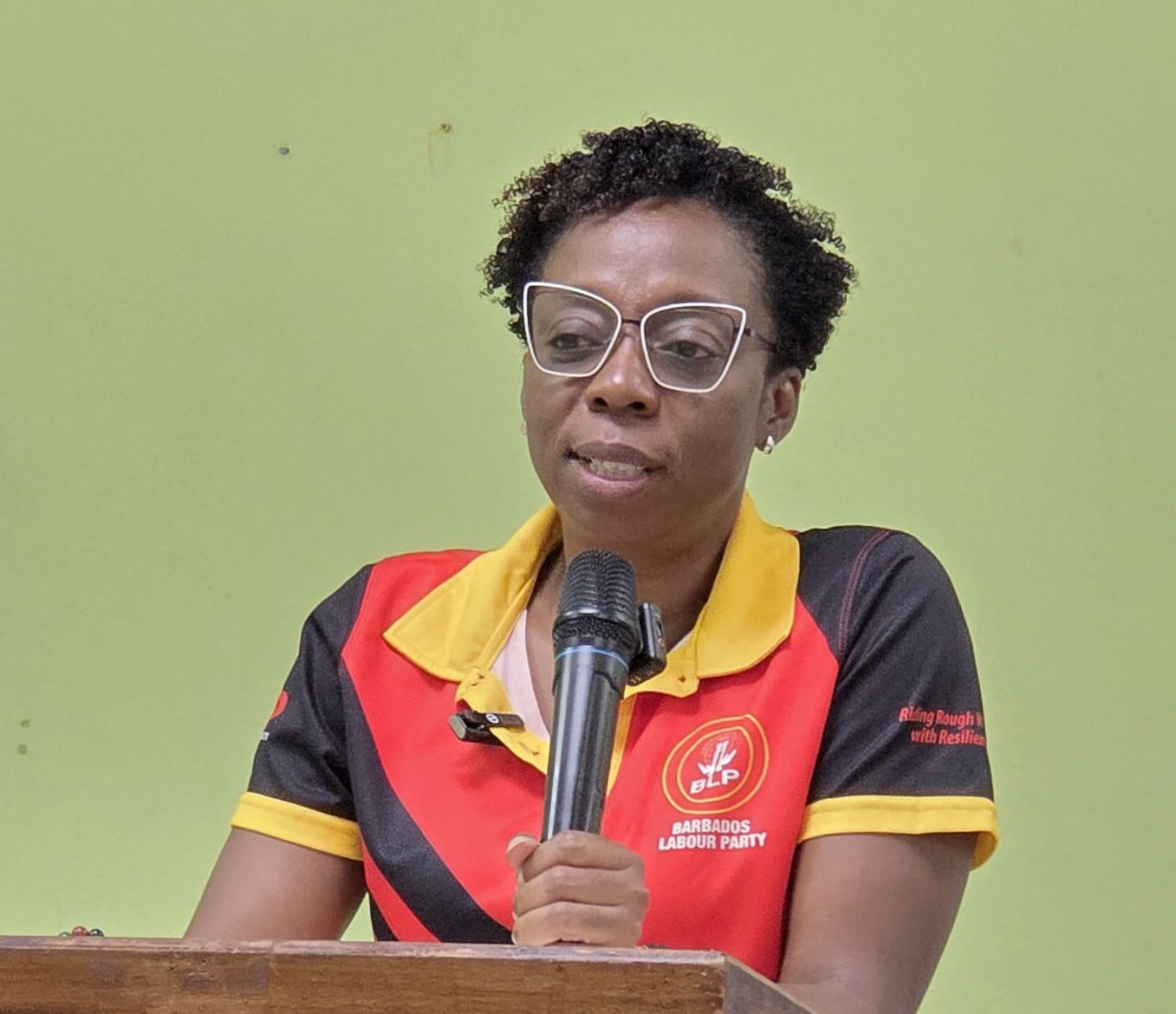
    The Barbados Union of Teachers (BUT) has publicly signaled that it holds no core opposition to a recent policy move from the Ministry of Education, which has approved early summer closure for a targeted group of primary schools across the island. The early shutdown is designed to create a clear window to carry out much-needed infrastructural improvement projects before the new academic term begins.

    In an official public statement, the teachers’ union emphasized that upgrading outdated learning environments has been a longstanding priority on its advocacy agenda. For years, the organization has pushed for government investment to modernize school facilities that directly impact the daily experiences of both learners and education workers. As such, the union says it fully endorses the comprehensive upgrade initiative, which aims to deliver safer, more functional spaces that support high-quality teaching and better learning outcomes for all stakeholders.

    Despite this broad backing, the BUT has not shied away from flagging a key potential risk that could trigger its opposition. The union’s core concern centers on project timelines: if contractors fail to complete all scheduled renovation and upgrade work by the end of the scheduled summer vacation period, the knock-on effect would disrupt the planned reopening of schools and throw off the delivery of planned instruction when the new academic year gets underway. The implicit message from the union is that it will hold both the Ministry of Education and contracted work teams accountable for meeting the established timeline to avoid negative impacts on students and staff.

  • Police find gun, ammo, suspected cocaine at murder victim’s home

    Police find gun, ammo, suspected cocaine at murder victim’s home

    A shocking fatal shooting has rocked the Caribbean nation of St. Vincent and the Grenadines, where a 37-year-old former national football player was gunned down in a public street Friday night. Now, law enforcement officials have launched a wide-ranging investigation into the killing, which has pushed the country’s 2025 homicide total to 15, marking a disturbing surge in violent crime in recent weeks.

    According to official police statements released Saturday, emergency dispatchers received the first report of the shooting at approximately 8:06 p.m. local time. First responding officers rushed to the incident site, located just steps from the local Anglican Church in the Calliaqua district, where they found Keith “Devon” James, a long-time resident of Golden Vale, Calliaqua, lying unresponsive on the left side of the roadway.

    Witness accounts collected by investigators suggest James had just returned to his neighborhood and was exiting his vehicle when the gunman opened fire. Local residents have told investigators they spotted an unregistered dark-colored vehicle speeding away from the area immediately after the shots rang out, leading to widespread speculation that the killing was a premeditated attack, with the suspect lying in wait for James before striking.

    A medical examiner who arrived at the scene shortly after the shooting pronounced James dead at the location. Forensic investigators working the case recovered five spent 9mm shell casings from the road and surrounding area, evidence that will be used to match against weapons recovered as part of the investigation. In a subsequent search of James’s private residence, law enforcement seized a Glock pistol, 10 live 9mm rounds of ammunition, an extra pistol magazine, a large cache of cash that included both local and foreign currency, and an undetermined amount of a controlled substance that field testing suggests is cocaine.

    In their official statement, police noted that all seized items are currently undergoing forensic examination as part of the active investigation, and investigators have not yet confirmed what connection, if any, the recovered materials have to the fatal shooting. “Investigators are pursuing several lines of inquiry and are examining all relevant circumstances that may assist in determining the motive and identifying the person or persons responsible,” the statement read.

    A post-mortem examination is scheduled to take place in the coming days to formally confirm the cause and manner of James’s death. The Royal St. Vincent and the Grenadines Police Force has extended formal condolences to James’s family and loved ones as they navigate this tragedy, while also urging the general public to avoid spreading unconfirmed speculation about the case. Officials asked that community members allow the investigative process to proceed unimpeded.

    Police are calling on any member of the public with information related to the shooting, no matter how small it may seem, to come forward to assist with the investigation. Tips can be submitted to the Criminal Investigations Department/Major Crimes Unit at 456-1810, Police Control at 457-1211, the emergency police line at 911 or 999, or any local police precinct. All submitted information will be kept completely confidential, per police policy.

    James’s killing marks a grim milestone for the small island nation: it pushes the total number of homicides recorded in St. Vincent and the Grenadines so far this year to 15, and James is already the fourth person to be killed by gunfire in the country in less than a month.

  • Short-term shipments, long-term systems to tackle Grenadines water woes

    Short-term shipments, long-term systems to tackle Grenadines water woes

    A crippling dry season has pushed St. Vincent and the Grenadines into a widespread water crisis, with the island chain of the Grenadines facing particularly acute shortages that have sparked public scrutiny of the current administration’s response. In a series of public communications released in early May 2026, senior government officials have pushed back against criticism, defended their ongoing emergency interventions, and laid out a timeline for permanent infrastructure upgrades while blaming past leadership for long-unresolved structural gaps in the region’s water systems.

    The current drought has impacted every part of the nation, forcing the Central Water and Sewerage Authority (CWSA) to implement sweeping water rationing measures on the main island of St. Vincent, which operates a municipal water network. Conditions are far more dire across the Grenadines, a collection of smaller southern islands that lack natural rivers, streams, and any established municipal water distribution system. Most residents rely on private household cisterns to store rainwater, and current supplies have dropped to critically low levels or run completely dry in many communities. The severity of the situation was first brought to wider public attention through independent commentaries submitted to local media outlets, prompting the government to issue its formal response.

    Addressing the public in an official video published by the state-run Agency for Public Information on May 8, Terrance Ollivierre — Member of Parliament for Southern Grenadines and Minister of Grenadines Affairs — confirmed that emergency water shipments from St. Vincent to the Grenadines have been ongoing, with scheduled weekly voyages planned through the dry season. “A boat will be going down to the Grenadines on Saturdays and stopping in Mayreau and Union Island,” Ollivierre stated. After arriving on each island, water is loaded onto CWSA trucks and other civilian vehicles for final distribution to community drop-off points, an arrangement that will continue as long as dry conditions persist. Ollivierre noted that he has maintained regular coordination with CWSA leadership and Water Minister Daniel Cummings to prioritize the Grenadines’ needs, acknowledging that the crisis has reached emergency proportions in the island chain while stressing that the main island also faces its own water shortages. “We would do our best to make sure that both mainland and in the Grenadines… we get the water to the people that they need,” he said.

    Daniel Cummings, Minister of Health with formal oversight of the CWSA and a former CWSA manager himself, echoed Ollivierre’s comments, confirming that emergency sea shipments have been active for an extended period. He added that the core long-standing challenge in the Grenadines is not just water production, but the complete absence of a modern, piped distribution network to deliver water to households. The government’s planned infrastructure projects will address this gap by constructing elevated storage facilities and a full network of gravity-fed transmission mains that will bring running water directly to residences across the Grenadines. “There will be transmission and distribution mains on the islands of a comprehensive water distribution system, as you expect in a normal society,” Cummings said, expressing regret that previous administrations failed to move forward with these critical projects decades ago. He also urged all residents across the country, particularly on the mainland, to actively reduce water waste by fixing personal leaks and reporting broken infrastructure to the CWSA to stretch limited supplies through the dry spell.

    In a separate interview with local radio station Hot 97 FM, Senator Lavern King, a native of the southern Grenadine island of Canouan, outlined the government’s full policy roadmap, pushing back against claims that long-term improvements are moving too slowly. King explained that the current NDP administration, which took office in November 2025, has already allocated significant funding for Grenadines water infrastructure in its first national budget — so much so that opponents labeled it a “Grenadines-only budget” — moving beyond stopgap measures to plan for a permanent, island-wide water solution.

    In the short term, King confirmed weekly water shipments from St. Vincent will continue, and left open the possibility of increasing delivery volumes if needed. She also cited declining overall rainfall across the archipelago as a key driver of the current crisis, urging residents to practice conscientious water conservation. For the long term, the government is actively pursuing external financing to build multiple desalination plants across the Grenadines, which will create a locally sustainable source of fresh water independent of rainfall.

    King pushed back against critics demanding immediate completion of these multi-year projects, noting that large-scale, permanent infrastructure requires rigorous environmental studies, detailed design work, and professional project management to avoid costly mistakes. “Can you have a long-term plan implemented in five months? You cannot… because it’s impossible,” she said. She contrasted the current administration’s methodical approach with what she described as haphazard, vote-focused planning by the previous government, which she claimed rolled out rushed projects right before elections that ultimately failed and required costly repairs later, resulting in widespread public funds waste. King emphasized that water access has been a persistent challenge in the Grenadines for generations, and that the current government is committed to delivering a lasting solution rather than short-term political gains.

    Cummings added that the government remains committed to moving the full infrastructure package forward as quickly as possible, bringing reliable running water to every community across the Grenadines for the first time in the nation’s history.

  • GHS and the creation of ‘high-maintenance women’

    GHS and the creation of ‘high-maintenance women’

    A recent controversial comment from St. Vincent and the Grenadines’ former prime minister and current opposition leader, who blamed rising national crime rates on so-called “high maintenance women”, has drawn widespread and well-deserved condemnation across the country. This misleading, dismissive statement does nothing to address the root of the nation’s most pressing social challenges – many of which trace directly back to deep, long-standing flaws in the country’s public education system, a crisis that has already been formally flagged by global development experts.

    A 202? World Bank assessment has repeatedly warned that the Caribbean region faces a systemic education crisis, with entrenched structural issues that carry devastating long-term consequences for social stability and economic growth. In St. Vincent and the Grenadines, these gaps are visible even at the nation’s most prestigious educational institutions, underscoring the scale of the problem. This year marks the 115th anniversary of Girls’ High School, the country’s long-revered premier all-girls secondary school. But behind its decades-long reputation for excellence lies a troubling pattern of missing oversight from the national Ministry of Education that has gone unaddressed for years.

    Parents of enrolled students have repeatedly raised alarms about unregulated autonomy at the school, claiming school leadership operates outside formal accountability frameworks. While educational leaders are rightfully granted a degree of institutional autonomy to manage campus operations, this authority must always be bounded by clear national regulations, consistent monitoring, and public transparency. The same standards that govern small rural schools across the nation must apply equally to so-called “elite” institutions – from the curriculum offered to student access to learning equipment, and even to the fees charged for graduation and school events.

    It is true that some schools enjoy advantages from more connected, wealthy alumni networks and parent communities, but public education in St. Vincent and the Grenadines is supposed to be founded on the core principle of equal opportunity for all students, regardless of background. Today, however, relentless fundraising demands have shifted priorities dramatically: many students report that revenue generation has overtaken actual learning as the school’s top focus. Frequent allegations of financial impropriety surrounding combined government funding and independent school fundraising efforts have yet to be addressed by a formal public audit from the Ministry of Education, leaving concerns uninvestigated.

    One alumna of Girls’ High School commented that the school “exposes us to the finer things in life so that we know what we should want later”. But this framing exposes a dangerous double standard: does this mean that young Vincentian women who could not attend the elite school are inherently less capable of aspiring to a high quality of life? For low-income students like Mary Jones, who struggles to cover daily transportation costs for school, let alone the endless fees for mandatory school events, the pressure of keeping up appearances and covering unplanned costs completely overshadows the goal of learning.

    This system risks institutionalizing systemic classism across generations, teaching students that social status and image matter more than knowledge, and that fundraising events matter more than student wellbeing. Instead of scapegoating women for national crime, as the opposition leader did, the country must turn its attention to fixing these deep structural flaws in education – the foundation of any strong, equitable nation.

    If St. Vincent and the Grenadines is serious about building a prosperous, united future, leaders must commit to meaningful reform across the entire education sector. Administrative appointments must be made based on merit and public accountability, not patronage, and consistent oversight must be enforced for every school, regardless of its reputation or student demographic. The education system must be restructured to prepare young people to navigate 21st-century challenges, staffed by well-supported educators focused on the core mission of nation-building, one student at a time.

    Instead of perpetuating learned helplessness, class division, and harmful hierarchies under the guise of education – the very dynamics that produce the inequity the opposition leader wrongly blames on women – the nation must build a new system rooted in equal access, consistent accountability, and opportunity for every young Vincentian, regardless of gender, class, or which school they attend.

  • Mom still critical after deadly ambush on family

    Mom still critical after deadly ambush on family

    A quiet morning commute to a toddler’s daycare turned into a deadly ambush this week in Belmont, leaving a 2-year-old boy and two adult men dead, and the child’s mother fighting for her life in a Port of Spain hospital. As of Wednesday evening, Antonia Cain-Kafi, 39-year-old Aquil Kafi’s wife and the mother of slain toddler Akini Kafi, remained in critical but stable condition after being hit four times during the sudden attack. The third victim was Aquil Kafi’s close friend, Anthony “Monster” Wilson.

    What makes the tragedy even more devastating to family members is the long, difficult journey the couple went through to welcome their only child. A close family friend shared with local outlet *Trinidad Express* that Cain-Kafi spent years trying to conceive, and when Akini arrived 2 years and 11 months ago, the couple celebrated him as nothing less than a “miracle baby.”

    On Thursday morning around 8:30 a.m., the group was traveling in a Toyota Aqua, with Kafi and Wilson in the front seats and Cain-Kafi and her young son in the back. They were en route to Akini’s regular daycare drop-off when another vehicle cut them off and blocked their path in the Holder Steps/Rifle Hill area, just off Serraneau Road and St Francois Valley Road. A gunman exited the blocking vehicle and immediately opened fire on the car carrying the family. By the time the shooting stopped, both Kafi and Wilson had been killed instantly, while both Cain-Kafi and Akini suffered life-threatening gunshot wounds.

    According to police accounts, bystanders in a private vehicle rushed the wounded survivors to Port of Spain General Hospital. Witnesses say Cain-Kafi, despite her own multiple gunshot wounds, managed to hand her injured son over to hospital staff for treatment. Medics were unable to save the toddler, who was pronounced dead shortly after arrival.

    On Wednesday, *Express* reporters met grieving relatives at the Forensic Science Centre in Federation Park, where family members had traveled to formally identify the bodies of the three victims. One relative who spoke to reporters shared warm, tender memories of the young boy who was taken too soon. Akini, she recalled, had an all-consuming obsession with cars. “He loved cars. He was fascinated by it and, well, he destroyed a lot of toy cars and he would then try to fix it,” she said. “He was a really loving baby boy and, oh my gosh, he had a smile that would melt any lady’s heart.”

    Local law enforcement has not yet released updates on potential suspects or motives for the targeted attack, leaving the community in mourning and waiting for answers as the surviving mother recovers from her devastating injuries.

  • Stuart: 3 new nurses walk off the job

    Stuart: 3 new nurses walk off the job

    A small group of newly qualified nursing professionals have abandoned their posts at a major public medical facility in Trinidad and Tobago, stepping down over what they describe as unsafe, unregulated working conditions that put their professional licenses and patient safety at severe risk. The Trinidad and Tobago National Nursing Association (TTNNA) president Idi Stuart confirmed the departure of the three nurses in an interview with the Saturday Express, shedding light on the systemic staffing gaps that led to the early exit of three of the 61 newly hired registered nurses at the North Central Regional Health Authority.

    Stuart explained that all newly hired nurses were assigned to the Eric Williams Medical Sciences Complex in Mt Hope, where they were immediately subjected to working conditions that violated both international nursing standards and onboarding promises made during orientation in April. During their hiring process, the new nurses were guaranteed a structured transition: they would only work weekday morning shifts, gradually acclimate to their roles, always work under the supervision of experienced senior staff, and share shifts with at least two to three other colleagues. None of these commitments were honored once the nurses began their roles.

    Instead of the ideal 1:4 nurse-to-patient ratio outlined in global nursing best practices, the facility requires all nursing staff to operate under a 1:6 ratio, a burden the TTNNA has already asked members to tolerate temporarily while the health authority addresses chronic staffing shortages. For the newly licensed nurses, however, the strain extended far beyond an elevated patient load: the three professionals were left to manage their assigned wards entirely alone, with zero ongoing supervision from senior or head nurses – a violation of standard onboarding protocols.

    Industry best practice mandates that new graduate nurses remain under close, structured supervision for a minimum of three to six months after starting their first role. Most other regional health authorities across the country maintain formal monitoring departments to support new hires during this transition period, recognizing that it takes an average of two years for new nurses to develop the confidence and clinical competence to practice independently. Leaving a newly licensed nurse unsupervised creates avoidable risks: if a medication error occurs or a critical patient emergency unfolds, the nurse faces professional disciplinary action that can result in the loss of their hard-earned license, all for failures rooted in systemic understaffing, not individual error.

    Stuart emphasized that the unmet onboarding commitments and unsupervised working conditions left the three new nurses with no other choice. They were forced to bear full responsibility for critical events like patient cardiac arrests, seizures, and end-of-life care – situations that even experienced nurses struggle to manage alone, and that should never fall to an unsupervised new graduate. With errors all but guaranteed under this structure, the nurses chose to step down rather than risk their professional futures. They now plan to pursue employment opportunities at other regional health authorities that can provide the structured support and safe working conditions necessary to deliver quality patient care.