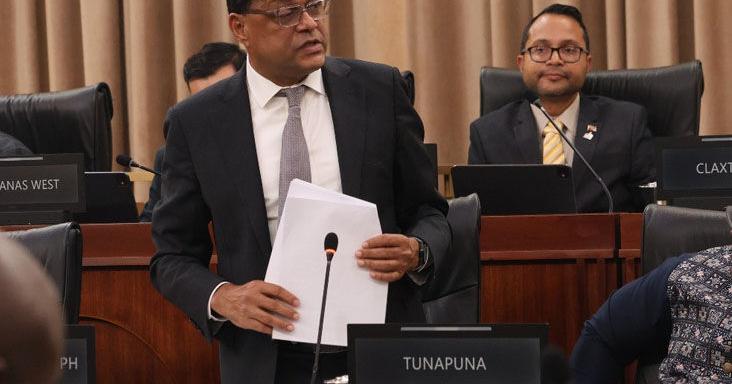
During a parliamentary debate on the 2026 Parole Bill last sitting day, Trinidad and Tobago’s Justice Minister Devesh Maharaj dropped a bombshell, releasing grim recidivism data from national law enforcement and correctional agencies that lays bare a deepening national crime and rehabilitation crisis.
Maharaj opened his address by warning lawmakers to brace for the troubling statistics, pulling data from two decades of arrest records to frame the scope of the problem. Between 2015 and 2025, a total of 53,183 people were arrested and charged with criminal offenses across the twin-island nation, with roughly 22% of those offenders going on to reoffend after facing legal consequences. Far more alarming, he said, are the figures from the Trinidad and Tobago Prison Service, which track repeat offending among convicted inmates who have been released back into society. Data collected between 2022 and 2026 shows that the annual recidivism rate for released prisoners has consistently hovered above 50%: hitting 58% in 2022-2023, 56% in 2023-2024, 53% in 2024-2025, and 57% in 2025-2026. Averaged across the five-year period, that means more than one out of every two released prisoners returns to criminal activity after serving their sentence. Calling the trend “scary” and “alarming”, Maharaj questioned the systemic failures driving the cycle of repeat crime, asking, “What is going on in our country? Why are so many of our young people returning to crime?”
Digging into the root of the crisis, Maharaj revealed that prison officials have been sounding the alarm about the lack of resources for years, with no meaningful response from previous leadership. When asked what barriers were driving the high recidivism rate, prison administration confirmed that core rehabilitation programming has never received dedicated government funding. Currently, the prison service uses a standardized risk assessment tool called the LSCMI to evaluate each new inmate’s risk level, individual needs, and accountability on intake. After a six-month orientation period that reviews each offender’s criminal history and risk factors, inmates are placed in programming tailored to their sentence length, needs, and background. The slate of available programming includes evidence-based cognitive behavioral therapy, adult literacy and general education courses, vocational and technical skills training, and recreational, spiritual, and cultural activities designed to support pro-social behavior change.
But Maharaj explained that none of these critical programs are supported by public funding. Instead, almost all rehabilitation initiatives rely entirely on external support from faith-based groups, community organizations, non-governmental organizations (NGOs), and volunteer private citizens who donate their time, professional expertise, and personal money to run the programs. To date, there is no dedicated budget line allocated to offender rehabilitation within the national correctional system. “Imagine the prison service having to depend on non-governmental organisations to change prisoners’ attitudes and rehabilitate them,” Maharaj said, noting that the entire system is one crisis away from collapse if these external groups pull their support.
Compounding the funding gap are crippling staffing shortages. The nation’s total prison population stands at roughly 3,500 inmates, but only 57 correctional officers are assigned full-time to facilitate and coordinate rehabilitation programming. These officers are tasked not only with coordinating daily activities but also with directly teaching and training inmates, drawing on their own individual skills to lead courses. Without dedicated funding, there is no budget to develop new evidence-based programming, adapt curricula to the changing needs of the inmate population, or expand access to programs across all correctional facilities. Widespread staff attrition has further stretched the system’s capacity, leaving the department responsible for rehabilitation chronically understaffed. Maharaj also highlighted that there is an urgent unmet need for specialized professional training for correctional staff to develop and deliver high-quality rehabilitation programming.
The Justice Minister argued that this systemic neglect is a core contributor to the nation’s ongoing crime crisis, pointing out that while the public and policymakers frequently complain about rising crime and repeat offending, successive governments have failed to address the root gap in rehabilitation resourcing. “The point I am making is, we have been complaining vigorously about crime, we have been complaining about repeat offending, but yet when it comes to addressing the root causes within the prison service, we have not taken the necessary steps,” he said.
Looking forward, Maharaj stated that the current Kamla Persad-Bissessar administration has committed to overhauling the broken correctional system, starting with a full top-to-bottom review of current policies and resourcing. He emphasized that the proposed 2026 Parole Bill is a critical first step to address the crisis: the legislation is designed to expand structured rehabilitation opportunities, give qualifying offenders a meaningful second chance to re-enter society, and support successful long-term reintegration to break the cycle of repeat crime.