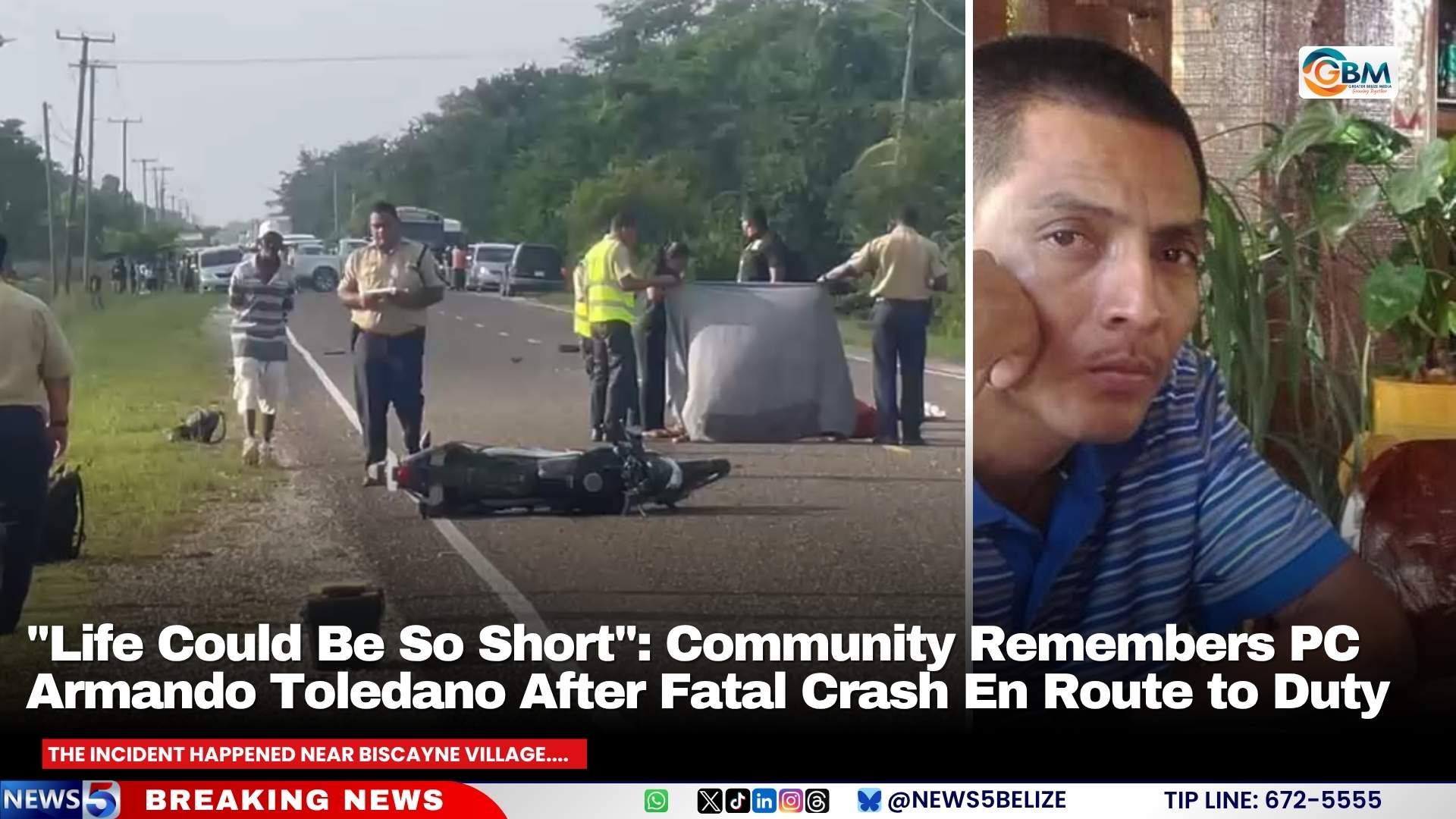
In a tragic loss that has shaken communities across Belize District, a veteran police officer with decades of dedicated service has died following a fatal traffic collision on Saturday afternoon, while he was traveling to his scheduled shift at a central Belize City precinct. Identified as Police Constable Armando Toledano, the incident unfolded near Biscayne Village, along the route he took to reach the Raccoon Street Police Station for work.
News of Toledano’s passing spread quickly across local social platforms over the weekend, prompting an outpouring of heartfelt tributes from residents, former trainees, and community members who encountered him during his years of service. Dozens of people have shared personal anecdotes highlighting his gentle demeanor, commitment to his role, and the quiet excitement he held for his upcoming retirement, after decades on the force.
One local resident, who spoke publicly about her interaction with Toledano, recalled a lengthy three-hour conversation she and her daughter Celenia shared with him while he was on duty, during which he opened up about his career, his family, and his plans for life after policing. “It was so good that I and my daughter Celenia got the chance to spend about three hours talking to him at his job, and he shared his life story as an officer,” she shared in her online tribute. “Really, life could be so short. RIP PC. You are one of the officers that love their job; he even told us that he has grandkids and was looking forward to his retirement because he had so many years. Life is surely short.”
Toledano’s death has also sparked new calls for institutional change within Belize’s police force, centered on addressing the burdens of long daily commutes for frontline officers. One community member argued that the department should prioritize providing on-duty or subsidized housing for officers who travel long distances each day to reach their posts, noting that lengthy daily commutes increase exposure to traffic risks. “It’s so hard for those officers to have to travel so far to reach work. The department needs to look into this; just provide housing for the police who have to commute every day. It’s hard for them,” the commenter wrote, extending condolences to Toledano’s family and colleagues.
For many young officers who got their start in the force under his guidance, Toledano was more than a trainer — he was a patient, supportive mentor who shaped their careers. A former police cadet who trained under him remembered his steady leadership in a tribute, calling him one of the best instructors the program ever had. “Best cadet trainer. RIP, Mr Toledano. You were always so patient and understanding with us, your past trainees,” she wrote.