分类: society

  • St David’s residents endure weeks-long water shortage

    St David’s residents endure weeks-long water shortage

    For more than six weeks, residents of the quiet Christ Church neighborhood of St David’s have endured a daily battle to access basic drinking water, a crisis that has upended routine life, strained household budgets, and sparked growing fears over public health – all compounded by a near-total lack of clear, consistent communication from local water officials, according to multiple community members who spoke to local outlet Barbados TODAY.

    The island’s ongoing dry season has made the intermittent supply even more punishing. Locals described a grueling daily schedule that now revolves around chasing scarce water: many wake in the pre-dawn hours to scramble for whatever small amount of water trickles through their taps, while others rely on infrequent water truck deliveries and costly store-bought bottled water to meet their families’ needs.

    Residents say the outage stems from a burst water main, a problem that was initially rumored to take just two weeks to repair. Those timelines have long since expired, with no official update or resolution put forward by the Barbados Water Authority (BWA). The little water that does reach homes almost exclusively flows in the dead of night, forcing residents to sacrifice critical sleep just to fill enough containers for basic hygiene, cooking and household chores.

    “It’s been off since early April,” one anonymous resident explained. “It’d be mostly coming back on at nighttime, so you have to get up if you want to go to work to catch water. When you come home to cook something, you go scramble to get the little drops that start coming out. The situation real stiff, real stiff for real.”

    For some, the water shortage is far more than a daily inconvenience: it threatens both personal health and small livelihoods. A 61-year-old small business owner who keeps livestock shared that he has been forced to stay up through the night to collect every possible drop of water to keep his chickens alive. “I’m affected very badly. This is six weeks now, we haven’t had water,” he said. “And if it come at night, one o’clock in the morning, we have to full every saucepan. I have chickens; I have to replenish the water as it comes to make sure they do not die. I never ever seen nothing like this yet. Never.”

    Many residents have lost trust in the water supplied by BWA tankers for drinking, especially for children, leading to added financial strain on top of the physical exhaustion of the daily water scramble. “I don’t drink water from the tank [truck borne water provided by BWA]. I buy bottled water,” one resident said. “We have children and we have to send them to school. We can’t risk drinking water provided by the water tanker. We have to buy water for the children to make tea. Please come and tell us something, say something. It will mean a lot if you all come and tell us something, please.”

    Another resident, hurrying to collect water before it stopped flowing again, summed up the community’s collective exhaustion: “It’s a lot. You got a bucket in the bath to catch water. Last night it ain’t even come on until about three o’clock. That ain’t easy, boy. Not easy.”

    In a response to inquiries about the crisis, the BWA acknowledged the ongoing disruptions, attributing the intermittent outages and low pressure to consistently low water levels at the pumping station that serves St David’s and surrounding districts. The authority issued a formal apology to customers for the service disruption, noting that it will continue to provide temporary water access via its fleet of tanker trucks while crews work to resolve the underlying issue.

  • Retail Farmers Claim City Council Pushed Them Out

    Retail Farmers Claim City Council Pushed Them Out

    A growing conflict is unfolding at Belize’s Michael Finnegan Market, where small-scale retail farmers are sounding the alarm over harsh new regulatory measures imposed by the Belize City Council that they say are pushing them out of their longtime operating space.

    The dispute comes just days after the mayor framed the new market rules as a matter of regulatory compliance, denying any widespread misunderstanding of the updated policies. But vendors on the ground say enforcement officers arrived recently to implement strict new trading limitations, slashing their allowed selling days to just one per week: Saturday. For many of these small agricultural producers, this restriction could cost them their entire livelihood.

    Placido Cunil, one of the small retail farmers who relies on the market for income, spoke with local outlet News Five about the sudden changes. Cunil specializes in growing niche Chinese vegetables, a product that has a very specific customer base. Unlike common local produce popular with Belizean consumers, his crops are almost exclusively purchased by Chinese shoppers, who overwhelmingly visit the Michael Finnegan Market on Tuesdays and Fridays to place bulk wholesale orders. Currently, only a handful of local farmers grow these specific vegetables, making those two midweek days critical to Cunil’s business.

    “If I am only allowed to sell on Saturdays, almost none of my regular customers will show up,” Cunil explained. “They only come on Tuesdays and Fridays. I don’t know how I am going to move my product at all.” He added that the enforcement team attributed the policy change to the national government led by Prime Minister Johnny Briceño, though Cunil said he has not been able to confirm whether that claim is accurate. He also noted that when he attempted to record the enforcement officers delivering the new rule, they prohibited him from doing so before leaving abruptly after informing him he could no longer trade on non-Saturdays. The new restrictions apply to all retail farmers operating at the location, Cunil confirmed.

    Local news organization News Five has reached out to the Belize City Council to request comment on the new policy and the vendors’ concerns, though no response has been released publicly as of the May 8, 2026 report. This report is a transcript of a televised evening news broadcast from the outlet.

  • A New Beginning: How Stella Maris is Redefining Inclusive Education

    A New Beginning: How Stella Maris is Redefining Inclusive Education

    Nestled in Belize, a one-of-a-kind public educational institution has spent nearly seven decades reimagining what it means to leave no child behind – and now, it is opening its doors to the nation to share its transformative model of inclusive learning. Founded in 1958, Stella Maris stands as the country’s only public school dedicated exclusively to serving children with diverse abilities, where going above and beyond for every student is not a one-off outreach project, but a baked-in daily standard that shapes every interaction on campus. As part of the Ministry of Education’s national MoRE Campaign, which challenges educational institutions to expand their impact beyond core academics with a specific focus on deepening inclusion, the school is inviting the public to witness a transformation that stretches far beyond new infrastructure. In this week’s “The Bright Side” segment, correspondent Sabreena Daly shares the story of the community redefining inclusive education for Belize.

    Ten-year-old James Ramos arrived at Stella Maris just one week before Daly’s visit, relocating from a mainstream primary school in southern Belize where his experience of education was far from welcoming. For James, who makes a nightly routine of watching the news, his first days at the new school have already brought a dramatic shift. When Daly asked if he had made new friends, the 10-year-old grinned and answered simply: “Hmm. A lot!” That sense of belonging is the exact opposite of what he left behind at his previous school, a change his father gambled on when he chose to uproot his entire life to access a school that meets James where he is. After just five days, that gamble has already paid off.

    What James discovered in his first week is the product of 68 years of deliberate, student-centered work that is now sparking a national conversation about educational inclusion in Belize. As Doreth Pascascio-Griffith, the school’s new principal, explains, the MoRE Campaign’s inclusion pillar asks a straightforward, challenging question: How truly inclusive can a school be? For Stella Maris, the answer has been baked into its mission from the start – what is new is the push to invite the broader Belizean community to see that work in action.

    “It is very important for Stella Maris to do more, especially with the type of kids that we have, or dynamic kids that people would say are always left behind,” Pascascio-Griffith says. “At Stella Maris, no child is left behind. Yes, they learn differently, and yes, we as administrators are going to ensure that we’re here to do more for these students academically and with our life skill program.”

    That commitment takes tangible shape across the school’s nine purpose-fitted classrooms, which serve more than 150 students with a fully personalized learning framework split into two core pathways. The Foundation Years pathway builds foundational literacy and numeracy skills tailored to each student’s pace, while the Life Skills Learning Center focuses on building independence and communication that students can carry into adulthood. For Pascascio-Griffith, the ultimate goal goes far beyond academics: she wants every student to leave Stella Maris feeling loved, confident, and prepared to thrive in the wider world.

    That mission extends far beyond formal lesson plans, woven into the small, caring acts that define daily life on campus. While early childhood educator Verie Vassel leads morning numeracy lessons for five-year-old learners in Room One, teacher Karen Williams in Room Nine completes a daily routine that does not appear in any official curriculum: combing a student’s hair. Across the campus, teachers step in to bathe students, change diapers, and help children stay fresh and comfortable every single day – tasks the staff see as core to their role, not extra work.

    “We have our wipes, we have Pampers, we have powder. If they need a little bit of water, you know, we have the water. We kind of, you know, give them the bath, and we have them fresh every single day. That’s our job, and we love it,” Vassel says.

    Under Pascascio-Griffith’s new leadership, Stella Maris is not only expanding its support for students – it is also building stronger connections with families and the broader community. The school has launched a new public website, a monthly WhatsApp newsletter to keep parents updated, and an active parent-teacher association that gives families a formal voice in school operations. For parents like Doreen Balthazar, the new outreach efforts have been transformative, offering actionable guidance for supporting neurodivergent children both at school and at home.

    The broader Belizean community has stepped up to support the school’s mission in turn. Local community partners donate school supplies, daily meals, and holiday gifts for students, while public agencies including the Coast Guard and Fisheries Department partner directly with students on hands-on learning. Most importantly, these community partnerships have opened new pathways to real-world work experience: this year alone, 15 Stella Maris students secured workplace placements across 11 local businesses, gaining on-the-job skills that open the door to future employment.

    “It starts here, and then we take them out into the real world. And I must say thanks to these businesses that had an open heart to take these students,” Pascascio-Griffith says, noting that students build foundational employable skills – like packing store shelves – on campus, preparing them for formal roles with local employers after graduation.

    For James Ramos, that future of opportunity is just beginning. One week into his time at Stella Maris, he already carries the bright, open energy of a child who has finally found a community that accepts him for who he is. His journey mirrors the school’s own next chapter: after decades of quiet, dedicated work, Stella Maris is stepping into the national spotlight to share its model, with the mission of expanding inclusive opportunity for all diverse learners across Belize. What the school has proven, after nearly 70 years, is that “doing more” was never an ambitious goal – it was always just the baseline for serving every child.

  • Robber shot after grabbing cash from America Street money changer

    Robber shot after grabbing cash from America Street money changer

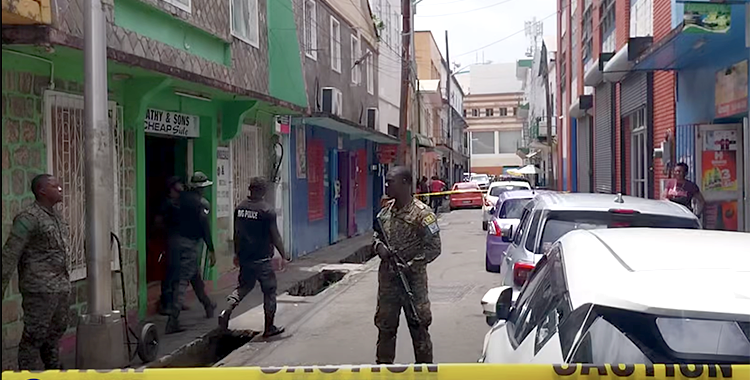
    On the evening of Friday, 8 May 2026, a violent armed robbery unfolded on America Street in Guyana, leaving one suspect wounded and sparking a widespread manhunt for a second fugitive involved in the crime, according to official statements from the Guyana Police Force.

    Preliminary investigations outline that two attackers targeted a local money changer, making off with 200,000 Guyanese dollars in stolen cash during the holdup. What the assailants did not anticipate, however, was that their target was a licensed firearm holder. In an act of self-defense during the robbery, the money changer opened fire, striking one of the suspects.

    The injured suspect was quickly taken into custody by responding law enforcement officers, and has since been transported to a local medical facility to receive treatment for non-life-threatening injuries, authorities confirmed. No reports of harm to the money changer or any bystanders have been released as of the latest update.

    As of late Friday evening, a senior police investigator noted that a widespread manhunt is already underway to locate and apprehend the suspect’s at-large accomplice, who fled the scene before officers arrived.

    To build a comprehensive case against the perpetrators, crime scene investigators have cordoned off the area at the intersection of America and Longden Streets, where forensic teams are currently conducting a meticulous search for shell casings, DNA evidence, and other clues that could help identify the second suspect and confirm the sequence of events during the robbery. The money changer was also escorted back to the crime site to assist investigators with reconstructing the attack and confirming key details of the incident.

    Local law enforcement has not released any further information about the identities of the suspects or updates on the manhunt as of the latest update, and the investigation remains active.

  • Former national footballer gunned down in Calliaqua

    Former national footballer gunned down in Calliaqua

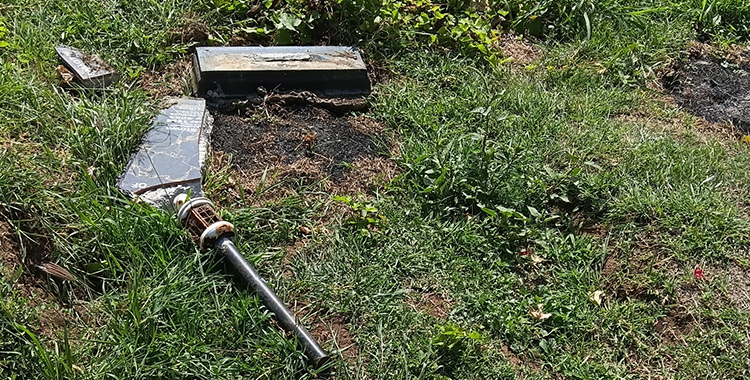
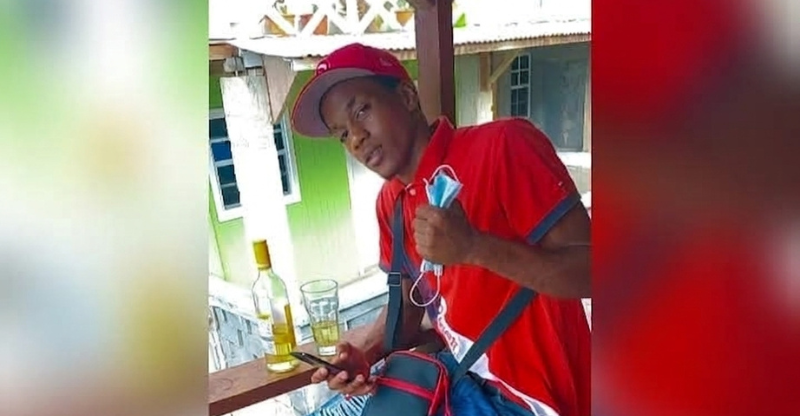
    A devastating act of violence has shaken the small coastal community of Cailliaqua in St. Vincent and the Grenadines, where former senior men’s national footballer Keith James was shot to death late Friday, just nine days shy of his 38th birthday.

    Local law enforcement agencies remain on site in the hours following the incident, working to gather forensic evidence and interview witnesses near the Anglican Church at the heart of the south coast town where the shooting unfolded.

    Preliminary accounts from early investigators indicate James had just completed his journey back to his local residence. The fatal attack occurred moments after he stepped out of his vehicle, leaving residents and officials in shock.

    Local community members have put forward preliminary speculation about the premeditated nature of the killing: a dark-colored unregistered vehicle was spotted speeding away from the area immediately after the gunshots rang out, leading locals to believe the gunman lay in wait for James before striking.

    The tragedy marks a grim milestone for the Caribbean nation this year. James’ murder pushes the total number of homicides recorded in St. Vincent and the Grenadines in 2024 to 14, and he is the fourth person to be killed by gun violence in the country in less than a four-week period.

    Beyond his time representing St. Vincent and the Grenadines on the international football stage, James also built a well-known legacy as a player for the local club side Avenues United, earning respect from teammates and fans across the country’s domestic football circuit.

  • Kid illustrators, storytellers emerge at showcase

    Kid illustrators, storytellers emerge at showcase

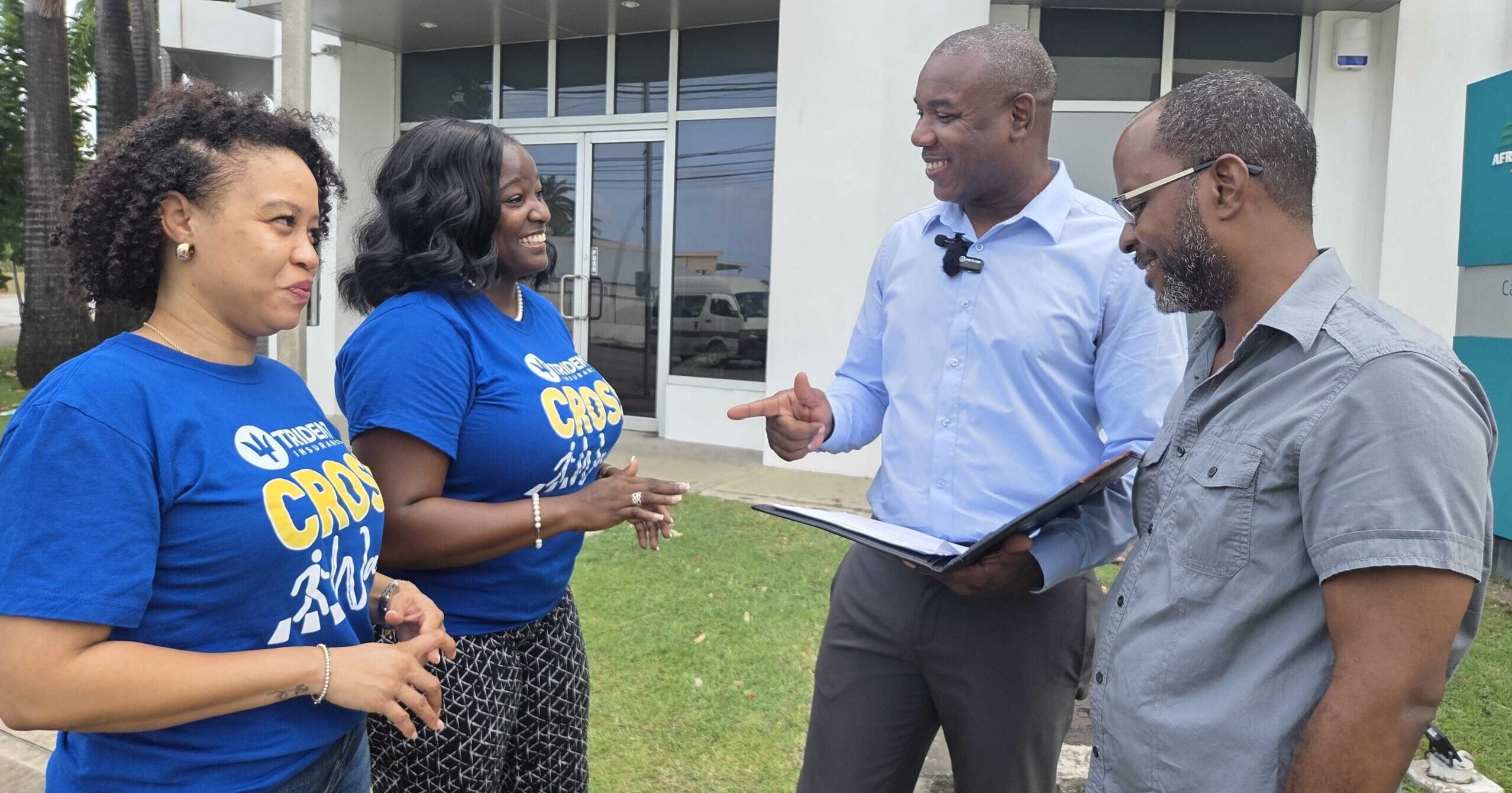
    A rising wave of young creative interest in illustration and storytelling took center stage Friday as Barbados hosted its first-ever Children’s Book Illustrator and Author Showcase at Olympus Theatres, a landmark event designed to celebrate and cultivate emerging local youth talent in literary creation.

    Organized by Bookscape Studio and generously sponsored by The Sandy Lane Charitable Trust, the free, day-long event welcomed primary school students from across the island for an immersive, hands-on introduction to the full process of children’s book development. Through interactive live presentations, dynamic storytelling sessions, and step-by-step illustration demonstrations, participants got an up-close look at what it means to work as a professional children’s author or illustrator.

    Headlining the showcase were three experienced creators: Barbadian authors and illustrators Cherise Harris and Ruth Amanda, alongside visiting Canadian writer Yolanda T. Marshall. Each creator used their platform to encourage young attendees to lean into writing and visual art as powerful, accessible outlets for personal self-expression.

    In an interview with Barbados TODAY, Amanda explained that the event grew out of a desire to open young people’s eyes to the diverse career and creative opportunities available in the fields of literacy and illustration. “I was so grateful to be invited by Cherise and Yolanda to be part of this wonderful showcase,” she said. “It’s a chance to show what creators right here in Barbados can build: literacy projects for a global audience, and books filled with familiar, relatable imagery that local children can truly connect with.”

    A core goal of the interactive exercises and discussions hosted at the event was to dismantle the misconception that illustration is bound by strict rules or single acceptable styles. “We want children to leave knowing there’s no one ‘right’ way to illustrate a story,” Amanda emphasized. “What matters most is that your unique story comes through. Our big hope is to inspire an entirely new generation of literary creators, whether that means they become authors, illustrators, or both. For these young creatives, the sky really is the limit.”

    Amanda also shared her observations of shifting artistic trends among young creatives in Barbados, noting a clear evolution in interest over the past several years. Older children, she explained, are increasingly drawn to illustration styles shaped by anime and graphic novel aesthetics, a growing movement that has gained significant traction across the island’s youth creative community. For younger children, meanwhile, trends are moving in a different direction: many are developing a new appreciation for softer, more traditional artistic approaches, such as watercolor illustration, though digital illustration with bold, bright colors also remains widely popular. “The diversity of styles available today is incredible,” Amanda added, “there truly is something for every young creator to explore.”

    For young people eager to build their illustration and storytelling skills, Amanda offered simple, actionable advice that prioritizes passion and practice over formal training. “Consistent practice is key. Draw inspiration from the world around you: take photos of what catches your eye, break subjects down into basic shapes, add details little by little, and keep showing up for your craft,” she said. “You don’t need formal art training to become an illustrator. Anyone can do this. Just keep exploring the world around you, and draw what inspires you.”

  • Venue Debate: How can Saint Lucia balance sports and entertainment?

    Venue Debate: How can Saint Lucia balance sports and entertainment?

    As the annual festival season kicks off across Saint Lucia, a long-running debate over the dual use of the island’s limited sports infrastructure for entertainment events has reemerged, pitting two senior government ministers against each other on resource management and national priorities. The topic was raised by reporters during Monday’s pre-Cabinet press briefing, where Youth Development and Sports Minister Kenson Casimir and former sports ministry senior official Dr. Ernest Hilaire laid out starkly conflicting visions for how the country’s public venues should be utilized.

    The core of the debate stems from a long-standing logistical challenge facing the small Caribbean island: limited available recreational and event space, a shortage that grows particularly acute during the annual Jazz and Carnival celebrations. To accommodate high demand for event venues, most of Saint Lucia’s existing sports grounds are regularly repurposed for concerts, parades, and other large entertainment gatherings. This constant multi-use has accelerated wear and tear on many facilities, most of which already were in need of major repair work before the added strain.

    Casimir, who is serving his second term as the cabinet minister overseeing sports and youth affairs, doubled down on his long-held stance that all public sports venues should be reserved exclusively for athletic activities. He pointed to recent damage sustained at the Soufriere Mini Stadium, which was recently used for a non-sporting entertainment event, as evidence of the risks of multi-use policies. “This has been the conviction from my heart and mind… I don’t want anything but sports at a sports facility. That’s my position,” Casimir told reporters.

    The minister noted that his stance has drawn widespread criticism online and in public discourse in past years, but he remains firm in his view that the island needs to do more to protect athletic infrastructure. “If at the end of the day we have those sports facilities being used in a very expedited fashion, get it back to usability for all the programmes that we have for sports. That’s my position. We have seen a lot of effort since I made my pronouncement and got slaughtered and dragged through social media and elsewhere. We’ve seen the concerted effort to do this more, but I believe, at the end of the day, we can do more.”

    Referring to the damage at Soufriere Mini Stadium, Casimir added that while event organizers have pledged to complete repairs to bring the venue back to sporting standard, the incident underscores deeper systemic issues. “It’s still early days, so we’ll see how that works out. But I believe until we understand what sports is doing for this nation, we [will] continue to have these issues.”

    Hilaire, who served as permanent secretary in the Ministry of Education and Sports during the planning and construction of the island’s iconic Daren Sammy Cricket Ground (DSCG), argues that a flexible multi-use model is not only practical but necessary for a small island nation with constrained public funding. Globally, multi-use sports venues that host everything from concerts to community gatherings are standard practice, and Hilaire says Saint Lucia can adopt the same model with intentional, proactive management.

    “I believe as a small island state, we have limited facilities, that is the truth. And it comes down to a question of management. How do we manage the use?” Hilaire explained. “You want surfaces that you can use for multiple purposes, and it takes very little to restore them. And that’s just what we have to do.”

    He even revealed that the Daren Sammy Cricket Ground was intentionally designed from its inception to host large entertainment events, noting the venue’s amphitheater-style northern stands, built specifically to provide optimal viewing for concert stages, with corporate boxes to accommodate premium guests. “We actually designed the DSCG for the purposes of concerts. The northern stands are shaped like an amphitheatre; two huge northern stands. We didn’t build a huge southern stand, we didn’t build a huge western stand. We built two northern stands with corporate boxes to the top. If you look at the shape of it, it was designed in an amphitheatre style, to allow us to have concerts there. So persons can rent boxes at the top, looking down at a stage.”

    Hilaire emphasized that building separate, dedicated entertainment venues for every community across the island is financially unfeasible for Saint Lucia. “We do not have the resources for every community to have a cricket field, a football field, and an entertainment venue of that size that can host 6,000 people, like in Soufriere. As a country, we just cannot. When your venue is for the international level, you become a little more circumspect how you use it, especially if you have sporting events right after. You don’t want to destroy it, and you cannot host events. But you have to be a little open-minded, and you have to invest in a facility where it has versatility, so it allows you to have multiple events with minimal damage and disruption.”

    Building purpose-built versatile infrastructure that can safely host multiple types of events, he argued, is the only practical solution to avoid forcing event-goers to travel long distances to a single central entertainment venue in the capital Castries. “What are you going to do? Spend $20 million on an entertainment venue in Castries, and when Dennery wants an event, everybody must go to Castries? In other words, you have to build a Dennery field in a way where it allows you to have mass crowd events there, and that’s my thinking on it. So I agree we need to be very respectful of athletes and sporting use, but we also have to understand we don’t have the resources to have dedicated facilities.”

    As Saint Lucia’s entertainment and sports sectors continue to grow, driving increased demand for public event space across the island, the debate over how to balance competing needs for access to infrastructure remains unresolved.

  • Het Surinaamse volk blootstellen aan vergiftiging

    Het Surinaamse volk blootstellen aan vergiftiging

    Suriname stands at a critical crossroads over its broken food safety system, and a ruling party parliamentarian is pressing leaders to answer a pressing question: how many more warnings, rejected exports, and public health risks must the nation endure before politicians finally acknowledge the system is failing.

    Jennifer Vreedzaam, a member of the National Assembly for the National Democratic Party (NDP), has reintroduced a long-delayed modern food safety bill to the Surinamese legislature, nearly six years after the draft was first submitted. In an opinion piece published May 8, 2026, she argues the public can no longer afford to wait for systemic reform, despite bureaucratic delays and quiet resistance from entrenched official interests that have blocked the creation of an independent national food authority.

    The crisis is not new. As far back as May 2022, Suriname’s authorities dismissed public concerns over toxic chemical contamination in local produce, claiming “there was no reason for panic.” Independent testing later proved the alarm was justified: every tested sample contained residues of banned pesticides, including the highly toxic carbofuran, also known as Furodan.

    Four years on, Vreedzaam says nothing has changed. In late April 2026, the European Union rejected a shipment of Surinamese red chili peppers due to dangerous excess pesticide residues. Just five days later, a second shipment of yardlong beans was turned away for the same violation. Most strikingly, as of the publication of Vreedzaam’s piece, there had been no product recall for the batches already circulating in Suriname, and no public warning was issued to local consumers. The contaminated goods remain available for purchase in domestic markets.

    Officials from the Ministry of Agriculture, Livestock and Fisheries (LVV) and the National Food Safety Board (BOG) have repeatedly claimed functional inspection and safety systems are already in place. But Vreedzaam argues the repeated EU rejections tell the opposite story. A working system would not generate the same recurring failures, she notes, adding that a properly structured framework would not allow for informal profit schemes at every step of the supply chain, whose proceeds go unreported to the public and cannot be tracked.

    This systemic failure is not just an economic issue—it puts the lives and long-term health of all Surinamese people at direct risk. Vreedzaam points to local health data that already shows rising rates of colon cancer and other chronic conditions linked to toxic pesticide exposure.

    Suriname’s existing food regulation dates all the way back to 1911, a century before the emergence of modern global food supply chains, cross-border trade, standardized pesticide testing, product traceability systems, and international food safety frameworks. The out-of-date law is completely unequipped to address 21st century challenges, Vreedzaam argues.

    Vreedzaam’s newly reintroduced 2026 Food Act aims to close these gaps and bring Suriname’s regulation in line with international standards. Key provisions of the legislation include mandatory registration and official certification for all food businesses, clear requirements for end-to-end product traceability, formal legal authority to order recalls of dangerous contaminated products, mandatory public transparency around safety risks, and strengthened inspection protocols for pesticides, additives, and environmental contaminants.

    The bill also accounts for Suriname’s unique geographic and socio-cultural diversity, making space for traditional and indigenous food production practices, while enshrining the principle that public health and food safety must be protected equally across all of the nation’s districts.

    Vreedzaam warns that repeated non-compliance with international safety rules will only lead the EU to tighten inspection requirements even further, driving up costs and increasing the risk of broader trade restrictions for all Surinamese agricultural exports. The resulting economic damage will be severe, but Vreedzaam stresses that food safety is never a secondary concern: it is a fundamental prerequisite for public health, sustainable trade, and Suriname’s international credibility.

    Despite the urgent need for reform, the bill continues to face significant political resistance. Vreedzaam says opposition is not rooted in disagreement over the importance of food safety, but in the institutional changes the bill would enforce. The National Institute for Food Safety (NIVS), an independent food authority that was formally authorized by law back in 2021, would upend existing power structures and vested interests. By law, NIVS is supposed to be led by independent scientists and food safety experts, rather than political appointees, but the body has never been fully staffed or made operational. Vreedzaam says this deliberate delay explains the continued resistance to passing the modern Food Act.

    Questions have long been raised about why NIVS’s governing board was never appointed, why funding for the agency was never allocated, and why no operational support was ever provided. The LVV has publicly criticized NIVS for failing to become active, but Vreedzaam says the finger-pointing clearly points to deliberate political obstruction, not any lack of need or clear vision for the agency.

    “Food safety does not wait for political debates,” Vreedzaam writes. “Pesticides do not wait for bureaucracy. Health risks do not care about political sensitivities.”

    The Surinamese public has a right to safe, uncontaminated food, Vreedzaam argues. Exporters deserve a reliable, trusted inspection system that lets them compete in global markets. Small-scale producers deserve clear guidance and government support to meet safety standards. And Suriname deserves modern legislation that fits the reality of 2026—not the outdated norms of 1911.

    The recent rejections by the EU are not an attack on Suriname, she says. They are a clear wake-up call for political leaders to act. Vreedzaam closes by pressing for immediate action, arguing that any official who does not recognize that an independent, depoliticized food safety system is essential for public health, food security, economic stability, and public safety has no business holding ministerial office. She also criticizes the government’s high-profile plans for agricultural fairs and new state-run fruit processing facilities, noting that leaders appear to pay little attention to how much toxic pesticide residue ends up on local produce consumed by the Surinamese public.

    With two high-profile export rejections in the first week of May 2026, the question that remains for Suriname’s leaders is unchanged: how many more warnings will the nation need before it finally acts?

  • Mother Loses Second Son to Gun Violence

    Mother Loses Second Son to Gun Violence

    In a devastating repeat of tragedy that has rocked a Belize City family, Helen Samuel is mourning the murder of her second son to gun violence, 12 years after she laid her first child to rest.

    On the night of Thursday, May 8, 2026, 29-year-old construction worker Jamal Samuels was fatally shot in the area outside the No. 24 CET construction site in central Belize City. The killing has left his grieving mother struggling to comprehend how her family has once again been torn apart by armed crime.

    In an exclusive interview with local outlet News 5, Samuel shared that law enforcement has barred her from viewing her son’s remains as the homicide investigation remains active. According to her account, Jamal had only left the family home that evening to purchase cannabis, with every intention of returning immediately after.

    Helen described her son as a homebody who rarely ventured out to socialize, saying, “He not a person who hangs. He was at home by his house. He would roll up the weed and sit down in front of the yard and smoke and drink. I think he just was there at the wrong time because he doesn’t usually go out there.” She told reporters she believes Jamal may have made a quick stop to visit an old friend he had not caught up with in a long time, putting him in the wrong place at the fateful moment of the shooting.

    The mother stressed that Jamal had no known conflicts with anyone in the community, adding, “I talked to him yesterday, and he didn’t tell me nothing… He didn’t have any bad arguments with nobody.”

    This is not the first devastating loss Helen has endured. Her oldest son, Robert “Bolo” Tracy, was killed in a separate gun-related incident back in 2014. She also previously lost an infant son when he was just 9 months old. Before Thursday’s shooting, Jamal was the oldest of her surviving children. Today, three of Helen’s children have died prematurely, and a fourth remains in police detention pending an open investigation, leaving the grieving mother with no surviving children living free at home.

    The killing comes as Belize City continues to grapple with persistent rates of gun violence that have left hundreds of families grieving similar losses in recent years.

  • NOTICE: Roadworks to Trigger Overnight Detour on All Saints Road Friday Night

    NOTICE: Roadworks to Trigger Overnight Detour on All Saints Road Friday Night

    Commuters and local residents in Antigua and Barbuda are being notified of upcoming major infrastructure improvements that will close a section of All Saints Road (ASR) for one overnight period in May 2026. The Ministry of Works confirmed that construction activities will take place along the stretch of road running from FADI Building Supplies to Fresh and Eazy Supermarket, requiring a temporary traffic detour.

    The route shift will go into effect starting at 7:00 p.m. on Friday, May 8, 2026, and will remain in place until 7:00 a.m. the next day, when the road will reopen to regular traffic. Clear directional guidance has been outlined for drivers traveling in both directions. For motorists heading out of town, the detour requires a left turn at Hazelroy’s on All Saints Road, following marked routes visible on official project maps. Drivers traveling into the city center will instead turn right at Fresh and Eazy Supermarket before following the mapped alternate route.

    To keep traffic moving safely and efficiently throughout the construction window, trained flag persons will be stationed at key points along the detour. Project organizers have emphasized that specific segments of the alternate route are designated as one-way traffic zones, with all boundaries clearly marked on official detour maps. Additional physical signage placed along the entire route will also provide continuous guidance for commuters in both travel directions.

    Local residents who live near the construction zone will still be granted access to their properties, though officials have warned that they must exercise extra caution when moving through the area. Heavy construction equipment will be operating in the work zone throughout the night, creating potential hazards for unaware pedestrians and drivers.

    Notably, all commercial businesses located along the closed stretch of road will remain open for regular operations during the work period, encouraging customers to still visit using the alternate access routes.

    This overnight construction work forms part of the broader government-led All Saints Road Project, a major infrastructure upgrade initiative across the island. Project stakeholders and the Ministry of Works have urged all regular users of All Saints Road to adjust their travel schedules and route plans ahead of time, noting that minor delays are likely even with the detour in place.

    For any questions or further clarification about the work or detour arrangement, members of the public can contact the Project Implementation Management Unit directly at 562-9173 during regular business hours.