分类: society

  • Government delivers 200 new apartments in Santo Domingo Oeste (West)

    Government delivers 200 new apartments in Santo Domingo Oeste (West)

    SANTO DOMINGO OESTE – In a significant move to address housing needs, President Luis Abinader has officially handed over 200 new residential units to families in the Lolita II Residential Project located in Hato Nuevo. This latest delivery brings the total number of completed homes in the development to 340, following the earlier inauguration of 140 units. The project represents a substantial commitment to improving living conditions for Dominican families, with these 200 apartments specifically designed to benefit approximately 670 residents.

    Constructed on a 12,567-square-meter property, each apartment spans 58 square meters and features comprehensive living amenities including three bedrooms, two bathrooms, combined living and dining areas, a functional kitchen, private balcony, and dedicated laundry space. The development extends beyond the residential units with planned parking facilities, visitor parking areas, landscaped green spaces with seating arrangements, and children’s playground facilities.

    The residential complex enjoys strategic positioning near essential services and infrastructure, including public transportation routes, educational institutions, retail markets, fuel stations, medical facilities, and recreational areas such as Francisco Peña Park and the Hato Nuevo playground.

    Vice Minister of the Ministry of Housing and Buildings Claudio Espinal emphasized the transformative impact of the initiative during the ceremony: ‘Today we are not merely distributing keys; we are providing peace of mind, stability, and future security. Decent housing constitutes a fundamental right rather than a privilege—it is the foundation where family values develop and dreams take shape through enhanced security measures. This exemplifies the state’s role in supporting citizens during crucial life moments.’

    The project represents a total investment of RD$529,848,000, funded through a public-private partnership model with approximately RD$356,383,200 contributed by private sector entities and RD$173,464,800 provided as government subsidy.

  • Onderwijsbonden slaan alarm: leerkrachten kunnen niet langer rondkomen

    Onderwijsbonden slaan alarm: leerkrachten kunnen niet langer rondkomen

    Suriname’s education sector has reached a critical breaking point as teacher unions issue urgent warnings about unsustainable working conditions and severe compensation challenges. Three major educational organizations—the Federation of Organizations of Teachers in Suriname (FOLS), the Teachers’ Union (BvL), and the Alliance for Teachers in Suriname (ALS)—have collectively declared that educators can no longer sustain themselves on their current wages amid the country’s deteriorating economic climate.

    The alarming situation has resulted in widespread demotivation among teaching professionals, triggering a significant brain drain that has created critical shortages of qualified instructors across all educational levels. Basic, secondary, and vocational schools throughout the nation are experiencing severe staffing deficits that threaten the quality of education delivery.

    In response to this escalating crisis, union representatives convened emergency talks on Friday with President Jennifer Simons at Ravaksur Plus. The high-level dialogue included the Ministers of Interior Affairs and Finance, along with a specially appointed committee of experts tasked with addressing the emergency.

    Following proposals from the Interior Minister, Ravaksur Plus will establish a dedicated working group incorporating representatives from FOLS, BvL, and ALS. This collaborative body will work alongside the presidential committee to comprehensively address all education-related challenges, including compensation structures and working conditions.

    The working group’s primary objective is to implement immediate relief measures to improve educators’ living and working circumstances while simultaneously restoring the teaching profession’s attractiveness. Several concrete agreements emerged from the urgent discussions:

    • All overtime payments for vocational teachers must be processed by Wednesday, February 4, 2026
    • Retired educators reactivated to address staffing shortages will receive outstanding payments by end-February 2026
    • All pending salary arrears for teaching staff will be settled promptly
    • Teacher unions must submit their complete package of demands by February 4, 2026

    Recognizing education’s fundamental role in developing critically-minded citizens, the unions expect the government to demonstrate urgent commitment to implementing comprehensive solutions that will restore stability to the education sector.

    The joint declaration received official endorsement from FOLS and its member organizations (SOB, KOB, COB, BLTO, IOB), alongside the Teachers’ Union (BvL) and the Alliance for Teachers in Suriname (ALS).

  • Elite Island Resorts, Through its Wishing Well Foundation, Donates EC$10,000 to Meals on Wheels Programme

    Elite Island Resorts, Through its Wishing Well Foundation, Donates EC$10,000 to Meals on Wheels Programme

    In a significant boost to community welfare efforts, Elite Island Resorts’ philanthropic division, the Wishing Well Foundation, has contributed EC$10,000 to sustain the Rotary Club of Antigua’s Meals on Wheels Programme. This substantial donation will fund food assistance operations for January and February, ensuring continued support for approximately 100 vulnerable community members monthly.

    The contribution was formally presented by Managing Director Sanjay Ambrose, who emphasized the Foundation’s commitment to honoring the legacy of its late founder, Sir Robert Barrett. Established under Barrett’s vision, the Foundation maintains its dedication to education, community development, and medical support initiatives across the region.

    ‘Our actions are driven by potential impact rather than public recognition,’ Ambrose stated during the presentation ceremony. ‘We prioritize tangible differences in people’s lives and were delighted to support this meaningful cause while anticipating future collaborative opportunities.’

    Rotary Club of Antigua President Elisa Graham accepted the donation with profound gratitude, acknowledging the critical timing of the support. Paul Ryan, Director of Service Projects and Past President, revealed the program requires approximately EC$5,000 monthly to maintain food provision services. ‘This generous contribution arrives at a crucial moment and will significantly enhance our capacity to assist those experiencing food insecurity,’ Ryan confirmed.

    The injection of funds will primarily offset operational expenses, guaranteeing uninterrupted delivery of essential nutritional support to community members in need, demonstrating effective corporate-community partnership in addressing social welfare challenges.

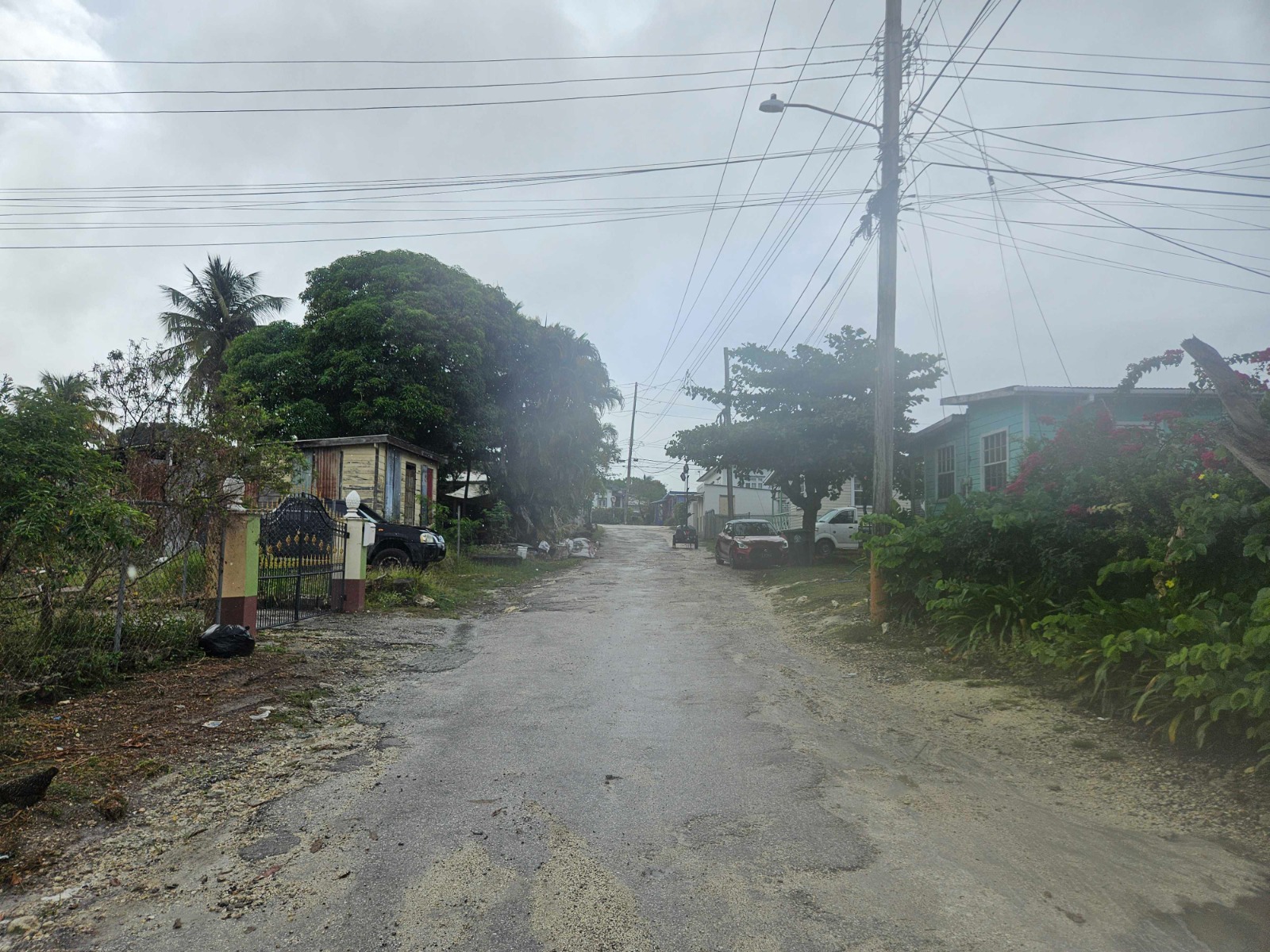
  • Dirt floors, the reality that the Dominican Republic wants to leave in the past

    Dirt floors, the reality that the Dominican Republic wants to leave in the past

    The persistence of dirt-floor dwellings continues to symbolize the profound vulnerability confronting families entrenched in extreme poverty across the Dominican Republic. These substandard living conditions, characterized by pervasive dust and unhygienic environments, pose significant health risks to inhabitants. Compounding these dangers, the frequently inadequate construction materials offer minimal protection against severe weather events and natural disasters.

    In a landmark policy decision, the Dominican Government identified the elimination of dirt floors among fifty critical initiatives during its inaugural Council of Ministers session on January 11. This comprehensive poverty alleviation strategy simultaneously targets the phase-out of traditional wood and charcoal stoves, addressing multiple dimensions of housing insecurity.

    According to the most recent 2022 National Population and Housing Census, the scale of this challenge has been precisely quantified. Among the nation’s 3,694,060 occupied dwellings, 69,620 residences (1.9%) still maintain dirt floors—with 25,366 located in urban zones and 44,254 in rural communities.

    Geographic distribution reveals surprising patterns: despite rapid urbanization, Santo Domingo Province records the highest concentration with 11,409 dirt-floor homes. This exceeds the figures for San Juan (6,010) and Azua (4,277). Conversely, Hermanas Mirabal (304), Santiago Rodríguez (402), and Samaná (649) demonstrate the most significant progress in eliminating these substandard conditions.

    Historical comparison with the 2002 census data reveals substantial progress, with nationwide dirt-floor residences declining from 150,123 to current levels—representing a reduction of more than half over two decades.

    A multi-sector approach has emerged to accelerate this transformation. Since 2020, the Ministry of Housing and Buildings has implemented the “Change of Dirt Floor for Cement Floor” program, successfully converting 13,905 homes between 2021 and 2024. Simultaneously, humanitarian organization Habitat for Humanity contributed to replacing 530 dirt floors with polished cement surfaces in the latter half of 2023, with ambitious plans to address 1,888 additional households throughout 2024.

  • These are the nine provinces where there are 10 homicides per 100,000 inhabitants

    These are the nine provinces where there are 10 homicides per 100,000 inhabitants

    The Dominican Republic’s National Police, through its Joint Task Force, has released its 132nd weekly crime statistics report revealing a complex national security landscape as of January 23, 2026. While approximately 15 provinces recorded zero homicides throughout January, nine demarcations remain classified in the high-risk ‘red’ category due to exceeding 10 homicides per 100,000 inhabitants.

    The comprehensive data visualization indicates that 25 provinces maintain a homicide rate of 7.68 (approximately eight) per 100,000 inhabitants. However, seven specific provinces—El Seibo, San Cristóbal, San José de Ocoa, La Vega, Salcedo, San Juan, and Dajabón—show concerning double-digit rates approaching 10 homicides per 100,000 residents according to monthly and accumulated reports.

    Two additional provinces, San Pedro de Macorís and María Trinidad Sánchez, appear in yellow on the official crime map, though the report’s accompanying statement did not clarify the specific significance of this color designation.

    The most encouraging finding emerges from longitudinal analysis: January 2026 demonstrates a 0.74% reduction in homicides compared to the same period over the previous four years. The statistical trend reveals a consistent downward trajectory, with rates declining from 11.59 in 2023 to 11.48 in 2024, then significantly dropping to 8.42 in 2025 before reaching the current 7.68 per 100,000 inhabitants in early 2026.

  • Donte Hunkins Recaptured

    Donte Hunkins Recaptured

    ST. JOHN’S, ANTIGUA AND BARBUDA – In a significant breakthrough, the Royal Police Force of Antigua and Barbuda has successfully recaptured fugitive Donte Hunkins, marking the conclusion of an extensive month-long search operation. The apprehension occurred on Saturday, January 31, 2026, when law enforcement officers located Hunkins hiding within an abandoned structure in the Whenner Road district.

    Hunkins, who had previously escaped from lawful custody, was taken into police custody without incident. Authorities confirmed he is currently cooperating with ongoing investigations related to fraud charges alongside the additional serious charge of escaping lawful custody.

    In a related development, officers discovered a 17-year-old female at the same location during the operation. She has likewise been detained as part of the continuing investigation, though her specific involvement remains under examination by investigators.

    The Police Administration issued an official statement expressing profound gratitude to community members for their vital assistance throughout the investigation. Public cooperation proved instrumental in generating actionable intelligence that ultimately led to the successful location and capture of the suspect, demonstrating effective collaboration between law enforcement and citizens.

    This case highlights ongoing efforts by Antiguan and Barbudan authorities to maintain public safety and judicial integrity, particularly concerning individuals who attempt to evade the legal system. The successful resolution of this manhunt reinforces the importance of community-police partnerships in addressing criminal activities.

  • The oldest Spaniard in the Dominican Republic is recognized

    The oldest Spaniard in the Dominican Republic is recognized

    In a heartfelt tribute ceremony held last Monday, December 15, the Foundation of Spanish Immigration in the Dominican Republic (FINMIESP) conferred its highest recognition upon Don Manuel Rodríguez Maire, celebrating his extraordinary life as the oldest Spanish national residing in the Caribbean nation. The emotional event unfolded at the Rodríguez Álvarez family home in Santo Domingo, where his wife Josefina Álvarez and daughter María Rodríguez welcomed distinguished guests to honor his remarkable legacy.

    FINMIESP’s board of trustees presented Rodríguez Maire with a commemorative plaque inscribed with text honoring his “exceptional merits” and recognizing his role as an “exemplary model” for current and future generations. As both witness and active participant in the history of Spanish immigration to the Dominican Republic, Rodríguez Maire embodies the cultural bridge between the two nations.

    The ceremony drew prominent figures from Dominican society and business circles, including Don Pepín Corripio and his wife Doña Ana María, who joined the family in celebrating their dear friend’s lifetime achievements. Adding diplomatic significance to the event, Lorea Arribalzaga Ceballos, Ambassador of Spain to the Dominican Republic, personally attended to congratulate Rodríguez Maire and emphasize the importance of maintaining the strong fraternal bonds between Spain and the Dominican Republic through its most distinguished citizens.

    Foundation leadership including President José Vitienes, Vice-President Elena Viyella de Paliza, and board member Manuel García Arévalo presided over the proceedings. Secretary Juan Ramos had the honor of formally presenting the plaque to Rodríguez Maire, whose life story represents the positive impact of Spanish culture, work ethic, and values on Dominican society’s development.

    FINMIESP, as an institution dedicated to preserving and celebrating the Spanish immigrant legacy in the Dominican Republic, continues to recognize those individuals whose lives exemplify the enduring connection between the two nations.

  • Aadham O’Garro Convicted and Sentenced for Firearm and Ammunition Offences

    Aadham O’Garro Convicted and Sentenced for Firearm and Ammunition Offences

    In a significant judicial outcome for Antigua and Barbuda’s law enforcement efforts, 25-year-old Grays Farm resident Aadham O’Garro has been handed a prison sentence for firearms violations. The conviction was delivered at St. John’s Magistrate Court on Friday, where Chief Magistrate Ngaio Emanuel presided over the case.

    O’Garro entered a guilty plea on charges of illegal possession of both a firearm and ammunition. The court imposed a two-year custodial sentence for the firearm offense and an additional one-year term for ammunition possession, with both sentences ordered to run concurrently.

    This successful prosecution stems from a coordinated police operation conducted in the Green Bay vicinity on January 24. During the tactical operation, law enforcement officials confiscated a Glock 17 9mm pistol alongside fifteen rounds of corresponding ammunition. O’Garro was one of three individuals apprehended and detained during this security initiative.

    The Royal Police Force of Antigua and Barbuda emphasized the operation demonstrates their continued commitment to combating illegal weapons circulation through strategic interventions and inter-agency cooperation. This sentencing occurs amid broader regional efforts to address firearm-related crimes in Caribbean communities.

  • Rupununi tourism organisation says police not properly investigating death of tour guide, blames cattle rustlers

    Rupununi tourism organisation says police not properly investigating death of tour guide, blames cattle rustlers

    The Guyana Police Force faces mounting criticism from tourism organization Visit Rupununi over its handling of the investigation into the brutal killing of renowned tour guide and conservationist Leon “Rasta” Baird. The 38-year-old’s partially charred remains were discovered January 25, 2026, in a burned vehicle near the Rupununi River, adjacent to Wichabai Ranch in South Rupununi.

    Visit Rupununi, established in 2015 with support from Conservation International, issued a strongly worded statement expressing “deep disturbance and outrage” at both the murder and the perceived inadequate police response. The organization directly implicated cattle rustlers operating in the Sand Creek area as the likely perpetrators, citing evidence from the crime scene and local reports.

    According to official police bulletins, forensic examination by Government Pathologist Dr. Nehaul Singh determined Baird was alive before the fire that caused his death. Investigators recovered evidential items including a knife and spent shotgun shells near the scene, alongside the remains of two cattle suspected to have been shot.

    The tourism body highlighted concerning investigative gaps: potential witnesses have come forward, suspects have been reportedly sighted, and physical evidence remains uncollected at the crime scene. Notably, the lead investigator hasn’t been seen in the district since the Sunday following the discovery.

    Visit Rupununi condemned the historical lack of police action against organized cattle rustling networks that have long plagued Region Nine (Upper Takatu-Upper Essequibo). The organization warned that failure to properly address this crime could embolden further violence, creating a dangerous perception that such acts occur without consequence.

    Neither Police Commissioner Clifton Hicken nor CID Head Deputy Commissioner Wendell Blanhum responded to media inquiries regarding these allegations. The police force’s only official communication stated that no arrests have been made while investigations continue.

    Baird, remembered as a respected local guide, vaquero, and dedicated conservationist, has been laid to rest after his remains were released to relatives following DNA sampling as part of the ongoing investigation.

  • Fire at ABLP Headquarters on Nugent Avenue Quickly Contained

    Fire at ABLP Headquarters on Nugent Avenue Quickly Contained

    A potential disaster was averted on Nugent Avenue this Saturday afternoon thanks to prompt intervention from bystanders. Emergency services were dispatched to the Antigua and Barbuda Labour Party Headquarters following reports of a fire, only to discover that vigilant members of the public had already extinguished the flames before their arrival.

    The St. John’s Fire Station received the emergency alert at precisely 2:13 p.m., according to Inspector Bagot. Fire tenders No. 17 and No. 19 were immediately deployed to the scene. Upon arrival, firefighters encountered several burnt wooden pallets that had been successfully doused by civilians, eliminating the need for any firefighting equipment deployment.

    While the quick-thinking actions prevented a more serious incident, the southern wall of the political party’s headquarters did sustain noticeable heat and smoke damage. Authorities have confirmed that no injuries resulted from the incident, marking a fortunate outcome given the circumstances.

    The St. John’s Fire Brigade has launched a formal investigation to determine the exact cause of the fire. The incident highlights both the importance of community vigilance and the effectiveness of emergency response systems, even when the immediate danger has been neutralized before official assistance arrives.