分类: society

  • Road deaths climb to five; three recorded in St Philip so far this year

    Road deaths climb to five; three recorded in St Philip so far this year

    Barbados is confronting a severe road safety emergency as official police statistics reveal five traffic-related deaths within the first weeks of 2024. The eastern parish of St Philip has emerged as a particular area of concern, accounting for three of these tragic incidents.

    The most recent fatalities occurred during a devastating Sunday afternoon period. At approximately 3:18 PM along Searles Road in Christ Church, a collision between a motorcyclist and a motorvan proved fatal. According to police reports, the vehicles were traveling in opposing directions when the crash occurred at the Leadvale junction. Despite being rushed to Queen Elizabeth Hospital, the motorcycle rider succumbed to injuries sustained in the accident.

    Merely thirty minutes later, tragedy struck again along Crane Road in St Philip. At around 3:45 PM, a bicyclist and motorvan collided while both traveling toward Rices. The cyclist was pronounced dead at the scene, marking the second fatality within an hour.

    These recent incidents follow earlier deadly crashes this month. A two-vehicle collision on Carrington Road in St Philip claimed two lives, while St Michael recorded another fatality when a pedestrian was struck by a truck near Kensington Oval on President Kennedy Drive.

    Barbados Police Service has launched comprehensive investigations into all cases. Authorities are urgently appealing to the public to exercise heightened caution and adhere to traffic regulations as the nation grapples with this alarming pattern of road tragedies.

  • Dominica joins Special Olympics Global Coalition

    Dominica joins Special Olympics Global Coalition

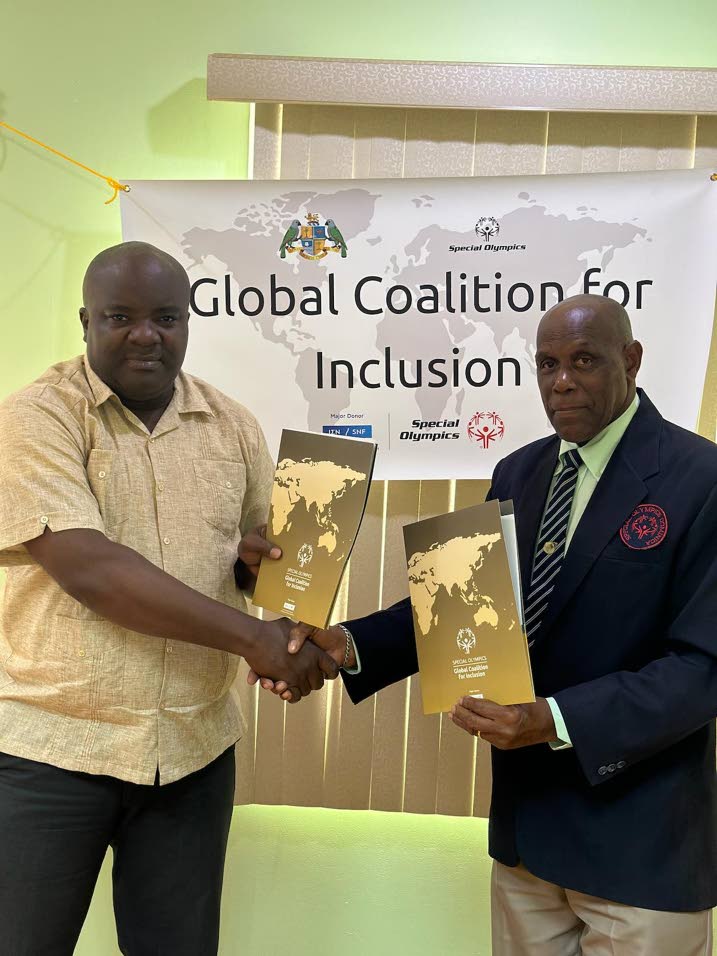
    ROSEAU, Dominica — January 8, 2026, will be remembered as a watershed moment in Dominica’s social development history as the Caribbean nation formally aligned itself with the Special Olympics Global Coalition for Inclusion. The landmark signing ceremony, orchestrated under the guidance of Senator Oscar George, Minister of State for Sports, signifies the government’s profound commitment to creating a more equitable society for citizens with intellectual disabilities.

    The ceremony witnessed the convergence of key stakeholders including Ainsworth Irish, National Director of Special Olympics Dominica, and Trevor Shillingford, representing the Ministry of Sports. This partnership establishes a comprehensive framework for implementing inclusive policies through educational and athletic channels.

    The Global Coalition for Inclusion, initiated in 2023, represents a multinational alliance combining governmental resources, philanthropic organizations, and developmental agencies to eradicate social exclusion. Supported by prominent entities like the Stavros Niarchos Foundation, the coalition employs strategic initiatives to promote inclusive education and sports programming on a global scale.

    Through this memorandum of understanding, Dominica has committed to an ambitious three-year implementation strategy that will integrate Unified Sports programs across 15 educational institutions, directly benefiting approximately 1000 young participants. This initiative transcends symbolic gesture, representing a concrete action plan to cultivate environments of mutual respect and social acceptance within school systems and broader community structures.

    Dominica’s accession marks the 20th nation to join this global movement and the third Caribbean territory following Jamaica and Trinidad and Tobago. This strategic positioning demonstrates the island nation’s dedication to leading regional efforts in disability inclusion and social integration.

    Senator George emphasized that “this partnership inaugurates a transformative period for Dominican youth, regardless of physical or intellectual capabilities. The introduction of Unified Sports within our educational framework will instill values of acceptance and collaborative spirit that will resonate through generations.”

    Irish echoed this sentiment, expressing profound appreciation for the governmental collaboration: “Our partnership with the Ministry of Culture, Youth, Sport, and Community Development enables tangible social transformation through athletic inclusion. We are witnessing the powerful effects of unified sports in breaking down barriers and creating cohesive communities.”

    This agreement represents more than bureaucratic formality—it constitutes a compelling call to action for systemic social reform. Dominica’s decisive step positions the nation as a beacon of progressive change within the Caribbean region, potentially inspiring similar initiatives across neighboring territories.

  • Judge calls for legislative reform: ‘Let errant police pay for misconduct’

    Judge calls for legislative reform: ‘Let errant police pay for misconduct’

    In a landmark ruling with profound implications for police accountability, High Court Justice Frank Seepersad has issued a powerful call for legislative reform to hold officers personally financially responsible for unlawful arrests. The January 20th decision came in the case of Jawanza Simmons, a Sangre Grande businessman who was wrongfully arrested and detained for 12 hours in 2019.

    The court found that Special Reserve Constable Cleon Smith acted maliciously and beyond legal authority when he arrested Simmons outside the Shops of Cunapo on November 20, 2019. According to evidence presented, Simmons was merely smoking a cigarette and conversing with his brother when Smith approached without justification, slapped the cigarette from his hand, and demanded identification without stating any suspected offense.

    Justice Seepersad described the officer’s conduct as “arbitrary and not rooted in the rule of law,” noting that speaking in a loud tone does not constitute disorderly conduct, and there was no reasonable basis for the resisting arrest charge. The court particularly condemned Smith’s repeated failure to appear in both magistrates’ and High Court proceedings, calling this non-cooperation “intolerable and unacceptable.”

    The judge awarded Simmons $100,000 in total damages – $75,000 compensatory and $25,000 exemplary – to be paid by the state. However, Seepersad emphasized that taxpayers should not bear the burden of officer misconduct, recommending that legislation be amended to require offending officers to pay damages through salary deductions or forfeiture of accrued benefits.

    Seepersad warned against what he described as a “frequent modus operandi” of threatening arrest without probable cause, stating that while Trinidad faces significant lawlessness, police must still exercise authority responsibly. “There is a saying that ‘fish often rots from the head,’” the judge noted, “so for the level of lawlessness to be addressed, there has to be cooperation between police and the public.”

    The ruling represents a significant judicial challenge to police practices and accountability mechanisms, with the court explicitly urging parliamentary intervention to create meaningful consequences for officer misconduct.

  • No hidden hands

    No hidden hands

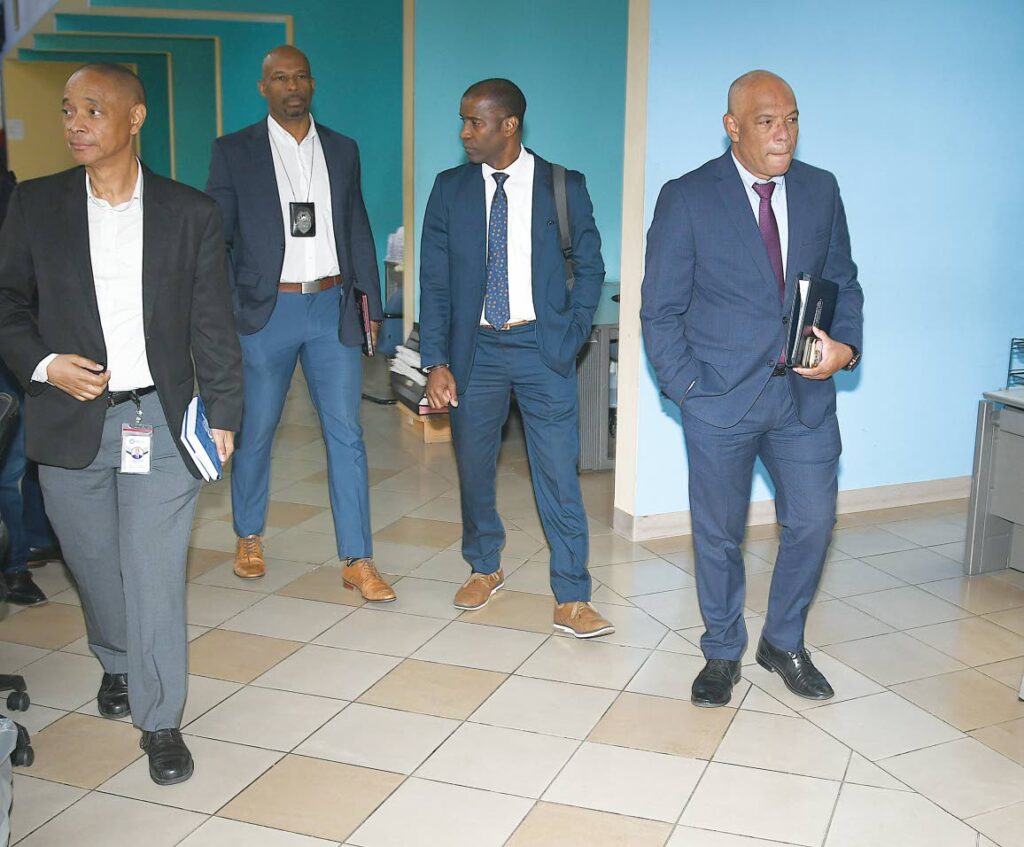
    Jamaica’s top anti-corruption authorities have publicly addressed growing concerns about their investigative processes, firmly rejecting allegations of external interference in high-profile cases. During a candid Jamaica Observer Monday Exchange session, senior officials from both the Financial Investigations Division (FID) and the Major Organised Crime and Anti-Corruption Agency (MOCA) provided detailed explanations for what the public perceives as deliberate delays in sensitive investigations.

    FID Chief Technical Director Dennis Chung emphasized the structural safeguards protecting their operations: “No single individual can influence any investigation within our organization. Our transition from a ministry unit to an independent department was specifically designed to enhance our autonomy from political oversight.” Chung highlighted the legal obligation to maintain secrecy throughout investigations, noting that violations carry severe consequences.

    MOCA Director General Colonel Desmond Edwards clarified the distinction between administrative oversight and operational independence: “My interactions with policymakers are strictly limited to budgetary matters, personnel challenges, and procedural approvals. There exists absolute separation when it comes to our investigative activities.”

    The officials addressed the common perception that law enforcement treats wealthy and influential targets differently from ordinary citizens. Edwards countered this narrative by explaining how complex criminal structures inherently require longer investigation periods: “We treat everybody equally and can only prosecute matters where we have evidence. Sophisticated offenders deliberately position themselves far from visible wrongdoing, creating intricate networks that demand meticulous unraveling.”

    Legal complexity represents another significant factor in prolonged investigations. Nigel Parke, MOCA’s senior director of legal and prosecutorial services, explained that affluent suspects often employ top-tier legal representation that leverages technical challenges and constitutional protections: “These legal maneuvers substantially extend timelines as courts must carefully consider each application and procedural matter.”

    Investigative methodology itself contributes to extended timeframes, Parke noted: “Cases evolve organically as evidence emerges. What begins as an inquiry into one offense may reveal completely different criminal activities, requiring additional international evidence gathering, forensic accounting, and witness location efforts.”

    Chung concluded by emphasizing their commitment to procedural integrity: “We maintain a 90% conviction rate by ensuring every investigation is thoroughly prepared. Premature disclosures could not only damage cases but expose agencies to significant legal liability while allowing criminals to evade justice.”

  • Social media erupts over south school’s hair rules

    Social media erupts over south school’s hair rules

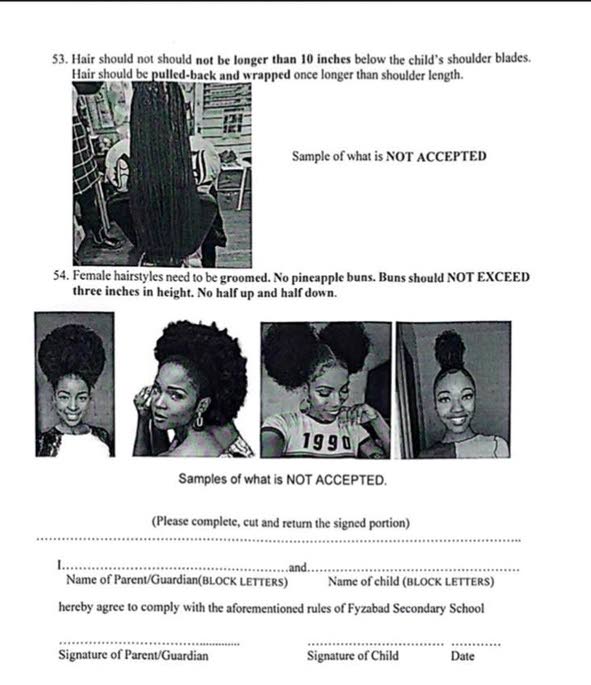
    A social media post exposing Fyzabad Secondary School’s hairstyle contract has ignited renewed debates about racial discrimination in Trinidad’s educational system. The document, circulated on January 17th, featured photographs exclusively depicting black women to illustrate ‘unacceptable’ hairstyles, prompting accusations of systemic bias in the multicultural nation.

    The controversial contract, requiring parental and student signatures, specified stringent grooming regulations under items 53 and 54 of the school’s 2026 rules. These provisions mandated that hair must not extend beyond ten inches below shoulder blades, prohibited pineapple buns exceeding three inches in height, and banned half-up, half-down styles. Accompanying visual examples solely featured black women sporting afros, braids, and other natural hairstyles, conspicuously excluding representations of Indian women despite Trinidad’s diverse demographic landscape.

    Social media commentary rapidly highlighted this omission, with users questioning why Indian hairstyles weren’t represented given their prevalence in Trinidadian society. The controversy intensified when an audio recording surfaced purportedly capturing the school principal threatening three-day suspensions for non-compliant students while defending against racial discrimination allegations.

    This incident echoes the 2023 Trinity College Maraval graduation controversy where 23 students were barred from crossing the stage due to hairstyle violations. That earlier incident prompted the Education Ministry to establish a National School Hair Code on July 6, 2023, which explicitly permitted locs, twists, plaits, afros, and cornrows while requiring individual schools to develop specific policies by October.

    In a January 19, 2025 statement, the Education Ministry clarified that the national code “does not prescribe or prohibit specific hairstyles,” instead emphasizing that school-level guidelines must be “reasonable, non-discriminatory, [and] respectful of students’ dignity.” Education Minister Dr. Michael Dowlath asserted that grooming guidelines must never “deny a child their right to education.”

    The Trinidad and Tobago Unified Teachers’ Association (TTUTA) president Crystal Ashe has urged ministerial intervention, stating that “responsibility for the current confusion rests primarily with the Ministry of Education” due to insufficiently clear national standards. Meanwhile, National Council Parent Teacher Associations president Walter Stewart warned against leaving hairstyle regulations to “subjective” principal interpretations, advocating for inclusive policy development involving cultural and religious groups.

  • ‘Shots started to ring out’: Politician gives chilling account of triple fatal police shooting

    ‘Shots started to ring out’: Politician gives chilling account of triple fatal police shooting

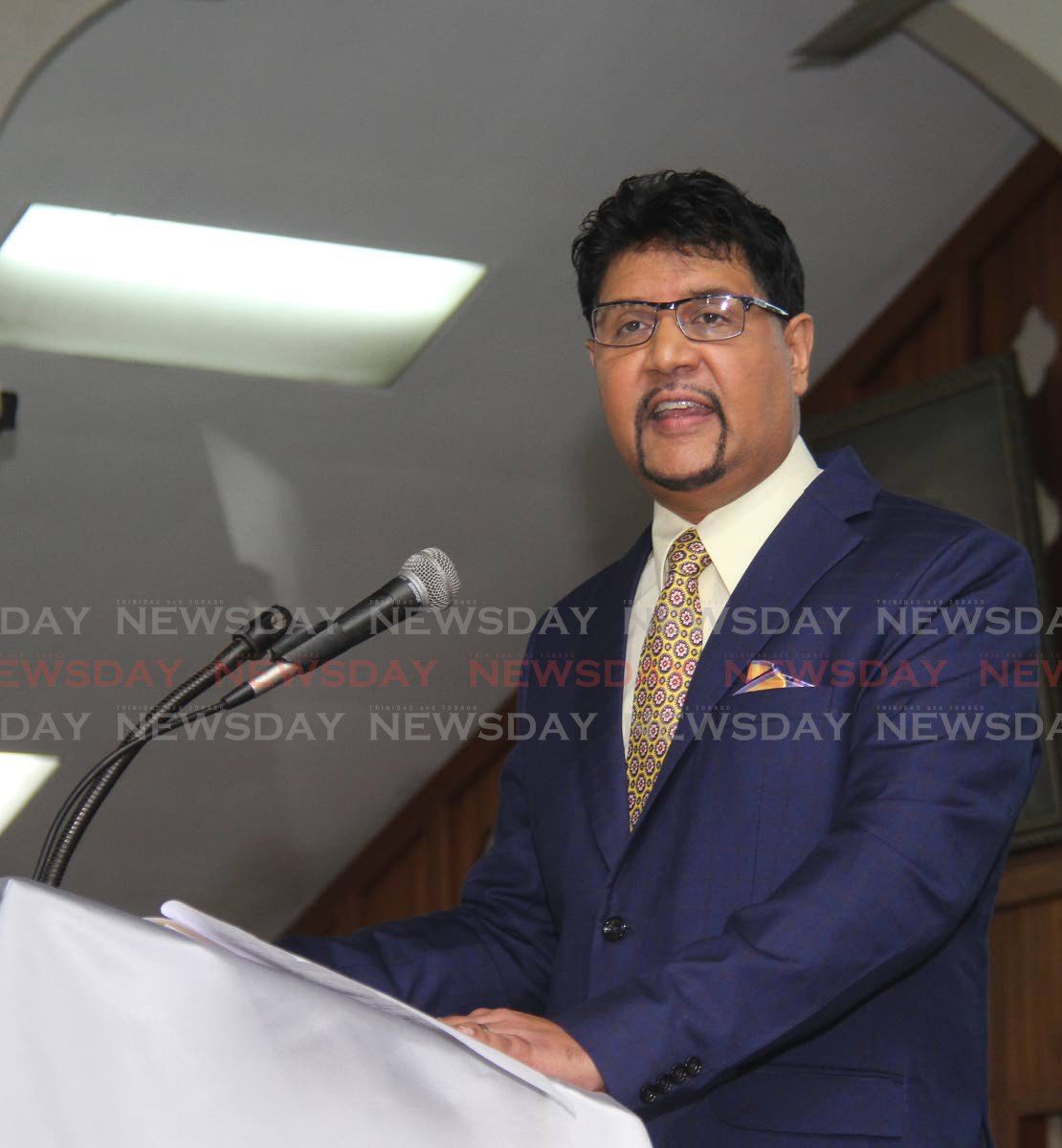
    A high-ranking political figure provided gripping testimony on Tuesday, detailing his eyewitness account of a deadly police operation that resulted in three fatalities thirteen years ago on Arcadia Drive in St. Andrew, Jamaica. The witness, who observed the incident from his apartment window, is a key figure in the murder trial of six law enforcement officers: Sergeant Simroy Mott, Corporal Donovan Fullerton, and Constables Andrew Smith, Sheldon Richards, Orandy Rose, and Richard Lynch.

    The defendants, all present in court with a seven-member jury, listened as the politician described the events of January 12, 2013, under prosecution questioning. From his master bedroom window, he had an unobstructed view of the midday shooting that claimed the lives of Matthew Lee, Mark Allen, and Ucliffe Dyer.

    The witness described a scene involving three vehicles: a Mitsubishi Outlander, a police pickup truck carrying five officers, and a ‘Kingfish’ police vehicle arriving later with two additional officers. Before the Kingfish’s arrival, he observed one man in a white shirt seated on the ground under police guard, another man of Indian descent near the Outlander’s front seat, and a third individual in a red shirt in the backseat, with three armed officers positioned around the vehicle, all carrying what appeared to be M16 rifles.

    The testimony revealed disturbing details: the man in the white shirt was initially seated on the ground with weapons pointed at him before hearing explosions and finding himself lying on the ground. The man of Indian descent seemed to be presenting vehicle documents to an officer when the situation escalated. The man in the red shirt exited the vehicle with raised hands, was shouted at by police, and began running—prompting immediate gunfire.

    ‘Immediately, as he put up his hands and came out of the car, and he was shouted at and he started to run. The shots started to ring out,’ the witness recalled, describing how the man fled into a yard across from the apartment complex.

    The arrival of the Kingfish vehicle brought two additional officers, one in a beige shirt with a police vest who emerged with a handgun. According to the witness, this officer ran toward the scene, shot in the direction of the man on the ground, and then moved to the front passenger seat of the Outlander. The witness stated the man in white appeared already dead when shot.

    Meanwhile, the other two officers moved toward the yard while the officer in beige pulled the Indian man from the car. Within seconds, the witness testified, this man appeared ‘lifeless’ on the ground as continuous gunfire erupted from multiple directions.

    The politician further testified that he watched the five officers collect three bodies from different locations and load them into the pickup truck, which then departed with both the bodies and the officers. The entire incident, from his arrival at the window to the removal of the bodies, lasted approximately five minutes.

    The trial faced tense moments when defense attorney High Wildman, representing Fullerton, objected to prosecution questions regarding the witness’s post-incident discussions and documentation of events, citing rules against self-corroboration. The objections grew so heated that Presiding Judge Justice Sonia Bertram Linton temporarily exited the courtroom before returning to dismiss the court for lunch.

    Background information reveals the three victims were returning from the Constant Spring Police Station where Dyer, on bail for community crimes, was fulfilling reporting requirements. Lee, who wasn’t from the area but shared a mutual friend with Dyer, had provided transportation.

    The officers were arrested and charged in August 2019—six years after the killings—following a ruling by the Office of the Director of Public Prosecutions. Fullerton faces additional charges for making a false statement to the Independent Commission of Investigations (INDECOM), whose probe was completed in 2017 but delayed by court actions.

    The trial continues on Thursday with further testimony expected from the witness.
  • Maitland’s miscarriage claim rubbished by DPP

    Maitland’s miscarriage claim rubbished by DPP

    In a compelling closing argument, Director of Public Prosecutions Claudette Thompson systematically dismantled the defense presented by Constable Noel Maitland, who stands accused of murdering his girlfriend, Donna-Lee Donaldson, and preventing her lawful burial in July 2022. Thompson urged the seven-member jury to reject Maitland’s unsworn statement that blood found in his apartment resulted from Donaldson suffering a miscarriage, characterizing his overall strategy as one of denial, deflection, and dismissal of overwhelming evidence.

    The prosecution constructed a meticulous narrative for the jury, portraying the case as a complete ‘mental jigsaw puzzle’ where every piece of evidence converges to point unequivocally at the defendant. A central piece of this puzzle remains a missing couch, allegedly power-washed at a Lyndhurst Road car wash where an attendant testified to observing blood ‘like rice grain’ seeping from it, accompanied by a swarm of flies. Thompson highlighted the conspicuous absence of this couch while noting that another couch, along with blood-stained curtains, shoes, and a cushion cover, remained in the apartment precisely because they were not implicated.

    Thompson accused Maitland of engaging in a deliberate campaign of misdirection, particularly by attempting to shift suspicion toward his ‘babymother,’ Kathy-Ann. The DPP reminded jurors that police investigators found no evidence to charge Kathy-Ann, noting she was not involved in picking up Donaldson, was not seen at the car wash, and did not participate in the alleged cover-up. The prosecution further questioned the whereabouts of Donaldson’s iPhone and raised suspicions about a different phone being submitted as evidence.

    In a dramatic rhetorical flourish, Thompson invoked scriptures from Proverbs 6:16-19 to frame Maitland’s alleged actions as embodying the ‘six things the Lord hates,’ including ‘a proud look,’ ‘a lying tongue,’ and ‘hands that shed innocent blood.’ She characterized his courtroom behavior and statements about a ‘love triangle’ as prideful, his accusations against others as wicked imaginations, and his phone calls to a truck driver involved in moving the couch as ‘running to mischief.’

    Concluding her argument, Thompson asserted that the evidence presented over the eight-month trial formed an incontrovertible whole, leaving no room for reasonable doubt. She implored the jury to deliver a verdict that is ‘true and just.’ The trial now proceeds to the defense’s closing arguments, with Trial Judge Leighton Pusey anticipating jury deliberations to commence by Thursday.

  • Immigration trainee fired over bribery voice notes

    Immigration trainee fired over bribery voice notes

    The Bahamas Department of Immigration has terminated Trainee Immigration Officer Alex K Riley following the circulation of compromising voice recordings that allegedly capture solicitation of bribes. Director of Immigration Stephen Laroda issued an immediate dismissal notice dated January 16, severing all employment ties with the officer.

    The disciplinary action follows the emergence of viral audio content featuring an unidentified male voice making explicit demands for monetary compensation. While authorities haven’t officially confirmed the voice belongs to an immigration officer, the recordings contain specific threats regarding intensified enforcement activities against Haitian nationals if financial demands remain unmet.

    In the controversial recordings, the voice states: ‘Now you going down to 150. Alex, by tomorrow let that whole 500 be there. I saved your life. Don’t make it hard for Haitians around there.’ The speaker further implies protection from immigration raids while warning that non-compliance would trigger increased enforcement presence.

    An immigration representative confirmed to The Tribune that the dismissal resulted from an investigation, though the exact nature of the probe—whether internal or involving law enforcement—remains unclear. This incident occurs amid heightened scrutiny of alleged misconduct within Bahamian law enforcement agencies, following a separate investigation into police officers allegedly soliciting bribes from tourists during traffic stops.

  • Judge calls for legislative reform: ‘Let errant police pay for misconduct’

    Judge calls for legislative reform: ‘Let errant police pay for misconduct’

    In a landmark ruling with significant implications for police accountability, High Court Justice Frank Seepersad has issued a powerful call for legislative reform to ensure officers face personal financial consequences for unlawful arrests. The January 20th decision came in response to the malicious 2019 arrest of Jawanza Simmons, a Sangre Grande businessman, by Special Reserve Constable Cleon Smith.

    The court established that Simmons was standing on a pavement smoking a cigarette and conversing with his brother when Smith approached without justification. The officer slapped the cigarette from Simmons’ hand, demanded identification without stating any suspected offense, and proceeded to arrest him when Simmons questioned the action. Testimony revealed that Smith pushed Simmons against a wall, emptied his pockets, and failed to identify himself properly before handcuffing him.

    During transportation to Sangre Grande Police Station, Simmons endured physical assault and verbal abuse. He was detained for approximately twelve hours in substandard conditions without communication access before facing baseless charges of disorderly conduct and resisting arrest. The case eventually collapsed when Smith repeatedly failed to appear in court, including at the magistrates’ level where the charges were ultimately dismissed.

    Justice Seepersad characterized the officer’s conduct as “arbitrary” and “not rooted in the rule of law,” concluding that Smith acted with malice in bringing unfounded charges. The judge emphasized that speaking loudly does not constitute disorderly conduct, and found no reasonable basis for the arrest or subsequent charges.

    The ruling highlighted systemic issues within law enforcement, noting the officer’s pattern of avoiding court appearances and the state’s failure to secure his testimony. Justice Seepersad warned against the prevalent practice of threatening arrest without probable cause, stating that rising criminality in the country does not excuse police from operating within legal boundaries.

    In his most significant pronouncement, Justice Seepersad urged Parliament to amend legislation to discipline officers who make unjustifiable arrests and require them to personally pay court-awarded damages rather than burdening taxpayers. He suggested deductions from salaries or termination benefits as potential methods of recovery.

    The state was ordered to pay Simmons $75,000 in compensatory damages and $25,000 in exemplary damages, plus legal costs. The case was represented by Elvin Cudjoe for Simmons and Keron Maynard for the state.

  • Sections of communities in Westmoreland now have light

    Sections of communities in Westmoreland now have light

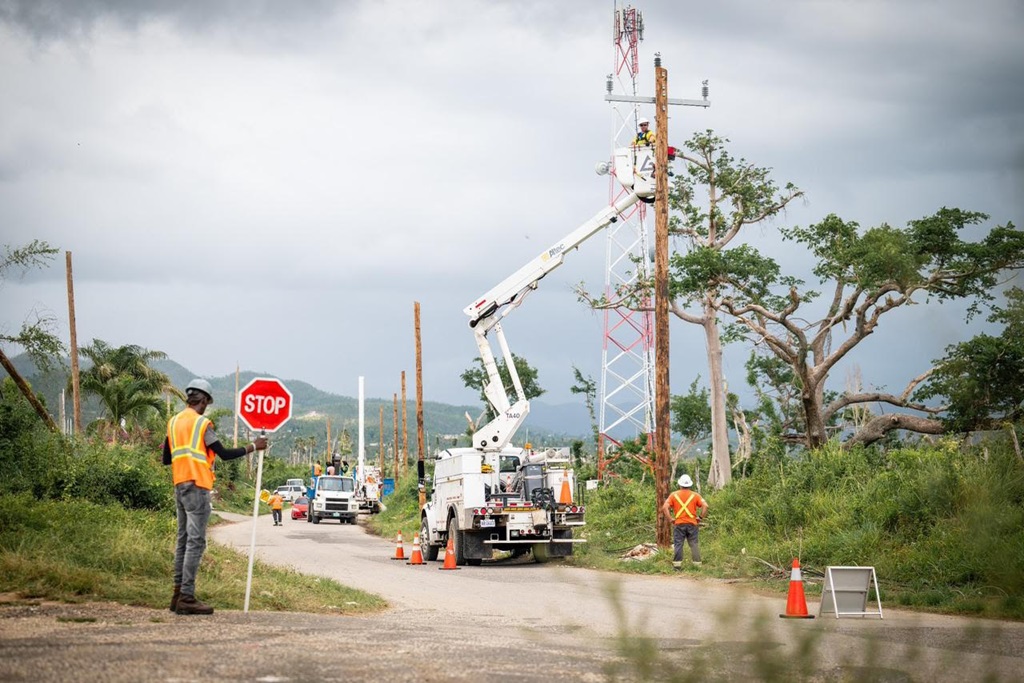
    A significant infrastructure milestone has been achieved in Westmoreland Parish with the successful energization of dedicated power lines servicing the National Water Commission’s (NWC) Roaring River Pump. This critical development has reinstated electrical service to numerous households across the Petersfield, Waterworks, and Shrewsbury Falls districts, marking a pivotal step in ongoing recovery efforts.

    The complex engineering endeavor, finalized last week following rigorous system validation tests, involved the comprehensive reconstruction of an extensive electrical corridor. Crews from the Jamaica Public Service Company (JPS) meticulously rebuilt over ten miles of transmission infrastructure, stretching from the central power source at the Paradise substation directly to the NWC’s vital pumping facility. The monumental scale of the project demanded the dedicated expertise of more than 100 linemen working tirelessly to ensure its timely completion.

    This achievement represents a dual victory, restoring not only power to residents but also securing the operational capacity of a crucial piece of water management infrastructure. The Jamaica Public Service Company has confirmed that its teams remain actively deployed throughout the parish, continuing their dedicated work to rebuild and strengthen the local electricity network to reach remaining affected customers in surrounding communities.