HAVANA, Cuba – In a pointed rebuke of Washington’s latest policy toward the Caribbean island, Cuban President Miguel Diaz-Canel publicly called on the United States Thursday to abandon its decades-long economic blockade of Cuba, arguing that lifting the restrictive trade measures would address the country’s deepening hardship far more effectively than the conditional aid package recently proposed by US authorities.
分类: politics
-

‘Rescue the JUTC’Phillips says State-run bus company in “most pathetic state” as losses mount
Jamaica’s main opposition party has launched a scathing attack on the current administration, accusing it of allowing the nation’s flagship public transit provider, the Jamaica Urban Transit Company (JUTC), to fall into the worst crisis in its institutional history.
Speaking during the ongoing sectoral debate in Jamaica’s House of Representatives, opposition transport spokesperson Mikael Phillips drew a stark medical metaphor to describe the state-owned bus operator’s decline, saying the JUTC has spent a full decade lingering in the “accident and emergency department” amid ballooning financial losses and sustained government policy neglect. He called the current situation the “most pathetic state” the agency has faced since its founding.
Phillips pushed back against government claims of progress, pointing out that successive ruling party budgets have poured billions of dollars in public subsidies into the JUTC and greenlit the purchase of hundreds of new transit vehicles—yet the agency continues to drift deeper into systemic financial and operational failure. He derided the government’s half-hearted interventions, comparing them to “calling on a carpenter to examine a critical patient, when what is truly required is oxygen and a skilled physician to diagnose the ailment and prescribe the cure.”
The opposition spokesperson laid out grim financial figures to back his criticism, noting that cumulative losses for the JUTC have topped $100 billion over the past 10 years. This fiscal year alone, the agency is projected to post a staggering $14.8 billion deficit, and remains operational only through an emergency $11 billion government grant that keeps it afloat month to month.
Even with major capital investments in the fleet, Phillips argued, core performance metrics for the JUTC have failed to improve. He raised pointed questions about the agency’s soaring maintenance and fuel costs, particularly perplexing given that a large share of the updated fleet now runs on lower-cost compressed natural gas or electric power.
Beyond financial mismanagement, Phillips also criticized the current administration’s decision to expand JUTC routes into rural parts of the island. That expansion, he argued, has sparked unnecessary and escalating friction between the state-owned transit giant and smaller private transport providers that already serve those communities.
At its core, Phillips argued, the JUTC’s deepening crisis is a symptom of a larger failing: the complete absence of a coherent, long-term national public transportation policy from the current government. He issued a clear warning that continued delays to comprehensive structural reform will only further erode public transit access and reliability across the entire island of Jamaica.
-

Dominican Senate approves air services agreement with Greece
In a move set to reshape air connectivity and bilateral relations between the Caribbean and Southern Europe, the Senate of the Dominican Republic has given final approval to a comprehensive Air Services Agreement with Greece, unlocking new potential for expanded passenger and cargo air links between the two nations.
The landmark accord was originally signed on November 13, 2025, on the sidelines of the ICAN 2025 international aviation conference, where it was developed as a framework to deepen collaborative work across the aviation sectors of both countries. Beyond basic air service access, the agreement includes progressive provisions that grant carriers from both nations fifth freedom traffic rights for passenger services, allowing airlines to pick up and drop off passengers in a third country before continuing to their destination. For all-cargo operations, the deal goes a step further, offering seventh freedom rights that enable cargo carriers to operate entirely between foreign countries without requiring a connection back to their home nation. It also introduces more flexible operating rules to support widespread code-sharing partnerships between airlines from both signatory states, opening the door for more route options and better scheduling for travelers and shippers alike.
Championed and advanced by the Dominican Republic’s Civil Aviation Board, the new agreement aligns with the country’s long-term national strategy to cement its status as a leading logistics and tourism hub across the Latin American and Caribbean region. Dominican authorities have outlined clear expectations for the deal: it is projected to open untapped commercial opportunities for both countries, upgrade the Dominican Republic’s global air connectivity network, and create stronger, more integrated diplomatic and economic bonds between Santo Domingo and Athens.
-

Senator Cholitín warns La Altagracia is being “punished by success”
In a stark address delivered before the Dominican Republic’s Senate, senior lawmaker Rafael Barón Duluc — widely known by his nickname Cholitín — has sounded the alarm over unregulated, uneven expansion in the province of La Altagracia, home to the Caribbean’s iconic tourist hubs Punta Cana and Bávaro. While the region has cemented its reputation as one of the top travel destinations in the Americas, drawing millions of visitors and generating billions in annual revenue, its rapid growth has come at a steep cost, Duluc argued.
Duluc framed La Altagracia’s current crisis as a case of “being punished by success”: the province’s booming tourism economy has failed to deliver broad-based improvements to quality of life for local residents, leaving critical public sectors starved for targeted investment and basic infrastructure outdated and overstretched. One of the most glaring gaps in data is also the root of many of the region’s challenges, he claimed: official population counts drastically undercount the actual number of people who call La Altagracia home, with Duluc putting the current population at over 1 million, far higher than government estimates.
To address this data deficit, Duluc is backing a Senate resolution that calls on President Luis Abinader to direct the National Statistics Office (ONE) to carry out a one-time, specialized census focused exclusively on La Altagracia. Without an accurate count of residents, the senator explained, local and national leaders cannot allocate sufficient funding or resources to fix widespread shortages that have plagued daily life in the province. These shortages range from K-12 classroom space and accessible public transportation to core utility services, while unmanaged population growth has also turned chronic traffic congestion into a daily crisis in both Punta Cana and the nearby town of Verón.
Duluc’s warning carries added weight, as it aligns with recent comments from Frank Rainieri, the pioneering tourism developer who helped transform Punta Cana from a remote coastal stretch into a global travel destination. Rainieri recently echoed the same concern, describing the region’s current pattern of unregulated growth as fundamentally unsustainable long-term. For Duluc, the specialized census is not just a bureaucratic exercise — it is the most critical first step to lay the groundwork for informed strategic planning, targeted public investment, and inclusive growth that can benefit both the tourism industry and the local community that calls La Altagracia home.
-

Abinader arrives in Guyana to sign new cooperation agreements with President Ali
GEORGETOWN, GUYANA – Dominican Republic President Luis Abinader touched down in Georgetown Wednesday evening to launch his fourth official working visit to the South American nation, a trip aimed at reinforcing long-standing bilateral ties and expanding collaborative frameworks between the two countries through new agreements with Guyanese President Mohamed Irfaan Ali.
Upon his arrival at Cheddi Jagan International Airport, Abinader received an official welcome from a senior Guyanese delegation led by Prime Minister Mark Anthony Phillips, Foreign Minister Hugh Todd, alongside Ernesto Torres, the Dominican Republic’s resident ambassador to Guyana. After participating in formal military honors to mark the official nature of his visit, the Dominican leader joined Guyanese government officials for a welcoming reception hosted at Government House.
A full day of diplomatic engagement is scheduled for Thursday, starting with a closed-door bilateral meeting between Abinader and Ali to discuss shared priorities and ongoing collaborative projects. Following their talks, the two heads of state will oversee the signing of a new bilateral cooperation agreement that expands on existing partnerships.
This current visit builds directly on progress achieved in 2023, when the two governments signed six memorandums of understanding targeting key sectors of mutual interest: sustainable energy development, national food security, and cross-border trade expansion. Abinader is traveling with a senior cabinet and delegation, including Joel Santos, the Dominican Minister of Energy and Mines, Samuel Pereyra, chairman of the Dominican Petroleum Refinery (Refidomsa), and Tulio Rodríguez, the government’s special coordinator for Guyana affairs. The Dominican president is scheduled to complete his diplomatic engagements and depart for the Dominican Republic by the end of Thursday.
-

Minnis ‘disappointed’ by loss but pledges to remain active
One day after final votes were tallied in The Bahamas’ general election, former prime minister Hubert Minnis opened up about his unexpected loss of the Killarney constituency seat — a post he held for nearly 20 years — revealing that while disappointment lingers, his engagement with the community he represented is far from over.
Minnis’ defeat came after a historic and politically charged campaign that saw the former leader of the Free National Movement (FNM) split from the party he once headed, launching a rare independent bid for re-election following months of public friction with current FNM leader Michael Pintard and the party’s senior leadership. When the FNM leadership declined to renominate Minnis as its candidate for the 2026 general election, he opted to stay in the race, marking the first time any former Bahamian prime minister has run as an independent after leaving the party they once led. On election night, early results projected FNM nominee Michela Barnett-Ellis as the winner of the Killarney seat, ending Minnis’ decades-long hold on the constituency.
The former prime minister arrived at a mandatory vote recount at the New Providence Community Centre on Thursday morning clad in his signature campaign gear — a branded “Killarney Strong” shirt and matching hat — and remained outwardly calm throughout the process. Speaking to reporters after the recount confirmed his loss, Minnis acknowledged the letdown of the outcome, but framed defeat in an unexpectedly reflective light.
“Of course, I would have been somewhat disappointed that I lost in Killarney,” he told reporters outside the centre. “Sometimes defeat can be victory. In terms of feeling, I still feel good. I woke up this morning and did my usual thing and just came from coffee house with my lovely wife enjoying a nice morning of coffee.”
As a long-time resident of the Killarney constituency, Minnis made clear that he has no plans to step back from community work. He announced a new initiative to launch an Educational Trust Fund, designed to provide much-needed financial aid to local high school students facing economic barriers. The former prime minister confirmed he will seed the fund with $100,000 of his own personal capital, and he plans to solicit additional donations from outside sponsors to expand the fund’s reach.
For months leading up to election day, Minnis remained confident he would retain the Killarney seat, even as pundits questioned his odds as an independent candidate. When asked on election day what his future would hold if he lost, he dismissed the question and reaffirmed his belief in a victory.
When asked Thursday whether his defeat signals the end of his formal political career, Minnis said he has not yet held in-depth conversations with his family about his long-term plans, stressing that his loved ones will be central to any future decision he makes. When pressed on whether he would consider reconciling and rejoining the FNM, he ruled out that possibility, noting that he currently plans to shift his focus to supporting his children as they grow their own business ventures. When asked what factors led to his defeat, he simply replied, “Only God knows.”
The 2026 general election delivered a decisive victory for the incumbent Progressive Liberal Party (PLP), which secured a second consecutive term in office. Unofficial final results show the PLP winning 33 of the 41 available parliamentary seats, while the FNM only captured eight seats. When asked for comment on the FNM’s poor overall performance in the election, Minnis said he does not interfere in the internal affairs of his former party.
“To be honest with you, I can’t tell you my real belief or what I believe happened,” he said. “I will write that in my journals, you know, but that’s my belief, and it would be backed up with some facts, but it’s not for public consumption at this time, the public is not prepared to take that. They can’t devour it at this time.”
-

Voter turnout voter turnout a ‘tragic’ 58%
In the wake of Tuesday’s general election in the Bahamas, an alarming projected voter turnout of just 58 percent has sent shockwaves through the nation’s political landscape, with senior electoral officials warning the figure would mark an unprecedented collapse in civic participation if officially confirmed. Geoffrey McPhee, an election consultant with the country’s Parliamentary Registration Department, told reporters Wednesday that the unofficial estimate — which remains subject to confirmation as recounts proceed across 25 contested constituencies — points to voter turnout falling even lower than the 2021 snap election held at the height of the COVID-19 pandemic.
McPhee emphasized that the 58 percent figure is still preliminary, drawn from preliminary on-the-night assessments by election staff, but called the projected drop a devastating blow to the country’s democratic culture. “Our folks, we have gone south with respect to excitement about elections. That is really, really, that’s horrible,” he said, adding that the 2021 COVID-era turnout, already a historic low, outperforms the current projection. “That’s tragic, because with elections, once they miss the election, they don’t feel the urgency to reengage.”
The projected slump represents a staggering break from the Bahamas’ strong post-independence voting tradition. For decades after the nation gained independence, general election turnout routinely exceeded 88 percent, and regularly climbed above 90 percent through the first three decades of self-governance. The 1977 inaugural post-independence general election recorded an 88.6 percent turnout, with numbers rising to 90.4 percent in 1982 and holding above 90 percent through 1987. Turnout stayed consistently high even as power shifted between major parties: it hit 91 percent when the Free National Movement (FNM) ended the Progressive Liberal Party’s (PLP) decades-long hold on government in 1992, and reached 93.2 percent when the FNM secured a landslide second term in 1997. Through 2002, 2007 and 2012, turnout remained firmly above 90 percent, and even in 2017, the first election to show a clear downward trend, participation still hit 88.4 percent.
The first historic rupture came in 2021, when turnout fell sharply to 64.9 percent. If the current 58 percent projection holds, Tuesday’s election will set a new post-independence low for voter engagement. The low turnout coincided with the PLP securing a commanding second consecutive term in office, with unofficial results showing the party winning 32 of 41 seats, nearly matching its 2021 landslide victory that ousted the FNM from power.
Prime Minister Philip “Brave” Davis, leader of the PLP, acknowledged the unexpectedly low turnout, noting that weak participation is never healthy for a democratic society and that more work must be done to help all voters feel that their ballots carry meaningful weight. So far, the highest recorded local turnout is expected in the New Providence constituency of Fort Charlotte, where former Island Luck CEO Sebas Bastian defeated FNM candidate Travis Robinson by more than 2,300 votes on an estimated 72 percent turnout, according to local insiders.
Civil society leaders have joined electoral officials in sounding the alarm, stressing that the projected low turnout should concern all Bahamians regardless of partisan alignment. Matt Aubry, head of the nonpartisan Organisation for Responsible Governance (ORG), said that weak participation does not necessarily equal voter apathy. Instead, he argued, many disengage because they do not feel their concerns are being addressed or that voting will lead to tangible change in their daily lives.
During the organization’s voter education outreach across the election cycle, Aubry said, ORG teams heard repeated frustration, particularly from young and first-time voters, who criticized campaigns for focusing heavily on personality politics and sensationalized rhetoric instead of the bread-and-butter issues affecting most Bahamian households. These include persistent struggles with the cost of living, limited economic opportunity, rising crime, high energy costs, inadequate housing and eroding public trust in political leadership.
Voters also repeatedly raised concerns about longstanding gaps in governance transparency, accountability, public procurement, campaign finance reform and access to information, even as more residents recognize how directly policy choices impact their daily lives and opportunities. Beyond policy grievances, Aubry noted that issues during the advanced voting process — including reported gaps in preparedness and efficiency — combined with ongoing public anger over the violation of campaign laws around candidate treat-giving by multiple parties, may have further eroded motivation to participate. The delayed and partial rollout of new biometric voter identification cards, paired with widespread misinformation and speculation on social media, also created confusion that may have undermined public confidence in the integrity of the electoral process for some voters, he added.
-

Election of nine women shows real progress, says former MP
A historic milestone for gender parity in Bahamian politics has emerged after this week’s general election, with nine women securing seats in the 41-member House of Assembly — a result former opposition leader Loretta Butler-Turner calls an unprecedented leap forward for women’s participation in frontline governance.
Butler-Turner, a former Long Island Member of Parliament representing the Free National Movement (FNM), told local media the outcome signals the long-standing political glass ceiling blocking women from national office is far more permeable than it was in previous election cycles. While she emphasized that systemic barriers still place disproportionate pressure on female candidates compared to their male counterparts, she framed the 202? election results as a clear sign of shifting attitudes among Bahamian voters.
“The Bahamian people have spoken, and with more women at the legislative table than ever before, I’m optimistic we’re building a Parliament that better reflects the country it serves,” Butler-Turner said.
Of the nine women elected this cycle, seven represent the Progressive Liberal Party (PLP) and two are members of the FNM. The full list of newly elected female MPs includes Glenys Hanna-Martin for Englerston, Michela Barnett-Ellis for Killarney, Frazette Gibson for Central Grand Bahama, Leslia Miller-Brice for Sea Breeze, Lisa Rahming for Marathon, JoBeth Coleby-Davis for Elizabeth, Ginger Moxey for Pineridge, Patricia Deveaux for Bamboo Town, and Pia Glover-Rolle for Golden Gates. Combined, women will now hold roughly 22 percent of all seats in the House of Assembly, a marked improvement from the 2021 general election, when only seven PLP women won seats and no female FNM candidates claimed victory.
Butler-Turner noted that the progress achieved this election cycle is just the first step toward meaningful gender equity in Bahamian politics. The next critical challenge, she argued, is to retain newly elected women in public service and build on the current momentum to recruit and support more female candidates in future races. She added that while Bahamian voters are increasingly open to electing women, female candidates still face structural disadvantages that their male peers do not encounter.
“There’s more openness now, but women still have to work harder to be seen as viable political candidates,” Butler-Turner said. “That’s changing as more of us run and win.”
She identified three persistent core barriers for women in Bahamian politics: limited access to the substantial campaign funding required to compete competitively, competing personal responsibilities that leave many women with less time to dedicate to full-time campaigning, and the disproportionate public scrutiny female candidates face over their personal and professional lives. Even so, she stressed that growing numbers of women are overcoming these hurdles, and voter attitudes continue to evolve in favor of female leadership.
Butler-Turner also highlighted the strong campaign run by outgoing PLP Senator Robyn Lynes, who ran for the Killarney seat and ultimately lost to Barnett-Ellis. She praised Lynes’ ability to connect quickly with voters and build cross-partisan support for her policy platform, noting her performance demonstrated how strategic messaging and energetic campaigning can shift electoral dynamics even in the final stages of a race.
“She connected with voters quickly, and her message gained traction across the political spectrum,” Butler-Turner said. “It’s a good example of how a clear message and strong delivery can shift momentum, even late in a race. Her high-energy campaign and messaging was commendable.”
-

Bannister says Pintard must resign after crushing defeat
Following the Free National Movement’s (FNM) humbling defeat in last Tuesday’s general election in the Bahamas, internal divisions have erupted over the future of party leader Michael Pintard, with a senior former party official calling for his immediate resignation in line with longstanding political tradition.
The election delivered a second consecutive consecutive term to the incumbent Progressive Liberal Party (PLP), while the FNM secured only eight out of 40 contested parliamentary seats – a result that nearly mirrored the party’s historic poor performance in the 2021 poll. While Pintard managed to hold onto his own Marco City constituency, he has so far declined to confirm whether he will step down, noting only that he will consult with his inner circle in the coming days to determine his next move.
Despite minor gains for the FNM, which flipped the Freetown and MICAL seats from the PLP, the party lost its hold on St Barnabas, leaving it badly outnumbered in the new parliament. The election also brought an unexpected shakeup: the upstart Coalition of Independents performed far stronger than predicted against FNM candidates, particularly across multiple constituencies in New Providence, signaling growing voter discontent with the established opposition party.
Opinions within the FNM’s senior ranks are deeply split on how to move forward. Some top officials have privately argued that Pintard should stay on in the interim to keep the party stable until a formal leadership convention can be called. Others, however, are pushing for an immediate exit, arguing that new leadership is required to rebuild the party’s base and reignite supporter enthusiasm.
Desmond Bannister, the country’s former deputy prime minister and a long-time FNM figure, is the most prominent voice calling for Pintard’s departure. “The tradition in politics is that if you lose an election, you resign,” Bannister explained in comments this week. “That doesn’t mean that you don’t have a chance to come back at some stage.” He pointed to former FNM leader Dr Hubert Minnis, who stepped down after defeat and later launched a bid to retake the party leadership, as a well-known example of this precedent. Bannister added that stepping aside would not close the door on a potential future comeback for Pintard.
But FNM Secretary General Serfent Rolle pushed back against calls for an immediate resignation, arguing that it is far too early to pressure the leader out. He emphasized that the FNM has longstanding internal processes for addressing leadership questions, and party councils are already holding a series of meetings to assess the election result, review the party’s financial position and map out a path forward.
“We have to have a stable party, and that’s what I’m going to be fighting for,” Rolle said. “People want blood all the time because they like drama, and it’s all that. But nobody can die for that. It will happen. There will ultimately be a convention.”
As the party conducts its post-election internal review, key questions continue to swirl around why the FNM’s policy and campaign message failed to resonate with Bahamian voters. Carlyle Bethel, a former official with the FNM’s Torchbearers Youth Association, released a public statement calling for sweeping restructuring and generational renewal within the party, paired with an end to the infighting that has plagued internal operations. Bethel argued that the party’s long-time loyalists have been sidelined and treated as disposable for far too long, noting that a fundamental shift in party culture is non-negotiable.
Bannister echoed those criticisms, confirming that many long-time FNM supporters felt alienated by the current leadership team. “These are loyal FNM supporters who decided that they’d been alienated by the party,” he said. “Whether reasonable or not, they didn’t support the party in the election. These are people who campaigned for the FNM all their adult life. Many of them actually led the campaigns of PLP candidates who were successful.” Bannister stressed that the FNM must urgently develop a targeted strategy to rebuild trust and reconnect with supporters who have walked away from the party.
The former deputy prime minister also raised serious alarm over alleged widespread violations of electoral law during the campaign, including systemic vote buying and undue influence over voters. “I’m alarmed that almost every candidate I saw was breaking the law in terms of what benefits they give to voters,” he said, calling for the country to strengthen existing legislation banning voter inducements and improve enforcement of existing rules. Bannister specifically called on the FNM’s team of prominent lawyers to review whether legal challenges should be filed over irregularities in the Grand Cay and Moore’s Island constituencies, where the incumbent PLP government rolled out new benefits to voters just days before polling opened.
Bannister also gave credit to the PLP for running what he described as a masterful, well-resourced campaign, and urged the FNM to undertake a full review of how political parties structure their operations and prepare for national elections. He argued that leadership focused on policy development should not be tasked with managing election organization, adding that the FNM must become far more professional and efficient in its campaign operations to compete going forward.
He also noted that the relatively low voter turnout in the election suggests the PLP still holds only minority support among the overall electorate, with many voters choosing to stay home rather than back either the incumbent government or the FNM as a viable alternative.
With Pintard’s future uncertain, the FNM is widely expected to face a competitive leadership contest in the coming months. The eight FNM candidates who won their seats, in addition to Pintard, are J Leo Ferguson in MICAL, Lincoln Deal in Freetown, Kwasi Thompson in East Grand Bahama, Dr Andre Rollins in Long Island, Adrian White in St Anne’s, Frazette Gibson in Central Grand Bahama, and Michela Barnett-Ellis in Killarney. Bannister described the incoming group of FNM MPs as highly competent, noting that any of the newly elected lawmakers would be capable of serving as the party’s parliamentary leader.
-

Bailey brothers to make history as deputy police chiefs
In a landmark overhaul of St. Vincent and the Grenadines’ national security apparatus, Deputy Prime Minister and National Security Minister St. Clair Leacock has confirmed that two biological brothers will occupy top leadership posts in the Royal St. Vincent and the Grenadines Police Force, as part of a wide-ranging restructuring that also touches school security and the national fire service.
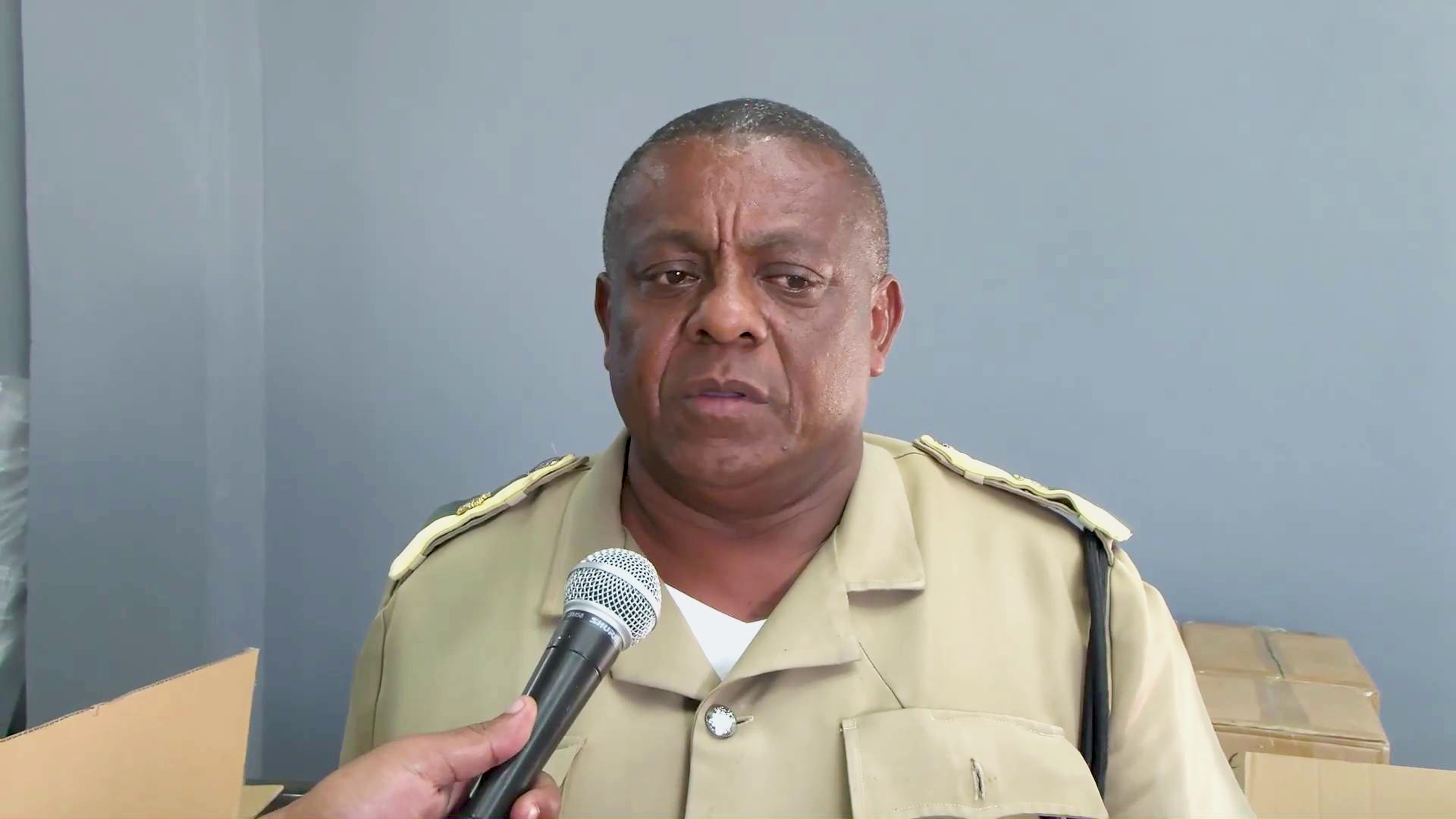
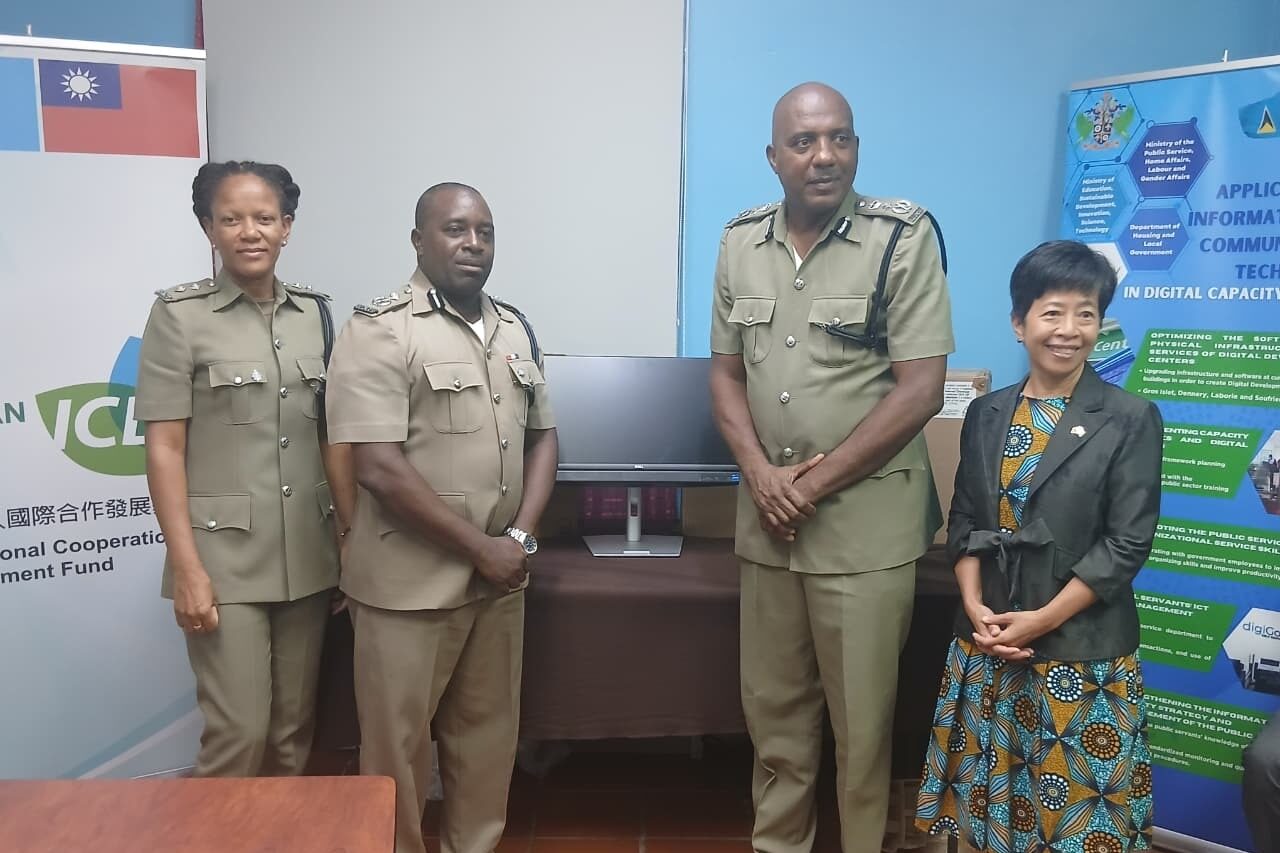
Speaking on NBC Radio on Wednesday, May 13, Leacock laid out the timeline and details of the senior leadership changes: when current acting Police Chief and Deputy Commissioner of Police (DCP) Frankie Joseph retires upon the expiration of his upcoming leave, veteran officer Trevor “Buju” Bailey will step into the role of acting DCP. His younger brother Dwayne Bailey, a superintendent who has overseen the country’s prison system since 2021, will return to the police high command as a second DCP. The appointments mark the first time two siblings from the same household will serve simultaneously at the most senior levels of the national police force, a development Leacock described as unprecedented in the country’s history.
The restructuring leaves current Commissioner of Police Enville Williams in his post, and follows the newly elected New Democratic Party (NDP) government’s approval of an additional DCP position in the national budget passed in February. When the budget was approved, Leacock had previously suggested the extra post might remain unfilled in 2026, with allocated funds directed to stipends for acting corporals. He clarified Wednesday that those stipends will continue even as the government fills the two new DCP roles, emphasizing that Dwayne Bailey’s return to top command will strengthen the force’s operational capacity. Leacock framed Dwayne Bailey’s shift from prisons to police as an almost lateral rank change, but a strategically critical move for public safety. Before his 2021 appointment to run prisons, Dwayne Bailey was a leading frontline crime-fighter with the police’s Rapid Response Unit, and took over the prison system after convicted murderer Veron Primus escaped twice while awaiting trial.
The Bailey brothers’ appointments are just the centerpiece of a much broader reshuffle that includes multiple promotions and reassignments across senior ranks. One of the most notable promotions goes to Brenton Smith, a former Station Sergeant with a Master of Science in police leadership and management, who will jump directly from his current rank to Assistant Commissioner of Police (ACP). Smith was fired from the force in 2021 under the previous Unity Labour Party government’s COVID-19 vaccine mandate, and later served as NDP’s general secretary until last December. He was reinstated with all full benefits under the new NDP government’s policy of restoring roles to workers dismissed over the mandate. In his new role as head of the police’s human resource development department, Smith will tackle longstanding complaints about promotion stagnation, including cases where officers remain constables for 20 to 25 years while others rise to senior rank in just a few years. His portfolio will cover performance appraisals, training, recruitment, and manpower planning to streamline force operations.
A second senior superintendent, Junior Simmons, a longtime police spokesperson and intelligence specialist, will also be promoted to the rank of ACP. Final confirmations for the new promotions are on hold while current ACP Christopher Benjamin, who is currently on leave, prepares to retire after his leave ends. Leacock added that an additional ACP appointment may be announced in the near future once all acting role transitions are finalized.
The restructuring has already sparked public controversy, particularly over the reassignment of two current ACPs, Benzil Samuel and Hezran Ballantyne, to oversee national school security. Critics have argued that posting senior police officers to schools is unnecessary and amounts to over-policing, but Leacock pushed back against that criticism, noting that school security has long been inadequate across much of the country. Many schools lack proper perimeter fencing, and understaffed auxiliary police forces are often overwhelmed managing campuses with hundreds of students, while auxiliary officers do not always carry the same authority as regular police. Leacock said the decision to assign senior ACPs to overhaul school security follows direct requests from school leaders and parent-teacher associations, and is rooted in on-the-ground assessments by police command. He added that rising concerns about unruly public behavior across the country make the upgrade to school security a pressing priority, and the government will move forward with the plan despite objections.
Leacock also rejected claims that the widespread leadership and structural changes amount to a government power grab that will turn St. Vincent and the Grenadines into a “police state”, calling the accusations far-fetched. The entire restructuring, he emphasized, is driven by a practical need to address longstanding operational challenges, target so-called “bad actors” fueling crime and public disorder, and rebuild depleted capacity across the full national security spectrum—including police, prisons, fire services, and auxiliary security forces.
The leadership reshuffle has opened up vacancies across every rank of the police force, from constable up to superintendent, and the government plans to launch new recruitment drives to fill these gaps. Leacock also announced plans to strengthen specialized police units, which have been depleted in recent years, leading to inconsistent security details for embassies, judges, and senior government officials, particularly on weekends. To address this gap, the government is considering creating a dedicated formal guard unit, staffed by a mix of specially trained auxiliary officers and tactical unit personnel, to take over permanent responsibility for these security details. Moving forward, Leacock added, the government will end the practice of arbitrarily reassigning highly trained specialized officers to regular beat duty, a shift designed to increase operational efficiency through deeper specialization.