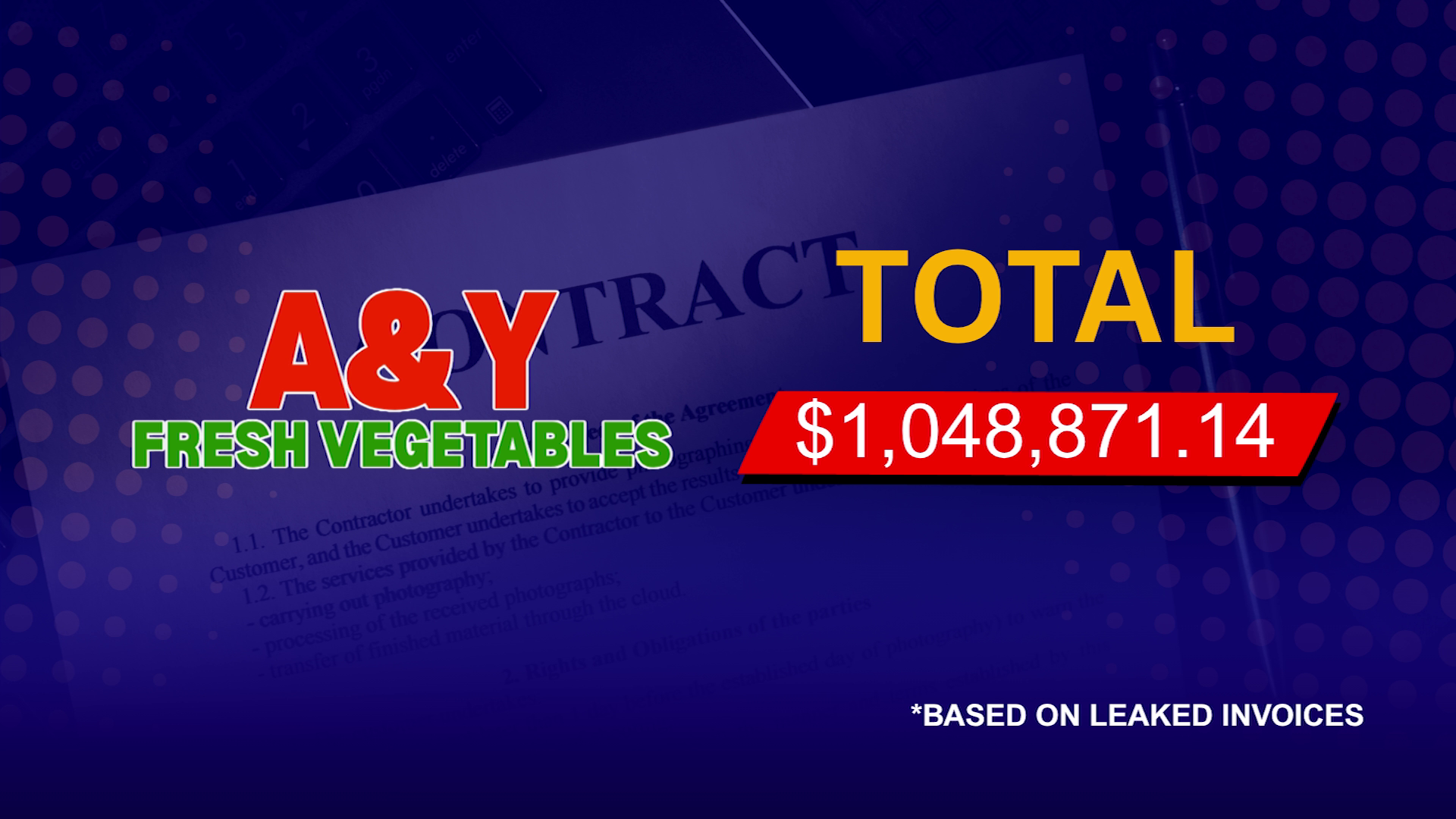
In a newly released batch of Smart Stream procurement leaks dating to July 13, 2026, Belize’s defense purchasing system is facing intense public scrutiny over a pattern of structured payments that appear designed to avoid mandatory oversight checks. Investigative records reviewed by local outlet News Five trace a million-dollar trail of public spending to A&Y Fresh Vegetables, a small produce supplier based in the rural community of Chunox Village.
Over the three-and-a-half-year period between January 2023 and April 2026, the company collected more than $1 million in taxpayer funds from Belize’s Ministry of Defense via 120 separate invoices. What has raised alarms is not the total sum of contracts, but the consistent structure of the payments: nearly every single invoice falls just under $10,000, the threshold that triggers mandatory additional financial review and oversight in Belize’s public procurement rules. Public records link the firm to Antonio and Yolando Patt, constituents of former Belizean Defense Minister Florencio Marin Jr. While investigators have uncovered no direct evidence that Marin used his position to influence the awarding of the contracts, the connection and unusual payment structure have sparked widespread questions about potential preferential treatment and weakened safeguards.
The controversy has also pulled back the curtain on a sweeping 2020 restructuring of defense procurement implemented by the Briceño administration. Prior to the reform, the Belize Defense Force (BDF) maintained primary control over the full purchasing lifecycle, from identifying supply needs and vetting vendors to verifying delivered goods and logging inventory. Retired BDF Major Lloyd Jones, who spent decades in military logistics, explained that the legacy system featured layered checks: quartermasters embedded in each battalion confirmed that all ordered supplies were received, recorded, and properly accounted for before allocation to troops.
But the 2020 reform shifted full control of purchasing — from tendering and vendor selection to invoice approval and payment disbursement — to the Ministry of Defense, leaving the BDF only to accept delivered goods once orders are finalized. The change was officially framed as a measure to centralize and tighten spending controls, but the leaked records tell a different story. A retired senior BDF general, who spoke on condition of anonymity, told reporters that the restructuring stripped away the military’s independent oversight checks, creating gaps that allow for intentional structuring of payments to avoid scrutiny.
Defense Ministry CEO Francis Usher has acknowledged that public perception of vendors connected to political figures receiving public contracts is often negative, noting that “the onus is on the business and whoever they are related to ensure the process is transparent and that there is no preferential treatment.” When asked about the centralized distribution system, Usher confirmed that all food rations are now delivered to the main Price Barracks facility before being distributed to outlying military posts.
Top government officials have moved quickly to distance themselves from the controversy. Marin has declined all requests for comment on the procurement dealings, while former minister Oscar Mira and Prime Minister John Briceño both denied any knowledge of or involvement in the contract awards. “Just like how I did not know what the Mira Family was getting and Florencio Marin, I do not know,” Briceño stated in a phone interview. Mira echoed that denial, saying “I had no say. I was not part of those committees. If they did so, they did on their own, not with my influence or anything to do with me.”
As investigators continue to review the leaked records, the same pattern of sub-threshold payments has been identified across multiple defense suppliers, shifting the public conversation from individual contracts to the integrity of the system as a whole. What began as an investigation into one small produce vendor has grown into a broader debate over whether the 2020 procurement restructuring removed critical anti-corruption safeguards, creating a framework that quietly enables abuse of public funds rather than preventing it. For Belizean taxpayers, the leak has left urgent unanswered questions about how public money for national defense is being spent, and who is ultimately responsible for holding officials and vendors accountable.