分类: politics

  • AG: US boat strikes consistent with international law

    AG: US boat strikes consistent with international law

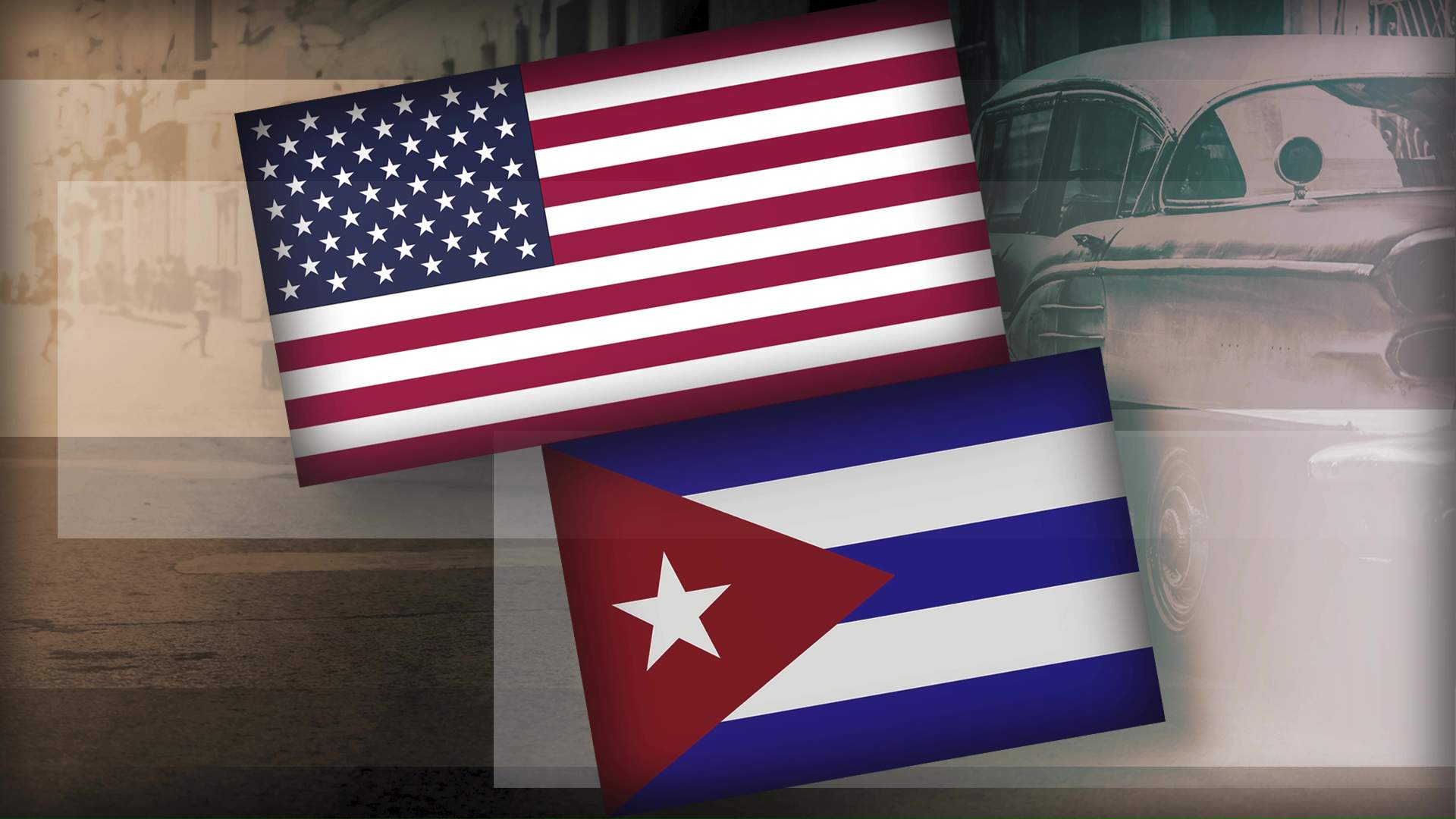
    Trinidad and Tobago’s Attorney General John Jeremie has publicly affirmed that recent US Navy operations targeting suspected drug trafficking vessels from Venezuela align with international legal standards. This conclusion was reached following consultation with an independent international legal expert outside his office.

    During a January 14 press briefing at the United National Congress headquarters in Chaguanas, Jeremie revealed he had sought external legal counsel before forming his official position. “My initial assessment, supported by expert advice, indicates these military actions were consistent with international law,” Jeremie stated. “This determination was based on guidance from a qualified international legal authority.”

    The Attorney General maintained confidentiality regarding the identity of the legal expert and declined to discuss specific details of the advice received, explaining that such disclosure would require revealing privileged information.

    When questioned about potential Trinidadian casualties resulting from the operations, Jeremie responded that he possessed no substantiated information confirming any citizens of Trinidad and Tobago were killed in the strikes. “As of now, I have no evidence suggesting any TT national perished in these military actions,” he emphasized.

    Regarding whether the operations adhered to international due process standards, Jeremie refrained from detailed commentary, citing the confidential nature of the legal guidance he received. “My responsibility has been fulfilled by ensuring the republic operates in accordance with established legal frameworks,” he noted.

    Jeremie confirmed he had communicated his assessment to Prime Minister Kamla Persad-Bissessar but offered no additional details regarding these communications.

    The press conference also addressed questions concerning potential US military operations originating from Trinidadian territory, including possible involvement in the reported January 3 capture attempt of former Venezuelan president Nicolas Maduro. Jeremie provided no commentary on these matters.

    While acknowledging the presence of US military personnel in Trinidad, Jeremie clarified their activities were unrelated to the naval operations. “We hosted marine personnel engaged in school visits and joint training exercises with our Defence Force,” he explained, characterizing these as “intense training exercises” that were publicly acknowledged.

    Jeremie referenced official statements from both the Ministry of Homeland Security and Ministry of Defence issued on the day of the strikes, which explicitly denied Trinidad and Tobago’s involvement in the US military operations.

  • ‘It was a private meeting’: State minister clarifies absence of St Thomas MP from hospital visit

    ‘It was a private meeting’: State minister clarifies absence of St Thomas MP from hospital visit

    KINGSTON, Jamaica — Health and Wellness State Minister Krystal Lee has provided clarification regarding her recent visit to Princess Margaret Hospital in St Thomas, characterizing it as an introductory team meeting rather than an official ministerial engagement. The minister explained that the purpose of her visit was primarily to acquaint herself with hospital staff and assess ongoing operations, which consequently did not warrant extending an invitation to local parliamentary representatives.

    Lee’s statements come in response to mounting concerns from opposition figures alleging that the Jamaican government is subverting democratic protocols by involving electoral losers in activities traditionally reserved for elected officials. These allegations emerged following sightings of former MP Michelle Charles accompanying the state minister during the hospital tour.

    Emphasizing the informal nature of her visit, Lee distinguished between protocol-required official functions and preliminary operational assessments. ‘The visit focused on evaluating proposed sites for a National Blood Collection Centre and maternity ward development,’ Lee noted, adding that ribbon-cutting ceremonies or formal events would naturally involve proper parliamentary inclusion.

    Meanwhile, St Thomas Eastern MP Rose Shaw expressed satisfaction with the minister’s explanation, suggesting the unauthorized participation of third parties resulted from opportunistic attempts to capitalize on the minister’s presence rather than official sanction. Shaw characterized the incident as unintended ‘shenanigans’ beyond the minister’s awareness or control.

  • Senior PLPs urge PM ‘wait until our time is right’ and avoid early election

    Senior PLPs urge PM ‘wait until our time is right’ and avoid early election

    Amid escalating speculation about potential election timing, senior Progressive Liberal Party (PLP) supporters are publicly advising Prime Minister Philip “Brave” Davis to resist calling an early vote. The internal debate emerges as the government tables a new Boundaries Commission report and both major parties proceed with candidate ratification processes.

    At Monday’s Majority Rule ceremony at PLP headquarters, party stalwarts expressed cautious views about election timing. Laverne Henfield, a PLP councillor from Centreville, advocated for allowing the term to reach its natural conclusion: “I think he should wait until our time is right. September will make us five years. We still have some more work to do.”

    The sentiment was echoed by Shantel Brown, a longtime supporter, who warned that political momentum can be deceptive: “Go straight through. Looks could be deceiving.” This caution reflects lingering memories of the previous administration’s failed early election call, which resulted in decisive rejection by voters.

    A Marathon constituency councillor identified as Ms. Smith suggested that while waiting until September might not be necessary, any election before May would be premature: “Why an early election? We need to let it run. We need to continue to complete things that have started.”

    Sirnardo Hart, the PLP’s protocol chairman, emphasized that an early election could deprive voters of fully understanding government achievements: “Don’t call it early. Wait until September because that’s his time and so people could know what’s really going on.”

    Not all party voices expressed concern. Sherry Bowe from Freetown stated readiness for whenever elections are called, while Bimini branch chairperson Kitty Saunders expressed full confidence in the Prime Minister’s decision-making: “The prime minister has information we don’t, so whatever his decision, I believe it’s the best decision.”

    The opposition Free National Movement has consistently predicted an early election, with leader Michael Pintard recently anticipating a first-quarter 2026 vote and urging supporters to complete voter registration promptly.

  • Ramsamooj: Farley gets ‘strongest hand’ to push autonomy

    Ramsamooj: Farley gets ‘strongest hand’ to push autonomy

    Political analyst Derek Ramsamooj asserts that the Tobago People’s Party’s (TPP) unprecedented 15-0 sweep in the January 12 Tobago House of Assembly (THA) election has positioned party leader Farley Augustine with unprecedented leverage to pursue enhanced autonomy for the island. The landslide victory, which marks a historic political shift, grants Chief Secretary Augustine a compelling mandate to advance Tobago’s agenda in negotiations with Trinidad’s central government.

    Ramsamooj highlights the emerging political dynamics between Prime Minister Kamla Persad-Bissessar and Augustine, noting the results have significantly weakened the People’s National Movement’s (PNM) national standing. The TPP now commands complete control of the assembly along with both Tobago West and Tobago East parliamentary seats.

    The analyst projects substantial opportunities for political cooperation between Persad-Bissessar’s United National Congress-led administration and Augustine’s THA government. This collaboration may potentially involve negotiations for increased budgetary allocations to Tobago, possibly seeking an additional percentage point or two from the national budget over the coming four-year term.

    Ramsamooj characterizes the PNM’s defeat as indicative of a party in decline, having lost its sole Darrel Spring/Whim seat that it secured in the December 2021 election. He emphasizes that the PNM has deteriorated into a minority political entity, suffering from diminished national appeal and leadership effectiveness under current leader Pennelope Beckles. The analyst urges urgent strategic reassessment and leadership style reevaluation for the party to reclaim political relevance.

  • Mottley a sane,consistent voice

    Mottley a sane,consistent voice

    Barbados Prime Minister Mia Mottley has established herself as a principled voice for democratic values and social justice throughout the Caribbean region, drawing stark contrasts with previous generations of regional leaders. Her recent condemnation of both the kidnapping of Venezuelan President Nicholas Maduro by US forces and the delayed election results in Guyana’s March 2020 general election demonstrates her consistent commitment to institutional integrity.

    Unlike her Caribbean Community (CARICOM) predecessors who remained silent during decades of democratic erosion in Guyana from the 1950s through the 1990s, Mottley recognizes the essential relationship between strong democratic institutions and social justice. Historical Caribbean leaders often acquiesced to US gunboat diplomacy and interventionist policies that toppled elected governments without evidence of communist threats.

    The Guyanese people suffered particularly under this foreign policy approach, enduring a reign of terror that specifically targeted Indo-Guyanese communities. The subsequent dictatorship of Forbes Burnham created widespread suffering, reducing Guyana to the Western Hemisphere’s poorest nation—a tragedy that might have been prevented had regional leaders demonstrated Mottley’s courage earlier.

    This analysis connects current US foreign policy under President Trump to centuries of Western expansionism dating back to Alexander the Great and the Roman Empire, arguing that modern US imperialism continues this tradition by forcibly removing uncooperative regimes.

    The commentary calls for more citizens and leaders with Mottley’s moral fortitude to challenge injustice, noting that some Caribbean citizens ironically celebrate US military power. Mottley demonstrates that neither military nor economic supremacy is prerequisite for ethical leadership on the global stage.

    Had Mottley’s principles prevailed historically, the Caribbean might have avoided authoritarian figures like Dési Bouterse, Papa Doc Duvalier, Eric Gairy, Forbes Burnham, and Rafael Trujillo. The region could have developed into an enviable society rather than suffering the corruption and emigration that continues to affect many nations.

  • Danish foreign minister heads to White House for high-stakes Greenland talks

    Danish foreign minister heads to White House for high-stakes Greenland talks

    WASHINGTON—Diplomatic tensions reached a critical point as top Danish and Greenlandic officials convened at the White House for emergency talks regarding President Donald Trump’s persistent campaign to acquire Greenland. The high-stakes meeting occurred amid escalating rhetoric from the American president, who has repeatedly declared his intention to seize the autonomous Danish territory “whether they like it or not.”

    Danish Defence Minister Troels Lund Poulsen attempted to preempt the discussions by announcing enhanced military commitments to Greenland, telling AFP that Denmark was both boosting its Arctic military presence and negotiating “an increased NATO presence in the Arctic” to address US security concerns.

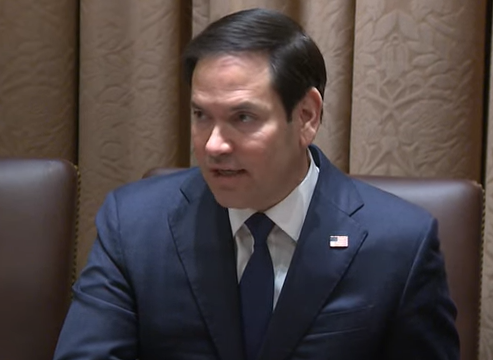
    The meeting brought together Danish Foreign Minister Lars Lokke Rasmussen, Greenlandic representatives, US Secretary of State Marco Rubio, and Vice President JD Vance, whose unexpected request to participate elevated the diplomatic significance. Lokke Rasmussen stated his intention to “clear up certain misunderstandings” regarding Greenland’s status, though observers questioned whether the Trump administration viewed the situation as a misunderstanding at all.

    Trump’s acquisition rhetoric has intensified since the January 3rd operation in Venezuela, with the president employing characteristically transactional language. He told The New York Times that ownership “is psychologically needed for success” and provides “elements that you can’t get from just signing a document,” reflecting his real estate background. The administration justifies the proposed acquisition as necessary to counter Russian and Chinese Arctic ambitions, though neither nation has made claims on Greenland.

    Greenlandic Prime Minister Jens-Frederik Nielsen delivered a definitive pre-meeting statement: “One thing must be clear to everyone: Greenland does not want to be owned by the United States. Greenland does not want to be governed by the United States. Greenland does not want to be part of the United States.” Danish Prime Minister Mette Frederiksen acknowledged the difficulty of resisting “completely unacceptable pressure from our closest ally.”

    The diplomatic standoff has prompted international responses, with France announcing plans to open a consulate in Greenland and a bipartisan Congressional delegation preparing to visit Copenhagen in solidarity with Denmark. Senate Democratic Whip Dick Durbin criticized Trump’s approach, stating that threats toward Greenland “are unnecessary and would only weaken our NATO alliance.”

    Analysts from the German Marshall Fund suggested the meeting’s outcome hinged on whether the US would moderate its position or maintain its uncompromising stance, with senior vice president Penny Naas noting: “If the US continues with, ‘We have to have Greenland at all cost,’ it could be a very short meeting.”

  • The eagle has landed

    The eagle has landed

    The trajectory of Venezuela’s Bolivarian Revolution exemplifies how ideological movements can deteriorate when leadership prioritizes dogma over populace welfare. Initially promising dignity and prosperity, the government gradually transformed into a rigid apparatus indifferent to citizen well-being, resulting in catastrophic economic collapse, severe shortages of essential commodities, rampant criminality, and a humanitarian disaster that triggered one of Latin America’s largest mass migrations with over 7.3 million citizens fleeing abroad.

    This crisis unfolded within the broader context of global power competition. Venezuela’s rejection of American influence and subsequent alignment with BRICS nations (Russia, China, Iran) created significant cultural, economic, and political upheaval throughout the Western Hemisphere. These geopolitical realignments often treated citizens as collateral, with BRICS partners demonstrating minimal concern for effective governance in allied nations, as evidenced by Trinidad and Tobago’s economic decline under similar affiliations.

    The Trump administration has introduced a distinct approach to this complex situation. Employing business-acquisition tactics rather than conventional diplomacy, the U.S. seeks to reclaim billions in historical investments in Venezuela’s energy infrastructure that were expropriated under Chavez. This strategy aims to achieve stability through controlled economic reengagement rather than destructive confrontation.

    Potential benefits include currency stabilization, job creation, restoration of public services, and the possible repatriation of displaced millions. A prosperous Venezuela would significantly enhance regional stability throughout the Caribbean basin. While geopolitical competition persists between American and BRICS influences, Venezuelans may finally experience tangible improvements from this recalibrated engagement strategy.

  • Auditor General’s UHWI findings confirm ministerial oversight failure — Dr Dawes

    Auditor General’s UHWI findings confirm ministerial oversight failure — Dr Dawes

    KINGSTON, Jamaica — A damning report from Jamaica’s Auditor General has uncovered severe procurement breaches and misuse of tax-exempt status at the University Hospital of the West Indies, revealing systemic governance failures within the nation’s public health system that have cost taxpayers millions.

    Opposition Health and Wellness spokesperson Dr. Alfred Dawes has declared the findings confirm a persistent pattern of administrative negligence and failed oversight. “For more than a year, I have consistently raised concerns about procurement practices across the Ministry of Health and Wellness and its agencies,” stated Dr. Dawes on Wednesday. “Each time, those warnings were dismissed, with the minister assuring the country that systems were sound. The Auditor General has now confirmed this was untrue.”

    The audit revealed that hundreds of millions of dollars were committed without basic documentation, directly contradicting repeated public assurances from Health Minister Dr. Christopher Tufton that procurement rules were being followed. This follows a familiar pattern of irregularities, including the Integrity Commission’s earlier exposure of an improper $80 million payment to Market Me and the acquisition of a $31 million drill for Bustamante Hospital for Children—a transaction publicly praised by the minister despite its procedural flaws.

    Dr. Dawes dismissed government attempts to attribute these failures to previous administrations as implausible. “This Government has been in office for nearly a decade, with full parliamentary majority and control of the public health system. After three consecutive terms, excuses about inherited weaknesses lack credibility,” he asserted.

    The consequences extend beyond financial waste, directly impacting healthcare delivery. “When procurement systems fail, hospitals go without essential equipment, services deteriorate, healthcare workers are left unsupported, and patients ultimately pay the price,” Dr. Dawes emphasized. “This is how a health system is driven into crisis—not by chance, but by poor governance and failed political oversight.”

    Calling for independent accountability measures, Dr. Dawes stressed that the public cannot trust internal reviews conducted by the same leadership that presided over these failures. “A system cannot credibly investigate itself. A committee appointed by the minister to examine wrongdoing within a system he oversees is like a man on trial choosing his own jury. Jamaicans deserve independent scrutiny, meaningful reform, and accountability that prioritizes patients and public funds.”

  • Ramsamooj: Farley gets ‘strongest hand’ to push autonomy

    Ramsamooj: Farley gets ‘strongest hand’ to push autonomy

    Political strategist Derek Ramsamooj asserts that the Tobago People’s Party’s unprecedented 15-0 electoral triumph in the January 12 Tobago House of Assembly (THA) elections has positioned party leader Farley Augustine with unprecedented leverage to negotiate enhanced self-governance for the island territory. This landslide victory, which marks the first time any party has secured every assembly seat, fundamentally reshapes Tobago’s political landscape and its relationship with Trinidad’s central government.

    Ramsamooj emphasizes that Chief Secretary Augustine now commands the strongest electoral mandate in Tobago’s recent history, providing him with substantial negotiating capital when engaging with Prime Minister Kamla Persad-Bissessar’s administration. The analyst anticipates extensive political cooperation between the THA and central government, potentially including negotiations for increased budgetary allocations to Tobago by one to two percentage points over the coming four-year term.

    The election results have simultaneously diminished the People’s National Movement’s (PNM) political standing nationally, with Ramsamooj characterizing the party as having ‘devolved into a minority political party.’ The PNM’s loss of its sole Darrel Spring/Whim constituency, previously secured in the 2021 elections, compounds what the analyst describes as a continuing erosion of the party’s national appeal under current leader Pennelope Beckles.

    While no formal coalition exists between the United National Congress (UNC) and TPP, Augustine’s two parliamentary representatives currently sit alongside UNC backbenchers in a section of Parliament traditionally reserved for government members. This seating arrangement signals potential alignment on various legislative matters despite the absence of official partnership agreements.

  • Parliamentary committee to deliberate on jury vs bench trials

    Parliamentary committee to deliberate on jury vs bench trials

    The Jamaican Parliament is poised to establish a Joint Select Committee (JSC) to conduct a comprehensive review of the nation’s judicial framework, specifically examining the contentious debate between jury trials and bench trials. This initiative, announced by Justice Minister Delroy Chuck, will follow the ongoing parliamentary debate on amendments to the Jury Act.

    The proposed legislative changes, tabled in the House of Representatives, include a substantial increase in juror compensation from $2,000 to $6,000 per day. Additionally, individuals participating in the jury selection process would receive a daily stipend of $2,000. Another significant amendment would grant judges the authority to dismiss juries when evidence of jury tampering emerges, a power currently absent in Jamaican jurisprudence but established in other Commonwealth jurisdictions like England and Wales.

    Minister Chuck emphasized that this parliamentary review represents a pivotal development in Jamaica’s legal evolution. “Recognizing that jury trials have been a hallmark of our justice system, this is a matter that Parliament should decide on, taking into account the suggestions and recommendations from all stakeholders within the justice system, and the wider public,” Chuck stated.

    The impetus for this judicial examination stems from the staggering backlog of over 3,000 criminal cases awaiting trial in Supreme and Circuit courts. Chief Justice Bryan Sykes has previously advocated for increased utilization of bench trials as a strategic approach to alleviate court congestion, a position that has gained traction within legal circles.

    Minister Chuck clarified that neither infrastructure limitations nor judicial shortages account for these delays, noting that both judge appointments and prosecutor numbers have significantly increased over the past decade. The government’s comprehensive review included comparative analysis of international jurisdictions to determine optimal procedures for addressing jury tampering concerns.

    The issue gained renewed urgency following the UK Privy Council’s 2024 decision to overturn the murder conviction of dancehall artist Vybz Kartel, which cited jury tampering as a contributing factor. This case highlighted the jurisdictional gap in Jamaican law regarding judicial authority to address compromised juries.

    The forthcoming parliamentary committee will solicit input from legal professionals, justice sector stakeholders, and the general public to determine whether Jamaica should maintain, modify, or potentially abolish its jury trial system in favor of exclusive bench trials.