分类: politics

  • ‘Gevaarlijke escalatie’: Wereld veroordeelt Israëlische doodstrafwet voor Palestijnen

    ‘Gevaarlijke escalatie’: Wereld veroordeelt Israëlische doodstrafwet voor Palestijnen

    The Israeli Knesset has approved a highly contentious legislation that institutionalizes capital punishment through hanging for Palestinians convicted of lethal attacks against Israeli citizens. The law, which applies exclusively to Palestinians from the occupied West Bank, has triggered widespread international condemnation and raised serious concerns about human rights violations.

    National Security Minister Itamar Ben-Gvir, a prominent right-wing nationalist, championed the legislation and was photographed celebrating its passage with champagne in the parliamentary chambers. Defying international criticism, Ben-Gvir declared: ‘We are not afraid, we will not submit.’

    The timing of this legislation coincides with escalating violence by Israeli military forces and settlers against Palestinians in the West Bank, accompanied by thousands of arrests amid Israel’s ongoing military operations in Gaza that some international observers have characterized as genocidal.

    Palestinian authorities have condemned the law as a ‘dangerous escalation,’ emphasizing Israel’s lack of sovereignty over Palestinian territories. Hamas has labeled it a ‘dangerous precedent’ threatening Palestinian prisoners’ lives and called for international intervention. Mustafa Barghouti, Secretary-General of the Palestinian National Initiative, warned the legislation specifically targets political prisoners and activists, representing what he called a ‘fascist shift’ within Israel’s governance system.

    International human rights organizations have responded with severe criticism. The UN Human Rights Office in Palestine demanded immediate repeal of the ‘discriminatory’ law, noting it deepens segregation and apartheid policies since it exclusively targets Palestinians who often face unfair judicial processes. Amnesty International described the legislation as ‘a public display of cruelty, discrimination, and contempt for human rights,’ highlighting patterns of extrajudicial executions and violence against Palestinians.

    Alain Berset, Secretary-General of the Council of Europe, characterized the development as a ‘serious regression,’ emphasizing that capital punishment represents an anachronism incompatible with modern human rights standards. European foreign ministers, including Ireland’s Helen McEntee and Italy’s Antonio Tajani, jointly condemned the law, with McEntee noting its ‘de facto discriminatory nature’ and Tajani calling for absolute respect for the value of human life.

    The legislation has intensified global scrutiny of Israel’s treatment of Palestinians and raised fundamental questions about compliance with international humanitarian law in occupied territories.

  • What is the blockade against Cuba, if not punitive?

    What is the blockade against Cuba, if not punitive?

    In a pointed rebuke of recent statements from senior United States government officials, Cuba’s top diplomat has pushed back against claims that Washington has made no formal adjustments to its punitive sanctions regime against the island nation. Bruno Rodríguez Parrilla, who serves as both a member of Cuba’s Political Bureau and the country’s Minister of Foreign Affairs, issued a series of probing questions calling out Washington’s characterization of its decades-long economic pressure campaign against Cuba. The remarks were published by state-owned Cuban outlet Granma on March 31, 2026.

    Rodríguez Parrilla opened his critique by challenging the core claim from US officials that Washington has not implemented any new punitive actions against Cuba. “Now the U.S. government says it has not taken any ‘punitive’ action against Cuba. What is the economic blockade, if not punitive?” he asked, calling out the broad, decades-long trade and economic embargo that has crippled Cuban economic activity for generations. He went on to question a litany of other restrictive US policies that target Cuba’s ability to engage in normal international trade and commerce, asking what each qualifies as if not punitive action.

    His list of grievances includes US threats to impose secondary sanctions on any third country that exports fuel to Cuba, systematic financial persecution that blocks Cuban entities from completing legitimate financial transactions anywhere across the globe, harsh restrictions that bar foreign merchant ships that have called at Cuban ports from entering US territorial waters, and the long-standing prohibition on recreational travel from the United States to the island.

    Beyond the broad blockade framework, Rodríguez Parrilla also questioned the ongoing utility of what he described as selective and arbitrary blacklists maintained by the US government against Cuban entities and individuals. These include the notoriously controversial US State Department list of state sponsors of terrorism, which Cuba was controversially added to and removed from in recent years, alongside multiple other restricted entity and travel restriction lists that bar American entities and citizens from engaging with a wide range of Cuban institutions.

    The Cuban foreign minister also highlighted a recent wave of coercive diplomatic pressure that the US has exerted on governments across the Caribbean and Latin America, pushing regional states to abandon long-standing medical cooperation programs with Havana. These programs, which deploy thousands of Cuban medical specialists to low-income and underserved communities across the region, have been a key source of legitimate foreign export income for Cuba for decades. Rodríguez Parrilla noted that the US pressure campaign does not just harm Cuba’s economy by cutting off this legal income stream—it also inflicts direct harm on vulnerable populations across the region who are cut off from life-saving care provided by Cuban medical workers. He called this campaign nothing less than a deliberate, purely punitive action against the Cuban people and their neighbors across the Americas.

  • Dominican Republic nominated to lead 79th World Health Assembly

    Dominican Republic nominated to lead 79th World Health Assembly

    The Dominican Republic has secured a historic unanimous nomination from all countries of the Americas to serve as president of the 79th World Health Assembly, set to take place from May 18 to 23, 2026, at the World Health Organization (WHO) headquarters in Geneva, Switzerland.

    The selection aligns with WHO’s long-standing rotational leadership framework, which allocates the 2026 presidency to the World Health Organization’s Region of the Americas, represented regionally by the Pan American Health Organization (PAHO). The full backing from every regional delegation was formalized during a closed-door meeting of country representatives held in October 2025, and the final confirmation of the appointment will take place during the opening plenary session of the 2026 assembly.

    The official notification of the nomination was delivered in a formal letter addressed to Dominican Republic President Luis Abinader, which included a guarantee of full institutional support from PAHO and the American regional bloc as the country prepares to take on the leadership role.

    This milestone marks the first occasion in history that the Dominican Republic has been selected to lead WHO’s highest decision-making body, a development that is widely viewed as a major global vote of confidence in the Caribbean nation’s public health leadership and contributions to international health cooperation. The annual World Health Assembly brings together senior health and diplomatic representatives from WHO’s 194 member states to identify pressing global health challenges, negotiate collaborative response frameworks, and set binding policy priorities that guide global public health work for the coming years.

  • Chandrikapersad Santokhi: Van ‘The Sheriff’ tot Staatsman

    Chandrikapersad Santokhi: Van ‘The Sheriff’ tot Staatsman

    Suriname and the Caribbean region mourn the sudden passing of President Chandrikapersad ‘Chan’ Santokhi on March 30, 2026. The 67-year-old leader from Lelydorp leaves behind a remarkable political legacy characterized by unwavering commitment to justice, economic reform, and regional cooperation.

    Santokhi’s journey from police academy graduate in Apeldoorn, Netherlands to national leadership was marked by exceptional dedication to law enforcement. His early career saw rapid advancement within Suriname’s police force, eventually becoming head of national criminal investigation and police commissioner. His tough-on-crime approach earned him the nickname ‘The Sheriff’ – a moniker he embraced, stating: ‘People want law and order. Hence the call for security, the call for sheriff.’

    As Minister of Justice from 2005-2010, Santokhi achieved significant milestones including removing Suriname from the U.S. blacklist of drug transit countries. His most notable contribution was initiating the criminal proceedings against former dictator Desi Bouterse for the December 1982 murders, demonstrating his steadfast commitment to accountability.

    Elected president in 2020, Santokhi ended the Bouterse era and inherited a financially exhausted nation. He implemented an unpopular but necessary IMF reform program, acknowledging communication shortcomings while maintaining his conviction: ‘We could have chosen a populist course aimed at winning elections. But that would have been irresponsible given our situation.’

    His regional leadership as CARICOM Chairman in 2022 strengthened Caribbean unity, particularly enhancing relations with Guyana. President Irfaan Ali of Guyana described him as ‘a brother forged by conviction’ who worked wholeheartedly for regional progress.

    Survived by his wife Mellisa Seenacherry and two children, Santokhi’s legacy extends beyond family to national transformation. His son Rishano remembered him as a man with strong legal vision whose principles continue to shape Suriname and the Caribbean.

    Santokhi’s philosophy centered on inclusive nation-building: ‘We cannot build a nation while tolerating major disparities. Structurally disadvantaged groups require targeted support strategies – not as favor but as duty.’ His passing creates a leadership void, but his exemplary dedication to justice and development endures.

  • Panton Claims Senator Pitts Silenced in Budget Debate

    Panton Claims Senator Pitts Silenced in Budget Debate

    A procedural dispute in Belize’s National Assembly escalated into a dramatic confrontation on Friday, with Opposition Leader Tracy Panton accusing the government of deliberately silencing UDP Senator Sheena Pitts during critical budget deliberations. The controversy erupted when Lead Government Senator Eamon Courtenay moved to conclude the debate while Senator Pitts awaited her turn to speak, prompting immediate objections from opposition members.

    The tension unfolded as Senate President Carolyn Trench Sandiford recognized Courtenay’s motion to close discussions, effectively preventing Pitts from delivering her planned remarks. Opposition senators protested vigorously, with Lead Opposition Senator Patrick Faber condemning the action as ‘unkind’ and alleging procedural unfairness. Despite repeated attempts to gain recognition, Senator Pitts was unable to secure the floor before the vote proceeded.

    In a subsequent exchange, President Sandiford defended her actions by stating she followed established protocol, noting that no opposition senators were standing to claim speaking time when she called for contributions. Senator Pitts countered that the President had been aware of her intention to speak prior to the debate, characterizing the incident as a deliberate exclusion that undermined democratic principles and women’s representation in leadership.

    The confrontation culminated in an opposition walkout before the session’s official adjournment, transforming a procedural disagreement into a symbolic protest. Panton has characterized the event as a ‘direct assault on democracy’ that contradicts national efforts to amplify female voices in political discourse. The incident has sparked broader discussions about representation, procedural fairness, and gender dynamics within Belize’s highest legislative chambers.

  • Taiwan Reinforces Belize Ties with Return of Ambassador Amino Chi

    Taiwan Reinforces Belize Ties with Return of Ambassador Amino Chi

    In a strategic move to fortify its diplomatic network, Taiwan has reassigned seasoned diplomat Amino C.Y. Chi to Belize for his third ambassadorial term in the Central American nation. The ambassador’s arrival on March 26, 2026, marked a significant moment in bilateral relations, with representatives from the Taiwanese expatriate community, embassy personnel, and technical mission delegates extending a warm welcome at the Philip S.W. Goldson International Airport.

    Ambassador Chi promptly initiated diplomatic engagements by hosting an exclusive dinner for community leaders and key Belizean partners shortly after his arrival. This gathering established the foundation for enhanced cooperation across multiple sectors in the coming months.

    The diplomatic transition follows the conclusion of Ambassador Lily Li-Wen Hsu’s productive tenure, which spanned from 2023 through February 2026. During her service, Ambassador Hsu achieved substantial progress in strengthening the Taiwan-Belize partnership through various bilateral initiatives.

    The Taiwanese Embassy has characterized this leadership change as the commencement of a new chapter in the countries’ relationship. With Ambassador Chi’s extensive experience and existing regional connections, officials anticipate deepened collaboration in areas of mutual interest, reflecting Taiwan’s ongoing commitment to maintaining robust international partnerships despite increasing geopolitical pressures.

  • PM: “Nobody in Rural North knows her”

    PM: “Nobody in Rural North knows her”

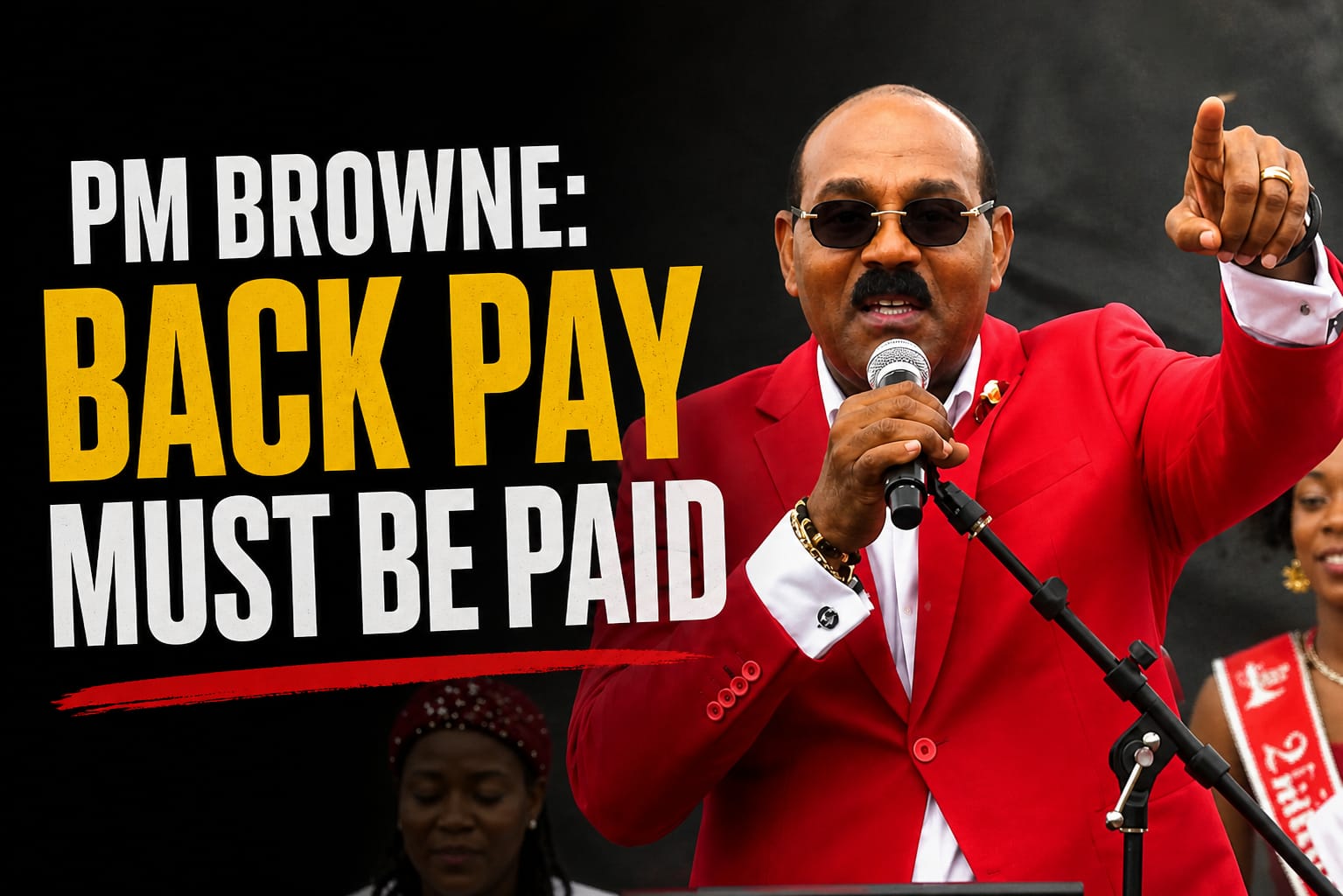
    Prime Minister Gaston Browne of Antigua has launched a pointed critique against two opposition candidates from the United Progressive Party (UPP), questioning their electoral viability due to alleged insufficient grassroots engagement and public visibility. The political leader’s remarks emerged from a widely circulated online video where he systematically assessed the campaign effectiveness of UPP representatives.

    Browne specifically targeted Malaka Parker, the UPP candidate for Rural North, asserting her virtual anonymity within the constituency. The Prime Minister claimed Parker has neither initiated active campaigning nor established any tangible presence in the area. “Malika Parker, for example, nobody in rural North knows her,” Browne stated, emphasizing that most constituents would likely fail to recognize her if directly questioned.

    The Prime Minister extended similar criticism toward Ashworth Azille, the UPP contender for Rural East. Browne maintained that Azille equally suffers from low visibility and has encountered significant challenges in connecting with potential voters. According to Browne’s account, Azille’s attempts to canvass local communities were met with resident resistance, with many allegedly expressing unfamiliarity with the candidate.

    Browne suggested these confrontations have visibly discouraged Azille, noting the candidate has subsequently become less visible in public spaces. While carefully distancing himself from any derogatory comments reportedly made by constituents, Browne presented these incidents as evidence of a fundamental disconnect between opposition candidates and the electorate they seek to represent.

    The Prime Minister’s comments reflect ongoing political tensions between the ruling Antigua and Barbuda Labour Party and the main opposition UPP as both parties position themselves for potential electoral contests. Browne’s assessment implies strategic advantages for his party while questioning the operational readiness of opposition candidates to effectively engage with critical voter bases.

  • Abinader seeks to stabilize food and service prices with business leaders

    Abinader seeks to stabilize food and service prices with business leaders

    SANTO DOMINGO – In a decisive response to mounting economic pressures, Dominican President Luis Abinader is spearheading a high-stakes conference with the nation’s foremost industry leaders this Tuesday afternoon. The emergency meeting, set to occur at 4:00 p.m. in the National Palace, forms a critical component of the administration’s strategy to counteract inflationary trends threatening the nation’s economic stability.

    The summit will assemble a powerful coalition of private sector representatives, including delegates from the National Council of Private Enterprise (CONEP), the Association of Industries of the Dominican Republic (AIRD), the National Organization of Commercial Enterprises, the National Union of Economic Supermarkets, and the Agricultural Business Board. This collaborative approach underscores the government’s commitment to a multi-sectoral solution.

    The primary objective of this unprecedented gathering is to formulate and coordinate concrete measures that will stabilize the prices of essential food items, basic commodities, and vital services. This initiative is directly motivated by the recent surge in global oil prices, which have been exacerbated by geopolitical tensions in the Middle East. These external factors have triggered a domino effect, elevating transportation and production costs that ultimately transfer to consumers.

    President Abinader’s administration has already demonstrated its proactive stance by implementing a fuel price freeze in the preceding week. While this measure provides immediate relief for consumers, it concurrently places a substantial fiscal burden on government resources. The upcoming dialogue aims to build upon this effort, fostering agreements that safeguard the purchasing power of the Dominican populace, with particular emphasis on protecting the most economically vulnerable segments of society from the brunt of global market volatility.

  • Sugar factory dispute sparks fears for food security

    Sugar factory dispute sparks fears for food security

    A brewing labor crisis at Barbados’s Portvale Sugar Factory has prompted urgent calls for government intervention from opposition officials and agricultural leaders, warning of severe consequences for the island’s entire agricultural sector and food security goals.

    Shadow Minister of Agriculture Amoy Gilding-Bourne of the Democratic Labour Party has appealed directly to Agriculture Minister and the Chief Labour Officer to intervene in the ongoing dispute between factory workers and management. The conflict, which began on March 18 when workers staged strike action over union representation rights and alleged poor working conditions, now threatens to destabilize Barbados’s agricultural production chain.

    Gilding-Bourne emphasized the immediate agricultural implications, stating that prolonged resolution would directly impact both sugar quality and crop rotation schedules. ‘The longer the canes stay in the ground, the lower the sucrose content,’ she explained. ‘But the crop rotation is going to be delayed as well, so we can invariably see that we’re going to have at least a lack of yams or sweet potatoes coming up in the weeks to come.’

    The situation has drawn serious concern from agricultural authorities, with Barbados Agricultural Society CEO James Paul highlighting the sugar industry’s critical role in the broader agricultural ecosystem. Paul warned that the disruption affects far more than sugar production alone, noting that by-products like molasses and bagasse are essential components for livestock feed and poultry farming operations.

    ‘We cannot at all try to trivialize this matter,’ Paul stressed. ‘It’s something that must be given great importance. The sugar industry is strategically positioned in terms of the circular economy concept where outputs from one sector become inputs for another.’

    The dispute has already driven up costs for farmers, with molasses prices increasing due to production shortages. Paul emphasized that reducing sugar production capacity ultimately diminishes buying power and increases unit production costs across the agricultural sector.

    Gilding-Bourne connected the crisis to national food security objectives, challenging the administration’s commitment to reducing food imports. ‘We’ve heard the current administration tout food security,’ she stated, ‘and I have said it many times: if we do not produce, we will perish. We cannot continue to do the same thing and expect different results.’

    Both officials described the sugar industry as being ‘held for ransom’ and emphasized the need for immediate resolution to prevent further damage to Barbados’s agricultural infrastructure and food production capabilities.

  • Amerikaanse militaire opbouw ‘losgekoppeld’ van politieke doelen

    Amerikaanse militaire opbouw ‘losgekoppeld’ van politieke doelen

    The escalating Middle East tensions between the United States and Iran reveal a fundamental strategic imbalance characterized by contrasting approaches to regional engagement. While Iran pursues well-defined political objectives through calibrated military and proxy operations, American military deployments appear disconnected from any coherent political strategy, creating dangerous uncertainty about conflict resolution pathways.

    According to security analysts including Ross Harrison of the Middle East Institute, Tehran maintains concrete geopolitical goals: exerting sufficient pressure to influence US policy decisions while advancing favorable regional power dynamics. Conversely, with regime change no longer an explicit policy objective, Washington’s substantial military presence—including troop reinforcements and airstrikes—lacks corresponding political direction. This strategic misalignment grants Iran superior positioning, as the Islamic Republic advances clear ambitions while American actions operate without definitive political endpoints.

    The limitations of this approach become evident in critical security challenges. Military operations alone likely cannot secure essential objectives like safeguarding the Strait of Hormuz without complementary diplomatic engagement. This reality fuels discussions within policy circles regarding potential ground invasion scenarios—though analysts remain deeply divided on feasibility and consequences.

    Critics highlight extreme risks associated with ground operations, potentially triggering prolonged conflicts reminiscent of Iraq and Afghanistan. Iran’s substantial conventional military, combined with sophisticated proxy networks including Lebanon’s Hezbollah and Yemen’s Houthis, could rapidly expand hostilities into regional warfare. Former Pakistani ambassador to Iran Asif Durrani emphasizes these proxy forces remain operational despite recent setbacks and continue posing significant threats.

    Furthermore, some experts warn invasion could strengthen Tehran’s regime by fostering nationalist unity against external aggression while potentially boosting extremist recruitment. The political and humanitarian costs would be substantial, likely triggering international condemnation.

    Alternatively, some voices contend ground operations might represent last-resort options should diplomacy fail and limited military pressure prove insufficient to counter nuclear ambitions or restore security. However, this remains widely viewed as an extremely hazardous option requiring broad political and military consensus among US allies.

    Iran demonstrates negotiating willingness but strictly on terms preserving national interests and preventing future attacks. Mehran Kamrava of the Arab Center for Research and Policy Studies notes Iran’s military actions aim establishing pain thresholds that deter US and Israeli operations. Recent precision strikes against oil infrastructure and military bases exemplify this strategy.

    The Houthis, as key Iranian proxies, maintain significant operational capabilities despite setbacks, their continued involvement adding conflict complexity and escalation risks.

    Diplomatic channels simultaneously gain prominence. Four-nation talks in Islamabad— involving Pakistan, Turkey, Saudi Arabia and Egypt—demonstrate regional de-escalation efforts aiming facilitate US-Iran dialogue. Pakistan’s mediation role proves crucial, emphasizing Islamic unity and regional stability.

    Successful diplomacy could create space for political solutions transcending military confrontation, though uncertainty persists regarding Washington and Tehran’s willingness to make concessions necessary for conflict resolution.