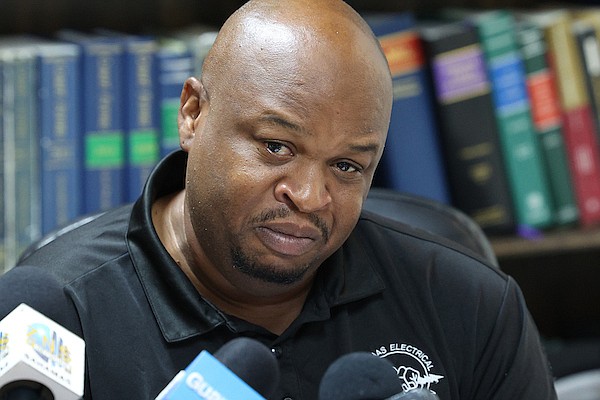
As the Bahamas approaches its upcoming general election, a scheduled lump-sum payment to hundreds of utility workers has ignited public debate over its timing and potential political motivations, with union leadership pushing back firmly against claims of improper political maneuvering.
Kyle Wilson, president of the Bahamas Electrical Workers Union (BEWU), confirmed last week that more than 800 junior line staff employed by Bahamas Power and Light (BPL) received a one-time $3,500 cost of living supplement, a benefit explicitly outlined in the union’s existing industrial agreement with the power provider. Speaking to The Tribune, Wilson emphasized that the payout structure was finalized through collective bargaining more than 18 months before the election was called, and the timeline for disbursement aligns with the contractual schedule laid out years in advance.
“This is a contractual entitlement for our members, it has no connection to electoral politics whatsoever,” Wilson stated. “It is purely a coincidence that the scheduled payment date falls just days before the general election. There is no political angle to this at all.” He also clarified that all funds for the supplement come directly from BPL’s operating budget, rather than being drawn from government public coffers.
The timing of the payouts has attracted increased public and media scrutiny, coming on the heels of a controversial decision by the incumbent Davis administration to erase outstanding residential electricity bills for customers on Grand Cay and Moore’s Island. The government has framed that move as a correction of longstanding billing errors that emerged in the wake of Hurricane Dorian and the COVID-19 pandemic, but political observers have questioned whether the series of financial benefits for voters are timed to sway electoral support.
Wilson pushed back against these insinuations, accusing political commentators and critics of attempting to politicize a routine internal labor matter. He noted that BPL has a long history of issuing similar cost-of-living lump-sum payments to union employees, meaning the current disbursement is neither unusual nor without precedent.
“Everything is amplified in the lead-up to an election,” Wilson explained. “Opponents and commentators will try to twist any development to score political points, but this is strictly an internal issue between BPL and its unionized workforce. This has nothing to do with the election, in any shape or form.”
Wilson expressed satisfaction with the outcome of the collective bargaining process, noting that the agreement strikes a fair balance for both workers and the utility. He also praised BPL management for sustaining stable, productive labor relations over the past several years, adding that there have been no major work stoppages, union-led demonstrations, or disputes escalated to the national Labour Board during that tenure.
He specifically credited BPL Chief Executive Officer Toni Pratt with fostering a collaborative negotiating environment, which allowed the company and union to reach an amicable agreement that protects worker benefits while supporting the company’s goal of delivering reliable electrical service to Bahamian consumers across the country. Wilson added that the union remains committed to holding up its end of the agreement by supporting workers in delivering high-quality service to the public.