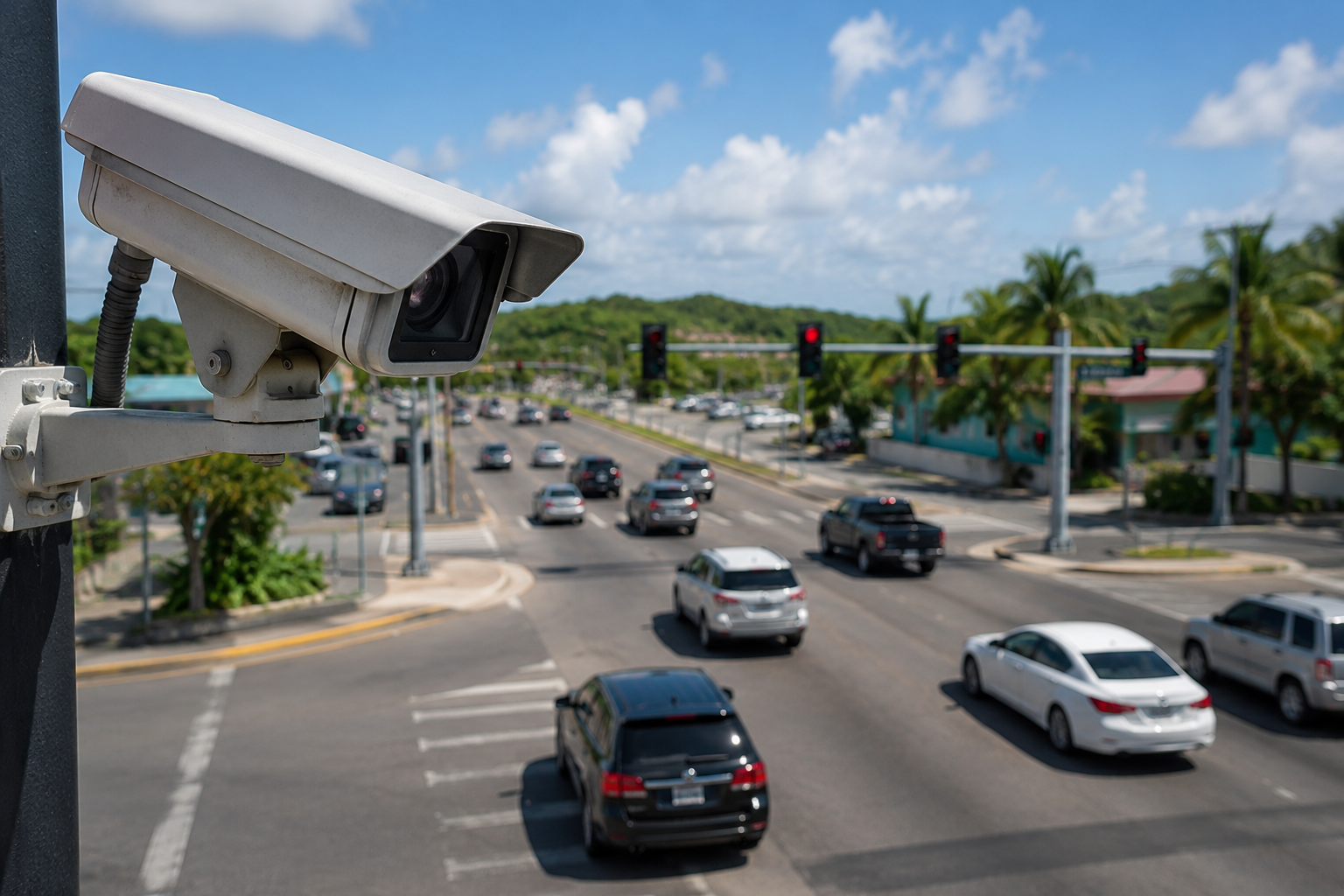
The twin-island nation of Antigua and Barbuda is exploring a notable expansion of its ongoing national closed-circuit television (CCTV) surveillance initiative, with officials floating the idea of integrating automated traffic enforcement into the existing network. However, government representatives have made clear that multiple critical hurdles — including required updates to national legislation and the development of supporting digital infrastructure — must be addressed before the new camera system can be used to issue official traffic citations to violating motorists.
The prospect of adopting automated speed and red-light ticketing, a system already in use across dozens of countries worldwide, was brought to public attention during the weekly post-Cabinet media briefing held this Thursday. Communications Director General Maurice Merchant fielded questions from reporters on whether the administration had evaluated the automated enforcement models successfully deployed in other jurisdictions, opening the door to formal discussions of the policy.
Merchant confirmed that the proposal to add traffic enforcement capabilities to the national CCTV network is currently under active review by government officials, but emphasized that the country has not yet completed the groundwork necessary to launch the program. Beyond technical and regulatory changes, he noted, policymakers are also confronting practical challenges that come with introducing this new form of enforcement. These obstacles include building public acceptance for the expanded surveillance use, as well as establishing the full back-end administrative systems required to process citations and manage cases efficiently.
One core technical requirement that must be fulfilled before implementation, Merchant explained, is the creation of a comprehensive, fully functional national vehicle database. This system would need to reliably track registered vehicle owners and store time-stamped camera evidence that meets legal standards for supporting traffic enforcement actions in court. Without this foundational infrastructure, the government cannot move forward with issuing ticketing based on camera footage.
On the regulatory side, Merchant added that amendments to Antigua and Barbuda’s existing body of traffic and surveillance legislation will almost certainly be required. Currently, national law does not allow police to issue formal traffic tickets based solely on CCTV evidence without an officer stopping a motorist directly at the time of the violation. To resolve this legal gap, Merchant pointed to a proven regulatory model already in place in the country’s Development Control Authority legislation. Under that framework, official notices are considered legally valid and served as long as there is documented proof of delivery, even if the intended recipient disputes that they actually received the notice. A parallel regulatory structure could be adapted to govern automated traffic citations, Merchant suggested, creating the legal standing needed for camera-issued tickets.
This discussion of expanded surveillance capabilities comes as the Antigua and Barbuda government continues the phased rollout of its original national CCTV program. During this week’s Cabinet meeting, officials received an update confirming that 42 high-priority strategic locations across both Antigua and Barbuda have been selected for the installation of new high-definition security cameras. The full installation process is projected to be completed by the final week of August. Once operational, the new cameras will primarily serve to strengthen national crime prevention efforts, and will be fully integrated into the Royal Police Force of Antigua and Barbuda’s existing public surveillance network.