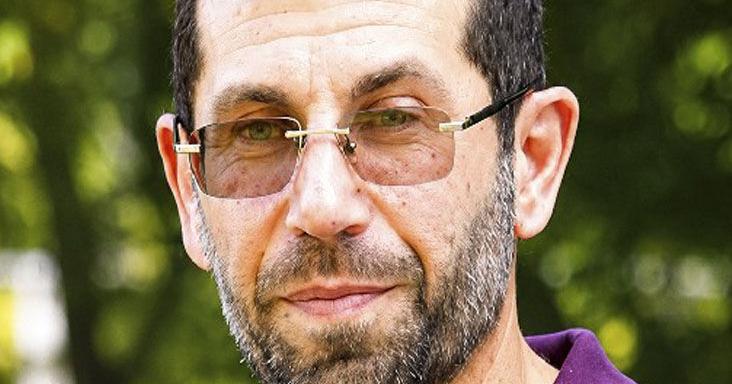
A high-stakes legal battle unfolding in Trinidad and Tobago has left a prominent businessman and his wife behind bars on Thursday night, even after a landmark Court of Appeal judgment ordered their immediate release from pre-charge preventive detention. Dominic Hadeed and Genevieve Hadeed, arrested on June 24 over unproven allegations of plotting to assassinate senior government officials, saw their release hopes dashed just hours after the Court of Appeal’s historic ruling reaffirmed judicial oversight of executive emergency powers, when state authorities secured an interim stay of the order while they seek to appeal the decision to the UK-based Privy Council.
The sequence of events began early Thursday, when a three-judge appellate panel led by Justices Peter Rajkumar, Mira Dean-Armorer and Joan Charles delivered a watershed constitutional judgment that rejected the state’s justification for the couple’s 11-week detention. The ruling, widely regarded as one of the most significant legal decisions to emerge from the country’s current state of emergency (SoE), struck down the government’s reliance on vague national security claims and unsubstantiated intelligence to hold the couple without criminal charges. The judges emphasized that the executive cannot justify preventive detention through broad, unspecified assertions of national security, and that courts retain a non-negotiable duty to scrutinize whether extraordinary detention powers have been exercised lawfully.
“The mere invocation and assertion of national security is not sufficient to prevent judicial oversight or scrutiny by a court of the exercise of emergency powers by the Executive,” the panel wrote. “The unscrutinised exercise of those powers could effectively confer a jurisdiction on a minister to order the detentions of persons at will by [Preventive Detention Orders] even if their issue is not objectively justifiable.”
The case stems from the Hadeeds’ arrest June 24 at their private residence. Three days after their arrest, Minister of Homeland Security Roger Alexander signed formal PDOs authorizing their ongoing detention, citing unspecified intelligence that the pair were part of an active conspiracy to assassinate Prime Minister Kamla Persad-Bissessar, Attorney General John Jeremie and other senior government leaders. As of Thursday, neither Dominic nor Genevieve Hadeed has been formally charged with any criminal offense, and court documents confirmed the couple had not even been interviewed by police as late as July 13, 19 days after their arrest. A third relative, 70-year-old Star Sabga, remains in custody under a separate PDO, as she has not filed a legal challenge to her detention.
In its ruling Thursday, the Court of Appeal was clear that it was not ruling on the veracity of the allegations against the Hadeeds—only on the legal validity of their detention. The panel found that the minister’s justification for the PDOs failed to meet statutory requirements, as it lacked any concrete factual details to support the claim of an active conspiracy. The judges noted that while the statements attributed to the Hadeeds were characterized as “vehement, obnoxious and reprehensible” if proven true, there was no claim in the detention orders that any preparatory steps had been taken to advance the alleged plot. Vague references to national security and intelligence could not fill the gaps in the state’s case, the court ruled.
The appellate panel also overturned a June 30 ruling by High Court Justice Frank Seepersad, who had previously denied the couple’s request for interim release. The court criticized Seepersad for accepting the state’s national security claims without critical review, writing that his approach was inconsistent with the legal standard for judicial review of detention orders. The judges also rejected the state’s argument that the Hadeeds had an adequate alternative remedy through an independent emergency tribunal, noting that the body cannot conduct meaningful scrutiny of executive decisions, has no power to grant interim release, and its recommendations are non-binding.
Acknowledging the gravity of the allegations against the couple and the importance of national security considerations, the court nonetheless ruled that continued pre-charge imprisonment was not justified, finding the Hadeeds had made an arguable case that the PDOs were unlawful. The court also accepted evidence that prolonged detention would cause irreparable harm, including loss of liberty, separation from the couple’s minor children, lasting reputational damage, and disruption to Dominic Hadeed’s ongoing medical care. To balance national security concerns and the couple’s right to liberty, the court ordered the pair released to strict house arrest with a series of stringent conditions: they must surrender all passports, firearms and personal communication devices; they may not leave their residence without explicit permission from the Commissioner of Police; all external communication and visits require prior approval, with only authorized legal representatives, medical staff and caregivers permitted entry; police are authorized to conduct unannounced compliance checks at the property; and the couple may be fitted with electronic monitoring devices at the state’s request. Any breach of these conditions would result in immediate re-detention.
Immediately after the ruling was delivered shortly before 3 p.m. Thursday, state attorney Gerald Ramdeen requested a six-hour stay of the release order to allow the state to file an appeal with the Privy Council, arguing that police needed additional time to search the Hadeeds’ residence to secure prohibited items. Senior Counsel Douglas Mendes, lead attorney for the Hadeeds, opposed the request, noting the strict house arrest conditions already provided ample oversight, and that the couple had arranged for their children to stay with grandparents and would coordinate all visits with police. The initial appellate panel rejected the six-hour stay request, granting police only two hours to complete the residence search.
By late Thursday evening, however, the state had filed an urgent new application for a stay of the release order and for permission to appeal the Court of Appeal’s ruling to the Privy Council. The application was heard at 8 p.m. by a new panel led by Chief Justice Ronnie Boodoosingh and Justices of Appeal Mark Mohammed and Ricky Rahim. Just before 9:30 p.m., the panel granted the state’s request for an interim stay, blocking the Hadeeds’ release and leaving them in prison as of Thursday night. A full hearing on the state’s stay application and permission to appeal is scheduled for 3 p.m. Friday. The substantive judicial review to determine the ultimate lawfulness of the Hadeeds’ PDOs is also scheduled for a case management hearing Friday before High Court Justice Vigel Paul.