分类: politics

  • BLP names Tyra Trotman as St Michael Central candidate

    BLP names Tyra Trotman as St Michael Central candidate

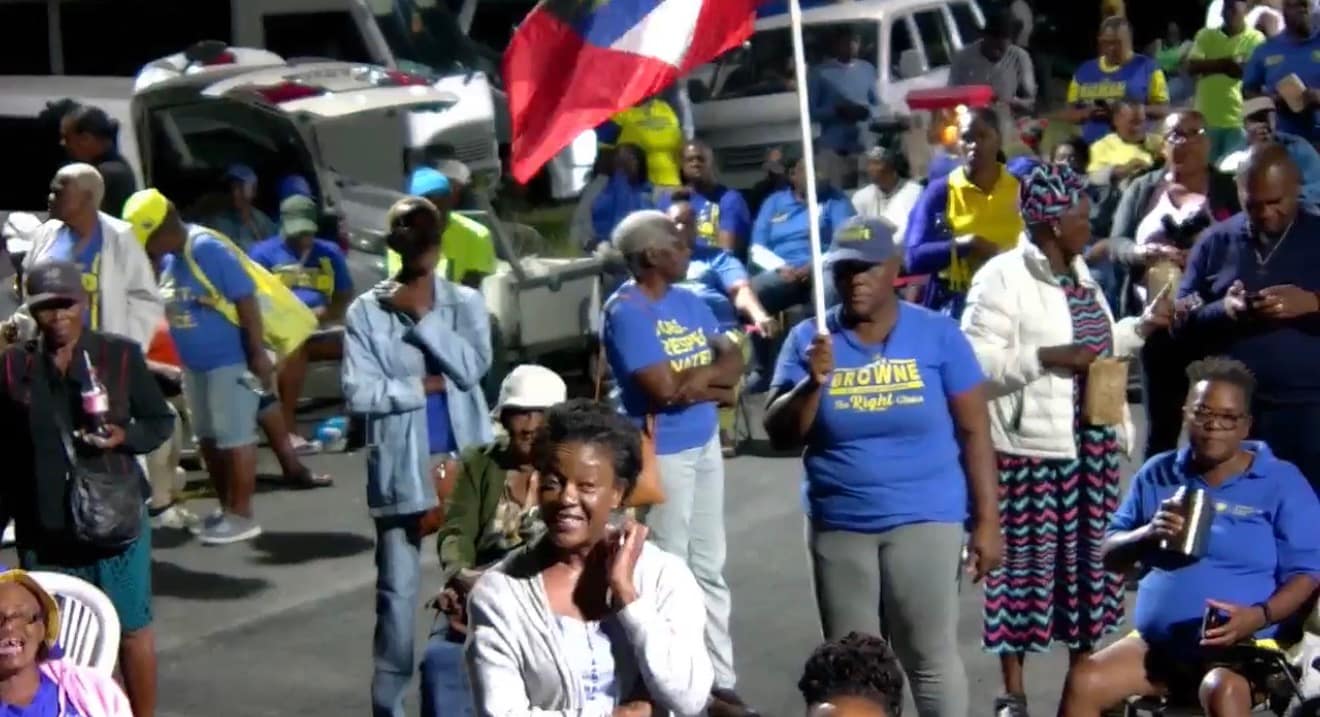
    In a significant political development, attorney Tyra Trotman has been officially confirmed as the Barbados Labour Party’s parliamentary candidate for the St Michael Central constituency. The nomination proceedings, conducted at Combermere School, mark a strategic transition for the party as it prepares for upcoming electoral contests.

    Trotman’s candidacy follows the announced departure of current House Speaker Arthur Holder, who has declared he will not seek reelection in the next general election. Holder, who has represented the constituency, publicly endorsed Trotman prior to the formal nomination process, signaling party unity and continuity.

    The selection establishes the foundation for the BLPs campaign strategy in this key constituency. Trotman’s legal background and professional expertise are expected to feature prominently in her campaign platform. Political analysts anticipate her nomination will bring fresh perspective to the constituency while maintaining the party’s established presence.

    This transition occurs amid broader political preparations across Barbados, with parties finalizing their slates of candidates ahead of the next national election. The St Michael Central constituency has historically been a competitive electoral district, making this nomination particularly significant for the ruling party’s electoral strategy.

  • Politic : Inauguration of the new premises of the Chancellery

    Politic : Inauguration of the new premises of the Chancellery

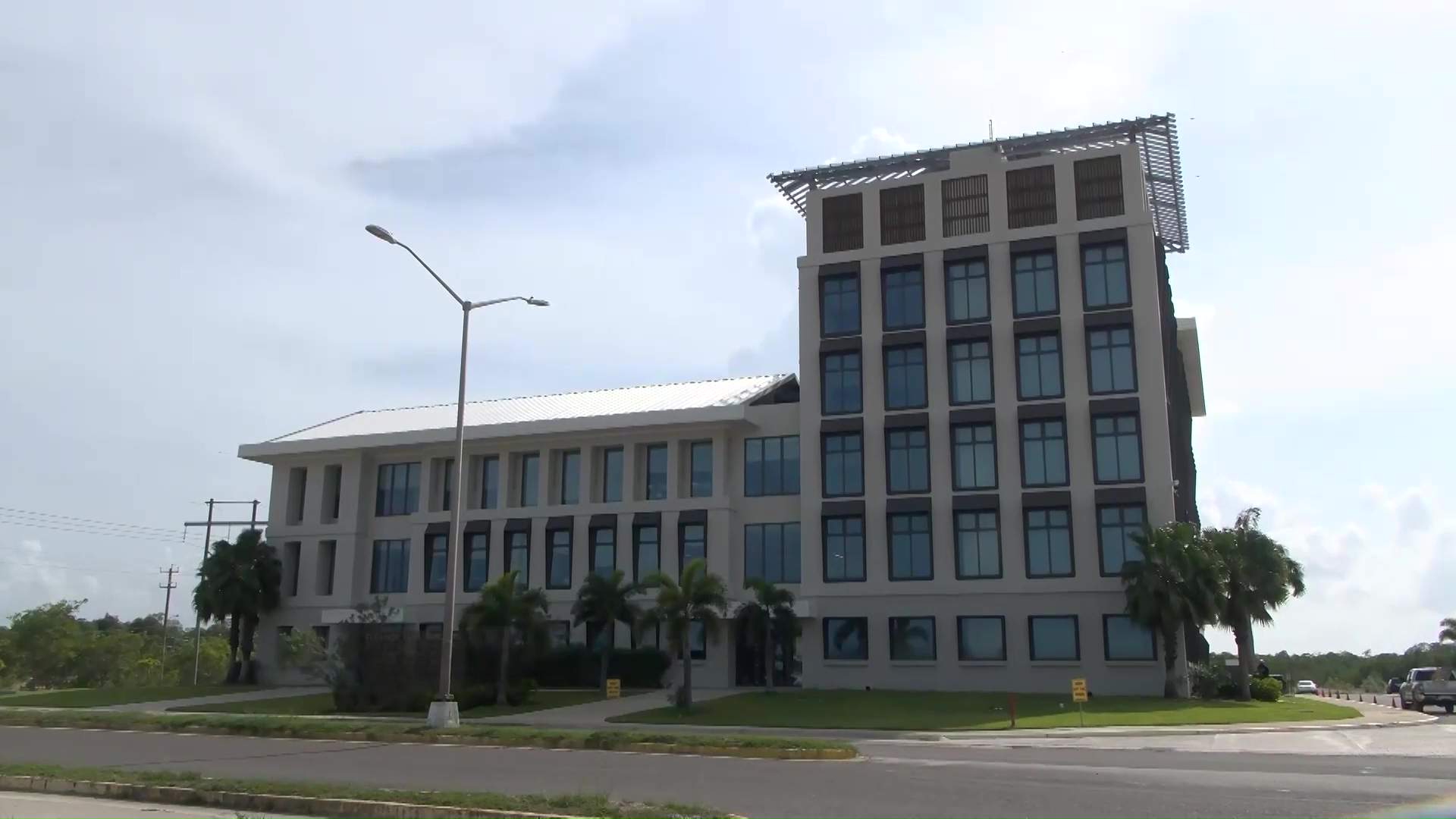
    Haiti’s Ministry of Foreign Affairs has officially relocated to a modern 12-story facility in Pétion-Ville, marking a significant upgrade in the nation’s diplomatic infrastructure. The newly acquired Gala Tower at 15 Rue Mangonès, previously owned by a senior ministry official, now serves as the central hub for Haiti’s international relations operations.

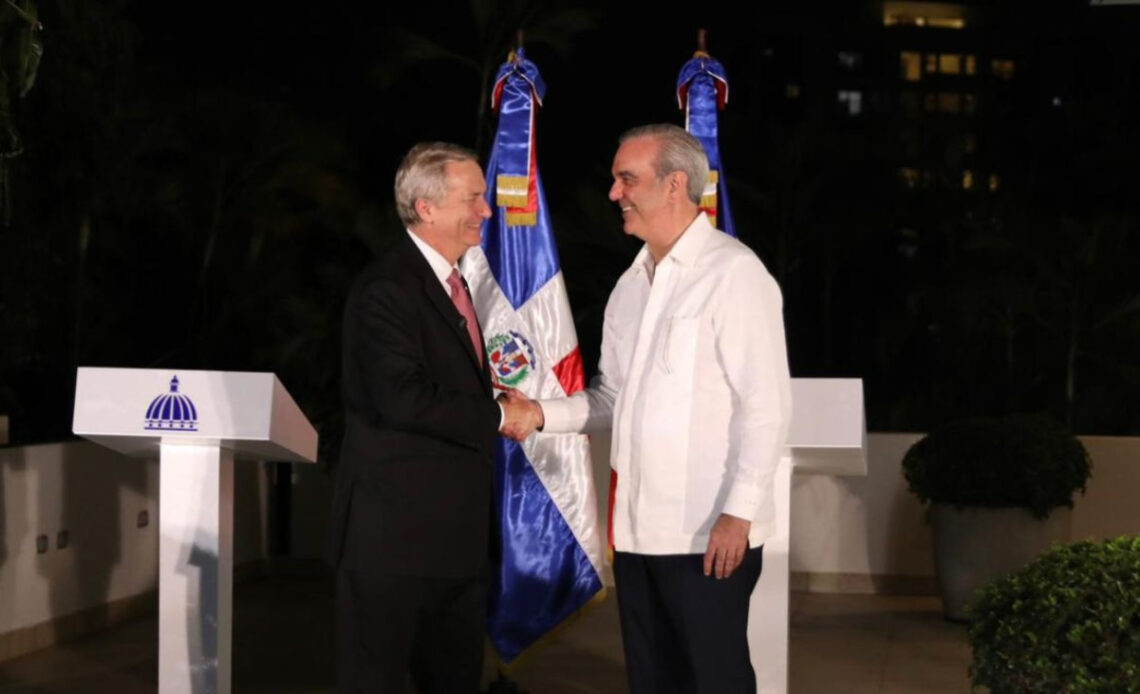
    The inauguration ceremony on January 15, 2026, gathered Haiti’s highest-ranking officials including Prime Minister Alix Didier Fils-Aimé, Chancellor Jean-Victor Harvel Jean-Baptiste, and members of the Presidential Transitional Council. The event also drew former ministers, senior civil servants, and representatives from the diplomatic corps, creating a solemn atmosphere befitting the occasion.

    Laurent Saint-Cyr, President pro tempore and Coordinator of the Transitional Council, delivered a keynote address emphasizing the institutional significance of the new chancellery. He articulated a vision for transforming the space into a strategic decision-making center operating on principles of ethics, performance, and national interest. Saint-Cyr called for a revitalized Haitian diplomacy characterized by proactive engagement, inclusivity, and sharper focus on national priorities. He further advocated for strengthened international partnerships and greater inclusion of women and young professionals in diplomatic service.

    The property acquisition, whose financial details remain undisclosed, provides the ministry with facilities that meet international embassy standards. This upgrade enables Haiti to host foreign dignitaries and government officials in appropriate settings while offering improved service delivery to citizens requiring consular assistance.

  • Vicepresident naar Zwitserland voor World Tourism Forum

    Vicepresident naar Zwitserland voor World Tourism Forum

    Surinamese Vice President Gregory Rusland is set to embark on an official visit to Switzerland this Saturday to participate in the prestigious World Tourism Forum, convened during the influential World Economic Forum week. Accompanied by a delegation of three senior officials, the Vice President will engage in high-level discussions before returning the following week.

    Mr. Rusland received a specific invitation to join an exclusive assembly of forty international decision-makers, comprising heads of state, chief executive officers, and government ministers. This selective gathering represents some of the most influential figures in global governance and business leadership.

    The central theme of his participation will focus on translating commitments into actionable strategies under the forum’s agenda: “From Pledges to Implementation: Scaling Sustainable Tourism and Hospitality.” This dialogue aims to bridge the gap between theoretical frameworks and practical execution in sustainable tourism development.

    Unlike conventional tourism conferences, the World Tourism Forum operates as a high-level decision-making platform that reconceptualizes tourism not as an isolated industry but as a strategic pillar for global economic resilience. The forum emphasizes peer-to-peer interaction and strategic alignment among participants, moving beyond traditional presentation formats to foster genuine collaboration and policy development.

    The participation of Suriname’s Vice President signals the growing recognition of small nations in shaping global tourism policies and highlights the increasing importance of sustainable tourism in national economic strategies.

  • George Price Day 2026: “Que viva George Price”

    George Price Day 2026: “Que viva George Price”

    Belize City witnessed a profound gathering of national reverence on January 15, 2026, as citizens across the spectrum united to commemorate George Price Day. The ceremony honored George Cadle Price, the architect of Belizean independence, with this year’s observance carrying dual significance: marking six years since the holiday’s establishment and coinciding with the 75th anniversary of the People’s United Party (PUP) which Price founded.

    Belize City Mayor Bernard Wagner inaugurated the proceedings by emphasizing the enduring nature of Price’s legacy. He reminded attendees that the nation inherited not just the freedoms Price secured but also the ongoing responsibility to ensure independence remains meaningful for successive generations.

    Prime Minister John Briceño delivered a heartfelt tribute, characterizing Price as a leader profoundly guided by faith and service. He recounted Price’s pivotal role in steering the peaceful Belizean revolution that ultimately achieved sovereignty in 1981. Briceño concluded his address with both a national blessing and the celebratory cry that echoed throughout the event: “Que viva George Price!”

    The program featured recitations from Price’s seminal 1950 Battlefield Park address, where he first challenged colonial authority and economic disparities, declaring that Belizeans had “awakened from the sleep of false hopes and empty promises.”

    Parallel celebrations included the traveling PUP at 75 exhibition, which chronicles the party’s central role in Belize’s political evolution. Culture Minister Francis Fonseca reported thousands have visited the exhibition nationwide, describing it as crucial for preserving political history. The exhibition, launched in Orange Walk in September 2025, will conclude in San Pedro next month.

    In personal reflections shared with media, Briceño revealed how Price’s guidance shaped his own path, recalling the founding leader’s belief that “public service is the highest call for any Belizean.”

    The commemorations extended beyond formal ceremonies with nationwide social media tributes and physical installations, including a commemorative billboard unveiled by Immigration Minister Kareem Musa at a major intersection. The day’s events culminated with a student assembly at Nazarene High School and a spectacular fireworks display, symbolizing the nation’s enduring gratitude.

  • Opposition senator renews criticism of govt housing programme amid audit concerns

    Opposition senator renews criticism of govt housing programme amid audit concerns

    A scathing audit of Barbados’ HOPE Inc. housing initiative has sparked intense political debate, with Opposition Senator Ryan Walters accusing the government of systemic mismanagement of public funds. The controversy emerged during Wednesday’s Senate session addressing legislative corrections needed for 20 low-income homes in Christ Church, delayed due to a 2022 resolution error that omitted the National Housing Corporation as vesting authority.

    Senator Walters seized on the Auditor General’s April 2025 special audit to highlight broader failures in the flagship housing program. The report revealed that HOPE Inc. operated without clear objectives, milestones, or performance indicators despite $64.5 million in committed public funding. According to Walters, this lack of framework created legal vulnerabilities, with the state potentially facing compensation claims due to transactions undertaken without proper authority and unclear property titles.

    The audit identified significant financial mismanagement, including a $37.8 million cost overrun attributed to the decision to use precast construction instead of traditional methods. Walters further criticized the program’s renewable energy component, noting that only two of the promised solar-equipped homes actually received such installations.

    Most alarming was the revelation regarding an international housing arrangement with Guyana, where $3.5 million was transferred for approximately 60 hardwood homes without performance bonds or proper vendor vetting. When the homes arrived in Barbados, missing components rendered them uninhabitable, requiring an estimated additional $125,000 per unit to complete—potentially totaling $43.7 million if the project continues.

    Walters concluded that these findings have ‘cast a grey cloud’ over the government’s housing credibility, asserting that taxpayers deserve answers for what he characterized as a record ‘nothing to be proud of.’

  • OP-ED: Beyond passports & visa pauses – Why the Caribbean must reclaim the narrative power in Washington

    OP-ED: Beyond passports & visa pauses – Why the Caribbean must reclaim the narrative power in Washington

    The Caribbean’s ongoing Citizenship by Investment (CBI) program crisis reveals a fundamental power imbalance in international relations that extends far beyond superficial discussions about due diligence and security compliance. At its core, this confrontation represents the region’s systemic loss of narrative control within Washington’s policy ecosystem, where Caribbean nations are being defined through standards they didn’t create and judged in forums where they lack representation.

    This pattern of economic reclassification—where once-viable activities are progressively recast as risky or non-compliant—has historical precedents from banana exports to banking services. The outcome consistently demonstrates economic disqualification through regulatory means rather than market failure, with CBI representing merely the latest manifestation.

    The traditional diplomatic approach—relying on ambassadors, foreign ministries, and multilateral appeals—has become inadequate in today’s policy landscape. Contemporary legitimacy frameworks are increasingly shaped outside formal diplomatic channels within Congressional offices, regulatory agencies, think tanks, and policy advocacy networks where narratives are established long before Caribbean representatives are consulted.

    The region’s critical deficit lies in its absence from Washington’s idea economy. While the United States benefits from established idea engines like the Heritage Foundation, Brookings Institution, and CSIS that systematically cultivate and normalize policy concepts, the Caribbean lacks equivalent institutional presence. This idea infrastructure gap leaves the region perpetually defensive, explaining itself against narratives it didn’t author.

    The convergence of heightened U.S. and EU CBI scrutiny, visa bond regimes, immigrant visa pauses, and disproportionately applied public-charge doctrines signals how Caribbean economies are being systematically ranked within the global system. Simultaneously, CARICOM faces internal strains as geopolitical pressures test regional unity.

    A strategic pivot requires expanding engagement beyond traditional diplomacy into narrative formation—engaging Congressional committees alongside executive desks, addressing regulatory agencies that shape outcomes, investing in idea production rather than mere negotiation, and repositioning the Caribbean as a strategic region rather than a compliance problem.

    The fundamental question isn’t whether CBI survives in its current form, but whether the Caribbean will continue allowing external actors to define legitimacy parameters for small states’ economic survival. Without claiming space in Washington’s idea economy, every sector—from finance and mobility to education and digital services—remains vulnerable to similar reclassification and exclusion cycles.

    The Caribbean possesses its most valuable export not in passports or commodities but in intellectual talent—thinkers, diplomats, technocrats, and policy professionals who understand global systems and Caribbean realities. The existing diaspora represents an untapped resource that requires institutional harnessing through establishments like the Institute for Caribbean Studies in Washington, D.C.

    This transformation demands a fundamental shift in how CARICOM, OECS, and individual governments engage with diaspora expertise—moving beyond transactional relationships toward trust-based, sustained collaborations. Modern sovereignty defense requires not just borders and diplomacy but ideas and the capability to shape them, presenting the region with an opportunity to build idea infrastructure worthy of its talent and adequate to contemporary challenges.

  • Rafael Correa: Outrage against Venezuela seeks to save oil deals

    Rafael Correa: Outrage against Venezuela seeks to save oil deals

    In a comprehensive social media analysis, former Ecuadorian President Rafael Correa has delivered a scathing critique of United States foreign policy toward Venezuela, characterizing recent actions as both economically unsustainable and strategically flawed. The former head of state asserted that the Trump administration had reached a critical realization about the ineffectiveness of its Venezuelan blockade strategy, recognizing that the approach was proving prohibitively expensive while failing to achieve its intended objectives.

    Correa detailed the multifaceted costs burdening American interests, highlighting how maintaining naval assets along Venezuela’s coastline generated substantial operational expenditures. More significantly, he emphasized that major US petroleum corporations—key financial supporters of the administration—were simultaneously missing out on highly profitable business opportunities within the South American nation’s energy sector.

    The former Ecuadorian leader suggested that facing this strategic impasse, the White House required a face-saving measure and consequently resorted to what he termed the ‘kidnapping’ of Venezuelan President Nicolás Maduro as a supposed ‘final solution.’ Correa referenced the January 3rd military incursion into Venezuelan territory, noting that contrary to US expectations, this intervention produced neither regime change nor any substantial political transformation within the Bolivarian Republic.

    According to Correa’s analysis, Washington’s genuine objective revolves around securing favorable terms for American oil conglomerates, despite Venezuela’s historical openness to foreign investment. He contended that the very sanctions imposed by the United States have paradoxically prevented such economic engagement from occurring.

    The former president further speculated about additional motivations behind US actions, suggesting Washington aims to manipulate global oil prices ahead of critical midterm elections while simultaneously demonstrating unilateral power to the international community. This combination of economic and geopolitical objectives, Correa concluded, reflects an assertion that the United States can operate without meaningful constraints in pursuing its interests.

  • Cuba updates Government Program after public consultation

    Cuba updates Government Program after public consultation

    In a significant governmental session presided over by President Miguel Diaz-Canel, Cuban Prime Minister Manuel Marrero Cruz detailed substantial enhancements to the nation’s governance framework. The high-level meeting marked a pivotal development in Cuba’s ongoing administrative restructuring efforts, incorporating extensive feedback from multiple national institutions and public consultations.

    The revised Government Program represents a synthesis of diverse inputs, including outcomes from nationwide public consultations, resolutions from the 11th Plenum of the Central Committee of the Communist Party, and substantive conclusions derived from the sixth ordinary session of the National Assembly of People’s Power. Further contributions emerged from specialized deliberations within the Commission on Economic Affairs, creating a comprehensive policy roadmap.

    First-quarter implementation priorities include the formal publication of the updated program document, consolidation of previously approved measures, and systematic identification of territorial potential to reinforce the national Economic Plan. A key focus remains on enhancing budget revenues through optimized regional resource allocation.

    Prime Minister Marrero emphasized the critical role of extraordinary sessions of Provincial Councils of People’s Power, describing them as mechanisms for evaluating implementation efficiency at local levels. These sessions enable assessment of additional capacity for achieving program objectives through decentralized governance structures.

    Concurrently, the Council of State conducted rigorous evaluation of compliance with Law No. 158 concerning the Comptroller General of the Republic. This audit incorporated recommendations from the accountability report presented to the National Assembly in December 2022, reflecting ongoing efforts to strengthen institutional transparency.

    The Council recommended intensified oversight in several strategic sectors including deficit reduction, external revenue generation, agricultural production enhancement, and reinforcement of state-owned socialist enterprises. These measures aim to address economic challenges while maintaining Cuba’s socialist development model.

  • Venezuelan teachers demand freedom for Maduro and Cilia in the street

    Venezuelan teachers demand freedom for Maduro and Cilia in the street

    In a powerful display of political solidarity, educators from across Venezuela converged for a militant Teachers’ Day march, demonstrating unwavering support for interim President Delcy Rodríguez and the current administration. The gathering transformed from a traditional celebration into a robust political rally, with participants voicing their absolute commitment to the ruling government.

    From the main platform, one teacher delivered a passionate declaration: ‘We stand resolute in our defense of the Constitution, our homeland, President Nicolás Maduro, and First Lady Cilia Flores.’ The educator further emphasized their dedication to ‘protecting free, quality education for all Venezuelans.’

    Another representative issued a call for unity among Bolivarian teachers, urging collective efforts to strengthen the nation’s educational system. ‘We will raise the banner of peace and political determination,’ the spokesperson stated, adding that they were prepared to ‘defend the Revolution with our lives if necessary.’

    A teacher from Aragua state made an emotional appeal: ‘We educators demand the release of Maduro and Cilia; we want them back with us,’ though the exact nature of their absence remained unspecified in the proceedings.

    Education Minister Héctor Rodríguez provided grave context, revealing that on January 3rd, educational and scientific institutions including the National Experimental Polytechnic University of the Bolivarian Armed Forces had suffered bombings, resulting in more than 108 fatalities to date.

    Despite Venezuela’s ongoing challenges, Minister Rodriguez emphasized that millions of children and youth maintain fully guaranteed access to education at all academic levels, completely free of charge, demonstrating the government’s commitment to educational accessibility during turbulent times.

  • Peruvian Party condemns US threats against Cuba

    Peruvian Party condemns US threats against Cuba

    A prominent political faction in Peru, led by former Supreme Court President Duberli Rodríguez, has issued a formal declaration vehemently condemning recent statements from the United States administration targeting Cuba. The document characterizes the U.S. President’s approach as a form of ‘hegemonic tyranny’ that has unjustly placed Cuba in its crosshairs.

    The statement further accuses the U.S. of perpetrating an ‘assault and kidnapping in Venezuela,’ actions it deems to be in direct violation of established international norms. It posits that the current U.S. strategy, marked by what it calls ‘extortionate threats,’ is a deliberate attempt to subdue the Cuban Revolution by force—a revolution the document celebrates as heroic for its resilience over more than six decades against numerous attempts to destabilize it.

    Crucially, the Peruvian party’s communique serves as a stark warning, asserting that threats directed at Cuba resonate profoundly across Latin America. This identification, it notes, transcends mere solidarity and represents a deep-seated connection felt by the people of the region. The statement concludes with an urgent appeal for the restoration of reason and peaceful dialogue, while staunchly advocating for the fundamental principles of national sovereignty and the unequivocal right to self-determination for all nations.