分类: politics

  • ‘Bricks and mortar infrastructure … second place to people’s dev’t’ – Leacock

    ‘Bricks and mortar infrastructure … second place to people’s dev’t’ – Leacock

    In his first major policy address since taking office, St. Vincent and the Grenadines’ Deputy Prime Minister St. Clair Leacock has articulated the New Democratic Party’s governing philosophy, placing human development above physical infrastructure projects. Speaking at a ceremonial donation event where Taiwan provided 198 tons of rice and humanitarian supplies to the Caribbean nation, Leacock emphasized that his administration would focus on elevating citizens rather than merely constructing buildings.

    The Deputy Prime Minister, who also serves as Minister of National Security, Disaster Management and Immigration, characterized the relationship with Taiwan as more than just receiving handouts, describing it as “a hand up” that helps the nation progress toward first-world status. He stressed that intangible human factors would take precedence over tangible infrastructure projects in the government’s priorities.

    Leacock outlined several key areas of focus, including raising basic wages, improving workplace conditions, enhancing health and safety standards, and maintaining education as a dominant pursuit. Perhaps most significantly, he emphasized the government’s commitment to fostering self-belief, integrity, and a sense of worth among all citizens, describing this as particularly crucial at this juncture in the nation’s political history.

    The administration plans to create what Leacock termed “a society of second chance and opportunity,” with government assistance consistently available to those in need. This people-centric approach, as characterized by Social Welfare Minister Shevern John, represents the core philosophy of Prime Minister Dr. Godwin Friday’s administration.

    Addressing concerns about the pace of change, Leacock acknowledged some public impatience given the widespread deprivation that has accumulated during the NDP’s 25 years in opposition. However, he assured citizens that the government would methodically address needs while maintaining its commitment to Taiwan relations, which have endured through previous NDP governance periods and will continue under the current administration.

  • Caribbean politics: Visa restrictions and the cost of Caribbean disunity

    Caribbean politics: Visa restrictions and the cost of Caribbean disunity

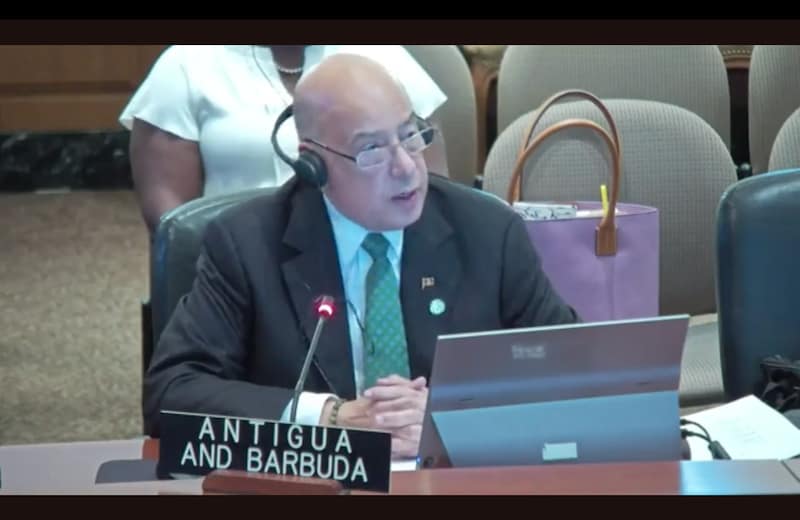
    A recent decision by the United States to implement partial visa restrictions and pause certain immigrant visa issuances to multiple nations, including Caribbean states Antigua and Barbuda and Dominica, has revealed significant fragmentation within the Caribbean Community (CARICOM). Rather than presenting a unified front, regional responses degenerated into domestic political point-scoring and silence, exposing a critical weakness in collective diplomacy.

    The US action stems from two primary domestic concerns, not diplomatic retaliation. First, data indicating that a substantial percentage of immigrant households from these nations eventually utilize public assistance programs aligns with the Trump administration’s policy emphasizing immigrant financial self-sufficiency. Second, the issue of visa overstayers illegally influencing congressional representation and federal funding allocations is a potent political matter within a polarized America.

    Statistics underscore the policy’s actuarial basis. Among CARICOM nations, the percentage of immigrant households receiving public assistance is notably high: Dominica (45.1%), Antigua and Barbuda (41.9%), St. Lucia (41.7%), Guyana (41.7%), Belize (41.8%), Grenada (40.7%), St. Kitts and Nevis (39.1%), St. Vincent and the Grenadines (38.1%), Trinidad and Tobago (37.1%), Jamaica (36.7%), The Bahamas (34.0%), and Barbados (33.9%).

    The specific restriction on B-1/B-2 visitor visas for Antigua and Barbuda and Dominica relates to concerns over visa overstaying, unlawful residence, and unpaid use of public services, particularly healthcare. This intersects with Citizenship by Investment (CBI) programs, where US authorities seek enhanced biometric verification to mitigate identity concealment risks, not to delegitimize the programs themselves.

    The sovereign right of any nation to control its borders is undeniable, a principle every CARICOM state exercises itself. The core failure lies in the Caribbean’s reaction: a lack of coordinated position, factual clarification, or collective insistence on distinguishing lawful travelers from illegal overstayers. This fragmentation resulted in 11 of 14 independent CARICOM states ultimately being affected, demonstrating that unilateralism offers no protection.

    The path forward requires abandoning outrage and internal recrimination. CARICOM must develop a common framework for US engagement, separating individual public charge assessments from national reputation and addressing biometric concerns through collective, technically sound solutions. Cooperation should be transparent, voluntary, and capped. For small states, sovereignty is defended not by silence or opportunism, but by coherence, discipline, and the courage to speak with one unified voice.

  • Nieuwe raden van toezicht bij SRS en STVS

    Nieuwe raden van toezicht bij SRS en STVS

    Suriname has undertaken significant reforms in its public broadcasting sector with the installation of new supervisory boards for both Radio Suriname Foundation (SRS) and Suriname Television Foundation (STVS). Vice President Gregory Rusland presided over the installations, emphasizing the critical role these oversight bodies will play in strengthening the nation’s media landscape.

    During the installation ceremonies, Vice President Rusland confirmed that his office maintains direct administrative and financial responsibility for both broadcast entities. He committed to advocating for enhanced budgetary allocations for STVS during upcoming budget deliberations, recognizing the financial challenges facing the state broadcaster.

    The newly constituted SRS board, chaired by Kenneth Moerlie, faces the formidable challenge of restoring the broadcaster’s former prominence. Rusland urged the council to develop innovative strategies to improve competitive positioning while fulfilling public service mandates. SRS Director Earnie Eenig highlighted the board’s crucial role in upcoming challenges, particularly regarding coverage of the forthcoming World Cup football tournament. “It would be peculiar for Suriname to participate in the World Cup while we fail to broadcast it,” Eenig remarked.

    The complete SRS supervisory board comprises Moerlie alongside Roberto Banel, Raoul Swedo, Harvey Liefde, Estacio Nasa, Audrey Tjung Angie, and Newton Ali.

    At STVS, the new board chaired by Shirley Lackin will prioritize financial stabilization of the state television network. Board member Glenn Truideman raised concerns about personnel management complexities arising from varying administrative authorities, which occasionally create operational friction.

    Vice President Rusland proposed implementing project-based working arrangements to provide clearer contract duration frameworks. The STVS board includes Lackin, Truideman, Stanley Sidoel, Kenrich Cairo, and Michel Felisi. STVS Director Raoul Abisoina expressed appreciation for the government’s cooperative relationship and anticipated productive collaboration with the new oversight body.

  • VS waarschuwt Iran: alle opties open, Iran belooft reactie op agressie

    VS waarschuwt Iran: alle opties open, Iran belooft reactie op agressie

    The United Nations Security Council convened an emergency session on Thursday amid escalating diplomatic tensions between the United States and Iran regarding the handling of recent civil unrest within Iranian territories. The session, requested by the U.S., revealed sharply divided positions among global powers concerning appropriate international response mechanisms.

    U.S. Ambassador to the UN Mike Waltz asserted that Washington maintains “all options on the table” to address reported violence against protesters in Iran, reiterating President Donald Trump’s support for what he termed “the brave Iranian people.” This stance followed earlier presidential statements suggesting potential intervention supporting demonstrators, though Trump subsequently adopted a more measured position, noting decreased violence and denying plans for large-scale executions.

    Iran’s Deputy UN Ambassador Gholamhossein Darzi delivered a sharp rebuttal, characterizing American statements as “lies, factual distortions, and a deliberate disinformation campaign” designed to conceal alleged U.S. involvement in instigating unrest. Darzi warned that any direct or indirect aggression against Iran would trigger a “decisive, proportional, and lawful response,” emphasizing this constituted legal reality rather than mere threat.

    Russian Ambassador Vassily Nebenzia criticized the U.S. motive for convening the session, accusing Washington of attempting to justify “brutal aggression and interference in the domestic affairs of a sovereign state” while pursuing regime change through military means. He urged American leadership and allied nations to reconsider their approach.

    UN Secretary-General António Guterres appealed for maximum restraint during this sensitive period, encouraging all parties to avoid actions potentially leading to additional casualties or broader regional escalation. Danish Ambassador Christina Markus Lassen emphasized the Iranian people’s repeated demonstrations demanding improved living conditions, calling upon Tehran’s government to peacefully respond to its citizens’ expressed will.

    The emergency meeting concluded without consensus, reflecting persistent geopolitical divisions while underscoring the international community’s growing concern regarding potential escalation pathways in the already volatile region.

  • Roberto Rosario warns against Dominican Republic joining Inter-American Court of Human Rights

    Roberto Rosario warns against Dominican Republic joining Inter-American Court of Human Rights

    SANTO DOMINGO – A significant political controversy has emerged in the Dominican Republic regarding the nation’s potential accession to the Inter-American Court of Human Rights (IACHR). Roberto Rosario, former president of the Central Electoral Board (JCE), has issued a stern warning against such a move, characterizing its proponents as “enemies of the homeland.” This declaration comes amid reports that the Ministry of Foreign Affairs is considering regularizing the country’s status before the international human rights body.

    Rosario referenced his involvement in a high-level Dominican delegation that visited the Inter-American Commission on Human Rights in Washington following Constitutional Court ruling 168-13. The delegation, headed by former President Danilo Medina and comprising senior government officials, aimed to clarify the implications of the domestic court’s decision. According to Rosario, representatives of the Court explicitly stated that the Dominican Republic would be required to amend its Constitution to comply with the Court’s rulings concerning citizenship access provisions.

    This position triggered a robust rebuttal from then-presidential legal adviser César Pina Toribio, who vehemently defended national sovereignty and rejected what he perceived as external interference in the country’s internal affairs. Drawing from this diplomatic encounter, Rosario concluded that any initiative for the Dominican Republic to join the Inter-American Court of Human Rights constitutes a direct threat to national sovereignty and must be categorically opposed by patriotic citizens and government institutions alike.

  • Column: Vragen om transparantie is geen aanval

    Column: Vragen om transparantie is geen aanval

    A burgeoning controversy surrounding the accompaniment of President Jennifer Simons’ spouse on official state missions has ignited a crucial debate about governmental transparency and accountability. What began as a simple inquiry about travel protocols has evolved into a complex discussion about the essential boundaries between private and public roles in high-level governance.

    The core issue centers on the fundamental necessity for clarity when family members join official delegations. Legitimate questions regarding capacity of participation, funding sources, and access to diplomatic meetings represent not media intrusion but essential components of proper democratic oversight. The situation escalated when social media imagery depicted the president’s husband actively participating in official engagements, despite subsequent claims of his ‘private’ attendance status.

    Concerningly, the public discourse has shifted from examining transparency requirements to questioning media motives, particularly targeting Starnieuws for raising these valid inquiries. This deflection strategy mirrors previous administrations’ approaches when similar scrutiny was applied to First Lady Mellisa Santokhi’s extensive travel with former President Santokhi—a subject that received substantial critical media coverage despite current suggestions otherwise.

    The essential principle remains unchanged: transparency operates prospectively, not retrospectively. Each administration bears independent responsibility for maintaining clear boundaries and disclosure practices. In democratic systems, transparency constitutes an obligation rather than a concession, with higher offices demanding greater clarity due to their profound impact on public trust.

    Critical journalism serves as democracy’s necessary counterbalance rather than an adversary to power. The media’s function involves ensuring governability through accountability, not maintaining official comfort. Personalizing these inquiries risks undermining press freedom’s vital role in democratic societies.

    This situation requires simple preventive measures: advance disclosure of delegation composition, purposes, capacities, and cost allocations. Such transparency wouldn’t eliminate criticism but would ensure it remains fair, measurable, and proportionate—ultimately benefiting all stakeholders, especially the public.

  • They died as they lived, with their heads held high

    They died as they lived, with their heads held high

    In a solemn ceremony marked by revolutionary fervor, Cuba welcomed home the remains of 32 military personnel who perished during duty in Venezuela. Army Corps General Lázaro Alberto Álvarez Casas, Political Bureau member and Minister of the Interior, delivered an emotionally charged address honoring the fallen combatants while delivering a stark message against imperialism.

    The ceremony, attended by grieving family members and government officials, transformed mourning into a powerful display of nationalist pride. General Álvarez Casas framed the soldiers’ deaths not as tragedy but as heroic sacrifice, emphasizing that they “fell fighting and ascended forever into history” while defending Cuba’s internationalist principles.

    Drawing direct parallels to historical struggles, the Minister connected the fallen soldiers to Cuba’s revolutionary legacy—from the mambises independence fighters to the barbudos of the Sierra Maestra and internationalist combatants across Latin America. He explicitly characterized the January 3 incident in Venezuela as “aggression and treacherous attacks,” though specific operational details remained undisclosed.

    The address contained significant political messaging, asserting that Venezuela represents “a natural extension of the homeland” and invoking the symbolic unity of revolutionary figures Simón Bolívar, José Martí, Hugo Chávez, and Fidel Castro. General Álvarez Casas made clear that Cuba maintains unwavering commitment to its overseas missions despite losses, stating emphatically: “Cuba does not abandon its children. Cuba does not renounce its principles.

    In direct confrontation with geopolitical adversaries, the Minister contrasted enemy claims of “high-precision operations and elite troops” with Cuba’s narrative of human sacrifice and familial loss. The speech culminated with a reaffirmation of revolutionary values over material wealth, declaring that imperialism “will never be able to buy the dignity of the Cuban people.”

    The ceremony established the fallen soldiers as permanent national symbols, with General Álvarez Casas promising they would “continue to march at the forefront of every battle” and inspire future generations of revolutionaries.

  • March of the Fighting People

    March of the Fighting People

    Cuban President Miguel Díaz-Canel Bermúdez has declared a nationwide day of remembrance and patriotic demonstration through his official social media account. The First Secretary of the Central Committee of the Communist Party articulated a threefold commitment: “We are going to sing our anthem to the heroes. We are going to thank them for their courage. We are going to march so that those who do not yet understand us can get to know us better.”

    The commemorative activities include a formal ceremony at Havana’s Anti-Imperialist Tribune, followed by a March of the Fighting People designed to demonstrate national unity and reaffirm commitment to the Cuban homeland. Simultaneously, across all municipalities nationwide, ceremonies will be conducted to pay posthumous tribute to martyrs whose remains will be interred in local pantheons dedicated to those who fell in defense of their communities.

    This coordinated national event represents both a memorialization of historical sacrifices and a contemporary political demonstration aimed at reinforcing national identity and revolutionary values. The activities appear designed to strengthen domestic solidarity while communicating Cuba’s perspective to international observers.

  • Politic : The decree on freedom of expression is «a tool of political repression» says FJKL

    Politic : The decree on freedom of expression is «a tool of political repression» says FJKL

    In a striking development for civil liberties in the Caribbean nation, the Haitian human rights organization Fondation Je Klere (FJKL) has issued a forceful condemnation of newly enacted legislation governing freedom of expression. The presidential decree, formally adopted by Haiti’s Transitional Presidential Council (CPT) on December 18, 2025, and officially gazetted on December 31, has sparked immediate concerns about democratic backsliding.

    The FJKL’s comprehensive analysis, published January 15, 2026, characterizes the measure as fundamentally repressive and incompatible with constitutional governance. The organization asserts that the CPT has overstepped its authority by legislating in domains constitutionally reserved for Parliament, thereby violating both domestic law and international human rights commitments.

    Legal experts examining the decree identify particularly problematic provisions in Articles 4 and 5, where nebulous terminology regarding ‘public order’ and ‘national security’ creates significant potential for arbitrary enforcement. These vaguely defined concepts could enable authorities to suppress legitimate political opposition under the guise of maintaining stability.

    While ostensibly designed to protect journalists, the legislation instead establishes mechanisms that facilitate their detention based on either flagrancy allegations or simple complaints, with inadequate procedural safeguards. The definition of defamation has been expanded to such an extent that it effectively criminalizes standard journalistic criticism, while simultaneously removing truth as a valid defense against charges.

    The penal provisions introduce severe sentencing guidelines, including prison terms of up to three years for defamation and forced labor sentences extending to two decades for insulting national symbols. Additionally, the statute of limitations for these offenses has been extended to five years.

    Perhaps most alarmingly, Article 18 mandates that digital platforms retain and surrender identifying information of users accused of publishing ‘illegal content,’ directly contravening constitutional protections for source confidentiality. The FJKL concludes that these measures collectively represent a return to the most oppressive periods in Haiti’s political history, constituting a deliberate instrument of political repression rather than good-faith regulation.

  • Cuba embraces its heroes

    Cuba embraces its heroes

    HAVANA, January 15, 2026 – Cuba conducted a solemn state ceremony at José Martí International Airport to honor 32 combatants who perished during recent military engagements in Venezuela. The ceremony marked the repatriation of remains and was attended by the nation’s highest leadership, including Army General Raúl Castro Ruz and President Miguel Díaz-Canel Bermúdez.

    The emotional ceremony witnessed the arrival of flag-draped coffins containing the remains of the fallen soldiers, each covered with Cuba’s single-star flag. Military honors included a three-volley rifle salute and the performance of the national anthem as the nation mourned its lost defenders.

    In his address, Minister of the Interior Lázaro Alberto Álvarez Casas emphasized the symbolic significance of the soldiers’ sacrifice, stating, ‘We do not welcome them with resignation, but with deep pride and eternal commitment. Death does not defeat those who fall defending a just cause.’ The minister explicitly connected the casualties to what Cuban authorities characterized as ‘US aggression against Venezuela,’ framing the combatants’ deaths as both a defense of Venezuela and Cuba’s national sovereignty.

    The ceremony highlighted the strong bilateral relations between Cuba and Venezuela, with Venezuelan Ambassador Orlando Maneiro Gaspar in attendance. Minister Álvarez Casas invoked the historical legacy of Simón Bolívar, José Martí, Hugo Chávez, and Fidel Castro, portraying the current conflict as part of a broader anti-imperialist struggle.

    Throughout the day, thousands of Cuban citizens gathered despite inclement weather to pay respects to the fallen soldiers. The ceremony concluded with Raúl Castro and President Díaz-Canel leading an honor guard at the Ministry of the Revolutionary Armed Forces headquarters, where they paid individual tribute to each of the 32 coffins.

    The government’s characterization of events emphasized national unity and resilience in the face of external threats, with official statements repeatedly condemning US foreign policy while celebrating the soldiers’ sacrifice as heroic and ideologically consistent with Cuba’s revolutionary principles.