分类: politics

  • Lashley’s return to politics stirs mixed feelings in City

    Lashley’s return to politics stirs mixed feelings in City

    The Barbados political landscape has been energized by veteran attorney Michael Lashley’s decision to seek nomination for the City of Bridgetown seat under the Barbados Labour Party banner, generating sharply contrasting reactions among constituents. This development comes as the constituency, spanning from Bayland to Kensington, has historically presented complex representation challenges due to its geographical expanse and diverse community needs.

    Lashley brings considerable political pedigree to the race, having served as a Democratic Labour Party Member of Parliament for St Philip North for 15 years and as Minister of Housing before his defection to the BLP late last year. His opponent, financial adviser and tourism expert Dale Rowe, represents the DLP after joining the party in 2022 and receiving official nomination last January.

    The constituency’s political history reveals a strong BLP stronghold for over three decades, with representation from prominent figures including Elliott Mottley, Dame Billie Miller, and most recently Corey Lane, who announced he would not seek re-election despite winning the seat in 2022.

    Resident perspectives reveal deep divisions regarding Lashley’s candidacy. While some welcome his experience, others question his party transition. Greenfield resident Mark expressed disappointment, stating Lashley was the DLP’s “last hope” for electoral success. Conversely, Frederick believed Lashley “has something to give to Barbados” and supported experienced guidance for younger party members.

    Throughout the constituency, residents voiced persistent concerns about inadequate representation, with many reporting feeling neglected between election cycles. Infrastructure issues, particularly an uncovered 30-foot well in Dunlow Lane that has remained hazardous since summer, highlight safety concerns that residents say have been ignored despite repeated complaints.

    Employment opportunities emerge as a critical issue, with tradesman Larry Hanson emphasizing the need for entrepreneurial support rather than handouts: “We got entrepreneurs here, these fishermen. We just want a little start. Mostly work, because we ain’t for no handouts.”

    Older residents expressed specific needs, with 65-year-old tailor Robert Jones advocating for reinstatement of non-contributory pensions for skilled workers unable to participate consistently in the National Insurance Scheme.

    Despite constitutional requirements setting the next general election by 2027, increased political activity across Barbados has fueled speculation about an early election call, with both major parties intensifying community engagement efforts.

    The overarching consensus among City constituents indicates a desire for visible, active representation that addresses long-standing issues including employment creation, housing solutions, and community maintenance—concerns that transcend party affiliations and demand practical solutions.

  • Overpeinzingen bij 77 jaar VHP

    Overpeinzingen bij 77 jaar VHP

    As Suriname’s Progressive Reform Party (VHP) commemorates its 77th anniversary on January 16, 2026, the political organization stands at a critical juncture requiring substantial internal transformation and strategic repositioning. According to prominent VHP member Henry Ori, the party confronts significant challenges despite its historical legacy of producing distinguished statesmen and exceptional parliamentary representatives.

    The recent 2020-2025 governmental term saw VHP assuming executive responsibility with a party president who initiated substantial policy measures. However, the party currently faces targeted negative campaigns aimed at undermining its public standing. Ori emphasizes that VHP inherited substantial governance challenges from previous administrations and prevented Suriname from descending into bankruptcy and economic decline, though he acknowledges that party leadership made certain miscalculations during their tenure.

    With over 40,000 registered members and extensive supporter networks, VHP represents a substantial political force rather than belonging to a select few individuals. The opposition period now provides opportunity for thorough evaluation, with the party possessing an assessment report and critical analysis from VHP Netherlands that should inform future direction.

    The emergence of political populism coincides with diminishing public trust in traditional politics, creating an environment where VHP must reestablish credibility through concrete actions. This necessitates addressing fundamental societal issues including inequality, poverty disparities, unequal access to knowledge resources, employment challenges, housing shortages, and land distribution problems.

    Ori advocates for developing self-cleansing mechanisms within the party structure, coupled with personnel renewal and ideological reinvigoration. VHP politics must demonstrate explicable policy choices connected to core party ideals while addressing Suriname’s pressing needs regarding wealth distribution, climate challenges, energy requirements, revenue generation, and investments in education, infrastructure, and healthcare systems.

    Despite securing 17 parliamentary seats in recent elections—demonstrating significant voter support for its philosophy—the party must transition from distrust to trust and from self-interest to collective benefit. This anniversary serves as both celebration and call to action for organizational renewal and democratic revitalization throughout Surinamese politics.

  • Nicaraguan Co-President greets Cuba and denounces US threats

    Nicaraguan Co-President greets Cuba and denounces US threats

    During the 48th Graduation Ceremony of Cadets at Nicaragua’s ‘Leonel Rugama’ Police Science University, President Daniel Ortega delivered a forceful condemnation of United States foreign policy toward two Caribbean nations. The Nicaraguan leader emphasized the overwhelming international consensus at the United Nations against the six-decade-long economic blockade imposed by Washington on Cuba, noting that nearly all member states consistently vote for its removal with only minimal opposition.

    Ortega specifically pointed to voting patterns, stating, ‘In every vote, almost all countries voted to lift the US blockade. Who voted against it? The delegate from the United States, the delegate from Israel, two or three countries at most.’ This observation highlighted the diplomatic isolation of the US position on the Cuba embargo within the global community.

    In a significant expansion of his critique, the Nicaraguan president expressed firm support for acting Venezuelan President Delcy Rodriguez while making explosive allegations regarding the disappearance of President Nicolás Maduro and First Lady Cilia Flores. Ortega characterized their absence as a kidnapping operation conducted by US military personnel on January 3, demanding their immediate return to Venezuela.

    The Central American leader further accused the United States of economic motives behind its Venezuela policy, asserting that Washington’s primary interest lies in the nation’s substantial petroleum resources. Ortega quoted specific figures, alleging the US intends to appropriate ‘thousands of barrels of oil that nation intends to take from the Venezuelan people,’ while portraying Maduro as a leader genuinely committed to peace.

    Concluding his address, Ortega extended gratitude to nations worldwide and even within the United States that have mobilized against what he characterized as American aggressions, acknowledging international support for peaceful resolutions to these regional tensions.

  • OECS leaders agree on need for unified approach on US deportation issue

    OECS leaders agree on need for unified approach on US deportation issue

    In a significant move toward regional solidarity, leaders of the Organisation of Eastern Caribbean States (OECS) have unanimously decided to pursue a collective bargaining strategy regarding US requests for member nations to accept third-country nationals. The resolution emerged during Tuesday’s OECS Heads of Government meeting in Saint Lucia, where leaders convened to address pressing regional and global challenges.

    While several OECS members, including Saint Lucia, had previously initiated non-binding dialogue agreements with the United States, the consensus now favors a coordinated regional approach. Consequently, a high-level OECS negotiating team will be established to represent all member states in future discussions with US authorities.

    The assembly, hosted by Saint Lucian Prime Minister Philip J Pierre, also examined the evolving geopolitical landscape, particularly expressing apprehension about deteriorating relations between Venezuela and the United States. Leaders analyzed potential ramifications for economic stability, energy security, regional safety, migration patterns, and diplomatic engagements, reaffirming their commitment to preserving hemispheric peace and constructive international relations.

    Additional agenda items included Citizenship by Investment Programs, with leaders pledging to enhance oversight mechanisms and standardize regulations across member states. Discussions highlighted advancements toward establishing a regional regulatory authority and maintaining productive dialogue with international partners such as the European Union.

    The meeting further addressed implementation plans for biometric travel systems throughout the OECS, designed to bolster border security while streamlining travel procedures for both citizens and international visitors.

    Emphasizing the necessity of adaptive governance in a rapidly changing global environment, OECS leaders agreed to convene more frequently to ensure coordinated responses to emerging challenges. Saint Lucia reiterated its dedication to regional unity and collaborative decision-making, emphasizing that international engagements must prioritize the long-term stability and development of the Eastern Caribbean.

    Leaders committed to maintaining transparency with their constituents, assuring that all policy decisions will be guided by the best interests of OECS citizens. The historic gathering was chaired by St Vincent and the Grenadines Prime Minister Dr. Godwin Friday in his inaugural presiding role, with participation from heads of government across the Eastern Caribbean region and OECS Director General Dr. Didacus Jules.

  • Officials Push Back Against Misinformation After U.S. Visa Reports

    Officials Push Back Against Misinformation After U.S. Visa Reports

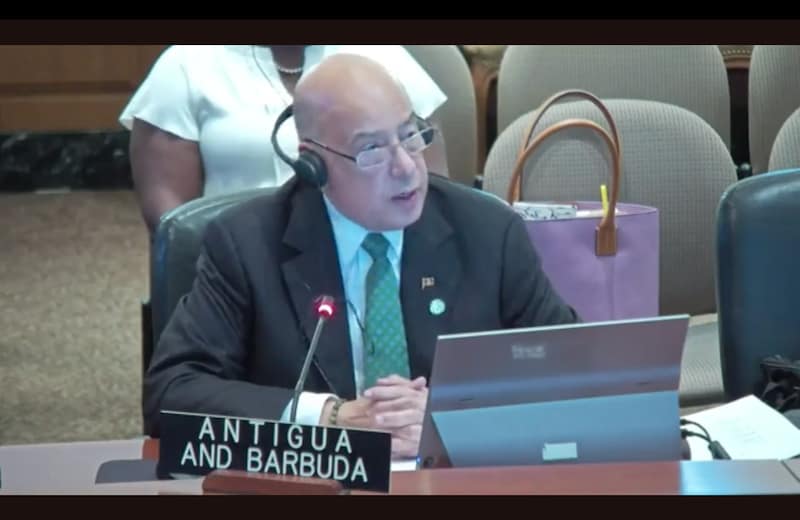
    The Antigua and Barbuda government has launched a comprehensive effort to address widespread misinformation regarding U.S. visa processing changes affecting the Caribbean nation. The initiative follows international media reports that triggered public concern and required immediate diplomatic verification.

    Maurice Merchant, Director General of Communications in the Prime Minister’s Office, revealed during Thursday’s post-Cabinet media briefing that officials swiftly engaged verification protocols upon learning of the purported changes. “The Cabinet immediately made contacts to verify, because it was coming from news portals,” Merchant stated, emphasizing the government’s proactive approach to information validation.

    The administration deployed Ambassador Sir Ronald Sanders, the nation’s top diplomat in Washington, to seek direct clarification from U.S. officials. Leveraging his strategic position in the American capital, Sanders conducted thorough research and established high-level contacts to ascertain the factual situation, subsequently advising the Cabinet of his findings.

    In response to growing public anxiety, the government implemented a multi-channel communication strategy. This included issuing official statements from senior officials, coordinating regular media appearances, and disseminating accurate information through authorized platforms. Merchant specifically noted that certain reports had significantly mischaracterized the scope of actual visa restrictions, creating unnecessary alarm among citizens.

    The communications director emphasized that current visa holders remain unaffected by any changes. “As it stands, persons with current visas, valid visas, can travel back and forth between Antigua and the United States and its territories,” he clarified, aiming to reassure the public about continued travel privileges.

    Merchant concluded by affirming the government’s commitment to transparency, noting that official channels would provide continuous updates as discussions between Antiguan and U.S. authorities progress toward resolving the situation.

  • US immigrant visa halt leaves Barbadians in limbo, says DLP

    US immigrant visa halt leaves Barbadians in limbo, says DLP

    The Democratic Labour Party (DLP) of Barbados has issued a forceful appeal to the government, demanding immediate intervention regarding the United States’ suspension of immigrant visa processing for Barbadian nationals. The party characterized the development as a severe disruption with profound consequences for citizens’ personal and professional lives.

    Dr. Dawn-Marie Armstrong, the DLP candidate for St Michael North, articulated the party’s position in a formal statement, expressing “profound concern” over what she labeled a sudden and impactful shift in policy. The suspension is reportedly causing significant distress by separating families and indefinitely postponing critical educational and career advancement plans for numerous citizens.

    Drawing attention to the precarious timing, the DLP highlighted that the suspension coincides with ongoing public debates concerning potential asylum-seeker arrangements, a context that has further amplified public anxiety. While carefully avoiding direct accusations, the opposition party insisted the situation warrants the “full and immediate attention of the Government of Barbados.”

    The party’s demands center on governmental transparency and decisive action. Key questions posed to authorities include the specific diplomatic steps being undertaken to engage with US officials, the rationale behind Barbados being singled out for this suspension, and whether resolving this issue is being treated as an utmost national priority.

    Emphasizing the socio-emotional impact, the DLP statement described family reunification and access to international opportunities as fundamental aspirations within Barbadian society. The party urged the government to maintain a clear and consistent channel of communication with the public throughout the diplomatic process, working diligently to restore this “vital pathway for Barbadian citizens.”

  • Cuban authorities paid tribute to 32 soldiers killed in Venezuela

    Cuban authorities paid tribute to 32 soldiers killed in Venezuela

    In a solemn ceremony at the Ministry of the Revolutionary Armed Forces (FAR) headquarters, Cuban leadership paid homage to 32 military personnel who perished during a recent US military operation. The incident occurred on January 3rd when American forces conducted an operation targeting Venezuelan President Nicolás Maduro and his wife Cilia Flores for arrest.

    Raúl Castro, alongside President Miguel Díaz-Canel, led the memorial service with participation from Interior Minister Lázaro Álvarez Casas and FAR Minister Álvaro López Miera. The ceremony marked the return of the soldiers’ remains to Havana, where citizens gathered to pay their respects at the FAR compound.

    The Cuban government announced posthumous military promotions for all 32 casualties, recognizing their exceptional heroism and sacrifice. The official statement described these honors as “a fitting and well-deserved tribute to their heroism.”

    Simultaneous public demonstrations unfolded across the nation, with Havana residents convening at the Anti-Imperialist Tribune facing the US diplomatic mission. This gathering culminated in a “March of the Combatant People” expressing national solidarity and homage. Parallel ceremonies occurred in all provincial capitals, with the fallen soldiers scheduled for burial in pantheons dedicated to those who perished in defense of the nation.

  • UWP seeks clarity on govt deportation MOU with US

    UWP seeks clarity on govt deportation MOU with US

    Political tensions have escalated in Saint Lucia as the opposition United Workers Party (UWP) has launched a rigorous challenge against the government’s recently signed memorandum of understanding (MOU) with the United States concerning potential deportation of third-country nationals to the Caribbean nation.

    Prime Minister Philip J. Pierre defended the non-binding agreement during a Sunday address, emphasizing that the MOU creates no legal obligations for Saint Lucia. The Prime Minister outlined stringent safeguards, including provisions that would bar entry to individuals with criminal records and ensure local authorities receive comprehensive health information about any potential deportees before consideration.

    However, the UWP has issued a formal statement demanding extensive clarification on multiple aspects of the agreement. The opposition party questioned the necessity of Cabinet approval and a prime ministerial address for an agreement described as non-binding. They raised substantive concerns about the definition of ‘third-country nationals,’ the timeline of negotiations with US officials, and whether these discussions preceded the December 2025 general election.

    The opposition’s inquiry extends to practical implementation matters, including background screening protocols, information sharing mechanisms with local security agencies, projected financial burdens on Saint Lucia, coordination procedures, agreement duration, and exit conditions should the arrangement prove contrary to national interests.

    While expressing support for strengthened international cooperation, the UWP criticized the government’s disclosure approach and the absence of public consultation. The party specifically highlighted concerns about potential security risks, unclear legal status for non-national deportees, and insufficient details regarding the economic implications of hosting deportees.

    Prime Minister Pierre, during a Monday Cabinet press briefing, stated that full MOU details would not be publicly disclosed, citing standard international practice. The controversy emerges amid broader regional discussions about migration policies and the diplomatic dynamics between Caribbean nations and larger global powers.

  • President Simons: economische stabiliteit voorwaarde voor rechtvaardige welvaartsverdeling

    President Simons: economische stabiliteit voorwaarde voor rechtvaardige welvaartsverdeling

    In a pivotal address to the Suriname Economists Association (VES), President Jennifer Simons unveiled the foundational framework for the nation’s economic and governance strategy extending to 2030. Speaking at the New Year’s reception, the president articulated a vision moving beyond macroeconomic stability as an end goal, positioning it instead as the essential foundation for sustainable growth and equitable wealth distribution.

    Simons characterized Suriname’s current juncture as a decisive crossroads, emphasizing that with the IMF program concluded and the 2025 political transition completed, the nation must now assume full responsibility for coherent fiscal, monetary, and structural policies. “We commenced our term amidst scarcity, a fragile economic recovery, and limited public trust,” Simons noted. “This reality demands not grand rhetoric but clear direction, disciplined execution, and institutional strength.”

    The administration declared 2026 as both a new budgetary cycle and the launch of a comprehensive Multi-Year Development Plan (MOP) targeting 2030 objectives. This strategic framework will integrate policy priorities, investment decisions, and implementation agreements within a macro-fiscal structure featuring scenario analyses for growth trajectories, inflation control, exchange rate management, and future petroleum revenues.

    Central to the government’s approach is the “one government, one course” principle, organized around five national priorities: enhancing revenue generation capabilities, strengthening education and healthcare systems, improving public security, revitalizing the housing sector, and ensuring policy coherence and execution. The economic direction rests on three fundamental pillars: macroeconomic stability, economic diversification, and investments in human capital and institutions.

    President Simons issued stern warnings regarding inflation risks and budgetary deviations, highlighting Suriname’s import dependency which rapidly transmits exchange rate pressures to consumer prices, thereby eroding purchasing power and undermining business and household confidence. Fiscal policy must consistently support monetary measures, with no room for broad wage adjustments that could fuel inflationary spirals. Protection mechanisms, she stressed, should specifically target low-income households and vulnerable populations.

    The address extensively addressed foreign exchange challenges, emphasizing that currency earnings must actively circulate within the domestic economy rather than accumulate stagnant reserves. Economic leakages including gold smuggling, underreporting, and informal exports exacerbate exchange rate pressures and constrain budgetary flexibility. The government is collaborating with the Central Bank to establish a stable and transparent foreign exchange market, supported by analytical work from a dedicated currency commission.

    Regarding public finances, while government revenues reached approximately SRD 45.6 billion in 2025, expenditures grew more significantly due to election costs, salary adjustments, and subsidies. For 2026 onward, the administration aims to implement expenditure controls without obstructing productive investments. Education and healthcare budgets will receive explicit protection, while inefficient programs face phase-out and state-owned enterprises will undergo enhanced oversight.

    Looking toward anticipated oil revenues, Simons cautioned that additional resources cannot justify unfettered spending. The savings and stabilization fund requires strengthened legal and operational frameworks with transparent rules for deposits, withdrawals, and public accountability. International experience demonstrates that nations typically fail not from resource scarcity but from weak management and transparency deficits, she observed.

    Concluding her address, President Simons invited VES and professional associations to actively contribute to policy formulation and public knowledge sharing. Effective policy demands not only technical excellence but also societal understanding and support, she remarked, adding that “economic choices are fundamentally moral choices—they determine whether families can prosper and whether youth can envision futures.”

  • ‘Bricks and mortar infrastructure … second place to people’s dev’t’ – Leacock

    ‘Bricks and mortar infrastructure … second place to people’s dev’t’ – Leacock

    In his first major policy address since taking office, St. Vincent and the Grenadines’ Deputy Prime Minister St. Clair Leacock has articulated the New Democratic Party’s governing philosophy, placing human development above physical infrastructure projects. Speaking at a ceremonial donation event where Taiwan provided 198 tons of rice and humanitarian supplies to the Caribbean nation, Leacock emphasized that his administration would focus on elevating citizens rather than merely constructing buildings.

    The Deputy Prime Minister, who also serves as Minister of National Security, Disaster Management and Immigration, characterized the relationship with Taiwan as more than just receiving handouts, describing it as “a hand up” that helps the nation progress toward first-world status. He stressed that intangible human factors would take precedence over tangible infrastructure projects in the government’s priorities.

    Leacock outlined several key areas of focus, including raising basic wages, improving workplace conditions, enhancing health and safety standards, and maintaining education as a dominant pursuit. Perhaps most significantly, he emphasized the government’s commitment to fostering self-belief, integrity, and a sense of worth among all citizens, describing this as particularly crucial at this juncture in the nation’s political history.

    The administration plans to create what Leacock termed “a society of second chance and opportunity,” with government assistance consistently available to those in need. This people-centric approach, as characterized by Social Welfare Minister Shevern John, represents the core philosophy of Prime Minister Dr. Godwin Friday’s administration.

    Addressing concerns about the pace of change, Leacock acknowledged some public impatience given the widespread deprivation that has accumulated during the NDP’s 25 years in opposition. However, he assured citizens that the government would methodically address needs while maintaining its commitment to Taiwan relations, which have endured through previous NDP governance periods and will continue under the current administration.