分类: politics

  • Definitive number of U.S.deportees to DA undecided, says PM Skerrit

    Definitive number of U.S.deportees to DA undecided, says PM Skerrit

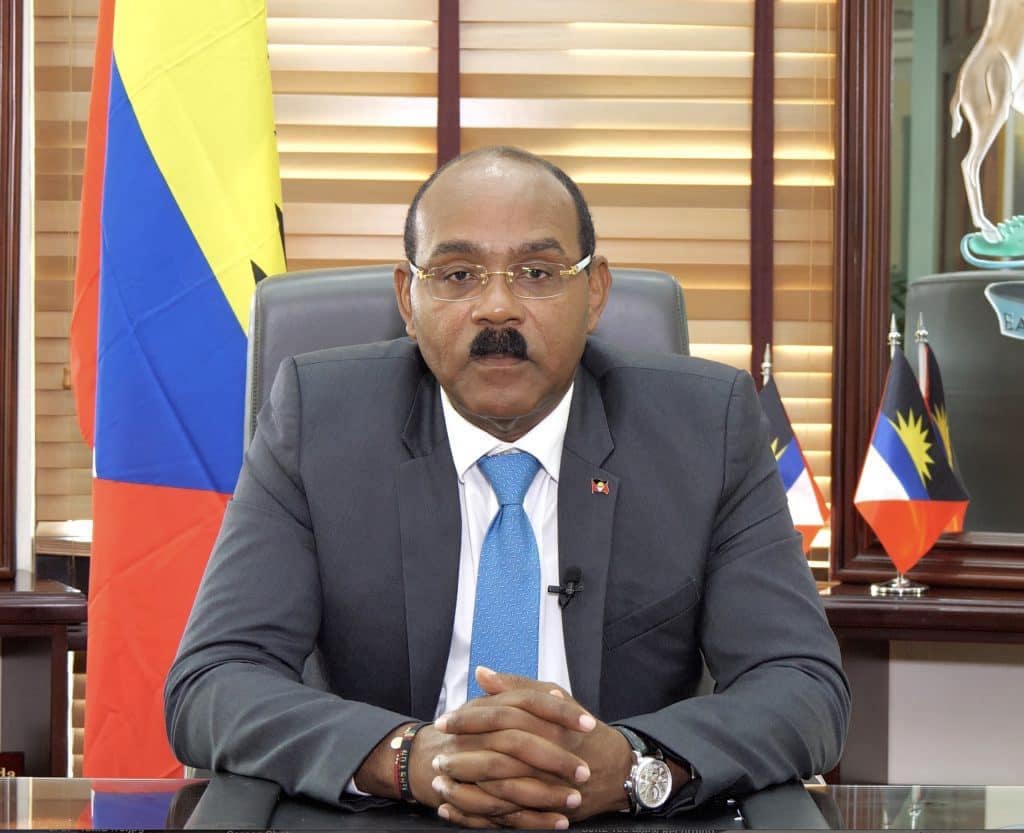
    Prime Minister Roosevelt Skerrit has clarified that Dominica has not established specific numerical commitments regarding the potential acceptance of third-country refugees deported from the United States. During a press briefing on Thursday evening, Skerrit characterized the arrangement as a contingency measure requested by the U.S. government to address immigration challenges.

    The development follows the December 16, 2025 proclamation that imposed partial visa restrictions on Dominica. Skerrit emphasized the preliminary nature of discussions, stating, “We have not decided how many people we are going to be taking. And as a matter of fact, we may never end up having anybody to come.”

    The Prime Minister framed the consideration as an act of diplomatic cooperation, noting: “We consider ourselves to be a friend to the United States and we believe that we are in a position, as small as we are, to assist the United States in addressing an issue it determines to be a national priority.”

    Crucially, Skerrit outlined several protective mechanisms within the Memorandum of Understanding between the nations. The agreement enables Dominica to reject any individuals deemed potentially problematic after thorough review. “They give you the background of these people, their criminal history, their medical history,” Skerrit explained, adding that Dominica retains absolute discretion to refuse applicants based on security assessments.

    The Prime Minister committed to public transparency, pledging that any formal requests from the U.S. would be disclosed to Dominican citizens once received by the government.

  • Security minister alleges insiders in facilitation of illegal firearm activities in Dominica

    Security minister alleges insiders in facilitation of illegal firearm activities in Dominica

    Dominica’s National Security Minister, Hon. Rayburn Blackmoore, has publicly condemned a pervasive ‘code of silence’ that he asserts is actively enabling the island’s escalating gun violence and illegal firearms trade. Minister Blackmoore, speaking at a recent press conference, expressed profound frustration with systemic hypocrisy, alleging complicity extends from local communities into both the public service and private sectors.

    The Minister articulated that this culture of silence directly facilitates individuals involved in violent crimes and the illicit importation of weapons. He described the resulting gun violence, particularly the tragic deaths of young men, as a symptom of a deeper societal malady. A critical concern highlighted was the alarming level of impunity enjoyed by perpetrators, who often operate undetected and evade apprehension.

    In response, the government is implementing a multi-faceted strategy. This includes significant investment in the Dominica Police Force, equipping officers with advanced tools and technology to enhance investigative and interdiction capabilities. A key initiative involves the specialized training of 23 police officers in ballistic analysis and serial number retrieval, a program that has already yielded successes in tracing firearms intercepted at ports.

    Furthermore, Minister Blackmoore revealed the deployment of sophisticated maritime surveillance systems to meticulously monitor territorial waters. This enhanced security apparatus, now operational in the south with northern expansion planned, provides real-time tracking of all vessels, significantly bolstering border security.

    The government is also tightening regulations around legal firearm ownership. The Minister cited instances where licensed holders illegally sold weapons to third parties, a practice strictly forbidden by law. He assured the public of the government’s unwavering commitment to dismantling the networks fueling violence and ensuring national security and safety for all citizens.

  • Breaking: Barbadians head to the polls next month as PM calls elections

    Breaking: Barbadians head to the polls next month as PM calls elections

    Barbados Prime Minister Mia Mottley has officially declared February 11, 2026 as the date for the nation’s next general election. The announcement came during a formal ceremony on Saturday evening, setting in motion the democratic process for the Caribbean nation.

    In her address to the nation, Prime Minister Mottley confirmed she has advised President Sandra Mason to dissolve Parliament on Monday, January 19, effectively concluding the current parliamentary session. The administration has simultaneously initiated comprehensive preparations for the upcoming electoral process, with Nomination Day scheduled for January 27, when candidates will formally register their participation.

    This election marks the first parliamentary contest since Mottley’s Barbados Labour Party achieved an unprecedented political victory in 2022, securing all 30 seats in the House of Assembly. The previous election represented a historic moment in Barbadian politics, delivering the first clean sweep in the nation’s electoral history.

    The upcoming vote will test whether Prime Minister Mottley maintains her extraordinary popularity following her party’s constitutional reform agenda and economic management. Political analysts are closely watching whether any opposition parties can break the ruling party’s parliamentary monopoly in this forthcoming election.

    Barbados, a stable democracy within the Commonwealth, continues its tradition of peaceful political transitions as it prepares for this significant electoral event amidst ongoing regional and global challenges.

  • Nicholas warns low standards pose greatest risk at APUA

    Nicholas warns low standards pose greatest risk at APUA

    In a stark warning against institutional mediocrity, Antigua’s Minister of Public Utilities Melford Nicholas has identified complacency—not ambition—as the most severe threat facing the Antigua Public Utilities Authority (APUA). Delivering his remarks during the commissioning ceremony of the new Barnacle Point reverse osmosis water plant, Minister Nicholas outlined a rigorous leadership philosophy built upon discipline, accountability, and the relentless pursuit of elevated performance benchmarks. He emphatically stated that the true danger lies not in setting overly ambitious goals, but in establishing low standards and comfortably meeting them. Since assuming oversight of the public utilities portfolio, Nicholas has adopted an intentionally hands-on approach, maintaining frequent communication with APUA’s senior management to closely monitor operational progress and institutional performance. He directly linked this drive for higher standards to public accountability, noting that failures in essential services like water distribution rapidly escalate into political crises. The minister stressed that utility leadership must be prepared with concrete data and effective solutions rather than excuses, particularly as new infrastructure like the Barnacle Point plant—a collaborative project with Seven Seas Water Group adding two million imperial gallons daily to the national system—comes online. Nicholas concluded that the next phase of reform must focus on transmission upgrades, automation, and a fundamental shift in institutional culture, aiming to build a utility capable of sustaining high performance under pressure and meeting public expectations.

  • Shurly Lackin aan het roer van de nieuwe RvT STVS

    Shurly Lackin aan het roer van de nieuwe RvT STVS

    In a significant administrative restructuring, Suriname has inaugurated a new Supervisory Board (Raad van Toezicht) for its national public broadcaster, STVS (Surinaamse Televisie Stichting). The appointment ceremony, held at the Vice President’s Office on January 17th, marks a pivotal development in the governance of the state-mediated enterprise.

    Shurly Lackin, former seven-year member of STVS’s management team, assumes leadership as Chairperson of the five-member oversight body. The council comprises Glenn Truideman, Stanley Sidoel, Kenrich Cairo, and Michel Felisi, bringing diverse expertise to the organization’s regulatory framework.

    Vice President Gregory Rusland presided over the installation, emphasizing STVS’s critical role in public information dissemination and social responsibility. He clarified the broadcaster’s administrative placement under his office, including budgetary oversight. “During budget deliberations,” Rusland stated, “we will endeavor to create greater financial flexibility for STVS.”

    Chairperson Lackin identified financial strengthening as a primary mandate, while Council Member Truideman highlighted structural challenges within the workforce. Truideman noted that STVS employees currently operate under three distinct administrative entities—the Vice President’s Office, STVS itself, and the Ministry of Home Affairs—creating operational friction and bureaucratic complexities.

    In response, Vice President Rusland suggested project-based employment models as a potential solution, where contracts would explicitly terminate upon project completion, streamlining human resource management.

    STVS Director Raoul Abisoina expressed appreciation for the existing cooperative relationship with the Vice President’s Office and anticipated constructive collaboration with the newly installed supervisory body, signaling optimism for institutional improvements.

  • Government Criticizes Venue Of Opposition-Lord Ashcroft Meeting

    Government Criticizes Venue Of Opposition-Lord Ashcroft Meeting

    A high-profile meeting between Belize’s Opposition Leader Tracy Panton and British billionaire Lord Michael Ashcroft has ignited political controversy, drawing sharp criticism from government officials regarding the chosen venue. The encounter, which took place aboard Lord Ashcroft’s luxury yacht named ‘The Atlantic Goose,’ has become a focal point of political discourse in the nation.

    Prime Minister John Briceño acknowledged the appropriateness of political leaders engaging with business figures and investors but expressed serious reservations about the meeting’s maritime setting. While affirming that such dialogues fall within the legitimate responsibilities of opposition figures, the Prime Minister explicitly questioned the judgment demonstrated by selecting a yacht for the discussions, suggesting numerous alternative venues would have been more appropriate.

    Adding to the government’s critique, Henry Charles Usher, Chairman of the ruling People’s United Party (PUP), characterized the yacht meeting as being ‘in bad form.’ Usher emphasized that formal office settings represent the proper environment for political-business engagements, explicitly distancing himself from any association with the vessel. When questioned by reporters about potential personal visits to the yacht, Usher repeatedly denied ever boarding ‘The Atlantic Goose’ and stated his clear intention to maintain that position.

    The developing situation highlights ongoing political tensions in Belize and raises questions about the perception of political accessibility and the optics of leadership engagements with influential foreign business figures. The government’s response indicates heightened sensitivity to the symbolism of political meetings and their potential impact on public trust and political accountability.

  • PM Briceño To Trump: “Immigrants Built The United States”

    PM Briceño To Trump: “Immigrants Built The United States”

    In a significant diplomatic development, Belizean Prime Minister John Briceño has publicly challenged the United States’ recent decision to suspend immigrant visa processing for citizens of 75 nations, including Belize. The policy shift, announced by the U.S. Department of State and scheduled to take effect January 21, 2026, cites concerns about applicants potentially relying on welfare systems.

    Prime Minister Briceño characterized the move as based on ‘broad misconceptions’ about immigrants’ role in American society. During a press briefing, the Belizean leader directly countered the rationale behind the decision: ‘I think it’s just a belief that President Trump for some reason has this misconceived notion that foreigners or immigrants when they go to United States, they are going just to benefit from the system, when every record will tell you that immigrants have built the United States.’

    The Belizean government emphasizes its longstanding partnership with the United States while seeking clarification on the practical implications of the policy. Notably, Briceño revealed that even the U.S. Embassy in Belize lacked comprehensive details about the implementation specifics as of yesterday, indicating possible internal communication challenges within the U.S. administration.

    The suspension affects Belizeans aspiring to live or work in the United States, though the full scope of impact remains uncertain pending further official guidance. This development occurs within the broader context of U.S. immigration policy adjustments and could potentially influence bilateral relations between the two nations.

  • CDF Spending Details to Be Released

    CDF Spending Details to Be Released

    In a significant development for governmental transparency, the Office of the Prime Minister has committed to publicly disclosing detailed expenditure records of the Constituency Development Fund (CDF). This decision comes in response to a formal request filed under the Freedom of Information Act by social activist Jerry Enriquez in October 2025.

    The disclosure, scheduled for release today, represents a victory for accountability advocates who have long sought greater visibility into how public funds are distributed and utilized across electoral divisions. Each Area Representative receives substantial allocations from the CDF, but until now, specific spending breakdowns have remained largely inaccessible to the public.

    Enriquez, a prominent voice for governmental accountability, emphasized that the request seeks to ensure taxpayer money is allocated responsibly rather than wasted. While the initial deadline of December 15, 2025, was extended at the government’s request, the Cabinet Secretary has now confirmed the imminent release of these financial records.

    This transparency initiative marks a critical step toward enabling citizens to track how their representatives utilize development funds, potentially setting a precedent for future financial disclosures across government departments.

  • Health Minister responds to new approval of permanent health aide positions by Cabinet

    Health Minister responds to new approval of permanent health aide positions by Cabinet

    In a significant move to strengthen the national healthcare infrastructure, the government has authorized the establishment of thirty-four new Public Health Aide roles. The Honorable Cassani Laville, Minister of Health, Wellness, and Social Services, announced that these positions will be designated at Level II within the Ministry. Cabinet has concurrently approved a substantial annual budgetary commitment of $702,836.10 specifically earmarked for Primary Health Care initiatives.

    A pivotal component of the decision mandates the conversion of all existing temporary and contracted Public Health Aides into permanent, stable positions. This transition is contingent upon the successful completion of standard public sector recruitment protocols and necessary verification procedures.

    Minister Laville articulated that the policy represents far more than a simple expansion of the government payroll. He framed it as a profound demonstration of the administration’s commitment to reinforcing community-based and primary health services. The initiative is designed to instill a greater sense of job security, professional stability, and purpose among these essential frontline workers.

    ‘The compassionate hands of our public health aides form the very heart of our healthcare system,’ Laville stated. ‘They perform demanding work, frequently beyond the public eye, to provide indispensable support to our nursing teams. Their unwavering dedication is a critical component in ensuring our communities receive necessary care, particularly during periods of crisis.’

    This strategic investment is interpreted as a direct response to the evolving demands on the healthcare sector, aiming to enhance service delivery and build a more resilient workforce for the future.

  • Rastafari institutions exempt from cultivation limits under Draft Cannabis Bill

    Rastafari institutions exempt from cultivation limits under Draft Cannabis Bill

    Grenada is embarking on a carefully calibrated transformation of its cannabis legislation, introducing a progressive yet controlled framework that balances religious freedom, public health, and social justice. The cornerstone of the proposed Drug Abuse (Prevention and Control) Amendment Bill, 2026, is its unique provision granting the Rastafari community unlimited cultivation rights for sacramental purposes within registered places of worship, a recognition of their religious heritage that is not extended to the general public.

    Nandy Noel, CEO of the Cannabis Commission for Legalisation and Regulation Secretariat, emphasized that the intent is to safeguard, not control, the Rastafari community. “We have not set any limits for the Rastafari with regard to their cultivation and their use, which is why a comprehensive registration of all Rastafari places of worship is vital,” Noel stated, clarifying that this exemption is specifically designed to allow unimpeded practice of their sacrament.

    For the wider Grenadian public, the bill outlines a decriminalization model with strict boundaries. Individuals aged 21 and older will be permitted to possess up to 56 grams of cannabis or 15 grams of cannabis resin. Quantities between 57 and 70 grams will be treated as a possession offence, while anything exceeding 71 grams will be classified as trafficking, carrying severe penalties. Public consumption remains prohibited with a fixed penalty fine of EC$300, and use for anyone under 21 is strictly forbidden.

    Household cultivation is also permitted but heavily restricted, allowing registered homes to grow a maximum of four plants for medicinal, therapeutic, or horticultural purposes. Officials consistently stressed that this reform, described by Agriculture Minister Lennox Andrews as “a measured shift, not an introduction to an unrestricted market,” does not legalize recreational use.

    The legislation incorporates significant social justice measures, including the expungement of criminal records for past minor cannabis offences and the immediate discontinuation of qualifying court cases. For young adults aged 18 to 20, criminal charges will be replaced with mandatory rehabilitation and counselling to avoid creating a permanent criminal record.

    Attorney General Claudette Joseph highlighted the medical impetus behind the move, citing “established scientific and research-based evidence of the medicinal value that cannabis possesses.” This first phase of reform will be followed by a second phase within 3 to 6 months, focused on developing a national policy framework and a regulated medicinal cannabis industry, marking a paradigm shift in Grenada’s approach to cannabis policy.