分类: politics

  • COFCOR-voorzitter Bouva wil sterkere positie CARICOM op wereldtoneel

    COFCOR-voorzitter Bouva wil sterkere positie CARICOM op wereldtoneel

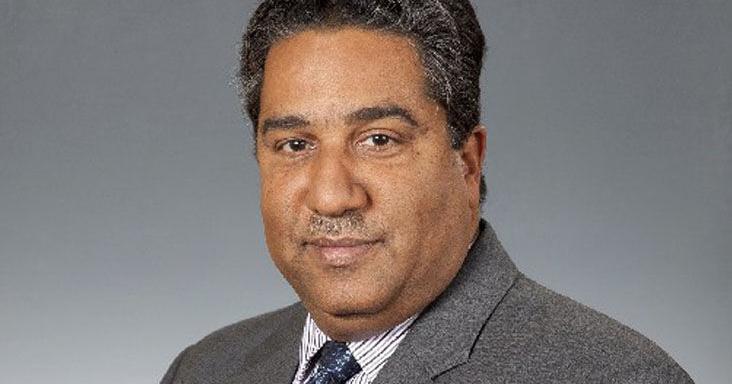
    On May 20, Suriname officially took over the rotating chairmanship of the Council for Foreign and Community Relations (COFCOR), the key ministerial coordination body for foreign affairs of the Caribbean Community (CARICOM), at the opening of the body’s 29th plenary session held in Paramaribo. The gathering, hosted at Paramaribo’s Yogh Hospitality, brought together top foreign affairs officials from across the Caribbean bloc to align shared positions on pressing cross-regional and global challenges.

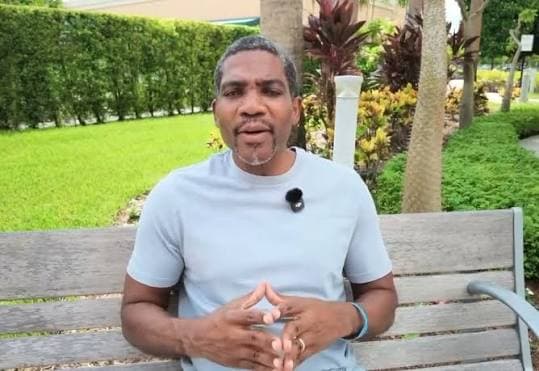
    In his keynote opening address, incoming chairman Melvin Bouva, Suriname’s Minister of Foreign Affairs, outlined a clear priority agenda for his tenure, emphasizing that the Caribbean bloc must amplify its collective profile on the global stage. Bouva argued that CARICOM, as a region rich in natural resources, holds unique strategic importance for the entire world. He called on member states to not only deepen existing partnerships with major international actors, but also conduct rigorous reviews of current cooperation frameworks to ensure they deliver tangible, equitable benefits to all Caribbean nations.

    Bouva also noted that Suriname’s leadership of COFCOR lays critical groundwork for the country’s upcoming assumption of the overall CARICOM presidency, which President Jennifer Simons will take over in July this year. During Suriname’s COFCOR chairmanship, top policy priorities will include advancing coordinated action on climate change adaptation, strengthening regional energy and food security, and expanding cross-regional connectivity infrastructure. Expanding strategic cooperation with partner nations across Africa, Asia, Europe and the Middle East also sits high on the agenda. Beyond these new priorities, the ongoing humanitarian and political crisis in Haiti remains a core ongoing focus for the bloc, while discussions will also cover shifting global geopolitical dynamics and the potential expansion of CARICOM’s membership.

    Outgoing chairman Denzil Douglas, who led COFCOR through the 2025-2026 term, opened the session with a retrospective of his tenure, marked by rising global tensions and growing instability in the international rules-based order. Douglas pointed to ongoing armed conflicts in Eastern Europe and the Middle East as key sources of spillover risk for small island and coastal Caribbean states, noting that small nations increasingly face challenges navigating a global order where narrow national interests often override agreed international norms.

    Douglas stressed that sustained unity among CARICOM member states remains non-negotiable to protect regional stability, pointing to ongoing crises in Haiti, Cuba and Venezuela, alongside recurring global public health threats including hantavirus and Ebola, as clear examples of challenges that demand a coordinated collective response. He concluded his address by formally congratulating Bouva and the Suriname delegation on assuming the COFCOR chairmanship, expressing his confidence that the incoming leadership will successfully strengthen CARICOM’s collective voice in global affairs.

  • Govia Welcomes New Senate, Praises Youth and Female Representation

    Govia Welcomes New Senate, Praises Youth and Female Representation

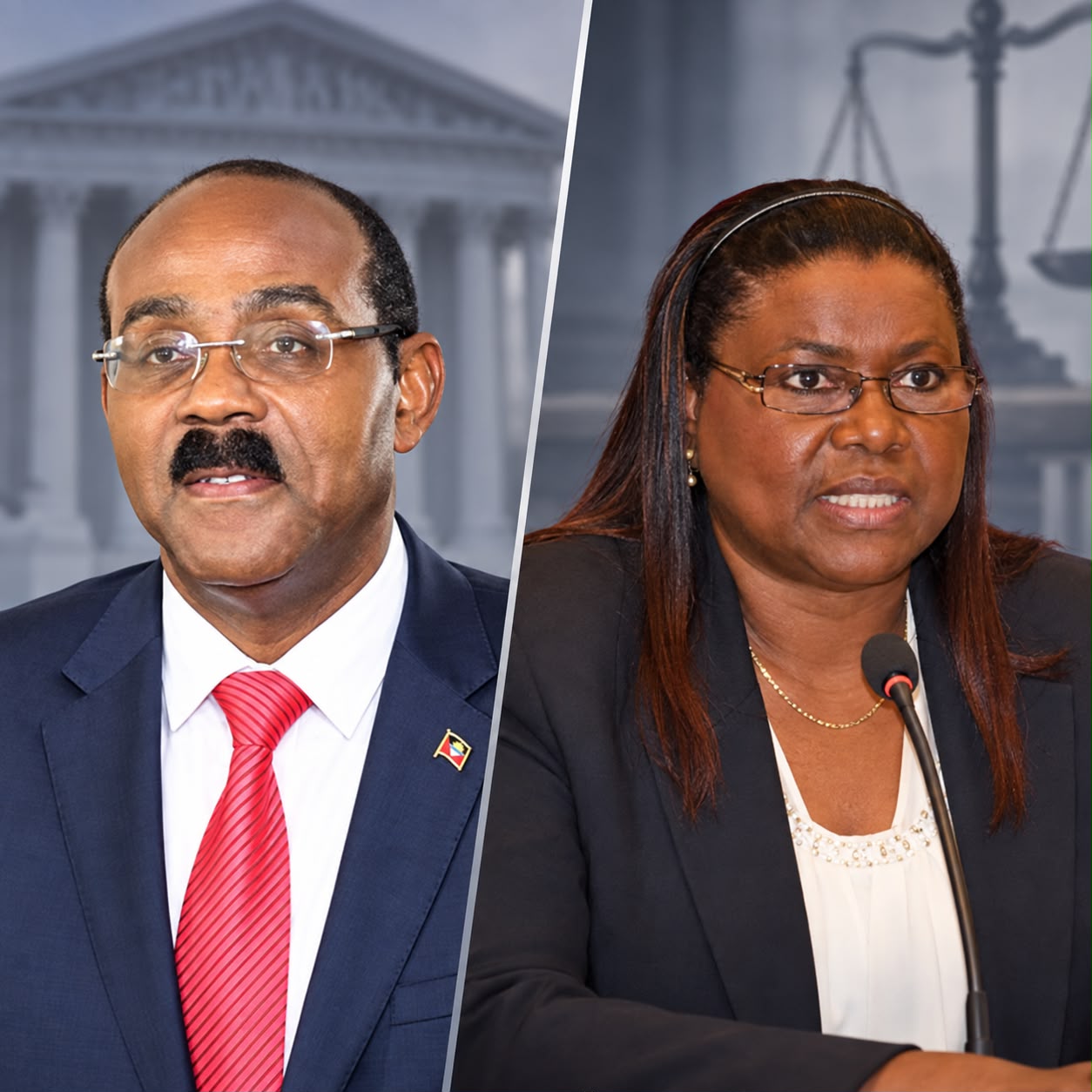
    In the ceremonial opening of Antigua and Barbuda’s Senate this Wednesday, held weeks after the April 30 general election reshaped the nation’s legislative bodies, Leader of Government Business in the Senate Shenella Govia opened proceedings with warm welcomes, reflective praise, and a forward-looking call for collaborative governance.

    First, Govia extended her congratulations to Alincia Williams-Grant and Philip Shoul, who secured re-election to the top leadership roles of the Upper House. Addressing Williams-Grant directly, Govia expressed full confidence in the pair’s leadership, saying, “I know that you’re more than capable to lead this honorable house.”

    Beyond leadership appointments, Govia centered much of her address on the shifting demographic makeup of the government’s Senate caucus, celebrating what she framed as meaningful progress toward inclusive governance. She highlighted that five members of the government bloc are women, a milestone that transformed the chamber into what she called “an institution of empowerment and an institution of opportunity.” Reflecting on the shift, she added, “How refreshing it is specifically to see five of us on this side as women.”

    Govia also turned attention to the growing inclusion of young people in the nation’s legislative landscape, pointing to a clear pipeline of young political talent nurtured through Senate service. She noted that multiple young former senators from the previous term have now advanced to take up seats in the lower House of Representatives, a progression she credited to the intentional work of the Antigua and Barbuda Labour Party. “We have seen it from the last Senate … and now they are in the lower house. This is the type of institution that the Antigua and Barbuda Labour Party continues to build,” she explained.

    Extending her welcome across the aisle, Govia extended greetings to newly appointed opposition senators, sharing her hope that the incoming parliamentary term would be defined by rigorous, productive debate that serves the best interests of the nation. “We look forward to a very interesting debate in this house,” she said. “May our discussions be very fruitful.”

    Closing her address, Govia offered gratitude to Prime Minister Gaston Browne for the trust he placed in all government-appointed senators, and confirmed she was eager to continue her own service in the role of Leader of Government Business in the Senate for the new term.

  • U.S. Embassy hosts Bourbon Diplomacy celebration in Santo Domingo

    U.S. Embassy hosts Bourbon Diplomacy celebration in Santo Domingo

    In a celebration of American cultural heritage and a public display of deepening bilateral ties, the U.S. Embassy in Santo Domingo, in partnership with the United States Department of Agriculture and its Office of Agricultural Affairs, has launched a signature “Bourbon Diplomacy” gathering. This event forms a core part of the Freedom 250 initiative, a nationwide program organized by the U.S. government to mark the upcoming 250th anniversary of the United States’ declaration of independence, set for full commemoration through 2026.

    The cross-sector gathering drew a diverse roster of high-profile attendees, spanning top business executives from the Dominican Republic, industry leaders from the country’s key hotel and retail sectors, senior Dominican government officials focused on trade and agricultural policy, sitting members of the international diplomatic corps based in the country, and prominent stakeholders from the Dominican Republic’s world-renowned tobacco industry. Together, the guests explored overlapping themes of craft, cultural tradition, and cross-border commercial collaboration.

    Speaking at the event, Leah Francis Campos, the U.S. Ambassador to the Dominican Republic, centered her remarks on the unique place of bourbon in American national identity, calling it one of the most recognizable and enduring icons of U.S. cultural heritage. She also took the opportunity to underline the robust and mutually beneficial commercial partnership between the two nations, noting that annual bilateral trade between the U.S. and the Dominican Republic already surpasses $33 billion.

    A key highlight of the evening was the deliberate pairing of two iconic craft products from each nation: authentic American bourbon and premium handcrafted Dominican cigars. The side-by-side showcase allowed attendees to appreciate the generations of refined craftsmanship and deeply rooted cultural traditions that define both industries, drawing clear parallels between the two product legacies.

    The U.S. Embassy formally acknowledged the critical support of the event’s official sponsors: Álvarez & Sánchez, United Brands, Beam Suntory, and El Catador. It also recognized the valuable participation of the Dominican Republic’s most prominent cigar manufacturers, including leading brands Arturo Fuente, La Aurora, La Galera, La Flor Dominicana, and industry association ProCigar.

    As a standing U.S. government project, Freedom 250 is coordinating a full calendar of commemorative activities across the globe leading up to and throughout 2026, the official anniversary year. Beyond reflecting on the United States’ 250-year history, the initiative has a core stated goal of strengthening people-to-people and governmental ties with international partner nations — the Dominican Republic included.

  • Southeast US Consul General Oliver Mair to be conferred with honorary doctorate

    Southeast US Consul General Oliver Mair to be conferred with honorary doctorate

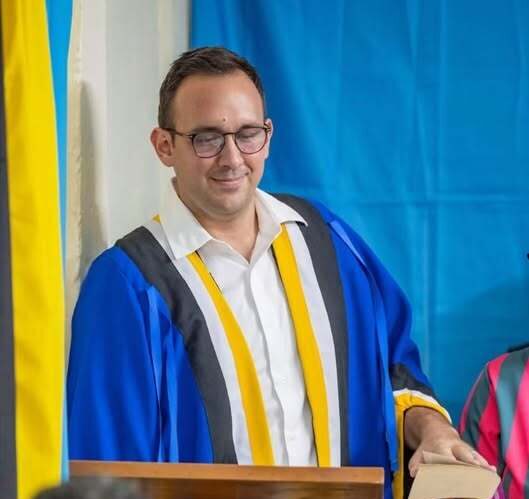
    KINGSTON, Jamaica — Longstanding Jamaican diplomat Oliver Mair, who serves as the island’s Consul General to the Southeast United States, is set to add another prestigious honor to his growing collection of accolades: an honorary Doctor of Ministry degree from the University of Fort Lauderdale, conferred in recognition of his extraordinary public service and lifelong dedication to lifting up Jamaican communities at home and abroad.

    The honorary degree, awarded honoris causa, will be officially presented during a ceremony on May 22 at Faith Centre Ministries in Sunrise, Florida. University officials selected Mair for the distinction citing his exemplary leadership, unwavering personal integrity, and consistent commitment to service that has left a deep, enduring mark on both the Jamaican diaspora and communities across the Southeast U.S.

    In a statement announcing the honor, the university highlighted that Mair’s decades of public service embody a living demonstration of active ministry: one centered on advancing equal justice, uplifting marginalized and underserved communities, and fostering hope for those facing adversity. His work aligns perfectly with the core mission and values the institution strives to instill in every graduate, rooted in the principle of servant leadership, the university added.

    This honorary doctorate is the latest in a series of recognitions for Mair’s innovative, impact-focused community work. Most recently, he led the highly successful Jamaica Hi-5k Reggae Run/Walk, a fundraising event that drew a record-breaking turnout of nearly 2,000 participants to generate critical support for public healthcare facilities across Jamaica. Prior to that, the Louise Bennett-Coverley Heritage Council, one of the most prominent organizations serving the Jamaican diaspora in the U.S., named Mair its “Cultural Man of the Decade” for his work connecting diaspora communities to their Jamaican heritage.

    Dona-Lee Raymond, president of the Louise Bennett-Coverley Heritage Council, praised Mair for his unique approach to community building, noting that he has leveraged culture, sports, and business development to energize, unify, and integrate the Jamaican diaspora across the Southeast. Former Jamaican Diaspora Advisory Board member Marlon Hill echoed that praise, emphasizing that Mair has been a constant, tireless presence across every type of community initiative, from interfaith church services to cultural music concerts to coordinated disaster response activations following regional emergencies.

    John T Hodgson, a veteran radio broadcaster and Lauderhill City Commissioner, added that Mair has fundamentally redefined the role of a diplomatic consul. Since Mair took up his post in 2018, Hodgson explained, he has transformed the Jamaican Consulate from an office focused solely on administrative paperwork and formal diplomatic protocol into an embedded community hub rooted in the daily lives of Jamaican-Americans across the region.

    For his part, Mair emphasized that his work is centered on lifting up the Jamaican diaspora, a community he describes as an extension of Jamaica itself that expands the nation’s global influence far beyond the island’s borders. “Everywhere we go, doors are opened because a Jamaican is there, working to ensure Jamaica’s interests are honoured and respected,” Mair explained, noting that the diaspora offers far more than just remittance income to the home island: it also provides invaluable expertise, professional advice, and technical support that drives national development.

    Mair pointed to the Southeast U.S. as a particularly vibrant hub of diaspora activity, noting that South Florida alone is home to 27 elected officials of Jamaican heritage, who have opened pathways for future generations of Jamaican-American leaders. The region’s diaspora community is deeply engaged year-round, consistently giving back to both their adopted homes and their country of origin, he added.

    Beyond traditional diplomatic and fundraising work, Mair founded and hosts a weekly virtual gathering that serves as a centralized community update for the 13 states that fall under his consular remit. The weekly series highlights the latest developments for diaspora communities and shares updates on progress and opportunities in Jamaica, functioning as a hub for information, connection, and investment that empowers community members to engage with Jamaica’s growth.

    Looking ahead, Mair says he remains committed to his work, emphasizing, “I want to keep being a pulsebeat of the best we can be.”

  • Labor reform bill approved with new rules on leave and contract suspensions

    Labor reform bill approved with new rules on leave and contract suspensions

    In a landmark vote held in Santo Domingo, the lower legislative chamber of the Dominican Republic, the Chamber of Deputies, has passed the first reading of a sweeping piece of legislation that overhauls the nation’s decades-old Labor Code. The bill brings targeted changes to three core areas of national labor regulation: employee leave policies, rules for temporary employment contract suspension, and mandatory workplace safety protocols for high-risk job roles. After a six-month review period carried out by a specially appointed legislative commission, the reform proposal earned full backing from all 144 deputies in attendance during the final vote. The commission’s review process was originally extended beyond initial timelines, however, due to persistent unexcused absences from participating deputies that stalled committee work for weeks. Among the most significant changes approved in the current draft is a doubling of mandatory paternity leave for new fathers, raising the allowance from two full working days to four. While legislators debated two additional popular expansions to leave policies — extending paternity leave further to seven days and introducing a new bereavement leave entitlement for workers mourning the death of a sibling — both amendments were struck down before the final vote on the full bill. The reform also codifies for the first time 13 explicit legal grounds that allow employers to temporarily suspend employment contracts. These eligible causes include national states of emergency and other official government mandates that bar employees from safely or legally accessing their workplaces. A third key provision mandates mandatory pre-employment and periodic anti-doping testing for workers holding high-risk positions. This requirement applies to roles across multiple sectors, including public and private security, all forms of commercial transportation, heavy machinery operation, work involving the handling of hazardous equipment, and any profession that requires regular direct contact with minors. The bill will now advance to a second reading for final debate and voting before moving to the Dominican Senate for further consideration.

  • Abinader announces restoration plans for historic Agua y Luz Theater

    Abinader announces restoration plans for historic Agua y Luz Theater

    A decades-long wait for revival is coming to an end for Santo Domingo’s iconic abandoned Agua y Luz Theater, after Dominican President Luis Abinader greenlit a public bidding process for its full restoration and transformation into a cutting-edge cultural and tourism destination. The official announcement came at a special luncheon Abinader hosted at the National Palace, bringing together leading figures from the Dominican artistic community to discuss the landmark cultural infrastructure initiative.

    Tourism Minister David Collado shared details of the approved plan with reporters following the meeting, confirming that the scope of work covered by the bidding includes full structural restoration, interior remodeling, and the installation of a permanent new roof. This critical addition will allow the venue to host events year-round, regardless of inclement weather that would disrupt open-air or uncovered performances.

    Collado outlined the timeline for the project, noting that the pre-construction administrative and bidding evaluation phase is projected to last roughly three months. As soon as the evaluation process concludes, authorities will move swiftly to award the contract and kick off renovation work on the site.

    During the gathering with artists, President Abinader opened up about the personal inspiration behind the project. Before taking office, he visited a prominent performance venue in Nashville, Tennessee, where he experienced the power of a permanent, dedicated space for showcasing live country music. That visit planted the seed for his vision: to create a similar enduring home for Dominican artists and a wide range of domestic cultural events.

    According to Collado, the government’s overarching goal is to reimagine the Agua y Luz Theater as a dynamic, lively entertainment hub that draws both local audiences and international tourists. The venue will follow the popular model that integrates immersive live performances with authentic cultural experiences, designed to deepen visitors’ connection to Dominican creativity and heritage. The initiative will be carried out in close partnership with leading national tourism and cultural institutions, with the ultimate aim of boosting Santo Domingo’s standing as a cultural destination and enriching the capital’s offerings for both arts enthusiasts and nightlife seekers.

  • Immigration tops new govt agenda

    Immigration tops new govt agenda

    In a ceremonial opening of the new Parliament marked by traditional pageantry, the Bahamas’ re-elected Davis administration has laid out an ambitious second-term policy platform that places sweeping immigration overhauls at the top of its legislative priorities. The event, held at the Atlantis resort, saw 41 newly elected Members of Parliament sworn into office before an audience of family, supporters, and dignitaries, who gathered in vibrant formal attire ahead of a post-ceremony celebratory reception.

    The ceremonial address was delivered by Governor General Cynthia “Mother” Pratt, who spoke on the administration’s behalf following the Progressive Liberal Party’s landslide victory in the May 12 general election. The PLP secured 33 of the 41 available parliamentary seats, granting Prime Minister Philip “Brave” Davis a substantial governing majority and breaking a 25-year political trend in which incumbents were ousted after a single term.

    Central to the administration’s planned legislation is a package of tough new immigration measures crafted to address longstanding public concerns over document fraud, border security, and irregular migration. Pratt announced plans to introduce the Employer Immigration Compliance Act, which will impose harsh new penalties on businesses that violate existing work permit regulations. Complementing this reform will be a new national e-verify portal, allowing employers to confirm a job candidate’s legal work eligibility before extending an offer of employment.

    Additional policy changes include daily fines for individuals who overstay their valid visas, strengthened enforcement of re-entry bans, and a fully integrated biometric immigration system equipped with overstay alerts, automated biometric e-gates, and upgraded fraud detection infrastructure. A dedicated immigration fraud intelligence unit will also be established to investigate and prosecute violations, with mandatory sentencing required for any public official found guilty of facilitating immigration or passport fraud.

    These pledges come in the wake of a 2023 controversy that prompted the administration to launch an independent immigration commission. After leaked documents exposed allegations of discretionary approvals and political interference linked to then-Immigration Minister Keith Bell, the Davis administration promised the panel would overhaul national immigration policy, review departmental operations, and rebuild public trust. To date, however, the government has released little detailed information about the commission’s ongoing work.

    Pratt noted that the administration begins its second term against a backdrop of widespread global uncertainty, driven by accelerating climate threats, persistent inflationary pressures, and rapidly shifting geopolitical dynamics. “Armed with our unshakeable confidence in the strength, resilience and potential of the Bahamian people, my government is resolved to meet these challenges head on,” she stated in the official Speech from the Throne.

    Beyond immigration reforms, the administration outlined a broad range of domestic policy initiatives across multiple sectors. To protect consumers from anti-competitive practices, the government will introduce updated modern competition legislation that targets price fixing, abuse of market dominance, and unfair pricing schemes. A new national investment policy will also be rolled out, establishing clear national development priorities and transparent requirements for foreign and domestic investors to ensure Bahamian residents share in the benefits of economic growth.

    Workers’ rights will see a generational update via the planned Employment Bill 2026, which the administration describes as the most significant expansion of labor protections in decades. The legislation will strengthen baseline workplace standards, expand maternity leave protections, add new provisions for mental health and wellness leave, and create new safety nets for working parents. Many of these provisions were first previewed during the Davis administration’s first term and included in the party’s pre-election manifesto, including a plan to roll out three annual unpaid mental wellness days for workers as an initial pilot.

    To boost public sector efficiency, a new National Productivity Council will be established to improve government performance, and a contributory public sector pension plan will be rolled out to expand coverage for civil servants. In the housing sector, the government will launch a national rental property registration system that enforces minimum living standards and strengthens tenant protections, alongside a new Residential Tenancy Authority with the power to conduct inspections, investigate complaints, and enforce housing regulations nationwide.

    Energy policy reforms will include a new Electricity Consumer Protection Code, which grants the Utilities Regulation and Competition Authority expanded power to enforce service standards, improve billing transparency, and strengthen consumer safeguards. Proposed energy equity legislation will eliminate price penalties that force Family Island residents to pay higher electricity rates solely based on their geographic location, and major national energy contracts will now require mandatory local content hiring and workforce training to ensure Bahamian workers benefit from the ongoing transition to clean energy. The administration also plans to promote wider adoption of energy-efficient appliances and residential renewable energy systems.

    The administration’s additional second-term commitments include comprehensive reform of the national education curriculum, expanded access to healthcare coverage, enhanced legal protections and social support for elderly residents, and new initiatives to boost national food security. Plans to grow the country’s creative economy include establishing an online intellectual property rights registry and a small claims dispute mechanism to protect Bahamian creators, alongside new tax incentives to attract more local and international film production to the islands.

    On climate resilience and environmental protection, the government reaffirmed its commitment to finalizing an updated national building code and will launch a dedicated Bahamas Environmental Tribunal to strengthen enforcement and adjudication of environmental regulations. Comprehensive new waste management and marine pollution legislation will also be introduced, with stronger criminal and civil penalties for violations.

  • Defence tests Floyd Green’s credibility in cops’ murder trial

    Defence tests Floyd Green’s credibility in cops’ murder trial

    A high-stakes murder trial involving six sitting and former Jamaican police officers took a dramatic turn Wednesday, as defense attorneys launched a sustained attack on the credibility of sitting Agriculture Minister Floyd Green, one of the prosecution’s key eyewitnesses. Green, who took the witness stand in the Home Circuit Court, maintained his composure and stuck firmly to his account of the 2013 shooting that left three men dead.

    The six officers on trial — Sergeant Simroy Mott, Corporal Donovan Fullerton, Constables Andrew Smith, Sheldon Richards, Orandy Rose, and Richard Lynch — stand accused of murdering Matthew Lee, Ucliffe Dyer, and Mark Allen. The fatal incident unfolded on January 12, 2013, on Acadia Drive in St. Andrew. Initial official accounts framed the deaths as the outcome of a shootout between the three men and responding officers; one additional man reportedly fled the scene, and authorities say two illicit firearms were recovered from the site. Corporal Fullerton faces an extra charge of submitting a false statement to Jamaica’s Independent Commission of Investigations, the body that probes law enforcement misconduct.

    Green, who was not in office at the time of the shooting, is one of only two civilian witnesses who claim to have observed parts of the incident. The minister has testified that he watched the events unfold from the bedroom window of his top-floor apartment, which sits at an elevation overlooking the crime scene.

    Lead cross-examination was handled by defense attorney John Jacobs, who is part of the legal team representing the officers alongside co-counsel Hugh Wildman and Althea Grant-Coppin. Jacobs systematically questioned inconsistencies between Green’s initial testimony and crime scene evidence captured in photographs.

    Early in the cross-examination, Jacobs called Green to account for his earlier claim that he saw a man of Indian descent standing outside a blue Mitsubishi Outlander, holding what looked to be vehicle registration papers. After Green confirmed that account, Jacobs pulled up a marked crime scene exhibit for the judge and jury to review, asking Green to point to any object matching the description of the papers in the photograph. When Green admitted he could not see the papers in the image, Jacobs pressed him to confirm he still stood by his original statement. Green clarified that his observation reflected what he saw on the day of the shooting, not what was visible in the post-incident photograph, reaffirming that he clearly saw the man standing by the vehicle’s passenger side with what he assumed were car papers. Jacobs directly accused the minister of lying under oath, a claim Green immediately rejected, stating he had been fully truthful with the court.

    Jacobs next turned to Green’s claim that he saw a man wearing a white shirt sitting on the road behind the parked Mitsubishi. After Green pointed to the general area behind the vehicle on the photograph, Jacobs asked him to confirm he saw no blood-like discoloration in that spot, which Green did. When Jacobs directed his attention to a patch of discoloration on the adjacent sidewalk to the left of the vehicle, Green acknowledged the red staining. Jacobs put forward an alternative account: that the man in the white shirt was actually on the sidewalk, not the road, and that the parked Mitsubishi — which was left facing Barbican Road with both front doors propped open — would have blocked Green’s view of the road from his apartment window. Green pushed back, noting his apartment’s elevated position meant no obstacles blocked his line of sight, and repeated that he clearly saw the man in the white shirt on the road.

    The cross-examination then turned to Green’s account of where the man of Indian descent’s body was located on the ground. Green confirmed he could see a second patch of discoloration on the sidewalk near the vehicle’s left front passenger door. When asked if this was the location he had previously referenced, Green stated he could only identify the general vicinity, noting that the man had been pulled from the vehicle and his body lay on the ground near the passenger door. When Jacobs challenged Green over previous markings on the exhibit that purported to show the exact location, Green clarified the marking was only ever intended to indicate a general area, not a precise spot.

    The tense day of cross-examination wrapped up with Green standing by all core elements of his testimony. The high-profile trial is scheduled to resume proceedings on Thursday.

  • Davis administration revives long-delayed FOIA promise

    Davis administration revives long-delayed FOIA promise

    For more than a decade, Bahamian voters have waited for successive national governments to turn a passed Freedom of Information Act (FOIA) from a hollow piece of legislation into a working framework for open governance. Now, the Davis administration has once again committed to full implementation of the law, reviving a decades-old transparency promise that has gone unfulfilled through multiple previous terms of office.

    Governor General Cynthia “Mother” Pratt formally laid out the renewed commitment in the annual Speech from the Throne this week, as the administration unveiled its updated legislative agenda for the coming term. “My government will continue expanding and fully implementing the Freedom of Information Act, and ensure that public bodies maintain trained FOIA officers and disclosure systems,” Pratt said in her official address.

    The new pledge comes against a backdrop of more than 10 years of broken transparency commitments from every Bahamian administration that has held power since the FOIA was first passed. The legislation was initially approved by the Ingraham administration just ahead of the 2012 general election, but no official enactment date was ever set. The subsequent Christie administration restructured the bill to update its provisions, but never moved to put those provisions into effect. In 2021, the Minnis administration appointed the nation’s first ever FOIA commissioner, but the new department was left chronically underfunded, preventing it from carrying out its core mandate.

    Before the Davis administration took office following the 2021 general election, the Progressive Liberal Party’s (PLP) Blueprint for Change campaign platform made a sweeping set of transparency and accountability promises. Beyond full implementation of the FOIA, the party pledged to deliver an Ombudsman Bill, an updated Public Disclosure Act, a comprehensive new Anti-Corruption Act, campaign finance reform, a formal government Code of Conduct, a national Whistleblower Act, electoral reform and public procurement reform.

    To date, only two of those promised reforms – electoral reform and procurement reform – have been completed, and watchdog groups continue to raise persistent concerns about gaps and weaknesses in the new procurement system. The Protected Disclosures Bill, which establishes legal protections for whistleblowers who report unlawful or unethical government activity, did pass Parliament during the administration’s first term, but no official confirmation has been given that the law has actually been enacted and put into force. Notably, none of the other unfulfilled transparency pledges from the 2021 campaign were included in this week’s released legislative agenda.

    Adding to questions about the administration’s commitment, Prime Minister Philip “Brave” Davis stated publicly as recently as June 2025 that full funding for FOIA implementation and other anti-corruption mechanisms was not a top priority for his government. Governance advocates have long warned that repeated delays to these anti-corruption and transparency reforms are no accident, arguing that prolonged inaction amounts to a deliberate choice to avoid public oversight of government activity.

    When fully implemented, the FOIA will grant Bahamian citizens a legal right to access records held by all public authorities, a foundational change that advocates say will drastically improve government transparency and hold elected officials accountable for their decisions. More than 120 countries around the world – including major democracies like the United States, United Kingdom, Canada and regional neighbor Jamaica – already have active freedom of information or access-to-information laws that enshrine this right for their populations.

  • Newell pushes sweeping environmental overhaul amid transparency concerns

    Newell pushes sweeping environmental overhaul amid transparency concerns

    During a sectoral debate on Jamaica’s environmental policy held Wednesday in the House of Representatives, Opposition spokesperson for environment and climate resilience Omar Newell has outlined a bold, comprehensive plan to overhaul the island nation’s outdated environmental governance system, arguing that far stronger institutional safeguards are required to restore public trust in major environmental decision-making processes.

    Newell opened his address by noting that Jamaica’s current regulatory framework has not kept pace with the converging crises the country now faces: intensifying climate-driven extreme weather, rapidly growing development pressures, and increasingly complex environmental disputes that expose cracks in existing oversight. He emphasized that the most critical reform the nation must pursue is restructuring environmental governance itself, pointing to recent high-profile controversies that have laid bare deep structural flaws in how decisions are currently reached.

    While he did not elaborate at length on the case, Newell referenced the ongoing public dispute surrounding Bengal Development Limited’s proposed mining and quarrying project in St Ann’s Dry Harbour Mountains as a clear example of these systemic failures. In that case, the Natural Resources Conservation Authority (NRCA) initially rejected the project’s application in 2020 over widespread environmental risks, only to have that decision overturned months later. The Constitutional Court ultimately ruled the issued permit unconstitutional, but the government has announced plans to appeal the ruling, prolonging the conflict. The case has sparked fierce debate among environmental advocates and good governance groups, who have long questioned how frequently political influence can alter technical, science-based recommendations within Jamaica’s environmental approval process.

    For Newell, the controversy is not an isolated incident of mismanagement; rather, it raises fundamental, system-wide questions about the independence and transparency of Jamaica’s entire environmental oversight regime. “The bigger question is, can environmental science and technical expertise be overridden by political discretion without sufficiently transparent safeguards?” he told the chamber.

    He further extended these concerns to the recently enacted National Reconstruction and Resilience Authority (NaRRA) Act, warning that certain provisions in the new law carry striking parallels to past controversies over ministerial powers to overrule independent technical decisions. Newell was careful to frame his push for reform as pro-growth rather than anti-development, emphasizing that clearer, more transparent rules benefit both investors and local communities. “This argument is not anti-development, it is not anti-investment. It is pro-transparency, pro-science, pro-accountability, Mr Speaker, and pro-Jamaica. Because investors deserve certainty, communities deserve fairness, and the country deserves confidence that environmental decisions are being made objectively and transparently,” he explained.

    At the core of Newell’s reform proposal is the creation of a fully independent environmental protection agency, established by statute and explicitly insulated from political and commercial pressure. He pointed out that the current structure of the National Environment and Planning Agency (NEPA) reinforces a widespread public perception that environmental protection is secondary to development interests: even after the government created a stand-alone environment ministry, NEPA still falls under the oversight of the Ministry of Economic Growth and Infrastructure Development.

    Beyond the new independent agency, Newell’s full reform package includes multiple targeted updates to Jamaica’s regulatory regime: modernization of the decades-old NRCA Act, an updated, streamlined environmental permitting framework, mandatory public publication of all technical recommendations that underpin approval or denial decisions, codified legal rights of appeal for affected parties, statutory timelines to prevent unnecessary delays in decision-making, expanded scientific monitoring capacity across vulnerable ecosystems, and the creation of a specialized, independent environmental tribunal to hear permit disputes. “What better way to have science lead the way than to have permit appeals be overseen by a transparent, competent authority and not one political director?” Newell asked.

    He added that the governing board of the new independent agency should be appointed through a transparent, open process modeled after the country’s Integrity Commission, requiring fixed professional qualifications for members, broad consultation with civil society and stakeholder groups, and legal protections against arbitrary removal from office. “It must include broad stakeholder consultation, fixed qualification requirements, protection from arbitrary removal, and representation from environmental science, engineering, planning, law, climate science, and civil society,” he said.

    Beyond institutional reform, Newell drew attention to what he characterized as widespread, growing environmental neglect across Jamaica, pointing to worsening seasonal flooding, rampant illegal dumping of waste, repeated failures of critical infrastructure during extreme weather, and chronically weak enforcement of existing environmental laws. He stressed that climate resilience and environmental protection can no longer be sidelined as secondary policy priorities, particularly as the island enters another Atlantic hurricane season, when the risk of catastrophic storms rises sharply.

    “We cannot continue building 20th century infrastructure for 21st century concerns. The collapse of roads and bridges during periods of heavy rainfall should remind us that climate resilience is not theoretical. Too many roads repeatedly fail, too many drains repeatedly overflow, too many retaining walls repeatedly collapse,” Newell said.

    He also renewed longstanding calls for the government to provide a public update on the controversial Fort Rocky development project in Port Royal, accusing the administration of remaining silent on rehabilitation efforts months after state agencies cleared protected sand dunes and mangrove ecosystems to make way for the project. Newell argued that Jamaica is currently at a defining crossroads, where national leaders will decide whether long-term environmental protection will be prioritized over short-term political and economic gains.

    “The Jamaica we hand over to our children is being shaped right now by the decisions we make, by the laws we pass in this honourable House, by the systems we tolerate. The environment is not a luxury; it is life itself, and if we fail to protect it, history will never forgive us,” he declared.