分类: politics

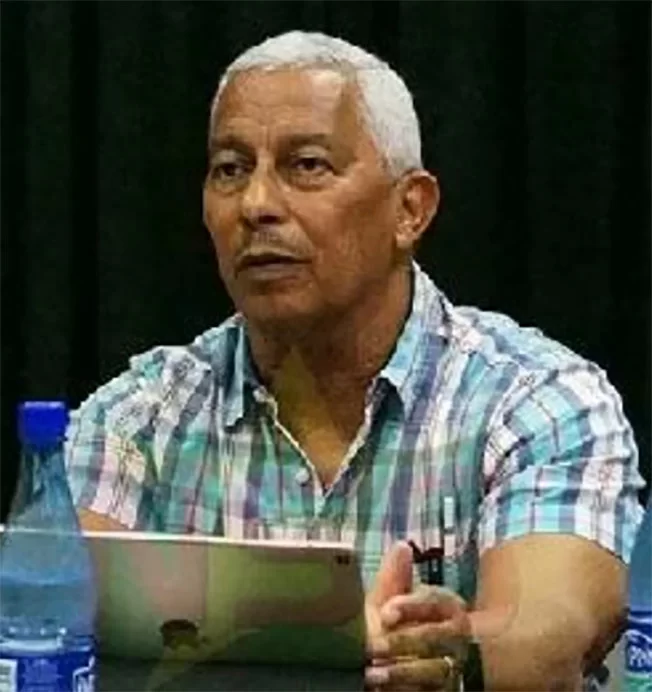
  • Hughes Says Opposition Senators Intend to Bring “Highest Level of Debate” to Senate

    Hughes Says Opposition Senators Intend to Bring “Highest Level of Debate” to Senate

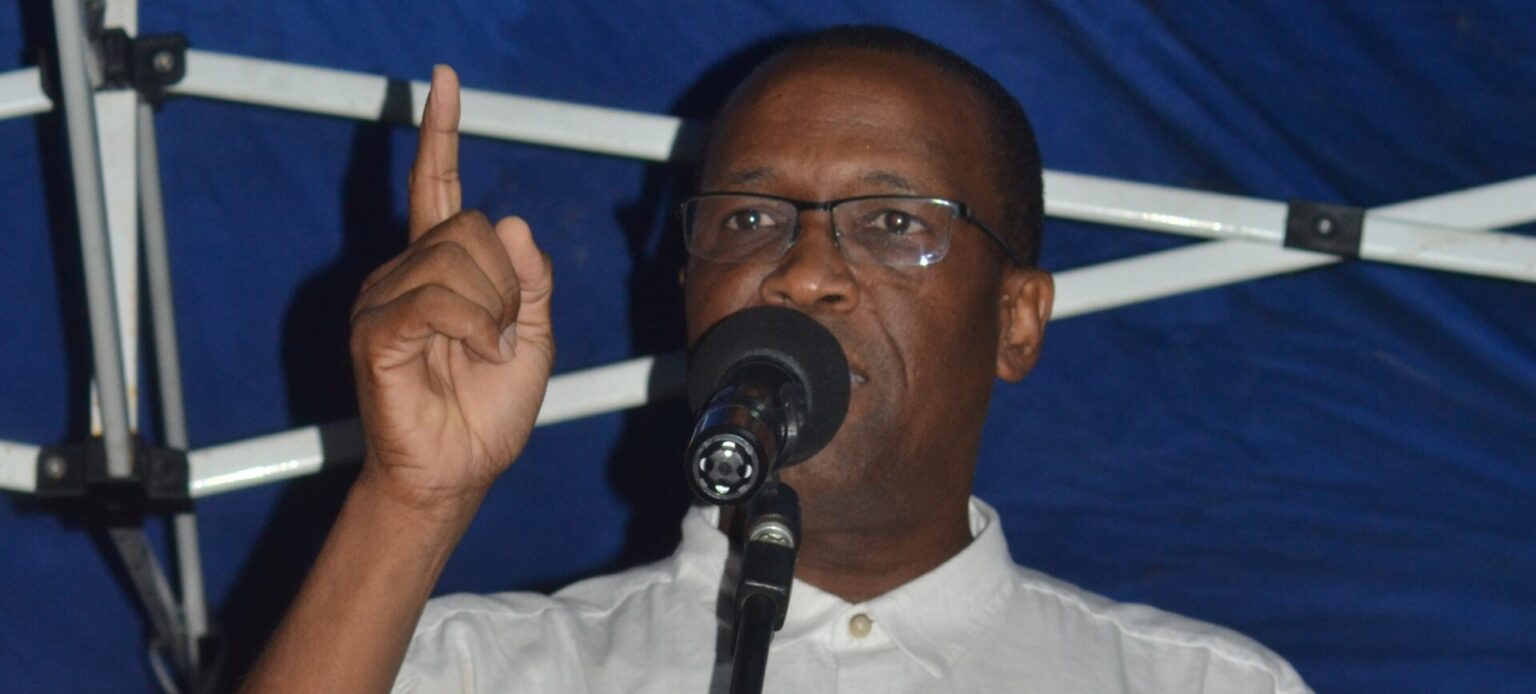
    Fresh off the swearing-in of newly appointed senators following the April 30 general election, Antigua and Barbuda’s Senate Minority Leader Chester Hughes has laid out a clear, principle-driven roadmap for the opposition bloc in the Upper House, emphasizing rigorous policy-centered debate over partisan conflict.

    Speaking to the full chamber in his first address after the inauguration ceremony Wednesday, Hughes positioned the opposition as a constructive watchdog for national interests, rather than an ideological foil set on blocking government action for political gain. He stressed that every piece of legislation brought before the Senate would receive thorough, research-backed review from opposition senators, with criticism rooted in national pride rather than partisan gain.

    “We will criticize constructively. We will criticize with a sense of purpose and national pride and not for political reasons,” Hughes told assembled lawmakers. “We will not debate bills and politics. But we will debate bills and policies and Antigua and Barbuda along with principles.”

    In a break from common opposition tactics that prioritize partisan positioning, Hughes clarified that opposition senators will not reject government proposals out of hand. If legislation requires revision and referral back to the Lower House, the decision will be framed as a substantive challenge to problematic provisions, not a blanket rejection of the government’s initiative, he said.

    To back this commitment to rigorous oversight, the Minority Leader revealed he has already issued formal guidance to all opposition senators requiring comprehensive pre-debate research on every bill. This preparation, he explained, will allow the bloc to put forward positions that align with what is right and principled for the future of Antigua and Barbuda, rather than reactive political talking points.

    Hughes also used the address to elevate youth engagement as a core priority for the new Senate term, issuing a direct challenge to first-time and younger senators to center the concerns of Antigua and Barbuda’s younger population. He urged these lawmakers to not only advocate for youth interests in legislative deliberations, but also to bridge the gap between the Senate and younger generations by breaking down how pending legislation directly impacts their daily lives and long-term livelihoods.

    Looking past the recent election campaign, Hughes closed his remarks by calling for cross-party civility, noting that political rivalries do not need to translate to personal or professional animosity. He emphasized that all elected lawmakers share a common goal of advancing national development, regardless of partisan affiliation.

    “The politics is over. The work begins to continue the building of the nation of Antigua and Barbuda,” Hughes said.

  • Senate President Challenges Young Senators to Help Shape Antigua and Barbuda’s Future

    Senate President Challenges Young Senators to Help Shape Antigua and Barbuda’s Future

    Following the recent general election in Antigua and Barbuda, the nation’s newly formed Senate has held its historic first formal sitting, where Senate President Alincia Williams-Grant delivered a clear, compelling charge to all appointed senators: approach their public roles with intentional discipline, thorough preparation, and unwavering dedication to serving the national interest.

    The address came immediately after the formal swearing-in ceremony for the new cohort of upper house legislators, where Williams-Grant emphasized that every senator carries a constitutionally mandated responsibility that demands the utmost gravity. She reminded members that the public holds high expectations for their work in the chamber, and that constituents across Antigua and Barbuda will be closely tracking every action, statement, and policy contribution they make. “The people are watching you,” she stressed, underscoring the accountability that comes with legislative office.

    To help senators meet these public expectations, Williams-Grant called on all members to deepen their familiarity with the Senate’s standing orders, mastering the formal rules that structure debate, procedure, and interactions within the chamber. “When you come into this house, that is what’s guiding us,” she explained, highlighting even basic procedural distinctions that are critical to effective legislative work, such as the difference between a point of order and a point of elucidation.

    Beyond procedural knowledge, the Senate President pushed members to prioritize ongoing training and professional growth, pushing back against the common misconception that an appointment to public office alone is sufficient preparation to serve effectively. “Training is important. So don’t close your mind that, ‘Hey, I’ve arrived, I’m a senator,’” she said. “There’s opportunity for growth and development” that all legislators should actively pursue throughout their tenures.

    A central, uplifting theme of Williams-Grant’s opening address was the growing representation of young people in the nation’s parliamentary process. She highlighted the appointments of two youthful new senators, Shaquan O’Neal and Jonathan Wenner, both of whom cut their political teeth participating in the Parliament’s official Youth Parliament programmes.

    Williams-Grant shared that seeing the two young legislators take their seats left her “overwhelmed” with pride, noting that their presence is a direct product of the legislative body’s years of youth outreach work. “The youth are the future of tomorrow. They are present now, they have a voice, they have a contribution to make,” she argued, pushing back against narratives that relegate young people to a secondary role in national governance.

    She framed O’Neal and Wenner’s appointments as tangible proof that the Parliament’s investments in youth engagement are delivering meaningful results. Closing her address, Williams-Grant called for cross-partisan unity, urging all senators — regardless of their political affiliation — to collaborate on behalf of all people of Antigua and Barbuda. “What we need is a collective effort … to bring to focus all of the issues that affect people of Antigua and Barbuda,” she concluded.

  • Williams-Grant Says Women Still Underrepresented in Both Houses of Parliament

    Williams-Grant Says Women Still Underrepresented in Both Houses of Parliament

    Against the backdrop of the ceremonial opening of Antigua and Barbuda’s newly elected Senate, Senate President Alincia Williams-Grant has sounded a clarion call for expanded female engagement in national politics, arguing that current levels of women’s representation in both chambers of the country’s parliament remain far from sufficient even after incremental gains in the Upper House.

    The April 30 general election, which formed the current legislative body, brought a modest but notable increase in female representation in the Senate, bringing the total number of women holding seats to seven out of a total 17. This equals a 41 percent share of positions in the Upper House — a milestone Williams-Grant acknowledges, but one that still leaves the nation short of meaningful gender parity in political leadership.

    Addressing her fellow senators directly during the opening ceremony, Williams-Grant highlighted the stark gender gap that persists in the lower House of Representatives, where just two women occupy seats among the chamber’s 17 members. Doing the basic math, that adds up to less than 12 percent female representation in the lower house, a figure that underscores how much unfinished work remains to build a legislative body that truly reflects the demographic makeup of the nation it serves.

    Williams-Grant used the opening session to urge women across every ideological and partisan divide to keep pushing for greater access to leadership roles and increased presence in national governance. She encouraged women to frame their advocacy as both a national priority and a commitment to gender equity, regardless of whether they claim the label of feminist, pushing for tangible improvement to the state of representative politics in Antigua and Barbuda.

    Beyond pushing for more candidacies and seats, the Senate President challenged sitting female senators to step into active mentorship roles, engaging with parliamentary community outreach and leadership programs designed to nurture the next generation of young women leaders. She warned against complacency in the wake of the small gains made in the recent election, stressing that progress has been too slow to warrant resting on current achievements.

    “So let’s not rest on our laurels, women of Antigua and Barbuda. We have some work to do,” she added.

    Williams-Grant also took time to recognize and celebrate the women who stood as candidates in the April 30 general election, noting that simply stepping forward to run for public office represents a major, groundbreaking accomplishment that paves the way for future progress, even for those candidates who did not win their races.

  • IN PICTURES: Members of the Senate take their oath of Allegiance

    IN PICTURES: Members of the Senate take their oath of Allegiance

    A new legislative chapter has begun for the upper chamber of a national parliament, as all sitting members of the Senate gathered to complete one of democracy’s most foundational ceremonial steps: formally taking their oath of allegiance.

    The ritual, which marks the official start of a new Senate term, brings together both newly elected representatives and returning incumbents to publicly reaffirm their commitment to the nation’s constitution, laws, and collective public interest. Photographic documentation from the event captures the solemn, structured atmosphere of the occasion, showing lawmakers standing in their assigned chamber seats, raising their hands or placing hands on official documents as they recite the required oath.

    For many new members, the moment represents the culmination of months of campaigning and grassroots organizing, turning election night victory into official legislative responsibility. Returning senators, meanwhile, use the oath-taking as an opportunity to restate their dedication to the constituents who reelected them to another term of office.

    The ceremony paves the way for the Senate to begin its official legislative work in the coming days, including the election of chamber leadership, the establishment of standing committees, and the introduction of the first round of policy proposals that will shape the nation’s governance over the coming term. This traditional civic event underscores the peaceful transfer and continuation of legislative authority that is a cornerstone of democratic governance.

  • Alincia Williams-Grant elected President of the Senate, Shoul Vice President

    Alincia Williams-Grant elected President of the Senate, Shoul Vice President

    A new leadership era has begun in the national Senate, following the formal election of Alincia Williams-Grant to the chamber’s highest leadership post and Shoul to the position of deputy leader. The voting process, held during the opening plenary session of the new legislative term, saw Williams-Grant earn broad cross-chamber support to take on the constitutionally mandated role of presiding officer, responsible for managing parliamentary proceedings, upholding procedural rules, and representing the Senate in official diplomatic and domestic engagements.

    Political observers note that Williams-Grant brings years of legislative experience and a track record of cross-partisan collaboration to the role, having previously served on multiple key Senate committees focused on judicial reform and national infrastructure. Her election marks a significant milestone for legislative leadership in the nation, as she steps into the role at a time when the body is set to take up high-stakes policy debates ranging from economic recovery measures to climate change regulation.

    Shoul, who was elected alongside Williams-Grant as vice president, will step in to preside over sessions in the president’s absence and support the implementation of new procedural reforms aimed at streamlining the legislative process and improving transparency for constituents. Following the official vote tally, Williams-Grant delivered her inaugural address to the chamber, outlining a policy agenda focused on strengthening democratic norms, advancing bipartisan cooperation, and prioritizing the needs of working-class communities across the country. She emphasized that the Senate must work as a unified body to address the pressing challenges facing the nation, from rising living costs to systemic inequality in access to public services.

    Cross-party leaders offered congratulatory remarks following the election, signaling a tentative willingness to collaborate on key legislative priorities over the coming term. Many political analysts expect the new leadership team to bring a more collaborative tone to Senate proceedings, after a previous term marked by increased partisan gridlock on major policy initiatives.

  • PM: Make digital platform to track gig workers’ benefits

    PM: Make digital platform to track gig workers’ benefits

    Barbados’ Prime Minister Mia Mottley has announced a push for local collaborative development of a custom digital platform that will underpin the country’s new National Portable Benefits Framework, a landmark reform designed to close a critical gap in the island nation’s social security system. Addressing the House of Assembly this Tuesday, Mottley outlined that the new framework will finally extend access to National Insurance and Social Security Service (NISSS) benefits to workers in non-traditional and gig economy roles, a demographic long excluded from the existing 60-year-old social safety net. Instead of waiting for external contractors or lengthy procurement processes, Mottley called for immediate cross-agency cooperation between the National Insurance Scheme (NIS), the Ministry of Innovation, Science and Technology, and government tech body Govtech, alongside a public call for young, locally trained Barbadian software developers to lead the platform’s creation. The core function of the custom digital tool will be to track working hours across multiple concurrent jobs for gig, freelance, short-term contract and digital remote workers, enabling the portable benefits system to operate seamlessly and efficiently. Mottley emphasized that this reform is a necessary evolution of Barbados’ social security structure, which was designed decades ago for a traditional, permanent full-time workforce and no longer aligns with the realities of the 21st century labour market. She called on Labour Minister Colin Jordan and backbench Member of Parliament Toni Moore to coordinate moving the plan forward, framing it as a natural next step in ongoing actuarial research for NISSS reform. The Prime Minister also highlighted the direct fiscal stake the Ministry of Finance has in the project, noting that unprotected informal and gig workers who face financial hardship later in life ultimately become a public burden on the Barbadian state. “If these people are not given an opportunity to be able to benefit from the NIS, they become a charge on the state of Barbados and I really believe that the Minister of Finance does not want his liabilities to extend in that direction whatsoever,” she said. Modern digital technology removes the historic barriers to tracking irregular work across multiple employers, Mottley explained, making the portable benefits framework logistically and financially feasible. The proposed platform will legally require registration of all gig and part-time work, with advanced digital tools enabling fast, accurate processing of contribution and benefit calculations for workers. “We are now after 58 years, 59 this year of a social security system finally prepared to make the social security system fully functional in all of its ways for people as opposed to people only having to fit in to the straight difficult rigid rules of the system,” she added. Mottley also used the address to urge consistent contribution to the NIS system among self-employed workers, noting that thousands of Barbadian professionals, tradespeople and independent workers currently avoid regular contributions, only to face severe financial hardship or poverty in retirement. She specifically cited examples including taxi drivers, fishermen, carpenters, lawyers, doctors and engineers who have fallen into avoidable hardship due to gaps in their social security contributions. Looking ahead, Mottley tied the expansion of social protection to growing global risks, including future pandemics and climate-related public health crises, noting that irregular workers are the most exposed to sudden economic shocks. Workers with multiple employers or variable working hours remain one of the largest unaddressed gaps in the current NISSS system, she confirmed. Framing the reform as a landmark milestone for the program, Mottley described the National Portable Benefits Framework as “the best gift we can give the country and the NIS system both for their Diamond Jubilees” as the social security program approaches its 60th anniversary.

  • Cuba condemns the despicable accusation against the Leader of the Revolution

    Cuba condemns the despicable accusation against the Leader of the Revolution

    On May 20, 2026, Cuba’s Revolutionary Government issued a forceful, uncompromising rejection of what it calls a despicable political accusation from the United States Department of Justice targeting Army General Raúl Castro Ruz, the iconic leader of the Cuban Revolution. The official statement, released in Havana in the centennial year of Fidel Castro Ruz, stresses that the U.S. government holds no legitimate jurisdiction over this matter, framing the allegation as a blatant act of bad-faith political provocation.

    The U.S. accusation is rooted in the 1996 downing of two aircraft operated by Brothers to the Rescue, a Miami-based anti-Cuba militant group that regularly violated Cuban airspace for hostile activities at the time. Cuba’s government argues that the U.S. has deliberately distorted historical facts to manufacture its accusation. Between 1994 and 1996, the group carried out more than 25 deliberate, severe intrusions into Cuban airspace—actions that violated both international law and U.S. domestic aviation regulations. Cuban officials repeatedly submitted formal complaints about these breaches to the U.S. State Department, the Federal Aviation Administration, and the International Civil Aviation Organization, all of which are omitted from the U.S. narrative.

    The statement also notes that U.S. authorities ignored clear, public official warnings from Cuba about the unacceptable nature of these airspace violations, including direct notifications sent to the sitting U.S. president outlining the grave risks and potential outcomes of continued inaction. Cuba emphasizes that its 1996 response to the intrusions was a legitimate exercise of self-defense, fully protected under the United Nations Charter, the 1944 Chicago Convention on International Civil Aviation, and long-recognized principles of national air sovereignty and proportional response.

    Cuba further points out the hypocrisy of the U.S. position: the United States has itself faced terrorist threats exploiting civil aviation, and has never tolerated hostile, provocative incursions into its territory by foreign aircraft. Multiple historical precedents show the U.S. would respond to such incursions with force, the statement argues.

    Cuba’s government also highlights that the U.S. government’s failure to act on repeated Cuban warnings decades ago amounts to complicity in the violent, illegal, terrorist acts planned and launched from U.S. territory against Cuba’s government and people—a systematic pattern of aggression that has persisted from the 1959 Cuban Revolution to the present day.

    The statement calls out the profound cynicism of the latest accusation, noting it comes from the same U.S. government that has carried out extrajudicial killings of nearly 200 people and destroyed 57 vessels in Caribbean and Pacific international waters far from U.S. territory, all over unproven claims of ties to drug trafficking. Under international law, these actions qualify as unlawful extrajudicial executions, and meet the definition of murder under U.S. domestic law itself.

    Cuba frames this baseless accusation against Castro as the latest in a string of desperate efforts by anti-Cuban factions to prop up a false narrative. This manufactured narrative, the government says, is intended to justify harsh collective punishment of the Cuban people through expanded unilateral coercive measures, including what Cuba calls an unjust, genocidal energy blockade and repeated threats of armed aggression against the island nation.

    In closing, Cuba reaffirms its longstanding commitment to global peace, while standing firm in its resolve to exercise its inalienable right to self-defense as enshrined in the United Nations Charter. The Cuban people, the statement concludes, reaffirm their unwavering dedication to defending their homeland and socialist revolution, and offer their full, unshakable support to Army General Raúl Castro Ruz, leader of the Cuban Revolution. The statement ends with Cuba’s iconic rallying cry: *Homeland or Death, We shall overcome.*

  • Senate to Convene Today as Antigua and Barbuda Continues Opening of New Parliament

    Senate to Convene Today as Antigua and Barbuda Continues Opening of New Parliament

    Following the general election held on April 30, Antigua and Barbuda is moving forward with the formal establishment of its new legislative branch, with the Senate set to hold its first sitting of the new term this Wednesday. This opening session marks a key step in solidifying the country’s newly elected government structure after the poll that determined the makeup of the nation’s parliament.

    Multiple key leadership appointments have already been confirmed ahead of the convening through official government announcements. Alincia Williams-Grant, who currently holds the position of Senate President, is poised to retain her leadership role after the Upper House holds its vote. The Cabinet of Antigua and Barbuda has officially submitted Williams-Grant’s nomination for the presidency, while Philip Shoul has been put forward to serve as the Deputy President of the body. Shenella Govia is also expected to take on the critical role of Leader of Government Business, responsible for coordinating the administration’s legislative workflow in the Senate.

    The upcoming sitting will first see all newly appointed senators complete their mandatory oath of office before proceeding with any scheduled parliamentary business. This first meeting follows last week’s earlier swearing-in ceremonies for two incoming government officials: government senator Tiffany Strand-Peters and Parliamentary Secretary Joel Anderson-Rayne. During that event, Director General of Communications Maurice Merchant publicly confirmed the timeline for the full Senate’s first gathering to local media and stakeholders.

    The 2025 Senate will draw its membership from three distinct blocs: ruling government-appointed senators, opposition senators, and one independent representative, Jamila Kirwan. Among the incoming members taking office this week is newly appointed opposition senator Malaka Parker, who will join Strand-Peters and Anderson-Rayne as the newest faces in the Upper House for this term.

    Wednesday’s sitting precedes a much-anticipated ceremonial opening of the full Parliament scheduled for May 26. During that formal event, Governor General Sir Rodney Williams will deliver the traditional Throne Speech, where he will lay out the incoming government’s full legislative and policy priorities for the 2026-2027 parliamentary year. This address will set the policy direction for the new administration over the coming term, outlining planned reforms, spending priorities, and legislative initiatives that will be brought before parliament in the upcoming session.

  • Pentagon watchdog evaluating strikes on alleged drug boats in the Caribbean Sea

    Pentagon watchdog evaluating strikes on alleged drug boats in the Caribbean Sea

    The U.S. Defense Department’s independent internal oversight body has announced it is opening a formal evaluation of counter-drug operations carried out by U.S. Southern Command (SOUTHCOM), a major military command responsible for operations across the Caribbean and Pacific. These operations, which have involved lethal airstrikes against vessels suspected of carrying drug shipments, have faced growing backlash and legal scrutiny from multiple stakeholders since the campaign launched last fall.

    According to a May 11 correspondence from the Pentagon’s Office of the Inspector General (IG), the core goal of the probe is to verify whether SOUTHCOM adhered to formally authorized targeting protocols when planning and executing these strikes. Since the start of the campaign, codenamed Operation Southern Spear, U.S. military forces have targeted nearly 60 suspected drug trafficking boats, resulting in the deaths of more than 190 people, official records show.

    An IG spokesperson confirmed to CNN that the review covers the full interagency targeting process for suspect vessels within SOUTHCOM’s area of responsibility, as a core component of the broader Operation Southern Spear initiative. The oversight body also clarified that the review was self-initiated, growing out of its continuous routine assessment of ongoing Pentagon operations, rather than being ordered by external stakeholders. As of press time, CNN has reached out to both the Pentagon and SOUTHCOM to request additional comment and details on the evaluation, with no immediate response.

    The Trump administration has defended the lethal campaign since it launched in September last year, framing the operations as part of a formal “armed conflict” against transnational drug cartels and classifying all people killed in the strikes as enemy combatants. As CNN first reported in October 2025, the administration’s legal justification rests on a classified Department of Justice legal opinion that argues the president has inherent authority to approve deadly force against a wide range of cartel operatives, on the grounds that these groups pose an imminent security threat to U.S. citizens.

    Concerns over the legality of the strikes have circulated within the military establishment for months. CNN previously reported that senior U.S. military leaders held serious reservations about the campaign’s legality. Adm. Alvin Holsey, the former head of SOUTHCOM, publicly clashed with Defense Secretary Pete Hegseth over the pace and scope of the operations just weeks before Holsey announced his retirement, just 12 months after he took up his command post. Two anonymous sources familiar with the conflict confirmed at the time that Hegseth argued Holsey was not moving aggressively enough to dismantle drug trafficking networks operating in the Caribbean, and repeatedly complained that the command was not sharing sufficient operational data with his office.

    Scrutiny on Capitol Hill intensified late last year after news emerged that U.S. forces had carried out a secondary strike targeting survivors of an initial attack on a suspected drug boat. Multiple lawmakers, particularly congressional Democrats, raised urgent alarms over the strike, with several going so far as to argue the action could meet the legal definition of a war crime.

    In recent months, the public has seen a slowdown in the frequency of confirmed strikes, a shift that followed the U.S. military’s capture of former Venezuelan President Nicolas Maduro. Despite the slowdown, however, operations have continued: the most recent confirmed strike, carried out on May 8, resulted in two deaths, according to official SOUTHCOM statements.

  • Vragen  in DNA over vermeende ‘gestopte onderzoeken en contractverlenging bij Luchthavenbeheer

    Vragen in DNA over vermeende ‘gestopte onderzoeken en contractverlenging bij Luchthavenbeheer

    During a routine plenary session for processing incoming parliamentary documents in Suriname’s National Assembly, two sitting assembly members have thrown the spotlight onto two unresolved public administration issues, prompting internal debate over how to handle unconfirmed allegations against government entities.

    NDP parliamentarian Ebu Jones first drew legislative attention to a series of stalled probes targeting senior officials across multiple public agencies, including the Ministry of Agriculture, Livestock and Fisheries (LVV), gold mining firm Grassalco, and the Ministry of Public Works. Jones specifically centered his query on the investigation into former LVV Minister Parmanand Sewdien, claiming that the dedicated police task force assembled to handle the case has already been disbanded. “I want clear answers on the exact status of these investigations, and why they have been halted mid-process,” Jones stated in his address to the assembly.

    Following Jones’ remarks, NPS lawmaker Ivanildo Plein raised a separate allegation related to NV Luchthavenbeheer, Suriname’s state-owned airport management company. According to unconfirmed information obtained by Plein, the government has unilaterally approved a 10-year contract extension for a senior executive at the firm, a decision he calls highly unusual given the company’s well-documented strained financial position. “If this report is accurate, this move is simply unjustifiable,” Plein said, calling on the administration to release a full public explanation of the deal.

    The unsubstantiated allegations quickly sparked debate among parliamentary leaders from across the political spectrum. VHP parliamentary group leader Asiskumar Gajadien pushed back against the claims, warning that serious public accusations are being brought forward in the national legislature without any supporting documentary evidence to back them up.

    NDP parliamentary leader Rabin Parmessar echoed Gajadien’s concerns, noting that the government must respond to the allegations before unconfirmed reports spread and gain unwarranted public credibility. At the same time, Parmessar emphasized that all assembly members have a responsibility to approach unvetted information with extreme caution. “When we do not have supporting documents to present, we should not be making these claims publicly,” he said, adding that any information must be fully verified before it is shared from the parliamentary floor. “I could bring up dozens of unconfirmed questions myself, but verification must come first before any public statement.”

    Vice President Gregory Rusland, responding on behalf of the administration, noted that the government was not prepared to deliver an immediate response to the questions raised during the incoming documents session. He confirmed that formal, detailed answers to all the queries will be provided at a scheduled future parliamentary sitting.