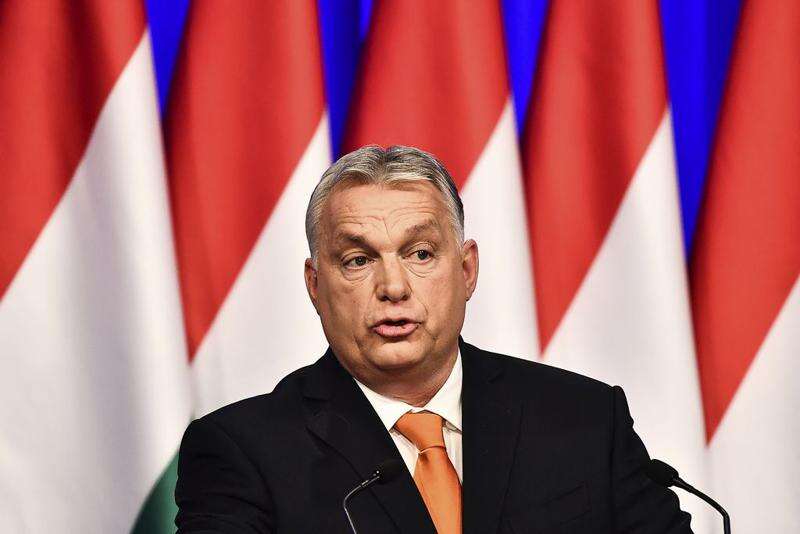
Hungary’s decades-long era of conservative populist rule came to an abrupt end Sunday, as long-serving Prime Minister Viktor Orbán formally conceded defeat to the opposition Tisza Party, which surged to a historic landslide victory in the country’s parliamentary election.
Based on partial official results published by Hungary’s national election office, Tisza Party is on track to claim a rare two-thirds supermajority in the 199-seat national parliament, securing 135 seats — a threshold that gives the incoming government broad authority to reshape the country’s constitutional framework. Tisza Party leader Péter Magyar, who is all but certain to be sworn in as Hungary’s next prime minister, confirmed Sunday that Orbán personally called him to extend congratulations on his election win.
“While official final vote tallies are still being compiled, the overall outcome of this election is unambiguous and clear,” Orbán said in a public address following his concession, acknowledging that the result represented a “painful” end to his 16 consecutive years in office.
The projected supermajority won by Tisza gives the party the same constitutional amendment power that Orbán’s Fidesz party leveraged to rewrite Hungary’s founding document in 2011. Beyond domestic constitutional changes, the election outcome is widely expected to trigger a major shift in Hungary’s position within the European Union. Analysts forecast that the new government will ease long-running tensions between Budapest and Brussels, and could reverse Orbán’s policy of blocking EU aid and military support for Ukraine amid Russia’s ongoing invasion.
Ursula von der Leyen, President of the European Commission, was quick to react to the results Sunday, saying in a statement that the Hungarian people had “chosen Europe” and that the country was now set to reclaim its full place at the heart of the European bloc.
Orbán, a polarizing right-wing leader whose populist, anti-establishment political style has frequently drawn comparisons to former U.S. President Donald Trump, saw his support erode steadily in recent years amid mounting domestic discontent. Stagnant economic growth, skyrocketing living costs, and widespread public anger over opaque wealth accumulation among elite figures with close ties to Orbán’s government all contributed to his government’s falling approval ahead of the election. The result also comes amid recent international friction surrounding the race: during a visit to Hungary earlier this year, U.S. Vice President JD Vance publicly praised Orbán’s leadership and launched a sharp criticism of the European Union’s engagement in the election campaign.