分类: politics

  • Barbados to make licence applications digital

    Barbados to make licence applications digital

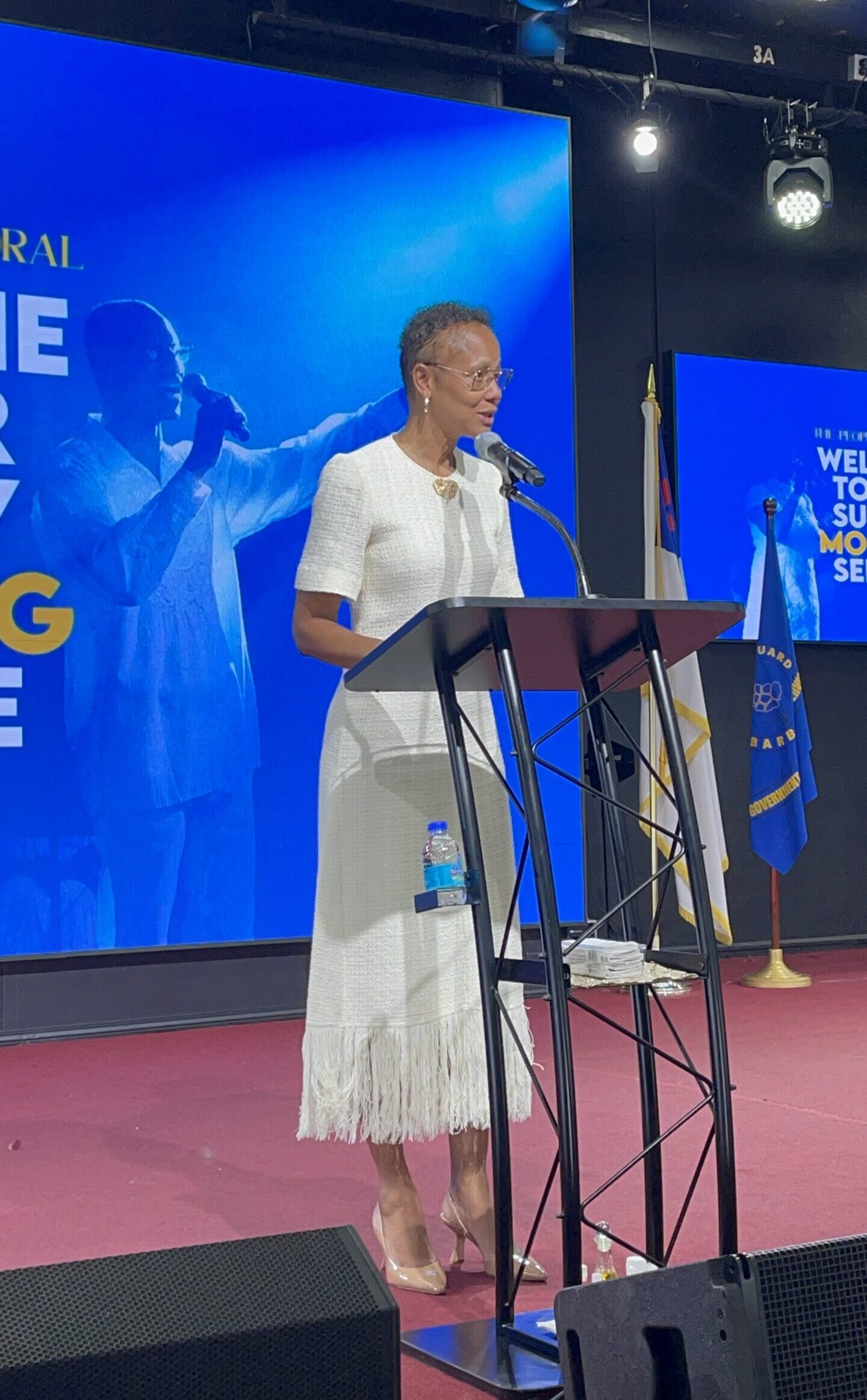
    Barbados’ Deputy Prime Minister Santia Bradshaw has unveiled an ambitious government-wide initiative to modernize public services, headlined by the upcoming full digitization of license applications and payment processing as a core component of the island nation’s broader digital transformation strategy.

    Bradshaw made the announcement Sunday during the National Security Division’s 50th Anniversary Thanksgiving Service, hosted at the People’s Cathedral. She outlined that the administration is pursuing three interconnected tracks to update public operations: upgrading core digital systems, integrating cutting-edge new technologies, and revising existing legislative frameworks to ensure regulations align with 21st-century operational needs.

    The shift to fully online license-related services is designed to unlock tangible improvements for citizens and industry stakeholders alike, boosting procedural efficiency, increasing government transparency, and expanding access to public services for people across the country. This transition is just one element of a far-reaching public sector modernization agenda that also includes the digitization of archival public records, the expansion of existing e-government platforms, and the rollout of unified cross-agency data systems designed to streamline coordination between disparate government ministries and departments.

    “In the near future, routine processes including license applications, annual industry registrations, and secure online payments for public services will all be completed entirely electronically,” Bradshaw confirmed, adding that foundational investments in information and communications technology infrastructure and specialized staff training are already progressing to support a smooth transition to the new digital systems.

    Bradshaw noted that the modernization push also extends to national security operations, where long-used manual processes are being replaced with technology-powered solutions designed to strengthen accountability and improve overall service delivery to the public.

    Speaking to the enduring legacy of the National Security Division, which was founded on April 1, 1976, and now employs more than 200 personnel, Bradshaw praised the agency’s 50-year track record of upholding safety and stability across all government institutions. She emphasized that continuous adaptation is non-negotiable for security agencies operating in an increasingly complex, digitally connected global landscape.

    Even as the government embraces technological innovation to strengthen operations, Bradshaw stressed that human expertise and professional judgment remain irreplaceable pillars of effective national security. “A nation is not made safe by systems alone; it is made safe by its people choosing every single day to be their brother’s keeper,” she told attendees of the milestone service.

  • COMMENTARY: Geothermal and EVs: Dominica’s fastest route to energy sovereignty

    COMMENTARY: Geothermal and EVs: Dominica’s fastest route to energy sovereignty

    This is the second installment of a three-part series exploring the transformative intersection of geothermal energy development and transport electrification in Dominica, with all opinions belonging solely to the author. At its core, the argument frames geothermal energy as the foundational enabling infrastructure for widespread electric vehicle (EV) adoption, addressing one of the most common criticisms of EV transition: that powering EVs with diesel-generated electricity does little to cut reliance on imported fossil fuels. When transport electrification is paired with domestic, stable renewable geothermal power, it evolves from a simple transport policy to a full-scale economic transformation for small island nations like Dominica.

    Unlike decades-old hypothetical plans for geothermal development in Dominica, the energy source is now moving from promise to tangible delivery. The country has already established a public commissioning timeline for its first geothermal plant, with the 10 megawatt facility on track to be fully integrated into the national grid by June 2026. This milestone is not just a win for clean energy; it clears the path for transport electrification that does not increase the country’s exposure to volatile global fossil fuel markets.

    Critically, this strategy is far more than an energy policy—it is a core foreign exchange (FX) strategy critical to Dominica’s economic stability. As a small open economy, Dominica relies heavily on scarce foreign exchange reserves, and its 2023 mineral fuel import bill reached a substantial $56.3 million U.S. dollars. This foreign currency outflow is inherently unstable: it spikes when global oil prices rise, when freight and insurance costs increase, and when geopolitical conflict disrupts global supply chains. As a small player in global energy markets, Dominica cannot outcompete larger economies for limited oil supplies. The only meaningful, long-term solution is to cut the volume of imported fuel the country must purchase.

    A key lesson drawn from the late-2025 surge in imports of used internal combustion engine (ICE) vehicles is that clear policy deadlines and aligned incentives drive rapid market change. Rather than lamenting this unplanned shift, the author argues that policymakers should structure the next phase of transition to guide market movement toward EV adoption, with four non-negotiable priorities: simplifying and standardizing EV import processes, expanding accessible EV financing, building out reliable public charging infrastructure, and accelerating geothermal energy expansion.

    Full national fleet electrification will not happen overnight. With roughly 40,000 licensed vehicles already on Dominican roads and standard vehicle lifespans spanning more than a decade, the transition requires a phased, results-focused approach that delivers rapid fuel import cuts without forcing premature turnover. The proposed three-phase roadmap prioritizes fast impact over immediate full conversion:
    – Phase 1 (2026–2029): Electrify high-mileage commercial and public fleets first, including taxis, buses, government vehicles, rental fleets and delivery vehicles. These vehicles consume massive amounts of fuel daily, so electrifying them delivers the fastest possible national import savings while providing visible, public proof that EV technology works reliably in Dominica.
    – Phase 2 (2028–2032): Shift the default for new passenger vehicle imports to EVs, with narrow exemptions only for specialized heavy equipment where electrification is not yet practical. This ends the long-standing assumption that imported ICE passenger vehicles will remain the norm indefinitely.
    – Phase 3 (2032 onward): Let market economics accelerate private vehicle turnover, rather than relying on government mandates. As geothermal expansion brings down electricity costs and EV charging becomes routine, the dramatic operating cost advantage of EVs will drive widespread voluntary adoption.

    The author argues that the Dominican government has a critical role to play in making EV incentives tangible and accessible for ordinary citizens, removing unnecessary barriers that are slowing adoption. Drawing from personal experience, the author notes that switching from an ICE to an EV revealed a surprising gap in the market: many local insurance providers refused to cover EVs, with only one out of five contacted providers willing to issue a policy. To fix this, the government should quickly introduce or amend legislation to require all licensed motor vehicle insurers to end discrimination against EVs immediately, noting that policymakers should prioritize insuring the future, not protecting the fossil fuel past.

    Another common barrier cited by prospective EV owners is the lack of local mechanics trained in EV maintenance and repair, a legitimate concern with a straightforward solution. According to recent remarks from China’s Ambassador to Dominica, China is now the world’s largest EV producer. Leveraging Dominica’s existing education and training partnerships with China, the author proposes that a diplomatic request can quickly arrange high-quality, short-term training for local mechanics and automotive instructors. This training can address the perceived skills gap in roughly six months, without requiring four-year university degrees for entry-level technicians.

    While the government has already outlined duty and VAT exemptions for EVs, public clarity and speed of implementation remain major gaps. Every month of policy confusion locks in another round of ICE vehicle imports that will operate on Dominican roads for decades. The author calls for three simple, immediate publishing changes to resolve this: a one-page public guide to all available EV incentives, a standard transparent checklist for EV import approvals, and a clear, accessible financing pathway for fleet operators, particularly those serving the general public.

    For ordinary Dominican drivers, the cost benefits of EV adoption are tangible and easy to measure, even before geothermal power fully reduces electricity generation costs. A head-to-head comparison between a 2012 Toyota RAV4 (one of the most popular compact ICE SUVs on Dominican roads) and a comparable modern EV, the BYD Atto 3, demonstrates the scale of savings. Calculations based on March 2026 petrol prices of EC$4.14 per liter show that the RAV4 costs between EC$65.82 and EC$67.39 per 100 miles to operate. By contrast, the BYD Atto 3 costs roughly EC$30 per 100 miles, even accounting for 10% charging losses and using the 2023 conservative residential electricity tariff of US$0.39 per kilowatt-hour. This works out to annual savings of EC$2,100 to EC$2,200 for a driver covering 6,000 miles per year, not including additional savings from lower EV maintenance requirements. Once geothermal expansion eliminates the fossil fuel component of electricity prices, these savings will grow even larger.

    In the upcoming third and final installment of this series, the author will connect this national strategy to unfolding global energy shocks, including war risks and critical shipping chokepoints, explaining why expanded geothermal development is not just a climate policy—it is a form of critical national insurance for small island economies like Dominica.

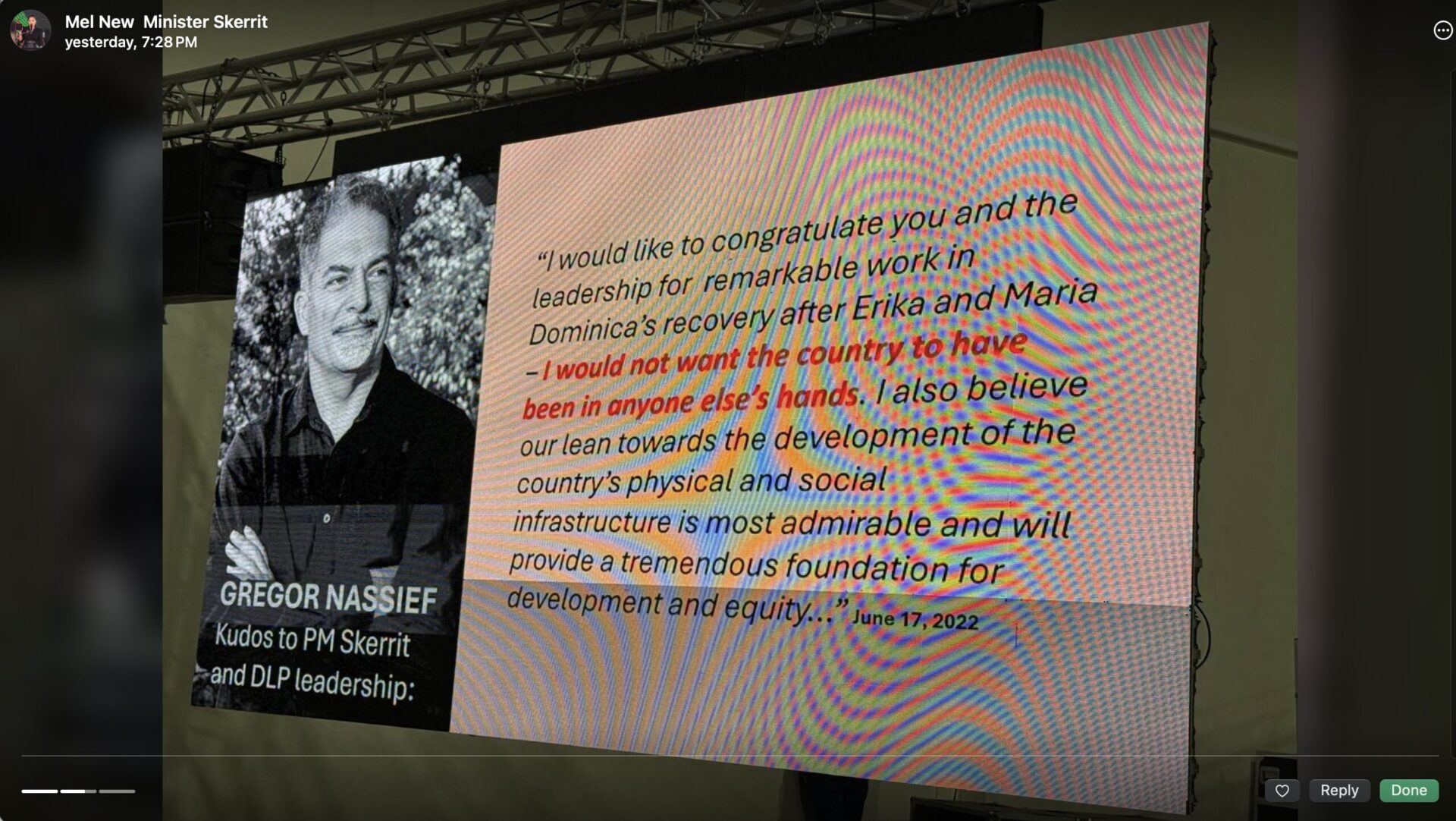
  • OPEN LETTER: Gregor Nassief – An open response to my ‘endorsement’ used at a Massacre DLP political meeting (with video))

    OPEN LETTER: Gregor Nassief – An open response to my ‘endorsement’ used at a Massacre DLP political meeting (with video))

    A public dispute over political campaign tactics has emerged in Dominica after local figure Gregor Nassief published an open letter formally pushing back against the use of what the event organizers framed as his endorsement at a political meeting for the Dominica Labour Party (DLP) held in Massacre.

    The letter opens with a standard mandatory disclaimer that clarifies all perspectives and claims contained within the open letter are exclusive to Nassief himself, and do not reflect the official stances of Duravision Inc., Dominica News Online, any of DNO’s affiliated subsidiary brands, or their respective teams.

    Nassief notes in the letter that he has become aware that event organizers circulated and presented a truncated excerpt of his previous comments, taken out of their original context, to create the false impression that he had publicly endorsed the DLP or specific candidates connected to the party at the Massacre gathering. The letter, paired with accompanying video footage to corroborate his claims, marks a formal public correction of the misrepresentation of his position in the local political arena.

    The incident spotlights the ongoing tensions around campaign messaging and the unauthorized appropriation of private or public comments from non-party-affiliated public figures for political gain ahead of local political activities in Dominica.

  • President Vs. Pope

    President Vs. Pope

    A high-stakes public confrontation has erupted between sitting United States President Donald Trump and Pope Leo XIV, the first American-born leader of the global Catholic Church, with escalating sharp verbal exchanges centered on the ongoing Iran conflict. Tensions flared after the pope used a high-profile CNN interview to push for an immediate diplomatic off-ramp to de-escalate tensions and end the conflict, a call that built on a series of peace advocacy efforts the pontiff led during the recent Holy Week and Easter observances.

  • US eases sanctions on Venezuela central bank

    US eases sanctions on Venezuela central bank

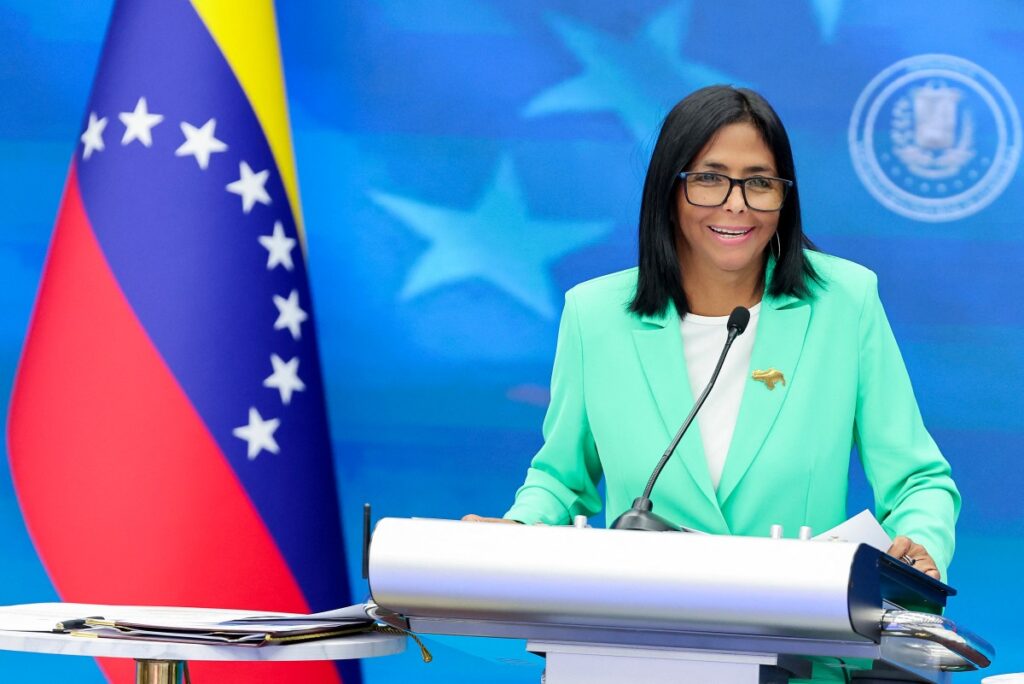
    In a significant step toward warming bilateral relations with oil-rich Venezuela following the removal of longtime leader Nicolas Maduro, the United States announced a rollback of sanctions against the South American nation’s central bank on Tuesday, marking the Trump administration’s latest pivot toward deeper engagement with the new interim government.

    The U.S. Treasury Department rolled out a new general license that clears the way for U.S. and international commercial entities to establish formal financial ties with the Venezuelan central bank, as well as three additional major domestic financial institutions: Banco Universal, Banco Digital de los Trabajadores, and Banco del Tesoro.

    This regulatory adjustment unlocks a range of critical financial activities that had been blocked for years under U.S. restrictive measures. Venezuelan financial institutions will now be permitted to carry out cross-border wire transfers, offer fully functional credit and debit card processing services, and conduct a host of other routine financial operations that had been off-limits to most global partners.

    Tuesday’s policy shift comes exactly two weeks after the Trump administration lifted punitive sanctions against interim Venezuelan President Delcy Rodriguez, who assumed the country’s top executive role after a U.S.-backed military operation removed Maduro from power in January.

    Diplomatic relations between Washington and Caracas have warmed steadily since Maduro’s ouster, with Rodriguez’s interim government moving quickly to meet core demands laid out by U.S. President Donald Trump. Most notably, the new administration has opened Venezuela’s massive energy sector to expanded investment and operations by American oil and gas companies.

    This latest sanctions rollback builds on a series of reciprocal moves over recent months. The United States has already relaxed a seven-year-wide full oil embargo on Venezuela, issuing targeted licenses that permit a small group of major multinational energy corporations to resume operations in the country, provided they adhere to specified transparency and regulatory conditions. Completing the normalization of diplomatic presence, the U.S. Embassy in Caracas resumed full formal operations last month, nearly seven years after it was ordered closed amid rising tensions with the Maduro government.

  • Davis says Grand Bahama on rebound, warns Port Authority

    Davis says Grand Bahama on rebound, warns Port Authority

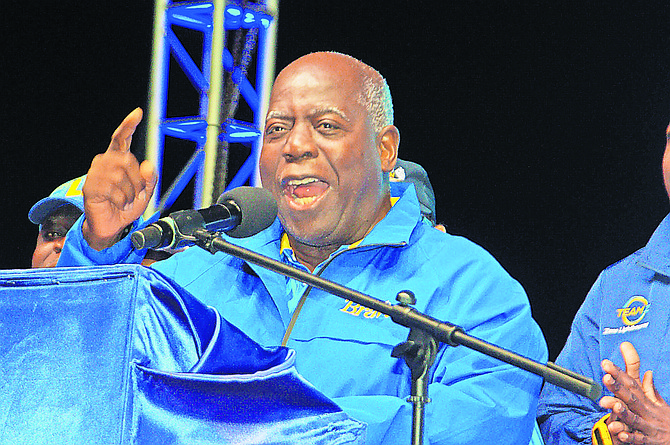
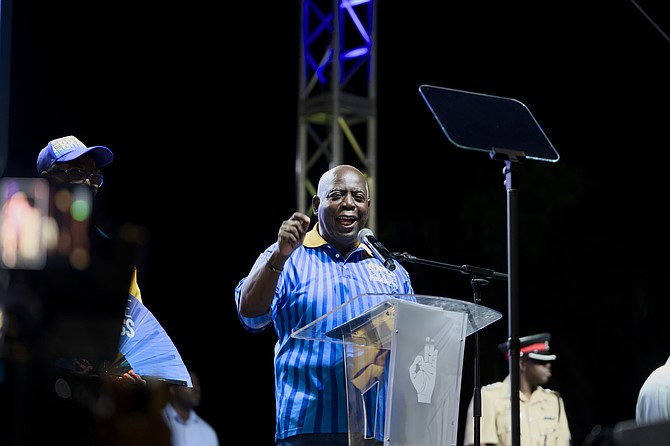
    At a packed political rally held Wednesday night in Grand Bahama’s West End, Bahamian Prime Minister Philip ‘Brave’ Davis delivered an optimistic address framing the island as firmly in the early stages of economic recovery, buoyed by new capital inflows, rising employment, and long-stalled infrastructure projects moving forward.

    The leader of the Progressive Liberal Party (PLP) told attendees that a long-awaited “new chapter” has opened for Grand Bahama, pointing to on-the-ground progress that residents can already see across the island. “People are working again. The new Freeport Health Campus is under construction. Major investments are moving forward. The Grand Bahama Shipyard is expanding, and local workers are accessing new skills training to advance their careers,” Davis said.

    Davis also highlighted a recent major investment announcement from global cruise operator MSC Cruises tied to Grand Lucayan, noting that the deal serves as external validation of the Davis administration’s years of targeted work to attract high-impact, sustainable investment to the island. He expressed full confidence that the four PLP candidates running for parliamentary seats across Grand Bahama — incumbent Pineridge MP Ginger Moxey, incumbent West Grand Bahama MP Kingsley Smith, Central Grand Bahama candidate Parko Deal, and Marco City candidate Eddie Whan — will keep the island’s recovery trajectory on track if elected.

    A core point of Davis’ address centered on the government’s ongoing standoff with the Grand Bahama Port Authority (GBPA) following recent arbitration proceedings. While Davis incorrectly stated that the administration secured a full victory in the arbitration, he emphasized that the PLP government took unprecedented decisive action to hold the private port authority accountable for failing to meet its long-term contractual obligations to the Bahamian people.

    “For far too long, this private authority has collected millions in public fees and concessions, but has never held up its end of the bargain for the communities of Grand Bahama,” Davis said. “The era of unaccountable license fee collection is coming to an end. We have put the Port on clear notice: Bahamian people will not continue to subsidize private profits while our local communities crumble from neglect.”

    Davis added that moving forward, the administration will take an unflinching stance to enforce the original terms of the Hawksbill Creek Agreement that established the port authority’s mandate. “We will use every legal tool at our disposal, every regulatory power granted to this government, and every bit of political capital we have to make sure the original promises of Hawksbill Creek are finally honored for the people of Grand Bahama,” he said.

    The prime minister also used the rally platform to criticize key policy proposals from Opposition Leader Michael Pintard and the Free National Movement (FNM), opening with a sharp rebuke of the opposition’s plan to abolish the Post Office Savings Bank. Davis told the crowd that roughly 7,000 residents of Grand Bahama rely on the community bank, with more than 35,000 users across the entire Bahamas who depend on its accessible savings services.

    He also dismissed the FNM’s proposal for a national government-run lottery as an empty political stunt with no real policy substance. “Their national lottery is not a serious plan for the country’s challenges — it’s just a gimmick,” Davis said. “They are chasing newspaper headlines instead of working on actual solutions that improve people’s lives.”

    In contrast to what he framed as the opposition’s shallow policy ideas, Davis argued that his administration has prioritized long-term, inclusive growth across the Bahamas through targeted policy action: energy sector reform to lower costs for residents and businesses, large-scale infrastructure investment, expanded workforce skills training, and opening new economic opportunities for all Bahamians.

    “While we are investing in real, lasting solutions for the Bahamian people, the opposition’s big idea is to turn the national government into a numbers house,” he added.

    Despite rising partisan tensions ahead of the upcoming election, Davis stressed that the progress Grand Bahama has made in recent years is undeniable and will continue under PLP leadership. “For the first time in a generation, we have a government that is finally standing up for the people of Grand Bahama,” he said. “We are not bowing to private special interests or clinging to outdated, unfair arrangements that shortchange local communities.”

    Deputy Prime Minister Chester Cooper also spoke at the rally, confirming that the planned redevelopment of Grand Bahama’s airport is now fully funded and construction is set to move forward. Cooper echoed Davis’ criticism of the previous FNM administration, noting that “for 34 years, the FNM gave the Port Authority a free pass on its obligations, but this PLP government has given them a clear deadline to deliver.”

  • PM and Church leaders reject FNM lottery plan

    PM and Church leaders reject FNM lottery plan

    A fresh political and social clash has erupted in The Bahamas over the opposition’s plan to launch a state-run national lottery, with Prime Minister Philip “Brave” Davis publicly dismissing the idea as a headline-grabbing, ill-conceived gimmick aligned with a proven failed, corruption-plagued model.

    The proposal was put forward Sunday by Michael Pintard, leader of the Free National Movement (FNM), who framed the independent board-overseen lottery as an untapped revenue source to drive national development. Pintard argued the new state system could operate alongside the country’s existing private gaming operators, pointing to frameworks already in place in jurisdictions including the Dominican Republic, Curaçao, Saint Martin and Ghana as successful blueprints for the plan.

    But Davis rejected the proposal outright during a press briefing with reporters, calling it a transparent political stunt born of desperation rather than a thoughtful policy solution. He pushed back particularly hard on Pintard’s choice of a model, noting the Dominican Republic’s national lottery has long been mired in confirmed corruption and fraud scandals. Davis questioned the opposition’s true motivations behind the push, suggesting the plan could create a slush fund open to abuse by corrupt actors. He also criticized the proposal for ignoring potential harm to the thousands of Bahamians already employed in the existing gaming industry, as well as the steady tax revenue the country already collects from private gaming operations. “It’s rather odd that you want to turn the Treasury into a gaming house,” Davis told reporters.

    The FNM’s announcement has reignited a decades-long contentious national debate that has killed every previous attempt to launch a national lottery in The Bahamas. Multiple past administrations have explored the policy, but all efforts have stalled amid fierce political pushback and widespread public concern. The Christie administration most recently attempted to legalize a lottery through provisions included in the 2014 Gaming Bill, but the plan collapsed after organized opposition from religious groups and large swathes of the public.

    Public resistance was clearly demonstrated in the 2013 national gambling referendum, when 59 percent of more than 81,000 participating voters cast ballots against approving a national lottery. Critics of the policy have repeatedly raised overlapping concerns: they question whether The Bahamas’ small population can support a state lottery without eating into existing tax revenues from private gaming, and they warn of persistent risks around lack of transparency, weak regulation, institutional corruption, and disproportionate social harm to low-income households. Supporters of a national lottery, by contrast, argue that a well-regulated system could generate significant new funding for critical public services including education and infrastructure, while also strengthening government oversight of the country’s entire gaming sector.

    In line with past opposition to the policy, senior church leaders have already renewed their vocal rejection of the new proposal, echoing the prime minister’s criticism. Bishop Walter Hanchell argued that a national lottery directly contradicts core Christian principles, pointing back to the 2013 referendum’s clear rejection of the policy. He recalled that even after voters rejected expanded gambling and lottery legalization a decade ago, then-Prime Minister Perry Christie moved forward with legalization anyway, against the explicit will of the Bahamian people. Hanchell said every negative outcome the church warned of at the time has since come to pass: rates of gambling addiction have risen sharply, and countless low-income Bahamians lose money earmarked for mortgages, rent and basic groceries to gambling operators every day. He called on national political leaders to abandon the lottery push and instead focus policy efforts on expanding social support and economic empowerment for vulnerable communities.

    Bishop Delton Fernander, president of the Bahamas Christian Council, echoed these concerns, noting that the proposal would disproportionately shift the burden of revenue generation onto low- and middle-income Bahamians. He pointed out that the public has already rejected the idea once, yet political actors continue to bring it back to the table. Fernander questioned whether repeated pushes for a national lottery are ultimately aimed at privatizing the lucrative sector for the benefit of a small, connected group of private actors. The Bahamas Christian Council has long maintained an unwavering opposition to the policy, he said, and past data already confirmed the country’s population is too small to sustain the system without major harm. Fernander added that critical public safeguards remain unaddressed more than a decade after the last debate, including targeted rehabilitation programs for people living with gambling addiction and formal systems to identify and support compulsive gamblers. Introducing a national lottery without first putting these protections in place, he warned, would only deepen the country’s existing social and economic inequalities.

  • Individuals who trade in lobster now able to sell during closed season—Green

    Individuals who trade in lobster now able to sell during closed season—Green

    KINGSTON, Jamaica — In a landmark update to the Caribbean nation’s fisheries governance, Jamaica has rolled out new regulations that permit licensed industry participants to legally hold, sell, process, and export legally caught Caribbean spiny lobster during the annual closed season — a long-awaited reform meant to fix critical flaws in the old management framework.

    Agriculture and Fisheries Minister Floyd Green announced the formal entry into force of the New Spiny Lobster Regulations 2026 during an address to the House of Representatives on Tuesday, noting the policy delivers on the government’s promise to modernize the fisheries sector while protecting one of the country’s most valuable marine assets.

    “I am pleased to advise this honourable House that the Fisheries (Spiny Lobster) Regulations, 2026 were promulgated on March 20, 2026, and are now in full force and effect,” Green told lawmakers.

    For decades, Green explained, Jamaica’s existing spiny lobster rules created a confusing, counterproductive contradiction for local fishers and fishing communities. Lobster harvesters could legally catch the species during the open fishing season, investing significant time, fuel, and labor into a legitimate catch — but once the closed season began, their lawfully harvested product became commercially trapped, with no legal path to move it through the supply chain.

    “Fishers who did everything right found themselves unable to sell, store, process or export what they had lawfully caught. The system did not distinguish between illegal harvesting and legitimate stock that was already in circulation,” Green said.

    Far from advancing conservation goals, the old framework produced widespread waste, significant economic losses, and constant uncertainty across the entire lobster value chain. It also left a critical supply gap during the closed season, leaving businesses that rely on lobster sales with few legal options to source inventory.

    That market gap, Green noted, created systemic pressure that in some cases incentivized the illegal poaching that regulations are meant to eliminate — an outcome that undermined both conservation and economic outcomes for licensed industry members.

    The new 2026 regulations are designed to correct this long-standing deficiency through a structured, tightly controlled regulatory framework. Under the updated rules, lawfully harvested lobster caught during open season can be officially declared, logged into a centralized tracking system, and handled through regulated channels during the closed season. All activities including storage, processing, domestic sale, and export remain under strict ongoing oversight from Jamaica’s National Fisheries Authority to prevent abuse.

    Green was clear to emphasize that the reform does not weaken protections against illegal fishing during the closed season. The core prohibition on capturing new spiny lobster during the closed period remains fully in place, with no changes to that long-standing conservation rule. What has shifted, he said, is the intelligence of how the sector is managed.

    “What has changed is that we are now managing the system more intelligently. We are protecting the resource while allowing legitimate economic activity to continue in a way that is transparent, traceable and enforceable. This ensures balance, so that our conservation objectives are met while our fishers, vendors, processors and exporters are not penalised for operating within the law,” Green stated.

    The reform also brings greater transparency and organizational structure to the entire sector. Mandatory declaration requirements, clear notification thresholds, and strengthened record-keeping rules now allow regulators to track lobster movement through the supply chain during the closed season in a way that was impossible under the old system.

    “This is what modern fisheries management looks like. It is deliberate, it is data-driven and it is designed to protect both the resource and the people who depend on it,” Green added.

    Core conservation rules remain intact under the new regulations. The capture, possession, or sale of undersized lobster or egg-bearing female lobster continues to be prohibited during both open and closed seasons, and any accidentally caught protected individuals must be returned to the water immediately. These rules remain central to protecting Jamaica’s breeding lobster stock, allowing juvenile lobsters to reach maturity and maintain a healthy, sustainable wild population for future generations.

    Reporting by Lynford Simpson

  • Mitchell, Pinder and Bonaby top list of most absent MPs in House

    Mitchell, Pinder and Bonaby top list of most absent MPs in House

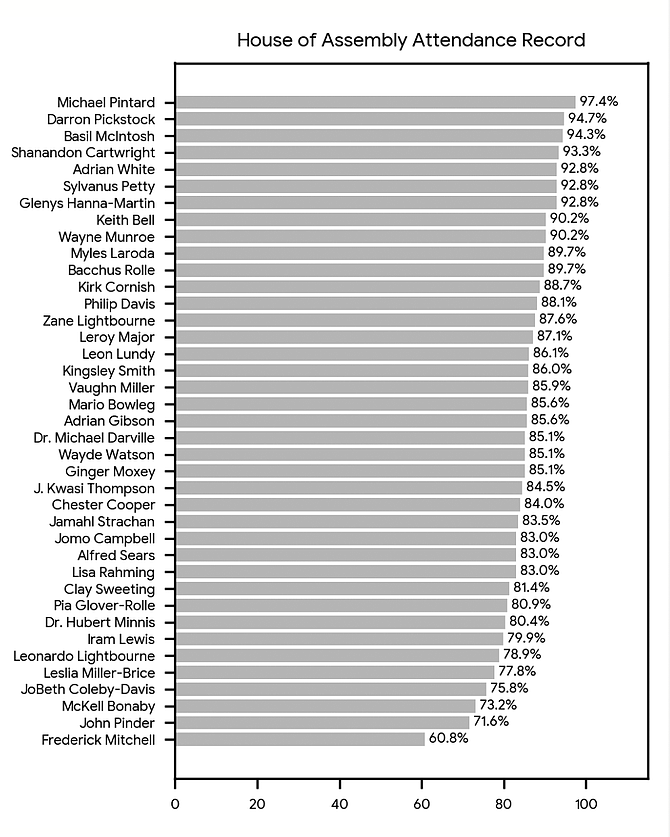
    Newly obtained official records from The Tribune have pulled back the curtain on attendance trends among members of the Bahamas’ House of Assembly, exposing significant disparities in participation among sitting lawmakers since the Davis administration took power in 2021. At the top of the list of the most frequently absent parliamentarians are three senior figures from the ruling Progressive Liberal Party (PLP): Foreign Affairs Minister and PLP Chairman Fred Mitchell, Central and South Abaco MP John Pinder, and Mount Moriah MP and Bahamas Public Parks and Beaches Authority chairman McKell Bonaby. All three have maintained attendance rates below 80 percent across the two parliamentary sessions covered in the data.

    The dataset spans two full parliamentary periods: 88 sittings held between October 2021 and August 2023, and an additional 106 sittings running from October 2023 through March 2026. Mitchell, who represents the Fox Hill constituency, has missed 76 total sittings, translating to an attendance rate of just 60.8 percent – the lowest among all sitting members. When reached for comment by The Tribune, Mitchell declined to provide any explanation for his high number of absences.

    Following closely behind Mitchell is Pinder, who has missed 55 sittings for a 71.6 percent attendance rate, and Bonaby, with 52 absences and a 73.2 percent attendance rate. Neither lawmaker responded to repeated requests for comment from The Tribune regarding their poor attendance track records. Energy Minister JoBeth Coleby-Davis came just behind this trio, missing 47 sittings to notch a 75.8 percent attendance rate. Seabreeze MP Leslia Miller-Brice missed 43 sittings, while North Andros and Berry Islands MP Leonardo Lightbourne missed 41 – with official records noting that one of Lightbourne’s absences was excused due to his participation in an official parliamentary conference.

    On the opposite end of the spectrum, opposition Free National Movement (FNM) lawmakers claim the top three spots for the most consistent attendance. FNM leader and Marco City MP Michael Pintard, MICAL MP Basil McIntosh, and St Barnabas MP Shanendon Cartwright hold the best attendance records in the entire body. After these three opposition figures, Englerston MP Glenys Hanna-Martin, North Eleuthera MP Sylvanus Petty, Carmichael MP Keith Bell and Freetown MP Wayne Munroe all posted attendance rates at or above 90 percent, placing them among the most active participants in House proceedings.

    One particularly notable entry in the records is the late Obie Wilchcombe, former MP for West Grand Bahama and Bimini, who maintained a perfect attendance record with zero absences before his unexpected passing in September 2023. The vast majority of other sitting lawmakers, including Prime Minister Philip Davis, Deputy Prime Minister Chester Cooper, and former Prime Minister Dr Hubert Minnis, all hold attendance rates above the 80 percent threshold. Kingsley Smith, who won the 2023 by-election to fill Wilchcombe’s vacant West Grand Bahama and Bimini seat, has missed 14 sittings since taking office, while Darron Pickstock – who won the Golden Isles by-election last November – has only missed one sitting in his short tenure so far.

  • Jamaican dancehall artiste received $118 million via TikTok from Canadian non-profit exec, lawsuit claims

    Jamaican dancehall artiste received $118 million via TikTok from Canadian non-profit exec, lawsuit claims

    A high-stakes fraud lawsuit filed in Canada has unveiled explosive allegations: a former senior finance executive at an Indigenous-led non-profit illegally siphoned more than CA$6 million in federal public funds earmarked for Indigenous conservation programs, with hundreds of thousands of dollars ending up in the hands of a Jamaican dancehall artist. Court filings paint a detailed picture of how the former executive exploited a gap in organizational oversight to funnel public money through multiple channels, prompting the Canadian federal government to seize control of remaining program funds and roil communities that rely on the initiative for conservation work and local employment.

    According to reporting from Canadian public broadcaster CBC News, the March 20 lawsuit names Melanie Desjarlais, former financial director of the First Nations National Guardians Network (FNNGN), as the sole perpetrator of the alleged fraud. The FNNGN is a federally funded non-profit founded in 2022, based in the cross-border Mohawk community of Akwesasne spanning Ontario, Quebec, and New York. The organization was tapped in 2024 to independently administer CA$27.6 million in federal funding for 80 separate Indigenous Guardians programs across Canada, which train and employ Indigenous community members to carry out critical conservation and ecological research on their traditional territories.

    Court documents outline that when the FNNGN executive director took medical leave in August 2025, Desjarlais became the only staff member with full day-to-day control over the non-profit’s finances. Over the following seven months, through August 2025 to March 2026, she is accused of making more than CA$6.3 million in unauthorized charges on the organization’s corporate credit cards. These charges were diverted to personal spending, including multiple vacations, tickets to professional hockey games, and systematic transfers to the Jamaican artist, the suit alleges.

    The court filings detail a multi-step alleged money laundering scheme. Desjarlais is accused of spending nearly US$2.78 million of the non-profit’s funds to purchase TikTok coins, the platform’s virtual currency that users can gift to content creators during live streams. Gifted coins convert to diamonds, which creators can cash out for real funds, and court documents note that this system can be exploited as a vehicle for illicit money movement. In addition to the TikTok coin transfers, direct PayPal records show more than US$750,000 was sent directly from Desjarlais to the dancehall artist. Some of these transfers included personal messages such as “Happy early birthday!” and one CA$5,000 transfer was labeled: “This is the last payment, the other one was an error. Love you and I’m sorry for everything.” Court documents also note court filings indicate Desjarlais and the artist may have had a romantic relationship. The Jamaican artist’s name is being withheld at this time by media outlets covering the case.

    Further records show Desjarlais traveled to Jamaica twice on the non-profit’s dime, once in October 2025 and again in January 2026. By late November 2025, the non-profit had depleted so much funds that scheduled payments to local Indigenous Guardians programs across the country halted due to insufficient balances, according to court filings.

    To date, none of the allegations against Desjarlais have been tested or proven in court. Desjarlais has declined to comment on the allegations through her legal representation.

    The revelation of the alleged fraud has already triggered major administrative and regulatory changes. The Canadian federal government, through Environment and Climate Change Canada, which originally provided the program funding, has stepped in to take over all future distribution of Indigenous Guardians funds allocated to FNNGN. A government spokesperson confirmed Ottawa was notified of the unauthorized transactions and is expanding a routine audit of the non-profit’s financial practices.

    The FNNGN’s legal counsel, Matthew Sammon, told reporters the organization is actively and aggressively working to recover the misappropriated public funds. Sammon emphasized that the alleged financial misconduct stems from the actions of a single individual and does not reflect the core mission or values of the network.

    Canadian courts have already taken emergency action to protect potential recovery of the funds: an injunction freezing all of Desjarlais’s global assets was granted last month and extended by the court on April 2. The lawsuit itself seeks CA$10 million in combined damages and restitution on charges of deceit, conversion, breach of contract, breach of fiduciary duty, and unjust enrichment.

    For Indigenous communities that rely on the program for funding and employment, the allegations have sparked acute concern. Elder David Scott, who trains young Guardians at Manitoba’s Swan Lake First Nation, told CBC the funding is critical to the success of local conservation work, leaving the program’s future in his community uncertain as the case moves forward.