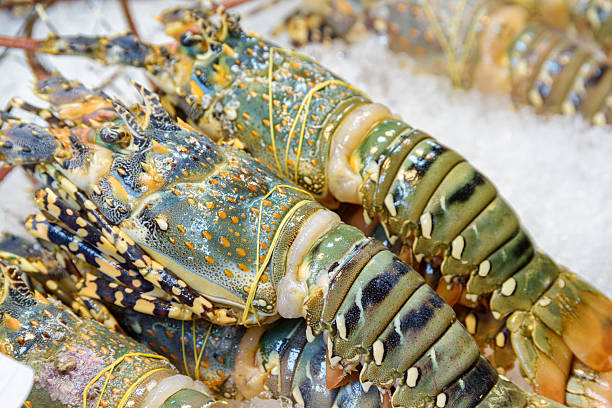
KINGSTON, Jamaica — In a landmark update to the Caribbean nation’s fisheries governance, Jamaica has rolled out new regulations that permit licensed industry participants to legally hold, sell, process, and export legally caught Caribbean spiny lobster during the annual closed season — a long-awaited reform meant to fix critical flaws in the old management framework.
Agriculture and Fisheries Minister Floyd Green announced the formal entry into force of the New Spiny Lobster Regulations 2026 during an address to the House of Representatives on Tuesday, noting the policy delivers on the government’s promise to modernize the fisheries sector while protecting one of the country’s most valuable marine assets.
“I am pleased to advise this honourable House that the Fisheries (Spiny Lobster) Regulations, 2026 were promulgated on March 20, 2026, and are now in full force and effect,” Green told lawmakers.
For decades, Green explained, Jamaica’s existing spiny lobster rules created a confusing, counterproductive contradiction for local fishers and fishing communities. Lobster harvesters could legally catch the species during the open fishing season, investing significant time, fuel, and labor into a legitimate catch — but once the closed season began, their lawfully harvested product became commercially trapped, with no legal path to move it through the supply chain.
“Fishers who did everything right found themselves unable to sell, store, process or export what they had lawfully caught. The system did not distinguish between illegal harvesting and legitimate stock that was already in circulation,” Green said.
Far from advancing conservation goals, the old framework produced widespread waste, significant economic losses, and constant uncertainty across the entire lobster value chain. It also left a critical supply gap during the closed season, leaving businesses that rely on lobster sales with few legal options to source inventory.
That market gap, Green noted, created systemic pressure that in some cases incentivized the illegal poaching that regulations are meant to eliminate — an outcome that undermined both conservation and economic outcomes for licensed industry members.
The new 2026 regulations are designed to correct this long-standing deficiency through a structured, tightly controlled regulatory framework. Under the updated rules, lawfully harvested lobster caught during open season can be officially declared, logged into a centralized tracking system, and handled through regulated channels during the closed season. All activities including storage, processing, domestic sale, and export remain under strict ongoing oversight from Jamaica’s National Fisheries Authority to prevent abuse.
Green was clear to emphasize that the reform does not weaken protections against illegal fishing during the closed season. The core prohibition on capturing new spiny lobster during the closed period remains fully in place, with no changes to that long-standing conservation rule. What has shifted, he said, is the intelligence of how the sector is managed.
“What has changed is that we are now managing the system more intelligently. We are protecting the resource while allowing legitimate economic activity to continue in a way that is transparent, traceable and enforceable. This ensures balance, so that our conservation objectives are met while our fishers, vendors, processors and exporters are not penalised for operating within the law,” Green stated.
The reform also brings greater transparency and organizational structure to the entire sector. Mandatory declaration requirements, clear notification thresholds, and strengthened record-keeping rules now allow regulators to track lobster movement through the supply chain during the closed season in a way that was impossible under the old system.
“This is what modern fisheries management looks like. It is deliberate, it is data-driven and it is designed to protect both the resource and the people who depend on it,” Green added.
Core conservation rules remain intact under the new regulations. The capture, possession, or sale of undersized lobster or egg-bearing female lobster continues to be prohibited during both open and closed seasons, and any accidentally caught protected individuals must be returned to the water immediately. These rules remain central to protecting Jamaica’s breeding lobster stock, allowing juvenile lobsters to reach maturity and maintain a healthy, sustainable wild population for future generations.
Reporting by Lynford Simpson