分类: politics

  • Opposition Leader: Christmas a time for hope

    Opposition Leader: Christmas a time for hope

    In a solemn Christmas address to the nation, Opposition Leader Pennelope Beckles framed the holiday season as a critical moment for national renewal amid mounting economic pressures and regional diplomatic strains. Speaking against a backdrop of widespread economic anxiety, Beckles characterized the current period as one of ‘profound uncertainty’ with many families confronting job losses and persistent financial instability.

    The political leader highlighted specific economic concerns, noting that thousands of public sector workers from discontinued CEPEP, URP and Forestry Division programs found themselves unemployed following the April 28 general election. ‘The national mood is heavy,’ Beckles observed, ‘as the cost of living continues to rise and opportunity feels increasingly out of reach for far too many.’

    International economic assessments have reinforced these concerns, with major ratings agencies Moody’s and S&P revising Trinidad and Tobago’s economic outlook from stable to negative. Local business chambers have simultaneously raised alarms regarding ongoing foreign exchange complications.

    Beyond domestic economic challenges, Beckles addressed growing regional tensions, referencing the country’s delicate positioning between ‘powerful interests’—an apparent allusion to ongoing US-Venezuela military tensions in the Caribbean. The opposition leader criticized Prime Minister Kamla Persad-Bissessar’s administration for its supportive stance toward US military deployment and its condemnation of CARICOM members who questioned these developments.

    ‘There is also strain on our relationships within our region, CARICOM,’ Beckles noted, ‘arising from the unfortunate posture adopted by the Government of Trinidad and Tobago.’

    Despite these challenges, the opposition leader framed Christmas as an opportunity for national unity and active hope. Emphasizing that hope requires ‘courage, vigilance and a deep love for country,’ Beckles called upon citizens to ‘recommit ourselves to the work of rebuilding hope, not just for today but for generations to come.’ She urged citizens to choose ‘peace over discord and unity over division’ during the holiday season.

  • When sovereignty becomes a doormat

    When sovereignty becomes a doormat

    Prime Minister Kamla Persad-Bissessar of Trinidad and Tobago has ignited a firestorm of controversy by asserting that the United States possesses an unquestionable right to pursue its national interests—even when such actions adversely affect other sovereign nations—and that impacted countries must simply “accept the consequences.” While presented as a tough stance, legal experts contend this position is not only legally flawed but dangerously reckless for a small nation state.

    The core of the dispute centers on fundamental principles of international law. Sovereignty, contrary to the Prime Minister’s characterization, has never equated to unlimited freedom. Since the establishment of the post-1945 global legal order, sovereignty has existed within a framework designed to restrain powerful nations and protect vulnerable ones. The longstanding principle, repeatedly affirmed by the International Court of Justice, is that the freedom of any state ends where another’s begins.

    Actions such as economic coercion, extraterritorial punishment, and policy intimidation are not legitimate expressions of sovereignty but rather violations of it. The editorial argues that if powerful nations could freely impose their preferences on others based solely on might, international law would be rendered meaningless, replaced by pure hierarchy.

    The specific context involves U.S. criticism of Citizenship-by-Investment (CBI) programs. The contention is not whether the U.S. can regulate its own borders—a right acknowledged as undisputed—but whether it can penalize other countries for domestic policies that breach no international treaty or convention. This is framed not as legitimate border control but as interference disguised as security.

    In contrast to the Prime Minister’s stance, the Caribbean Community (CARICOM) delivered a response described as orthodox, restrained, and legally sound. CARICOM recognized U.S. sovereignty while formally requesting consultation, clarity, and respect for the rule of law. This approach is presented as the prescribed method for small states to navigate a rules-based international system.

    The editorial expresses particular alarm that this doctrine originates from a Prime Minister who holds the title of Senior Counsel, a position that should demand a higher standard of legal reasoning. The author condemns the underlying logic as “profoundly defective,” where sovereignty is mischaracterized as an unlimited license, coercion is rebranded as mere consequence, and international law is treated as optional etiquette.

    The author concludes with a stark warning: if the Prime Minister’s doctrine were correct, Trinidad and Tobago would itself have no protection against sanctions, blacklists, or financial pressure whenever it became inconvenient to more powerful nations. The piece ends with a powerful admonition: “Sovereignty is not a doormat. And TT should stop pretending that being trampled is a sign of strength.”

  • Zelensky reveals US-Ukraine plan to end Russian war, key questions remain

    Zelensky reveals US-Ukraine plan to end Russian war, key questions remain

    KYIV, Ukraine — A newly revealed US-brokered draft proposal to resolve the ongoing Russian invasion of Ukraine indicates that Kyiv has secured several critical concessions in negotiations, though fundamental disagreements over territory and Moscow’s potential acceptance continue to pose significant obstacles.

    President Volodymyr Zelensky disclosed details of the 20-point framework during an extensive briefing with journalists, presenting an annotated version of the document that has been jointly developed by American and Ukrainian negotiators. While acknowledging that certain elements of the plan remain unsatisfactory to Kyiv, Zelensky emphasized that Ukrainian diplomats successfully eliminated several initially problematic demands.

    The revised draft no longer contains immediate requirements for Ukraine’s complete military withdrawal from the Donetsk region or automatic recognition of Russian-occupied territories as sovereign Russian land. Perhaps most significantly, the proposal removes previous stipulations that would have compelled Ukraine to legally renounce its aspirations for NATO membership—a longstanding red line for Moscow.

    However, the blueprint appears to facilitate potential future troop redeployments and establishes mechanisms for creating demilitarized zones along current front lines. Specifically, the agreement would recognize the existing deployment positions in Donetsk, Luhansk, Zaporizhzhia, and Kherson regions as the de facto line of contact, with working groups subsequently convening to determine necessary force movements and parameters for special economic zones.

    This structure suggests a compromise approach that postpones decisions on militarily and politically sensitive issues—including territorial withdrawals that Ukraine had previously resisted—while creating procedural pathways for continued dialogue. Zelensky characterized the negotiations as attempting to balance Russian demands for Ukrainian withdrawal with American efforts to devise mutually acceptable arrangements through demilitarized or special economic zones.

    The Kremlin has received the draft proposal for review, though analysts remain skeptical that Moscow would abandon its maximalist territorial objectives in eastern Ukraine. The emerging framework represents the most detailed diplomatic effort to date to outline a potential resolution to the conflict, yet its viability ultimately depends on Russia’s willingness to engage with terms that fall short of its original demands.

  • Trump waarschuwt Maduro: ‘Speel niet te hard’

    Trump waarschuwt Maduro: ‘Speel niet te hard’

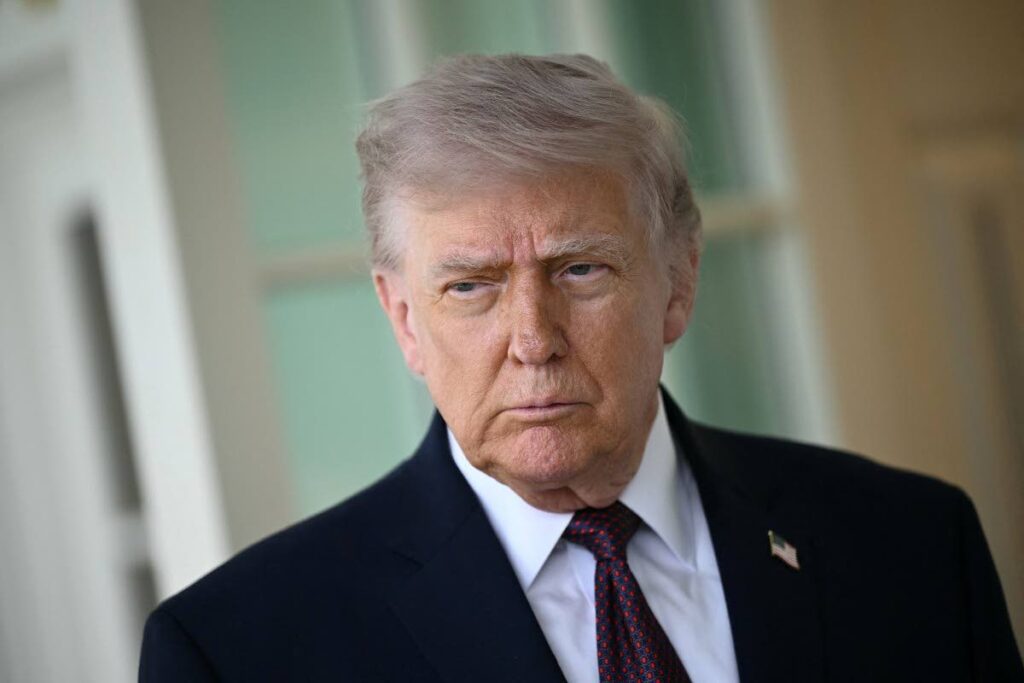
    President Donald Trump has issued a stark warning to Venezuelan leader Nicolás Maduro during a press briefing at his Mar-a-Lago resort in Florida, suggesting it would be “wise” for Maduro to step down amid escalating tensions. The December 22nd address, attended by Secretary of State Marco Rubio and Defense Secretary Pete Hegseth, signaled Washington’s readiness to intensify pressure on Caracas following months of heightened diplomatic strain.

    Trump explicitly stated that removing Maduro from power remains an objective, warning that “if he plays tough, it will be the last time he gets to do so.” Simultaneously, the U.S. Coast Guard continues pursuing a third oil tanker from Venezuela’s alleged “shadow fleet” used to circumvent American sanctions. The president confirmed the retention of previously seized vessels containing nearly 4 million barrels of Venezuelan oil, indicating potential options including sale, retention, or allocation to strategic reserves.

    Maduro responded through state television with a counterattack, urging Trump to address domestic economic and social issues rather than threatening Caracas. The exchange occurs alongside increased U.S. military operations in the region under drug interdiction missions, with over two dozen attacks on suspected drug smuggling operations resulting in more than 100 fatalities—actions whose legality has been questioned by critics.

    The escalating crisis prompted an emergency United Nations Security Council meeting convened at Venezuela’s request with Russian and Chinese support. Russian Foreign Minister Sergei Lavrov expressed “profound concern” over U.S. operations in the Caribbean, warning of risks to regional stability and international shipping while reaffirming Moscow’s support for Maduro’s government.

    China condemned American actions as “serious violations of international law,” emphasizing Venezuela’s right to independent development through its Foreign Ministry spokesperson. Venezuelan Foreign Minister Yvan Gil presented Maduro’s letter to the UN, warning that U.S. blockade measures would disrupt global oil and energy supplies, particularly affecting vulnerable nations across Latin America and the Caribbean.

  • Perez Esquivel: Attacking Venezuela is attacking the entire continent

    Perez Esquivel: Attacking Venezuela is attacking the entire continent

    Nobel Peace Prize recipient Adolfo Pérez Esquivel has issued a severe condemnation of United States foreign policy toward Latin America through his organization, the Service for Peace and Justice (SERPAJ). The statement characterizes former President Donald Trump’s repeated threats to seize Venezuelan oil and national assets as founded on falsehoods, facilitated by the \”complicit silence\” of European allies and major international institutions including the United Nations, the Organization of American States (OAS), and the U.S. Congress. Pérez Esquivel accuses Washington of adopting a posture of \”fierce hostility\” that endangers the entire Latin American region. The critique further describes Trump as behaving like a \”great dictator\” who systematically disregards established international law, binding treaties, and the Universal Declaration of Human Rights. SERPAJ’s document highlights the enduring U.S. economic embargo against Cuba, now in its seventh decade, alongside contemporary threats directed at nations such as Colombia, Mexico, Brazil, and Nicaragua. It also alleges American interference in regional electoral processes, citing Honduras as a specific example. The statement contextualizes current U.S. actions within a long and violent history of supporting military dictatorships and orchestrating interventions across the continent to preserve its global hegemony. SERPAJ concludes that as U.S. power is increasingly contested by other nations on the world stage, it is aggressively seeking to secure its interests and maintain dominance within its traditional sphere of influence in Latin America through blockades, destabilization attempts, military posturing, and overt threats.

  • Japan will reform its employment policy for foreigners

    Japan will reform its employment policy for foreigners

    The Japanese government is implementing a significant restructuring of its foreign worker admission framework, introducing a new training system to replace the contentious Technical Internship Program. Under this revamped approach, authorities plan to cap employee admissions at approximately 426,000 participants during the initial two-year implementation phase.

    This policy shift, directed by Prime Minister Sanae Takaichi, seeks to alleviate critical labor shortages across essential industries while implementing stricter enforcement measures against visa overstays. The updated program creates a pathway for participants to advance to Specified Skilled Worker status, facilitating extended residency periods.

    Japan’s revised immigration strategy projects admitting 805,000 workers by March 2029—a reduction from the originally planned 820,000—reflecting the nation’s ongoing struggle with demographic aging and persistent workforce deficits. The restructured system will encompass 17 sectors, including agriculture and construction, representing a consolidation from the current 19 covered industries.

    The visa framework introduces two distinct categories: Type I visas permitting stays of up to five years, and Type II visas offering unlimited renewal opportunities alongside eligibility for permanent residency. Current Immigration Services Agency data reveals 333,000 Type I visa holders and 449,000 technical interns residing in Japan as of June 2025, highlighting the substantial scale of Japan’s foreign workforce initiative.

  • China rejects US restrictions on DJI

    China rejects US restrictions on DJI

    The Chinese government has issued a formal diplomatic protest against what it characterizes as discriminatory economic measures targeting its technology sector. Foreign Ministry spokesman Lin Jian articulated Beijing’s position that the United States has inappropriately broadened national security definitions to justify creating restrictive lists against Chinese corporations.

    Lin asserted that these actions represent unjustified suppression that fundamentally violates established principles of market fairness and international competition standards. The spokesman emphasized that such measures disrupt normal commercial operations and create artificial barriers in global technology markets.

    Official communications from Beijing specifically urged American authorities to rectify these contested practices and establish equitable operational conditions for Chinese enterprises. The statement highlighted the expectation for non-discriminatory treatment that aligns with international trade norms and bilateral agreements.

    The diplomatic exchange references ongoing tensions surrounding Chinese technology giants, particularly DJI, recognized as the global leader in civilian and commercial drone manufacturing with extensive international market penetration. This development occurs against the backdrop of increasing Washington-led restrictions imposed on multiple Chinese technology firms under national security pretexts, signaling a deepening technological divide between the two economic superpowers.

  • Eugène van der San benoemd tot voorzitter Administratief Beroepsinstituut

    Eugène van der San benoemd tot voorzitter Administratief Beroepsinstituut

    Suriname has taken a significant step toward enhancing its administrative justice system with the formal installation of the Administrative Appeals Institute (Administratief Beroepsinstituut) on Monday. President Jennifer Simons presided over the inauguration ceremony, appointing distinguished public administration expert Eugène van der San as the institution’s inaugural chairman.

    The newly established institute will serve as a specialized advisory body to the head of state regarding administrative appeal cases. Its mandate encompasses the meticulous preparation of government policy proposals and providing strategic direction for their implementation within existing legal frameworks. The seven-member council, including a secretary, will operate independently while advising the president based on relevant legislation including the Personnel Act, Firearms Act, and Electoral Act.

    Van der San emphasized the institute’s constitutional foundation, noting that Suriname’s governance structure incorporates both judicial and administrative legal processes. “Alongside our judiciary, our state system recognizes administrative legal proceedings where the president serves as the appeals authority,” he explained during the installation ceremony.

    The institutionalization of this body represents a crucial advancement for transparent and careful execution of constitutional duties. Van der San stated that the institute provides the president with “a specialized and structured advisory mechanism” that will ensure greater accountability in administrative decision-making.

    Established for the current government’s term, the institute is expected to become an increasingly important resource for citizens seeking legal recourse, particularly in cases where traditional judicial pathways are limited or unavailable. This development marks a substantial evolution in Suriname’s administrative justice capabilities, potentially affecting how governmental decisions are reviewed and appealed.

  • OPINION: Diplomatic Maturity Prevails: How Responsible Engagement Secured Antigua and Barbuda’s Interests

    OPINION: Diplomatic Maturity Prevails: How Responsible Engagement Secured Antigua and Barbuda’s Interests

    In a notable demonstration of effective statecraft, Antigua and Barbuda has successfully navigated complex security negotiations with the United States, transforming potential travel disruptions into a framework of enhanced bilateral cooperation. The diplomatic breakthrough follows the U.S. proclamation of December 16, 2025, which initially raised concerns about visa validity and travel restrictions for Antiguan and Barbudan citizens.

    Under the strategic direction of Prime Minister Gaston Browne and Foreign Affairs Minister E.P. Chet Greene, Ambassador Sir Ronald Sanders engaged in high-level discussions with U.S. State Department officials. Rather than adopting confrontational tactics, the diplomatic mission focused on constructive negotiation aimed at safeguarding national interests while acknowledging U.S. security priorities.

    The negotiations yielded significant protections for Antigua and Barbuda citizens. The United States confirmed it would honor all existing visas, providing immediate assurance to students, business travelers, tourists, and families with pre-2025 visa approvals. This guarantee eliminated concerns about revoked visas and protected substantial personal investments in travel and education plans.

    For future travel arrangements, both nations agreed to align biometric systems as a practical security enhancement rather than a punitive measure. Ambassador Sanders emphasized that while technology would be harmonized, the travel process for citizens would remain fundamentally unchanged—a key concession achieved through diplomatic dialogue.

    The successful outcome highlights the effectiveness of professional diplomacy in creating mutual trust between nations of disproportionate size and influence. U.S. State Department officials demonstrated receptiveness and good faith engagement, reflecting the enduring strength of the bilateral relationship built over decades.

    This achievement underscores Antigua and Barbuda’s capacity to engage global powers from a position of respect and principled partnership rather than weakness. The resolution reaffirms the nation’s commitment to being a responsible international partner while steadfastly protecting the rights and interests of its citizens.

  • Dr James questions Trinidad and Tobago’s approach to Caricom

    Dr James questions Trinidad and Tobago’s approach to Caricom

    Trinidad and Tobago finds itself at a critical juncture in foreign policy as prominent voices express diverging views on the nation’s regional alliances and international positioning. The escalating discourse centers on Prime Minister Kamla Persad-Bissessar’s recent criticism of the Caribbean Community (Caricom), with economist Dr. James questioning whether adequate justification has been provided for these diplomatic maneuvers. ‘I remain unconvinced that the grounds for her position have been sufficiently explained,’ Dr. James noted, suggesting the administration appears to be addressing perceived problems that may not yet exist.

    The debate has expanded to include concerns about national sovereignty amidst evolving global dynamics. Dr. James emphasized that despite the nation’s size, it must assert its independence: ‘The fact that I am small doesn’t mean that I am not my own man. I cannot allow another country, simply because it has money or power, to treat me however it likes.’

    Movement for Social Justice leader David Abdulah issued strong cautions against weakening Caricom ties, highlighting the economic necessity of regional trade relationships. ‘We cannot diss Caricom. We cannot seek to break our relationship with Caricom,’ Abdulah stated, pointing to limited access for Trinidadian manufactured goods in United States markets. He further questioned what tangible benefits the nation might gain from what he characterized as a pivot toward Washington, noting insufficient public scrutiny of potential economic or diplomatic returns.

    The political discourse intensified following Prime Minister Persad-Bissessar’s response to criticism from Antigua and Barbuda’s Prime Minister Gaston Browne, which included distancing Trinidad and Tobago from Caricom’s traditional ‘zone of peace’ position and accusations of the regional bloc aligning with Venezuela’s government.

    Adding judicial perspective to the conversation, Justice of Appeal and Presbyterian minister Frankie Seepersad urged consideration of broader regional contexts, particularly Venezuela’s mass migration crisis and territorial claims against Guyana. Speaking after a church service in Marabella, Seepersad warned against revisionist narratives that overlook recent instability: ‘Millions of people do not leave their homes because all is well.’ He called for honest discourse that acknowledges recent history and the plight of displaced populations when evaluating decisions aimed at restoring regional balance.