分类: politics

  • Trump playing energy chess

    Trump playing energy chess

    A compelling editorial critique has emerged from Trinidad and Tobago, challenging the nation’s prevailing attitudes toward U.S. energy geopolitics under the Trump administration. The author, Gordon Laughlin, contends that while local media and CNN-driven narratives foster disdain for President Trump, this emotional approach overlooks transformative global energy realignments with direct implications for Caribbean nations.

    The analysis highlights Trump’s strategic reshaping of global energy dynamics, noting how U.S. liquefied natural gas (LNG) has achieved market dominance through aggressive policies that pressure OPEC, intensify sanctions against Iran, and reconfigure global energy flows. These developments critically impact Trinidad and Tobago’s oil, gas, and manufacturing sectors, particularly the strategic industrial hub at Point Lisas.

    Laughlin emphasizes the vulnerability of Trinidad’s economy to U.S. policy shifts, noting that a single sanction or diplomatic gesture could trigger economic instability. The commentary draws attention to Venezuela’s proximity and its vast oil reserves—a factor that further compounds regional energy security concerns.

    The editorial employs the metaphor of ‘energy chess’ to illustrate Trump’s strategic maneuvering versus what it characterizes as Trinidad’s simplistic approach (‘playing all fours’). It calls for urgent geopolitical awareness, energy strategy reassessment, and independent analysis rather than reliance on American media narratives. The piece concludes with a stark warning: national survival depends on thinking critically about gas markets and geopolitical realities.

  • PSC calls for MPs to be barred from police appointments

    PSC calls for MPs to be barred from police appointments

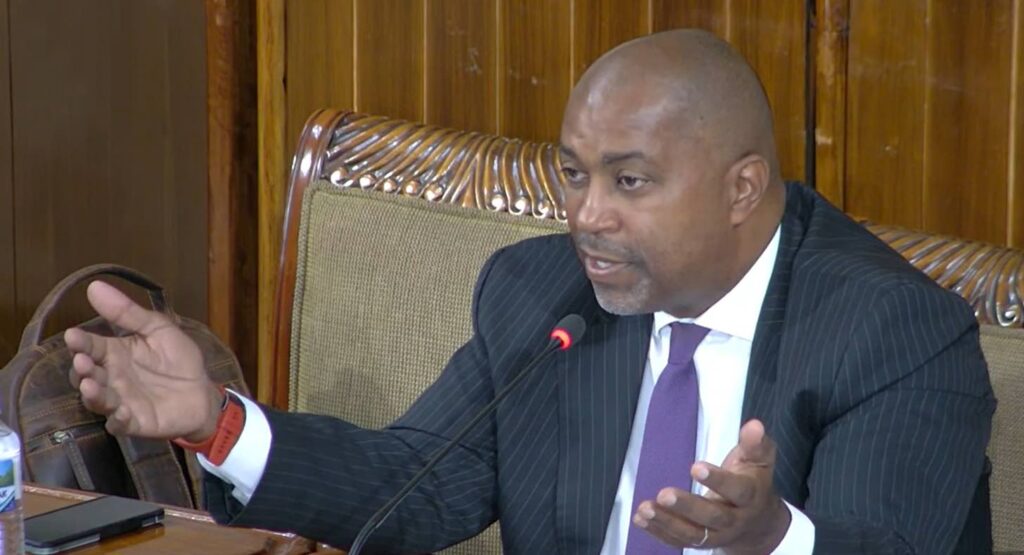
    In a significant move toward institutional autonomy, Trinidad and Tobago’s Police Service Commission (PSC) has issued a formal demand for complete independence from parliamentary oversight in the appointment of its board members and senior police leadership. The recommendations, detailed in the PSC’s 2024 annual report presented to the House of Representatives in November, call for sweeping reforms to eliminate perceived political patronage.

    The commission specifically advocates for removing the requirement for House of Representatives approval in appointing both PSC members and the Commissioner and Deputy Commissioners of Police. This structural change aims to bolster public confidence in the police force’s independence and enhance the commission’s supervisory capabilities.

    Among the key proposals is extending the Commissioner of Police’s retirement age to 65 and removing the position from Section 75 of the Police Service Act, which currently grants the President authority to extend the service of senior officers beyond retirement age based on national interest considerations.

    The PSC further recommends expanding its membership from five to seven individuals with fixed five-year terms, while seeking broader mandates including consultation rights on appointment criteria for top police positions and monitoring powers over Assistant Commissioners of Police.

    To strengthen its selection processes, the commission seeks mandatory powers to compel organizations to provide information for security vetting of candidates. Additionally, the PSC requests full audit authority over police service performance, oversight of recruitment, promotion, disciplinary processes, and the establishment of conduct standards.

    The report also highlights operational challenges, with PSC Chairman Dr. Wendell Wallace noting a 50% staffing shortage in the commission’s secretariat and expressing concern over one-third of staff lacking job security, with many employed on monthly contracts.

  • Hitting a sour note

    Hitting a sour note

    The Trinidad and Tobago government’s communication approach has once again demonstrated significant shortcomings, particularly evident in its recent handling of the national emblem transition timeline. Through a discreet legal notice issued on December 18, Homeland Security Minister Roger Alexander authorized a five-year extension for continued use of the former coat of arms, pushing the full implementation deadline to January 2, 2031.

    This administrative decision was enabled by amendments to the National Emblems of Trinidad and Tobago (Regulation) Act, which received unanimous parliamentary support from both the ruling PNM and opposition UNC parties in January. Notably, then-Opposition Leader Kamla Persad-Bissessar had previously observed that the legislation granted ministers unrestricted authority to extend implementation timelines through ministerial orders.

    While the extension itself represents practical governance—allowing existing inventory of official materials featuring the old emblem to be depleted—the government’s execution has raised eyebrows. The choice to implement this significant national symbol change through a mere legal notice, without public consultation or formal announcement, contrasts sharply with the administration’s approach to other national matters. Notably, the government had convened a press conference to announce the cancellation of the 2025 Independence Day parade, making the low-profile emblem decision particularly conspicuous.

    The Rowley administration’s handling of the emblem modification process has been characterized by missed opportunities. While the incorporation of the steelpan into the national coat of arms received widespread support, the government bypassed comprehensive public consultation regarding other potential modifications. The removal of Christopher Columbus’s ships from the emblem was widely viewed as long overdue, but the process lacked the democratic engagement that could have strengthened national unity.

    This approach has unnecessarily exposed the government to allegations of operating surreptitiously, creating a self-inflicted controversy that could have been avoided through transparent communication and inclusive decision-making processes.

  • Police get 12 vehicles for Christmas

    Police get 12 vehicles for Christmas

    The Trinidad and Tobago Police Service (TTPS) has significantly enhanced its operational capacity with the acquisition of 12 fully restored police vehicles, marking the culmination of a rapid fleet rehabilitation initiative that has delivered 52 vehicles within a mere three-week timeframe.

    This strategic infrastructure enhancement occurred on December 24 through collaboration between government ministries and the Vehicle Management Corporation (VMCOTT). The ceremony represented the fulfillment of Prime Minister Kamla Persad-Bissessar’s directive to strengthen law enforcement capabilities, particularly ahead of the Christmas season when security demands typically escalate.

    Homeland Security Minister Roger Alexander publicly commended VMCOTT and associated stakeholders for their exceptional expediency in returning previously decommissioned vehicles to active duty. “These vehicles, some of which had been out of service for several months to a couple of years, have now been returned to full operational readiness,” confirmed an official TTPS release.

    The government statement emphasized its unwavering commitment to national security, declaring: “The government reaffirms its commitment to equipping the police with practical and reliable resources to strengthen national security and enhance public safety. Promise made, promise kept.”

    The handover ceremony attracted high-ranking officials including Transport and Civil Aviation Minister Eli Zakour, Deputy Commissioner of Police Junior Benjamin, VMCOTT chairman Amrall Mohammed, acting CEO Brian Aliendre, alongside additional board members and corporate executives from the state-owned vehicle management entity.

    This development follows a previous vehicle transfer ceremony held on December 12 at the Diplomatic Centre in St. Ann’s, which was personally attended by Prime Minister Persad-Bissessar, underscoring the administration’s prioritization of law enforcement infrastructure modernization.

  • Early warning on democracy

    Early warning on democracy

    In a stark editorial published in Newsday, former Trinidad and Tobago Health Minister Dr. Fuad Khan issued a profound caution regarding the gradual deterioration of democratic norms, emphasizing that democracies are not abruptly destroyed but systematically weakened over time.

    Dr. Khan articulated that the erosion occurs through pervasive silence, rationalization of questionable actions, and uncritical allegiance to political leaders. He expressed particular concern about supporters who applaud every governmental decision while simultaneously dismissing all criticism as acts of hostility. This behavior, he warned, fundamentally undermines accountability and causes significant damage to vital democratic institutions.

    Connecting his observations to the current political environment, the former minister stressed that genuine support for leadership should never necessitate the suspension of independent judgment. He posited that robust democracies inherently depend on continuous scrutiny, legitimate dissent, and the unwavering willingness of citizens to challenge decisions made by their representatives.

    Drawing lessons from historical precedents, Dr. Khan highlighted the dangerous trajectory nations face when political personality supersedes foundational principles and blind loyalty replaces governmental accountability. Such conditions, he noted, often lead nations toward damaging outcomes that become exceptionally difficult to reverse once established.

    The physician-turned-politician concluded with a powerful affirmation that constructive criticism constitutes essential civic responsibility rather than political sabotage. Trinidad and Tobago’s future stability and prosperity, he asserted, will be determined by informed citizens who prioritize national interests above partisan politics and institutional integrity above individual personalities.

  • MSJ advocates peace as war looms

    MSJ advocates peace as war looms

    Amid the festive season, a stark political divide has emerged in Trinidad and Tobago regarding regional military presence and the true meaning of Christmas peace. Movement for Social Justice (MSJ) leader David Abdulah has issued a solemn Christmas message warning that the core message of peace is being overshadowed by escalating global conflicts and commercial exploitation.

    Abdulah invoked biblical symbolism, drawing parallels between contemporary conflicts and historical oppression. He specifically referenced Christ’s actions in overturning money changers’ tables, condemning the modern commercialization of religious observances. ‘Christmas has become totally commercialized as a rapacious capitalist system sees the opportunity to make significant profits,’ Abdulah stated, arguing that this undermines the spiritual significance of the season.

    The political leader expressed particular concern about multiple global conflict zones, drawing direct comparisons between Israeli military operations in Gaza and West Bank to King Herod’s biblical massacre of infants. He further cited conflicts in Ukraine, Sudan, and Democratic Republic of Congo as examples where mineral wealth acquisition drives violence beneath surface-level narratives.

    Closer to home, Abdulah characterized US military deployment near Venezuela’s territorial waters as ‘old-style gunboat diplomacy’ aimed at forced regime change. He referenced President Trump’s recent statements suggesting objectives beyond initial anti-narcotics claims, including potential seizure of oil assets. Abdulah interpreted these actions through the lens of US National Security Strategy 2025, which explicitly aims to ‘restore American pre-eminence in the Western Hemisphere.’

    In stark contrast, Prime Minister Kamla Persad-Bissessar has publicly endorsed US military presence in the region, defending both the establishment of a US radar facility in Tobago and military actions against alleged drug vessels. She has openly broken with CARICOM’s traditional ‘zone of peace’ consensus, stating Trinidad and Tobago ‘wants no part of alignment’ with what she termed the ‘Maduro narco government.’

    Persad-Bissessar’s Christmas message employed different biblical references, focusing on liberation from oppression. Citing Luke 4:18 and John 1:9, she emphasized Christ’s role as liberator while drawing parallels between Herod’s tyranny and contemporary regional governance. Without explicitly naming Venezuela, she described populations ‘forced to live under repression, violence, and economic hardship’ in neighboring countries.

    The fundamental disagreement between these political perspectives highlights deeper ideological fractures regarding sovereignty, regional policy, and the interpretation of peace during the Christmas season.

  • Minister vows to tackle deficit owed to MTS: Barry Padarath’s $850m promise

    Minister vows to tackle deficit owed to MTS: Barry Padarath’s $850m promise

    In a stark revelation of financial mismanagement, Trinidad and Tobago’s National Maintenance Company (MTS) faces a crippling $850 million deficit inherited from the previous administration. Newly appointed Minister of Public Utilities Barry Padarath has pledged urgent action to resolve the crisis, which has left hundreds of retirees without promised benefits and exposed systemic failures in public administration.

    The staggering shortfall was uncovered by Ombudsman Jacqueline Sampson-Meiguel in a special parliamentary report, revealing that accumulated receivables—primarily from government ministries including Education—have rendered MTS unable to meet its obligations. The state-owned enterprise, responsible for providing security services to schools and law courts, now struggles to pay retirement benefits to its largely low-wage workforce of 6,500 employees.

    Minister Padarath, whose United National Congress (UNC) government took office last April, described the situation as ‘a runaway horse’ characterized by absent accountability and transparency. He alleged that ‘friends, family and financiers’ of the former People’s National Movement (PNM) regime received inflated contracts through improper channels, compounding the financial turmoil.

    Current negotiations focus on recovering outstanding payments from major clients, particularly the Ministry of Education. Padarath emphasized due process in reviewing contracts to ensure legitimate claims while preventing payments to ‘ghosts’ or improperly connected beneficiaries.

    The human impact is devastating. The Ombudsman’s report documents retirees waiting up to two years for partial payments, forcing many into debt, medication rationing, and severe emotional distress. With 200 employees retiring annually—mostly security officers and maintenance staff earning modest wages—the $20 million annual retirement liability has become unsustainable without immediate intervention.

    The report condemns the ‘systemic administrative failure’ that created this injustice, noting that persistent Ombudsman intervention has been required to resolve individual cases. Padarath has committed to restructuring MTS leadership and implementing transparent processes to restore accountability and prevent future crises.

  • Former UNC MP cautions TT against supporting US military build-up in Caribbean

    Former UNC MP cautions TT against supporting US military build-up in Caribbean

    Former United National Congress (UNC) parliamentarian and diplomat Rodney Charles has issued a stark warning to Trinidad and Tobago’s government regarding its unwavering support for the ongoing US military deployment across the Southern Caribbean. In a detailed Facebook post dated December 20, the seasoned statesman articulated profound concerns about the strategic implications of current foreign policy directions.

    Charles, who previously served as Trinidad and Tobago’s Ambassador to the United Nations during Prime Minister Kamla Persad-Bissessar’s initial administration (2010-2015) and later as shadow foreign minister until April 2025, emphasized that his critique stems from patriotic concern rather than anti-American sentiment. The veteran diplomat referenced his personal connections to the United States, including his postgraduate tenure at Carleton University where he briefly served as a White House press intern and State Department participant, plus family members who have served in US military capacities.

    His central argument challenges the government’s assumption that current US political dynamics under President Donald Trump will remain permanent. Charles highlighted upcoming US midterm elections in November 2026, suggesting potential significant Democratic gains that could dramatically alter foreign policy trajectories. He warned that Trinidad and Tobago risks positioning itself on ‘the wrong side of even their foreign policy realities’ in a potentially transformed political landscape.

    The former ambassador expressed particular concern about deteriorating regional relations, noting that Caribbean Community (CARICOM) partners are viewing Trinidad and Tobago’s stance with increasing skepticism. He suggested current policies are ‘undermining that regional body’ and creating conditions that could lead to ‘likely recolonization of the region’ as external powers exploit apparent divisions.

    Charles also pointed to concerning regional developments including the growing isolation of Antigua and Barbuda plus Dominica, alongside negative travel advisories affecting tourism-dependent economies like Barbados, Grenada and St. Lucia during critical winter tourist seasons. He connected these developments to President Trump’s revival of the Monroe Doctrine through the National Security Strategy 2025 document, which explicitly seeks allied support for executing US policy objectives.

    The former diplomat concluded that current foreign policy approaches appear predicated on three precarious assumptions: the perpetual reign of Trumpism in US politics, successful regime change in Venezuela, and the permanent eradication of Bolivarian nationalism in any subsequent Venezuelan government—all of which he considers dangerously speculative foundations for national strategy.

  • Doctors in Brazil confirm Bolsonaro is fit for surgery

    Doctors in Brazil confirm Bolsonaro is fit for surgery

    Former Brazilian President Jair Bolsonaro has received medical clearance to undergo a surgical procedure following comprehensive diagnostic testing at a hospital in Brasília. The medical evaluation occurred after his transfer from Federal Police headquarters, where he has been detained since November 22nd while serving a 27-year sentence for attempted coup charges.

    Leading physicians Dr. Brasil Caiado and Dr. Claudio Birolini, who are overseeing the medical procedure, confirmed that Bolsonaro underwent extensive preoperative assessment including complete cardiological evaluation, comprehensive blood work, and coronary computed tomography angiography. The diagnostic results revealed minor fatty plaque deposits without significant arterial deterioration, while laboratory findings remained within normal clinical parameters.

    Cardiologist Caiado stated that the former president presents with clinical stability and meets all necessary criteria for surgery. “The patient has been thoroughly prepared with all requisite preoperative testing completed and demonstrates no cardiac contraindications for the procedure,” he affirmed during a medical briefing.

    Following the surgical intervention, the former Army captain will be transferred to the post-anesthesia care unit for approximately two hours of intensive monitoring before returning to his hospital room. The medical team emphasized that standard postoperative protocols will be implemented to ensure recovery.

    The development marks a significant medical milestone for the incarcerated former leader, whose legal team has previously raised concerns about his health status during ongoing judicial proceedings. Prison authorities have coordinated with medical staff to ensure appropriate security measures throughout the hospitalization period.

  • Russia and DPRK implement comprehensive strategic partnership treaty

    Russia and DPRK implement comprehensive strategic partnership treaty

    In a significant diplomatic development, Russian President Vladimir Putin has affirmed the successful implementation of a groundbreaking comprehensive strategic partnership treaty with North Korea, marking a new era in bilateral relations between the two nations. The Russian leader conveyed his sentiments through an official congratulatory telegram addressed to North Korean Supreme Leader Kim Jong Un, emphasizing the treaty’s role in substantially expanding productive cooperation across multiple domains including political affairs, economic trade, and humanitarian initiatives.

    President Putin particularly highlighted the heroic contributions of Korean People’s Army personnel during the liberation of Russia’s Kursk region, characterizing their military participation and subsequent demining operations conducted by North Korean sappers on Russian territory as tangible evidence of the “unwavering friendship and brotherhood in combat” shared between Moscow and Pyongyang.

    The foundation of this strengthened alliance was formally established on June 19, 2024, during President Putin’s official state visit to Pyongyang, where both nations signed the comprehensive strategic partnership agreement. This new pact, which possesses an open-ended duration without expiration, effectively supersedes the previous bilateral agreement on friendship, good neighborliness, and cooperation that had been in effect since the year 2000.

    The upgraded treaty signifies a substantial deepening of diplomatic and military ties between Russia and North Korea, potentially altering regional security dynamics and representing a notable shift in the geopolitical landscape of Northeast Asia and beyond.