
The Communist Party of Cuba (PCC) and the Young Communist League have announced the Granma Rebelde International Festival, set to take place in Havana from October 17 to 20, 2025. This landmark event commemorates the 60th anniversaries of Granma and Juventud Rebelde, two iconic newspapers established by Fidel Castro, the revered leader of the Cuban Revolution. The Festival aims to serve as a dynamic platform for political, academic, cultural, and grassroots exchanges, fostering dialogue, solidarity, and cooperation grounded in critical thought. It will address pressing global challenges to peace and social justice, uniting participants in a shared commitment to progressive ideals. The event invites communist, left-wing, and progressive youth organizations, social movements, media outlets, and academic and cultural institutions to join in confronting media manipulation and imperialist tactics that distort realities and fuel fascism and neocolonialism. Granma and Juventud Rebelde, steadfast in their dedication to truth and unity, have played pivotal roles in advancing Cuba’s socialist project. The Festival will culminate on October 20, coinciding with Cuban Culture Day, and will also honor the upcoming centennial of Fidel Castro’s birth in August 2026. Additionally, Havana will host the 3rd International Meeting of Theoretical Publications of Left Parties and Movements from October 15 to 17, providing a vital forum for discussing emerging political theories and practices. The PCC and Young Communist League eagerly anticipate welcoming participants to Havana for this historic celebration.
分类: politics
-
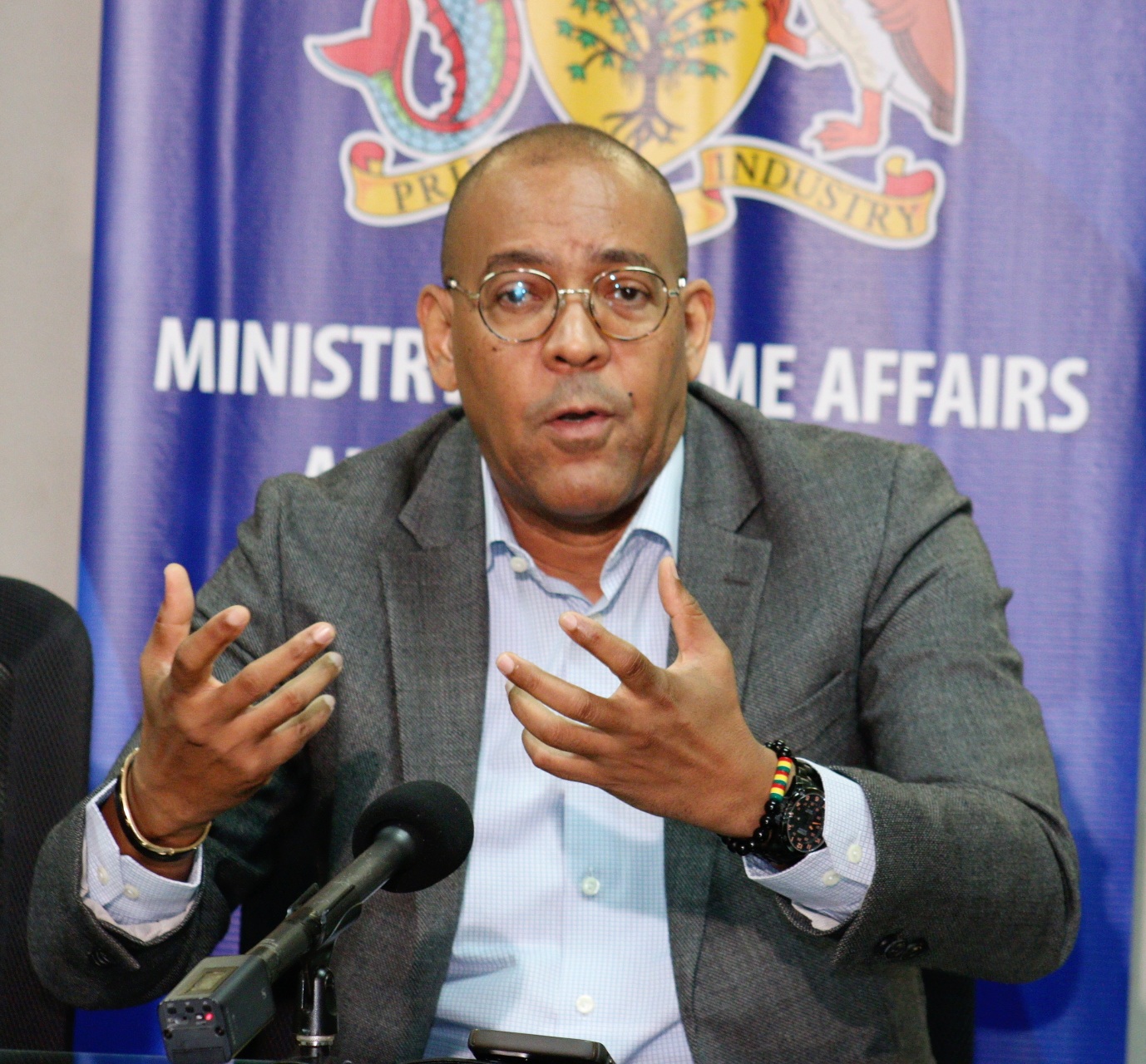
US visa bond plan sparks uncertainty in Barbados
Barbadian officials are grappling with uncertainty as the United States gears up to implement a contentious visa bond policy later this month. The policy, disclosed by the US State Department, mandates visa applicants from select countries to post bonds ranging from $5,000 to $15,000 to secure a US visa. Initially, the pilot program will target citizens of Malawi and Zambia, with the possibility of expanding to other nations identified as having high visa overstay rates, inadequate vetting procedures, or citizenship-by-investment programs. Barbados’ Minister of Foreign Affairs, Kerrie Symmonds, expressed ambiguity about the policy’s potential impact on Barbadian travelers, stating, ‘I’m not entirely certain at this point, if, and how this will actually relate to us.’ The visas issued under this scheme will be valid for a single entry, with a maximum stay of 30 days within a three-month period. Applicants who comply with all visa conditions, including timely departure or proper filing for extensions, will receive a full refund of their bond. The pilot program is set to run until August 5, 2024, with its outcomes informing future decisions on visa bond implementation to address national security and foreign policy concerns.
-
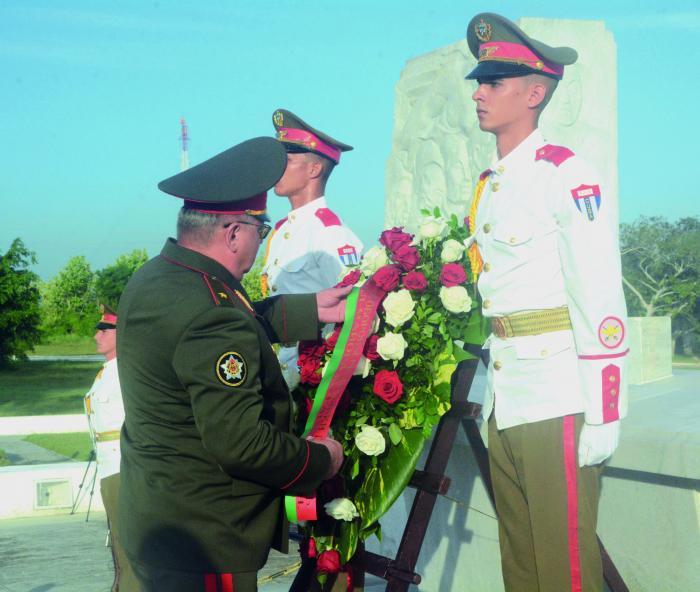
Another step in the consolidation of ties between Cuba and Belarus
In a significant display of diplomatic camaraderie, Major General Pavel Nikolaevich Muraveiko, Chief of the General Staff of the Armed Forces of Belarus and first deputy Minister of Defense, emphasized the shared global perspectives between Belarus and Cuba during his first official visit to the island nation. The high-ranking official expressed his gratitude for the warm reception extended by the Cuban people, describing it as a testament to the brotherly relations between the two countries. Speaking at the Cacahual Mausoleum, General Muraveiko highlighted the alignment of both nations’ views on global issues and the military-political landscape, underscoring the importance of exchanging experiences and opinions to bolster bilateral collaboration. His visit, marked by a packed itinerary, included tours of military units and industrial facilities, as well as insights into the training processes at Cuban military academies. The Belarusian delegation also paid homage to Cuban historical figures, including Antonio Maceo and Panchito Gómez Toro, whose remains are interred at the Mausoleum. Army Corps General Roberto Legrá Sotolongo, first deputy minister of the Revolutionary Armed Forces of Cuba, underscored the importance of preserving history as a means of safeguarding national identity. The visit concluded with a mutual commitment to further strengthen the strategic partnership between Belarus and Cuba, rooted in shared values and historical ties.
-
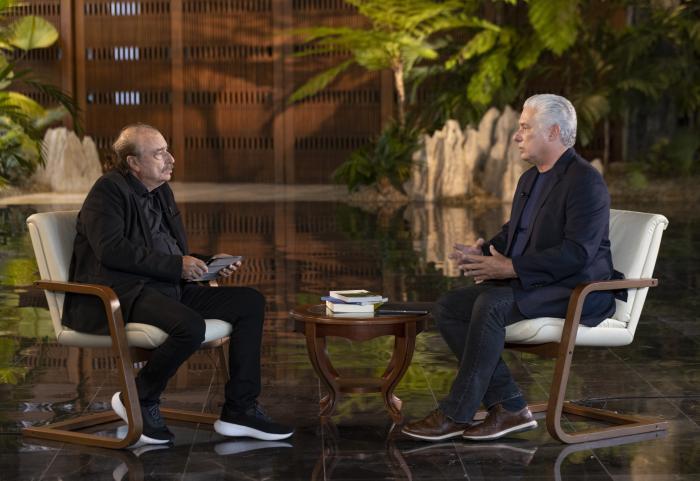
Cuba has never stood idly by
In a comprehensive interview with Spanish journalist Ignacio Ramonet, Cuban President Miguel Díaz-Canel addressed the pressing economic challenges facing Cuba, the impact of the U.S. blockade, and the nation’s efforts toward regional integration. The discussion, held at the Palace of the Revolution on May 11, 2024, delved into three key areas: domestic policy, the economy, and international relations.
**Domestic Policy and Economic Hardships**
Díaz-Canel acknowledged the severe difficulties faced by Cuban families, including food shortages, inflation, and public service deficits. He attributed these issues primarily to the U.S. economic blockade, which has been in place for over six decades. The President emphasized that the blockade has intensified under recent U.S. administrations, particularly with the inclusion of Cuba in the U.S. list of state sponsors of terrorism. This has further restricted Cuba’s access to international financial systems and foreign investment.The President highlighted Cuba’s resilience and creative resistance in the face of these challenges. Despite the blockade, Cuba has managed to maintain social programs and economic activity, albeit at a reduced capacity. Díaz-Canel pointed to the COVID-19 pandemic as a critical moment when Cuba prioritized saving lives, diverting limited resources to healthcare and vaccine development.
**Economic Measures and Future Plans**
Díaz-Canel outlined Cuba’s Macroeconomic Stabilization Program, aimed at addressing inflation, exchange rate issues, and fiscal imbalances. The program, which extends to 2030, focuses on stimulating domestic production, particularly in agriculture, to achieve food sovereignty. The President also discussed the role of micro, small, and medium-sized enterprises (MSMEs) in diversifying the economy and fostering innovation.**International Relations and Regional Integration**
On the international front, Díaz-Canel criticized the U.S. government for maintaining the blockade despite widespread global condemnation. He expressed Cuba’s willingness to engage in dialogue with the U.S. on equal terms but stressed that the blockade must be lifted unilaterally. The President also highlighted Cuba’s participation in regional alliances, such as the Eurasian Economic Union and its aspirations to join the BRICS group, as part of its strategy to counter U.S. hegemony and foster South-South cooperation.**Regional Challenges and Solidarity**
Díaz-Canel addressed the political and economic crises in Latin America and the Caribbean, emphasizing Cuba’s commitment to regional solidarity and integration. He condemned U.S. interference in the region and reaffirmed Cuba’s support for progressive governments and movements. The President also highlighted Cuba’s contributions to regional health and education, including the deployment of medical brigades to Haiti and other countries.In conclusion, Díaz-Canel expressed optimism about Cuba’s future, emphasizing the nation’s resilience, creativity, and commitment to social justice. He called for greater international cooperation and solidarity to overcome the challenges posed by the U.S. blockade and to build a more equitable world.
-
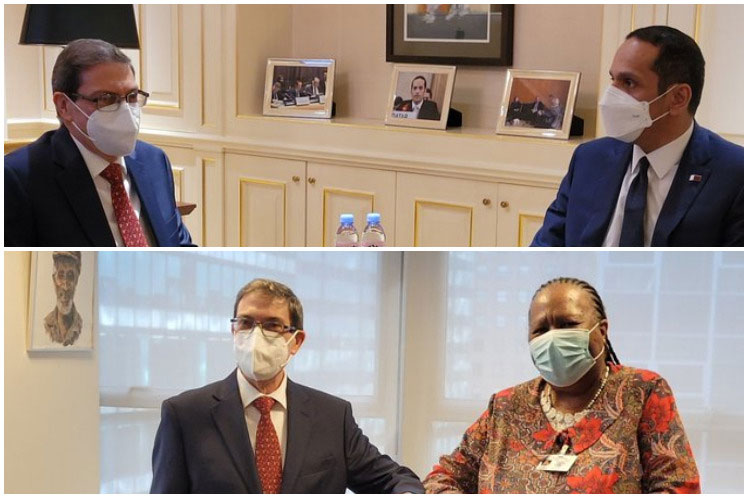
Cuban FM meets with counterparts from Qatar and S. Africa at UN
Cuban Foreign Minister Bruno Rodríguez has conducted a series of high-level diplomatic meetings during the 76th session of the United Nations General Assembly in New York. The senior diplomat engaged with prominent international counterparts, including Qatar’s Deputy Prime Minister and Foreign Minister Sheikh Mohammed bin Abdulrahman Al-Thani, and South Africa’s Minister of International Relations and Cooperation, Naledi Pandor.
Through his official Twitter account, Minister Rodríguez expressed considerable satisfaction with the current state of Cuba’s political relationships with both nations. The discussions, held within the framework of the UNGA’s high-level segment running through September 27th, focused on strengthening international cooperation and bilateral partnerships.
Regarding the meeting with Qatari officials, Rodríguez emphasized the positive development of political relations between Havana and Doha. In his separate engagement with South African representatives, the Foreign Minister highlighted the excellent condition of bilateral relations, noting the historical friendship and solidarity between the two nations that has been notably strengthened throughout the challenges presented by the global pandemic.
These diplomatic exchanges form part of Cuba’s ongoing efforts to maintain and enhance its international relationships through multilateral forums like the United Nations, where matters of global significance are addressed through diplomatic dialogue and cooperation.
-
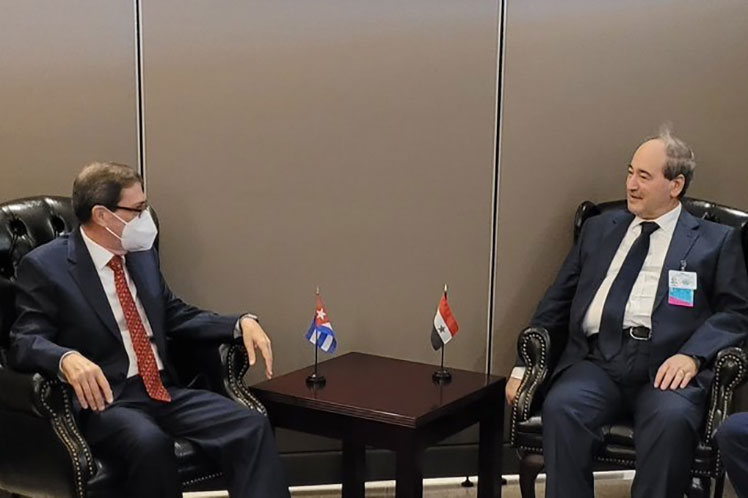
Cuba and Syria confirm positive political relations at the UN
Cuban Foreign Minister Bruno Rodríguez has utilized his official Twitter platform to announce a concerted diplomatic push to deepen economic and cooperative relationships with partner nations. The declaration comes as the minister participates in the high-level segment of the 76th United Nations General Assembly (UNGA) in New York, a premier gathering for global diplomacy set to conclude on September 27th.
Minister Rodríguez is actively engaging in a series of bilateral meetings with his counterparts from various nations on the sidelines of the assembly. This practice is a standard feature of the annual UN event, providing a critical forum for high-ranking dignitaries and diplomatic envoys to conduct in-person negotiations and strengthen multilateral ties.
The broader context of these diplomatic exchanges is the UNGA’s high-level general debate, where the international community’s focus is sharply trained on two paramount global challenges: the ongoing COVID-19 pandemic and the escalating climate crisis. These overarching themes are shaping discussions and fostering alliances aimed at crafting coordinated international responses.
-
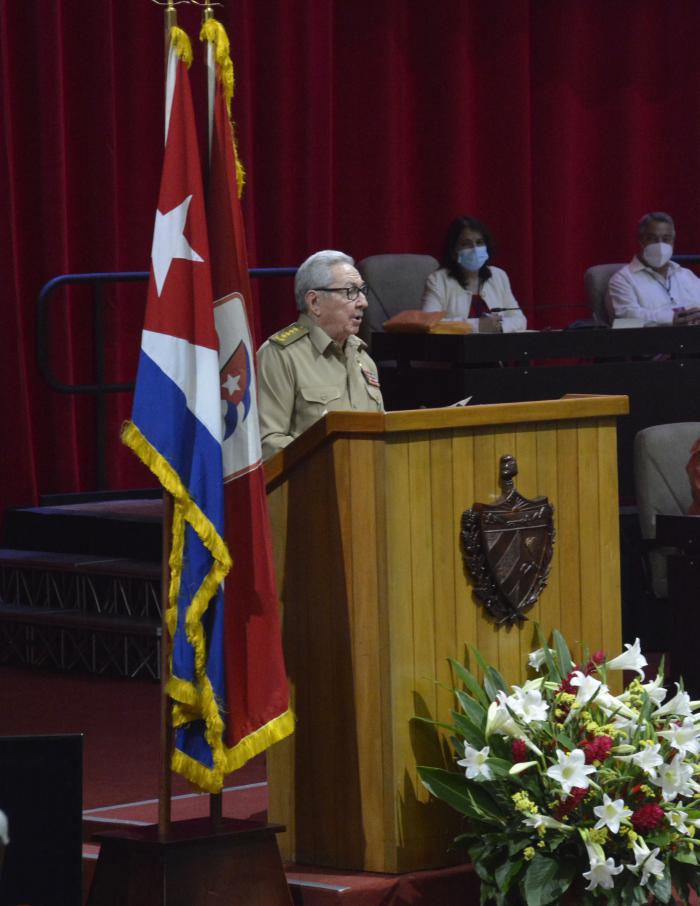
Central Report to the Eighth Congress of the Communist Party of Cuba
On April 16, 2021, Army General Raúl Castro Ruz delivered a pivotal address at the opening of the Eighth Congress of the Communist Party of Cuba, marking the 60th anniversary of the proclamation of the socialist character of the Cuban Revolution. The event coincided with the commemoration of the 1961 victory at Playa Girón, a defining moment in Cuba’s resistance against U.S.-backed aggression. Castro’s speech highlighted the historical significance of the Revolution, its enduring principles, and the challenges facing Cuba today. He emphasized the importance of unity, ideological firmness, and the need to adapt to contemporary global realities while preserving socialist values. Castro also addressed Cuba’s response to the COVID-19 pandemic, the country’s economic reforms, and the ongoing U.S. economic blockade, which he described as the most comprehensive and prolonged economic war ever waged against a nation. He underscored the resilience of the Cuban people and the necessity of strengthening the Party’s role in guiding the nation’s development. The Congress concluded with a reaffirmation of Cuba’s commitment to socialism, sovereignty, and international solidarity, particularly with Latin America and the Caribbean. Castro’s address served as both a reflection on Cuba’s revolutionary legacy and a roadmap for its future, emphasizing the importance of generational leadership transitions and the continued defense of socialist principles.
-
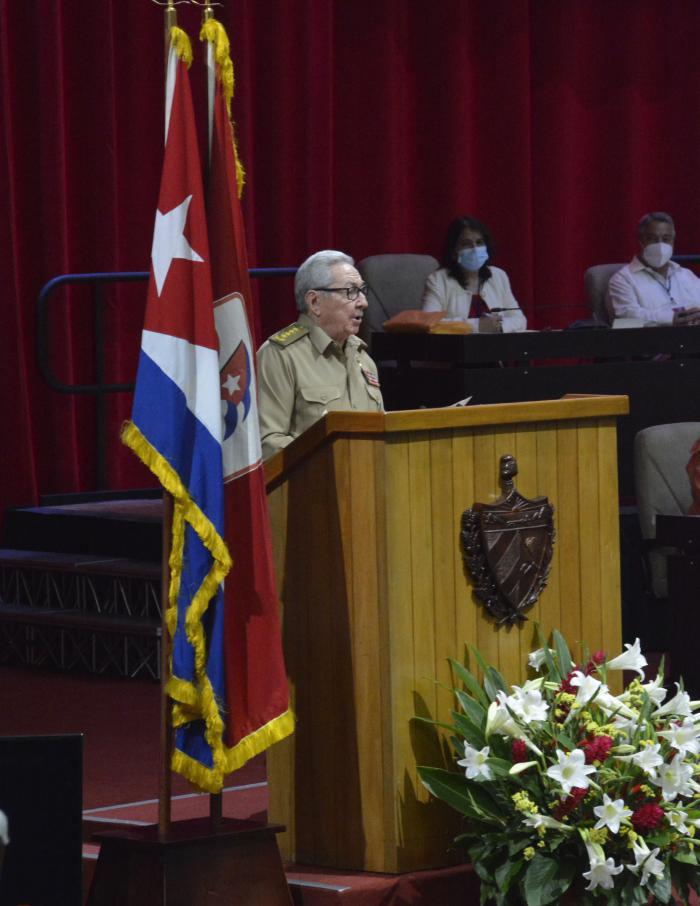
Central Report to the Eighth Congress of the Communist Party of Cuba
On April 16, 2021, Army General Raúl Castro Ruz delivered a pivotal address at the opening of the Eighth Congress of the Communist Party of Cuba, marking the 60th anniversary of the proclamation of the socialist character of the Cuban Revolution. The event, held under extraordinary circumstances due to the COVID-19 pandemic, underscored Cuba’s resilience and commitment to socialism amidst ongoing challenges, including the U.S. economic blockade and internal economic reforms. Castro highlighted the historical significance of the Revolution, emphasizing its enduring principles and the need for continued unity and ideological firmness. He also addressed the Party’s role in guiding Cuba’s development, the importance of youth engagement, and the ongoing efforts to update the country’s economic and social model. The Congress concluded on April 19, coinciding with the 60th anniversary of Cuba’s victory at Playa Girón, a symbol of the nation’s resistance to external aggression. Castro’s speech reaffirmed Cuba’s commitment to socialism, its defense of sovereignty, and its determination to overcome current challenges through collective effort and innovation.
-
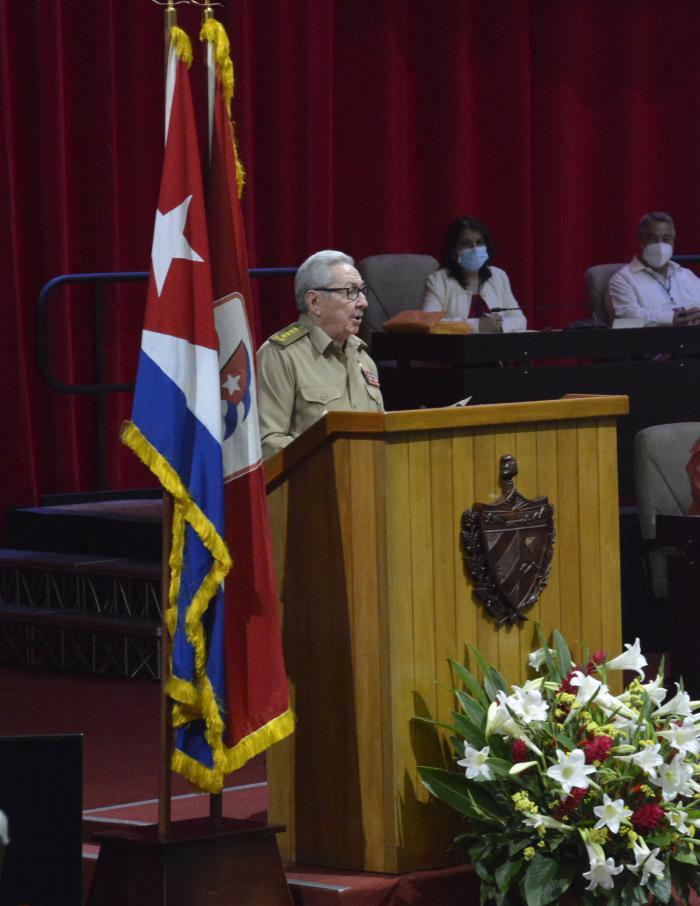
Central Report to the Eighth Congress of the Communist Party of Cuba
On April 16, 2021 – a date etched into Cuban history as the 60th anniversary of Fidel Castro Ruz’s proclamation of the Revolution’s socialist character – Army General Raúl Castro Ruz delivered the opening address to the Eighth Congress of the Communist Party of Cuba (PCC). The date carried layered historical meaning: it fell on the eve of the 60th commemoration of Cuba’s 72-hour victory over the CIA-backed Playa Girón mercenary invasion, launched by the United States government in 1961 to crush the revolutionary experiment and reimpose neocolonial rule on the island with the complicity of the Organization of American States. Castro opened by honoring the over 3,400 Cubans killed and 2,099 disabled by six decades of U.S.-backed state terrorism, whose sacrifice forms the foundation of the country’s modern sovereignty.
The Congress convened two years after the adoption of Cuba’s 2019 Constitution, a milestone that came 150 years after the first Mambi Constitution of Guáimaro. To align national legislation with the new constitutional framework, the National Assembly of People’s Power has advanced a scheduled legislative overhaul, approving 11 new laws to structure core state and government bodies, while the Council of State has issued 33 decree laws, with input from universities and research centers strengthening the process. Due to COVID-19 pandemic restrictions, delegate numbers were limited to 300, democratically selected from the PCC’s more than 700,000 members organized across 58,000 local cells – a timeline held to despite extraordinary circumstances, in line with the party’s rule that congresses are held every five years save for war, major disaster or existential exceptional crisis.
Castro highlighted key demographic and organizational shifts within the PCC: after a period of membership decline starting in 2006, the party has grown by 27,000 new members, with an average of more than 39,400 new militants joining annually, one-third coming from the Young Communist League (UJC). Still, he acknowledged growing pains: shifting national demographics have pushed the average age of membership upward, with 42.6% of members over 55, creating a priority to recruit more young people from agricultural sectors, small farming and key economic industries with untapped potential for party growth.
A central section of the address focused on Cuba’s unprecedented response to the COVID-19 pandemic, guided by a national plan approved by the PCC Political Bureau in January 2020 that centered intersectoral coordination, mass public participation, and a core commitment to protecting universal public health. Castro emphasized that only a socialist system could deliver the coordinated, equitable response that had contained the virus through case tracking, targeted isolation, and homegrown Cuban pharmaceutical treatments – noting that five domestic vaccine candidates were in clinical trials, a achievement he credited to the scientific ecosystem Fidel Castro built decades earlier. He acknowledged a global resurgence of the virus had reached Cuba, driven in part by relaxed adherence to public health rules, but credited Cuban scientists and medical professionals for turning public health innovation into a global public good.
The Eighth Congress structured its work around three core commissions led by top Cuban leaders: the first, chaired by Prime Minister Manuel Marrero Cruz, evaluates economic and social progress since the Seventh Congress, updates the Party and Revolution’s Economic and Social Policy Guidelines, and assesses the government’s strategy to boost the economy amid the COVID-19 global crisis; the second, led by Central Committee Second Secretary José Ramón Machado Ventura, reviews progress on party functioning, ideological work and mass outreach set by the 2012 First National Party Conference; the third, headed by President of the Republic Miguel Díaz-Canel Bermúdez, assesses cadre policy across the party, youth organizations, mass groups, and state institutions.
Turning to economic policy, Castro reaffirmed that economic development, the struggle for peace, and ideological firmness are the PCC’s core missions. Over the past five years, he noted, the Cuban economy has demonstrated extraordinary resilience in the face of a drastically intensified U.S. economic, commercial and financial blockade, allowing the country to preserve core revolutionary achievements in free public healthcare, universal education and social security, while maintaining its commitment to international solidarity. Still, he acknowledged deep structural challenges: excessive bureaucracy, weak resource controls, systemic corruption, and an economic model that has failed to deliver sufficient incentives for work and innovation.
To address these gaps, Castro called for a more dynamic updating of Cuba’s economic and social model, balancing centralized planning with greater decentralization and autonomy for enterprises and local governments. He highlighted the recent expansion of permitted self-employment activities from 127 to over 2,000, a reform that drew both public support and criticism from proponents of rapid mass privatization. Castro drew a clear line on the boundaries of reform: the fundamental means of production will remain under public ownership, a foundational principle of Cuban socialism that protects free universal healthcare and education. Any turn to full privatization, he warned, would irreversibly destroy the core of Cuban socialism and erode national sovereignty, echoing Fidel Castro’s 1992 warning that without unwavering resolve, the revolution would not survive.
Castro outlined concrete priorities for the state enterprise sector: it must prove its role as the dominant form of economic management through increased productivity, efficiency, and a top-to-bottom shakeup of bureaucratic inertia, replacing a culture of waiting for top-down orders with proactive, autonomous entrepreneurship. He emphasized the need to boost domestic food production, reduce overreliance on imports, and expand diversified competitive exports, noting that Cubans must adapt to living within their means and prioritize savings as a core driver of growth. The international tourism sector, once a steady source of foreign income until 2018, was hit hard by new U.S. restrictions and the COVID-19 pandemic, but Castro noted that Cuba used the industry shutdown to upgrade hotel infrastructure, and he expressed confidence the sector will recover for the benefit of all Cubans.
Addressing the controversial reintroduction of convertible currency sales in retail and wholesale outlets, Castro explained the measure was a temporary necessity born of extreme liquidity shortages caused by the blockade, intended to curb black market activity and leverage remittances to guarantee a steady supply of basic goods priced in Cuban pesos. He acknowledged that poor communication caused public confusion, but clarified that the policy will remain in place until the economy recovers enough to support full convertibility of the national currency. He also called for eliminating outdated prejudices against foreign investment, highlighting the Mariel Special Development Zone as a successful hub for investment that continues to grow despite U.S. blockade efforts.
Castro also addressed the implementation of the 2021 Reordering Task, a sweeping monetary and labor reform that unified Cuba’s dual currency, restructured salaries and pensions, and reduced excessive unsustainable subsidies. He noted that while the reform has achieved important milestones, it has also exposed implementation gaps: poor preparation, weak communication, excessive price hikes, and errors in salary restructuring that the government has moved quickly to correct. The reform, he emphasized, will proceed on schedule to lay the foundation for sustainable, prosperous Cuban socialism, and will eliminate the harmful paternalistic myth that Cubans can prosper without working.
Turning to the role of the Communist Party, Castro reaffirmed the constitutional provision – personally drafted by Fidel Castro – that names the PCC as the superior leading force of Cuban society and state, a principle rooted in more than a century of revolutionary struggle from José Martí’s original Cuban Revolutionary Party to the unification of anti-Batista revolutionary forces. He emphasized that Cuba’s single-party system has been the constant target of U.S. “divide and conquer” tactics, but the unity of the Cuban people around the party and revolution has been the country’s most effective strategic weapon against foreign aggression. Within that framework, he added, the party fosters broad internal democratic debate, strengthens ties with working people, and promotes youth participation while preserving the UJC’s organizational independence.
Castro acknowledged that ideological work, while centered on truth-telling, still requires profound transformation: he called for an end to triumphalism, superficiality, and stridency in media coverage of national issues, urging more creative, accessible communication that conveys optimism and teaches Cuban history to counter intensified U.S. ideological subversion. He detailed how the U.S. government funds covert social media campaigns, fake news, radio and television outlets, and cyberattacks on Cuban critical infrastructure to paint a false picture of a collapsing revolution and incite social unrest. He noted that domestic counterrevolution lacks any meaningful social base or public support, and remains confined to online activism, but warned against naivety around new technologies and the need to defend information security.
On cadre policy, Castro highlighted progress in promoting young people, women, and Black and mixed-race Cubans to leadership positions based on merit, but acknowledged that progress remains insufficient, with persistent problems of formalism, weak ties to the public, and failure to train new generations of leaders. He proposed expanding a longstanding policy requiring all higher education students to complete military service before admission – a policy already in place at the Institute of International Relations that builds on the constitutional principle that defending the socialist homeland is every Cuban’s supreme duty – pointing to President Díaz-Canel’s own voluntary military service as an example to follow.
Turning to foreign policy, Castro outlined a drastically changed global context since the 2016 Seventh Congress, marked by an unprecedented escalation of U.S. aggression against Cuba. He traced the history of U.S. hegemony over Cuba from the 1898-1902 military occupation, the imposition of the Platt Amendment, and the 1934 Treaty of Relations that consolidated neocolonial rule until the 1959 revolution. Over the past four years, he noted, the U.S. has abandoned any pretense of multilateral normativity, using its economic, military and technological power to impose its will globally, creating a context that has drastically amplified the harm of the 60-year-old blockade. The blockade, which Castro called the longest, most comprehensive economic war in modern history, has been drastically tightened during the COVID-19 pandemic, with 240 new coercive measures adopted since 2017 that target core sectors of the Cuban economy, restrict remittances, cut off fuel supplies, restrict tourism, and intimidate foreign investors.
Castro detailed the human cost of the tightened blockade: it forces Cuba to source essential medical equipment and supplies from distant, indirect markets, drives up the cost of foreign trade, creates shortages of essential consumer goods and food, and complicates Cuba’s ability to honor its international financial commitments. He also condemned the U.S. campaign to discredit Cuba’s global medical internationalism, which has saved millions of lives in vulnerable communities around the world, calling the attack on Cuba’s medical missions a crime against the universal human right to health. He noted the 2019 activation of Title III of the Helms-Burton Act – a law that codifies the blockade and enshrines U.S. political intervention in Cuba – as an unprecedented escalation that allows U.S. courts to sue foreign companies operating in Cuba, a violation of international law that exposes the U.S.’s goal of destroying Cuban sovereignty.
Castro reaffirmed Cuba’s willingness to build a respectful, civilized relationship with the United States based on mutual respect, but stressed that Cuba will never renounce its revolutionary principles, sovereignty or independence to achieve normalized relations. “We do not consider the U.S. people our enemy,” he emphasized, “but we will never negotiate our sovereignty under threat of aggression.”
Turning to Latin America and the Caribbean, Castro noted that the region has faced a coordinated imperial and oligarchic counteroffensive against progressive and leftist governments, rolling back gains against neoliberalism and undermining regional integration bodies such as UNASUR and CELAC. He reaffirmed Cuba’s unwavering solidarity with Venezuela, Nicaragua, Bolivia’s Luis Arce, Mexico’s Andrés Manuel López Obrador, Argentina’s Alberto Fernández, and former Brazilian president Luiz Inácio Lula da Silva, reaffirmed Cuba’s support for Argentine sovereignty over the Malvinas, Puerto Rican self-determination, and Caribbean demands for reparations for slavery and colonialism. He noted that Cuba has strengthened ties with socialist partners in Asia including China, Vietnam, Laos and the DPRK, deepened relations with Russia, expanded cooperation with the European Union, and maintained longstanding solidarity with African nations and the causes of Palestine and the Sahrawi people.
Closing the address, Castro confirmed that the Eighth Congress marks the completion of the orderly transfer of power from the revolutionary generation to a new cohort of younger leaders. He praised President Miguel Díaz-Canel, who has risen through the party ranks from local leadership to the presidency, and has performed strongly in office over the past three years, uniting the party, state and government behind a shared vision. Castro announced that he is stepping down as First Secretary of the PCC Central Committee, and will not seek a position on the party’s highest governing bodies, though he will remain an active revolutionary fighter committed to defending the homeland for the rest of his life.
“Let no one doubt,” he closed, “as long as I live I will be ready to defend the homeland, the Revolution and socialism. Viva Free Cuba! Long live Fidel! Homeland or Death! We will win!”