分类: politics

  • Russia urges Japan to abandon hostile policy toward Moscow

    Russia urges Japan to abandon hostile policy toward Moscow

    The Russian Foreign Ministry has issued a formal declaration establishing concrete conditions for the restoration of diplomatic relations with Japan, emphasizing that Tokyo must demonstrate tangible steps away from its current hostile posture. Russian officials contend that Japan’s present foreign policy direction contradicts its national interests and undermines regional stability.

    Moscow’s statement specifically underscores the necessity for Japanese authorities to preserve what it describes as “the positive legacy of bilateral ties” developed over previous decades. The diplomatic communique suggests that current tensions stem directly from Japan’s adoption of what Russia characterizes as an antagonistic position toward Russian interests.

    This development follows high-level briefings where Russian officials conveyed their strategic approach to regional and international matters, including specific practical considerations regarding engagement with Japan. The diplomatic rift intensified significantly when Japan aligned with Western-imposed sanctions against Russia following the commencement of military operations in Ukraine in February 2022.

    The deterioration culminated on March 21, 2022, when Moscow formally suspended peace treaty negotiations and halted discussions concerning joint economic initiatives in the Southern Kuril Islands. Russian authorities attributed these decisions to Japan’s “unfriendly position” regarding the Ukraine conflict, marking a significant setback in Russo-Japanese relations that continues to impact Northeast Asian geopolitics.

  • Heisa rond onstatutaire benoemingen nieuw SBB-bestuur

    Heisa rond onstatutaire benoemingen nieuw SBB-bestuur

    A significant governance dispute has emerged within Suriname’s coalition government regarding the controversial appointment and installation of a new supervisory board at the Foundation for Forest Management and Supervision (SBB). The foundation’s director, Ruben Ravenberg, currently abroad, confirmed to Starnieuws that he has learned about the new board’s formation but questions whether the appointment process followed established statutes. Ravenberg intends to seek clarification from Minister Stanley Soeropawiro of Land Policy and Forest Management upon his return to Suriname.

    Minister Soeropawiro formally installed the new board this past Wednesday, with only Robin Brunswijk from the previous administration retaining his position. The newly appointed members include Kaminie Tajib, Leon Boedhoe, Meriam Asodanoe, Fairouz Fredison Brunswijk, and Sayonara Asmo. Both Ravenberg and coalition circles have raised concerns about the apparent deviation from statutory procedures in these appointments. While Ravenberg maintains his dual role as SBB director and board chairman, the origins and nomination process for the new members remain unclear.

    Article 6 of the SBB statutes explicitly outlines board composition requirements: a seven-member structure with the SBB director serving ex officio as chairman and the Head of the National Forest Service as vice-chairman. Additional representatives should be nominated from concession holders, indigenous communities, environmental organizations, the Finance Ministry, university institutions, and the National Army. Sources indicate this appointment controversy initially surfaced as a discussion point back in August.

    The current conflict follows a year-long dispute between Ravenberg and the previous board. Four now-replaced members had previously sued the director over alleged unauthorized changes to SBB’s staff leadership structure. The former board insisted that SBB cover legal expenses for their lawsuit against Ravenberg, which the director refused. This led to the board’s lawyer separately taking legal action against Ravenberg. Despite having testified before a judge in this matter, Ravenberg maintains that since he didn’t initiate the lawsuit, SBB shouldn’t bear associated legal costs.

  • Police Summon Opposition Leader Jamale Pringle for Questioning in Morris Bay Equipment Damage Probe

    Police Summon Opposition Leader Jamale Pringle for Questioning in Morris Bay Equipment Damage Probe

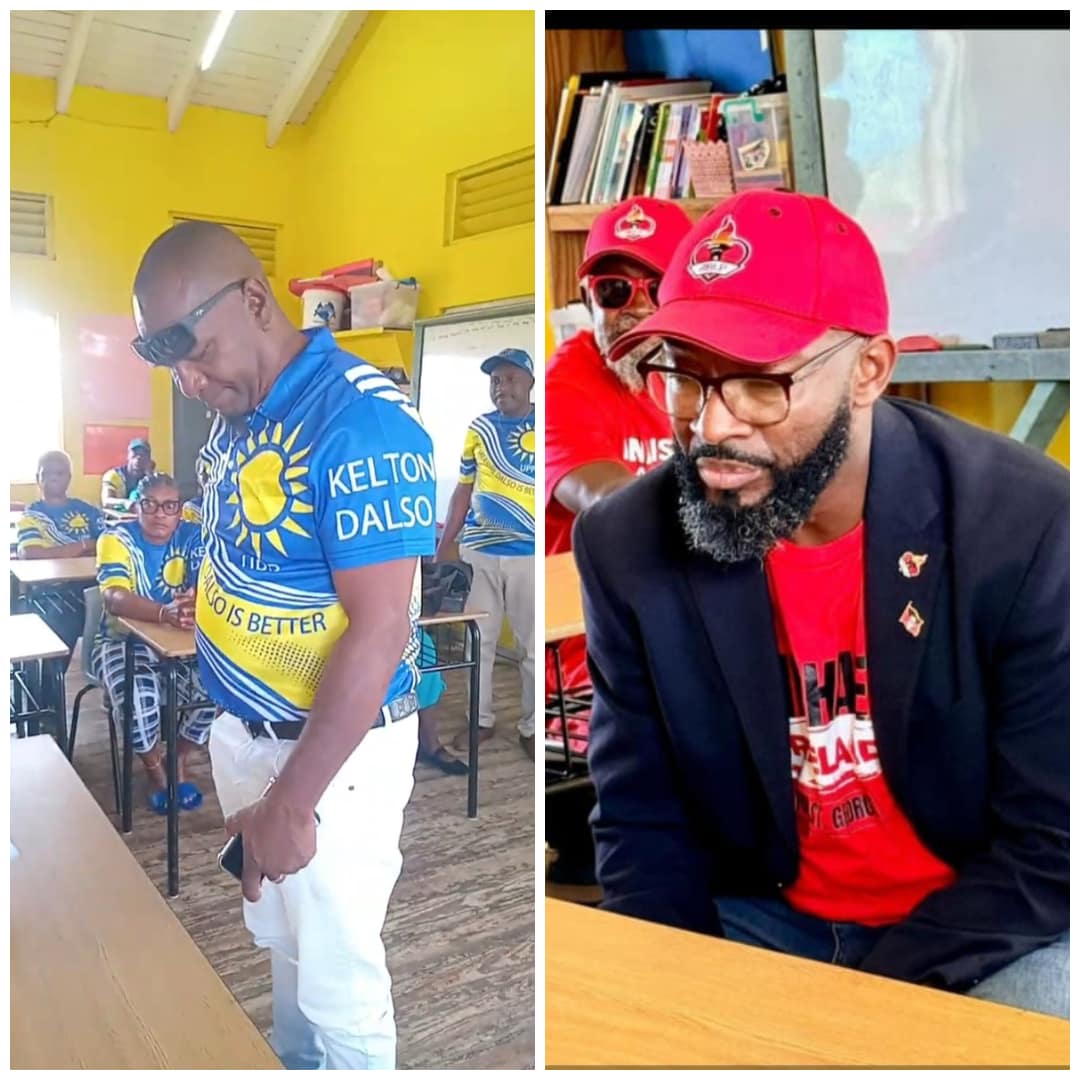
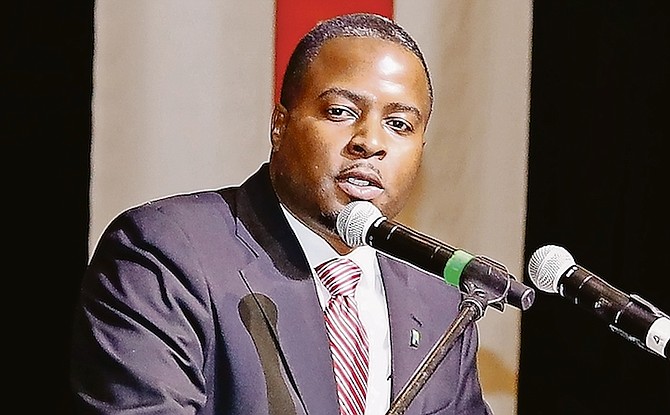
    Antiguan authorities have formally requested Opposition Leader Jamale Pringle to present himself for police interrogation at 10 a.m. on Boxing Day as part of an ongoing criminal investigation into the deliberate destruction of telecommunications infrastructure belonging to the Antigua Public Utilities Authority. The incident occurred at Morris Bay in Old Road, where critical equipment associated with preparatory activities for an undersea cable project was vandalized.

    Law enforcement officials have clarified that this summons for questioning does not constitute an arrest at this juncture. The timing of this development has raised constitutional considerations, as Antigua and Barbuda’s legal framework mandates that any detained individual must be brought before a judicial authority within 48 hours, excluding Sundays and public holidays. Given that Boxing Day is officially recognized as a public holiday followed immediately by a weekend, any potential detention could extend through the remainder of the week into the following week.

    Pringle, who serves as the parliamentary representative for All Saints East and St. Luke, has characterized the police action as fundamentally politically motivated. The United Progressive Party, which he represents, has issued strong criticisms of the investigation process, cautioning that such actions risk exacerbating existing political divisions and potentially eroding public trust in law enforcement institutions if perceived as partisan maneuvers rather than impartial judicial proceedings.

  • Government increases 2026 budget for tourism

    Government increases 2026 budget for tourism

    Santo Domingo – The Dominican government has unveiled its fiscal blueprint for 2026, presenting a state budget of RD$1.62 trillion that implements targeted financial reallocations across public institutions. While representing a nominal 1.9% increase from initial 2025 projections, the budget actually constitutes a 3% reduction compared to the currently amended 2025 budget, signaling a period of fiscal recalibration.

    Financial analysts note this budget reflects strategic prioritization rather than across-the-board cuts. Sixteen public institutions will experience funding reductions ranging from 0.1% to 27%, while twelve agencies will receive increased allocations. The most dramatic shift occurs at the Ministry of Energy and Mines, which secures a 75.4% budget expansion—soaring from RD$6.0 billion to RD$10.6 billion—to fund critical power generation projects and energy sustainability initiatives.

    Other notable beneficiaries include the Ministry of Sports and Recreation (45.6% increase) and the Ministry of Tourism (18% boost), indicating heightened focus on recreational infrastructure and tourism development. Concurrently, public debt management funding increased by 11%, while National Treasury obligations decreased by 5.5%. Both the Senate and Judiciary maintained unchanged budgets.

    These financial adjustments coincide with sweeping institutional reforms scheduled for implementation in 2026. Most significantly, the newly established Ministry of Justice will assume administrative and judicial functions currently managed by the Public Prosecutor’s Office, representing the most substantial governmental restructuring in recent years. Budget officials characterize these changes as necessary adaptations to evolving national priorities rather than mere austerity measures.

  • Ambassador Campos presents the Geneva Consensus to civil society leaders

    Ambassador Campos presents the Geneva Consensus to civil society leaders

    In a significant diplomatic engagement, U.S. Ambassador to the Dominican Republic Leah Francis Campos convened with leading civil society organizations dedicated to promoting family values and the protection of human life. The high-level discussion, characterized by mutual respect and constructive dialogue, aimed to reinforce institutional cooperation and shared principles between the two nations.

    Ambassador Campos formally introduced the Geneva Consensus Declaration during the meeting, a key initiative originally advanced by the Trump administration. This document underscores the critical importance of national sovereignty in international policymaking, particularly concerning the preservation of human life and traditional family structures. The ambassador emphasized the vital role that non-governmental organizations play in shaping societal norms and contributing to meaningful legislative debates.

    Prominent groups in attendance included Youth With A Mission (YWAM/JUCUM), the Forum of Women in Defense of Life and Family (FOMUDEVI), the Christian Action Group, and the Happy Marriage Movement. Omayra Álvarez, president of JUCUM, characterized the encounter as historically significant and expressed appreciation for the U.S. delegation’s outreach. She reaffirmed her organization’s dedication to advancing fundamental freedoms and initiatives that benefit the common good.

    Ambassador Campos, who began her diplomatic tenure on October 12, 2025, reiterated her commitment to fostering a bilateral relationship grounded in mutual respect for sovereignty and the inherent dignity of all people. The meeting represents continued diplomatic efforts to strengthen ties through shared values and cultural understanding.

  • Leider van Bangladesh, favoriet voor het premierschap, terug uit ballingschap

    Leider van Bangladesh, favoriet voor het premierschap, terug uit ballingschap

    In a dramatic political homecoming, Tarique Rahman, acting chairman of the Bangladesh Nationalist Party (BNP), returned to Dhaka on Thursday following nearly 17 years of exile in London. The carefully orchestrated return marks a pivotal moment in Bangladesh’s fragile political transition as the nation prepares for February elections.

    Hundreds of thousands of supporters lined the route from Dhaka airport to the reception venue, waving party flags and holding banners while high-level BNP officials welcomed Rahman under tight security. The 60-year-old son of ailing former Prime Minister Khaleda Zia made his symbolic return by removing his shoes to walk barefoot on Bengali soil and gathering a handful of earth as a gesture of homecoming.

    Addressing ecstatic crowds at the reception center, Rahman opened his speech with “Beloved Bangladesh,” promising to unite people of all faiths and ensure their safety. “We will build a Bangladesh that a mother dreams of,” he declared, urging Muslims, Hindus, Buddhists and Christians to join him in creating an inclusive nation. He emphasized his vision for a democratic, economically strong Bangladesh, stating: “I have a plan – a plan for the people of my country, for my country.”

    The return occurs during a sensitive electoral period in the Muslim-majority nation of nearly 175 million people, currently under an interim government led by Nobel laureate Muhammad Yunus. The elections are viewed as crucial for restoring political stability after nearly two years of turmoil. While authorities have promised free and peaceful elections, recent media attacks and sporadic violence have raised concerns about the electoral process.

    Rahman’s homecoming follows the quashing of his convictions in absentia for money laundering and alleged involvement in a plot to assassinate former Prime Minister Sheikh Hasina. The legal barriers disappeared after Hasina was ousted by student protests last year. The political landscape has shifted dramatically since Hasina’s fall, ending decades where she and Khaleda largely alternated power.

    The return also carries personal urgency as Rahman’s mother Khaleda has been seriously ill for months. Rahman visited her in hospital shortly after his arrival.

    According to a December survey by the U.S.-based International Republican Institute, the BNP appears positioned to win the largest number of parliamentary seats, with the Islamic party Jamaat-e-Islami also remaining in contention. Hasina’s Awami League party, excluded from the February 12 elections, has threatened unrest that some fear could disrupt the voting process.

    Nahid Islam, leader of the National Citizen Party that emerged from the youth protest movement that toppled Hasina, expressed hope that Rahman would help shape Bangladesh’s democratic future. “Our greatest challenge now is to create a culture of coexistence and healthy competition in the new political reality,” he stated.

  • Column: Kerstboodschap of zelfverheffende politieke mythe

    Column: Kerstboodschap of zelfverheffende politieke mythe

    In the Netherlands, political parties are exercising their right to utilize religious holidays for societal messaging, with several organizations having disseminated Christmas communications that meet journalistic standards in both content and tone. This demonstrates that political communication and festive periods need not be inherently incompatible. However, when religious symbolism is employed to bolster political assertions, such messaging must withstand scrutiny regarding factual accuracy, democratic principles, and accountability.

    The United Reformed Party (VHP) declared in its Christmas message that the May 25th elections positioned it ‘in opposition as the sole party safeguarding the people’s voice.’ This constitutes not merely an audacious claim but primarily an undemocratic characterization of political reality. Within a parliamentary democracy, no single party exclusively protects the popular will. All parties that secured votes—whether in coalition or opposition—share this responsibility, with The National Assembly serving as the supreme representative body.

    The implication that VHP uniquely champions the popular will disregards not only other parties’ roles but also voters themselves. Had VHP truly represented the people’s voice and compass, the electorate would not have relegated it to opposition benches after five years of governance. Elections represent democratic judgments rather than random occurrences.

    Notably, VHP’s message extensively expresses sympathy regarding poverty, rising prices, and daily living pressures. While this empathy sounds compassionate, it inevitably raises the question: where was this problem-solving capacity during the past five years? Between 2020 and 2025, VHP possessed both opportunity and power to implement structural alternatives. Poverty reduction, legal certainty, fundamental rights protection, nationwide uniform education, healthcare, and social policy constituted governmental responsibilities rather than opposition themes. That these issues are now revisited without self-criticism or acknowledgment of policy failures renders the message particularly bitter.

    The disconnect between rhetoric and action manifests equally in VHP’s parliamentary conduct. During debates concerning initiative nature conservation legislation, where substantive discussion, improvement, and constitutional diligence were expected, VHP engaged primarily in obstruction and questioning of proposers’ motives. Constructive contribution was scarcely evident. Ironically, coalition factions—despite the bill originating from their own coalition circle—subjected proposals to critical analysis and thoroughly dismantled the initiative. This exemplifies parliamentary craftsmanship and demonstrates legislative oversight in the public interest.

    VHP’s creation of a self-serving misleading myth represents particularly concerning undemocratic expression. Claims of ethnic exclusion from governing coalitions shortly after elections contradict factual reality. The truth remains that VHP pursued coalition participation until the final moment but was rejected by all other parties regardless of their reasons. No evidence supports allegations of ethnic discrimination.

    Nevertheless, VHP’s Christmas message positions itself as ‘the light in darkness,’ directly comparing Christ’s birth to its political role. Religious imagery can prove powerful but becomes problematic when suggesting political superiority. According Christian belief, Christ came not to rule but to serve—precisely the element absent in a message radiating primarily self-glorification.

    Christmas represents a moment for reflection, truth, and humility. Those claiming unprecedented freedom to warn and inspire should equally demonstrate courage examining their own choices, missed opportunities, and policy errors. Inspiration without honesty constitutes not light but illusion.

    VHP retains every right to dream, warn, and oppose—fundamental democratic privileges. However, distorting democratic reality and ignoring governmental responsibility undermines credibility. Christmas deserves more than political marketing; it deserves truth. And truth tolerates no deception, even when expressed in festive wording.

  • PSC calls for MPs to be barred from police appointments

    PSC calls for MPs to be barred from police appointments

    In a significant move toward institutional autonomy, Trinidad and Tobago’s Police Service Commission (PSC) has issued a formal demand for complete independence from parliamentary oversight in the appointment of its board members and senior police leadership. The recommendations, detailed in the PSC’s 2024 annual report presented to the House of Representatives in November, call for sweeping reforms to eliminate perceived political patronage.

    The commission specifically advocates for removing the requirement for House of Representatives approval in appointing both PSC members and the Commissioner and Deputy Commissioners of Police. This structural change aims to bolster public confidence in the police force’s independence and enhance the commission’s supervisory capabilities.

    Among the key proposals is extending the Commissioner of Police’s retirement age to 65 and removing the position from Section 75 of the Police Service Act, which currently grants the President authority to extend the service of senior officers beyond retirement age based on national interest considerations.

    The PSC further recommends expanding its membership from five to seven individuals with fixed five-year terms, while seeking broader mandates including consultation rights on appointment criteria for top police positions and monitoring powers over Assistant Commissioners of Police.

    To strengthen its selection processes, the commission seeks mandatory powers to compel organizations to provide information for security vetting of candidates. Additionally, the PSC requests full audit authority over police service performance, oversight of recruitment, promotion, disciplinary processes, and the establishment of conduct standards.

    The report also highlights operational challenges, with PSC Chairman Dr. Wendell Wallace noting a 50% staffing shortage in the commission’s secretariat and expressing concern over one-third of staff lacking job security, with many employed on monthly contracts.

  • Hitting a sour note

    Hitting a sour note

    The Trinidad and Tobago government’s communication approach has once again demonstrated significant shortcomings, particularly evident in its recent handling of the national emblem transition timeline. Through a discreet legal notice issued on December 18, Homeland Security Minister Roger Alexander authorized a five-year extension for continued use of the former coat of arms, pushing the full implementation deadline to January 2, 2031.

    This administrative decision was enabled by amendments to the National Emblems of Trinidad and Tobago (Regulation) Act, which received unanimous parliamentary support from both the ruling PNM and opposition UNC parties in January. Notably, then-Opposition Leader Kamla Persad-Bissessar had previously observed that the legislation granted ministers unrestricted authority to extend implementation timelines through ministerial orders.

    While the extension itself represents practical governance—allowing existing inventory of official materials featuring the old emblem to be depleted—the government’s execution has raised eyebrows. The choice to implement this significant national symbol change through a mere legal notice, without public consultation or formal announcement, contrasts sharply with the administration’s approach to other national matters. Notably, the government had convened a press conference to announce the cancellation of the 2025 Independence Day parade, making the low-profile emblem decision particularly conspicuous.

    The Rowley administration’s handling of the emblem modification process has been characterized by missed opportunities. While the incorporation of the steelpan into the national coat of arms received widespread support, the government bypassed comprehensive public consultation regarding other potential modifications. The removal of Christopher Columbus’s ships from the emblem was widely viewed as long overdue, but the process lacked the democratic engagement that could have strengthened national unity.

    This approach has unnecessarily exposed the government to allegations of operating surreptitiously, creating a self-inflicted controversy that could have been avoided through transparent communication and inclusive decision-making processes.

  • Police get 12 vehicles for Christmas

    Police get 12 vehicles for Christmas

    The Trinidad and Tobago Police Service (TTPS) has significantly enhanced its operational capacity with the acquisition of 12 fully restored police vehicles, marking the culmination of a rapid fleet rehabilitation initiative that has delivered 52 vehicles within a mere three-week timeframe.

    This strategic infrastructure enhancement occurred on December 24 through collaboration between government ministries and the Vehicle Management Corporation (VMCOTT). The ceremony represented the fulfillment of Prime Minister Kamla Persad-Bissessar’s directive to strengthen law enforcement capabilities, particularly ahead of the Christmas season when security demands typically escalate.

    Homeland Security Minister Roger Alexander publicly commended VMCOTT and associated stakeholders for their exceptional expediency in returning previously decommissioned vehicles to active duty. “These vehicles, some of which had been out of service for several months to a couple of years, have now been returned to full operational readiness,” confirmed an official TTPS release.

    The government statement emphasized its unwavering commitment to national security, declaring: “The government reaffirms its commitment to equipping the police with practical and reliable resources to strengthen national security and enhance public safety. Promise made, promise kept.”

    The handover ceremony attracted high-ranking officials including Transport and Civil Aviation Minister Eli Zakour, Deputy Commissioner of Police Junior Benjamin, VMCOTT chairman Amrall Mohammed, acting CEO Brian Aliendre, alongside additional board members and corporate executives from the state-owned vehicle management entity.

    This development follows a previous vehicle transfer ceremony held on December 12 at the Diplomatic Centre in St. Ann’s, which was personally attended by Prime Minister Persad-Bissessar, underscoring the administration’s prioritization of law enforcement infrastructure modernization.