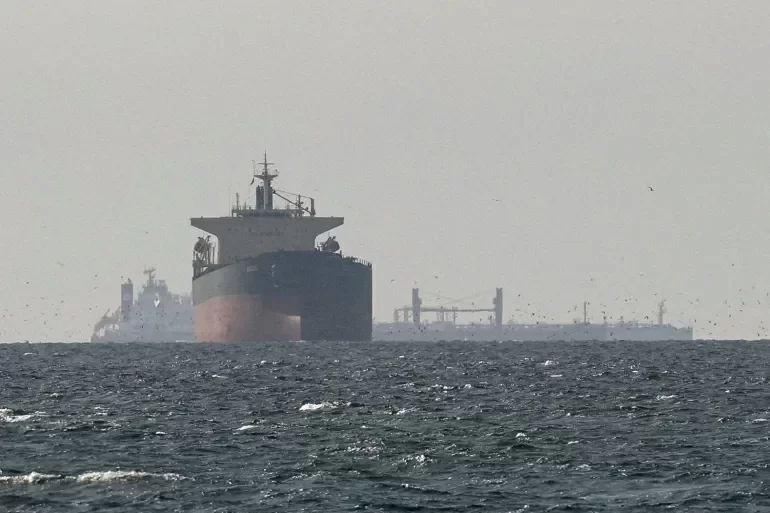
Amid escalating regional tensions between the US, Israel and Iran, a stark warning from former Russian president and current deputy chairman of Russia’s Security Council Dmitry Medvedev has amplified long-simmering anxieties among Gulf Arab states over the upcoming US-Iran negotiations scheduled to take place in Islamabad. Senior regional officials and independent analysts now confirm that the talks will center heavily on two core issues: capping Iran’s uranium enrichment program and addressing Tehran’s growing control over the Strait of Hormuz, the world’s most critical chokepoint for global oil shipments. Less priority will be placed on two longstanding Western demands: rolling back Iran’s ballistic missile program and curbing its network of regional proxy militias.
Gulf state officials have sounded the alarm that this narrowed negotiating approach carries significant risk: rather than breaking Iran’s grip on Middle Eastern energy infrastructure, it would simply formalize and manage Tehran’s influence, leaving the nations most vulnerable to energy and security disruptions shut out of key decision-making processes. Sources close to Gulf regional governments note that US-Iran diplomacy is currently focused almost entirely on accepting Iran’s existing leverage over Hormuz in exchange for limits on uranium enrichment. Even as talks remain deadlocked over the scope of permitted enrichment — Iran has rejected demands for zero enrichment and the export of its existing stockpiles — the shift in negotiating priorities has already sparked deep concern among regional leaders.
“Ultimately, Hormuz has become the new red line,” one senior Gulf government source explained. “It was not the red line before, but it is now. The core objectives of these talks have fundamentally shifted.”
During the latest round of regional conflict, Iran broke longstanding geopolitical taboos by openly threatening to block the Strait of Hormuz, transforming the waterway for the first time into a tangible negotiating weapon. In an April 8 post on the social platform X, Medvedev highlighted this new strategic reality, writing: “It is unclear how a ceasefire between Washington and Tehran will play out, but one thing is certain: Iran has already tested its nuclear weapon, and it is called the Strait of Hormuz. Its potential is inexhaustible.”
Medvedev’s comment underscores how Iran now uses its geographic control of the strait as a strategic leverage tool to raise costs for Western powers and set the terms of engagement without crossing the explicit nuclear threshold. This perspective is confirmed by senior Iranian security sources. One high-ranking Iranian security official described the strait as a “priceless golden asset derived from Iran’s geographic position that the world cannot take away.” A second source close to Iran’s Revolutionary Guard further confirmed that the taboo against openly threatening to close the strait has now been permanently broken.
The international community has reacted with widespread concern to these shifting dynamics. The United States has repeatedly emphasized that unimpeded passage through the strategic waterway is non-negotiable for global energy markets and international security. A senior US defense official stated: “We will deploy every necessary measure to uphold freedom of navigation and protect the global oil supply.”
The European Union has called for restraint and urgent diplomatic action to prevent further escalation. EU High Representative for Foreign Affairs Josep Borrell noted: “It is critically important that Iran and the US resolve their differences through dialogue and minimize the risk of disruptions to global energy supplies.”
Gulf states, particularly Saudi Arabia and the United Arab Emirates, are monitoring the situation closely. An anonymous Gulf diplomat warned: “Prolonged instability in the Strait of Hormuz would have catastrophic consequences for our national economies and the entire global market. We urge a compromise that upholds the security and sovereignty of all nations in the region.”
As one of the world’s largest importers of Middle Eastern oil, China has also called for regional stability. A spokesperson for China’s Ministry of Foreign Affairs said: “We support peaceful diplomatic resolutions and emphasize the importance of unimpeded passage for all international trade.”
Against this backdrop, tensions surrounding the Strait of Hormuz remain a persistent flashpoint for geopolitical instability, with far-reaching implications for global energy security and international relations.