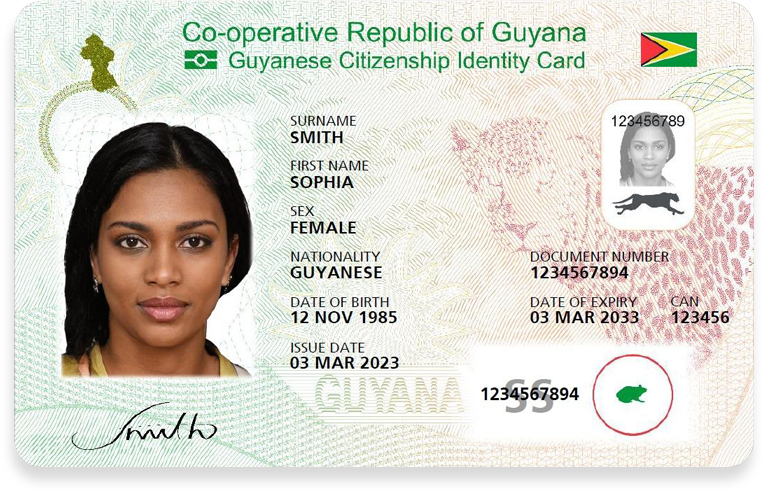
In a significant move to modernize public services and bolster national security, Guyana’s Minister of Home Affairs, Oneidge Walrond, announced on Wednesday, October 29, 2025, the implementation of electronic identification (e-ID) cards. These cards aim to ensure compliance with tax obligations and social security contributions under the National Insurance Scheme (NIS). The initiative also targets foreign nationals residing in Guyana, requiring them to register and obtain e-ID cards to validate their legal stay. Minister Walrond emphasized that the e-ID cards will serve as a secure gateway to both government and private sector services, while also addressing concerns about illegal immigration and national security. The cards issued to non-citizens will automatically expire upon the conclusion of their approved stay, ensuring that only legally authorized individuals retain access. Walrond dismissed social media claims labeling the initiative as a means to legitimize illegal migrants, calling such statements ‘misinformed and irresponsible.’ She reaffirmed the government’s commitment to leveraging technology for border protection and public safety. Police Commissioner Clifton Hicken outlined plans to register all unregistered immigrants within the next three to four weeks, warning that failure to comply would result in deportation after a grace period. The announcement follows criticism from the opposition Forward Guyana Movement (FGM), which accused the government of reactive policymaking in the wake of a recent bombing allegedly involving a Venezuelan national. FGM leader Amanza Walton-Desir had previously raised concerns about unchecked migration and the lack of a clear policy, which were dismissed by the government at the time. The e-ID initiative marks a pivotal step in Guyana’s efforts to enhance governance, national security, and public trust.
分类: politics
-
President moet oordelen over ontheffing ovj Rathipal
In a significant development within the legal system, Prosecutor General Gracia Paragsingh has officially relieved Reshmi Rathipal, a public prosecutor, of her duties. The decision, announced on Wednesday, October 29, comes as a formal dossier has been submitted to President Jennifer Simons, urging her to take appropriate measures against Rathipal. The Public Prosecution Service (OM) has stated that this action was deemed necessary due to issues related to the official’s performance. Further steps in this matter remain pending, subject to the discretion of the competent authority. The Prosecutor General’s decision was made in consultation with the OM’s Management Team. While awaiting the President’s final decision, Rathipal has been temporarily suspended from her position. This move underscores the OM’s commitment to maintaining integrity and accountability within its ranks.
-
Grace jabs Shevern over party leaders’ vaccine mandate stance
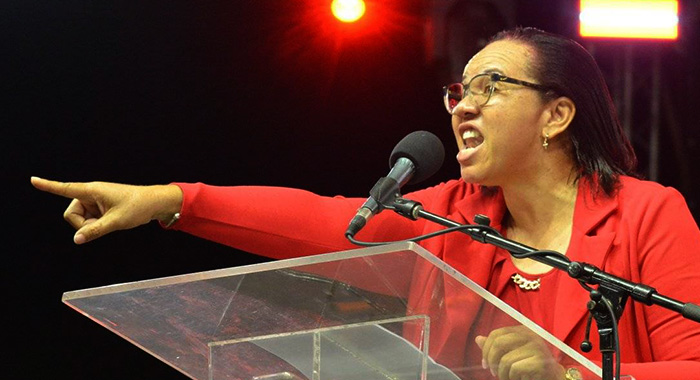
The political landscape in North Windward has become increasingly heated as Grace Walters, the Unity Labour Party’s (ULP) candidate and a Hospital Administrator, clashed with her opponent, Shevern John of the New Democratic Party (NDP), over the contentious COVID-19 vaccine mandate. The mandate, implemented in 2021, led to the dismissal of hundreds of public sector workers, a decision that has become a focal point in the upcoming general elections scheduled for November 27.
-
Trinidad PM says Caricom not a reliable partner
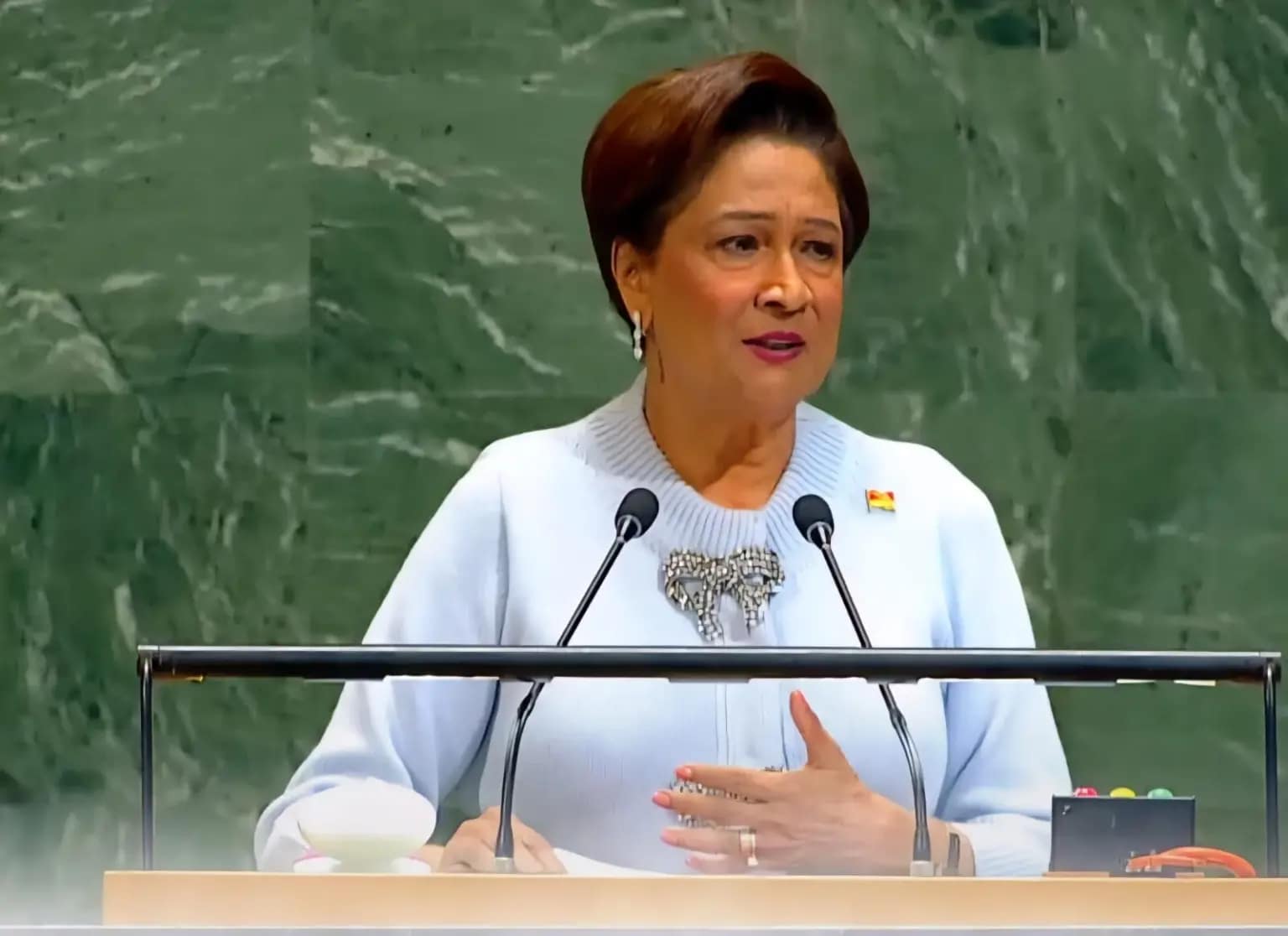
Trinidad and Tobago Prime Minister Kamla Persad-Bissessar has firmly stated that her country will not be coerced or manipulated in its security efforts, accusing certain Caribbean Community (Caricom) nations of aligning with Venezuela amidst escalating regional tensions. During a live interview on the Crime Watch programme with Ian Alleyne, Persad-Bissessar expressed disappointment with Caricom’s reliability, emphasizing that some member states have prioritized Venezuela over Trinidad and Tobago. She vowed that no external entity would pressure or blackmail her administration in its fight against crime and drug trafficking. This statement comes amid heightened security concerns in the Caribbean, including increased U.S. military presence and allegations of Venezuelan-backed drug cartels. The U.S. has deployed a nuclear-powered submarine, reconnaissance aircraft, and destroyers to the region, conducting airstrikes against suspected traffickers. While Trinidad and Tobago supports these efforts, Venezuela has accused the U.S. of destabilizing the region. Persad-Bissessar denied claims of colluding with Washington to undermine Venezuela, stressing that her government has not engaged in energy-related negotiations with Caracas. She also highlighted Trinidad and Tobago’s domestic security challenges, including rising crime rates, and announced plans to extend the state of emergency declared in July. The Prime Minister reaffirmed her administration’s commitment to regional security and international anti-narcotics initiatives, while maintaining solidarity with the Venezuelan people.
-

STATEMENT: Dominica-Cuba Friendship Association
The Commonwealth of Dominica has issued a powerful statement of solidarity with the Republic of Cuba, condemning the decades-long economic, commercial, and financial blockade imposed on the island nation. This unilateral measure, described as unjust and outdated, has caused immense hardship for the Cuban people, restricting access to essential resources, stifling national development, and limiting Cuba’s engagement with the global community. Despite these challenges, Cuba has emerged as a symbol of humanitarianism, providing critical medical, educational, and technical assistance to countries worldwide, including its Caribbean neighbors. Dominica emphasized that the blockade violates international law, human rights, and the principles of the United Nations Charter, calling it a relic of a bygone era that undermines peace and mutual respect. The statement, issued on October 29, 2025, in Roseau, joins the global chorus demanding the immediate and unconditional lifting of the blockade. Dominica also expressed profound gratitude for Cuba’s enduring friendship and contributions to the region’s social and economic development, reaffirming its commitment to strengthening ties between the two nations. The message concluded with a call for justice, humanity, and solidarity to prevail.
-

Grace queries Shevern’s grading of her hospital performance
In a heated exchange during the North Windward election campaign, political candidates Shevern John and Grace Walters sparred over the state of healthcare services under Walters’ administration. John, the New Democratic Party (NDP) candidate, criticized the deteriorating conditions at local hospitals during the NDP’s Warm-Up Rally in London, a village in North Windward. She highlighted issues such as collapsing roofs, mould-infested walls, and inadequate facilities, accusing Walters of neglect despite her dual role as hospital administrator and Unity Labour Party (ULP) candidate. John emphasized that leadership, not titles, is essential for improving healthcare and vowed to prioritize health services if elected. Walters, in her response, defended her record, stating that no one raised concerns during her leave from the hospital and that her focus has always been on community service and youth empowerment. She acknowledged the need for healthcare improvements but argued that the ULP has already initiated significant reforms, including the Strengthening Health System Resilience Project and the construction of the Acute Referral Hospital at Arnos Vale. Walters urged voters to reject the NDP, claiming their policies would reverse progress and make healthcare inaccessible. The election, set for November 27, will determine the future of North Windward’s healthcare system and political leadership.
-

UWP Dennery North hopeful supports pension plan for farmers
Bradley Marcelle Fulgence, the United Workers Party (UWP) candidate for the Dennery North constituency, has publicly supported Opposition Leader Allen Chastanet’s proposal to implement a pension plan for farmers should the UWP secure victory in the upcoming general elections. Speaking at a UWP press conference on October 28, Fulgence emphasized the critical role played by Saint Lucia’s banana farmers, who have long been the backbone of the nation’s agricultural sector. He highlighted their relentless efforts, often under harsh conditions, to sustain both their families and the country’s economy. Fulgence lamented that many of these farmers have been neglected, lacking access to pensions, financial security, and proper recognition. He revealed that some have even passed away without receiving the compensation they rightfully deserved. To address this, the UWP has introduced the ‘Save our Saint Lucia’ initiative, a comprehensive policy framework designed to restore dignity to farmers. Under this plan, banana farmers who dedicated years to the industry but were unable to contribute to the National Insurance Corporation (NIC) will receive monthly government payments. Additionally, families of farmers who have passed away in the last five years will be granted a one-time payment as a gesture of gratitude. Fulgence stressed that this initiative is not an act of charity but a long-overdue act of justice for those who have fed the nation and sustained rural communities. The proposed plan will be administered through the Ministry of Agriculture in collaboration with the NIC and local farmers’ cooperatives. Fulgence concluded by affirming the UWP’s commitment to fairness, dignity, and respect, promising that the ‘Save our Saint Lucia’ policy will ensure that the contributions of farmers are never forgotten.
-
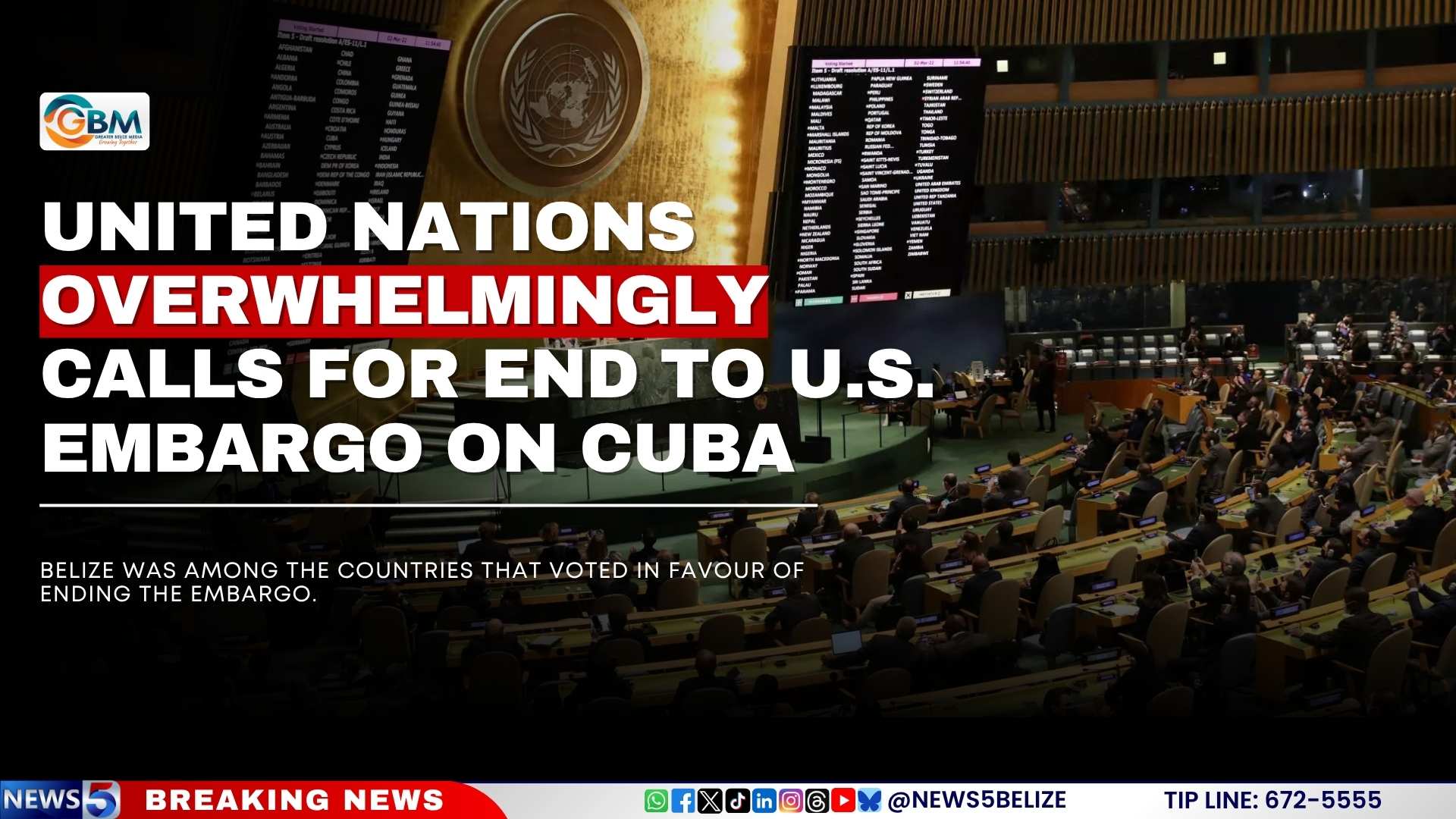
United Nations Overwhelmingly Calls for End to US Embargo on Cuba
In a resounding display of international consensus, the United Nations General Assembly has once again urged the United States to terminate its long-standing economic embargo on Cuba. The resolution, passed on October 29, 2025, garnered support from 165 nations, with only seven opposing and 12 abstaining. This annual vote, a tradition spanning over three decades, underscores the global community’s persistent disapproval of the embargo, which has been in effect since the Cold War era. The embargo restricts most commercial and financial interactions between the U.S. and Cuba, a policy critics argue inflicts collective punishment on the Cuban people. Despite the overwhelming support for the resolution, the U.S., alongside Israel, Argentina, Hungary, North Macedonia, Paraguay, and Ukraine, voted against it. Belize was among the nations advocating for the embargo’s end. Notably, this year’s vote reflects a slight shift from the previous year, when 187 countries supported the resolution and only the U.S. and Israel opposed it. The U.S. attempted to justify its stance by accusing Cuba of deploying troops to support Russian forces in Ukraine—a claim vehemently denied by Cuban officials. Cuban Foreign Minister Bruno Rodriguez condemned the embargo as a punitive measure, while U.S. Deputy Ambassador to the UN, Jeff Bartos, defended the policy, emphasizing Washington’s commitment to holding Cuba’s communist regime accountable. While the UN vote carries significant symbolic and political weight, it lacks the authority to lift the embargo, a decision that remains the sole prerogative of the U.S. Congress.
-
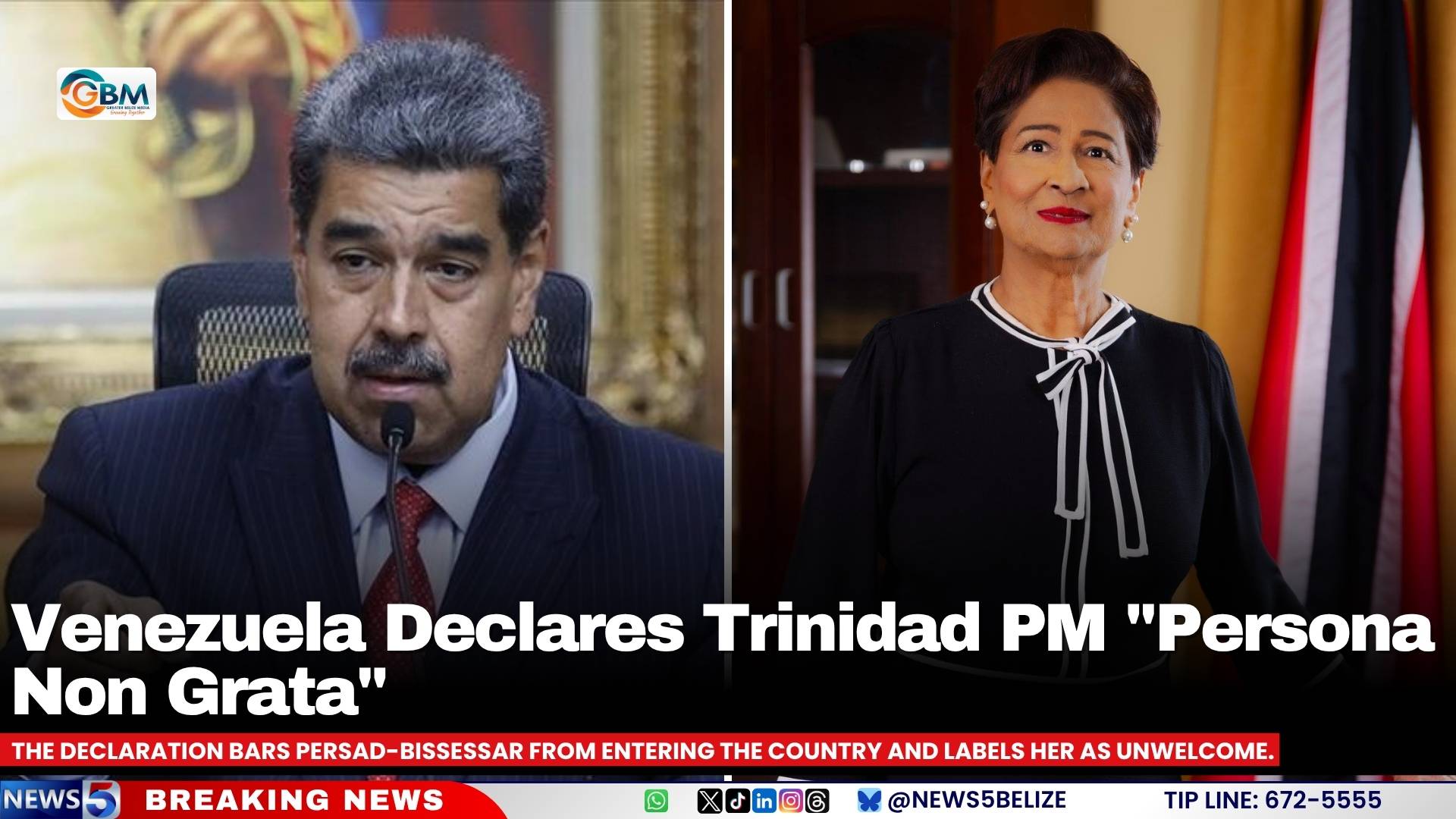
Venezuela Declares Trinidad PM “Persona Non Grata”
In a dramatic escalation of diplomatic tensions, Venezuela has officially declared Trinidad and Tobago’s Prime Minister, Kamla Persad-Bissessar, ‘persona non grata.’ The decision, ratified by Venezuela’s National Assembly on October 29, 2025, prohibits Persad-Bissessar from entering Venezuelan territory and brands her as unwelcome. This move comes in response to her outspoken endorsement of U.S. military operations targeting suspected drug-trafficking vessels in the Caribbean. ‘I have no sympathy for traffickers; the U.S. military should kill them all, violently,’ Persad-Bissessar stated earlier this month, sparking outrage in Venezuela. The Venezuelan government has vehemently criticized these military strikes as unlawful and a direct threat to regional peace and sovereignty. Reports suggest that at least 57 individuals have lost their lives in 13 separate attacks, though no concrete evidence has been presented to link the victims to drug trafficking. In a retaliatory measure, Venezuela has suspended a significant gas agreement with Trinidad and Tobago, accusing the island nation of aligning itself with U.S. military interests. Concurrently, Trinidad and Tobago is reportedly preparing to deport hundreds of undocumented Venezuelan migrants. While the timing of this action has raised eyebrows, government officials assert that the deportation plan has been in the works for two months, independent of the current diplomatic rift.
-

Tax Reform Delayed, SARA Now Set for 2027
Belize’s ambitious tax reform initiative has encountered a significant delay, with the launch of the Semi-Autonomous Revenue Authority (SARA) now rescheduled for 2027. Originally anticipated to roll out sooner, the government has extended the timeline to allow for a one-year grace period before the transition begins. During this interim phase, the Belize Tax Services Department will continue its operations without disruption. Authorities are currently finalizing critical details, including staff salaries, insurance benefits, and job roles, to ensure a smooth transition to SARA. This reform is a cornerstone of Belize’s broader strategy to modernize its tax collection and management systems, promising enhanced efficiency and user-friendliness through digital platforms like the IRIS Belize Portal. However, the delay has sparked concerns among stakeholders, particularly the Public Service Union (PSU), which represents many affected employees. The PSU has criticized the lack of adequate consultation and raised alarms about potential impacts on workers, operational costs, and national revenue. Tensions escalated recently when the PSU’s letter to the Prime Minister reportedly went unanswered for weeks, fueling speculation of a possible strike. The government’s decision to postpone SARA’s implementation reflects a more cautious approach, though it remains uncertain whether this will alleviate the growing discontent among union members.