分类: politics

  • “If the municipality is prosperous, so will be the province and the country”

    “If the municipality is prosperous, so will be the province and the country”

    Under the leadership of First Secretary Miguel Díaz-Canel Bermúdez, the Communist Party of Cuba conducted extraordinary plenary sessions in both Cienfuegos province and the Special Municipality of Isla de la Juventud this Thursday. These high-level meetings focused on critical economic and organizational challenges facing the nation.

    During the Cienfuegos session, Party officials addressed multiple strategic priorities including national defense strengthening, stabilization of the National Electric System (SEN), and enhanced food production capabilities. Roberto Morales Ojeda, Political Bureau member and Secretary of Organization, emphasized the necessity of generating foreign exchange through increased production of goods and services, alongside import substitution initiatives.

    Díaz-Canel highlighted the fundamental importance of overcoming difficulties through Cuban ingenuity and determination rather than attributing all challenges to external factors. He stressed that ‘complacency, apathy, and silence do not help unity,’ advocating instead for proactive participation, particularly among younger generations.

    The parallel session in Isla de la Juventud revealed specific economic challenges, including a persistent budget deficit of approximately 485 million pesos. Municipal Party leader Rafael Ernesto Licea Mojena outlined ambitious plans for agricultural development, with 32 investments planned for 2026 to achieve territorial self-sufficiency. The municipality additionally aims to establish an export hub and potentially transform into a special development zone.

    Both sessions reinforced three core pillars of Cuban political work: unity, anti-imperialism, and patriotism. Leadership emphasized transforming municipal business structures, fostering sustainable local development, and implementing practical solutions rather than superficial analyses.

  • Budna’s Constitutional Claim Faces Collapse as Defense Pushes for Costs

    Budna’s Constitutional Claim Faces Collapse as Defense Pushes for Costs

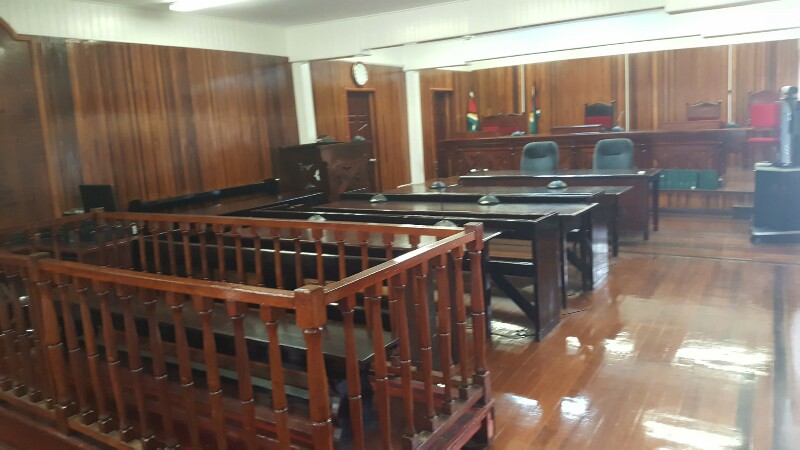
    A landmark constitutional lawsuit alleging the unlawful abduction and extradition of Joseph Budna to Guatemalan authorities faces potential collapse in Belize’s judicial system. The case took a dramatic turn during recent proceedings as Senior Counsel Eamon Courtenay, representing former Home Affairs Minister Kareem Musa, moved to have the claim entirely dismissed on constitutional grounds.

    Courtenay presented a fundamental legal argument that challenges the very foundation of Budna’s lawsuit. He emphasized that Belize’s Constitution explicitly designates the Attorney General—not individual government officials—as the proper defendant in civil or constitutional claims against the state. This technical jurisdictional issue could prove fatal to Budna’s case against the former minister.

    The allegations at the heart of the lawsuit are severe, including accusations of kidnapping, torture, and violations of multiple international conventions. Courtenay argued that such serious claims require immediate evidentiary support rather than promises of future proof. “Many things are said in the street,” Courtenay told the court. “Street facts do not constitute evidence. Mr. Budna should get his tackle in order and bring evidence if he has any.”

    The defense has formally requested that the court award legal costs against Budna’s legal team, characterizing the lawsuit as “ill-conceived” and improperly filed against Minister Musa in his personal capacity rather than his official role. This cost application places additional financial pressure on Budna’s representatives, who now face the possibility of covering the defense’s legal expenses.

    The presiding judge’s upcoming decision will determine whether the case proceeds to substantive hearings or is dismissed entirely based on these preliminary objections. This development represents a significant setback for Budna’s attempt to seek legal recourse for what he claims were grave violations of his constitutional rights during his transfer to Guatemalan authorities.

  • Musa Calls Budna’s Claim “Absurd, Frivolous, Fanciful”

    Musa Calls Budna’s Claim “Absurd, Frivolous, Fanciful”

    In a significant legal development emerging from Belize’s judicial system, former Home Affairs Minister Kareem Musa has appeared in court to confront a constitutional claim filed against him by attorney Arthur Saldiva. The case has generated considerable attention due to its unusual blending of personal and ministerial accountability.

    Musa, represented by the prestigious law firm Courtenay and Coye, has characterized the lawsuit as fundamentally flawed from both procedural and substantive perspectives. The former minister contends that the claim’s ambiguous nature—naming him simultaneously in his personal capacity and former ministerial role—creates unprecedented legal confusion that necessitated his retention of private counsel rather than representation by the Attorney General’s office.

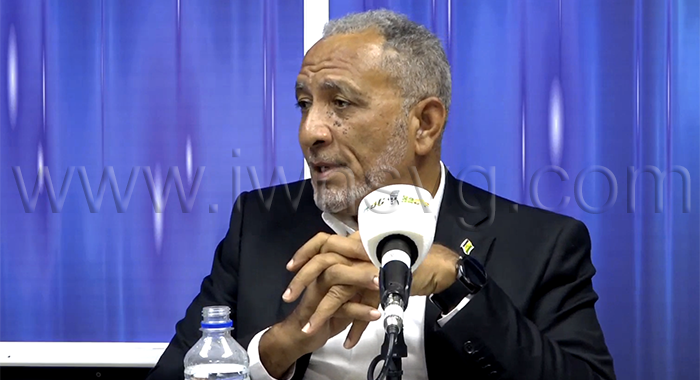
    Outside the courtroom, Musa delivered a scathing assessment of the litigation, describing it as “absurd, frivolous, and fanciful” while acknowledging his professional obligation as an attorney to respect judicial proceedings. “There are better things that I could be doing right now,” Musa stated, “but as an officer of the court, I know it’s my duty to make an appearance.”

    The former minister highlighted what he termed the claim’s “irregularities,” particularly noting the plaintiff’s apparent uncertainty about whether to pursue action against Musa personally or against his former ministerial office. This jurisdictional ambiguity represents a central point of contention that may ultimately determine the case’s viability.

    Legal observers note that the proceedings could establish important precedents regarding the separation between personal and ministerial responsibility for former government officials. The court’s forthcoming decisions will determine whether the case advances to substantive hearings or is dismissed on procedural grounds.

  • Belize, Guatemala Hold High‑Level Talks as ICJ Ruling Nears

    Belize, Guatemala Hold High‑Level Talks as ICJ Ruling Nears

    In a significant diplomatic development, the foreign ministers of Belize and Guatemala convened high-level talks at the Organization of American States (OAS) office in the adjacency zone on January 22, 2026. This meeting marks a crucial step in bilateral relations as both nations await the International Court of Justice’s final ruling on their longstanding territorial dispute.

    The conference, facilitated by the OAS’s new special representative, focused on strengthening confidence-building measures and establishing frameworks for post-ICJ cooperation. Belize’s Foreign Minister Francis Fonseca emphasized the meeting’s importance in reviewing progress made throughout 2025 and determining the OAS’s future role following the court’s decision.

    Guatemalan Foreign Minister Carlos Ramiro Martínez participated in discussions addressing mutual concerns and developing strategies for maintaining regional stability. The OAS office has served as a critical diplomatic channel for both countries over the past two decades, facilitating dialogue and conflict resolution mechanisms.

    The timing of these talks is particularly significant as they occur alongside the ongoing ICJ proceedings, demonstrating both governments’ commitment to peaceful resolution regardless of the judicial outcome. The ministers explored concrete measures to ensure continued cooperation on border security, economic development, and cross-border initiatives after the court delivers its historic ruling.

  • Guatemala Reaffirms Commitment to ICJ Ruling

    Guatemala Reaffirms Commitment to ICJ Ruling

    In a significant diplomatic development, Guatemalan Foreign Minister Carlos Ramiro Martínez Alvarado has formally reaffirmed his nation’s commitment to accepting the forthcoming International Court of Justice ruling regarding the protracted territorial dispute with neighboring Belize. The declaration came following high-level consultations held on January 22, 2026, marking the first official engagement with the new representative of the Secretary-General.

    Minister Martínez Alvarado characterized the judicial process as a paradigm of peaceful conflict resolution through international legal frameworks. “Our position aligns with the fundamental principles of international law,” stated the Foreign Minister during post-meeting deliberations. “We have maintained consistent advocacy across multiple international forums regarding our nation’s dedication to implementing the Court’s decision irrespective of its final determination.”

    The diplomatic discourse highlighted the Organization of American States’ substantial involvement in facilitating this process spanning two decades. Martínez Alvarado specifically acknowledged the continuity of approach maintained by Minister Fonseca throughout the prolonged judicial proceedings, while emphasizing the newly established collaborative dynamic with the Secretary-General’s representative.

    This bilateral engagement between Guatemala and Belize represents a noteworthy departure from conventional territorial dispute resolution mechanisms. Rather than pursuing adversarial approaches, both nations have opted for judicial arbitration through the ICJ, establishing what regional observers consider a precedent for amicable conflict resolution in Latin American territorial matters. The Foreign Minister explicitly framed this process as demonstrating how historically contentious international disagreements can be addressed through established legal channels rather than political confrontation.

  • Border Tensions Resurface in Belize–Guatemala Talks

    Border Tensions Resurface in Belize–Guatemala Talks

    Persistent border tensions between Belize and Guatemala took center stage during high-level diplomatic discussions held on January 22, 2026. The talks addressed recurring incidents of Guatemalan Armed Forces personnel crossing into Belizean territory, particularly in the contentious Sarstoon River region.

    Recent confrontations have escalated tensions, most notably in September when Guatemalan military personnel planted their national flag on Sarstoon Island—a territory Belize maintains is unequivocally under its sovereignty. This symbolic act represented the latest in a series of territorial incursions that have strained bilateral relations.

    During the negotiations, Belizean officials pressed for explanations regarding these military movements. Foreign Affairs Minister Francis Fonseca emphasized the ongoing diplomatic dialogue between the nations, highlighting joint efforts to establish mechanisms for tension reduction. The discussions focused particularly on improving military-to-military communication and cooperation to prevent operational misunderstandings.

    Both countries are working under the auspices of the Organization of American States (OAS) to develop frameworks that ensure peaceful resolution of border issues. Minister Fonseca confirmed that reducing military tensions remains a mutual priority, with both nations committed to maintaining regional stability through continuous dialogue and confidence-building measures.

  • Guatemala Responds to Sarstoon Tension Concerns

    Guatemala Responds to Sarstoon Tension Concerns

    In a significant diplomatic development, Guatemala has formally addressed mounting international concerns regarding recurring military incidents along the contested Sarstoon River border zone. Foreign Minister Carlos Ramiro Martinez Alvarado provided a detailed response to direct questioning about the nation’s strategy for conflict reduction in the region.

    The Minister confirmed that bilateral discussions are actively underway between the involved nations, with the explicit objective of implementing tension-reduction protocols. These diplomatic efforts are occurring with the close oversight of the Organization of American States (OAS), which has been monitoring the situation with particular attention.

    Minister Martinez Alvarado elaborated on concrete measures being implemented, stating, ‘There are several measures that we have had to follow and implement internally, in coordination with our armed forces, in addition to the arrangements in place between both countries.’ He specifically reiterated Guatemala’s commitment to ‘reducing tensions across the entire zone, including the Sarstoon River.’

    While acknowledging that some incidents have been ‘unfortunately, inevitable,’ the Foreign Minister emphasized his nation’s continued dedication to diplomatic solutions and military de-escalation. This statement represents the most direct official response to date regarding Guatemala’s position on the border tensions that have attracted regional concern.

  • Musa ‘Not Concerned’ Over Pou Court Case

    Musa ‘Not Concerned’ Over Pou Court Case

    A brewing legal confrontation within the Belize Police Department has captured national attention as the case of Police Constable Gabriel Pou advances to formal court proceedings. The controversy centers on Pou’s allegations that he faced institutional pressure to falsify an official statement regarding the abduction case of Joseph Budna—a statement he claims would have wrongfully implicated senior officers.

    Pou’s legal representative contends that his client’s recent transfer was a deliberate tactic to suppress his testimony, raising profound questions about transparency and accountability within the law enforcement hierarchy. The constable maintains he possesses evidence demonstrating involvement of higher-ranking officials in misconduct related to the Budna investigation.

    In response to these serious allegations, both Police Commissioner Dr. Richard Rosado and Prime Minister John Briceño have publicly urged Pou to present any substantiating evidence directly to the Director of Public Prosecutions (DPP). Adding his voice to this call for transparency, former Home Affairs Minister Kareem Musa characterized the Prime Minister’s position as “perfectly right” during recent press inquiries.

    Musa, while acknowledging his limited personal acquaintance with the officer—mentioning Pou was assigned to his ministry with only occasional interactions—expressed no apprehension about the judicial process potentially revealing sensitive information. “I’m not concerned at all,” Musa stated, emphasizing that proper evidentiary disclosure to the DPP represents the appropriate pathway forward.

    As this developing scandal moves through the judicial system, national observers await whether Constable Pou will formally submit his purported evidence, potentially exposing systemic issues within Belize’s law enforcement establishment.

  • Politic : Statement from the OAS General Secretariat on the situation in Haiti

    Politic : Statement from the OAS General Secretariat on the situation in Haiti

    The Organization of American States (OAS) has issued a critical statement addressing Haiti’s ongoing political transition, emphasizing the impending expiration of the current transitional government’s mandate on February 7, 2026. This deadline stems from the April 3, 2024 agreement that established the transitional framework.

    In its comprehensive assessment, the OAS General Secretariat underscored that determinations regarding Haiti’s future governance structures must originate from domestic leadership and key national stakeholders. The international body stressed that any emergent political arrangement should feature clearly defined parameters and temporal limitations to preserve the transitional nature of these mechanisms.

    The OAS outlined essential components for successful transition, prioritizing security restoration and electoral organization through a results-driven methodology. The organization emphasized that operational effectiveness will require robust coordination mechanisms, including constructive collaboration with international partners. Most significantly, the Secretariat highlighted the necessity for national unity, placing Haitian citizens’ welfare at the core of all political deliberations.

    Characterizing Haiti’s current situation as a historical crossroads, the OAS acknowledged the nation’s simultaneous grappling with urgent security concerns while working toward reestablishing democratically elected institutions. The organization noted that maintaining existing stability, preserving institutional continuity, and fostering dialogue remain crucial during this delicate period.

    The General Secretariat concluded with an appeal to all political actors and national leaders to exercise responsibility in service of peace and public interest. Reaffirming Haiti’s priority status within the organization, the OAS reiterated its commitment to supporting stable governance and strengthening democratic institutions in accordance with its established mandates and principles.

  • Former Home Affairs Minister Pushes for Dedicated Gun Court

    Former Home Affairs Minister Pushes for Dedicated Gun Court

    In the wake of the withdrawn Thirteenth Amendment proposal, former Home Affairs Minister Kareem Musa is advocating for the preservation of one specific component: the creation of a specialized court dedicated exclusively to firearms and gang-related offenses. Musa has publicly encouraged the current administration and cabinet to reconsider implementing this judicial mechanism, highlighting a critical backlog within the existing system.

    Musa expressed particular regret over the abandonment of this feature, stating, “Perhaps the highlight of the Thirteenth Amendment that I find regrettable that we’re not proceeding with is a specified gun and gang court.” He emphasized the urgency of the matter, pointing to over one hundred and sixty firearm charges currently languishing without resolution in magistrate courts. This significant delay, he argues, constitutes a denial of justice for both the accused and the public.

    The proposed dedicated court was designed to streamline the judicial process for cases brought under the Firearms Act, many of which have failed to yield conclusive outcomes. Musa contends that such a specialized venue is paramount for effectively addressing gun violence and organized gang activity, thereby enhancing public safety and judicial efficiency. He remains hopeful that government officials will re-evaluate this priority initiative to tackle the persistent case backlog.