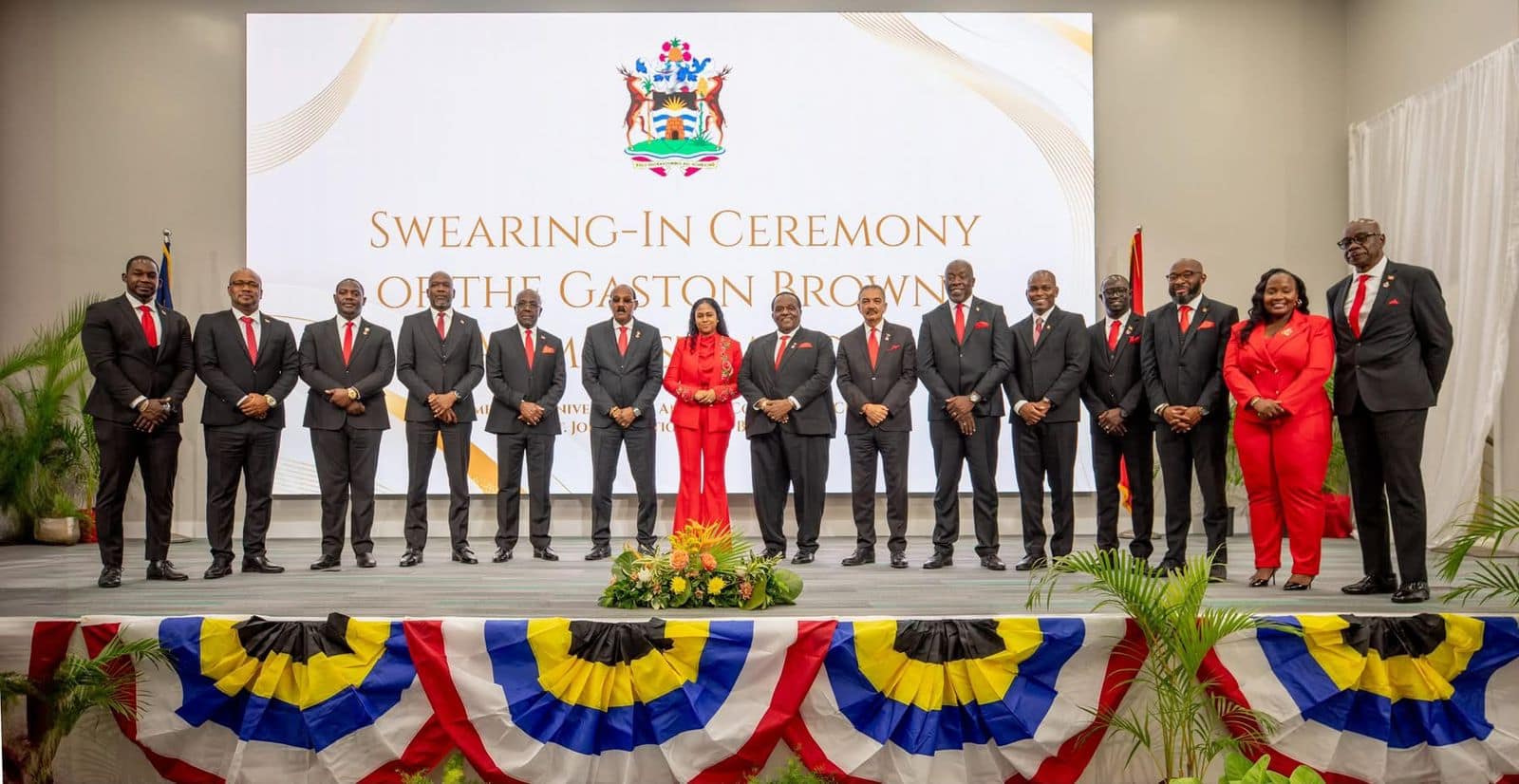
On a celebratory Tuesday ceremony steeped in national identity and a collective vow to serve the public, 12 freshly elected members of the Antigua and Barbuda Labour Party (ABLP) formally took office to begin their legislative terms. Among the group of incoming parliamentarians, three earned promotion to cabinet-level roles, completing their oaths of office as official Ministers of State. The public event drew hundreds of local residents from across both islands, marking a defining turning point for the nation’s governance just weeks after ABLP secured a resounding win in the 2023 General Elections. The decisive outcome of the vote handed Prime Minister the Hon. Gaston Browne’s administration a strong popular mandate to advance its policy agenda for the coming term. The ceremony blended formal constitutional tradition with widespread public celebration, as attendees gathered to witness the peaceful transition of legislative power and reaffirm shared confidence in the new government’s ability to deliver on campaign promises.
分类: politics
-
Zuidoost-Azië zoekt oplossing voor energie- en voedseltekorten
Southeast Asian bloc ASEAN centered its urgent discussions on two pressing crises on Thursday: the unfolding Middle East conflict that has disrupted global energy flows via the blockaded Strait of Hormuz, and long-simmering regional disputes that threaten bloc cohesion, during pre-summit ministerial meetings held in Cebu City, the Philippines.
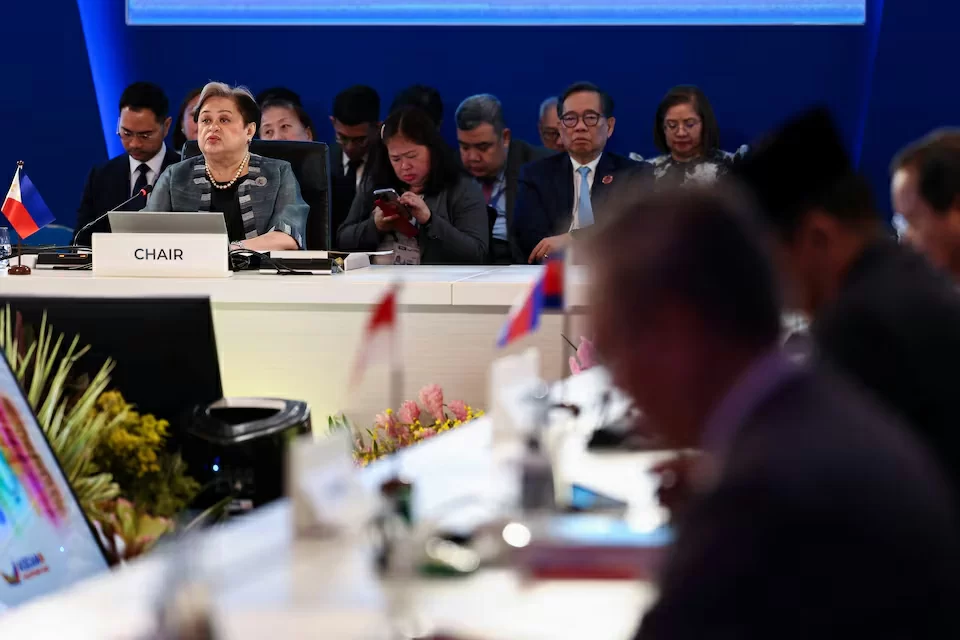
Hosted by the Philippines, this year’s ASEAN chair, the gathering brought together foreign and economic ministers from the bloc’s 11 member states, home to nearly 700 million people, almost all of which rely heavily on imported energy to power their fast-growing economies. The session opened with remarks from Philippine Foreign Secretary and current ASEAN Chair Ma. Theresa Lazaro, who opened by highlighting how events outside the Southeast Asian region can send immediate, profound shocks to ASEAN economies and communities.
“The ongoing crisis in the Middle East makes clear that developments far beyond our borders carry direct and deep-seated impacts for every ASEAN member,” Lazaro told attendees, stressing that strengthened crisis coordination and institutional preparedness are non-negotiable for the bloc right now.
The Straits of Hormuz, a chokepoint that carries roughly one-fifth of the world’s daily oil and gas supplies, has become a flashpoint amid escalating Middle East tensions, with blockades disrupting global energy trade. For energy-import dependent ASEAN economies, this disruption has already driven up fuel costs and created significant downside risks to regional economic growth, prompting ministers to push for a coordinated regional response.
The Philippine chair has prioritized rapid adoption of a regional oil exchange agreement, a framework designed to spread supply risk across the bloc by creating a reserve sharing mechanism on a voluntary, commercial basis. Economic ministers also put forward two additional key proposals: developing alternative energy supply routes to reduce reliance on the strait, and upgrading cross-border communication protocols to respond faster to future supply disruptions.
Beyond energy security, the meeting also tackled multiple simmering regional conflicts. On the sidelines of the official gathering, the Philippines facilitated a rare three-way meeting between Philippine President Ferdinand Marcos Jr., Thai Prime Minister Anutin Charnvirakul, and Cambodian Prime Minister Hun Manet, aimed at de-escalating a long-running border dispute between the two neighboring Southeast Asian states. The conflict, which erupted into heavy armed clashes and airstrikes last year, has left a fragile ceasefire in place that remains vulnerable to collapse.
Anutin noted ahead of the meeting that the primary goal of the discussion was to rebuild bilateral trust, and that no final binding agreement was expected to emerge from Thursday’s talks. The delicate situation adds an extra challenge to the Philippines’ ASEAN chairmanship, which must balance competing priorities across the bloc’s 2025 agenda.
Myanmar’s political crisis, one of the most divisive ongoing issues for ASEAN, also featured heavily in closed-door discussions. Since the 2021 military coup, the country has remained deeply split, and the new military-backed civilian government installed earlier this year has been pushing for re-engagement with ASEAN. To date, the bloc has withheld recognition of the new administration, citing a lack of meaningful progress on peace negotiations with opposition groups.
The Philippines, as chair, has called for the Myanmar military government to grant ASEAN’s special envoy access to detained Nobel Peace Prize laureate Aung San Suu Kyi, as a concrete confidence-building measure to prove the junta’s commitment to the bloc’s five-point peace plan agreed after the 2021 coup.
Going into Friday’s official 48th ASEAN Summit and related leaders’ meetings, a draft consensus statement obtained by Reuters shows bloc leaders are set to formally call for immediate de-escalation of tensions between the United States and Iran, an immediate end to hostilities in the Middle East, full compliance with international maritime law, and the immediate reopening of the Strait of Hormuz to global commercial traffic. The statement will also repeat the bloc’s call for rapid ratification of the regional oil exchange agreement to strengthen regional energy security.
For decades, ASEAN has faced longstanding criticism for its consensus-based approach that often produces statements of intent rather than binding, enforceable action. But current leaders and analysts note that the severity of the current energy crisis has created new urgency that is pushing member states to move past procedural delays toward tangible, coordinated policy action.
-

Long-term NHC tenants to gain ownership as Senate cuts red tape
Barbadian lawmakers have passed a transformative new bill on Wednesday that clears years of bureaucratic backlog to grant homeownership to nearly 3,900 long-term tenants of National Housing Corporation (NHC) properties, a move cross-party senators have praised as a long-overdue step to deliver tangible social and economic uplift for low-income households across the country.
The legislation, officially named the State (Acquisition and Vesting of Property) Bill, covers nine major housing estates located across the island: Deacons Farm, Grazettes, Fernihurst, Wildey, Bonnetts, Golden Acre, Silver Hill, Gall Hill and Wotton. Unlike a 2013 predecessor law that required time-consuming, case-by-case property transfers that left more than 85 percent of eligible applicants waiting indefinitely for title deeds, the new framework streamlines the entire process into a single administrative action. Under the new rules, all qualifying properties will first be legally vested to the Barbadian state, then immediately transferred to eligible tenants – cutting out the lengthy red tape that derailed the earlier policy effort.
During Senate debate ahead of the bill’s approval, two independent senators – Karina Goodridge and Jamal Slocombe – emphasized the bill’s potential to reshape the lives of low-income Barbadians who have waited decades for housing security. Goodridge framed the legislation as a direct response to years of public outcry over Barbados’s persistent housing access challenges. “This bill does not only just bring a practical answer and solution to the long-standing issues that many Barbadians have faced, but it will cement the fact that persons who are waiting for so long will now become homeowners and that gives those people a sense of security,” Goodridge told the chamber, adding that the reform should have been enacted years earlier.
Goodridge also raised critical concerns about transparency and equitable allocation, urging the sitting administration to put safeguards in place to ensure properties go to the tenants who rightfully qualify. She called attention to anecdotal reports of fraudulent rent arrangements, where third parties have held NHC unit tenancy agreements while collecting inflated market rent from low-income households actually living in the properties. To prevent eligible residents from being displaced, Goodridge proposed that all applicants be required to disclose the date they began occupying their unit and their total monthly gross income, with income details verified directly through the Barbados Revenue Authority.
Slocombe echoed Goodridge’s support while pushing for the fastest possible rollout of the new policy, noting that overcrowding is widespread in many of the NHC units. “We recognise there are people who in those small housing units, there are seven and eight people living in two-bedroom houses sometimes, and it provides a unique opportunity for Barbadians to be able to feel a sense of pride and dignity,” he said.
Introducing the bill to the Senate, Leader of Government Business Senator Lisa Cummins outlined the core benefits of the streamlined process, noting that homeownership will unlock new economic opportunities for thousands of qualifying residents that were out of reach as long-term tenants. Cummins confirmed that eligibility is restricted to tenants who have occupied their NHC unit for 20 years or more, maintain a positive rental payment history, and meet all structural and legal requirements for property transfer. She emphasized that the reform imposes no additional financial burden on beneficiaries, as the transfer is an internal administrative process between the NHC and the state. Where the 2013 policy only managed to complete transfers for 567 of more than 3,900 eligible units over its decade-long implementation, Cummins said the new bill will resolve all pending cases in a single unified action, fulfilling the original unmet promise of the 2013 reform.
-

President en granman Aboikoni overleggen over ontwikkeling Saamaka-gemeenschap
On May 7, Suriname President Jennifer Simons led a government delegation on an official working visit to the Upper Suriname region, where she held high-level talks with traditional leader Granman Albert Aboikoni centered on advancing inclusive growth for the Saamaka community. The discussions, hosted in the local settlement of Asidonhopo, focused on strengthening collaborative governance between the national government and indigenous traditional authorities, while addressing pressing challenges faced by local residents and unlocking new opportunities for sustainable regional development.
A key milestone of Simons’ visit was the official inauguration of new solar energy projects in the Goejaba and Langu areas. These installations have now brought 24-hour continuous electricity access to large swathes of Upper Suriname, closing a long-standing energy gap that held back local progress. During her address at the opening, President Simons underscored that reliable energy infrastructure is a foundational pillar for unlocking socioeconomic development across Suriname’s inland regions, creating the conditions for new businesses, improved services, and higher quality of life for local residents.
Beyond energy expansion, the visit delivered tangible progress for education and agricultural development in the Langu region. According to official updates from the Communication Service of Suriname, new school furniture was donated to the O.S. Makanti school, and a national school feeding program was officially launched to support student nutrition and attendance. To further boost local livelihoods, the country’s Ministry of Agriculture, Livestock and Fisheries has scheduled specialized training sessions for local community members focused on commercial chicken farming, equipping residents with new skills to generate income and strengthen local food security.
The meeting between President Simons and Granman Albert Aboikoni marked a continued push by the Suriname government to center partnership with traditional indigenous leadership in inland development planning, ensuring that regional growth aligns with the needs and priorities of local communities.
-
Senate meets briefly, then adjourns
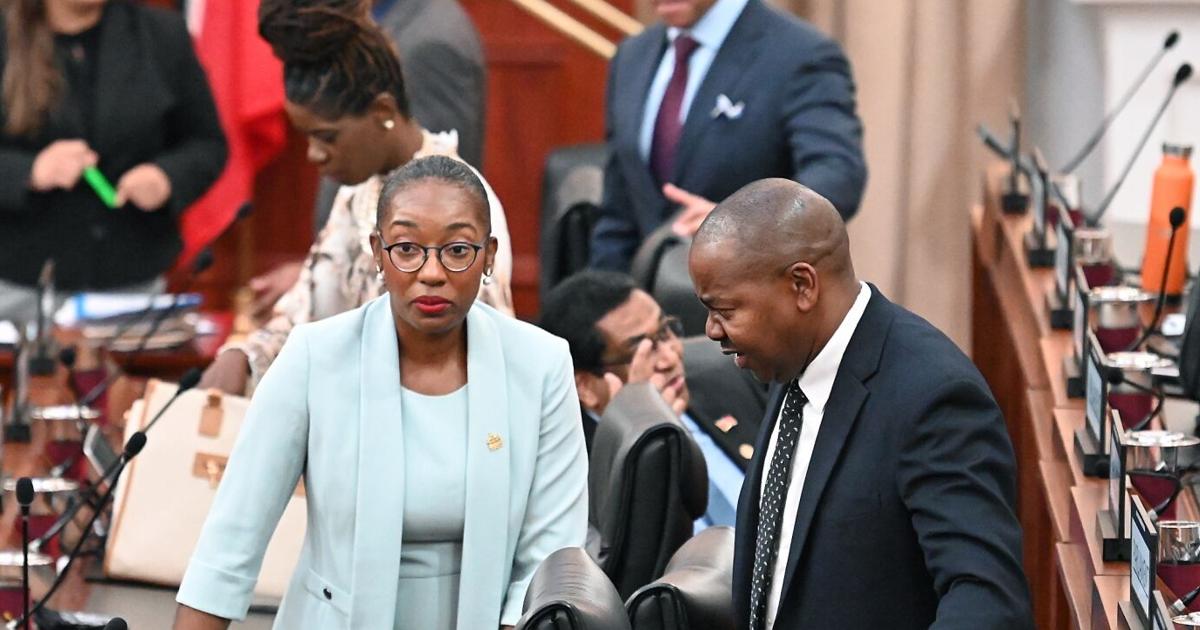
In an unusual development that has raised unanswered questions about parliamentary procedure, Trinidad and Tobago’s Senate wrapped up its sitting on Wednesday in less than one hour, adjourning without setting a firm return date after government leaders pushed through the sudden end of proceedings. The truncated session came only after Justice Minister Devesh Maharaj introduced the long-awaited Victims’ Rights Bill, a key piece of legislation focused on supporting crime victims across the country. Immediately following the bill’s first reading, Senate Government Business Leader Darrell Allahar tabled a motion to adjourn the upper chamber to a date yet to be announced.
When local media outlet the Express reached out to Allahar to request clarity on why the session was cut short without any debate on the introduced legislation, he declined to offer any on-the-record comment, leaving the public without an official explanation for the abrupt end to proceedings. Opposition Senate Business Leader Dr. Amery Browne later confirmed that the Opposition caucus had received informal notice of the planned early adjournment on Tuesday, but was never given a clear, formal justification for the decision. “The early adjournment was the decision of the Government, which they signalled to us since yesterday evening. They gave no clear reasons,” Browne stated in an interview.
While government officials have refused to comment on the cause of the early adjournment, multiple sources familiar with the situation have confirmed to the Express that the sudden end of the sitting is directly tied to an ongoing ethics controversy involving two sitting Opposition Senators: Faris Al-Rawi and Janelle John-Bates. Both lawmakers were present and took their seats on the Opposition bench during yesterday’s short sitting, despite ongoing calls for disciplinary action over their involvement in a document preparation scandal linked to a former cabinet minister.
The controversy first erupted during last Friday’s Senate sitting, when John-Bates made a surprise announcement that she had submitted her resignation to Opposition Leader Pennelope Beckles. She also issued a formal public apology to the entire Senate for her role in the scandal, which came to light after tracked changes in a publicly submitted document revealed that she and Al-Rawi had assisted former Health Minister Terrence Deyalsingh in drafting his witness statement for the Public Administration and Appropriations Committee (PAAC), a legislative oversight body.
During last Friday’s debate on a special PAAC report that called on Parliament to review John-Bates’ conduct, Al-Rawi publicly confirmed that he serves as Deyalsingh’s legal counsel. Shortly after the disclosure, Government Senator David Nakhid tabled a successful motion to refer both Al-Rawi and John-Bates to Parliament’s Privileges Committee, which is tasked with investigating potential breaches of parliamentary ethics and privilege. The committee will now hold closed hearings to determine whether any rules were broken and what disciplinary measures, if any, should be imposed.
Following the referral last Friday, Beckles told reporters that she was still reviewing John-Bates’ resignation offer and planned to hold a one-on-one meeting with Al-Rawi to discuss his role in the incident before making any final decisions. To date, the Opposition Leader has not issued any further public statements on the controversy, and has indicated she will announce her final decisions on the matter when she has completed her internal review.
-
From university to industry: The best path for Artificial Intelligence
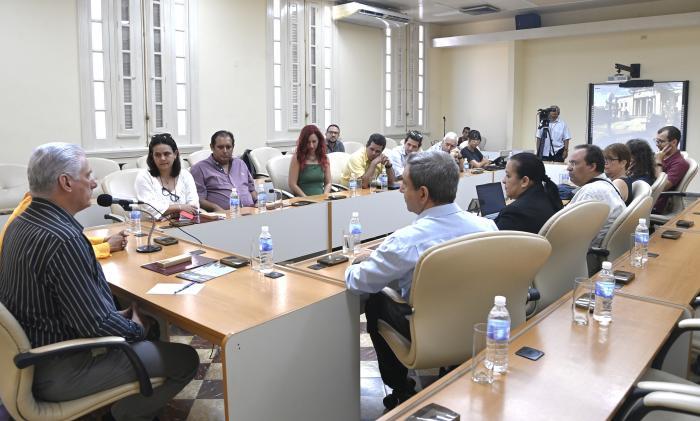
On the morning of Wednesday, May 7, 2026, Miguel Díaz-Canel Bermúdez, First Secretary of the Central Committee of the Communist Party of Cuba and President of the Republic of Cuba, undertook a working visit to the University of Havana, where he held an in-depth meeting with academic researchers leading cutting-edge artificial intelligence development initiatives across the institution. The visit, framed within Cuba’s national Science and Innovation-based Government Management System, underscores the top leadership’s sustained commitment to advancing digital transformation and leveraging AI to address pressing social and economic challenges across the island.
Díaz-Canel was joined on the visit by Walter Baluja García, Minister of Higher Education, Mayra Arevich Marín, Minister of Communications, and Miriam Nicado García, Rector of the University of Havana. During the session, researchers from two leading faculties — Physics, and Mathematics and Computer Science — presented a curated selection of their ongoing AI projects, all tailored to deliver tangible benefits for Cuba’s public and private sectors.
Leading the presentation from the Faculty of Physics was Dr. Milton García Bonato, a senior researcher at the faculty’s Center for Complex Systems. He outlined that his team’s work in AI stretches back more than 30 years, predating the global mainstream boom in artificial intelligence driven by large-scale internet-based language models. One of the team’s most high-impact innovations is an AI model built to analyze human mobility patterns. This tool proved critical during the COVID-19 pandemic, enabling policymakers to accurately assess population movement trends and measure the effectiveness of public health restriction measures. Beyond public health, the model also serves as a core planning resource for urban transportation systems, helping city officials organize transit networks based on commuter origin and destination data.
The Faculty of Physics has also expanded its AI applications into other key national sectors, including telemedicine solutions for the public health system and efficiency-focused tools for the national economy. In a post-meeting interview with reporters, García Bonato emphasized that AI aligns naturally with the faculty’s longstanding research focus on complex systems: “AI is fundamentally about leveraging existing data that captures complex interrelationships to build predictive models that support better decision-making,” he explained. “Our team is fully committed to translating academic breakthroughs into solutions that address the country’s current needs, from more efficient resource management to tangible problem-solving. The nation can count on us — our work is rigorous, peer-validated, and published in top international journals, so this is established, credible science.”
From the Faculty of Mathematics and Computer Science, Dean Dr. Suilan Estévez Velarde presented a broad overview of the faculty’s AI-driven contributions to Cuba’s digital transformation. Her presentation highlighted a diverse portfolio of tools, including platforms for AI-augmented citizen engagement, open science collaboration portals, enterprise project management systems, and logistics and operational optimization frameworks. Special attention was given to work from the faculty’s Cryptography Institute, along with advances in data analytics for decision support, medical image processing for biomedicine, and domestic language model development — headlined by CeciLIA, Cuba’s homegrown large language model.
Like their colleagues in Physics, the mathematics and computer science team made major contributions to COVID-19 response through combined AI and mathematical modeling for outbreak prediction, tools that have since been adapted for forecasting other infectious diseases. The faculty has also developed AI-powered diagnostic support tools for specific conditions including skin diseases, and industry-focused solutions ranging from predictive analytics for the domestic software sector to integration of generative AI and blockchain technology for Cuban enterprises. Estévez Velarde noted that these innovations have the potential to drive widespread modernization across the Cuban economy, boosting operational efficiency, cutting costs, and creating new export-ready products and technologies that strengthen national competitiveness.
Despite these significant advances, Estévez Velarde also highlighted a key ongoing challenge: strengthening collaboration between academic research institutions and domestic industry. She noted that misalignment around project timelines, communication styles, and priorities between academia and the private sector can leave promising research trapped as unpublished theses rather than scaled into real-world solutions, emphasizing the need for targeted training to bridge this gap and translate academic work into tangible national impact.
In her closing assessment of the meeting, University of Havana Rector Miriam Nicado García called the exchange “extremely productive.” She noted that the session gave researchers the opportunity to outline how the university is integrating AI into strategic sectors spanning health, energy, transportation, the broader economy, and public services. Attendees also reached consensus on the key priorities for future growth: continued investment in university infrastructure and faculty development, expanded AI education across all levels of the national education system, and sustained training of new PhDs, masters students, and specialists in AI and related digital fields — all critical to advancing Cuba’s long-term development goals.
Díaz-Canel reaffirmed during the visit that advancing AI and digital transformation is a core strategic priority for the Cuban government, as the nation works to build a more modern, digitally connected society that delivers greater benefits to all citizens.
-

Our people will continue to defend the political system that is sovereignly recognized in the Constitution
In an official statement released in early May 2026, the International Relations Committee of Cuba’s National Assembly of People’s Power has issued a sharp rejection of a new U.S. Executive Order that further intensifies the decades-long economic, commercial and financial blockade against the Caribbean nation. The committee emphasizes that this latest measure is designed to deepen the illegal, immoral collective punishment imposed on the Cuban people for more than 60 years, constituting another direct attack on Cuba’s national sovereignty and right to self-determination.
Beyond tightening restrictions on the island, the new executive order pushes an extreme internationalization of the blockade, the committee notes. It expands coercive secondary sanctions, pressuring and threatening third countries, foreign businesses and global financial actors to cut off all commercial and financial ties with Cuba, isolating the nation from the global economy.
The statement goes further to condemn escalating belligerent rhetoric from the current U.S. administration, which has recently included open threats of military aggression against Cuba. The committee describes the long-running U.S. blockade as an inherently genocidal policy, one that has inflicted widespread harm on Cuban livelihoods for generations, and argues the new measures only worsen this humanitarian harm.
Against this backdrop, the committee reaffirms the Cuban people’s unwavering commitment to defending their sovereign political system, which was enshrined in the national Constitution via a universal popular referendum supported by an overwhelming majority of Cuban voters. Cuba remains dedicated to building a socialist society centered on advancing social justice for all its citizens, a path the Cuban people have repeatedly chosen and defended.
Just weeks before this statement, more than six million Cuban adults – 81% of all Cubans over the age of 16 – participated in the nationwide “Signature for the Homeland” initiative, reaffirming their collective support for Cuban independence, the Cuban Revolution, and the nation’s sovereign revolutionary governance. More recently, on International Workers’ Day, more than five million Cuban men and women marched through streets and public squares across the country, demonstrating their united resolve to defend the homeland against external aggression and interference.
Cuba’s longstanding commitment to global peace is also reaffirmed in the statement, which reiterates the principles of the 2014 Proclamation of Latin America and the Caribbean as a Zone of Peace, signed by heads of state and government during the CELAC summit held in Havana.
The committee, acting on behalf of the Cuban people through their elected parliamentary representatives, issued a global call to parliamentarians, national legislative bodies, and inter-parliamentary organizations around the world to raise their voices and take collective action to end the U.S. military threat, economic blockade, and energy sanctions against Cuba.
The statement references the recent International Meeting of Solidarity with Cuba, held in Havana on May 2, where participants from across the globe unanimously agreed that Cuba has an inalienable right to live in peace, defend its sovereignty, and pursue independent national development – and that global solidarity with Cuba cannot be blocked by any external power. The meeting’s Final Declaration praised Cuba’s consistent commitment to peace, called out the escalating aggression from the current U.S. administration, and pledged to expand global resistance and support for Cuba as the world marks the centennial of the birth of iconic Cuban revolutionary leader Fidel Castro.
The statement concludes with the iconic slogans that have defined Cuban resistance for decades: Long live peace! Down with aggression! Defend the Homeland! Homeland or death, we shall prevail! (Venceremos!)
-
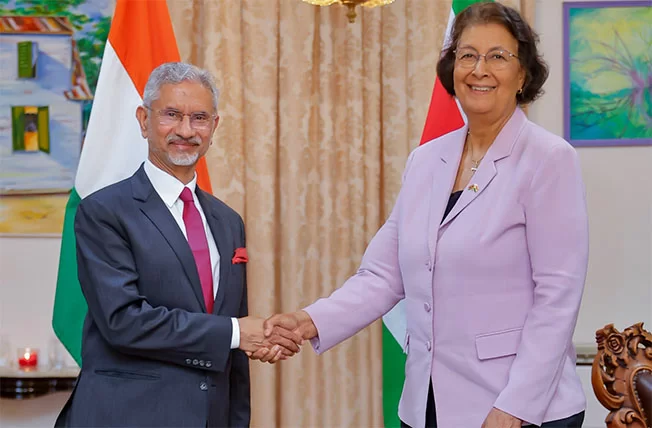
Samenwerking Suriname-India krijgt impuls met focus op economie en energie
On May 7, a landmark diplomatic meeting between Suriname and India reached a series of tangible agreements to advance bilateral cooperation across four key sectors: energy, agriculture, infrastructure, and investment. The talks, held during the 9th session of the Joint Commission between the two nations, marked the first ever official visit to Suriname by India’s Minister of External Affairs Subrahmanyam Jaishankar, a milestone Suriname’s Minister of Foreign Affairs, International Trade and Cooperation Melvin Bouva described as a historic moment for bilateral ties.
The visit began with bilateral talks between the two top diplomats at Suriname’s foreign affairs ministry, followed by a full joint session of delegations from both countries. Bouva opened the discussions by highlighting the deep, centuries-long roots of the relationship between Suriname and India, tracing their connection back to the arrival of Indian contract workers in Suriname in 1873. He emphasized that what began as a bond rooted in shared history has evolved into a dynamic, modern strategic partnership that aligns with the development priorities of both nations. During the visit, Jaishankar also paid a courtesy call to Suriname President Jennifer Simons, as agreed in the diplomatic schedule.
Speaking at the commission meeting, Jaishankar framed the bilateral Joint Commission as the “engine room” of the Suriname-India relationship, where abstract diplomatic discussions are transformed into actionable, on-the-ground collaboration. He reaffirmed India’s commitment to supporting Suriname’s ongoing national development trajectory, positioning India as a reliable partner focused on shared growth and mutual prosperity. The talks prioritized expanding bilateral trade and investment flows, with targeted focus on extending cooperation into energy, agriculture, infrastructure, and digitalization. Both sides agreed that the private sector will play a central role in driving innovation and technological advancement across these priority areas.
In addition to high-level strategic discussions, the delegations reviewed progress on concrete projects stemming from earlier diplomatic agreements. These include small-scale “quick impact projects” designed to deliver immediate benefits to local communities, such as a new passion fruit processing facility in Suriname. The two sides also explored financing options for larger infrastructure and public health projects through concessional lending from India, and discussed plans for capacity building programs in agriculture, tourism, and entrepreneurship development.
Cultural ties, a foundational pillar of the bilateral relationship, were also reaffirmed during the visit. Jaishankar paid his respects at three key monuments in Suriname: the statue of Mahatma Gandhi, the Baba and Mai Monument, and the Fallen Heroes Memorial. The two nations also announced a shared intention to sign a formal Memorandum of Understanding focused specifically on expanding energy sector cooperation in the coming months.
On the multilateral front, the delegations discussed aligned cooperation between India and the Caribbean Community (CARICOM), as Suriname prepares to assume the presidency of the CARICOM Council for Foreign and Community Relations (COFCOR). Bouva concluded that the 9th Joint Commission meeting and the historic visit will pave the way for deeper integration between the two nations, advance sustainable development goals, and deliver tangible mutual benefits to people in both Suriname and India.
-
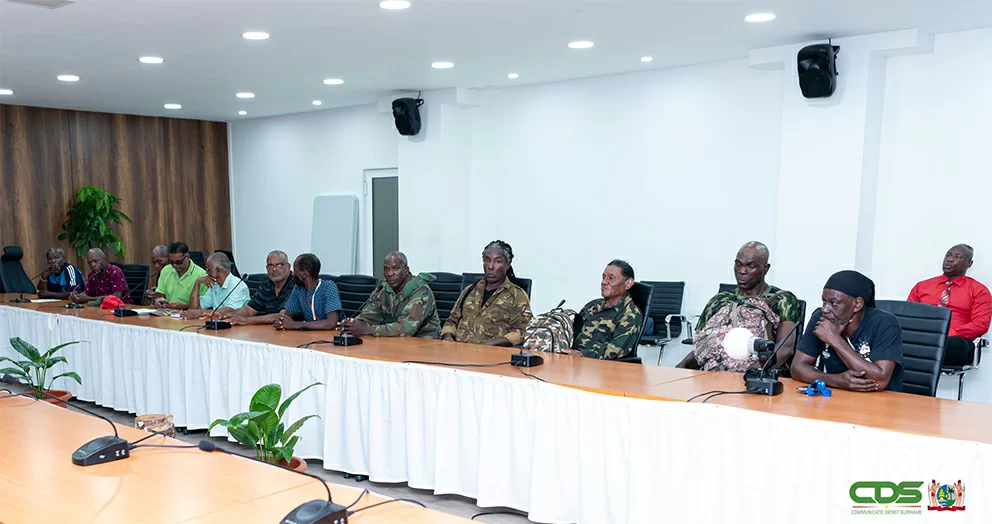
Toelagen, zorg en grond: ex-militairen zoeken oplossing
A delegation representing Suriname’s former military personnel has once again brought a raft of unaddressed grievances to the President’s Cabinet, seeking urgent government action to resolve long-running hardships facing the veteran community. The delegation, representing the Association of Surinamese Veterans and Ex-Military Personnel (VSVEM), was received by senior cabinet officials Melvin Linscheer, Rudie Roeplal and Bidjai Lalbiharie on behalf of President Jennifer Simons on May 5, 2026.
The issues put forward by VSVEM mirror concerns the group first formally raised in writing with government authorities back in 2025, none of which have seen meaningful resolution to date. According to VSVEM chairman Waldo Jameson, the most pressing concerns include inadequate resettlement and disability allowances, unaffordable out-of-pocket medical costs, exclusion from the Ministry of Defense’s official burial fund, and continued stagnation of a collective land application first submitted in 2021.
Jameson explained that ex-military personnel are currently locked out of the defense ministry’s burial fund due to a regulatory requirement that applicants have formal documented income — a barrier that disproportionately affects most former service members, who often lack stable formal employment. This rule, he emphasized, requires urgent amendment to correct a fundamental injustice.
On top of exclusion from the burial fund, the monthly resettlement and disability stipends currently provided to ex-military personnel are far too low to cover basic living costs, Jameson said. With national budget negotiations still ongoing, there is no clear timeline for a much-needed increase to these critical support payments.
While former service members do hold government-issued BaZo medical care cards, they are still required to cover a wide range of additional out-of-pocket medical expenses that place unsustainable financial strain on many households, many of which already operate on very limited incomes.
The group’s collective application for agricultural land, first submitted back in 2021, has also failed to move forward through the approval process. The proposed land parcel was intended to support collective agricultural activities and launch a member training enterprise that would provide on-the-job skills development to help former service members reintegrate into civilian workforces and build stable livelihoods.
Beyond resolving existing grievances, Jameson also highlighted that the ex-military community is eager to contribute to the country’s upcoming national housing construction program, leveraging the technical construction skills many members gained during their period of military service to help expand access to affordable housing across Suriname.
Further talks between the VSVEM delegation and presidential cabinet officials are scheduled to resume on May 13, 2026. The upcoming discussions will also explore new policy pathways to support greater reintegration of former military personnel into the civilian labor market.
-

Too Many Drones, Not Enough Rules. Who’s in Control?
As drone technology becomes increasingly accessible and integrated into daily life across Belize — from recreational hobby flights to commercial agricultural operations — the country’s Civil Aviation Department is moving to close a critical gap between rapid technological growth and outdated regulatory oversight, launching a public consultation process for a sweeping 55-page draft of new drone rules. The initiative comes as authorities sound the alarm over a rising tide of unregistered, unlicensed drone operations that pose growing risks to public safety, airspace security, and personal privacy.
The public consultation, held this week, brought together a broad cross-section of stakeholders: recreational drone enthusiasts, commercial drone operators, industry representatives, and concerned local residents. All parties gathered to dissect the draft proposals, share on-the-ground experiences, and weigh in on how new rules will shape the future of drone use in the country.
Jared Garcia, a professional event cinematographer and drone enthusiast who has operated a drone for nearly two years to capture scenic footage and event coverage, attended the consultation to understand how evolving rules will impact his work. “As a drone operator, we already follow international standards, and licensing already comes with its own set of guidelines,” Garcia explained. “My main goal today is to see what new provisions will be added or removed, and how those changes will affect my day-to-day operation.”
Garcia is part of a fast-expanding community of drone operators in Belize, but Civil Aviation data shows that the vast majority of current operators have not completed required registration or obtained official licenses. That lack of tracking creates two critical risks, says Nigel Carter, Director of Belize’s Civil Aviation Department: authorities have no way to trace operators if an accident occurs, and unregulated flights open the door to invasive privacy breaches.
Rather than waiting for a high-profile accident or a surge in privacy complaints to spur action, Carter says regulators are moving proactively to mitigate risks before they escalate. “We don’t want to wait until there’s a mid-air collision with a manned aircraft, or we start getting dozens of reports of drones peeking into residential windows,” Carter noted. “It’s far better to set clear boundaries now, outline what is and is not allowed, and make sure operators understand and follow those rules.”
Beyond recreational use, drones have carved out a critical niche in Belize’s agricultural sector, where commercial operators have leveraged the technology to fill gaps left by traditional crop management methods. Carlin Strite, an operator with local agricultural drone firm Agrobotics, has been using large commercial drones to spray crop fertilizer for four years, running daily operations during the rainy season. Strite explained that drones solve a longstanding problem for local farmers: when seasonal rains leave field ground too muddy for traditional ground spraying rigs to access, and small manned crop dusters are not suited for targeted applications on small plots, drones can step in to complete the work.
While the proposed regulations set affordable costs for entry — with registration and licensing fees each running around $30, a minor expense compared to the thousands of dollars many operators invest in their hardware — commercial operators like Strite say the biggest existing pain point is regulatory ambiguity. “The biggest problem we’ve faced up to now is that rules keep changing, and we’ve never had a clear, finalized set of standards to follow,” Strite said. “It’s extremely confusing. What we need is standardized, clear rules. We understand that safety has to come first, but we also hope for unnecessary restrictions that don’t serve a clear public good.”
In developing the new framework, Belizean regulators have leaned on established international safety and privacy standards to guide their approach, since the country has not yet completed a full local risk assessment for drone operations. Carter emphasized that the goal of new rules is not to stifle innovation, but to create a safe, predictable environment that lets drone technology grow while protecting the public. “Whether it’s flying a drone over a crowded outdoor concert or flying near a commercial airport, we need clear guidelines to prevent harm,” Carter explained. “The government has a responsibility to protect concert attendees, passengers on commercial aircraft, and private residents in their homes from privacy breaches and unsafe conditions.”
Industry advocates, who have organized into the Belize National UAS Industry Association (BNUIA) to represent drone operators in policy talks, say they are encouraged by the collaborative tone of the current process. Will Moreno, president of the BNUIA, noted that the consultation marked a noticeable shift from earlier communications, when operators struggled to have their input taken into account. “We all want a safe, secure airspace just as much as regulators do,” Moreno said. “What we don’t want is overly verbose, legally dense regulations that are impossible for an average hobbyist to understand. A lot of other countries use simple diagrams and plain language to make rules accessible, and that’s the standard we should aim for here.”
Civil Aviation officials stress that the new rules are not intended to be unnecessarily restrictive, but rather to formalize and clarify informal guidelines that have been in place for years. Following this week’s consultation, the public will have an additional two weeks to submit written comments and feedback before regulators finalize the framework and move toward implementation. As Belize’s skies grow increasingly crowded with unmanned aircraft, the country is now on track to update its rules to match the pace of technological change, striking a delicate balance between nurturing innovation and protecting public interest.