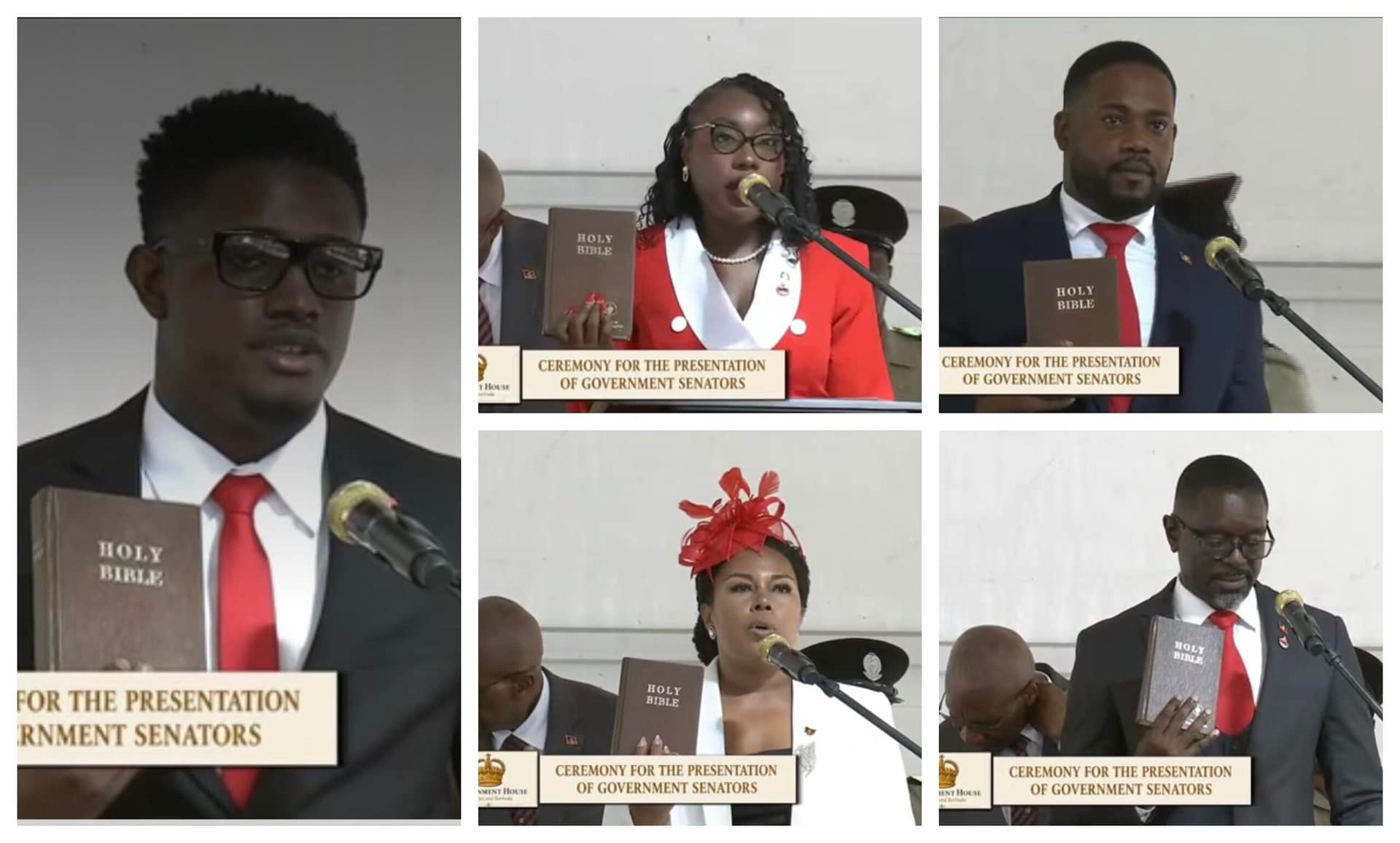
In a significant reshaping of Antigua and Barbuda’s Upper House of Parliament, Prime Minister Gaston Browne has announced 10 new senate appointments, a move that brings fresh faces and institutional continuity to the country’s legislative upper chamber. The appointment that has drawn widespread attention is that of 22-year-old Shaquan O’Neil, a serving Youth Ambassador, who will now enter the history books as the youngest person ever to take a seat in the nation’s Senate.
Beyond O’Neil’s landmark appointment, the new cohort of senators includes Kendra Beazer, who previously stood as the Antigua Barbuda Labour Party (ABLP) candidate for the Barbuda constituency in the April 30 general election, ultimately falling short of a winning result. Three other first-time senators will also take their seats: Angelica O’Donoghue, Abena St. Luce and Joel Rayne, expanding the range of new perspectives in the upper legislative body.
Alongside the incoming new members, Prime Minister Browne has reappointed five senators who held seats in the previous legislative term, ensuring a balance between fresh representation and institutional experience. Among the returning legislators is Alincia Williams-Grant, who is set to take on the role of Senate President in the new session. The returning cohort also includes Lamin Newton, an ABLP candidate who unsuccessfully contested the All Saints East & St. Luke constituency in the recent general election, as well as Colin O’Neil Browne, Phillip Shoul and Shenella Govia.
The appointments mark a key post-election restructuring of the national legislature, blending youth representation, new political talent, and experienced incumbency to shape the upper house’s work ahead.
分类: politics
-
Prime Minister Gaston Browne Appoints 22-Year-Old to Senate in Blend of Youth and Experience
-
Governor General Sir Rodney Williams Pays Tribute to the late Mary-Clare Hurst
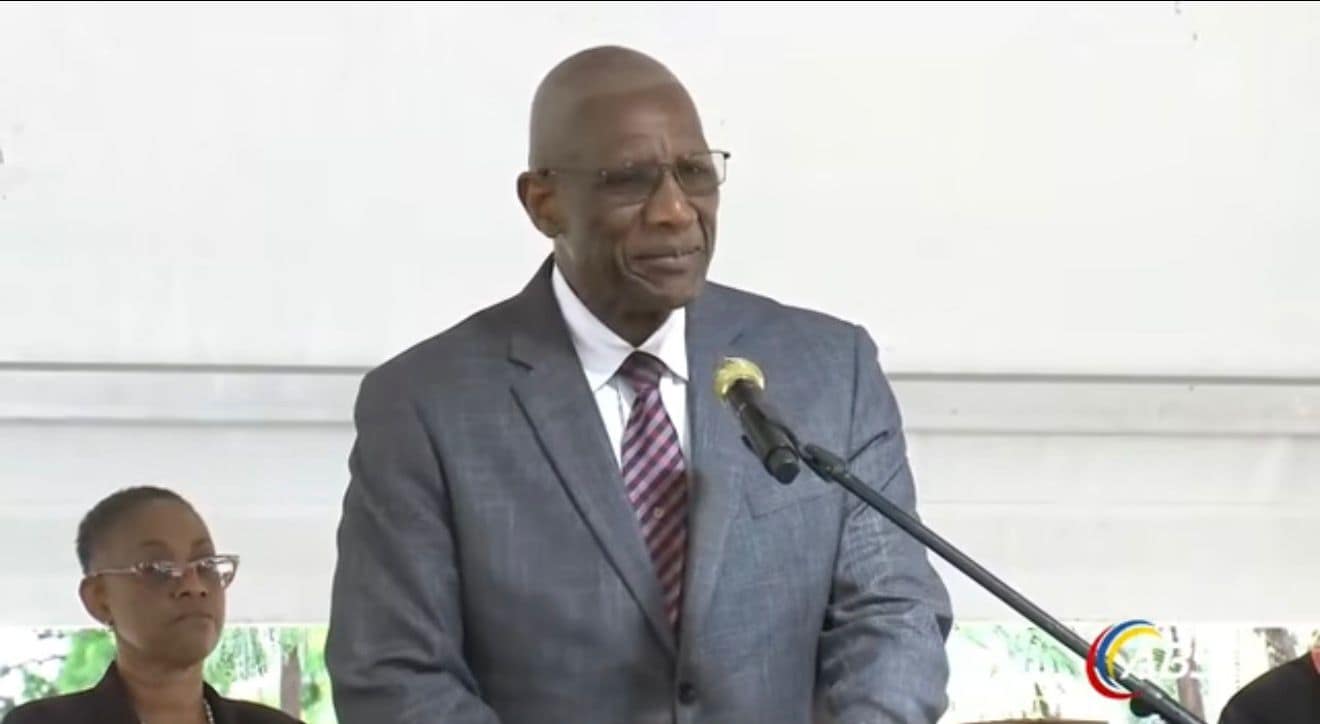
Against the backdrop of a landmark ceremonial sitting for newly elected senators following Antigua and Barbuda’s recent general election, Governor General Sir Rodney Williams opened the official swearing-in proceedings this week with a moving, heartfelt tribute to one of the nation’s most groundbreaking public servants: the late former Senator Mary Clare Hurst, who passed away earlier this week.
Before administering oaths of office to the incoming Upper House members, Sir Rodney paused the formal agenda to shine a light on Hurst’s decades of cross-sector contributions that shaped Antigua and Barbuda’s political, tourism, parliamentary, and public administration landscapes. He stressed that honoring her legacy amid the induction of new lawmakers was a fitting tribute to a figure who dedicated her life to national progress.
“Miss Hurst devoted many of the years of her life to public service and national development, serving Antigua and Barbuda with commitment, discipline, and distinction,” Sir Rodney told attendees gathered in the parliamentary chamber.
Across a decades-long career, Hurst built a reputation for excellence that earned respect from every corner of national life, Sir Rodney noted. Among her most historic achievements was her trailblazing role as the first woman to hold the position of General Secretary of the Antigua and Barbuda Labour Party — a milestone that drew spontaneous applause from attendees when it was highlighted.
Hurst’s public service extended across multiple senior leadership roles, including stints as a government senator, Leader of Government Business in the Senate, Minister of State in the Ministry of Tourism and Economic Development, and chairman of the Antigua and Barbuda Tourism Authority. Beyond her formal titles, Sir Rodney emphasized that Hurst leaves behind a far-reaching legacy centered on lifting up the next generation: she was a dedicated mentor to young people, a passionate advocate for youth development, and a relentless champion for strengthening Antigua and Barbuda’s public institutions.
He remembered Hurst as a leader defined by resilience, compassion, and unwavering professionalism, with a lifelong commitment to advancing the interests of Antigua and Barbuda. As the nation welcomes a new cohort of senators to the Upper House, Sir Rodney argued that reflecting on Hurst’s contributions is a critical reminder of the work that has built the country’s parliamentary institutions today. Her work laid critical groundwork for the nation’s modern democratic and parliamentary development, he added.
Closing his tribute, Sir Rodney extended sincere condolences on behalf of himself and Her Excellency Lady Williams to Hurst’s family, friends, colleagues, and supporters. “May her contribution to national life continue to inspire future generations, and may she rest in peace,” he said.
Following the tribute, the ceremony proceeded to mark the official swearing-in of the new senators, an occasion Sir Rodney framed as a pivotal moment in Antigua and Barbuda’s constitutional history. The induction, he said, reflects core values of continuity, stability, public service, and public confidence in the institutions that undergird the nation’s parliamentary democracy.
-
WORLD COURT: Guyana says Venezuela failed to prove historical occupation of Essequibo
On Friday, 8 May 2026, Guyana delivered new documentary evidence to the United Nations’ highest judicial body, the International Court of Justice (ICJ), to strengthen its position in the long-running border dispute over the Essequibo Region with Venezuela. The submission centers on historical cartographic and archival records that Guyana argues disprove Venezuela’s core territorial claims.
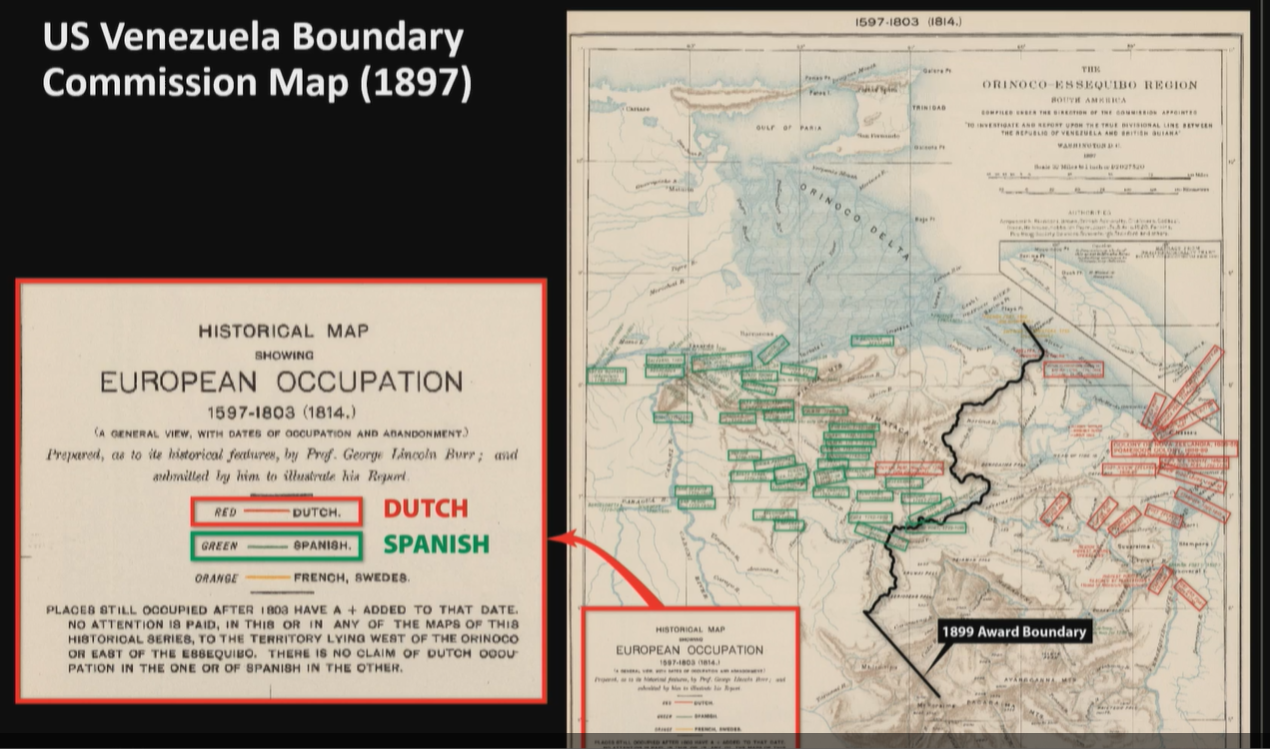
Paul Reichler, lead legal counsel for Guyana, presented a collection of historical maps to the court, including one that clearly marks the boundary demarcated by the 1899 Arbitral Tribunal Award — the original ruling that established the territorial division at the center of the modern dispute. One key document, a map published by the joint United States-Venezuela Boundary Commission in February 1897, the exact same month that the 1897 bilateral treaty to resolve the dispute was signed, confirms that Spanish forces never established occupation in the territory east of the agreed preliminary boundary line, Reichler explained.
Reichler emphasized that this finding aligns with Guyana’s long-held position that the Essequibo Region was historically occupied by Dutch colonizers, not Spanish, a fact echoed by the more than 30 Dutch place names still in use across the area today. He added that neither the 1899 arbitration proceedings nor the current ICJ case have ever produced credible evidence from Venezuela proving that it or Spain ever held actual occupation of any portion of the territory ultimately awarded to Great Britain. He urged ICJ justices to review the full official transcripts of both the US-Venezuela Boundary Commission and the 1899 Arbitral Tribunal to verify this finding.
Clarifying the core question before the court, Reichler noted that the current proceedings are focused on the legal validity of the 1899 Arbitral Award, not on whether the tribunal drew the geographically correct boundary. Per the ICJ’s 2020 preliminary ruling, the court will only assess the accuracy of the boundary line if it first determines the 1899 award is legally invalid.
Venezuela has previously argued before the court that 19th-century Britain repeatedly engaged in territorial aggression against Spanish holdings in the region, and claims that the 1966 Geneva Agreement replaced the 1899 award as the valid framework for settling the controversy. But Reichler pushed back against this interpretation, reading key excerpts of the 1966 agreement into the court record that contradict Venezuela’s position.
The text of the Geneva Agreement explicitly states that no provision of the document can be read as a renunciation or reduction of any territorial sovereignty claim by either party, and that no activities taking place during the agreement’s term create new legal basis for any territorial claim outside of a mutually agreed settlement by the mixed commission established by the pact. Reichler stressed that Venezuela’s argument that the 1966 agreement completely set aside and replaced the 1899 award cannot be reconciled with the actual written text of the agreement, calling Venezuela’s reading a novel reinterpretation that does not align with the agreement’s original wording.
Professor Pierre d’Argent, another member of Guyana’s legal team, added that the Geneva Agreement explicitly grants the United Nations Secretary General the authority to refer the unresolved dispute to the ICJ for a final settlement after decades of failed negotiations. After more than 60 years of discussions without a resolution, the referral to the ICJ was fully consistent with the terms of the 1966 agreement, he confirmed.
-

UAE President, VPs congratulate Prime Minister of Antigua and Barbuda on re-election
ABU DHABI — The United Arab Emirates’ top leadership has extended formal congratulations to Prime Minister Gaston Browne of Antigua and Barbuda after he secured re-election for another term in office.
Sheikh Mohamed bin Zayed Al Nahyan, the President of the UAE, was the first to deliver the message of goodwill, marking the official recognition of Browne’s new electoral mandate. In a demonstration of the unified diplomatic stance of the UAE’s highest governing bodies, two of the nation’s most senior leaders followed with identical congratulatory communications.
These messages came from Sheikh Mohammed bin Rashid Al Maktoum, who holds three key roles as UAE Vice President, Prime Minister, and Ruler of Dubai, and Sheikh Mansour bin Zayed Al Nahyan, who serves as Vice President, Deputy Prime Minister, and Chairman of the Presidential Court. The exchange of congratulations underscores the diplomatic goodwill between the UAE and the Caribbean nation, reinforcing the ongoing bilateral relationship between the two countries ahead of Browne’s new term.
-
Survey Launched in Barbuda to Help Council Determine Most Pressing Social and Economic Concerns
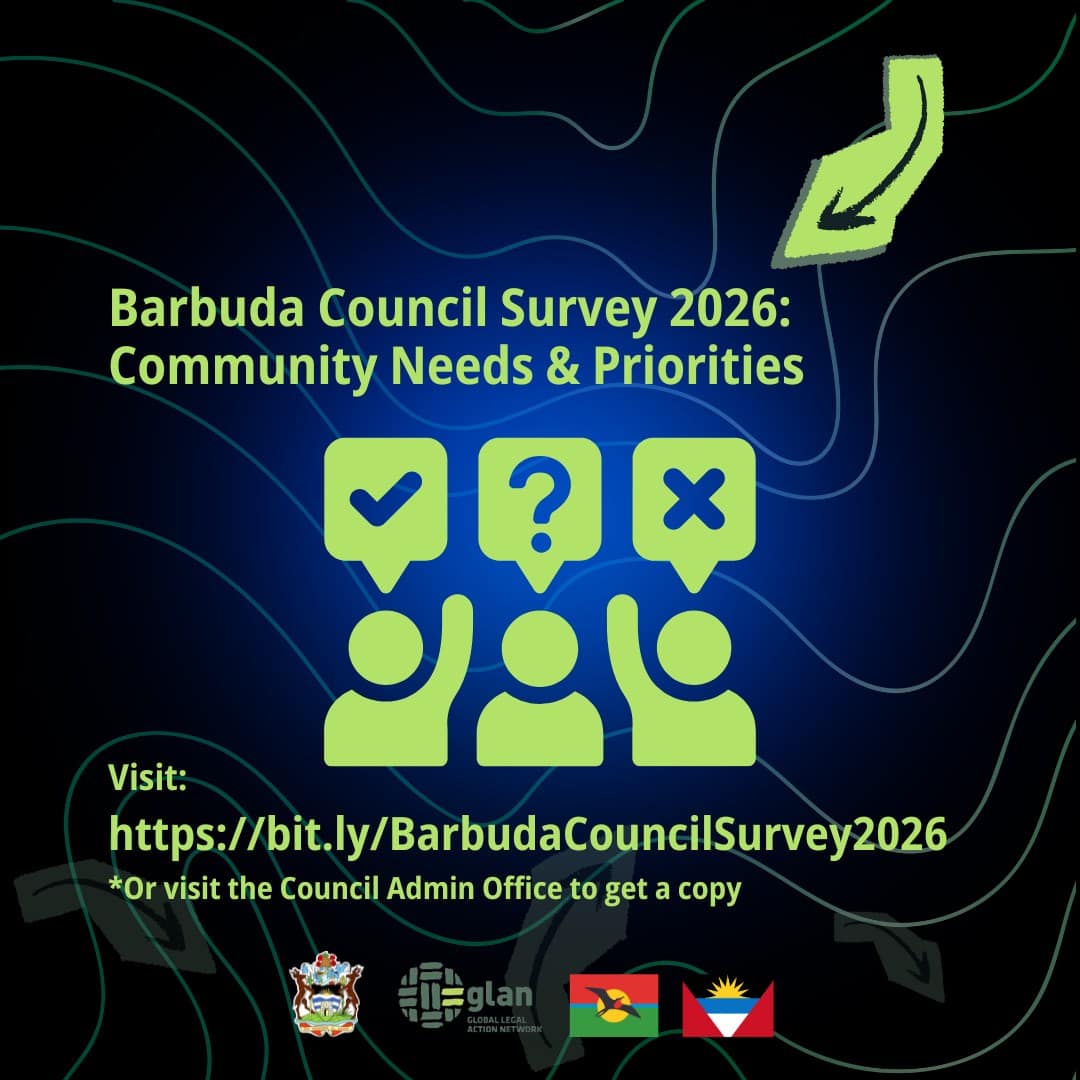
After securing a landmark legal victory that protects collective land ownership on the Caribbean island of Barbuda, local governing body the Barbuda Council has launched a widespread outreach effort, urging both on-island residents and Barbudans living in the global diaspora to contribute to a new community survey.
The court ruling, announced last week in collaboration with the Global Legal Action Network (GLAN), reaffirmed a long-standing core principle of Barbudan society: that land on the island cannot be privately sold. In an official public statement released online alongside GLAN, the Council framed the ruling as nothing short of a turning point for the island community. ‘Last week marked an important moment for Barbuda,’ the statement read, emphasizing that the outcome was a testament to collective action. The win serves as a powerful reminder of what marginalized island communities can accomplish when they unify around shared priorities, the Council added.
Moving past the legal victory, the Council is now turning its focus to long-term community-led planning, turning to the island’s people to map out the most pressing social and economic priorities for the future. The 2026 Barbuda Council Survey is designed to capture direct feedback from all segments of the Barbudan population, whether they currently reside on the island or live abroad. By participating, community members will directly shape how local leaders approach development, infrastructure, public services, and governance decisions for years to come.
‘Wider participation will strengthen the voice of the Barbudan community in discussions surrounding development and governance,’ the statement explained. For decades, outside development proposals have threatened the island’s collective land model, so centering community input is seen as a critical step to ensuring any future progress aligns with the needs and values of Barbudan people themselves. The Council has called on respondents to not only complete the survey themselves but also share the official link with other members of the diaspora to ensure broad representation.
Closing the statement, the Council reiterated its commitment to community self-determination, noting: ‘The future of Barbuda must be shaped by Barbudans.’
-
LETTER: Upholding Integrity in the Civil Service: The Need for Fairness, Accountability, and Due Process
As the foundational backbone of effective governance across every sovereign nation, the civil service bears the critical mandate of sustaining administrative continuity, delivering equitable public services, and entrenching the rule of law. Rooted in core values of fairness, professionalism, and impartiality, this institution’s credibility stands or falls based on how it upholds these principles in every day operational practice. Yet growing evidence of flawed processes and embedded bias in handling internal allegations has sparked widespread concern over systemic vulnerabilities that erode both individual well-being and public confidence.
In recent discourse, growing attention has centered on gaps in how complaints and internal reports are managed across multiple branches of the civil service. All allegations, whether filed through formal channels or raised informally, carry outsized weight that can shape career trajectories, destroy professional reputations, and foster toxic, hostile working climates for those targeted. This inherent impact demands that every complaint be processed with the utmost rigor, professionalism, and unwavering fairness—an expectation that too often goes unmet in current practice.
One of the most pressing flaws identified is the trend of advancing complaints and compiling official reports without comprehensive, impartial investigation and fact-checking. In far too many cases, unfounded assumptions, personal prejudices, or unresolved workplace rivalries have skewed the official narrative presented to disciplinary bodies. When these unvetted claims form the basis of administrative action, the entire process is fundamentally compromised. Unverified or inadequately investigated allegations can wrongfully stain an individual’s professional standing, triggering unwarranted disciplinary penalties that have no basis in verifiable fact.
Equally troubling is the persistence of discriminatory behavior—whether hidden in implicit bias or expressed openly—in the adjudication of internal complaints. Preferential treatment or unfair targeting based on personal connections, institutional rank, gender, or other extraneous factors has no place in any professional setting, and it is especially corrosive in the civil service, where all decisions are required to be guided exclusively by evidence and formally established procedures.
At its core, upholding the integrity of internal processes requires unwavering commitment to the principle of natural justice. This foundational legal and ethical standard demands three non-negotiable safeguards: every individual must be given full opportunity to respond to allegations brought against them, all investigations must be conducted by impartial parties free from conflicting interests, and all final conclusions must be drawn solely from verified, corroborated facts. Without these guardrails in place, the civil service’s accountability mechanism risks transforming into a tool for personal retaliation and arbitrary victimization, rather than a system to uphold institutional standards.
Leaders and senior officials within the civil service carry a unique responsibility to model ethical practice when documenting incidents and adjudicating complaints. Official incident reports must be objective, unambiguous, and fully supported by tangible evidence. Personal conjecture and unsubstantiated claims must never be allowed to form the foundation of official government documentation. After all, the integrity of the entire process depends entirely on the integrity of the public servants tasked with overseeing it.
To rebuild and sustain public trust in the civil service, institutions must renew their collective commitment to transparency, procedural fairness, and accountability. Systemic reform requires prioritizing comprehensive training for all staff on ethical conduct, rigorous investigative protocols, and identifying and mitigating unconscious bias that can skew decision-making. Beyond training, clear and proportionate consequences must be enforced for public servants who deliberately abuse the internal complaints system to file false or misleading allegations for personal gain.
Critically, the goal of these reforms is not to discourage legitimate reporting of misconduct. Instead, it is to ensure that all reporting is conducted responsibly, in line with ethical and procedural standards. A genuinely fair and just civil service protects both parties: the individual bringing forward a complaint of misconduct, and the individual who has been accused. This balance ensures that truth triumphs over unfounded assumption, and that justice is not only carried out, but is visibly seen to be carried out by the public.
Public confidence in the civil service is constructed on a foundation of trust. That trust can only be maintained over time when internal systems are structurally fair, processes are open to transparent scrutiny, and every person interacting with the institution is treated with inherent dignity and respect. Only once these reforms are fully implemented can the civil service fully deliver on its core mandate: serving as a steadfast guardian of the public interest and a national model of uncompromising integrity.
-
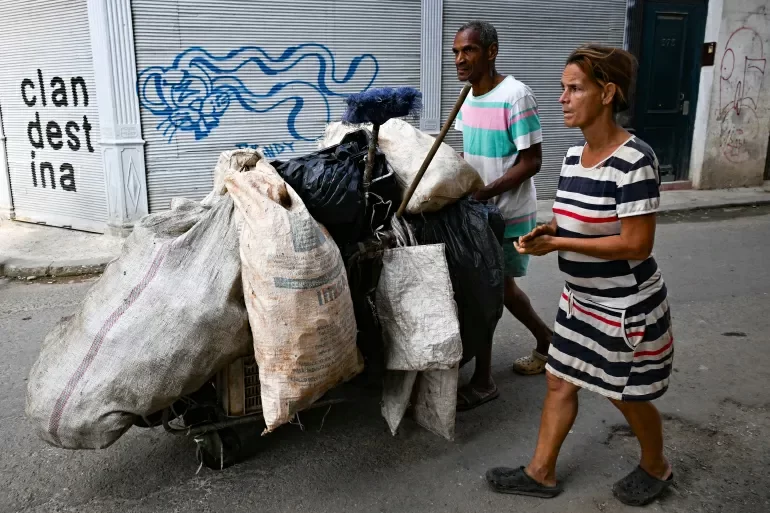
VS scherpt sancties tegen Cuba aan; VN waarschuwt voor ‘energiesterfte’
On Thursday, the United States rolled out a fresh slate of economic sanctions targeting Cuba, expanding on a months-long pressure campaign that has steadily ratcheted up tensions between Washington and Havana. The announcement came just hours after independent United Nations experts condemned the ongoing U.S. fuel blockade against the island nation as a form of “energy starvation” that inflicts severe damage on Cubans’ fundamental human rights.
The latest penalties target high-profile Cuban entities and individuals, headlined by Grupo de Administracion Empresarial SA (GAESA), a large business conglomerate controlled by the Cuban military that holds sway over nearly every major sector of the country’s economy. Ania Guillermina Lastres Morera, who serves as president of both GAESA and Moa Nickel SA (MNSA) — a nickel industry joint venture between Canadian firm Sherritt International and Cuba’s state-owned nickel enterprise — was also sanctioned. Within hours of the U.S. announcement, Sherritt International confirmed it had temporarily suspended all of its operational activities in Cuba to comply with the new measures.
U.S. Secretary of State Marco Rubio stated via social platform X that the new sanctions make clear the Trump administration will not tolerate what it frames as threats to regional security from the Cuban government. “We will continue taking action until the regime implements the necessary political and economic reforms, Rubio said.Cuba’s government has not issued an immediate official response to Thursday’s new round of sanctions, but earlier this week, Cuban officials already denounced U.S. restrictive measures as unilateral coercive tools that amount to collective punishment of the entire Cuban population.
Washington has significantly ramped up pressure on Havana since the start of 2026, a shift that followed the kidnapping of Venezuelan leader Nicolas Maduro on January 3. Since that event, the U.S. has cut off all oil shipments from Venezuela to Cuba, and issued an executive order imposing secondary sanctions on any third countries that supply fuel to Cuba, effectively creating a full fuel blockade. President Trump has repeatedly repeated threatened military action to overthrow the Cuban government.
The three UN special rapporteurs who released Thursday’s human rights assessment emphasized that the illegal blockade not only disrupts daily life across the island, but also systematically undermines the exercise of basic human rights for all Cubans. They defined the situation as “energy starvation”, a crisis where widespread fuel shortages paralyze the essential services that are required for a dignified human existence.
The experts also noted that only one Russian oil tanker has reached Cuban ports in recent months, a shortage that has drastically worsened the existing energy crisis sparked by long-term economic stagnation on the island. Local reports confirm that fuel shortages have blocked thousands of Cubans from accessing hospitals and prevented children from traveling to school. Cuba’s public health system alone is now backlogged with more than 96,000 delayed surgeries, including over 11,000 procedures for pediatric patients.
“Energy starvation used as a tool of coercion is incompatible with international human rights standards, the UN rapporteurs warned.
-
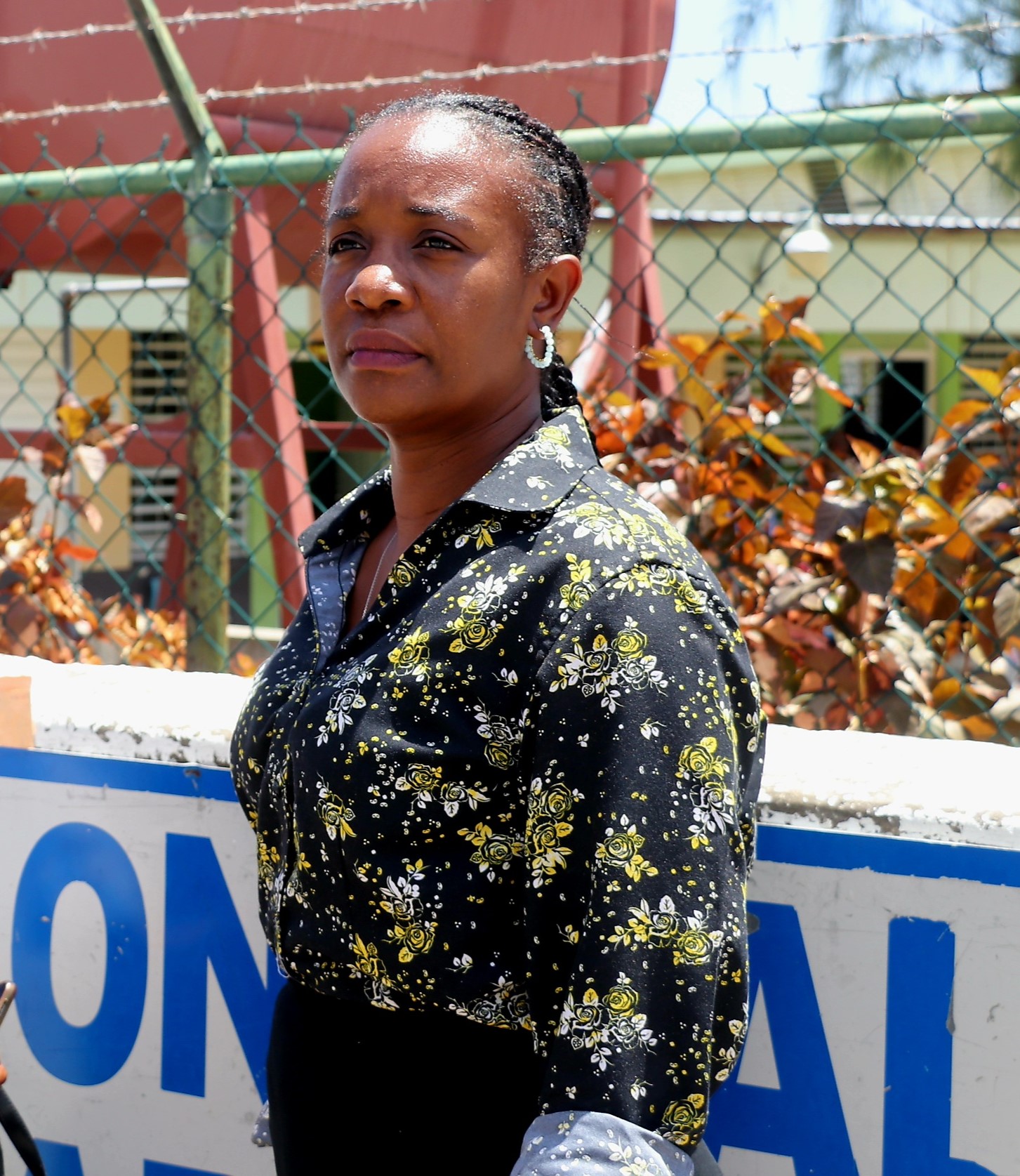
Dems reject ‘draconian’ elder protection bill
Barbados’ main opposition Democratic Labour Party (DLP) has launched a scathing attack on the government’s proposed Protection of Older Persons Bill, arguing the draft legislation prioritizes criminalization over desperately needed social support for the island’s growing aging population. In an official statement released Thursday, DLP’s spokesperson for health and elder affairs Felicia Dujon outlined the party’s “grave concern” over sweeping law enforcement powers granted under the bill, including provisions that allow police to arrest suspected offenders without a warrant and enter private residential properties to pursue individuals accused of violating the law.
Dujon labeled the proposed legislation draconian, excessive, dangerous, and deeply insulting to low-income Barbadian families grappling with economic strain. “Instead of building stronger support systems for families caring for aging relatives, this government appears determined to police poverty and criminalise desperation,” she said.
Citing official demographic data showing that adults over the age of 65 now make up 16 percent of Barbados’ total population, the DLP emphasized that thousands of families are already providing unpaid elder care with no government assistance, all while navigating sky-high inflation and stagnant wage growth. What the current administration frames as intentional neglect, the party argues, is most often the result of caregiver burnout or a complete lack of accessible resources to support at-home care.
One of the most contentious provisions of the bill is the plan to create a mandatory national registry for people convicted of elder abuse offenses. The DLP has highlighted a striking policy irony in this priority: Barbados has yet to establish a fully operational, comprehensive registry for convicted sex offenders, a gap that puts vulnerable women and children at ongoing risk.
“It is astonishing and deeply troubling that the government is moving with urgency to establish a registry for persons convicted of elder abuse offences while Barbados still does not have a comprehensive and functioning sex offenders registry to monitor individuals convicted of sexual crimes against women and children,” Dujon said.
The opposition stressed that it does not tolerate or excuse elder abuse in any form, but that the Mia Mottley administration’s policy priorities are clearly misplaced. Dujon pointed out that the proposed elder abuse registry would be one of the first fully operational convicted offender registries in the country — created not to track rapists or child molesters, but to target people, most often struggling relatives, accused or convicted under the new elder abuse laws.
The DLP also used its critique of the bill to raise questions about the long-delayed construction of Barbados’ new Geriatric Hospital. As of 2026, Dujon noted, the public has received almost no substantive updates on the project’s progress, and the government has chosen to push punitive legislation forward rather than prioritizing the completion of critical geriatric healthcare infrastructure.
“Barbadians deserve support, compassion, and meaningful solutions, not blame, intimidation, and legislation designed to punish citizens who are already struggling to survive,” Dujon added.
The DLP has laid out a clear set of demands for the government to revise the bill before moving forward with parliamentary consideration. These demands include: withdrawing or making sweeping amendments to the controversial provisions; eliminating the broad authority for warrantless arrests; pausing plans for the proposed elder abuse registry until broad national public consultations can be held; prioritizing the creation of a comprehensive national sex offender registry first; increasing public investment in elder care institutions and formal caregiver support programs; releasing an urgent public update on the status of the new Geriatric Hospital; expanding financial and social assistance for families providing at-home elder care; and holding genuine, inclusive consultations with healthcare workers, family caregivers, senior citizens, legal experts, and civil society organizations before advancing any further legislative action.
-
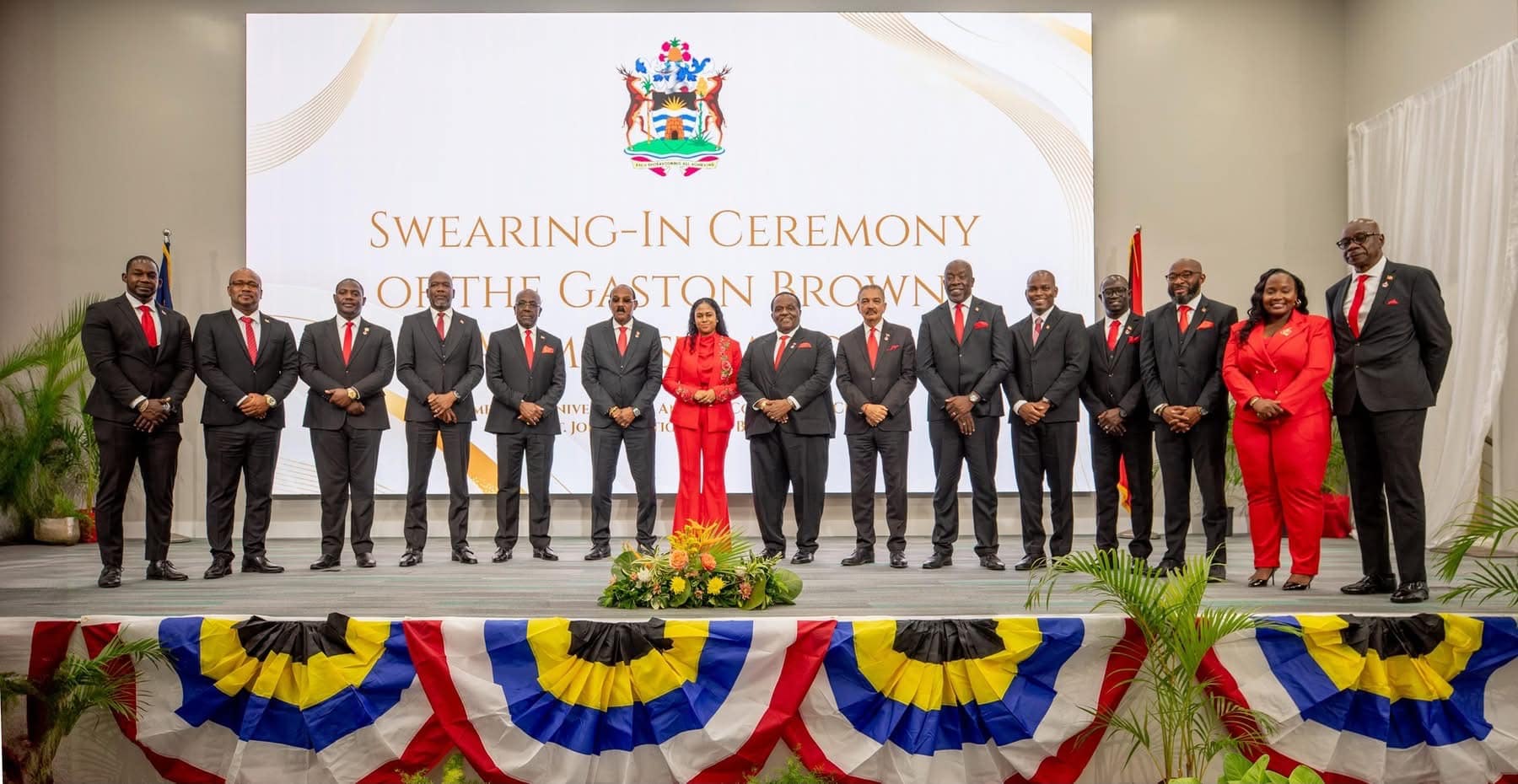
ABLP to Hold Thanksgiving Service on May 17 Following Election Victory
The Prime Minister of Antigua and Barbuda, Gaston Browne, has officially notified the national Cabinet of plans for a special Service of Thanksgiving to celebrate the Antigua and Barbuda Labour Party’s (ABLP) recent electoral success. Scheduled for Sunday, May 17, the religious gathering will take place at the St. John’s Pentecostal Church House of Restoration, a central venue in the country’s capital.
In his address to Cabinet members, Browne extended a wide invitation to multiple groups to participate in the upcoming service. He specifically encouraged sitting Cabinet ministers, elected parliamentarians, longstanding party supporters, and general members of the public to join the ceremony. Beyond a simple celebration, the service carries two core purposes, according to the prime minister.
First, the event will serve as a collective moment of gratitude for the public trust that the people of Antigua and Barbuda have placed in the ABLP administration to lead the nation for another term. Second, the gathering will be an opportunity for the incoming government to seek spiritual guidance and collective strength as it prepares to tackle the policy priorities and challenges of its new tenure. The announcement frames the service as a unifying moment for both the ruling party and the broader national community following the conclusion of the country’s general election.
-
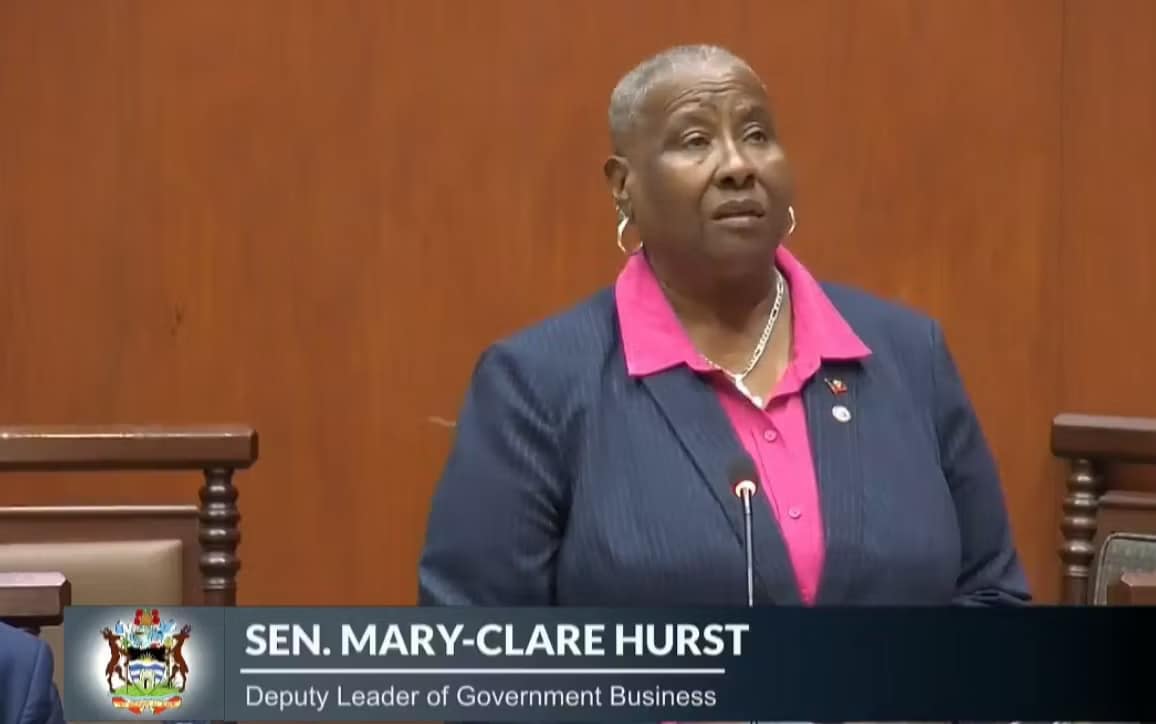
Cabinet Pays Tribute to the late Mary-Clare Hurst, Announces Official Funeral
The government of Antigua and Barbuda has gathered to pay solemn homage to Mary-Clare Hurst, a pioneering female politician and beloved public servant who passed away recently, celebrating her decades of transformative contributions to the nation and the Antigua and Barbuda Labour Party (ABLP).
During a special sitting, Cabinet members stood in a moment of quiet reflection to honor Hurst, who held multiple senior roles across government and the ruling political party throughout her career. Prime Minister Gaston Browne joined all attending ministers in lauding Hurst’s consistent dedication, unshakeable loyalty to the ABLP and the Antigua and Barbuda people, and sharp professionalism that shaped the country’s political and public institutions.
Across her trailblazing career, Hurst shattered long-standing gender barriers to make history as the first woman to occupy the role of General Secretary of the ABLP, a milestone that opened doors for greater female representation in the country’s politics. She went on to serve with distinction in a string of senior government positions, including government senator, Leader and Deputy Leader of Government Business in the Senate, and Minister of State within the Ministry of Tourism and Economic Development. Beyond her legislative and cabinet work, Hurst also chaired the Antigua and Barbuda Port Authority, where her sharp administrative acumen and commitment to excellence earned her respect from colleagues, industry stakeholders and the public alike.
Beyond her formal public roles, Hurst was widely recognized for her deep commitment to lifting up the next generation of public leaders. Cabinet members highlighted her enduring passion for mentorship and youth development, noting her instrumental work in nurturing emerging political talent and advancing efforts to modernize both the country’s political party framework and public sector institutions. Colleagues remembered her as a resilient, empathetic, and disciplined leader whose legacy of service will remain a touchstone for future generations of Antiguan and Barbudan public servants.
In a formal announcement marking her extraordinary contributions, the Cabinet confirmed that Hurst will be honored with an Official Funeral, a rare distinction recognizing her outsized impact on national development. The government extended its deepest gratitude for Hurst’s decades of loyal, distinguished service to the people of Antigua and Barbuda, and offered heartfelt condolences to her family, friends, colleagues and countless supporters as they navigate this period of grief.