分类: politics

  • U.S. finalizes withdrawal from WHO

    U.S. finalizes withdrawal from WHO

    The United States has officially completed its withdrawal from the World Health Organization (WHO), marking a significant shift in global health diplomacy. The departure, initiated through an executive order signed by President Donald Trump on January 20, 2025, follows a required one-year notice period but leaves approximately $133 million in outstanding financial obligations unpaid.

    According to United Nations officials speaking at a New York briefing, the withdrawal may not have fully met all procedural conditions. A Deputy Spokesperson for the UN Secretary-General noted that the WHO has not yet confirmed fulfillment of all requirements, specifically highlighting the settlement of outstanding financial obligations as a key condition that remains unresolved.

    The Trump administration’s decision to withdraw stemmed from multiple criticisms of the WHO, including allegations of mishandling the COVID-19 pandemic, failure to implement necessary reforms, and susceptibility to political influence from member states. The administration also criticized the organization’s funding structure, arguing that the U.S. contributed disproportionately compared to other nations, specifically noting China’s significantly lower contributions despite its larger population.

    Health experts worldwide have expressed concern about the implications of the U.S. departure, warning that it could weaken global disease surveillance and response capabilities, particularly in managing future pandemics. The United States had been one of the WHO’s largest contributors, providing over $600 million annually through assessed dues and voluntary contributions.

    The withdrawal represents part of a broader policy shift by the Trump administration away from international organizations perceived as not aligning with U.S. interests. Questions now emerge about how the United States will participate in global health coordination efforts moving forward, as the WHO remains the primary international body for disease prevention and response coordination.

  • Dominican Republic appoints new consul general to Antigua and Barbuda

    Dominican Republic appoints new consul general to Antigua and Barbuda

    The Dominican Republic has officially installed Julio Cesar Mateo Baez, colloquially known as Yulyn, as its new Consul General to Antigua and Barbuda. This diplomatic appointment follows the recent departure of former envoy Joaquin Lopez Diaz, marking a new chapter in bilateral relations between the two Caribbean nations.

    In his inaugural address, Consul General Mateo Baez emphasized his dual mission of serving the Dominican diaspora while fortifying diplomatic and cultural ties with Antigua and Barbuda. He characterized the host nation as a ‘valued partner’ whose citizens demonstrate remarkable dedication and work ethic, noting his encouragement from the historically strong relationship between the countries.

    The new consul issued a compelling appeal to Dominican nationals residing in Antigua and Barbuda, urging them to embody the role of cultural ambassadors through exemplary conduct and strict adherence to local laws. He emphasized that the behavior of expatriates directly influences international perceptions of the Dominican Republic.

    Mateo Baez’s diplomatic agenda includes scheduled courtesy visits to senior government officials in St. John’s during the coming weeks, where he will discuss matters of mutual interest and exchange formal greetings. His first official engagement will occur Sunday with attendance at a special service at Holy Family Cathedral commemorating the Bridging of Altagracia—a significant religious and cultural observance for the Dominican people.

  • SOVA waarschuwt voor overhaaste herstructurering Openbaar Ministerie

    SOVA waarschuwt voor overhaaste herstructurering Openbaar Ministerie

    The Suriname Bar Association (SOVA) has delivered a substantive critique of proposed judicial reforms during a national conference on modernizing the justice system. Legal experts argued that genuine modernization must transcend mere administrative restructuring and instead focus on strengthening legal certainty, transparency, integrity, and institutional resilience.

    The association presented a comparative analysis of two competing governance models: the existing single Attorney General system versus a proposed College of Attorneys General. SOVA emphasized that this choice fundamentally impacts core rule-of-law principles including accountability, operational efficiency, and democratic oversight rather than representing a simple organizational decision.

    SOVA’s analysis revealed that the current single Attorney General model offers distinct advantages in clear accountability structures, rapid decision-making capabilities, and direct crisis intervention. However, the association acknowledged vulnerabilities to personal dependency and political pressure when institutional safeguards remain underdeveloped.

    The collegial model, while potentially enhancing policy continuity and internal checks, presents significant risks for Suriname’s small legal jurisdiction. Collective decision-making could introduce bureaucratic delays, leadership ambiguity, and responsibility diffusion—critical concerns for a nation requiring swift, transparent judicial processes.

    The bar association cautioned against falsely equating modernization with structural overhaul, proposing instead comprehensive reforms within the existing framework. Key recommendations include establishing mandatory consultation protocols for high-stakes prosecution decisions involving state security, large-scale corruption, or political figures.

    SOVA advocated for publicly accessible prosecution guidelines to increase legal predictability and reduce risks of selective or politically influenced enforcement. The association stressed that transparency serves as the foundational element for public trust in judicial institutions.

    Additional proposals include implementing fixed statutory terms for the Attorney General, clearly defined dismissal grounds, and enhanced procedural protections during suspensions or removals. These measures aim to balance independence with institutional stability.

    The association called for clearer demarcation between the Prosecution Service and the Justice Ministry, recommending written documentation of policy directives, parliamentary oversight of interventions, and strengthened separation of powers to prevent informal influence.

    SOVA concluded that a properly empowered Attorney General—supported by robust legal safeguards, transparent policies, effective checks and balances, and visible accountability mechanisms—can deliver judicial security comparable to collegial governance systems. The central question remains how to create responsible, transparent, and resilient institutions rather than simply increasing the number of officeholders.

  • Federation’s Human Rights Record to be spotlighted next week

    Federation’s Human Rights Record to be spotlighted next week

    The Federation of St. Kitts and Nevis is poised for international human rights examination as Attorney General Garth Wilkin prepares to present the nation’s human rights record before the United Nations on January 27, 2026. This appearance marks a significant moment in the country’s ongoing engagement with global human rights mechanisms.

    Among thirteen jurisdictions scheduled for assessment next week, St. Kitts and Nevis will undergo scrutiny through the UN Human Rights Council’s Universal Periodic Review (UPR) process. The evaluation will be conducted by the UPR Working Group during sessions at the UN’s Geneva headquarters, representing the fourth such examination for the Caribbean nation since the process began.

    The UPR mechanism employs a comprehensive three-document foundation for its assessments: an official national report submitted by the state under review; compiled information from independent human rights experts, special procedures, treaty bodies, and various UN entities; and substantive contributions from diverse stakeholders including national human rights institutions, regional organizations, and civil society groups.

    Historical data reveals this constitutes the Federation’s fourth UPR cycle, with previous evaluations occurring in January 2011, November 2015, and most recently in January 2021. The available documentation forming the basis for next week’s review has been made accessible to the public through official United Nations channels, ensuring transparency throughout the process.

    The upcoming review represents both a procedural obligation and an opportunity for the Federation to demonstrate its human rights advancements while receiving constructive feedback from the international community on areas requiring further development.

  • Venezuelan embassy in Antigua launches campaign calling for return of Maduro

    Venezuelan embassy in Antigua launches campaign calling for return of Maduro

    The Venezuelan Embassy in St. John’s has initiated a worldwide diplomatic campaign demanding the immediate repatriation of President Nicolás Maduro and First Lady Cilia Flores, whom Venezuelan authorities assert are currently detained in the United States under criminal allegations.

    Designated with the hashtag #BringThemBack, this mobilization effort stems from what embassy officials describe as a January 3rd military operation conducted by United States forces that allegedly resulted in the apprehension and subsequent transportation of Venezuela’s leadership to American territory.

    The campaign formally commenced during a Thursday evening solidarity gathering at the embassy, drawing participation from international diplomats, religious figures, Venezuelan expatriates, and local activists. Venezuelan Ambassador to Antigua and Barbuda Carmen Velasquez characterized the alleged incident as among the most devastating events in contemporary Venezuelan history, addressing attendees with emotional appeals for diplomatic resolution.

    Ambassador Velasquez provided a firsthand account claiming presence in Caracas during the purported operation, describing being awakened by powerful explosions and observing unlit helicopters alongside drone strikes targeting multiple locations. Her testimony aimed to substantiate the Venezuelan government’s narrative of foreign military intervention.

    The assembly featured notable attendees including Cuban Ambassador Sergio Martinez, Chinese Ambassador Jiang Wei, Senator Colin O’Neal, and religious representatives from the Antigua Christian Lay Movement and All Saints Fellowship of Believers. Ambassador Martinez denounced the alleged American actions as violations of Venezuelan sovereignty, while Senator O’Neal criticized the purported removal of a democratically elected leader within Western Hemisphere territory.

    The event culminated in a candlelight vigil led by Pastor James Warner, honoring those reportedly deceased during the incident while symbolizing hope for the leaders’ safe return. The embassy has subsequently established a Condolence Book inviting public signatures as gestures of support for the Venezuelan people amid escalating international tensions.

  • Applications Open for CHOGM 2026 Social Media Correspondents

    Applications Open for CHOGM 2026 Social Media Correspondents

    Antigua and Barbuda, host nation of the forthcoming 2024 Commonwealth Heads of Government Meeting (CHOGM), has unveiled an innovative initiative to integrate youth perspectives into the global dialogue. The program is actively recruiting a cadre of young content creators to serve as official correspondents, tasked with documenting and disseminating the summit’s proceedings across digital media channels.

    This initiative specifically seeks to elevate youth commentary on critical agenda items, with a sharp focus on climate change mitigation, advancing gender equality, and strengthening civil society engagement. Eligibility is extended to active members or distinguished alumni of established youth leadership programs, including the Antigua and Barbuda National Youth Ambassador Programme, the CARICOM Youth Ambassador Programme, and the National Youth Parliament. Furthermore, the application pool encompasses current university students, tertiary institution attendees, former school leaders (such as head boys, head girls, and prefects), and young professionals with a proven dedication to socio-developmental causes.

    Prospective candidates must exhibit a compelling on-camera persona and possess foundational technical knowledge in video production, encompassing principles of lighting, audio capture, and compositional framing. Mandatory proficiency is required in contemporary content creation tools, including smartphone/HD camera operation, wireless microphone usage, and video editing software. Interested individuals are instructed to submit their applications via email to youthaffairs@ab.gov.ag, clearly marked with the subject line ‘CHOGM Correspondents,’ no later than the deadline of Friday, February 6, 2026.

    CHOGM 2026 is poised to convene leaders from across the Commonwealth in Antigua and Barbuda, positioning the twin-island nation at the epicenter of high-level international discourse on development, multilateral cooperation, and the collective challenges confronting member states.

  • iWN founder Kenton Chance among new SVG diplomats

    iWN founder Kenton Chance among new SVG diplomats

    In a significant diplomatic reshuffle announced by Foreign Minister Fitz Bramble on Thursday, distinguished journalist Kenton X. Chance has been designated as the new Ambassador of St. Vincent and the Grenadines to Taiwan, effective March 1. The appointment forms part of a broader realignment of the nation’s diplomatic corps unveiled in Kingstown.

    Chance brings to the role an exceptional background in journalism and international affairs, having cultivated a prestigious career since 2002. His academic credentials include first-place honors degrees from Taiwan’s Ming Chuan University—a bachelor’s in journalism and mass communication (2011) followed by a master’s in international affairs with a focus on global governance (2012). His connection to Taiwan was first forged in 2006 when he received a government scholarship to study Mandarin Chinese, preceding his undergraduate studies.

    The ministerial announcement also confirmed several other key diplomatic postings: Roland Matthews as Consul General to New York; Vynnette Frederick as Ambassador to the United Nations; Brereton Horne as High Commissioner to the United Kingdom; and Angella Ideisha Jackson as Ambassador to Cuba. Incumbent ambassadors Lou-Anne Gilchrist (United States) and Gareth Bynoe (Venezuela) will retain their positions. An appointment for Consul General to Toronto remains pending.

    Chance’s professional stature is underscored by his 2022 recognition as the first and only Vincentian to receive the Distinguished Taiwan Alumni Award from Taiwan’s Ministry of Education—an honor granted to only ten individuals worldwide that year. His journalistic work has extended across five continents, with contributions to renowned outlets including The New York Times, Associated Press, The Guardian, and CGTN.

    Founder and Executive Editor of iWitness News, Chance has committed to ensuring the publication’s continuity as a reliable news source without his direct involvement. In a personal statement, he acknowledged the gravity of his new role, expressing his commitment to national service with the support of his wife, Symantha Chance.

  • Hofpresident Rasoelbaks: modernisering rechterlijke macht al jaren in voorbereiding

    Hofpresident Rasoelbaks: modernisering rechterlijke macht al jaren in voorbereiding

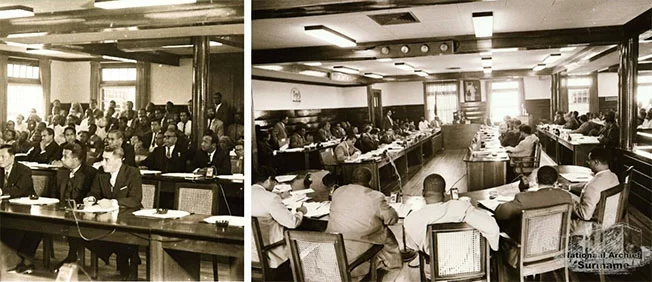
    Suriname’s judicial system stands at a historic crossroads requiring fundamental decisions that will shape legal proceedings for current and future generations, according to President of the Court of Justice Iwan Rasoelbaks. Speaking at the Judicial Modernization Congress on Thursday, Rasoelbaks emphasized that the nation’s court modernization represents not a sudden initiative but the culmination of years of systematic reforms, strategic investments, and institutional choices.

    The judicial leader revealed that the congress emerged from a shared recognition between legislative and judicial branches that structural dialogue has become imperative. While recent legislative initiatives concerning the judiciary provided the immediate catalyst, Rasoelbaks noted that reform necessity has existed for decades. “We essentially should have held this conversation around 1975,” he observed, referencing the prolonged period during which fundamental questions about the organization of the rule of law remained unaddressed.

    A significant obstacle identified by the Court President is the outdated organizational law for the judiciary, which originated in 1869 and underwent only limited revision in 1936. This antiquated legislation, according to Rasoelbaks, severely restricts operational agility, expansion capabilities, and modern administration within both judicial organizations and the Public Prosecutor’s Office. Despite these constraints, judges have consistently endeavored to deliver justice within this restrictive framework.

    Rasoelbaks recalled the 2003 sit-down action by sitting magistrates, when judges suspended work for ten days to highlight the dire situation. This protest marked the beginning of a developmental trajectory that has since been implemented incrementally. Capacity building emerged as a critical focus area, with several judicial training programs established through collaboration with the Netherlands Council for the Judiciary.

    Since 2003, five specialized RAIO training programs have produced 31 new judges. Rasoelbaks stressed that judge education constitutes an intensive and prolonged process with suitable candidates remaining scarce. “You cannot simply hand a lawyer a gavel and expect them to be a judge,” he remarked.

    Beyond educational initiatives, additional measures have advanced judicial reform. In 2018, experienced legal practitioners from court practice underwent accelerated judicial training, resulting in eight appointments. Available capacity has enabled judicial decentralization to districts including Brokopondo and Marowijne, alongside existing courts in Paramaribo and Nickerie. Small claims courts have also been established to make justice more accessible to citizens.

    Rasoelbaks simultaneously issued a sobering warning about future challenges. Within ten years, half of current judges will reach retirement age, with only a small core remaining within fifteen years. Continuation and expansion of training programs are therefore inevitable. “Without capacity and without resources, nothing is possible,” he emphasized.

    Institutional advancements have likewise progressed. A code of conduct and complaints procedure for judges has been established, and the 2019 amendment of the Government Accounting Act redesignated the Court of Justice as an independent administrative body with its own budget. Since 2022, the court has operated with independent financial resources separate from the Ministry of Justice and Police. Legislation to further consolidate this position currently awaits parliamentary consideration.

    The Court President also addressed discussions concerning establishing a third judicial instance, noting two primary options: joining the Caribbean Court of Justice or creating Suriname’s own supreme court. Regardless of the chosen path, Rasoelbaks indicated this would require careful and prolonged development, with existing first and second instance courts requiring further strengthening first.

    He expressed confidence that the congress would significantly contribute to informed decision-making by competent authorities. “This is not an endpoint, but the beginning of a subsequent trajectory,” concluded Rasoelbaks, urging participants to continue dialogue in service of building a robust, modern, and future-proof legal system for Suriname.

  • Pg Paragsingh: Modernisering rechterlijke macht onvermijdelijk

    Pg Paragsingh: Modernisering rechterlijke macht onvermijdelijk

    Suriname’s Prosecutor General Garcia Paragsingh has issued a compelling call for comprehensive judicial modernization, declaring it an “inevitable necessity” rather than a choice to future-proof the nation’s rule of law. The urgent appeal came during her opening address at the Judicial Modernization Congress held on Thursday.

    Paragsingh emphasized that evolving societal dynamics, increasingly sophisticated criminal activities, and rising public expectations demand thoughtful and systematic reforms. She characterized the judiciary as a fundamental pillar of constitutional democracy that requires regular critical assessment—not to dismantle functioning systems but to strengthen areas needing improvement.

    Globally, judiciaries face parallel challenges including complex criminality, rapid technological advancement, capacity constraints, and heightened societal demands for transparency, efficiency, and independence. The Prosecutor General stressed that modernization must align with national legal traditions while addressing these contemporary pressures.

    A central congress theme involves the potential establishment of a third judicial instance—a significant structural change requiring meticulous consideration due to implications for legal development, jurisprudence consistency, and citizen protection. Paragsingh highlighted that such reforms must balance efficiency, accessibility, and processing times while maintaining public trust.

    Closely tied to this discussion is the positioning and operation of prosecution services within a third instance framework. Paragsingh advocated for an independent, expert prosecution unit with clear mandates, emphasizing its vital role in maintaining judicial quality and consistency through professional collaboration with the judiciary.

    The address also covered modernization needs within the Public Prosecutor’s Office, which operates at the intersection of investigation, prosecution, and adjudication. Paragsingh underscored the necessity for ongoing investment in quality, expertise, and national-international cooperation, recognizing the institution’s unique constitutional responsibility.

    Concluding her remarks, the Prosecutor General framed the congress as action-oriented rather than academic, aimed at formulating concrete, realistic steps forward. By synthesizing national and international experiences, Suriname can make informed choices for its judicial future, working toward a shared vision of a modern, effective, and authoritative judiciary.

  • We must move from rhetoric to action

    We must move from rhetoric to action

    In a series of extraordinary provincial government council meetings held Thursday in Ciego de Ávila and Sancti Spíritus, Cuban Prime Minister Manuel Marrero Cruz delivered a forceful address emphasizing municipal-level development as the cornerstone of national progress. The high-level gatherings focused on addressing Cuba’s pressing economic challenges through localized solutions and systemic transformation.

    Marrero Cruz characterized municipalities as essential battlegrounds for solving population-level problems, urging local governments to transition from passive administrative units to proactive development protagonists. “The municipality must stop being a passive link and become the protagonist of its own development,” he stated, calling for concrete actions over rhetoric.

    The Prime Minister framed Cuba’s current economic situation as effectively a “war economy” resulting from intensified U.S. embargo measures and increasingly hostile American policies. This reality, he argued, necessitates profound transformations and radical shifts in mentality rather than half-measures or business-as-usual approaches.

    Agricultural production emerged as a central theme, with particular focus on Ciego de Ávila’s strategic role in national food security. With approximately 35,000 hectares dedicated to diverse crops including root vegetables, grains, and fruit trees, the province represents a critical agricultural bastion. Agriculture Minister Ydael Pérez Brito highlighted the province’s geographical advantages and combination of land resources and skilled labor as key assets.

    The meetings established 2026 as a pivotal year for Cuba, with Marrero acknowledging difficulties ahead while emphasizing strengthened policy implementation to unleash territorial potential. “If you want to move forward,” he asserted, “you have to do things differently and not be afraid of change.”

    Governor Alfre Menéndez Pérez adopted a self-critical tone, identifying priority areas including export diversification, new market development, reduction of outstanding fines and budget deficits, and improved water supply to vulnerable communities.

    Vice President Ana María Mari Machado contributed legal and institutional perspectives, emphasizing that municipal empowerment requires not just political will but also an enabling regulatory framework that can rapidly respond to local needs.

    The discussions also examined specific production opportunities—from fishing integration to rice cultivation despite drought conditions—and rediscovered traditional technologies like animal traction, windmills, and biodigesters as timely solutions for energy and food challenges.

    Marrero Cruz concluded by directing attention toward municipal-level meetings where implementation will ultimately occur, urging officials to maximize capabilities without using the U.S. embargo as justification for domestically solvable problems. He invoked Fidel Castro’s historical determination as inspiration for current circumstances, signaling resolve in facing Cuba’s complex challenges through localized production and development.