分类: politics

  • It’s time to wake up

    It’s time to wake up

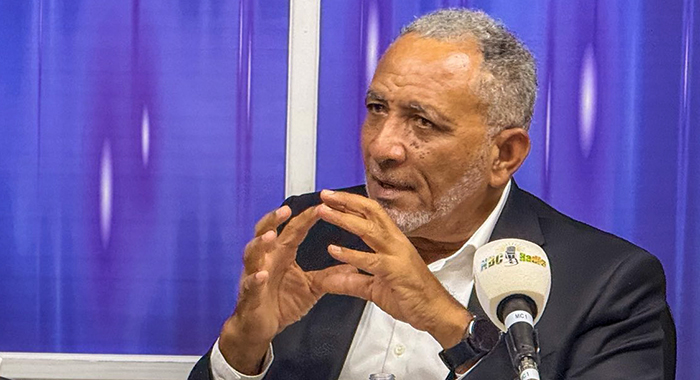
    Five months into the tenure of the New Democratic Party (NDP) administration led by Prime Minister Godwin Friday, a prominent regional lawyer, journalist and social commentator Jomo Thomas has sounded a public alarm: the new government is in dire need of a skilled professional communications strategist to reverse eroding public credibility.

    For weeks, widespread dissatisfaction with the NDP’s disjointed public messaging has bubbled under the surface of political discourse in St. Vincent and the Grenadines, but until now few have voiced the criticism openly. Thomas argues that the era of polite, behind-the-scenes feedback is over, and hard truths must be shared before the government loses what remaining public trust it holds.

    In just 20 weeks in office, the administration has accumulated a growing trail of missteps: contradictory statements from different cabinet members, uncoordinated policy announcements, overreaching executive actions, and confirmed instances of public misinformation. While individual incidents may appear trivial on their own, Thomas notes that taken together, they reveal a dangerous pattern of disorganization that the post-election goodwill from the party’s November 2025 decisive electoral victory can no longer obscure.

    As the administration approaches its six-month milestone, a clear majority of Vincentians still cannot articulate the government’s core policy priorities or long-term national direction. Even for loyal NDP supporters who may take offense to this assessment, the reality is unavoidable: for many ordinary citizens, the current government feels indistinguishable from the previous Unity Labour Party administration it defeated, carrying over the same policy approaches, leadership styles, and bureaucratic habits. This lack of visible change has left many voters openly questioning what purpose their landslide election win actually served.

    From the earliest days of the NDP’s term, political observers warned that while the party ran a vigorous, effective campaign, it entered office unprepared for the day-to-day demands of governing. Supporters of the new administration pushed back at the time, arguing that all new governments face an expected learning period. But Thomas points out that a productive learning curve depends on three key traits: humility to accept gaps in knowledge, discipline to implement structural changes, and willingness to act on feedback – traits he says the current administration has so far lacked, instead leaning into stubbornness and complacency.

    Too many incoming cabinet members and political appointees have entered office assuming they already possess the skills needed to govern, Thomas says, rejecting outside guidance or professional support. The outcomes of this overconfidence are already visible to the public.

    Persistent public speculation has emerged that Deputy Prime Minister St. Clair Leacock functions as the de facto head of government, even as many dismiss these rumors as unfounded. Notably, the administration’s own poor communication strategy has done nothing to counter this growing public perception. Increasingly, voters only see Prime Minister Friday at low-stakes, image-focused events: school openings, local sports competitions, and other photo-ready public appearances. Thomas stresses that the Office of the Prime Minister is not a prop for social media content; it requires consistent, serious public visibility and clear demonstration of national leadership.

    Thomas adds that the current press secretary, while widely recognized as a hardworking contributor during the election campaign, lacks the specialized training and high-level experience required to manage national government communications. This is not a personal criticism, he clarifies, but an objective observation of a critical professional gap that needs addressing. Running communications for an election campaign and coordinating national public messaging for a sitting government are entirely different roles requiring vastly different skill sets.

    Voters often criticized former Prime Minister Ralph Gonsalves for his overwhelming, omnipresent public profile, Thomas acknowledges, but one clear benefit of that leadership style was that the public always knew exactly where the administration stood on key issues. There was no question who the national leader was, and the entire cabinet aligned behind consistent messaging. Thomas emphasizes that no one is calling for a return to Gonsalves’ authoritarian-style leadership, but effective governance by any administration requires clear, consistent messaging. If Friday is doing the work of leading effectively behind closed doors, that work is completely invisible to the public – and in politics, public perception shapes reality.

    The urgent need for a professional communications strategist extends far beyond optimizing social media content, Thomas explains. The new hire would be tasked with coordinating consistent messaging across all government-owned and aligned platforms, including the Agency for Public Information, NBC Radio, VC3 Television, and other state media outlets. Without this coordinated leadership, Thomas warns the NDP administration will continue to be seen as unfocused, reactive to events rather than proactive, and internally divided.

    The initial public excitement that followed the NDP’s early policy moves – including the popular VAT-free shopping day and the partial reinstatement of public servants dismissed by the previous administration – has already worn off. Five months in, voters are increasingly asking: what tangible, meaningful change has the government delivered since those opening moves? What is the administration’s long-term plan for the country? Who is actually in charge of setting the national agenda?

    Thomas urges the NDP leadership to wake up to a core political reality: governance and political communication cannot be separated. The party’s chances of winning re-election at the end of the term will not depend solely on delivering policy outcomes. It will depend on how well it communicates its vision, how consistently it demonstrates leadership, and how effectively it manages public perception of its work.

    It is past time for the NDP to get serious about fixing this critical gap, Thomas says. It is past time for the administration to act. If the party fails to address its communication failures soon, it risks fulfilling the current fears of many political observers: becoming a one-term administration that squandered its electoral mandate before it had a chance to deliver on its promises.

    By S. Smith
    *This is an opinion piece. The views expressed are those of the author and do not represent the official editorial position of iWitness News.*

  • Ameen: $1b debt at corporations

    Ameen: $1b debt at corporations

    Trinidad and Tobago’s new Minister of Rural Development and Local Government, Khadijah Ameen, has uncovered a massive accumulated debt crisis across the country’s regional corporations, with total liabilities expected to exceed one billion dollars. The revelation came following a collaborative meeting held Wednesday with municipal mayors, chairs, and senior administrative leaders of all regional corporations, convened as part of pre-budget planning ahead of the government’s upcoming mid-year fiscal review.

  • Ralph takes on Kamla over CARICOM SG re-appointment

    Ralph takes on Kamla over CARICOM SG re-appointment

    A deepening regional dispute over the re-appointment of CARICOM Secretary General Carla Barnett has emerged, with former St. Vincent and the Grenadines prime minister Ralph Gonsalves stepping forward Wednesday to push back against scathing criticisms from the government of Trinidad and Tobago. Trinidad and Tobago’s leadership has labelled the process that extended Barnett’s five-year term as “surreptitious and odious”, claiming it was deliberately shut out of the closed-door caucus vote held in Nevis during a February CARICOM summit hosted by St. Kitts and Nevis, and is demanding a full special meeting of the 15-member regional bloc to revisit the decision, even floating the possibility of holding a fresh election for the post.

    Trinidad and Tobago Foreign Affairs Minister Sean Sobers has amplified his government’s objections, arguing that the country’s exclusion from the decision-making caucus was no accidental mistake. He noted that the leaders of Antigua and Barbuda and The Bahamas also departed the main summit early, and both nations had appointed designated representatives to stand in for their heads of government—yet none of these delegates, including Trinidad and Tobago’s representative, received an invitation to attend the caucus. According to Sobers, this deliberate exclusion violates Article 11.2 of the Revised Treaty of Chaguaramas, which explicitly allows any head of government to appoint a delegate to attend summit meetings on their behalf. He also added that three formal letters Trinidad and Tobago sent to regional leaders on the issue have been met with complete silence, a lack of response he calls deeply troubling.

    Trinidad and Tobago Prime Minister Kamla Persad-Bissessar has doubled down on these criticisms, stating in a public Facebook statement that the flawed process poses long-term risks for her country, and that until the matter is resolved with full transparency, her government will give no ground to CARICOM or its secretariat.

    But speaking on his Unity Labour Party’s local radio station, Gonsalves—now opposition leader in St. Vincent and the Grenadines, and one of the longest-serving heads of government in CARICOM’s history until he left office last November—dismissed Trinidad and Tobago’s claims as unfounded. As a signatory to the 2001 Revised Treaty of Chaguaramas who shepherded the agreement into domestic law during his premiership, Gonsalves broke down the bloc’s voting rules to back his argument that the re-appointment was completely legal.

    He pushed back against the claim of deliberate exclusion, noting that CARICOM chairman and St. Kitts and Nevis Prime Minister Terrance Drew personally traveled to Port of Spain to meet with Persad-Bissessar ahead of the summit to resolve pre-meeting tensions, and both sides described those talks as very fruitful. Persad-Bissessar publicly confirmed she would attend the summit, Gonsalves said, which left regional leaders relieved. Gonsalves added that he has received verified information that both Persad-Bissessar and Sobers were formally invited to the Nevis caucus where the vote was held. He explained that closed-door caucuses for heads of government (and their designated delegates) are standard procedure for sensitive CARICOM business, contrary to Trinidad and Tobago’s claims of an unprecedented secret process.

    On the subject of Trinidad and Tobago’s absence, Gonsalves revealed that Persad-Bissessar ultimately decided not to travel to Nevis for the caucus, and Sobers confirmed he could not attend in her place because he experiences seasickness—an explanation Gonsalves cast doubt on, noting the five-minute boat ride between St. Kitts and Nevis is a short, routine crossing. Gonsalves added that even if Sobers could not travel, Trinidad and Tobago failed to nominate an alternative representative who could attend the meeting. He also rejected Trinidad and Tobago’s claim that Antigua and Barbuda and The Bahamas were also wrongfully excluded, noting he has participated in multiple caucus meetings where the two nations’ foreign ministers served as accredited delegates for their governments, and there is no rule barring designated representatives from attending.

    Breaking down the text of the treaty that governs CARICOM, Gonsalves explained that decisions of the Heads of Government Conference are binding when supported by an affirmative vote of members, and abstentions do not invalidate a decision as long as three-quarters of member states vote in favor. Omission from voting by a member state counts as an abstention under the treaty’s rules. Gonsalves confirmed that St. Kitts and Nevis Prime Minister Drew publicly stated Barnett secured the required majority for re-appointment, meeting all procedural requirements.

    He also addressed Trinidad and Tobago’s reference to Article 24 of the treaty, which outlines the Secretary General’s appointment process, noting that the article does not override the conference’s supreme authority to take up the matter directly even if it has not been reviewed by the Community Council (CARICOM’s second-highest ministerial body). The treaty explicitly allows the Heads of Government Conference—CARICOM’s supreme decision-making body—to address any matter directly, he said.

    Gonsalves also touched on an earlier disagreement between Persad-Bissessar and Barnett, noting that Persad-Bissessar had publicly criticized Barnett for failing to respond to a letter regarding a CARICOM Arrest Warrant case involving a Trinidadian citizen detained in Barbados. Gonsalves argued this was an internal matter between Trinidad and Tobago and Barbados that should have been raised with the CARICOM chairman, not the Secretary General, so Barnett was correct not to intervene.

    Regional leaders are scheduled to hold a follow-up meeting on the dispute this Friday, according to information Gonsalves has received. He noted that even if the matter is reopened, if a majority of leaders back the original re-appointment, Barnett will retain her post. Responding to implicit threats from Persad-Bissessar that Trinidad and Tobago could withhold funding over the dispute, Gonsalves argued that Trinidad and Tobago is already the largest beneficiary of the Caribbean Single Market and Economy, and any move to withdraw from the bloc would backfire. Trinidadian businesses currently enjoy free establishment and preferential access to all CARICOM markets, he noted, and losing that access would make Trinidadian exports less competitive against goods from the United States, Puerto Rico, and the Dominican Republic, dragging down Trinidad and Tobago’s economy and driving up unemployment. Gonsalves said that if Persad-Bissessar disagrees with the process, the treaty allows her to either initiate withdrawal with a one-year notice or bring the matter to the Caribbean Court of Justice for a formal ruling.

    Barnett, a Belizean-born economist, became CARICOM’s eighth Secretary General in August 2021 after being unanimously appointed by regional leaders, and her re-appointment would extend her tenure through 2031.

  • Greene Details Healthcare, Housing and Skills Investments in St. Paul’s Ahead of Election

    Greene Details Healthcare, Housing and Skills Investments in St. Paul’s Ahead of Election

    As political parties across Antigua and Barbuda ramp up campaign efforts ahead of the approaching national general election, Chairman of the ruling Antigua and Barbuda Labour Party (ABLP) E.P. Chet Greene has laid out a comprehensive portfolio of completed and planned development initiatives for the St. Paul’s constituency, framing the work as proof of consistent, long-term progress rather than last-minute electioneering.

    At the core of the constituency’s recent gains are expanded public healthcare infrastructure, designed to reduce barriers to access for local residents. Greene confirmed that two upgraded healthcare facilities are now fully operational: a newly constructed primary care clinic in the community of Cobbs Cross, and a comprehensive renovation of an existing clinic elsewhere in St. Paul’s. “We have two very functional clinics in St. Paul’s, bringing healthcare services to a new level,” Greene shared in his remarks, emphasizing that the upgrades were structured to bring essential care directly closer to the communities that need it. Looking ahead, the ABLP has further plans to widen the scope of available services, adding specialized dental and vision care to the constituency’s public health offerings in coming months.

    Beyond healthcare, the ABLP has prioritized youth development and workforce readiness through expanded education and vocational training opportunities. A key milestone in this effort is the nearing completion of a new technical training centre, which will offer programming across a range of practice-focused career tracks. One dedicated wing of the facility will provide professional training in beauty and skincare, while other sections will cover a broad spectrum of vocational skills aligned with local labour market demands.

    This new centre complements existing training partnerships with larger post-secondary institutions across the country, including the University of the West Indies Five Islands Campus, where dozens of St. Paul’s residents are already enrolled in skills-building programs. “We have about 30 students on short courses… and others in longer programmes,” Greene noted, adding that youth empowerment and accessible education remain non-negotiable pillars of the constituency’s long-term growth strategy.

    The ABLP’s development agenda for St. Paul’s also includes targeted expansion of affordable housing, with Greene confirming that new parcels of land will soon be opened up for residential development to accommodate the constituency’s growing population. Complementary infrastructure upgrades, including improved emergency response facilities, are also in the works to support the area’s expanding population and growing local economic activity.

    Greene took explicit care to distinguish the ABLP’s ongoing work from pre-election campaign promises, stressing that consistent progress in St. Paul’s has been a years-long priority rather than a temporary push for votes. “While others campaign, I maintain,” he said, emphasizing his administration’s sustained presence and on-the-ground engagement with constituents throughout his tenure. The rollout of the constituency’s development record comes as the ABLP works to highlight its delivery track record across all electoral districts ahead of the upcoming vote.

  • St. Kitts and Nevis National Public Poll – Your Voice Matters

    St. Kitts and Nevis National Public Poll – Your Voice Matters

    Residents of the Federation of St. Kitts and Nevis have been invited to participate in a new nationwide public opinion poll that aims to center public voice in shaping the country’s future trajectory, according to an official notice posted early Thursday morning on April 9, 2026.

    Organized by a local independent polling firm, the initiative calls on every eligible member of the public to set aside just a few minutes of their time to share their perspectives via a set of survey questions. A core guarantee of the project is full respondent anonymity, a design choice intended to encourage open, honest feedback without fear of attribution or personal consequence.

    The notice framing the poll emphasizes that the long-term direction of St. Kitts and Nevis is ultimately determined by its citizenry, making widespread public participation critical to capturing a representative snapshot of public priorities and views across the federation. With anonymity built into the survey structure, organizers hope to remove barriers to participation and encourage a diverse cross-section of residents to contribute their input.

  • That day, people fought and died across the country

    That day, people fought and died across the country

    Seventy-odd years after one of the most pivotal moments in Cuba’s revolutionary struggle, the legacy of the April 9 general strike against the Batista tyranny endures as a powerful testament to the Cuban people’s unbreakable commitment to change. In excerpts from his 1989 book *Semillas de fuego (Seeds of Fire)*, Rebel Army Commander Faustino Pérez reflects on the failed 1958 uprising, drawing lessons that remain resonant for Cuba’s ongoing journey decades later.

    When revolutionary leaders called for a nationwide general strike to oust the Batista regime, activists across the island rose to answer the call. From the capital of Havana to the far eastern provinces, hundreds of disparate actions unfolded: revolutionary activists seized national radio outlets to broadcast the strike call, stormed the Old Havana armory, destroyed electricity substations, shut down transportation hubs, blocked key travel routes into and out of the capital, and derailed trains in multiple regions. Guerrilla forces joined the effort, matching the underground movement’s actions with coordinated assaults: Enrique Hart led a raid on the Matanzas radio station, rebels attacked the Quemado de Güines barracks and shut down Cuba’s Central Highway, and militias from Santiago de Cuba, led by René Ramos Latour (who had stepped into Frank País’ post at the National Action Headquarters in the Sierra Maestra), launched an assault on the Boniato Barracks. By the end of the day, the entire Eastern region was effectively paralyzed by the combined power of guerrilla fighters and underground organizers.

    Despite the widespread popular mobilization, the strike failed to achieve its core goal of toppling the Batista tyranny. In the wake of the uprising, the regime unleashed a wave of brutal repression that claimed more than 100 revolutionary combatants, including Marcelo Salado, the July 26 Movement’s capital field commander and one of its most promising young leaders. The defeat pushed the Cuban revolutionary movement into one of the most difficult periods of its entire campaign against Batista.

    Pérez offers a candid reflection on the causes of the failure, acknowledging that while multiple contributing factors were at play, the primary responsibility rested with errors in judgment and leadership among the activists tasked with directing the uprising. Yet far from framing the April 9 strike as a catastrophic and final loss, Pérez frames it as a critical turning point that strengthened the revolutionary cause. Even in defeat, the uprising proved beyond doubt that the Cuban people retained an unyielding commitment to struggle and sacrifice for their vision of independence.

    The immediate aftermath of the April 9 setback also laid new groundwork for future victory. Dozens of grassroots insurgent groups, many armed only with basic weapons, remained active across the island, and gradually merged with established guerrilla fronts. Two new full guerrilla columns formed to expand the revolutionary struggle: the Pepito Tey column, which joined the Frank País Second Front under Belarmino Castilla after winning the battle of Ramón de las Yaguas, and a separate column led by Víctor Bordón that began operations in the Escambray Mountains. Even an unsuccessful expedition to Pinar del Río, which included future combatant Jesús Suárez Gayol (who would later die fighting alongside Che Guevara in Bolivia), represented a step forward in building insurgent capacity across the island.

    For Pérez, this trajectory of defeat turned into strength is a defining feature of Cuba’s century-long revolutionary journey. “On the Cuban people’s upward path, no setback has ever been or will ever be definitive; it has never brought paralysis, nor has it ever meant abandoning the struggle,” he writes. “The darkness of the setback has never extinguished the revolutionaries’ certainty of victory.” The April 9 defeat was no exception, Pérez argues: through the fighting spirit of the Cuban people, the courage of frontline combatants, and steady revolutionary leadership, what appeared to be a total loss was eventually re-forged into a stepping stone to the eventual victory that would reshape Cuba’s history forever.

  • Patria: a communication milestone of our time

    Patria: a communication milestone of our time

    Cuba’s leading international communication gathering, the Patria International Colloquium, is gearing up to open its fifth iteration in 2026, bringing a slate of new updates and symbolic milestones to Havana. Rooted in the core mission of aligning Cuba’s public communication network with progressive, leftist frameworks adapted to 21st-century digital shifts, the event carries heavy symbolic weight this year, timed to coincide with two landmark national anniversaries: the centennial of Cuba’s iconic Commander-in-Chief, and the 65th anniversary of the victory at the Bay of Pigs, as well as the declaration of the socialist character of the Cuban Revolution.

    Against a backdrop of sustained international media pressure targeting Cuba, the colloquium stands as a tangible demonstration of global solidarity with the island nation, event organizers confirmed. At an official press conference, Ricardo Ronquillo Bello, president of the Union of Cuban Journalists (UPEC), shared that even with an accelerated call for participation, global turnout has exceeded expectations, with roughly 150 international delegates already confirmed to attend. This strong response, he noted, is clear evidence of widespread global support for Cuba and the long-standing international prestige the colloquium has built since its launch.

    This year’s edition introduces a restructured programming model that expands the event’s core mission beyond academic discussion, positioning it as a hub for practical professional preparation and skills training. Parallel to the main keynote panels and discussions, a series of hands-on workshops will be held, and a hybrid virtual component will be offered to extend access to communication professionals across every region of Cuba. Organizers emphasized they are prioritizing leveraging the expertise of high-profile attendees, including senior specialists, veteran journalists, leading communication theorists, and heads of major communication organizations from around the world.

    Daniel González, a member of the colloquium’s organizing committee, added that the event will center cutting-edge shifts in the global communication sector, with artificial intelligence and its real-world applications for media and public communication set to be one of the central thematic focuses of the conference. The gathering will also feature a large-scale public exhibition hosted at Havana’s Línea y 18 fairgrounds, where domestic and international media outlets and communication-focused initiatives will display their latest technological and innovative advances to attendees.

    A key milestone of this fifth edition will be the official inauguration of the permanent Patria Project headquarters, a facility designed to operate as a year-round hub for communication research, professional training, and preparatory work for future industry initiatives. Closing his remarks, Ronquillo Bello framed the colloquium as a modern stand against external media pressure, drawing a parallel to the historic Bay of Pigs victory: “Patria coincides with dates of great national symbolism. Let us say, then, that Patria is the communications-based Bay of Pigs of our time.”

  • St. Kitts and Nevis, Guyana Deepen Strategic Ties Through Security, Agriculture, Modernization and Biodiversity Pact

    St. Kitts and Nevis, Guyana Deepen Strategic Ties Through Security, Agriculture, Modernization and Biodiversity Pact

    Two Caribbean nations, the Federation of Saint Kitts and Nevis and the Cooperative Republic of Guyana, have advanced their longstanding bilateral relationship into a new era of targeted strategic cooperation, following a landmark series of agreements signed during an official visit by Saint Kitts and Nevis Prime Minister Dr. Terrance Drew to Georgetown on April 8, 2026.

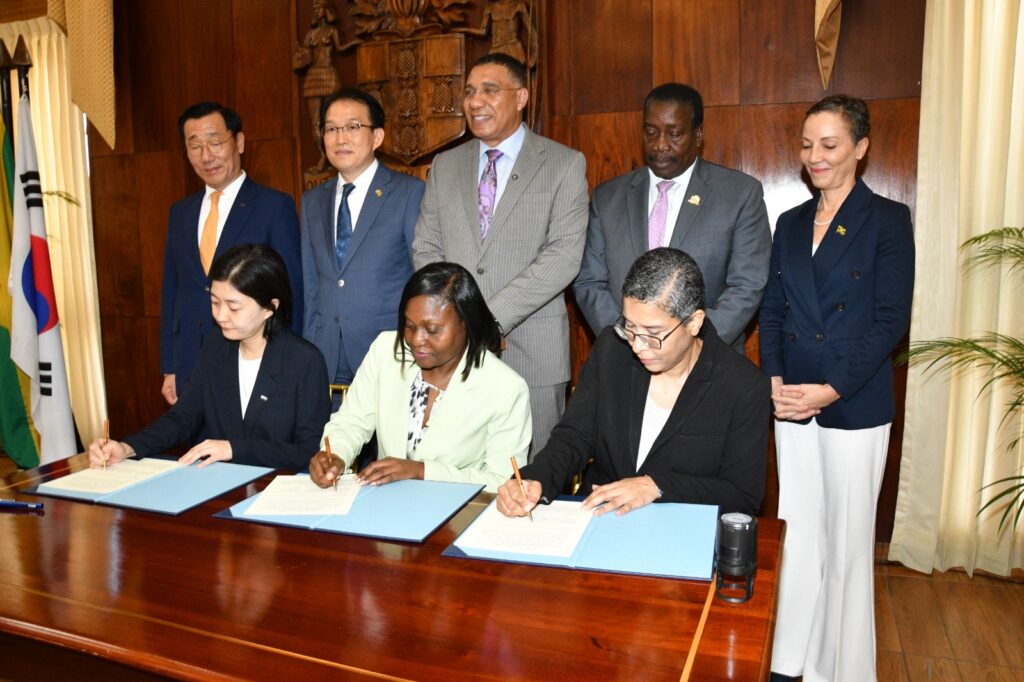
    Three core Memoranda of Understanding (MOUs) were formalized during the visit, covering non-lethal defense and security collaboration, agriculture and food security, and public sector modernization. On top of these bilateral accords, Drew also officially marked Saint Kitts and Nevis’ entry into the Global Biodiversity Alliance, an international conservation and sustainable development initiative spearheaded by Guyanese President Mohamed Irfaan Ali.

    The new agreements build on decades of connection between the two countries, which are anchored in shared colonial history, collective regional solidarity within the Caribbean Community (CARICOM), and deep people-to-people connections. The frameworks create structured, actionable collaboration pathways in sectors that sit at the top of both nations’ national development agendas, with benefits expected to ripple across the broader Caribbean bloc.

    In remarks following the signing, Prime Minister Drew emphasized that the cooperation areas were deliberately selected to deliver tangible, measurable improvements to the lives of citizens in both the near and long term. “I’ve selected what I think would have solid impact on St. Kitts and Nevis,” Drew stated, noting that intentional, focused implementation would be key to unlocking the full value of the new partnerships.

    On the topic of agriculture and food security, Drew highlighted the urgent need for Caribbean nations to boost local production and cut overreliance on extra-regional imports, a priority that has grown more pressing amid persistent global food price inflation and ongoing supply chain disruptions. He noted that Guyana’s rapidly expanding agricultural sector creates unique mutual benefits: Saint Kitts and Nevis can gain reliable access to affordable regional food staples while building its own domestic production capacity through knowledge sharing and technical assistance from Guyana.

    “As you can see, the cost of food across the world… there’s a lot to learn, but there’s also opportunities, because we want to buy food as well. You have it here in Guyana. Why buy it from outside the region?” Drew said. He added that Saint Kitts and Nevis’ large, fast-growing tourism sector creates a steady, high-demand market for other Caribbean nations’ agricultural exports, while expanded local production will simultaneously improve national food resilience and lower grocery costs for local residents.

    Turning to government modernization, Drew welcomed Guyana’s offer to support Saint Kitts and Nevis’ digital transformation agenda by sharing expertise in leveraging technology to strengthen governance, enhance project oversight, and improve evidence-based decision-making. The prime minister explained that access to real-time data and modern digital administrative systems will significantly boost the efficiency of public services, speed up development project delivery, and improve transparency and accountability across all government ministries and departments.

    Saint Kitts and Nevis’ accession to the Global Biodiversity Alliance aligns the Federation’s national Sustainable Island State Agenda with a global movement focused on protecting critical ecosystems, preserving irreplaceable natural resources, and advancing scientific innovation for conservation. Drew noted that the alliance’s mission fits seamlessly with his administration’s domestic policy priorities. “This community champions for diversity… biodiversity fits exactly to what our national agenda is. We want to create a sustainable Island. Biodiversity is fundamental, so for us this is natural,” he said.

    As the current Chairman of CARICOM, Drew also committed to advocating for the alliance across the Caribbean region, working to encourage more Caribbean nations to join the initiative and expand its collective impact.

    Guyanese President Mohamed Irfaan Ali, who was present for the signing ceremonies, welcomed the deepened partnership between the two nations and reaffirmed Guyana’s commitment to driving regional development through shared resources, innovative collaboration, and practical, action-oriented agreements. Ali praised Drew’s leadership across CARICOM and noted that the new accords mark just the beginning of deeper collaboration that will directly improve quality of life for people across the Caribbean.

    The April 2026 visit and resulting agreements highlight Saint Kitts and Nevis’ proactive approach to regional diplomacy and targeted development cooperation. The country continues to pursue strategic partnerships that advance its core national priorities, strengthen economic and climate resilience, and create long-lasting, inclusive opportunities for its population.

  • The CEP warns of significant impacts on the election schedule in Haiti

    The CEP warns of significant impacts on the election schedule in Haiti

    Haiti’s Provisional Electoral Council (CEP) has issued a formal public warning that ongoing adjustments to national election regulations will cause substantial delays to the country’s upcoming electoral timeline, forcing the postponement of two critical pre-voting processes.

    In an official statement released Wednesday, April 8, 2026, the CEP drew public and political stakeholder attention to a March 24, 2026 Ministerial Order that revises Article 3 of an earlier September 18, 2024 order. That original legislation established the CEP’s membership structure and outlined the terms of service for its council members.

    Under the terms of the updated Ministerial Order, the CEP is mandated to execute all necessary actions within its authority to put into effect the rules laid out in Articles 12 and 14 of the National Pact for Stability and the Organization of Elections, a national framework designed to guide the country’s democratic transition. Currently, the electoral body is working through the technical process of aligning the December 1, 2025 Electoral Decree with the requirements specified in those two articles of the stability pact.

    “This harmonization process significantly impacts the electoral calendar,” the CEP emphasized in its statement. As a direct consequence of the ongoing alignment work, the council has formally delayed two key steps that were already on the schedule: voter registration, which was originally set to launch on April 1, 2026, and candidate registration, which was scheduled to begin April 13, 2026. The CEP confirmed that revised timelines for both processes will be shared with the public as soon as the harmonization work reaches a key milestone, without providing an exact date for the new announcement.

    In closing, the CEP reaffirmed its longstanding commitment to overseeing Haiti’s upcoming electoral process in full alignment with its status as an independent institution. The body pledged to uphold international democratic standards throughout the process, committing to run inclusive, impartial, and fully transparent elections for the Haitian people.

  • Minister warns curriculum marginalises Barbadian history

    Minister warns curriculum marginalises Barbadian history

    Barbados’ top official for Pan-African Affairs and Heritage is sounding a critical alarm: decades of sidelining the island nation’s own history in national education has left generations disconnected from their core cultural identity, and systemic reform is the only solution to reverse the damage. Trevor Prescod, the minister holding this portfolio, reiterated his urgent call for a complete curriculum overhaul during remarks delivered Wednesday on the margins of a national cultural heritage workshop. He detailed that the gap in historical education stretches across every level of the country’s schooling system, from secondary classrooms through to post-secondary tertiary institutions.