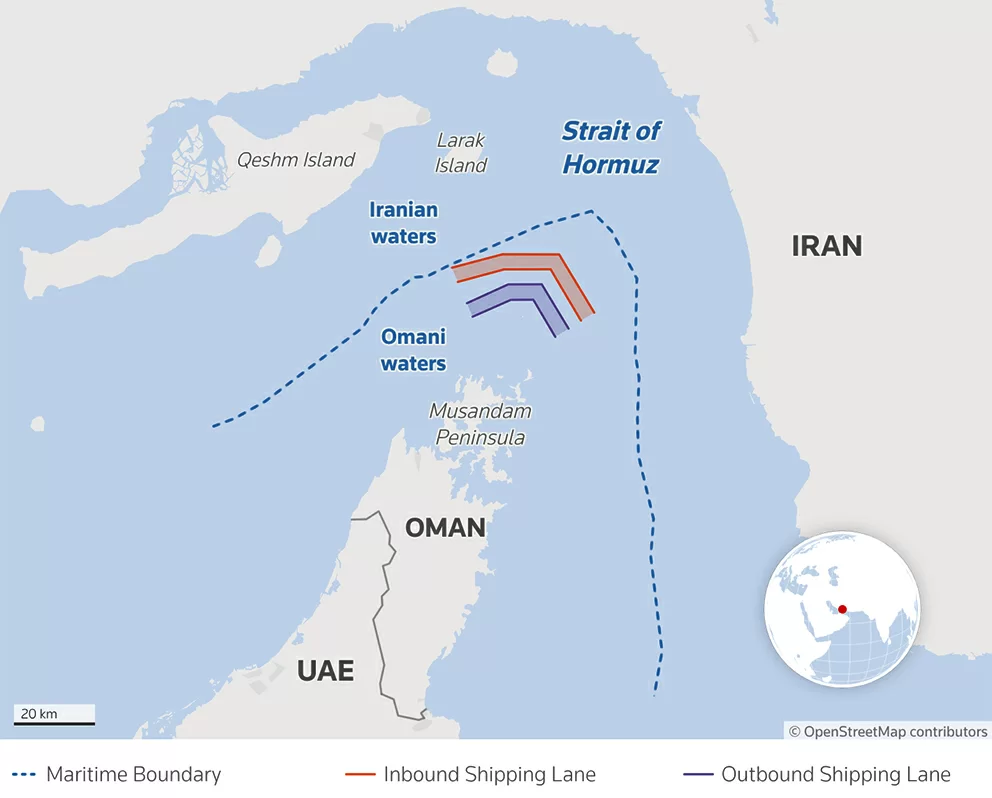
After 10 weeks of open conflict between the United States and Iran, hopes for a swift diplomatic resolution have been dashed, leaving regional security and global energy markets on edge. On Sunday, former President Donald Trump flatly rejected Iran’s counterproposal to a U.S.-drafted peace framework, extending a standoff that has already inflicted widespread damage across the Middle East and disrupted one of the world’s most critical energy chokepoints.
The clash, which erupted in late February, has caused extensive harm to civilian and infrastructure across Iran and Lebanon, brought most commercial shipping through the Strait of Hormuz to a near-standstill, and pushed global energy prices sharply higher. The 21-mile waterway, which carried roughly one-fifth of the world’s total oil supply before the outbreak of hostilities, remains the conflict’s most globally impactful flashpoint.
Iran tabled its counteroffer to the U.S. proposal earlier last week, on Wednesday. The Iranian plan centers on an immediate end to all hostilities across every front of the conflict, with specific priority given to de-escalation in Lebanon, and guarantees for unimpeded commercial navigation through the blockaded Strait of Hormuz. Key demands in the proposal include war damage reparations from the U.S., formal international recognition of Iran’s territorial sovereignty over the Strait, full lifting of U.S. economic blockades and long-running sanctions on Tehran, and an end to the U.S. ban on Iranian crude oil exports.
Within hours of the proposal’s public release, Trump rejected the plan outright via social media, writing simply: “I do not like it – COMPLETELY UNACCEPTABLE.” Markets reacted instantly: global benchmark crude prices jumped $3 per barrel within minutes of the announcement, as traders priced in prolonged disruption to energy supplies.
The original U.S. peace framework had called for an immediate ceasefire as a first step, with negotiations on thorny core disputes including Iran’s nuclear program to follow. According to anonymous sources familiar with the discussions, Iran has already signaled willingness to compromise on the nuclear front, offering to dilute most of its stockpile of highly enriched uranium and transfer the remaining supply to a neutral third country for safekeeping. Pakistan, which has served as the primary neutral mediator between Washington and Tehran, transmitted Iran’s full peace proposal to U.S. officials following its completion.
Despite a month-old ceasefire that had brought several days of relative calm to the region, hostile drone activity was detected over multiple Gulf Cooperation Council states on Sunday, a stark reminder that the risk of renewed escalation remains acute. Even amid the standoff, small signs of limited de-escalation emerged this week: for the first time since the conflict began, a Qatari Energy-operated liquefied natural gas carrier, the Al Kharaitiyat, completed a safe transit of the Strait of Hormuz en route to Pakistan’s Port Qasim. Iran authorized the passage as a gesture of goodwill to Pakistan and Qatar, both of which have acted as mediators in the peace talks. Separately, Iran’s semi-official Tasnim News Agency reported Sunday that a Panamanian-flagged bulk carrier, which had been turned away when it attempted to transit the Strait on May 4, was finally permitted to pass through a corridor designated by Iranian military forces.
Diplomatic pressure for a resolution is mounting as Trump prepares for an upcoming visit to China, as the ongoing conflict has already triggered a widespread global energy crunch that threatens to undermine fragile growth in the world economy. On Sunday, Trump acknowledged in a televised address that while Iran has suffered heavy military losses, it has not yet been fully defeated and hostilities are far from over. Israeli Prime Minister Benjamin Netanyahu echoed that assessment, noting that “additional work is required” to neutralize Iran’s nuclear program and ballistic missile program, adding that while diplomacy remains the preferred path forward, a military option remains on the table.
For its part, Iran has shown no willingness to back down on its core demands. Iranian President Masoud Pezeshkian reiterated Sunday via social media that Iran “will never bend to the enemy” and will defend its national interests with unwavering resolve. In recent days, violence has actually intensified around the Strait of Hormuz even amid the ceasefire: there have been multiple reported incidents of intercepted drones over the United Arab Emirates, a drone attack on a cargo vessel in Qatari territorial waters, and active anti-aircraft operations in Kuwait. Fighting also continues unabated in southern Lebanon between Israeli forces and Iran-backed Hezbollah militias, despite a U.S.-brokered ceasefire reached on April 16. New peace talks between Israeli and Lebanese delegations are scheduled to kick off in Washington on May 14.
Internationally, the Trump administration faces a lack of broad support for a unilateral military mission to reopen the Strait of Hormuz without a full peace agreement, with NATO allies uniformly hesitant to join such an operation. Domestically, Trump also faces growing pressure from opposition Democratic lawmakers, who are pushing legislation to force an immediate end to U.S. involvement in the conflict. Senate Armed Services Committee ranking member Jack Reed, the panel’s top Democrat, issued a scathing rebuke of the administration’s handling of the crisis Sunday, saying: “This situation has only been made worse by Trump’s own choices. Now he is desperately scrambling to find a way out.”