分类: politics

  • Clintons to testify on Epstein at end of February

    Clintons to testify on Epstein at end of February

    WASHINGTON, United States – Former President Bill Clinton and former Secretary of State Hillary Clinton have agreed to provide testimony before Congress regarding their connections to the late financier and convicted sex offender Jeffrey Epstein. The announcement came from Republican Representative James Comer, Chairman of the House Committee on Oversight and Government Reform, on Tuesday.

    The Clintons, initially defiant of congressional subpoenas, reversed their stance following the House’s move to hold them in contempt. Chairman Comer stated that the Democratic power couple had ‘completely caved,’ agreeing to participate in transcribed and filmed depositions scheduled for this month. Hillary Clinton is set to appear on February 26, followed by Bill Clinton on February 27.

    The Epstein scandal, which continues to reverberate through Washington’s corridors of power, implicates numerous high-profile figures from business and politics. Epstein, who died in a federal jail in 2019 while awaiting trial on sex trafficking charges, maintained extensive networks among global elites.

    The Justice Department’s recent release of over 3 million documents related to the Epstein investigation has intensified scrutiny, fueling fierce partisan debates. Democrats allege the congressional probe is politically motivated, engineered to target opponents of former President Donald Trump—a longtime Epstein associate who has not been summoned to testify—rather than pursue genuine oversight.

  • US judge halts end to Haitian migrants’ protections

    US judge halts end to Haitian migrants’ protections

    A federal judge has issued a decisive injunction against the Trump administration’s attempt to revoke deportation protections for approximately 350,000 Haitian immigrants, whose Temporary Protected Status (TPS) was scheduled to terminate this Tuesday. In a comprehensive 83-page ruling, U.S. District Judge Ana Reyes delivered a stern rebuke to Homeland Security Secretary Kristi Noem, asserting she lacks the legal authority to dismantle these critical safeguards.

    The court document presented compelling evidence that Secretary Noem’s termination decision appeared “substantially likely” to have been predetermined and motivated by racial animus toward nonwhite immigrants. Judge Reyes characterized Noem’s actions as “arbitrary and capricious” while acknowledging her constitutional right to express controversial views about immigrants—but emphasizing that such personal biases cannot dictate policy implementation.

    This legal victory comes amid Haiti’s profound humanitarian crisis, where extreme poverty, rampant gang violence, and political instability have created unlivable conditions. Armed groups currently control significant portions of the country, including most of the capital Port-au-Prince. The nation’s transitional government remains exceptionally fragile, having held no elections in the past decade.

    In Florida—home to over 150,000 Haitian TPS recipients—community leaders and lawmakers cautiously celebrated the ruling while recognizing the likelihood of an administration appeal. Miami-based county legislator and Haitian-born activist Marleine Bastien characterized the decision as “breathing room” rather than permanent stability, noting the irony that while U.S. citizens are advised against travel to Haiti, the administration sought to forcibly return immigrants to the same dangerous conditions.

    The TPS program, designed to protect individuals from deportation to countries experiencing armed conflict, environmental disasters, or other extraordinary circumstances, has faced systematic dismantling under the current administration. Officials argue the program encourages undocumented immigration and has been improperly extended, particularly regarding Haiti’s designation following the catastrophic 2010 earthquake. The Biden administration most recently extended Haiti’s TPS designation in 2021.

  • Macron says work under way to resume contact with Putin

    Macron says work under way to resume contact with Putin

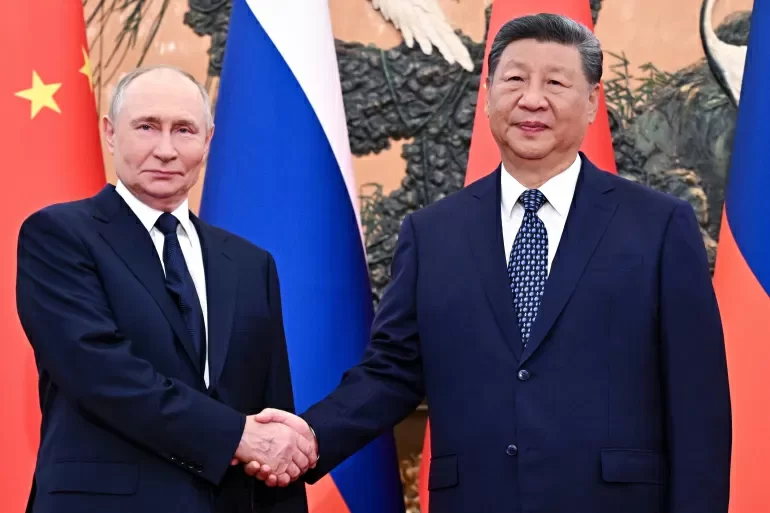
    PARIS — French President Emmanuel Macron revealed on Tuesday that France is undertaking technical preparations to reestablish diplomatic communications with Russian President Vladimir Putin, marking a potential shift in European engagement nearly four years following Russia’s full-scale invasion of Ukraine. During a visit to northeastern France, Macron emphasized that these preparations are being conducted with full transparency and in close coordination with Ukrainian President Volodymyr Zelensky and European allies.

    While affirming France’s unwavering support for Ukraine, Macron articulated the strategic necessity of reopening channels with the Kremlin to eventually negotiate post-war security arrangements. ‘In this context, it is important that Europeans restore their own channels of discussion,’ Macron stated, highlighting Europe’s role in establishing independent diplomatic pathways beyond U.S.-led initiatives.

    The French leader tempered expectations by acknowledging Moscow’s current reluctance toward genuine peace negotiations. ‘I think it would be useful, but I don’t think Russia is currently willing to conclude a peace agreement in the coming days or weeks,’ Macron commented, pointing to Russia’s continued attacks on Ukrainian civilian infrastructure and energy systems as evidence of lacking ‘genuine willingness to negotiate for peace.’

    This potential diplomatic overture represents a notable evolution in Macron’s approach. Initially maintaining contact with Putin during the early months of the invasion, the French president had subsequently suspended all dialogue while intensifying support for Ukraine. The European Union’s communication with Russia has remained virtually frozen since 2022, accompanied by extensive sanctions and travel restrictions.

    The Kremlin responded cautiously to Macron’s announcement, having previously characterized similar European calls for renewed dialogue as ‘positive’ in January. No specific timeline has been established for the potential resumption of high-level discussions between Paris and Moscow.

  • $14 billion added to budget as Williams tables fourth supplementary estimates

    $14 billion added to budget as Williams tables fourth supplementary estimates

    The Jamaican government has presented a substantial fourth supplementary budget allocation of $14.36 billion for the 2025-2026 fiscal year to address critical national priorities. Finance and Public Service Minister Fayval Williams presented the estimates before the House of Representatives on Tuesday, outlining the strategic distribution of these emergency funds.

    The overwhelming majority of this allocation, approximately $13.4 billion, has been designated specifically for expenditures related to Hurricane Melissa. This funding received Cabinet approval following the preparation and authorization of the third supplementary estimates in December 2025. This substantial injection brings the total government allocation for Hurricane Melissa response and relief efforts to approximately $66.76 billion.

    A significant component of this hurricane response package includes a $24.18 billion loan facility approved for the Jamaica Public Service Company to accelerate the restoration of electrical infrastructure across the island. Additionally, the Ministry of Health and Wellness will receive $400 million under the first phase of the hurricane rehabilitation program for public health initiatives. This health allocation includes $300 million for facility assessment and repair mobilization, with another $100 million dedicated to purchasing fixed assets for the affected region.

    The supplementary estimates also include a strategic investment in Jamaica’s digital future, with $960 million allocated as an initial payment to Trans Americas Fiber Systems Limited. This payment follows the signing of a letter of intent between the company and the Jamaican government to pursue enhanced sub-sea fiber capacity, representing a significant step in strengthening the nation’s telecommunications infrastructure.

    Furthermore, the estimates reflect adjusted central government budgetary support for the Development Bank of Jamaica, though specific allocation details were not disclosed during the parliamentary presentation. Minister Williams emphasized that these allocations represent necessary measures to address both immediate recovery needs and long-term infrastructure development priorities.

  • FNM demands answers after BGC ‘denied access’ during blackout

    FNM demands answers after BGC ‘denied access’ during blackout

    A significant political confrontation has erupted in the Bahamas following allegations that the Bahamas Grid Company (BGC) was barred from accessing critical infrastructure during a major power crisis. Free National Movement Senator Michela Barnett-Ellis, serving as Shadow Minister for Energy, has formally demanded explanations from the Davis administration regarding these claims.

    The controversy stems from a since-deleted Facebook post by BGC, published during Sunday’s island-wide blackout, which stated that their team had been denied entry to the New Providence Control Center since January 27th. According to the company, this restriction violated their contractual right to jointly manage the facility alongside Bahamas Power and Light (BPL).

    Senator Barnett-Ellis characterized these allegations as raising ‘serious and troubling questions about the management of our national electricity system.’ She emphasized that if verified, this decision would have left BPL personnel exclusively overseeing the control center during a critical emergency period, potentially hampering efforts to assess, mitigate, or shorten the widespread outage that affected thousands of residents.

    The opposition senator presented a series of pointed inquiries to the government, including: who authorized the denial of access, whether the Minister of Energy and Prime Minister were informed of this decision, and what safeguards exist to ensure contractual partners can perform their designated roles during emergencies.

    In response, BPL issued an official statement denying any strain in their partnership with BGC, affirming their commitment to ‘a seamless working relationship.’ The power company disclosed that both organizations held a productive meeting to address the social media post and ‘chart the way forward in unity.’ BPL also emphasized maintaining strict security protocols governing access to secured spaces, applicable to all employees, partners, and visitors.

    The extensive power outage began late Saturday, with a complete island-wide blackout occurring around 1 AM Sunday. BPL attributed the crisis to high winds causing multiple areas to trip offline, with several other islands also experiencing weather-related disruptions. Notably, BGC’s responsibilities are limited to New Providence’s network under a public-private partnership established between the government and US-based Pike Corporation.

    This incident has brought renewed attention to the 25-year agreement between BPL and BGC, whose specific details remain undisclosed despite repeated requests from opposition parties and media outlets. Questions persist regarding staffing arrangements, equipment control, and operational responsibilities between the two entities.

  • Immigration agents to wear body cameras, US says

    Immigration agents to wear body cameras, US says

    In a significant policy shift, the Department of Homeland Security (DHS) announced Monday the immediate deployment of body cameras to all federal officers operating in Minneapolis. This decision comes directly from DHS Secretary Krisi Noem and follows the fatal shooting of two U.S. citizen protesters by immigration agents in the city last month.

    The announcement occurs against the backdrop of a partial government shutdown, triggered by a legislative impasse. Democratic lawmakers are leveraging the federal budget process to demand sweeping reforms to immigration enforcement tactics. Their demands, which extend beyond body cameras, include banning agents from wearing masks during operations and prohibiting warrantless arrests and detentions.

    Secretary Noem declared the new measure on social media platform X, stating, “Effective immediately we are deploying body cameras to every officer in the field in Minneapolis.” She further committed to a nationwide expansion of the body camera program, conditional on the availability of federal funding.

    The shootings that precipitated this crisis involved citizens Renee Good on January 7 and Alex Pretti on January 24. Their deaths during protests has intensified scrutiny on President Donald Trump’s aggressive immigration crackdown, which has specifically targeted Minneapolis. The city has been a focal point for enforcement actions characterized by heavily armed, masked, and unidentified agents.

    With the shutdown now in its third day, House Democrats remain firm in their refusal to approve a spending package without concrete guarantees on reforming DHS operational procedures, making the body camera mandate a central element in the ongoing political negotiation.

  • Thousands of Venezuelans march to demand Maduro’s release

    Thousands of Venezuelans march to demand Maduro’s release

    CARACAS, Venezuela — The Venezuelan capital witnessed dueling political demonstrations on Tuesday as the nation navigates its complex transition following the dramatic ouster of former leader Nicolas Maduro. Thousands of government-backed supporters marched through Caracas demanding Maduro’s release, exactly one month after his removal by U.S. forces and subsequent extradition to face narcotics charges in New York.

    The pro-Maduro contingent, comprising numerous public sector workers and Chavista loyalists, displayed photographs of the detained former president and his wife Cilia Flores while chanting “Venezuela needs Nicolas.” The sea of red-clad demonstrators, waving national flags and stretching several city blocks, expressed both confusion and defiance regarding their leader’s fate.

    Interim President Delcy Rodriguez faces mounting pressure from multiple fronts as she attempts to maintain equilibrium between Washington’s demands and the entrenched Maduro loyalists within her administration. Rodriguez, previously Maduro’s vice president and staunch ally, has initiated conciliatory measures including releasing political prisoners and opening state-controlled oil resources to private investment.

    The United States has reengaged diplomatically with Venezuela, with envoy Laura Dogu arriving in Caracas last weekend. Washington has outlined a three-phase roadmap aiming to transform the crisis-ridden nation into “a friendly, stable, prosperous and democratic Venezuela.”

    Simultaneously, hundreds of university students and relatives of political detainees staged separate demonstrations urging faster implementation of promised amnesty legislation. The opposition continues advocating for new elections following Maduro’s removal, though significant challenges remain regarding the political framework.

    The competing protests highlight Venezuela’s deeply fractured political landscape as the nation confronts its most significant governmental transition in decades.

  • FNM to ratify eight candidates as election race heats up

    FNM to ratify eight candidates as election race heats up

    The Free National Movement (FNM) is poised to officially endorse a minimum of eight parliamentary candidates during its upcoming ratification assembly, signaling intensified electoral preparations ahead of Bahamas’ general elections. Insider sources reveal the party will strategically position prominent figures in newly established constituencies, with notable shifts involving current St Barnabas representative Shanendon Cartwright transitioning to the St James electoral district and Carlton Bowleg moving from North Andros to contest the Bimini and Berry Islands seat.

    The ratification list demonstrates the party’s balanced approach between experienced legislators and fresh political voices. Newcomers including Jamal Moss (St Barnabas), Janice Oliver (North Andros), and Jay Philippe (Bain and Grants Town) are among those expected to receive official endorsement. Additional constituencies slated for candidate confirmations encompass Pineridge, Centreville, and Long Island, though party officials remain discreet regarding the latter’s nomination, merely acknowledging Dr. Andre Rollins as the probable frontrunner.

    Political observers note that the final number of ratifications remains fluid, with intense deliberations continuing throughout Monday evening. This development occurs alongside the Progressive Liberal Party’s (PLP) completion of its own candidate roster on Sunday, setting the stage for heightened political competition.

    The FNM’s latest endorsements supplement its existing slate of 28 previously ratified candidates, including party chairman Dr. Duane Sands (Bamboo Town), Kwasi Thompson (East Grand Bahama), Michael Foulkes (Golden Gates), Marvin Dames (Mount Moriah), Elsworth Johnson (Yamacraw), Rickey Mackey (North Eleuthera), Senator Darren Henfield (South Beach), and Adrian White (St Anne’s). These strategic movements reflect both parties’ concerted efforts to optimize electoral advantages through careful candidate placement and constituency-specific considerations.

  • US judge to hear request for ‘immediate takedown’ of Epstein files

    US judge to hear request for ‘immediate takedown’ of Epstein files

    A U.S. federal judge has scheduled an emergency hearing for Wednesday to address a request for blocking access to investigative documents concerning convicted sex offender Jeffrey Epstein. This development follows legal representatives from Florida law firm Edwards Henderson alerting the court that numerous victim identities, intended to be protected through redaction, remained fully visible in recently released files.

    The Justice Department, which published over three million documents related to the Epstein investigation last week, now faces mounting pressure after legal counsel Brad Edwards and Brittany Henderson identified a critical email within the document cache that listed 32 minor victims with only a single name properly anonymized. An additional complainant reported her complete residential address appearing in the public records, raising severe privacy and safety concerns.

    In response to these disclosures, attorneys have urgently petitioned for the immediate removal of the files from the government website. District Judge Richard M. Berman acknowledged the request but expressed uncertainty regarding his capacity to resolve the issue, stating in a brief order, “I am not certain how helpful I can be.”

    The department is currently undertaking around-the-clock efforts to implement additional redactions after The New York Times discovered dozens of unredacted nude photographs containing identifiable faces within the released materials. Most of these images have since been removed or adequately obscured.

    Concurrently, the Epstein case continues to reverberate through Washington’s political landscape. Former President Bill Clinton and former Secretary of State Hillary Clinton have agreed to provide testimony before a House committee investigating the handling of earlier Epstein investigations, thereby avoiding potential contempt proceedings. Their spokesperson confirmed they “look forward to setting a precedent that applies to everyone.”

    The couple had initially challenged the subpoenas as invalid due to an alleged lack of clear legislative purpose, instead submitting sworn written statements. Bill Clinton acknowledged flights on Epstein’s aircraft for humanitarian purposes but denied visiting his private island, while Hillary Clinton stated she had no substantive interactions with the financier.

    The investigation remains intensely polarized, with Democrats alleging the probe targets political opponents of former President Donald Trump—who also associated with Epstein but has not been summoned to testify. Neither Trump nor the Clintons face allegations of criminal misconduct related to Epstein’s activities.

  • Grenada to attend 2026 Commonwealth Law Ministers Meeting in Fiji

    Grenada to attend 2026 Commonwealth Law Ministers Meeting in Fiji

    Fiji is preparing to host a critical gathering of Commonwealth law ministers and attorneys general from February 9-12, 2026, in Nadi. The meeting comes at a pivotal moment as global indicators show a concerning decline in rule of law protections worldwide.

    Over three days of intensive discussions, ministers will examine how robust legal frameworks safeguard fundamental aspects of daily life—from democratic participation and economic fairness to community safety and environmental health. The agenda focuses on developing concrete strategies to reinforce justice systems through improved accessibility and institutional strengthening that underpins societal stability, equitable economies, and climate resilience.

    Commonwealth Secretary-General Shirley Botchwey expressed gratitude to the Fijian government for hosting the significant event, emphasizing that “the rule of law remains essential to peace, stability, and development, yet it is under serious pressure in many parts of the world.” She noted that when legal protections weaken, ordinary citizens bear the brunt of the consequences, underscoring the Commonwealth’s commitment to practical cooperation rather than mere rhetoric.

    The meeting will operate under the thematic banner “Anchoring Justice in a Changing Tide: Strengthening the Rule of Law for a Resilient Future,” chaired by Fijian Justice Minister and acting Attorney General Siromi Turaga. Minister Turaga highlighted the intention to explore how Commonwealth nations can ensure their justice systems remain adaptable, inclusive, and responsive to contemporary challenges.

    The ministerial dialogue will specifically address the complex intersections between legal frameworks and pressing global issues including climate change, digital transformation, and regional cooperation. Five supplementary side events will incorporate perspectives from youth leaders, individuals with direct justice system experience, and disability rights advocates, ensuring diverse voices inform policy discussions.

    Outcomes from this ministerial meeting are expected to directly influence the agenda for the upcoming Commonwealth Heads of Government Meeting (CHOGM) scheduled for later this year in Antigua and Barbuda, potentially shaping international legal cooperation for years to come.