
On May 23, 2026, Haiti’s Minister of Culture Emmanuel Ménard officially released a comprehensive action plan for his ministry, outlining key priorities and initiatives to be completed by the end of the current fiscal year on September 30, 2026. The roadmap was developed in alignment with the country’s core national priorities and Prime Minister Fils-Aimé’s pledge to strengthen cross-sector governance and upgrade public service delivery across Haiti.
分类: politics
-
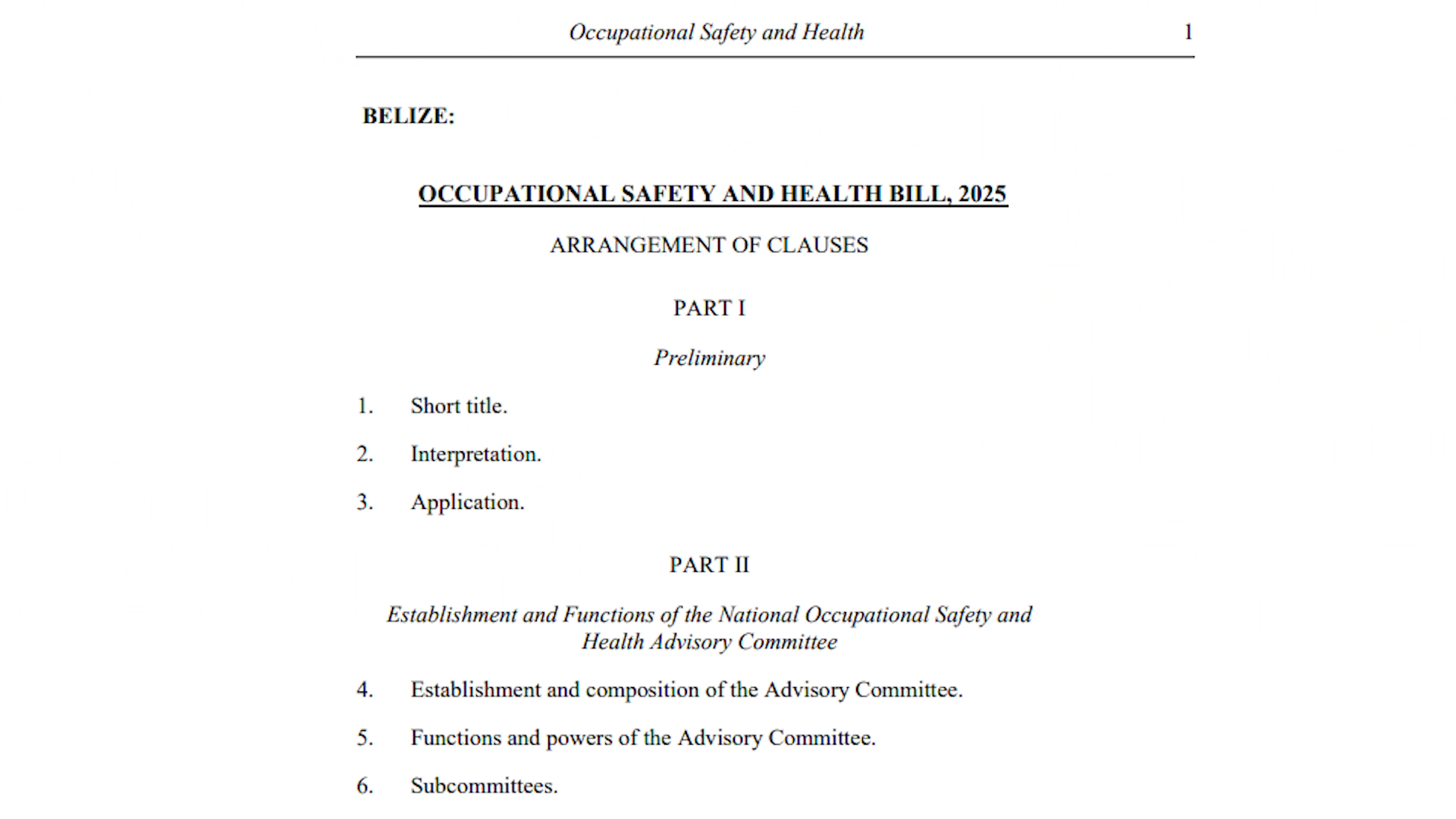
Why Can’t the Long-delayed OSH Bill Cross the Line?
More than ten years after drafting work first began, Belize’s landmark Occupational Safety and Health (OSH) Bill, a piece of legislation designed to elevate workplace protection standards across the country, remains trapped in legislative limbo – leaving the nation’s workforce growing increasingly frustrated by the ongoing delay.
The bill, which would codify stronger legal safeguards for employees in every sector, has failed to advance past the Senate for final approval. Union-aligned senators have raised red flags over the proposed legislation, identifying what they describe as major unaddressed gaps and contradictory provisions that undermine the bill’s core purpose. In response, national labor leaders have formally hit pause on the legislative push, insisting that flaws must be resolved before the bill moves forward.
Dean Flowers, president of Belize’s Public Service Union, has publicly backed the collective decision by key social partners to delay passage until all outstanding concerns are properly resolved. For labor advocates, Flowers emphasized, the priority is not rushing a flawed bill into law, but crafting robust, effective legislation that delivers on its promise of protecting workers.
Flowers voiced strong public support for senators who have pushed for revisions, praising their efforts to communicate the need for changes to the general Belizean public. He argued that the holdup lays bare deeper systemic issues within the Ministry of Labor, calling for an end to political patronage in key government departments to ensure qualified, competent leaders are put in place to develop sound policy and address critical legislative questions.
In sharp criticism of the ministry’s handling of the bill, Flowers drew a parallel to a recent public incident where a legislative representative was unable to answer basic questions about the draft OSH text, claiming they had not authored the legislation themselves. Flowers called this inability to defend the bill’s provisions an damning indictment of the institutional capacity of the Labor Department, noting it is unacceptable for officials to present draft legislation to lawmakers without being able to explain its contents or address outstanding concerns.
A new meeting of the National Trade Union Congress of Belize scheduled for this Saturday is expected to shed more light on the path forward for the bill, with Flowers confirming that additional details on next steps will be shared after the gathering closes. This report is a adapted from a transcribed broadcast evening newscast.
-

Restructuring or Rollback? Workers Raise Concerns Over SARA Plan
In a decision that has sparked growing labor tension across Belize, the national Cabinet has given formal approval to a sweeping institutional overhaul that would convert the existing Belize Tax Service Department into a new Semi-Autonomous Revenue Authority (SARA). The government has framed the transition as a phased reform process that will include ongoing stakeholder consultations, with the restructured body set to operate under the oversight of the Ministry of Finance. Changes are planned for the agency’s governance framework, staffing model, and core operational procedures, but official assurances about inclusive consultation have failed to ease widespread anxiety among affected workers.
The nation’s Public Service Union (PSU) has emerged as the most vocal opponent of the plan, launching forceful pushback against the restructuring. Union leaders warn that the proposed changes threaten to strip public workers of critical earned benefits, and they accuse the Ministry of Finance of intentionally sidelining worker concerns throughout the early planning stages. With public debate over SARA intensifying, PSU President Dean Flowers is demanding full government transparency around the proposal, and the union has refused to withdraw its opposition despite government attempts to move the process forward.
In an interview with local media, Flowers detailed the union’s latest interactions with government officials, noting that the PSU was recently invited to participate in an initial meeting for the project steering committee tasked with overseeing the SARA transition. During the meeting, discussions centered on the committee’s terms of reference – a document the union has not yet approved, a point Flowers emphasizes is critical to the entire process.
The dispute is not a new development: the PSU previously filed a formal trade dispute against the Ministry of Finance over the restructuring plan, presenting its core arguments to the Belize Labor Commissioner and the Ministry of Public Service. Notably, Flowers confirmed that the Ministry of Public Service itself, through its sitting minister, has already acknowledged that the union’s position is justified. The minister also publicly criticized the Ministry of Finance for what he called a “horrible job” of engaging stakeholders, disclosing plans, and maintaining transparency around changes to one of the government’s largest revenue-generating agencies.
Flowers reiterated that the Ministry of Public Service has explicitly stated that full disclosure is required to allow the union to engage meaningfully, comment on the proposal, and shape the final policy outcome if the government insists on moving forward with the transition. A key demand from the Ministry of Public Service has been full public disclosure of the draft legislation that would establish SARA. While Flowers confirmed that the union has received a copy of the draft legislation, his assessment of the document is highly critical.
“Quick reaction is that it is deficient. It is wanting, especially where respect for workers and workers’ rights is concerned. It is holistically and completely deficient in that regards,” Flowers told reporters. Under the current timeline, the union has 30 days to submit formal feedback on the draft legislation, and Flowers confirmed the organization will fulfill that step to formally document its objections and concerns.
Beyond the gaps in the draft legislation, Flowers also highlighted that the government has not shared any independent analysis or impact studies that justify the need for the transition to SARA. The union plans to continue aggressive advocacy for full transparency, and it has pledged to closely scrutinize recommendations from the Caribbean Regional Technical Assistance Centre (CARTAC) that back the SARA proposal, challenging any unsubstantiated claims about the benefits of restructuring.
This report is a transcript of an evening television broadcast from local Belizean media, with all statements reproduced accurately per broadcast content.
-
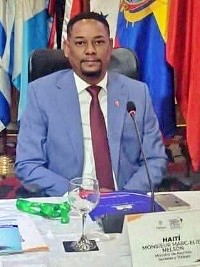
Bogotá : Haiti proposes a regional system for the recognition of professional skills
Against a backdrop of growing regional migration pressures and shifting labor market dynamics across Latin America and the Caribbean, Haiti has put forward a bold proposal for cross-border cooperation at the region’s highest-level gathering of labor ministers. The Conference of Ministers of Labor of Latin America and the Caribbean, hosted in Bogotá, Colombia from May 21 to 22, 2026, brought together top labor and social affairs officials to address shared challenges spanning migration, inclusive economic growth, and climate-linked labor disruption.
Leading Haiti’s delegation to the conference, Marc-Elie Nelson, Minister of Haiti’s Ministry of Social Affairs and Labor (MAST), introduced a landmark initiative: the creation of a standardized regional system for the recognition of professional skills. Nelson argued that such a coordinated mechanism would unlock tangible benefits for the entire region, from encouraging cross-border entrepreneurship to expanding equitable access to public employment support services. Most critically, he emphasized, the framework would advance the financial and digital inclusion of migrant workers, a group that often faces systemic barriers to formal economic participation across the region.
“Investing in these areas is investing directly in the stability, prosperity, and cohesion of our region,” Nelson told conference attendees. Alongside his call for the skills recognition system, Nelson urged regional partners to establish a dedicated regional innovation fund focused on expanding professional inclusion for marginalized and mobile worker populations.
Beyond labor market reform, Nelson called for unified, coordinated action from regional governments to tackle two of the most pressing shared challenges: irregular migration patterns and climate change impacts on labor systems. He also made a forceful stand against exclusion in workplaces across the region, stating, “We must raise our voices together strongly against xenophobia, discrimination, and all forms of exclusion in the world of work.”
By the close of the two-day conference, participating officials advanced regional cooperation through two key multilateral agreements: a memorandum of understanding and a joint policy statement titled the Bogota Declaration on Dignified Labor Migration and Rights-Based Mobility in Latin America and the Caribbean. Both documents were initialed by attending delegations, laying the groundwork for future coordinated action.
For Haiti, signing onto the agreements reaffirms the country’s long-standing commitment to building a regional governance model that centers human dignity as a core priority of public policy, aligning with the nation’s proposal to center marginalized migrant workers in regional labor reform efforts.
-
Consultations on modernising copyright and intellectual property laws to be held- Ali
GEORGETOWN, Guyana – May 22, 2026 – For nearly 60 years after gaining independence from Britain, Guyana has relied on outdated 1956 colonial-era copyright legislation to govern intellectual property rights. Now, amid growing pressure from local creators, innovators, and international stakeholders, President Irfaan Ali has announced that broad public consultations on updating the country’s IP framework will launch in the near term. The announcement comes just one day after the administration identified creative and digital industries as priority growth areas for new public financing, spotlighting the gap between economic development ambitions and outdated legal protections.
Speaking to reporters from Demerara Waves Online News on Friday, Ali confirmed that the government would prioritize stakeholder input to shape the future of copyright regulation in the South American nation. He specifically highlighted a desire to center perspectives from Guyana’s artistic community, and suggested initial discussions could open on social media platforms to expand accessibility. “Maybe, we should move this up on the agenda and start the consultation on that,” Ali stated.
The president’s commitment follows remarks Tuesday from Government Efficiency Minister Zulfikar Ally, who named creative and digital sectors among the key industries that will access financing from the upcoming Guyana Development Bank during an address to the Guyana Manufacturing and Services Association (GMSA) business luncheon. When pressed for details on how the government would address widespread gaps in creative work IP protection, Ally only acknowledged the sector is under active review, offering no concrete timeline or policy details.
Guyana’s failure to modernize intellectual property law stretches back decades. The country has never replaced the 1956 British Copyright Act it inherited at independence in 1966. Previous efforts to pass updated IP legislation in the 2000s collapsed due to lack of political will. While the ruling People’s Progressive Party Civic promised copyright reform as a core 2025 election pledge, no legislative action has been taken to date. The opposition coalition A Partnership for National Unity (APNU) has already tabled a motion calling for a bipartisan select committee to advance reform with a clear legislative timeline, but the National Assembly has yet to take up the proposal.
International pressure for reform has also mounted in recent weeks. During an official visit to Guyana on May 13, 2026, U.S. Under Secretary of State for Economic Affairs Jacob Helberg emphasized that strong intellectual property protections, as a component of private property rights, are critical to unlocking private investment and realizing Guyana’s goal of becoming one of the Western Hemisphere’s most prosperous economies, driven in large part by its emerging oil sector.
“In order to do that, certain conditions have to be met, including the right to private property, including respecting intellectual property, including different kinds of principles of governance that the private sector necessarily needs in order to have the confidence, the predictability, and the certainty to deploy and invest a lot of money. And so we focused on the goal. We agreed on the goal,” Helberg told reporters following meetings with Guyanese leadership.
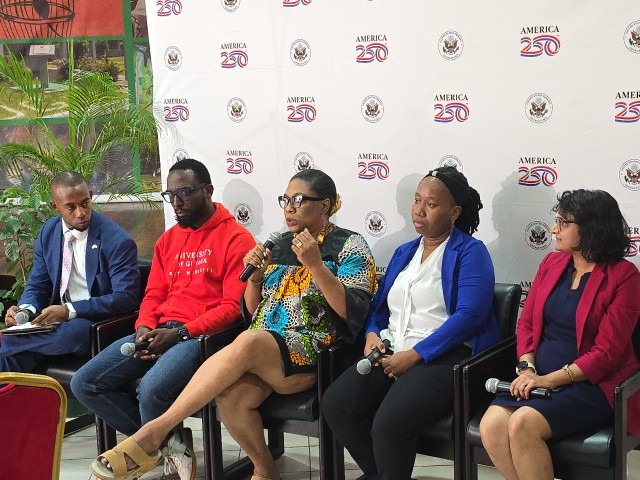
Local innovation leaders have echoed these calls, warning that weak IP protections are stifling homegrown creativity and technological development. Dr. Karen Abrams, founder and executive director of STEM Guyana, outlined the risks of the current legal framework during a U.S. Embassy-hosted panel on STEM education and innovation held at the University of Guyana.
Abrams described Guyana’s current innovation ecosystem as a shallow market constrained by a small population, widespread poverty, and no legal guardrails to protect original literary, artistic, and technological creations. “For innovators, the minute you throw out an innovation, there’s no protection, no IP protection. It’s co-opted by the powerful entities,” she told attendees.
To address gaps in the current system, Abrams proposed the creation of a national science foundation that would provide dedicated research funding for university faculty and students, while establishing clear IP frameworks for publicly supported work. She also advised local innovators to pursue IP protection in foreign jurisdictions in the near term, noting that “there’s not a whole lot of protection for ideas in Guyana but wherever you look overseas, those markets do offer protection for your ideas.”
Beyond legal reform, Abrams emphasized that long-term innovation capacity depends on addressing foundational gaps in Guyana’s education system. She noted that half of Guyana’s children struggle with basic math and literacy, and 50 percent drop out of secondary school by the ninth grade. “You can’t develop an innovative ecosystem if you lose half of your children in a tiny country where you need them to not only develop the oil industry, you need them to be thinking in 2046, what are those industries?” she said.
The opposition’s reform plan, tabled earlier this year by APNU parliamentarian Nima Flue-Bess, mirrors many of these stakeholder priorities. Flue-Bess’s motion calls for a special select committee to audit the existing 1956 copyright law, map gaps in digital rights and enforcement, and hold targeted consultations with creative industry stakeholders to ensure new legislation reflects on-the-ground needs. Under the opposition proposal, a draft updated copyright bill would be submitted to the 65-seat National Assembly for debate within six months of the committee’s work concluding.
-
US says temporary visa holders should leave to apply for Green Cards
The Trump administration has rolled out a sweeping new immigration policy that requires most foreign nationals holding temporary U.S. visas to return to their countries of origin before submitting applications for permanent residency, framing the change as a critical defense of the nation’s existing legal immigration framework.
In a public post on X, the Department of Homeland Security emphasized that any temporary visa holder seeking a green card must complete their application process from their home country, arguing the new rule aligns the system with how U.S. law originally intended it to operate, rather than rewarding exploitation of procedural gaps. Officials argue the policy closes what they describe as unfair loopholes that have allowed temporary visitors to remain in the U.S. while pursuing permanent status, bringing long-overdue consistency to green card application protocols.
New official guidance published Friday by U.S. Citizenship and Immigration Services (USCIS) clarifies that adjustment of status — the process of securing permanent residency without leaving the U.S. — is not an automatic entitlement for applicants, but a discretionary benefit granted at the agency’s discretion. The guidance notes the entire immigration system is built around the core expectation that temporary visa holders will depart the U.S. once their stated reason for visiting has concluded, though it still requires immigration officers to review every application on an individual, case-by-case basis.
Under the new memo, adjudicating officers are directed to weigh a range of eligibility factors, including whether applicants have previously violated visa terms, overstayed their authorized period of admission, accepted unauthorized employment, committed fraud, or otherwise failed to comply with the conditions of their entry to the U.S.
USCIS did carve out narrow exceptions for a small number of visa categories that allow for so-called “dual intent,” a legal designation that permits certain temporary visa holders to reside in the U.S. while pursuing permanent residency. Even for these groups, however, the agency stressed that dual intent status does not guarantee green card approval, nor does it alter the foundational expectation Congress set that temporary visitors will leave the U.S. once their stay ends. Administration officials added that the updated guidance will free up valuable agency resources to speed up processing for other pending immigration cases.
But the policy has drawn sharp condemnation from immigrant rights organizations, which warn it puts vulnerable migrants in extreme danger. Advocates say the rule could force at-risk people to return to countries rife with violence, political instability, or human rights abuses while their green card applications are being processed.
HIAS, a leading non-profit that provides support to refugees and displaced migrants, pointed out that the requirement to leave the U.S. during the application process will disproportionately harm trafficking survivors, as well as abused and neglected migrant children, who rely on access to U.S. protections while their residency applications proceed.
The new guidance represents the latest move in the Trump administration’s broader ongoing effort to tighten U.S. immigration laws and narrow legal pathways to permanent long-term residency in the country. This policy push extends back months: last year, the administration moved to cut the maximum visa duration for some international students, cultural exchange participants, and foreign media workers. In January of this year, the State Department revealed it had revoked more than 100,000 visas in the period since Trump returned to the presidency.
-
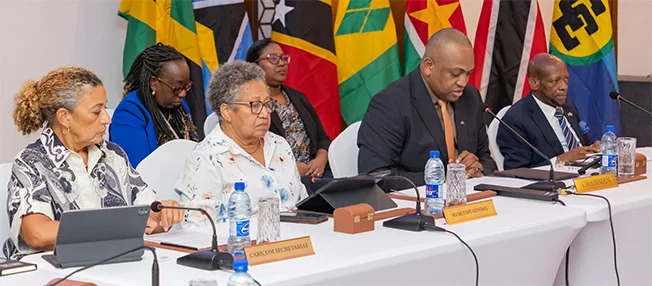
CARICOM-landen roepen op tot gezamenlijke koers in veranderende wereldorde
The 29th plenary meeting of the Council for Foreign and Community Relations (COFCOR), the key diplomatic body of the Caribbean Community (CARICOM), wrapped up its two-day session in Suriname on Thursday, closing with a unanimous, urgent call for deepened cross-regional integration and coordinated collective action.
Outgoing host and incoming COFCOR chair Melvin Bouva, Suriname’s foreign affairs minister, framed Caribbean regional unity not as an optional policy priority, but as an existential strategic imperative in the face of a rapidly evolving global geopolitical order. During the closing press briefing, Bouva emphasized that CARICOM member states must align their positions and act collectively if the bloc hopes to retain its international relevance and influence. “If we fail to stand together, we risk being pushed to the margins of the emerging global system,” he warned.
Suriname welcomed delegations of foreign ministers and senior representatives from across CARICOM’s 15 member states for the conference, where discussions centered on three core pillars: strengthening internal regional cooperation, expanding strategic international partnerships, and addressing pressing global challenges that disproportionately impact small Caribbean nations. Bouva confirmed that talks with prospective and existing international partners yielded productive outcomes that are poised to deliver tangible benefits to the entire Caribbean region.
Among the key partnership advances discussed was the development of a joint cooperation mechanism between CARICOM and Saudi Arabia, alongside plans to deepen existing strategic ties with the United Kingdom. Bouva also highlighted Austria’s formal offer to host and facilitate a dedicated CARICOM liaison office in Vienna, a facility designed to strengthen the bloc’s collective presence and voice in multilateral forums based in the Austrian capital. Discussions also advanced toward a potential comprehensive cooperation agreement with the United Arab Emirates, which Bouva said would dramatically expand CARICOM producers’ market access to fast-growing economies across the Middle East, Africa and Asia.
Separate talks with Japan focused on technical collaboration in high-priority areas for the Caribbean: climate disaster risk management, mitigation of harmful sargassum blooms that disrupt coastal economies, and support for regional industrial diversification. Throughout these discussions, delegates reaffirmed the unique structural vulnerability of Small Island Developing States (SIDS) and emphasized that sustained international support remains critical to their resilience. Conversations with Singapore, meanwhile, centered on shared challenges and opportunities for small states globally, with delegates agreeing that collective, coordinated action is the most effective path to strengthening small nations’ bargaining power in international negotiations.
Beyond new international partnerships, the conference centered key multilateral governance issues, including ongoing reform processes at the United Nations. COFCOR delegates issued a formal warning that efforts to centralize UN operations through regional hubs must not come at the cost of weakening in-country technical expertise or reducing institutional focus on region-critical priorities such as climate adaptation, disaster preparedness and emergency response.
The ongoing political and humanitarian crisis in Haiti also retained its spot as a top priority for the bloc. CARICOM reaffirmed its unwavering support for Haitian-led political solutions to restore lasting peace and stability to the country, while calling attention to the urgent unmet need for additional international humanitarian assistance to address the country’s worsening humanitarian catastrophe.
The bloc also expressed formal solidarity with member states Belize and Guyana amid their ongoing border disputes, confirming that CARICOM will continue to advocate actively for the security, sovereignty and territorial integrity of both nations. Finally, delegates held preliminary discussions on the future expansion of the Caribbean Community, reviewing applications for membership from Bermuda, which is seeking full membership, and French Guiana, which has applied for associate member status. No final votes on the applications were held during this session.
-
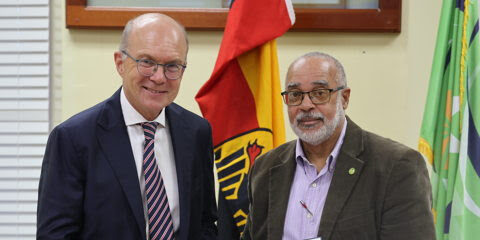
New German ambassador presents credentials to OECS director general during diplomatic ceremony
On Tuesday, May 12, a landmark diplomatic ceremony took place as Dr. Didacus Jules, Director General of the Organisation of Eastern Caribbean States (OECS), formally accepted the Letter of Credence from H.E. Dr. Christophe Nicolas Eick, the newly appointed Ambassador of the Federal Republic of Germany to the OECS. The event marked a significant milestone in the more than decade-long formal partnership between the regional bloc and Germany, drawing senior attendees including Karolin Troubetzkoy, members of the international diplomatic corps, OECS Commissioners, and the full OECS Commission leadership team.
In his opening address following the credential presentation, Ambassador Eick emphasized the solid foundation of warm, cooperative relations already established between Germany and the OECS member states, outlining his core priorities for his tenure. “As Germany’s representative to the Organisation of Eastern Caribbean States, I know I can build on long-established friendly relations between Germany and the OECS,” the ambassador stated. “And I’m committed to working closely with the Commission, particularly in areas of priority concern to the organisation and its member states.”
Eick made clear that climate action collaboration would stand as a central pillar of Germany’s engagement with the Caribbean region during his posting. “For climate issues in the Caribbean, I have a keen interest in furthering and strengthening cooperation, particularly relating to the impacts of climate change,” he said. “Germany continues to be a reliable partner in the fight against climate change.”
Responding to the ambassador’s remarks, Dr. Jules extended sincere gratitude for Germany’s unwavering commitment to multilateralism and rules-based international cooperation at a time of shifting global geopolitics. “At a time when some are retreating into narrow nationalism, we continue to deepen integration – through our Economic Union, our shared institutions, our common approaches to education, health, climate resilience, free movement, digital transformation, and regional governance,” Jules observed. “This is why Germany’s engagement with the OECS is both timely and strategically important.”
Jules went on to frame Germany as a critical strategic ally for the small island nations that make up the OECS, citing Berlin’s global leadership in climate diplomacy, environmental innovation, ecological conservation, and equitable sustainable development. “Germany’s global leadership in climate diplomacy, environmental technology, ecological conservation, and green transition positions your country as an especially valuable partner for the OECS,” he added.
The OECS Director General also laid out five key priority areas where the regional bloc is eager to expand collaboration with Germany: environmental management and climate resilience, renewable energy adoption and just energy transition, joint research and innovation partnerships, workforce skills development for green economies, and unlocking new climate finance and strategic partnership opportunities.
Jules also reaffirmed the OECS’s longstanding commitment to forging balanced, constructive diplomatic ties with the global community, while upholding the sovereignty and regional priorities of its member states. “We seek friendship with all nations while preserving our agency, our sovereignty, and our regional priorities,” he said. Addressing growing global geopolitical division, he added: “In an era of geopolitical polarisation, small states must avoid becoming satellites of competing powers. Instead, we must strengthen our strategic partnerships on the basis of mutual respect, shared values, and common interests.”
Closing his remarks, Jules stressed that collective action, rather than individual state effort, is the only path to building sustained resilience in today’s volatile global landscape.
Following the formal credential ceremony, Ambassador Eick and his delegation held a closed-door courtesy meeting with OECS Commission representatives, where the two sides delved into deeper discussions of the bloc’s ongoing regional initiatives and mapped out concrete next steps for future collaboration.
Formal diplomatic relations between the OECS and Germany were first established in 2010, building a partnership that has grown steadily over the past 16 years, particularly around shared priorities of climate action and sustainable development for small island developing states.
-

India’s ‘Cockroach Party’ Is the Protest Nobody Saw Coming
In a turn of political events that caught both establishment figures and observers completely off guard, a new grassroots protest movement has taken India by storm, sparked by a single ill-judged comment from the nation’s top judicial official. On May 15, 2026, Chief Justice Surya Kant made global headlines for his inflammatory remarks during a routine Supreme Court petition hearing, where he compared unemployed Indian youth to “cockroaches”. The justice went further, claiming that jobless young people turn to social media activism only to lash out at institutions, labeling them parasitic. Though Kant quickly walked back the comments once public backlash erupted, the harm to public sentiment had already been done.
Within 24 hours, an unexpected leader turned that public anger into a tangible political movement. Abhijeet Dipke, a 30-year-old former political strategist and Boston University graduate, posed a simple provocative question on the social platform X: “What if all cockroaches came together?” What started as a throwaway comment quickly materialized into a formal political organization: the Cockroach Janta Party (CJP), launched the same day.
The new party was built with deliberate, satirical edge from its inception. Its name is a direct rebuke to Prime Minister Narendra Modi’s ruling Bharatiya Janata Party, and its founding rules lean into the identity the Chief Justice insulted: only unemployed, chronically online people are eligible for membership. The party lists its headquarters as “anywhere with a working wifi connection” and proudly notes it has received zero funding from corporate donors. It launched with a fully functional website and a clear manifesto channeling widespread youth frustration.
The movement went viral almost instantly. Within just seven days of its launch, CJP amassed 19 million followers on Instagram – nearly double the follower count of India’s official government account on the platform. More than 350,000 unemployed youth have formally signed up to join the party. Social media feeds across India have been flooded with CJP memes, protest videos, and viral content featuring supporters in homemade cockroach costumes. Two high-profile opposition Members of Parliament, Mahua Moitra and Kirti Azad, have publicly announced their affiliation with the new movement, and major international news outlets from CNN to Al Jazeera have already covered the unexpected political uprising.
The viral success of the satirical party stems from very real, deep-seated economic pain that resonates across India’s massive youth population. Official data shows nearly 40% of Indian graduates between the ages of 15 and 25 are currently out of work. India is home to the largest youth population in the world, and for a generation that was promised widespread economic opportunity after 12 years of Modi’s administration, the Chief Justice’s “cockroach” label was not just an insult – it was seen as an accidental admission of the government’s failure to deliver on its promises.
That frustration is laid out clearly in CJP’s founding manifesto, which targets the close ties between India’s ruling establishment and big business. The party’s key policy demand is the revocation of broadcast licenses held by billionaire tycoons Mukesh Ambani and Gautam Adani, both widely perceived as close allies of Modi’s government, to make space for a truly independent Indian media sector.
Indian authorities have already moved to crack down on the movement. On May 21, regulators blocked CJP’s official X account under a court-ordered legal demand. But the censorship attempt has only accelerated the movement’s growth, turning a viral satirical joke into a serious political force. Supporters are now actively exploring plans to field an official electoral candidate in an upcoming by-election in the state of Bihar. As early CJP supporters have put it: when you label a generation of young people cockroaches, you quickly learn that cockroaches are almost impossible to exterminate.
-
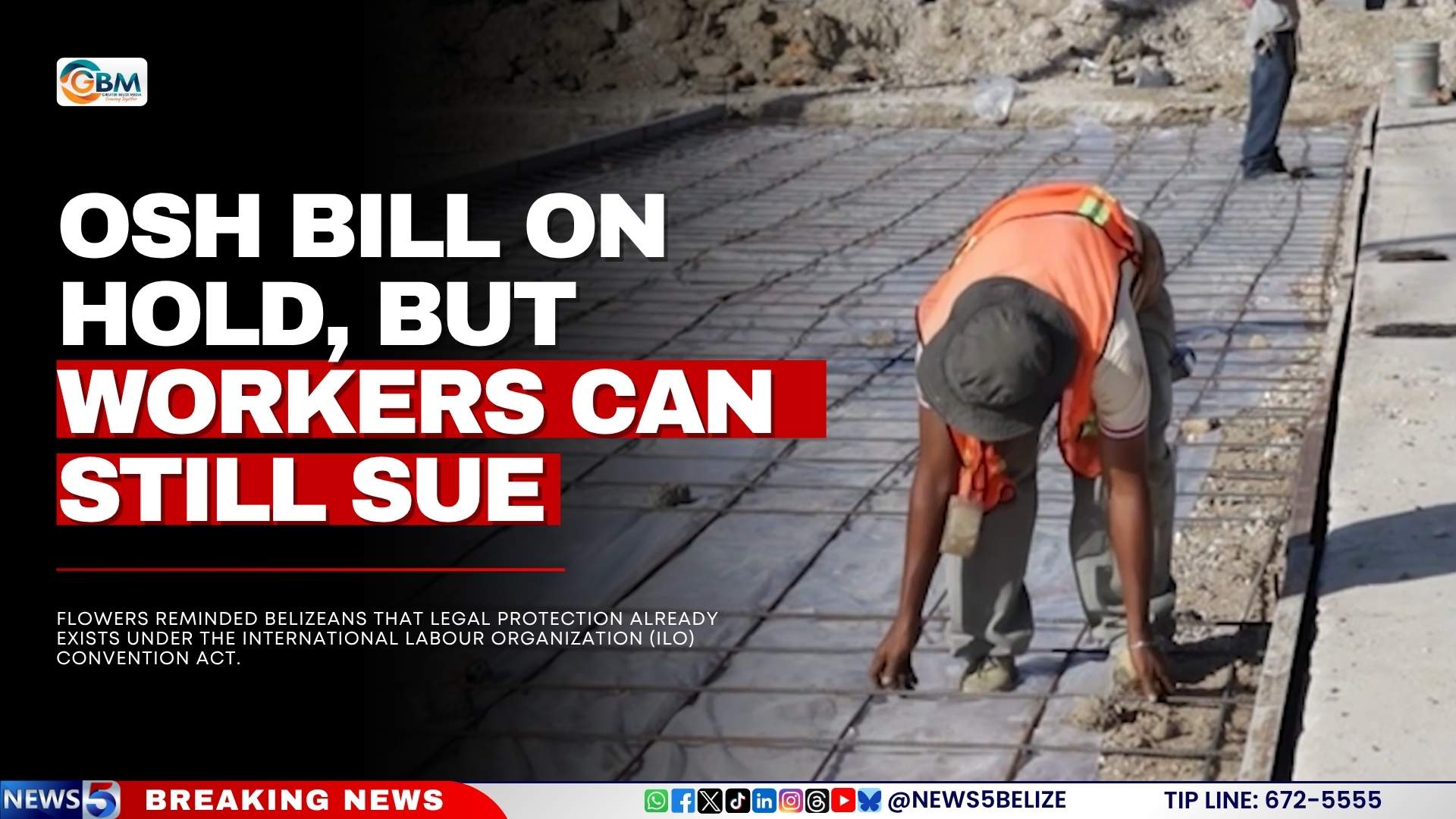
OSH Bill on Hold, But Workers Can Still Sue
In a development from Belize’s legislative landscape, a key bill aimed at updating the nation’s occupational safety and health (OSH) regulations has been put on hold, but workers retain legal pathways to seek justice for workplace injuries, according to the leader of the country’s largest public service labor group.
Dean Flowers, president of the Public Service Union, has publicly thrown his weight behind ongoing efforts to strengthen the pending OSH Bill, commending independent senators who recently drew national attention to critical gaps and shortcomings in the current draft of the legislation. The bill has been officially shelved pending its second reading, a procedural delay that has left many workers questioning what protections they have access to in the interim.
Flowers told local outlet News 5 that the independent senators carried out exemplary work in communicating with Belizean citizens, clearly outlining why targeted amendments to the draft are necessary and why tough, unresolved questions must be addressed before the legislation can advance to final passage.
But Flowers’ most critical message was directed at working people across the country who may feel vulnerable or unprotected while the OSH reform sits in legislative limbo. The union leader reminded Belizeans that long-standing legal protections are already in effect through the country’s existing International Labour Organization (ILO) Convention Act. As a signatory to multiple core ILO conventions, including agreements specifically focused on occupational safety and health standards, Belize has already enshrined these international rules into domestic law.
“Those conventions already carry the force of law,” Flowers emphasized. In a direct statement to workers, he clarified: “If anybody is injured at their workplace, they can sue their employer, they can sue the government. So I just want to also put that out there without the passage of the OSH itself into law.”
The delay of the OSH Bill comes as Belize continues to grapple with calls for stronger workplace safety regulations, with labor advocates pushing for updated domestic legislation that codifies clearer standards, better enforcement mechanisms, and stronger protections for workers across all sectors. The independent senators’ critique of the current draft has delayed progression but also created space for public debate on what effective OSH reform should look like for the nation.