分类: politics

  • Venezuelan Opposition Leader Released and Recaptured Within Hours

    Venezuelan Opposition Leader Released and Recaptured Within Hours

    In a dramatic reversal, Venezuelan opposition leader Juan Pablo Guanipa was forcibly detained on Sunday evening mere hours after his release from state custody. The 61-year-old senior member of the Primero Justicia party, a prominent government critic, was seized by approximately ten armed individuals operating from multiple vehicles who brandished weapons during the operation.

    Eyewitness accounts, including testimony from Guanipa’s son captured in a viral online video, confirmed the assailants displayed no official identification during the apprehension. The Public Prosecutor’s Office subsequently issued a statement justifying the re-detention, alleging Guanipa had violated the terms of his conditional release and requesting his transfer to house arrest.

    This development occurred on the same day Caracas initiated the release of dozens of political prisoners under a negotiated arrangement with Washington. The prisoner releases form part of diplomatic agreements following last month’s capture of former President Nicolás Maduro by U.S. forces. Acting President Delcy Rodríguez had previously committed to additional prisoner releases in the coming days.

    Independent human rights organization Foro Penal verified at least 30 individuals were freed Sunday, though noted hundreds remain incarcerated. The Venezuelan government maintains its position that all detainees face legitimate criminal charges, denying any political motivations behind imprisonments.

  • Hongkongse criticus China, Jimmy Lai, veroordeeld tot 20 jaar cel

    Hongkongse criticus China, Jimmy Lai, veroordeeld tot 20 jaar cel

    In a landmark ruling that has drawn international condemnation, Hong Kong media magnate Jimmy Lai Chee-ying has been sentenced to 20 years imprisonment—the most severe penalty ever issued under the city’s national security legislation. The 78-year-old British citizen, founder of the now-defunct Apple Daily newspaper, was convicted on charges of conspiracy to collude with foreign powers and publishing seditious materials.

    The verdict culminates a nearly five-year legal battle that began with Lai’s arrest in August 2020, shortly after China implemented the National Security Law in response to pro-democracy protests. Throughout the proceedings, Lai maintained his innocence, declaring himself a “political prisoner” targeted by Beijing for his criticism of Chinese policies.

    Eight co-defendants, including former Apple Daily executives and activists, received prison terms ranging from six to ten years after pleading guilty. The court identified Lai as the central figure in conspiracies aimed at compelling foreign nations, particularly the United States, to impose sanctions and blockades against Hong Kong and China.

    The sentencing has triggered strong international responses. Australia, the United Kingdom, European Union, Japan, and Taiwan expressed serious concerns about the verdict’s implications for freedom of expression in Hong Kong. UN Human Rights Chief Volker Türk called for the judgment to be quashed and urged Lai’s release on humanitarian grounds, citing his advanced age and health conditions.

    British Foreign Secretary Yvette Cooper described the sentence as effectively “a life term” and pledged continued diplomatic efforts on Lai’s behalf. Japanese officials voiced apprehension about the ruling’s impact on freedoms of speech, assembly, and association.

    Chinese and Hong Kong authorities defended the verdict as necessary for safeguarding national security. Hong Kong leader John Lee characterized Lai as responsible for “numerous heinous crimes” and stated the punishment brought “great relief” to society.

    Lai’s family and supporters condemned the sentence as inhumane, noting his diabetes and hypertension. His son Sebastien called the verdict “devastating” and declared it represented the “total end” of Hong Kong’s independent judicial system, appealing for his father’s release before it becomes “too late.”

    The case symbolizes the intensified suppression of political dissent since the 2020 national security legislation, with prosecutors highlighting Lai’s meetings with American politicians including Mike Pence and Mike Pompeo as evidence of foreign interference.

  • Dominican gov’t names new heads at MESCyT and comptroller’s office

    Dominican gov’t names new heads at MESCyT and comptroller’s office

    SANTO DOMINGO – In a significant administrative overhaul, President Luis Abinader enacted Executive Decree 84-26 on Monday evening, appointing new leadership to two critical public institutions. The move represents a strategic effort to enhance governance effectiveness and institutional performance within the Dominican government.

    The decree designates Rafael Evaristo Santos Badía as the incoming Minister of Higher Education, Science, and Technology (MESCyT), succeeding Franklin García Fermín. Santos Badía transitions from his role as Director General of the National Institute for Technical Professional Training (INFOTEP), bringing extensive expertise spanning education policy, labor rights advocacy, and decades of public service.

    Concurrently, Geraldo Espinosa Pérez has been appointed as the new Comptroller General of the Republic, taking over from Félix Antonio Santana García. Espinosa Pérez possesses over 24 years of specialized experience in accounting, financial management, public budgeting, and institutional auditing across both governmental and financial sectors.

    The presidential office emphasized that these reassignments are designed to strengthen operational transparency and administrative rigor. Executed under the president’s constitutional authority, the appointments have been formally communicated to all relevant agencies for immediate implementation.

    This restructuring occurs within the framework of a broader governmental initiative aimed at modernizing public management, reinforcing oversight mechanisms, and promoting accountability across vital state sectors.

  • India announces $175 million package for Seychelles

    India announces $175 million package for Seychelles

    In a significant diplomatic development, India has unveiled a substantial assistance package to Seychelles during an official ceremony attended by high-level delegations from both nations. The event, which featured Seychelles President Patrick Herminie as the guest of honor, marked the culmination of bilateral talks aimed at strengthening ties between the Indian Ocean neighbors.

    The comprehensive cooperation package includes India’s commitment to donate 10 fully-equipped ambulances, an equal number of utility vehicles, and five advanced Laser Radial-class boats complete with spare parts to enhance the operational capabilities of the Seychelles Defence Force. Additionally, New Delhi will provide 1,000 metric tons of essential food grains and pulses as part of a special economic support initiative.

    Maritime security cooperation received particular emphasis with India’s commitment to refurbish the PS Zoraster vessel for the Seychelles Coast Guard and establish a dedicated hydrographic unit in Seychelles. This infrastructure enhancement aims to bolster maritime domain awareness and security capabilities in the strategically important Indian Ocean region.

    The two nations formalized their enhanced partnership through the adoption of the India-Seychelles Joint Vision framework, which outlines shared objectives for sustainability, economic growth, and regional security. Multiple memoranda of understanding were exchanged covering diverse areas including pharmacopoeial standards harmonization, technical and scientific collaboration, and digital transformation solutions at the population level.

    Further cooperation agreements encompass joint technical work in ocean observation services, training programs, data exchange mechanisms, and maritime scientific research. The partnership also includes specialized training initiatives for Seychelles public officials, food procurement arrangements, and a finalized cultural exchange program spanning 2026-2030, ensuring sustained people-to-people connections between the two nations.

  • NDP gov’t not firing ULP supporters, MP tells North Leeward constituents

    NDP gov’t not firing ULP supporters, MP tells North Leeward constituents

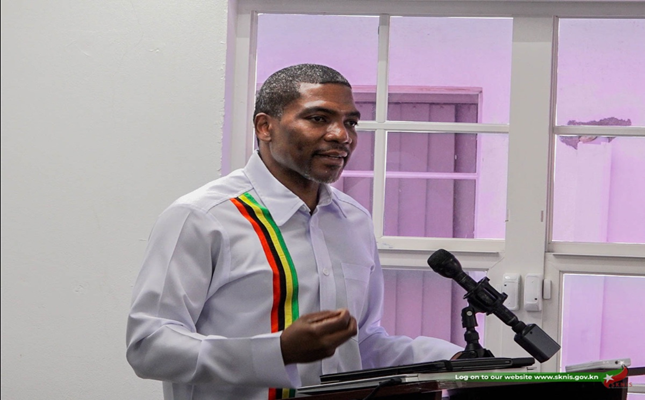
    In a definitive stance against political retaliation, North Leeward MP Kishore Shallow has declared the newly elected New Democratic Party (NDP) administration will break from the practices of the former Unity Labour Party (ULP) government. The assurance came during a town hall meeting in Fitz Hughes, where Shallow, who also serves as Minister of Tourism, Civil Aviation and Sustainable Development, articulated his government’s commitment to an inclusive society.

    The NDP’s electoral victory on November 27 ended 24 years of ULP governance, sparking calls from some supporters for the dismissal of public sector workers who had backed the previous administration. Minister Shallow explicitly rejected these demands, instead highlighting policy decisions that demonstrate the government’s alternative approach.

    As evidence of this philosophy, Shallow referenced the Christmas road cleaning and seasonal jobber programs. Rather than purging workers affiliated with the previous government, the administration expanded employment opportunities by adding 2,000 workers to the road cleaning initiative at an additional cost of $2 million. This decision, advocated by Transport Minister Nigel Stephenson, prioritized maintaining existing workers while creating new positions.

    Shallow acknowledged the impatience of long-time NDP supporters who endured marginalization during the ULP’s lengthy tenure but cautioned against repeating cycles of political victimization. “We are not going to victimize people because they vote for ULP,” he stated emphatically, speaking on behalf of Prime Minister Dr. Friday and cabinet colleagues.

    The minister framed inclusive governance as both an ethical imperative and economic necessity, warning that continued partisan discrimination would leave St. Vincent and the Grenadines “poorer for it.” Instead, the government is focusing on creating opportunities through four economic pillars: tourism, agriculture, the new economy, and the blue economy.

    Shallow appealed for patience as the administration works to deliver on campaign promises of job creation and salary increases, emphasizing their goal of building “a St. Vincent and the Grenadines for all and not just a selected few.”

  • German party leader calls for resuming talks with Russia

    German party leader calls for resuming talks with Russia

    In a striking departure from Germany’s official foreign policy, Alternative for Germany (AfD) co-leader Tino Chrupalla has called for an immediate resumption of talks with Russian President Vladimir Putin, advocating for a fundamental reassessment of Russia’s place within Europe. During an interview with German broadcaster ARD, the right-wing politician contended that the North Atlantic Treaty Organization was never originally established as an alliance against Moscow.

    Chrupalla explicitly dismissed concerns about Russian aggression toward Germany, characterizing recent intelligence warnings about Russian drone activities as ‘fake news’—a direct rebuttal to alerts previously issued by German Chancellor Friedrich Merz. This position directly contradicts the established German governmental stance, which maintains that while future negotiations with Russia remain possible, they must be conducted strictly within the allied consensus of NATO and European partners, rejecting any parallel bilateral discussions.

    The AfD leader’s controversial proposal finds ideological alignment with French President Emmanuel Macron’s persistent advocacy for a more strategically autonomous European diplomatic approach toward Russia. Chrupalla’s statements emerge during a period of intense strategic reevaluation within certain European political circles regarding conflict resolution mechanisms and the future architecture of continental security, signaling growing divisions within Western approaches to Moscow.

  • Hungary accuses EU of obstructing peace, denounces conscription

    Hungary accuses EU of obstructing peace, denounces conscription

    In a striking departure from European Union consensus, Hungarian Foreign Minister Péter Szijjártó has launched a vehement critique against Brussels’ handling of the Ukraine conflict. Speaking to Georgian media, Szijjártó characterized the EU as actively undermining peace negotiations by treating the war as its own strategic instrument rather than pursuing diplomatic resolution.

    The minister presented a grim portrayal of conditions within Ukraine, alleging an ‘open hunt’ for military-age males across Ukrainian cities. He described desperate attempts by citizens to evade compulsory conscription, citing Hungary’s provision of consular assistance to a citizen detained for helping five Ukrainians cross the border. Szijjártó condemned Ukraine’s sealed border policy that prevents departure and demanded immediate cessation of forced mobilization practices.

    Central to his address was the accusation that European officials’ visits to Washington have deliberately prolonged hostilities. Szijjártó asserted that without Western intervention, the conflict would have already concluded through negotiation. He maintained the EU has no genuine interest in facilitating a comprehensive Russia-US agreement, instead ‘openly sabotaging’ peace initiatives.

    Political analysts interpret these statements as Hungary’s most direct challenge to EU foreign policy unanimity regarding Ukraine. The remarks highlight profound fractures within the bloc concerning conflict resolution approaches and reveal Budapest’s increasing alignment with narratives that attribute responsibility for prolonged warfare to Western powers. This diplomatic positioning further illustrates Hungary’s growing isolation within European institutions as it champions alternative perspectives on the conflict.

  • India and Canada enhance security cooperation

    India and Canada enhance security cooperation

    In a significant diplomatic development, India and Canada have solidified a new security cooperation framework following high-level discussions between their respective national security advisors. The pivotal meeting between India’s National Security Advisor Ajit Doval and Canada’s Security and Intelligence Advisor Nathalie Drouin in Ottawa has yielded concrete measures to bolster bilateral security coordination.

    The dialogue culminated in mutual recognition of the substantial advancements achieved through existing security initiatives designed to protect national interests and citizen safety. Both nations have committed to institutionalizing this enhanced cooperation through the appointment of dedicated liaison officers specializing in security and law enforcement matters. This structural enhancement will facilitate more seamless interaction between relevant agencies across both countries.

    According to official statements from diplomatic channels, this strategic arrangement will significantly accelerate direct communications between Indian and Canadian authorities. The improved framework is specifically designed to enable rapid information sharing on critical mutual concerns, including the escalating challenge of illicit narcotics trafficking—with particular emphasis on fentanyl precursor chemicals—and combating sophisticated transnational organized crime networks operating across jurisdictions. This collaboration represents a substantive step forward in the two nations’ joint security efforts.

  • The DPRK provided housing to more than 32,000 families in 2025

    The DPRK provided housing to more than 32,000 families in 2025

    The Democratic People’s Republic of Korea has initiated a sweeping rural transformation program under the direct supervision of General Secretary Kim Jong Un. This strategic initiative, branded as the “new era rural revolution,” represents a significant nationwide effort to overhaul North Korea’s agricultural infrastructure and living conditions.

    Kim Jong Un, serving as Chairman of State Affairs, has personally overseen and guided the construction of new rural housing developments, characterizing the project as both strategically vital and essential for national development. The program has mobilized substantial human resources across multiple provinces, with workers participating in material transportation, logistics coordination, and construction implementation.

    According to reports from the Korean Central News Agency (KCNA), the project encompasses numerous localities including Tanchon, Jongju, Songrim, Manpho, Hoeryong, Anju, Unsan district, and the municipalities of Rangnang, Mangyongdae, and Kangso. These areas have established specialized construction brigades composed of skilled workers operating with reported efficiency.

    The architectural planning demonstrates consideration for regional geographical variations, with construction teams in Nampho City and South Hwanghae, Kangwon, and North Hwanghae provinces adapting designs to accommodate coastal, flatland, and mountainous terrain characteristics. Beyond structural development, the program incorporates extensive environmental beautification efforts through the planting of diverse tree and flower species.

    This comprehensive approach aims not merely to improve housing conditions but to fundamentally modernize North Korea’s entire rural sector, integrating these areas into contemporary development standards while potentially enhancing agricultural productivity and community sustainability.

  • Senate committees to address labor reform in Mexico

    Senate committees to address labor reform in Mexico

    The Mexican legislative process has taken a significant step forward as Senator Castillo confirmed through a social media announcement that specialized committees will begin examining a transformative labor reform proposal. The Constitutional Affairs, Labor and Social Welfare, and Legislative Studies committees have been tasked with reviewing the comprehensive report on reducing the national workweek.

    This legislative initiative follows a groundbreaking multi-sector consensus reached in December 2023, when President Claudia Sheinbaum announced the proposal would advance to the Senate. The agreement emerged from extensive consultations across business, labor, academic, governmental, and civil society sectors, representing a rare collaborative achievement in Mexican policymaking.

    The proposed legislation outlines a gradual transition to a 40-hour workweek through an incremental reduction of two working hours annually. This phased approach is designed to reach the target by 2030, potentially benefiting approximately 13.4 million Mexican workers who currently labor under longer schedules.

    Beyond the labor reform, Senator Castillo outlined additional parliamentary priorities for the coming session. These include the presentation of new initiatives by various parliamentary groups and deliberations concerning the 40th anniversary commemoration of the Belisario Dominguez Institute, a respected research institution.

    The legislative agenda also features the swearing-in of circuit judges and a special session that will highlight Mexico’s linguistic diversity. As Castillo emphasized, this session will feature an address delivered in an indigenous language, representing ‘one of the diverse communities and peoples we have in our country,’ underscoring the nation’s cultural richness.