分类: politics

  • Gonzalo Castillo announces reinstatement of U.S. visa

    Gonzalo Castillo announces reinstatement of U.S. visa

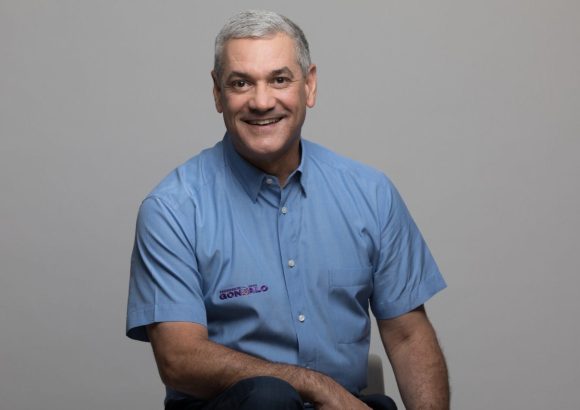
    In a public announcement shared via social media on Tuesday, Gonzalo Castillo, a one-time presidential contender from the Dominican Liberation Party, revealed that U.S. authorities have restored his 10-year non-immigrant visa, a move he has openly praised.

    Castillo took to the platform X, formerly Twitter, to extend his gratitude to the U.S. government, current U.S. President Donald Trump, and Leah Francis Campos, the U.S. Ambassador to the Dominican Republic, for facilitating the decision. According to Castillo, the reinstatement of his travel document embodies the core principles of freedom, due process, and respect for fundamental rights that the United States is globally recognized for upholding. He particularly noted the significance of this ruling coming as the U.S. marks the 250th anniversary of its founding.

    The visa had been revoked by U.S. authorities years earlier, following the launch of Operation Calamar, a high-profile Dominican corruption investigation. In this sprawling case, Dominican public prosecutors have leveled allegations against a group of former government officials, claiming they diverted billions of Dominican pesos through fraudulent and irregular payments for land expropriation projects. Prosecutors also allege that illegal bribes from the scheme were used to improperly fund political campaigns during the 2020 Dominican presidential election, in which Castillo ran as the Dominican Liberation Party’s candidate.

  • New York, New Jersey announce probe into FIFA’s World Cup ticket sales

    New York, New Jersey announce probe into FIFA’s World Cup ticket sales

    Less than three months before the 2026 FIFA World Cup kicks off across the United States, Mexico and Canada, two major U.S. host states have opened a full probe into whether global football’s governing body has gouged passionate fans with exorbitant, unfair ticket costs. On Wednesday, law enforcement leaders from New York and New Jersey confirmed the investigation will target the ticketing policies and practices of FIFA, the tournament’s official organizer, putting a spotlight on widespread consumer complaints that have roiled the lead-up to the historic three-nation event.\n\nNew Jersey, which is slated to host the World Cup final on July 19 at the MetLife Stadium shared by the NFL’s New York Giants and New York Jets, has emerged at the forefront of the inquiry. New Jersey Attorney General Jennifer Davenport issued a blunt rebuke of FIFA’s current ticketing model in her official statement, arguing that the organization has turned what should be a dream experience for football supporters into a frustrating, predatory process marked by misleading scarcity, convoluted purchasing rules and out-of-reach pricing.\n\n\”We are committed to conducting a thorough investigation of FIFA’s conduct,\” Davenport emphasized, noting that the probe will examine two key areas of concern: widespread fan reports of misrepresented seat locations that leave buyers with worse views than advertised, and the controversial dynamic pricing model that automatically pushes ticket costs higher as sales volumes increase, a practice that has been criticized for penalizing casual fans who cannot purchase early.\n\nNew York’s top law enforcement official echoed these concerns, pointing out that millions of regional supporters have waited more than a decade for the World Cup to arrive in their region, and are entitled to transparent, fairly priced access to matches. \”New Yorkers have been waiting years for the World Cup to come to their backyard and they deserve a fair shot at affordable tickets,\” said New York Attorney General Letitia James. \”No one should be manipulated into paying sky-high prices for seats, and fans should be able to trust that the tickets they purchase will be the ones they receive.\”\n\nMuch of the public outrage around ticket pricing has centered on the high-profile match schedule at MetLife Stadium, which will host eight tournament matches including the final. Complaints have spread far beyond just match tickets: even official transit options for fans traveling from Manhattan to the northern New Jersey stadium carry dramatically inflated costs, with a special event train ticket priced at $100, compared to the standard $12.90 regular fare for the same route.\n\nThe New York and New Jersey probe is not the first official pushback against FIFA’s ticketing practices. Back in May, law enforcement authorities in California confirmed they had reached out to FIFA to review potential legal violations related to the state’s ticket sales for its six tournament matches, signaling growing multi-state scrutiny of the governing body’s practices.\n\nFan advocacy groups have also lined up to condemn the pricing structure, with one of Europe’s largest fan organizations calling the model unethical and a betrayal of the sport’s core fanbase. Football Supporters Europe (FSE) has labeled the World Cup’s pricing scheme \”extortionate\” and a \”monumental betrayal,\” noting that the high costs have put the 2026 tournament entirely out of financial reach for millions of average working fans. Analysts project the 2026 World Cup will generate roughly $13 billion in total revenue for FIFA, a figure that has amplified criticism of the organization’s profit-focused ticketing approach.\n\nNot all voices have joined the criticism of FIFA’s ticket sales, however. Former U.S. President Donald Trump weighed in on the controversy Wednesday, pushing back on consumer concerns and framing the rapid sell-out of tickets as a sign of the tournament’s unprecedented success. \”The World Cup is amazing,\” Trump told reporters. \”It’s the most successful they’ve ever had, ticket-wise. They’ve never had anything that sold so quickly.\”

  • ‘Did he apply?’: PNP raises questions over Anderson’s NaRRA appointment

    ‘Did he apply?’: PNP raises questions over Anderson’s NaRRA appointment

    KINGSTON, Jamaica — Jamaica’s main opposition political bloc, the People’s National Party (PNP), has ramped up pressure on the ruling administration led by Prime Minister Andrew Holness, demanding full public disclosure of the details surrounding Ambassador Anthony Anderson’s appointment as chief executive officer of the National Reconstruction and Resilience Authority (NaRRA).

    Shortly after the government made the appointment public on Wednesday morning, the PNP released an official statement outlining a series of unresolved questions that demand immediate, open answers. At the top of the opposition’s inquiry is a key probe: did Major-General Anderson submit an application for the top leadership role through the standard, initial public recruitment process that was advertised for the position?

    While the PNP explicitly stated that it expects Anderson to carry out his duties in line with the strict standards of transparency, integrity and accountability that the critical NaRRA post requires, the party emphasized that if Anderson did not participate in the open recruitment process, Jamaican voters are owed a thorough, straightforward explanation for why the initial search failed to turn up a qualified candidate from the original applicant pool.

    The opposition argued that a completed recruitment process that fails to produce any candidate deemed suitable for appointment is far more than a minor bureaucratic hiccup. Instead, it serves as a clear warning that deep, foundational flaws exist in the governance framework that regulates the authority, the statement noted.

    The PNP reminded the public that it has repeatedly flagged governance gaps baked into the original NaRRA legislation since the body was established, and the latest appointment has done nothing to ease those longstanding concerns. In fact, the opposition says the appointment has only reinforced its skepticism.

    The party pointed to a telling detail that supports its criticism: Anderson, a sitting ambassador to Jamaica’s most critical international partner, the United States, has only held that diplomatic post for 12 months. The fact that the government turned to him to fill the role, the PNP argues, strongly implies that qualified, credible candidates from the relevant domestic professional sectors opted not to apply, deterred by the flawed structural and governance arrangements the opposition has repeatedly called inadequate.

    In the opposition’s view, installing a loyal military and policing technocrat to lead this civilian-focused reconstruction authority — under circumstances where the standard recruitment process did not follow its normal, open procedure — does nothing to fix the core governance problems already plaguing NaRRA.

    Closing its statement, the PNP repeated its call for full transparency, urging the ruling government to lay out every detail of Anderson’s appointment to the Jamaican public. The party also called on the administration to introduce amending legislation to address the well-documented governance weaknesses that have eroded public trust in NaRRA, and to move without further delay to place the authority on a solid, publicly accountable foundation.

  • Suriname President Jennifer Geerlings-Simons to visit Dominican Republic

    Suriname President Jennifer Geerlings-Simons to visit Dominican Republic

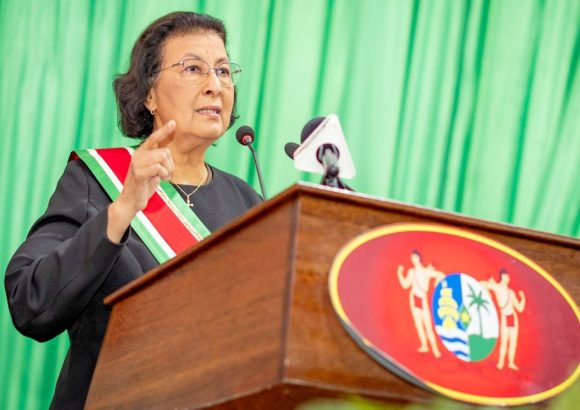
    One of the highest-profile diplomatic engagements between two Caribbean nations is set to kick off this weekend, as the President of Suriname, Jennifer Geerlings-Simons, travels to the Dominican Republic for an official working visit that will run through June 2.

    Geerlings-Simons and her official delegation are scheduled to touch down at Punta Cana International Airport on Saturday morning, kicking off a packed three-day schedule of formal diplomatic activities set to launch on Monday. The official welcome will be held at the Dominican Republic’s National Palace, where the visiting head of state will receive full military honors before entering a closed-door private meeting with her Dominican counterpart, President Luis Abinader.

    Following the one-on-one discussion, delegations from both countries will hold expanded bilateral talks focused on deepening cross-national cooperation. The morning’s official events will conclude with a formal signing ceremony for new bilateral agreements and a shared joint statement outlining shared priorities for the two nations moving forward.

    Later on Monday, Geerlings-Simons will join Dominican Republic Foreign Minister Roberto Álvarez for a commemorative visit to the Altar of the Fatherland, where the pair will lay a wreath to honor the Dominican Republic’s national heritage. On Tuesday, the final day of the visit, the Surinamese president will meet with the Dominican Republic’s top congressional leaders — Senate President Ricardo de los Santos and Chamber of Deputies President Alfredo Pacheco — at the National Congress. She is scheduled to depart the country from Las Américas International Airport later that same afternoon, bringing the official visit to a close.

  • Opposition Senators Condemn Expulsion of MP Pringle as ‘partisan and meant to embarrass’

    Opposition Senators Condemn Expulsion of MP Pringle as ‘partisan and meant to embarrass’

    A major political confrontation has erupted in Antigua and Barbuda’s legislature after the Senate President barred Opposition Leader Jamale Pringle from taking his seat for the annual Throne Speech on the morning of May 26, 2026, triggering a walkout by all opposition lawmakers and sharp accusations of partisan manipulation of parliamentary procedure.

    The United Progressive Party (UPP), the country’s main opposition bloc, has issued a fierce condemnation of Senate President Alincia Williams-Grant’s controversial decision, which it says violates long-standing parliamentary norms and undermines democratic representation. Pringle, a newly elected Member of Parliament, had been formally invited to the sitting in an official May 14 correspondence from the Clerk to Parliament, which addressed him as “Honourable Member.” The invitation explicitly called him to attend for necessary parliamentary business, which includes completing the oath of office administered by the Clerk, and he arrived at the chamber well ahead of the scheduled event.

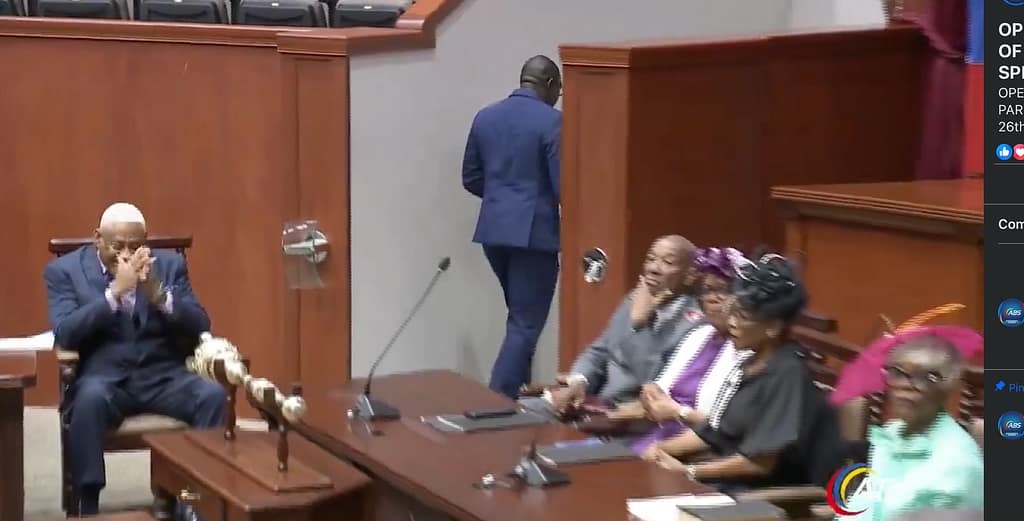
    Williams-Grant’s official justification for barring Pringle from the chamber was that he had not yet completed his oath of office. But the UPP and its senators reject this reasoning as baseless and politically motivated. Following the expulsion, when Senate Minority Leader Chester Hughes attempted to raise an objection to the ruling on the floor, Williams-Grant also refused to allow him to speak. In response, all four sitting opposition senators staged a coordinated walkout of the upper chamber in protest.

    Hughes has laid out detailed arguments challenging the Senate President’s decision, framing it as clear partisan favoritism toward the ruling government. He emphasized that if a governing party MP had faced the same situation, they would have been permitted to complete the oath immediately before the Throne Speech and take their seat. Hughes also called out a double standard in procedural treatment: the Attorney-General, who holds no formal voting or priority position in the Senate, was allowed to address the chamber, while the minority leader, as an elected Senate representative, was denied his basic right to speak on a critical procedural matter.

    Beyond accusations of favoritism, Hughes dismissed the secondary justification cited for the ruling — that the decision aligned with procedural norms in nearby Trinidad and Tobago — as entirely irrelevant. He stressed that Antigua and Barbuda’s parliament holds the independent authority to set its own procedural rules, meaning appeals to another country’s practices hold no weight in this context.

    The UPP has gone further, alleging that the entire incident was the result of prearranged collusion between the Senate President and government members of the lower house of parliament. The party says the deliberate snub was designed specifically to embarrass Pringle personally and humiliate the opposition as a whole. In closing its condemnation, the opposition bench warned that the arbitrary use of parliamentary procedure to sideline elected opposition representatives poses a direct threat to the foundations of democratic governance in the country.

  • Sir Rodney Says Road and Housing Projects Continued Despite Cement Shortages

    Sir Rodney Says Road and Housing Projects Continued Despite Cement Shortages

    Antigua’s governing administration has announced significant advancements in national public infrastructure, marking steady progress across two core portfolios: road network upgrades and affordable housing expansion. Officials confirmed that road quality across the country has seen measurable improvement in recent months, with several key high-traffic thoroughfares already completed and open to motorists. These finished projects include the Sir George Walter Highway, Friars Hill Roadway, Sir Sidney Walling Highway, the Valley Road connecting Golden Grove to Old Road, and the Parham to Wilikies Highway, all of which have been repaired to deliver a smoother, safer driving experience. Work is currently underway on a full renewal of All Saints Road, and the government notes that upgrades are not limited to primary arteries: secondary local roads running through villages and residential communities are also being repaved as part of the broader infrastructure initiative. To fund the multi-project program, a consortium of local financial institutions has approved a $150 million advancement, which will be repaid through a small annual user fee imposed on all registered motorized vehicles in Antigua. The governing administration has publicly extended its gratitude to the senior leadership of the Ministry of Works, particularly Minister of Works the Honourable Maria Browne, the first woman to hold the position. Since assuming office, Minister Browne has overseen a workforce that has consistently delivered strong results, with the Director of Works and other senior team members providing visible, effective leadership that has motivated frontline staff to meet the high expectations of road users across the country. The administration acknowledged that the project faced temporary supply chain disruptions, specifically a widespread cement shortage that slowed progress at multiple sites. However, officials confirmed that the ongoing dredging of the shipping channel leading to cement storage silos at Crabbes is nearing completion, which will resolve the supply issue and remove the barrier to ongoing construction work. Beyond her track record delivering on infrastructure projects, Minister Browne has been praised by the government for her personal leadership qualities: she brings consistent energy, proven competence, unwavering determination, and a solutions-focused mindset to every assigned responsibility, and holds high regard across the governing administration. Joining the Ministry of Works leadership team is newly re-assigned Minister of State the Honourable Shenella Govia. A youthful senator who also serves as Leader of Government Business in the Senate, Govia is described as bringing abundant energy and enthusiasm to her new role, and the government expects her contributions will strengthen the ministry’s capacity to deliver on the administration’s ambitious infrastructure targets. Beyond infrastructure upgrades, the statement also highlighted the government’s signature “housing revolution,” a cornerstone initiative that has defined the administration’s 12 years in office. To date, two government agencies—the National Housing and Urban Development Company and the Central Housing and Public Authority (CHAPA)—have completed construction of more than 2,000 new affordable homes across Antigua. Private sector contractors have also made significant additional contributions to expanding the national housing stock over the same period. While the government has made substantial progress in meeting existing demand for new housing, officials noted a unique side effect of that success: the high delivery rate has spurred even greater public demand for additional housing units. The administration commended the minister responsible for housing for the progress achieved to date, and confirmed that new construction projects are already planned to roll out in the coming months to meet rising demand.

  • PM Browne Blasts Opposition Senators for Walking Out With Pringle

    PM Browne Blasts Opposition Senators for Walking Out With Pringle

    A heated political clash has erupted in Antigua and Barbuda’s Parliament after a coordinated opposition walkout, drawing scathing condemnation from Prime Minister Gaston Browne who labeled the move a clear display of inadequate leadership from the opposition bloc. The confrontation unfolded during a ceremonial joint sitting of the Parliament on Tuesday, triggered when Senate President Alincia Williams-Grant issued a formal ruling barring Opposition Leader Jamale Pringle from taking part in proceedings. The ruling stemmed from a straightforward constitutional requirement: Pringle had not yet completed the mandatory oath of allegiance for all participating parliamentary members.

    Instead of complying with the ruling, Pringle exited the chamber, and the four other opposition senators followed him out in an organized protest. Speaking to the press immediately following the annual Speech from the Throne, Browne launched a sharp rebuke of the opposition’s actions, arguing that the group had intentionally ignored long-established constitutional rules, only to manufacture political controversy after being blocked from participating.

    “The Constitution is the ultimate authority in this nation,” Browne emphasized during the press briefing. “Any action that runs counter to its text is not permissible, and we cannot set aside its clear requirements for political convenience.” The Prime Minister stressed that the rule requiring an oath of allegiance for participating members was widely known, and even the opposition had previously acknowledged this mandate. “They have already accepted that the constitutional provisions require every member taking part in these formal proceedings to have completed the oath,” he noted.

    Browne explained that Pringle had simply missed the window to complete the oath ahead of the Tuesday sitting, making his participation unlawful under existing rules. He pointed to Barbuda MP Trevor Walker as a point of comparison: Walker chose to stay away from the sitting voluntarily, because he understood he could not join proceedings without first taking the required oath. “The opposition will have to wait until the next parliamentary sitting, when the oath of allegiance will be formally added to the agenda,” Browne said. “Once they complete the requirement, they will be able to participate fully, as is their right.”

    The Prime Minister also pushed back against claims that the opposition faced unfair treatment in the incident, revealing that parliamentary officials had tried to resolve the issue quietly ahead of the sitting to avoid public embarrassment for Pringle. “Officials spoke to him in private before Parliament convened because they did not want to put him in an awkward position publicly,” Browne said. “He refused to cooperate with the reasonable request.”

    Browne characterized the opposition’s decision to stage a walkout as reckless and politically immature, arguing that the bloc should have taken responsibility for its own procedural oversight rather than abandoning the sitting entirely. “This lack of cooperation is just ridiculous,” he said. He added that opposition leaders need to “learn to pick their fights,” noting that the walkout only served to highlight deep weaknesses in the opposition’s leadership. Closing his remarks, he doubled down on his criticism, directly tying the incident to Pringle’s leadership: “And that is just poor leadership.”

  • Speech From the Throne by His Excellency The Rt. Hon. Sir Rodney Williams

    Speech From the Throne by His Excellency The Rt. Hon. Sir Rodney Williams

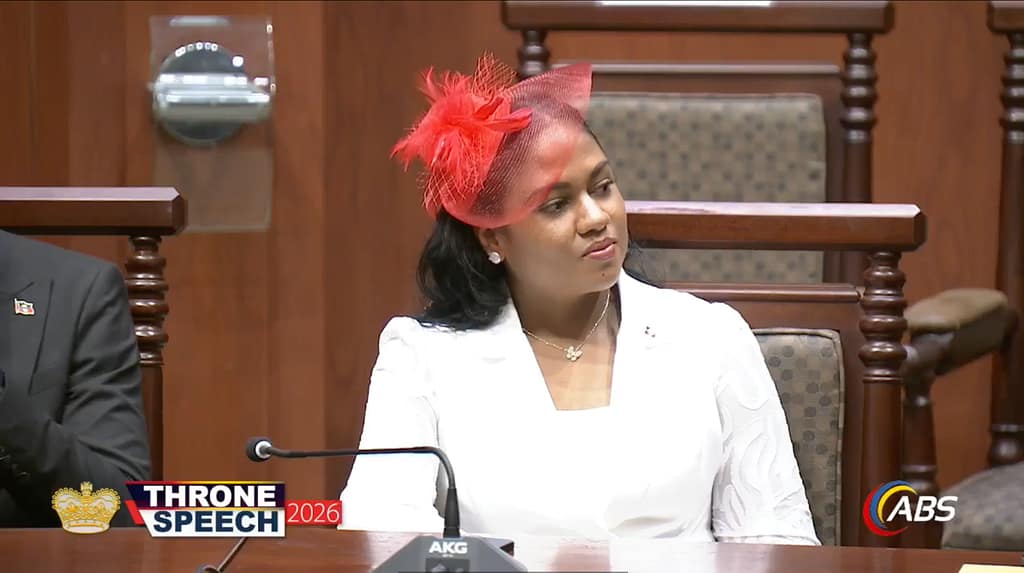
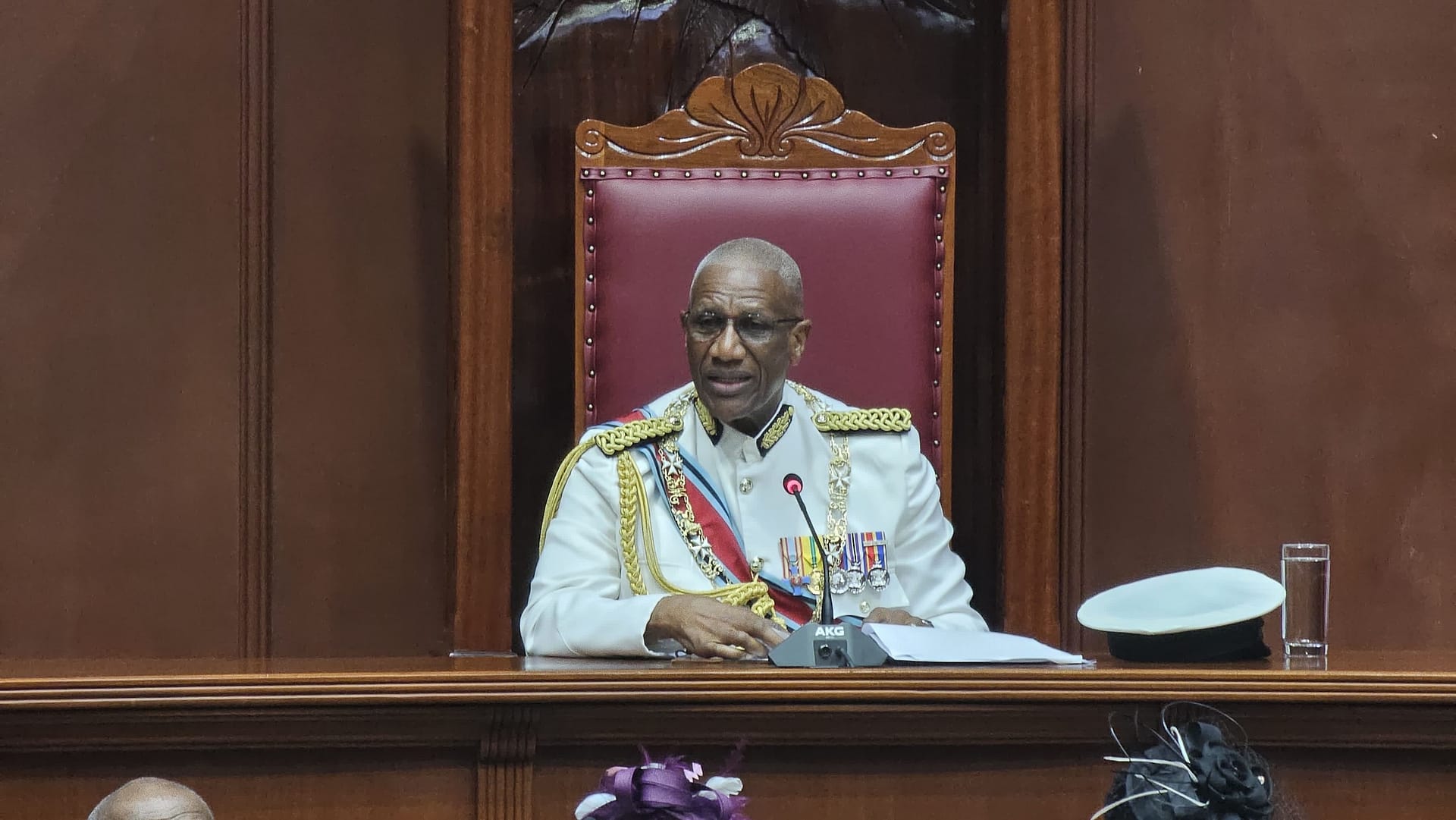
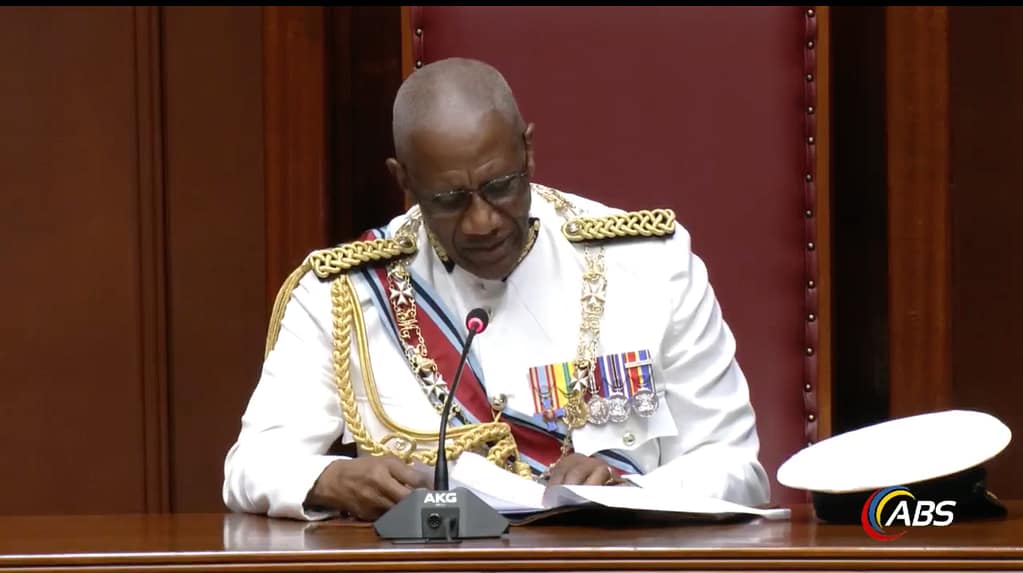
    In a formal constitutional ceremony marking the opening of a new parliamentary session, His Excellency The Right Honourable Sir Rodney Williams, Governor-General, delivered his traditional Speech from the Throne, laying out the government’s legislative and policy agenda for the upcoming term.

    The address, rooted in the longstanding Westminster parliamentary tradition that the head of state outlines the executive branch’s planned priorities, covered a wide range of pressing domestic and international issues facing the nation. Sir Rodney opened the speech by acknowledging the resilience of the national population in the wake of recent economic and social challenges, including post-pandemic recovery efforts and the impacts of global inflation on household budgets.

    On domestic policy, the Governor-General highlighted the government’s core commitments: expanding access to affordable healthcare for all citizens, upgrading critical national infrastructure including road networks and rural broadband connectivity, and delivering targeted reforms to boost affordable housing construction to address growing housing insecurity across urban and rural communities. He also emphasized the administration’s plans to invest in early childhood education and skills training programs, designed to reduce youth unemployment and prepare the workforce for emerging green economy opportunities.

    Regarding climate action, a central priority for the small island nation, Sir Rodney outlined new policy initiatives to strengthen coastal defenses against rising sea levels, expand renewable energy generation capacity, and update national emissions reduction targets in line with international climate agreements. He noted that climate change poses an existential threat to the country’s coastal communities and economic mainstays such as tourism and agriculture, making urgent action non-negotiable.

    In the section on foreign affairs and international relations, Sir Rodney reaffirmed the nation’s commitment to multilateral cooperation, regional integration within CARICOM, and upholding international law. He noted the government will continue to strengthen diplomatic and trade ties with regional and global partners, while advocating for small island developing states in global forums addressing climate change and global development inequality.

    The speech concluded with a call for cross-parliamentary collaboration, noting that the government’s agenda is designed to advance shared national prosperity, security, and equity, and inviting all elected representatives to work together to deliver meaningful progress for citizens across the country.

  • Global Conflicts Threaten Antigua and Barbuda, Governor General Warns in Throne Speech

    Global Conflicts Threaten Antigua and Barbuda, Governor General Warns in Throne Speech

    During the formal ceremonial opening of Antigua and Barbuda’s new parliamentary session on Tuesday, Governor General Sir Rodney Williams delivered the annual Speech from the Throne, and centered a key portion of his foreign affairs address on the disproportionate economic harm that ongoing global conflicts are inflicting on vulnerable small island developing states. Sir Rodney framed foreign policy as one of the most daunting policy portfolios for the twin-island nation, warning that missteps in international engagement can leave small developing countries exposed to overwhelming geopolitical pressures that lie far outside their ability to influence or control. In his remarks to the full legislative body, he specifically called out the two major active conflicts roiling global order today: the ongoing Russia-Ukraine war and escalating tensions between Israel and Iran. Sir Rodney detailed how the cascading effects of these conflicts have rippled through global markets to raise costs for Antigua and Barbuda and similar small nations. Restrictive sanctions placed on Russia, he explained, combined with repeated instability at critical international chokepoints for commercial shipping, have driven sharp spikes in global fuel prices, elevated marine insurance premiums, and pushed up the cost of everyday consumer goods across every region of the world. He offered a concrete example of how regional escalation directly impacts global costs: if open conflict between the United States, Israel and Iran leads to the closure of the Strait of Hormuz, the vital maritime route that carries roughly 20 percent of the world’s daily oil supply, shipping, insurance and consumer product costs will surge across every global market. Most pointedly, Sir Rodney emphasized that small island states bear no responsibility for igniting these conflicts, yet are forced to absorb the full weight of their negative economic consequences. “Small states have played no role in starting these conflicts that have generated tough economic choices for the people of Antigua, the Caribbean and the people of these two large states,” he told legislators. Beyond his warning about global risks, Sir Rodney also offered strong praise for the country’s current diplomatic leadership, highlighting the government’s renewed confidence in Foreign Affairs Minister E.P. Chet Greene. His reappointment to the role, the Governor General noted, reflects the administration’s trust in Greene’s proven ability to steer the country’s foreign relations through this period of unprecedented global uncertainty. “The management of our state’s foreign affairs by a very skillful minister… demonstrates the same reasons why faith is placed by my government in the Honourable Paul Chet Greene,” Sir Rodney said. Finally, the Governor General reaffirmed Antigua and Barbuda’s longstanding commitment to deepening regional integration through the Caribbean Community (CARICOM), framing the regional bloc as an indispensable pillar of the country’s ongoing political stability and economic prosperity. He stressed that coordinated collective action among Caribbean nations is more critical than ever to address shared external challenges that no single small island state can tackle alone.

  • Pringle, Opposition Senators leave joint sitting of parliament

    Pringle, Opposition Senators leave joint sitting of parliament

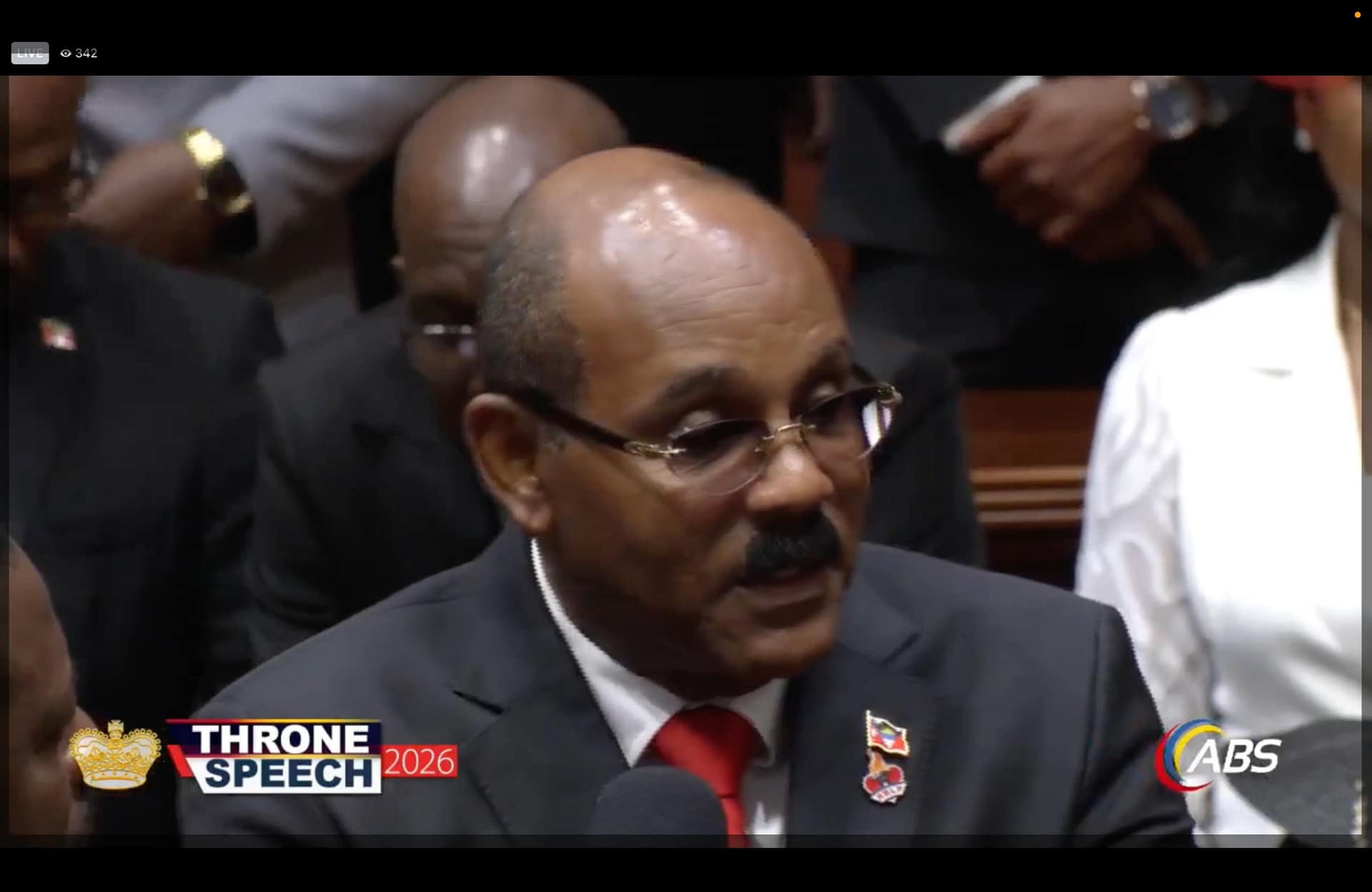
    A routine opening of a joint parliamentary sitting in Antigua descended into dramatic political confrontation on Tuesday, after Senate President Alincia Williams-Grant ordered Opposition Leader Jamale Pringle to leave the chamber before proceedings could begin, triggering a mass walkout by all opposition lawmakers.

    The standoff unfolded within the first minutes of the ceremonial gathering, which brought together members of both the Senate and House of Representatives alongside invited guests. Williams-Grant told the assembled chamber that the question of Pringle’s eligibility had been brought to her attention ahead of the sitting, and she had attempted to reach out to the opposition leader privately to resolve the matter before the formal gathering began.

    Despite those outreach efforts, Pringle chose to take his seat and attend the sitting, leaving the Senate President with no option but to issue a formal public ruling. “I’m asking the honourable gentleman to remove himself from this proceedings this morning in this House,” Williams-Grant stated from the chair.

    Attorney General Sir Steadroy Benjamin quickly threw his support behind the ruling, grounding the decision in the country’s foundational law. He emphasized that the Antiguan Constitution contains an unambiguous requirement that all parliamentarians must complete the oath of allegiance before they are legally permitted to participate in any parliamentary business. Until that constitutional obligation is fulfilled, Benjamin argued, Pringle could not lawfully take part in the joint sitting.

    Pringle responded from the floor, acknowledging that he was familiar with the constitutional language outlining the oath requirement. But he pushed back against the timing of the ruling, arguing that the dispute should have been resolved privately in advance rather than being aired publicly to disrupt the start of the sitting.

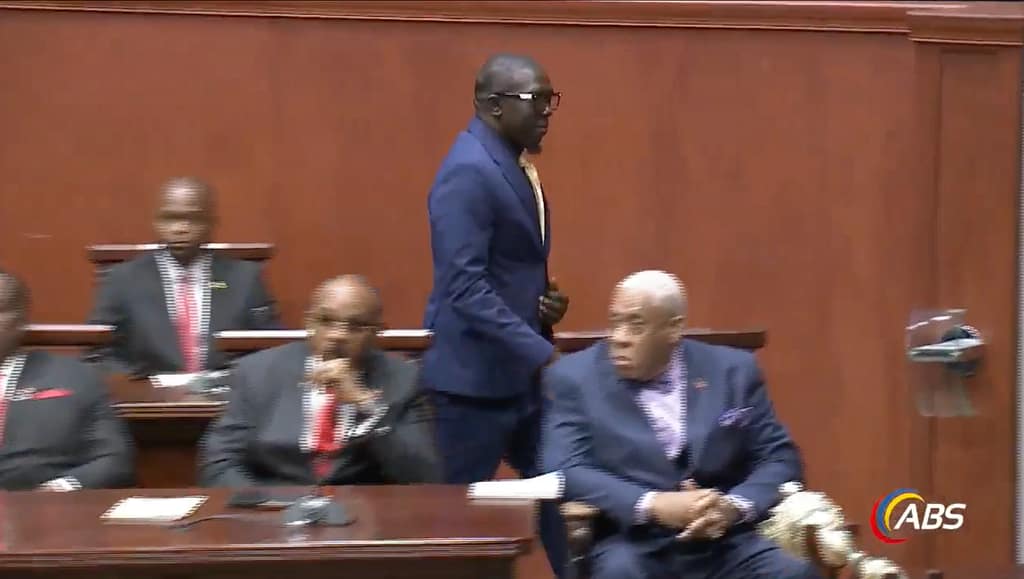
    Moments after Pringle’s remarks, the entire bloc of opposition lawmakers rose from their seats and walked out of the chamber in a coordinated protest against the ruling. The walkout has amplified already strained political tensions in the country, casting a cloud over the ceremonial joint sitting and delaying its official start as leadership navigated the unexpected fallout.