分类: politics

  • Regering staat achter hervorming rechterlijke macht; benadrukt constitutionele zorgvuldigheid

    Regering staat achter hervorming rechterlijke macht; benadrukt constitutionele zorgvuldigheid

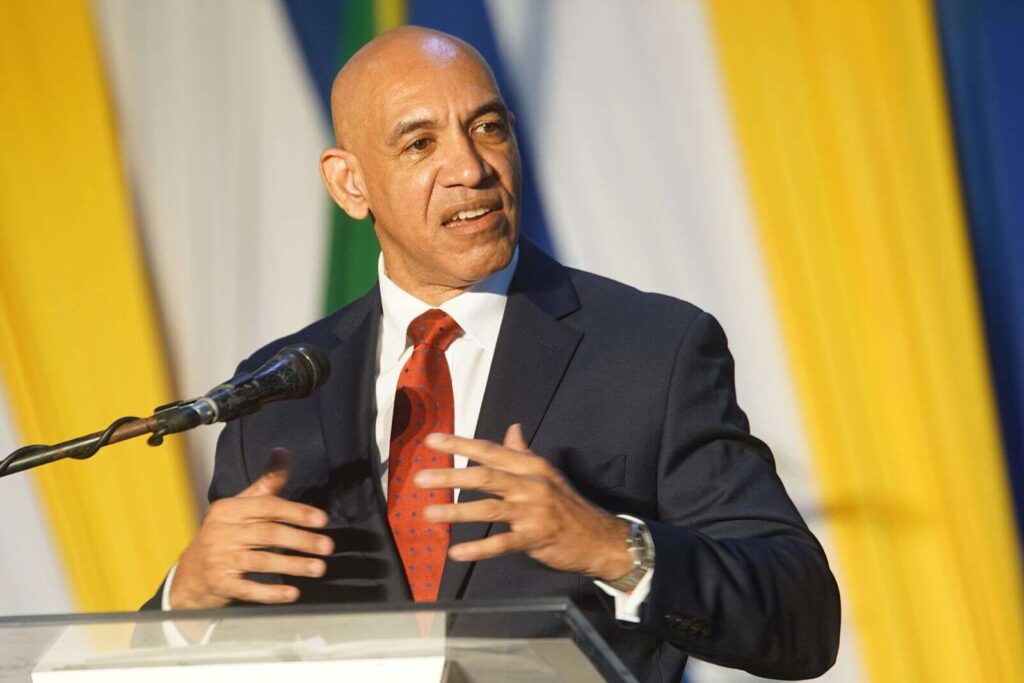
    Suriname’s government has expressed cautious support for proposed judicial reforms while emphasizing the need for constitutional alignment and practical implementation. Justice Minister Harish Monorath addressed the National Assembly on Thursday, outlining the administration’s careful approach to restructuring the judicial system.

    Minister Monorath characterized the proposed legislation as touching upon fundamental aspects of state governance rather than routine policy adjustments. “These reforms reach the core of our constitutional structure,” Monorath stated, emphasizing that any changes must be continuously evaluated against constitutional principles, separation of powers doctrine, and practical executability.

    Regarding the establishment of a third judicial instance, the minister acknowledged the importance of enhanced legal development and protection while highlighting critical considerations. “We must thoroughly examine personnel capacity, financial implications, and organizational structure,” Monorath explained, noting that new judicial bodies create permanent state burdens and require sufficient qualified personnel.

    The proposal to establish a college of prosecutors-general received similar scrutiny. Monorath stressed the necessity for clear demarcation of authority and responsibility within the Public Prosecutor’s Office, which occupies a unique position within the state apparatus. Structural changes must not create ambiguity regarding hierarchy, accountability, or command relationships.

    Monorath emphasized the crucial balance between reform and institutional stability, noting that judicial stability remains essential for legal certainty and citizen/investor confidence. The minister underscored that legislation must be both legally sound and administratively workable.

    The government consequently adopted a prudent approach: supporting judicial modernization and strengthening while prioritizing constitutional consistency, financial viability, and practical implementation. According to Monorath, all modifications should contribute to a stronger, more transparent, and independent legal system rather than responding to incidental events or temporary tensions.

    Following the minister’s address, VHP parliamentarians Krishna Mathoera and Mahinder Jogi criticized what they characterized as the government’s passive stance toward initiative laws. They emphasized shared responsibility that cannot be delegated, noting that the executive branch ultimately implements adopted legislation. The assembly adjourned after the minister’s responses, with sponsors expected to present amendments based on discussions during the second round.

  • Material aid sent by Mexico arrives in Havana

    Material aid sent by Mexico arrives in Havana

    In a significant demonstration of international solidarity, Mexican Navy vessels Papaloapan and Isla Holbox docked at Havana’s port on Thursday morning carrying substantial humanitarian aid for the Cuban people. The shipment, comprising essential food supplies, toiletries, and cleaning products, represents the Mexican government’s concrete response to Cuba’s ongoing economic challenges.

    Cuban President Miguel Díaz-Canal Bermúdez publicly acknowledged the gesture via social media, characterizing the assistance as emblematic of “the solidarity, friendship, and exemplary history of sovereignty and respect for the rights of others that distinguish Mexico.” His statement underscored the deep historical ties between the two nations.

    Betsy Díaz Velázquez, Cuba’s Minister of Domestic Trade, personally oversaw the reception of the aid and expressed profound gratitude to Mexican President Claudia Sheinbaum, the Mexican government, and its citizens. “We feel accompanied by Mexico, by its humanity, its solidarity, and its brotherhood,” she stated during the arrival ceremony.

    The minister specifically recognized the coordinated efforts of multiple Mexican institutions including the Ministry of the Navy, the Ministry of Foreign Affairs, the Embassy, and the Office of the Presidency in facilitating the complex logistical operation. She emphasized the particular importance of this assistance given the “intensified attempt to suffocate us” through tightened U.S. economic sanctions.

    This humanitarian delivery occurs against the backdrop of strengthened U.S. restrictions under the economic blockade, which Cuban officials describe as increasingly detrimental to civilian welfare. The Mexican government’s aid shipment not addresses immediate material needs but also serves as a diplomatic statement reinforcing Mexico’s independent foreign policy and commitment to South-South cooperation.

    The distribution mechanisms for the received supplies will be managed through Cuba’s domestic trade networks, ensuring the aid reaches populations most affected by current economic pressures.

  • Column: Wanneer een wet klopt, maar moreel ontspoort

    Column: Wanneer een wet klopt, maar moreel ontspoort

    A controversial compensation law passed in November 2024 has placed Suriname’s Prosecutor General among the highest-paid public officials in the nation, earning a staggering net monthly salary exceeding SRD 1 million (approximately USD 27,000). The legislation, championed by Asis Gajadien (VHP) and Geneviévre Jordan (ABOP) and enacted under President Chan Santokhi’s administration, has sparked widespread criticism for its timing and provisions.

    The Judicial Position Act establishes that the Prosecutor General’s base compensation reaches 95% of the presidential salary. However, this figure represents merely the foundation for additional benefits rather than a true cap. The law’s critical feature is its definition of ‘compensation’ as an aggregate of base salary, allowances, and reimbursements.

    Article 31 further compounds this structure by granting annual 5% increments based not on years served in current position, but on total tenure within the judicial system. For the current Prosecutor General—with six years in role but over forty years in judicial service—this translates to exponential salary growth rather than measured experience recognition.

    Beyond these provisions, tax-free allowances can reach 150-170% of base compensation, creating a system where officials technically remain under the 95% threshold while substantially exceeding it in practice. This design emerges as particularly controversial given its implementation during nationwide austerity measures that saw subsidy reductions, tax increases, and repeated government calls for public sacrifice.

    The disparity has drawn sharp criticism from Assembly Member Poetini Atompai (NPS), who has demanded full governmental transparency regarding the judicial compensation structure and its burden on national finances. He rightly questions the proportionality, reasonableness, and executive accountability in this arrangement.

    Critics argue that the Dutch ‘Balkenende norm’—which establishes the prime minister’s salary as the absolute maximum for public officials—offers a more transparent alternative that prevents creative legislative constructions. The current system, while legally sound, represents a failure of legislative responsibility when laws become mathematically clever but socially indigestible.

    In a nation where nurses, teachers, and pensioners face genuine economic hardship, this judicial compensation model threatens to erode public trust in the justice system. The law requires immediate revision to prevent the moral derailment of Suriname’s judicial institutions and restore faith in governmental fairness.

  • LVV doet aangifte wegens onbevoegde beheersdaden op terreinen in Tibiti

    LVV doet aangifte wegens onbevoegde beheersdaden op terreinen in Tibiti

    The Ministry of Agriculture, Livestock, and Fisheries (LVV) in Suriname has initiated legal proceedings against unauthorized occupation of state-owned lands in the Tibiti region of Para district. The contested forestry territories were officially allocated to the ministry for agricultural purposes by the government in March 2023.

    During an inspection at kilometer 99 in the Tibiti area, ministry officials encountered workers who claimed to be operating under instructions from two individuals identified as R.M. and K.J. The workers asserted they had received authorization from the son of former LVV Minister Parmanand Sewdien, though the legal validity of such permission remains unclear.

    Through a formal legal notice delivered by attorney Deepak Jairam, the ministry has demanded the immediate evacuation of the premises from K.J. The document emphasizes that no authorization has been granted to any parties for activities on these parcels, except to a company responsible for installing an irrigation system for an official agricultural project.

    LVV Minister Mike Noersalim confirmed to Starnieuws that significant investments have been made on the property, including equipment, a drip irrigation system, and solar panels valued at approximately €40,000. The Dutch company that executed and delivered these projects has reportedly not yet received payment. Additionally, the site contains a cultivated passion fruit (markoesa) plantation.

    The ministry has indicated that if evidence emerges of damage to state property, additional charges for destruction and/or theft will be filed. This incident has reignited concerns regarding the management and supervision of state lands designated for agricultural development. Local police have documented the case and are conducting an investigation into the matter.

  • APNU excludes WIN from Region Four council committees- Manickchand

    APNU excludes WIN from Region Four council committees- Manickchand

    In a significant political development within Guyana’s Region Four (Demerara-Mahaica) governance structure, the A Partnership for National Unity (APNU) has excluded its coalition partner We Invest in Nationhood (WIN) from representation on crucial council committees. Local Government and Regional Development Minister Priya Manickchand disclosed this exclusion during Thursday’s parliamentary session while addressing budgetary estimates.

    The revelation emerged when WIN councillor Tabita Sarabo-Halley questioned why only APNU and People’s Progressive Party Civic representatives were appointed to sectoral committees. Minister Manickchand clarified that APNU’s Chief Whip failed to submit any WIN nominations when invited to propose committee members. ‘I’m advised that in this particular instance, no names were submitted from your collection. The APNU Chief Whip failed to submit any names from WIN when they were asked to submit names,’ she stated.

    The minister speculated that APNU might have determined WIN lacked sufficient capacity or expertise, though she emphasized that the two parties must resolve the matter internally. This exclusion marks a notable fracture in the opposition alliance, particularly significant since APNU unexpectedly lost its historical control of Region Four in last September’s elections, securing only nine seats compared to PPPC’s seventeen and WIN’s eight seats.

    APNU parliamentarian Ganesh Mahipaul attempted to secure a commitment for parliamentary-style proportionality in committee formations but was unsuccessful. Minister Manickchand maintained that appointments must follow legal guidelines rather than political proportionality models, noting that committee members are conventionally selected based on expertise and ability to serve regional interests, with the exception of procurement committees which fall under the National Procurement and Tender Administration Board’s jurisdiction.

  • Abinader to visit U.S., Chile and France in March

    Abinader to visit U.S., Chile and France in March

    SANTO DOMINGO – The Dominican Presidency unveiled on Thursday an extensive international itinerary for President Luis Abinader, marking a significant month of diplomatic engagements across the Americas and Europe throughout March. This strategic tour underscores the nation’s proactive approach to strengthening bilateral relations and engaging with global economic governance.

    The President’s first diplomatic stop will be in the United States, where he is scheduled to participate in a high-profile regional summit convened by U.S. President Donald Trump in Miami on March 7th. The assembly, as detailed in an official government communiqué, is designed to foster dialogue on pressing matters of mutual regional and international concern.

    Following his North American engagement, President Abinader will journey to Santiago, Chile, for a three-day visit from March 10th to 12th. The central purpose of this leg is his official attendance at the presidential inauguration of Chile’s President-elect, José Antonio Kast. The agenda also includes a dedicated bilateral meeting between the two leaders to discuss avenues for enhanced cooperation between their nations.

    Concluding this diplomatic tour, President Abinader will travel to Paris, France, on March 24th and 25th. The European visit features a pivotal meeting with French President Emmanuel Macron. Furthermore, the Dominican leader will actively participate in high-level assemblies of the Organisation for Economic Co-operation and Development (OECD), highlighting the country’s commitment to engaging with critical international economic policy forums.

  • Barbados Landslide Win, But Where Were Voters?

    Barbados Landslide Win, But Where Were Voters?

    In an unprecedented political achievement, Prime Minister Mia Mottley has secured her third consecutive comprehensive electoral victory in Barbados, with her Barbados Labour Party capturing all thirty parliamentary seats. This remarkable triumph solidifies Mottley’s position as one of the Caribbean’s most dominant political figures and represents a rare feat in global democratic politics.

    Despite the overwhelming margin of victory, the election was characterized by notably subdued voter participation across the island nation. Preliminary reports indicate mid-to-low turnout levels persisted throughout polling day, despite extensive civic engagement campaigns urging citizens to exercise their democratic rights. This apparent disconnect between electoral enthusiasm and the scale of the governing party’s success has emerged as a significant subplot to the historic outcome.

    In her post-election address, Prime Minister Mottley reflected on her administration’s challenging journey since initially assuming power in 2018. She acknowledged the unforeseen complications presented by the COVID-19 pandemic, which forced a strategic pivot from immediate growth initiatives to survival measures during the global health crisis. Mottley emphasized that only within the past thirty months has her government been able to transition toward its intended transformation agenda.

    The Prime Minister articulated her administration’s fundamental philosophy, stating: ‘We did not come simply to hold office. We have come to make Barbados better and to make your lives better.’ She reiterated the party’s longstanding commitment to poverty alleviation, social justice, and creating substantive opportunities for national development. Mottley framed her government’s mission as building strong families, communities, workers, and businesses toward the ultimate goal of forging a resilient nation.

    Political analysts are now examining the implications of both the electoral sweep and the participation patterns, questioning how a government achieves such dominance while apparently failing to energize substantial portions of the electorate. This dual reality presents both a powerful mandate and a governance challenge for Mottley’s third term administration.

  • Politic : New Municipal Commission at the head of Port-au-Prince

    Politic : New Municipal Commission at the head of Port-au-Prince

    In a significant administrative move, Haiti’s Interior Ministry has formally established a new governing body for its capital city. On February 11, 2026, Interior Minister Paul Antoine Bien-Aimé presided over the swearing-in ceremony of the freshly appointed Port-au-Prince Municipal Commission at the Ministry’s Delmas 60 headquarters.

    The commission, comprising President Yves Andrel Salomon (functioning as mayor) alongside deputies Dorothé Ignace Morel and Esther Cinéas, assumes authority during a period of substantial challenges for the capital. Their appointment, initially decreed by the Council of Ministers under Prime Minister Fils-Aimé on February 7, 2026, signifies a strategic effort to stabilize municipal governance.

    The installation event witnessed the presence of key government figures, including Ketlène Jean Louis, Director General of the Ministry of Haitians Living Abroad (MHAVE), senior ministry officials, and representatives from the National Federation of CASECS of Haiti (FENACAH).

    In his address, Director General Pierre Canisius Guignard emphasized that this leadership transition stems from a commitment to address the legitimate needs and aspirations of Port-au-Prince residents, specifically through the enhanced delivery of quality public services. The Ministry of the Interior and Territorial Communities (MICT) has expressed strong expectations for the new commission to implement local public policies aimed at revitalizing the city and restoring its former pride. The executive agents are urged to operate with both effectiveness and efficiency.

    Minister Bien-Aimé formally presented the official confirmation of appointments to the new members, aligning with the decree that establishes this municipal commission. This body is tasked with managing the capital’s affairs on an interim basis until the next scheduled elections.

    A critical directive for the new council is to prioritize the acute needs of the population, with particular attention to the most vulnerable communities, including those residing in camps for displaced persons. The Ministry has pledged its full support to the municipal executive agents, aiming to boost operational performance and fortify the institutional framework of the municipality during this pivotal period.

  • Foreign Minister denies Dominican government ties to DEA office shutdown

    Foreign Minister denies Dominican government ties to DEA office shutdown

    SANTO DOMINGO – Dominican Foreign Minister Roberto Álvarez has officially confirmed that the recent shutdown of the U.S. Drug Enforcement Administration (DEA) office in the country stems entirely from an internal investigation within the U.S. embassy, with no involvement or connection to the Dominican government or its officials. The clarification came following a direct conversation between Álvarez and U.S. Ambassador to the Dominican Republic, Leah Campos.

    Ambassador Campos provided explicit assurances that the decision to close the DEA’s operational office was motivated solely by findings from an internal probe conducted by the embassy itself. Minister Álvarez publicly relayed the diplomat’s statements, emphasizing that the measure was categorically unrelated to any actions or policies of Dominican authorities.

    The development follows the recent arrest of Melitón Cordero, the DEA’s former supervisor in the Dominican Republic, who was taken into custody as part of an investigation into alleged visa fraud. While the timing of the office closure and the arrest is notable, the Dominican government’s statements aim to dispel any speculation of local misconduct or bilateral diplomatic friction, framing the event as an internal administrative action by the United States.

  • NDP opent opnieuw Sociaal Maatschappelijk Bureau aan Hoogestraat

    NDP opent opnieuw Sociaal Maatschappelijk Bureau aan Hoogestraat

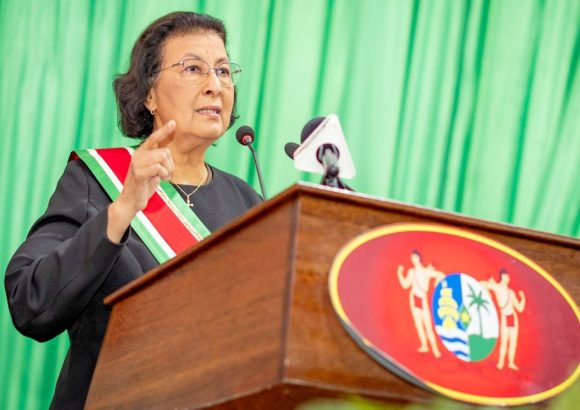
    In a significant move to strengthen community support mechanisms, Suriname’s National Democratic Party (NDP) has officially reopened its Social and Societal Bureau (SMB) after a five-year suspension. The new facility, located on Hoogestraat within the former party headquarters of the BVD, was inaugurated by NDP Chairwoman and President Jennifer Simons on February 12th.

    The bureau, operating under the Office of the NDP Chairman, will serve as a specialized center addressing public grievances that cannot be directly resolved through ministers, assembly members, or other government officials. Coordinator Yvonne Cheuk Alam explained that the facility will provide guidance and collaboratively seek solutions with citizens, potentially through engagement with relevant ministries depending on each situation’s specific circumstances.

    President Simons emphasized the bureau’s advisory nature during the unveiling ceremony, clarifying that it does not represent an institution where individuals can obtain everything they request. Rather, it functions as an information and guidance center within a nation where many administrative processes remain unclear and assistance doesn’t always arrive promptly. The SMB specifically will not replace existing institutions but will serve as a referral and advisory point, particularly for cases requiring immediate intervention.

    Cheuk Alam revealed that the bureau reactivation follows the successful operation of a similar office called the Ombudsman’s Bureau from 2010 to 2020 at the Ocer party center. That previous initiative proved effective through established agreements with ministers and assembly members, creating shorter pathways to problem resolution for citizens. The current reactivation responds to what officials describe as the dual responsibilities burdening administrators following the NDP’s assumption of national leadership under challenging circumstances.

    The bureau will address multiple societal issues including land matters, housing concerns, sexual assault cases, domestic violence incidents, educational challenges, and parent-school conflicts. While primarily established to serve party members, Cheuk Alam stressed that the facility remains open to all Surinamese citizens, emphasizing national unity beyond political affiliations in the post-election period.