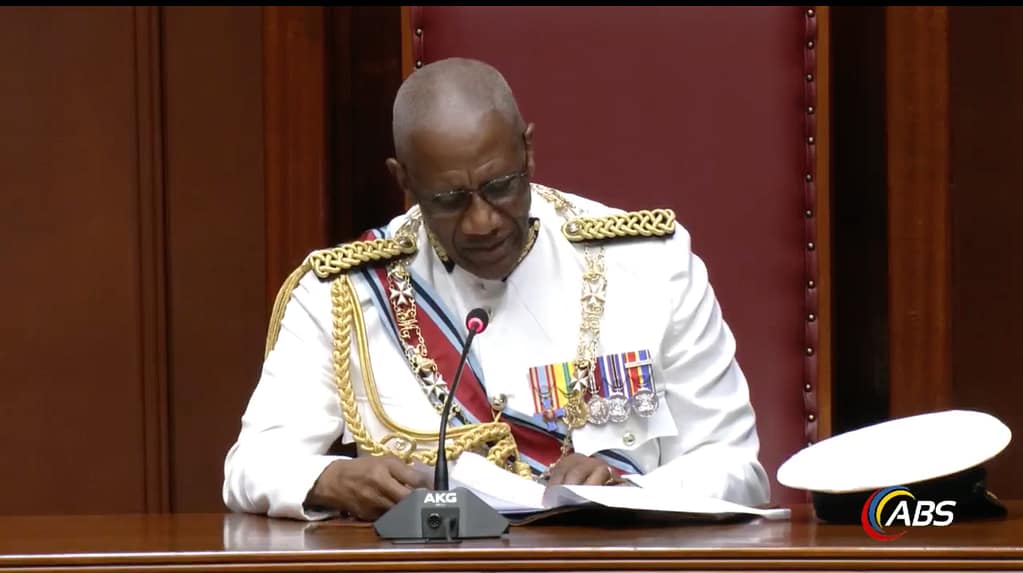
During the formal ceremonial opening of Antigua and Barbuda’s new parliamentary session on Tuesday, Governor General Sir Rodney Williams delivered the annual Speech from the Throne, and centered a key portion of his foreign affairs address on the disproportionate economic harm that ongoing global conflicts are inflicting on vulnerable small island developing states. Sir Rodney framed foreign policy as one of the most daunting policy portfolios for the twin-island nation, warning that missteps in international engagement can leave small developing countries exposed to overwhelming geopolitical pressures that lie far outside their ability to influence or control. In his remarks to the full legislative body, he specifically called out the two major active conflicts roiling global order today: the ongoing Russia-Ukraine war and escalating tensions between Israel and Iran. Sir Rodney detailed how the cascading effects of these conflicts have rippled through global markets to raise costs for Antigua and Barbuda and similar small nations. Restrictive sanctions placed on Russia, he explained, combined with repeated instability at critical international chokepoints for commercial shipping, have driven sharp spikes in global fuel prices, elevated marine insurance premiums, and pushed up the cost of everyday consumer goods across every region of the world. He offered a concrete example of how regional escalation directly impacts global costs: if open conflict between the United States, Israel and Iran leads to the closure of the Strait of Hormuz, the vital maritime route that carries roughly 20 percent of the world’s daily oil supply, shipping, insurance and consumer product costs will surge across every global market. Most pointedly, Sir Rodney emphasized that small island states bear no responsibility for igniting these conflicts, yet are forced to absorb the full weight of their negative economic consequences. “Small states have played no role in starting these conflicts that have generated tough economic choices for the people of Antigua, the Caribbean and the people of these two large states,” he told legislators. Beyond his warning about global risks, Sir Rodney also offered strong praise for the country’s current diplomatic leadership, highlighting the government’s renewed confidence in Foreign Affairs Minister E.P. Chet Greene. His reappointment to the role, the Governor General noted, reflects the administration’s trust in Greene’s proven ability to steer the country’s foreign relations through this period of unprecedented global uncertainty. “The management of our state’s foreign affairs by a very skillful minister… demonstrates the same reasons why faith is placed by my government in the Honourable Paul Chet Greene,” Sir Rodney said. Finally, the Governor General reaffirmed Antigua and Barbuda’s longstanding commitment to deepening regional integration through the Caribbean Community (CARICOM), framing the regional bloc as an indispensable pillar of the country’s ongoing political stability and economic prosperity. He stressed that coordinated collective action among Caribbean nations is more critical than ever to address shared external challenges that no single small island state can tackle alone.
Global Conflicts Threaten Antigua and Barbuda, Governor General Warns in Throne Speech